Creators who want to influence people for good should also think carefully about tone. Environmental storytelling does not need to lecture or shame audiences. It can invite curiosity instead.
The company's Next Generation Process (NGP) Pilot Plant in London, Ontario, has officially moved into initial operating campaigns, generating the kind of structured, repeatable data that separates laboratory promise from commercial viability.
In the modern nutrition universe, that level of commitment deserves an applause. But for those who don’t live in a Nordic fishing village, the nutrition company Zinzino has built its omega-3 research and formulations around these principles, combining biomarker testing, antioxidant protection and traceable sourcing across both sustainably harvested small-fish oils and a vegan marine-microalgae alternative.
Dubai Municipality has set up 12 AI-powered "Ehsan Stations" to safely and officially feed strays. The city also officially supports Trap-Neuter-Return (TNR) programs.
Creators who want to influence people for good should also think carefully about tone. Environmental storytelling does not need to lecture or shame audiences. It can invite curiosity instead.
The company's Next Generation Process (NGP) Pilot Plant in London, Ontario, has officially moved into initial operating campaigns, generating the kind of structured, repeatable data that separates laboratory promise from commercial viability.
In the modern nutrition universe, that level of commitment deserves an applause. But for those who don’t live in a Nordic fishing village, the nutrition company Zinzino has built its omega-3 research and formulations around these principles, combining biomarker testing, antioxidant protection and traceable sourcing across both sustainably harvested small-fish oils and a vegan marine-microalgae alternative.
Dubai Municipality has set up 12 AI-powered "Ehsan Stations" to safely and officially feed strays. The city also officially supports Trap-Neuter-Return (TNR) programs.
Creators who want to influence people for good should also think carefully about tone. Environmental storytelling does not need to lecture or shame audiences. It can invite curiosity instead.
The company's Next Generation Process (NGP) Pilot Plant in London, Ontario, has officially moved into initial operating campaigns, generating the kind of structured, repeatable data that separates laboratory promise from commercial viability.
In the modern nutrition universe, that level of commitment deserves an applause. But for those who don’t live in a Nordic fishing village, the nutrition company Zinzino has built its omega-3 research and formulations around these principles, combining biomarker testing, antioxidant protection and traceable sourcing across both sustainably harvested small-fish oils and a vegan marine-microalgae alternative.
Dubai Municipality has set up 12 AI-powered "Ehsan Stations" to safely and officially feed strays. The city also officially supports Trap-Neuter-Return (TNR) programs.
Creators who want to influence people for good should also think carefully about tone. Environmental storytelling does not need to lecture or shame audiences. It can invite curiosity instead.
The company's Next Generation Process (NGP) Pilot Plant in London, Ontario, has officially moved into initial operating campaigns, generating the kind of structured, repeatable data that separates laboratory promise from commercial viability.
In the modern nutrition universe, that level of commitment deserves an applause. But for those who don’t live in a Nordic fishing village, the nutrition company Zinzino has built its omega-3 research and formulations around these principles, combining biomarker testing, antioxidant protection and traceable sourcing across both sustainably harvested small-fish oils and a vegan marine-microalgae alternative.
Dubai Municipality has set up 12 AI-powered "Ehsan Stations" to safely and officially feed strays. The city also officially supports Trap-Neuter-Return (TNR) programs.
Creators who want to influence people for good should also think carefully about tone. Environmental storytelling does not need to lecture or shame audiences. It can invite curiosity instead.
The company's Next Generation Process (NGP) Pilot Plant in London, Ontario, has officially moved into initial operating campaigns, generating the kind of structured, repeatable data that separates laboratory promise from commercial viability.
In the modern nutrition universe, that level of commitment deserves an applause. But for those who don’t live in a Nordic fishing village, the nutrition company Zinzino has built its omega-3 research and formulations around these principles, combining biomarker testing, antioxidant protection and traceable sourcing across both sustainably harvested small-fish oils and a vegan marine-microalgae alternative.
Dubai Municipality has set up 12 AI-powered "Ehsan Stations" to safely and officially feed strays. The city also officially supports Trap-Neuter-Return (TNR) programs.
Creators who want to influence people for good should also think carefully about tone. Environmental storytelling does not need to lecture or shame audiences. It can invite curiosity instead.
The company's Next Generation Process (NGP) Pilot Plant in London, Ontario, has officially moved into initial operating campaigns, generating the kind of structured, repeatable data that separates laboratory promise from commercial viability.
In the modern nutrition universe, that level of commitment deserves an applause. But for those who don’t live in a Nordic fishing village, the nutrition company Zinzino has built its omega-3 research and formulations around these principles, combining biomarker testing, antioxidant protection and traceable sourcing across both sustainably harvested small-fish oils and a vegan marine-microalgae alternative.
Dubai Municipality has set up 12 AI-powered "Ehsan Stations" to safely and officially feed strays. The city also officially supports Trap-Neuter-Return (TNR) programs.
Creators who want to influence people for good should also think carefully about tone. Environmental storytelling does not need to lecture or shame audiences. It can invite curiosity instead.
The company's Next Generation Process (NGP) Pilot Plant in London, Ontario, has officially moved into initial operating campaigns, generating the kind of structured, repeatable data that separates laboratory promise from commercial viability.
In the modern nutrition universe, that level of commitment deserves an applause. But for those who don’t live in a Nordic fishing village, the nutrition company Zinzino has built its omega-3 research and formulations around these principles, combining biomarker testing, antioxidant protection and traceable sourcing across both sustainably harvested small-fish oils and a vegan marine-microalgae alternative.
Dubai Municipality has set up 12 AI-powered "Ehsan Stations" to safely and officially feed strays. The city also officially supports Trap-Neuter-Return (TNR) programs.
Creators who want to influence people for good should also think carefully about tone. Environmental storytelling does not need to lecture or shame audiences. It can invite curiosity instead.
The company's Next Generation Process (NGP) Pilot Plant in London, Ontario, has officially moved into initial operating campaigns, generating the kind of structured, repeatable data that separates laboratory promise from commercial viability.
In the modern nutrition universe, that level of commitment deserves an applause. But for those who don’t live in a Nordic fishing village, the nutrition company Zinzino has built its omega-3 research and formulations around these principles, combining biomarker testing, antioxidant protection and traceable sourcing across both sustainably harvested small-fish oils and a vegan marine-microalgae alternative.
Dubai Municipality has set up 12 AI-powered "Ehsan Stations" to safely and officially feed strays. The city also officially supports Trap-Neuter-Return (TNR) programs.
Jordan opened 15 lower-cost vegetable markets Saturday in several cities in honor of Ramadan, the month-long Muslim fasting holiday that began Friday.
According to the Jordan Times, the government began the market program last Ramadan. In exchange for a free stall, water and electricity, farmers agree to mark their produce down 30 percent. The program cost 6 million Jordanian dinars last year.
Here on Green Prophet we love to hear about green design. In the world of green furniture design we’ve already covered Green Lullaby, which makes cribs, doll houses and doll cradles for kids out of recycled cardboard paper. But now there’s a new recycled cardboard furniture design company in town and they’re making furniture for everybody.
Krooom, an Israeli design company with international representation (website no longer working 2021), is producing eco friendly DIY cardboard furniture for the home, office, and kid’s room. Fun cardboard furniture isn’t just for kids anymore.
With a focus on the environmental impact of their products, Krooom makes a conscious choice to use cardboard with at least 60% recycled content (which consumes less energy than producing products from virgin fibers) and to also ensure that their products are recyclable. According to Krooom’s website, precycling is just as important as recycling. P
recycling is “the process of making a conscious choice to purchase or use products and services which will have a less harmful effect on the environment.”
Krooom’s Storage Trunk can hold 32 kgs
But beyond being environmentally conscious and friendly, Krooom’s designs are beautiful. Check out their Naggie Bookcase above, or their convincing faux wooden storage trunk on the right. Other products include file cabinets, magazine racks, wine holders, and a child’s table with chairs.
Nitzan Bertele, the founder of Krooom and the company’s chief design offer, said that “the challenge we faced was to bring cardboard to a level where it can compete with similar products from plastic and wood at the mass retail level.” But once they figured that out, the sky was the limit. Bertele continued to say that “we brought in a new concept, we are penetrating all sorts of markets, and once we do that we will keep refreshing them on a seasonal basis with new designs and products.”
Krooom’s designs are also NTR – No Tools Required – and intended for easy assembly. Arriving flat and with easy instructions, a la IKEA, their products are truly intended for the widest possible market. Bringing eco design to everybody.
Read more about environmentally conscious furniture design::
I’ve not yet had kids, but when I do I might buy a Taga – a hybrid bicycle and baby carriage developed by Dutch and Israeli designers.
The Taga is a bike, a stroller or a biking stroller. All 3. And it’s good for little kids (babies), bigger kids too, as well as twins and kids of all sizes.
We can see the Dutch influence (I’m half Dutch too), while the baby part is very much an Israeli thing. Unlike in some metropolitan cities where young families move to the burbs after the birth of their first, Israelis tend to stick around in the city if it’s in their blood. And they have lots of babies, much more than the average family in Europe or the US.
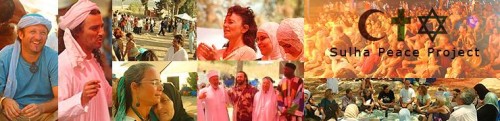
A year ago, James wrote an article on Green Prophet about a unique organization known as the Sulha Peace Project and its role in reconciliation among peoples of different religious faiths and cultures, which is what the word sulha or reconciliation in Arabic is supposed to be about.
The Sulha Peace Project was founded in the year 2000 in the aftermath of the beginning of the Second or Al Aqsa Intifada, with the hope to find some positive ways to bring people together, including those at variance with each other (Israelis and Palestinians, in particular) in order to acquire a better understanding of issues that separate people – and to help find solutions to achieve tolerance to live together as fellow human beings.
This led to the first Sulha gathering in the late fall of 2001, which occurred coincidentally during the time and period leading up to three important interfaith religious holidays: Ramadan, Hanukah, and Christmas. Their environmental message is strong:
The Social Economic Academy, a non profit organization aimed at promoting social and economic change in Israel that opens its courses to the entire general public, will be leading a course on food politics this fall – starting in September.
The name of the courseis What Are We Nourished By? and will be held at Kibbutz Revadim in south-central Israel.
The course will not be taught by a single lecturer, and will rather be taught by a variety of people with different perspectives on food – ranging from chefs, to environmentalists, to farmers, to devout vegetarians. All of the lecturers are participating in the course on a volunteer basis. Each class will present a new issue and be lead by a different lecturer.
Check out the course syllabus:
The Politics of Food, Ami Atinger (Heschel Center) – 9.2.09
The Ecological Footprint of the Food Industry, Eran Ben Yamini (CEO of the Green Movement) – 9.9.09
It’s been a mystery: how can our teeth withstand such an enormous amount of pressure, over many years, when tooth enamel is only about as strong as glass?
A new study by Prof. Herzl Chai of Tel Aviv University’s School of Mechanical Engineering and his colleagues at the National Institute of Standards and Technology and George Washington University gives the answer. And it has applications in the field of green aeronautics.
The researchers applied varying degrees of mechanical pressure to hundreds of extracted teeth, and studied what occurred on the surface and deep inside them.
The study, published in the May 5, 2009, issue of the Proceedings of the National Academy of Science, shows that it is the highly-sophisticated structure of our teeth that keeps them in one piece — and that structure holds promising clues for aerospace engineers as they build “greener” aircraft and space vehicles of the future.
Water is fast becoming the new oil. Without it, nations starve and conflicts ensue, like the piracy off the Somali coast we’ve written about. Predictions become direr as we factor in global warming. And new conflicts in the Middle East could erupt at any time over that most innocuous and life-sustaining element.
With limited resources and no cooperation from neighboring countries, authorities in Israel quickly understood that they would have to bootstrap what little water options they have, to irrigate their very dry land. Necessity spurs innovation, and along the way, Israel created an industry.
Cost effectiveness, familiarity with both the business and geographical climates, innovation, and solutions that really work, are among the factors that draw water infrastructure representatives from all over the world to meet with Israeli companies.
One of the best channels to Israeli water solutions and investments is via Oded Distel, director of the government-run NEWtech, a new initiative to help countries access Israeli water technologies. Before its establishment, contacts were usually forged at conferences, like the upcoming WATEC water conference in Tel Aviv in November.
NEWtech, which stands for the National Water Technology program, is a one-stop shop for advice and solutions pertaining to your water needs and investment goals. Read on to see more about what they do, and about some of the hottest Israeli water companies.
Homeowners in Israel can take title to the land under their houses and apartments after the Knesset voted in early August to privatize the Israel Land Administration.
The reform passed 61 to 45, above the protest of environmentalists, Jewish nationalists and Arab parties. The law will transform the ILA, which historically controlled 93 percent of Israel’s land, into the Lands Authority. This body will sell state land, beginning with 100,000 acres and expanding to double that by 2014.
We’ve covered the land reform as it was debated; for more background, check out this post on land in Israel and this one on the last vote.
Gil Yaacov, director of the Green Course student environmental group, part of a 13-organization anti-privatization coalition, says the government’s plan relinquishes control under the cover of efficiency.
“Out of the total 800,000 dunams, 550,000 are open spaces — places that are not built yet,” Yaacov said, citing coastal areas, among others. “Once you privatize those open spaces, the government loses control over the conflict between private investment and the public interest.”
Last week we had news that Gaza and Israel are smoking a peace pipe for water. Now this is more news that should bring a smile to the face of every leader in the Middle East: A true regional partnership, brokered by three peace foundations – that is about to reduce biomass pollution for Israelis, Jordanians and Palestinians.
Even better, it will transform biomass waste into biofuel, so that farmers and industrialists can turn a profit while simultaneously creating much-needed jobs in the region.
The idea was initiated by the Peres Center for Peace (we’d reported earlier) at an annual conference in Germany – the Jordanian-Israeli Forum on Economic Cooperation in 2008. A joint Jordanian-Israeli company, MME New Diesel Company, with technology supplied by a German company, will run the biofuel initiative.
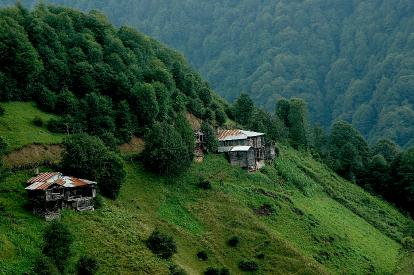
Farmers in northeastern Turkey are furious at the government’s plans to flood the verdant region with eight hydroelectric dams.
According to the Hurriyet Daily News, Turkey is scrambling to meet its energy needs, and the Macahel basin is one of 550 sites in the Black Sea area marked for dams.
The Macahel Basin was declared a UN Biosphere because of its unique honeybee species, including some of the only genetically pure Caucausus bees in the world.
Yalla Nwaffer Mai, or Let’s Save Water is a water conservation campaign launched in July by the Jordan Water Company (Miyahuna), HSBC Bank, and USAID to fight water waste and create awareness about the need to conservate water in Jordan. Jordan is categorized as the fourth water-poorest country in the world.
The target of the campaign has been to distribute and install water saving devices (free of charge) in order to reduce consumption in target areas known for consuming large quantities of water. Since western Amman consumes over 20 percent of the city’s water allocation, the campaign focused on that region.
To date a total of 1,200 houses have been equipped with these water saving devices in west Amman neighborhoods such as Um Uthaina, Sweileh, Sweifieh, Sheisani, the Sports City area, and Khalda. The campaign organizers originally planned to equip 2,500 homes with the devices, but then stated that the numbers had been reduced since standard houses in these target areas needed more devices than originally expected.
After 30 years spent servicing Israel’s military aircraft, engineer Hugo Tour decided to redesign a car’s internal combustion engine to make it twice as efficient.
Hugo Tour spent more than 30 years servicing Israel’s high profile military aircraft and helicopters – and advising the US Air Force, too – about what went wrong when military aircraft failed.
All that time spent in the Israel Air Force (IAF) servicing jet engines and aircraft got Tour to thinking: If jet engines, air conditioners and water heaters can achieve high rates of efficiency – above 80 percent – then why not a car’s internal combustion engine, which has an extremely low efficiency rating, at 20-30%?
They chew this stuff on a daily basis, like Bolivians and other South American mountain people chew cacao leaves. It gives people in Yemen and other Arabian Peninsula countries a mild, narcotic-like effect; and unfortunately, it is ruining the economy of Yemen due to do many people getting “hooked” on it.
What is this plant that is often seen being chewed by people in Yemen, and being grown in place of food crops in this aired country’s 3% of available arable agricultural land.
The 1980s pop icon Morrissey said that every day is like Sunday, silent and grey. But an Israeli solar energy company has taken the first day of the week in the Hebrew calendar and used it for more optimistic purposes: They named their company Sunday Energy, in appreciation of the power packed into the sun.
With less than two years in the business, Sunday is already becoming an alternative energy force in Israel and setting the stage for a solar powered Middle East and other emerging markets.
After partnering with schools, wineries and global energy companies like Ormat locally in Israel, the young company is predicting sales of about $250 million from its solar installations in the next couple of years.
The plan is not to be any old solar technology integrator – bringing together photovoltaic (PV) panels, meters and wires from different suppliers to store and direct solar power from the sun. Sunday has an ambitious plan to be a power plant provider, says Kobi Dinar, the company’s CEO.
During the week of August 9, 2009, talk continued about plans to revive the ailing Dead Sea. Tigo Energy became a finalist for two R&D grants from the US Department of Energy and a conceptual plan for a Globe Ecological Hub in Modiin was recently proposed. For these stories and more, check below for this week’s 8 Israel-related cleantech headlines.


 Jordan opened 15 lower-cost vegetable markets Saturday in several cities in honor of Ramadan, the month-long Muslim fasting holiday that began Friday.













![solar-hot-water-heater-rooftops-israel2_UMvkj_5784[1]](http://greenprophet.com/wp-content/uploads/2009/08/solar-hot-water-heater-rooftops-israel2_UMvkj_578414.jpg)