Home Blog Page 689

2009 World Water Week Honors Young Turkish and Israeli Innovators

2

rain water conservationWorld Water Week, an annual meeting in Stockholm about the world’s most urgent water-related issues, took place this year between August 16-22.  Organized by the Stockholm International Water Institute (SIWI), it brought together water experts, practitioners, decision makers, and global leaders in order to come up with solutions to international water crises.

It also recognized the achievements of innovators in the field of water conservation.  Including those of two young women – Ceren Burçak Dag of Nisantasi, Turkey and Emily Elhacham of Israel.

Both young women were recognized as part of the Stockholm Junior Water Prize, which is open to young scientists between the ages of 15-20.  The prize is intended to encourage these scientists’ continued interest in water conservation and often draws thousands of international participants.

Think Again: What to Do With That Old Pair of Jeans

9

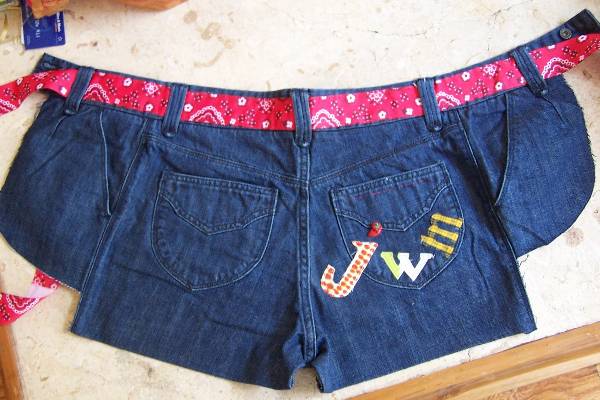
jeans apron reuse designThink Again is a new series that provides fun ideas for how to reuse items in your home that you would normally throw out or recycle.  Reusing is higher on the “green” food chain than recycling, because getting another use out of an object is always more effective than spending the energy to recycle it.  Plus, trying to reuse can force us to be creative!

The three R‘s – reduce, reuse, and recycle – are listed in that order for a reason.  Reducing the amount of products, or materials, or energy that you use is the most environmentally conscious.  After that comes reuse – which means giving the materials that you did use a second life without going through any type of intensive recycling process.  And the third is recycling, which does require energy but is still more effective than using completely new materials.

But the three R‘s don’t have to be so boring!  Reusing can be a lot of fun since it forces us to think of ways to use an item that differ from its original purpose.  It’s a way to bring a little bit of whimsy into your life, to surprise yourself with creativity, and to enjoy a product in a new way.

For our first installment in the Think Again series, we will be working with an old pair of jeans – an item that almost everyone has lying around.  Jeans are the staple of many wardrobes… which means that at some point or another, they wear out.  And even if you try to repair them, after one or two repairs or patches it is time to give up wearing them.

But that doesn’t meant that you have to throw them out!  What else can be done with an old pair of jeans?

Bill McKibben Talking in Beer Sheva

7

[youtube]http://www.youtube.com/watch?v=kiYWXEuktO0[/youtube]

Legendary American environmentalist Bill McKibben is paying the region a visit in early September. On Monday, September 7th McKibben will speak at 9.30 AM in Beer Sheva, in Israel’s Negev. Exact location TBA.

Born in 1960, McKibben founded the 350.org campaign to address the climate crisis. He published his first book as a serial in the New Yorker, later printed as The End of Nature (Random House 1989). It was one of the first climate change books printed for a wide audience.

Tel Aviv’s Junktion inspires us to upcycle our junk

14
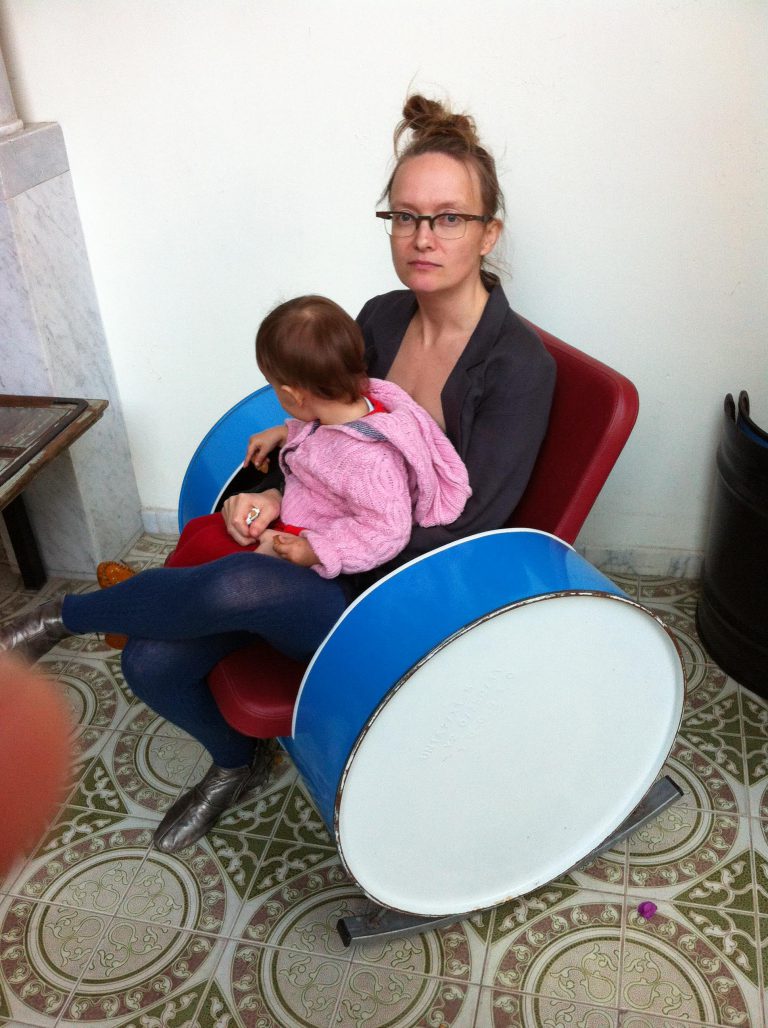
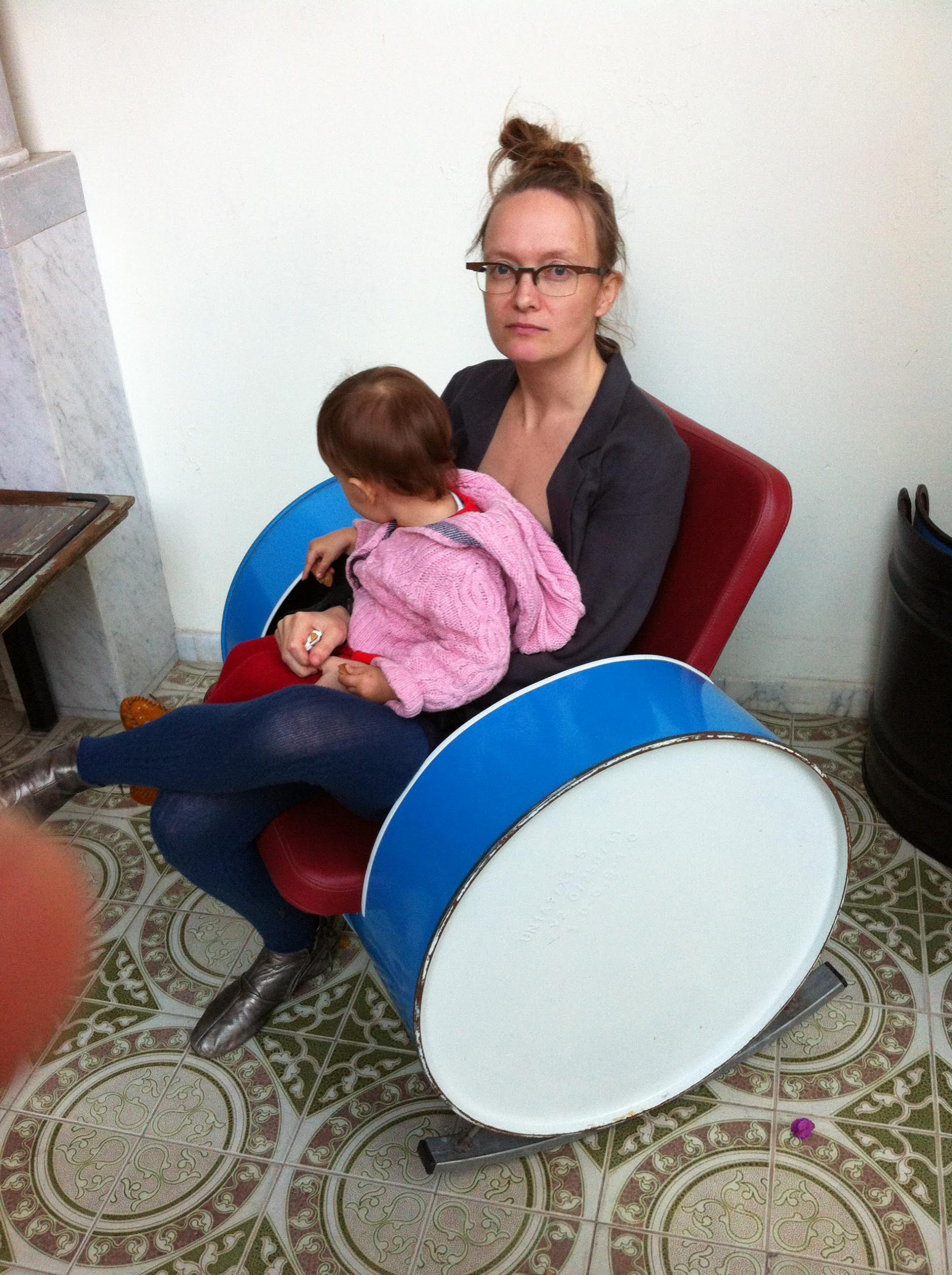
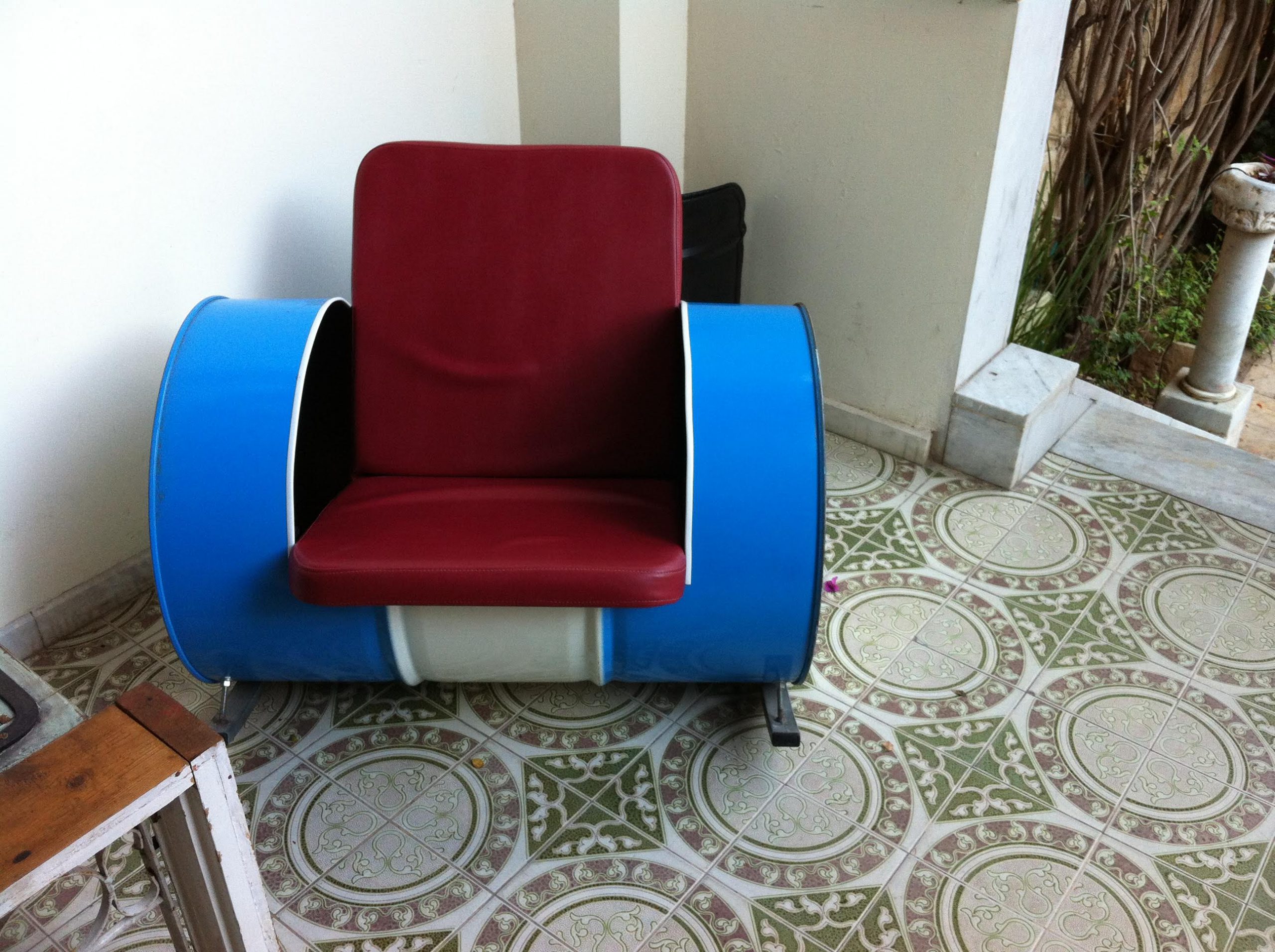
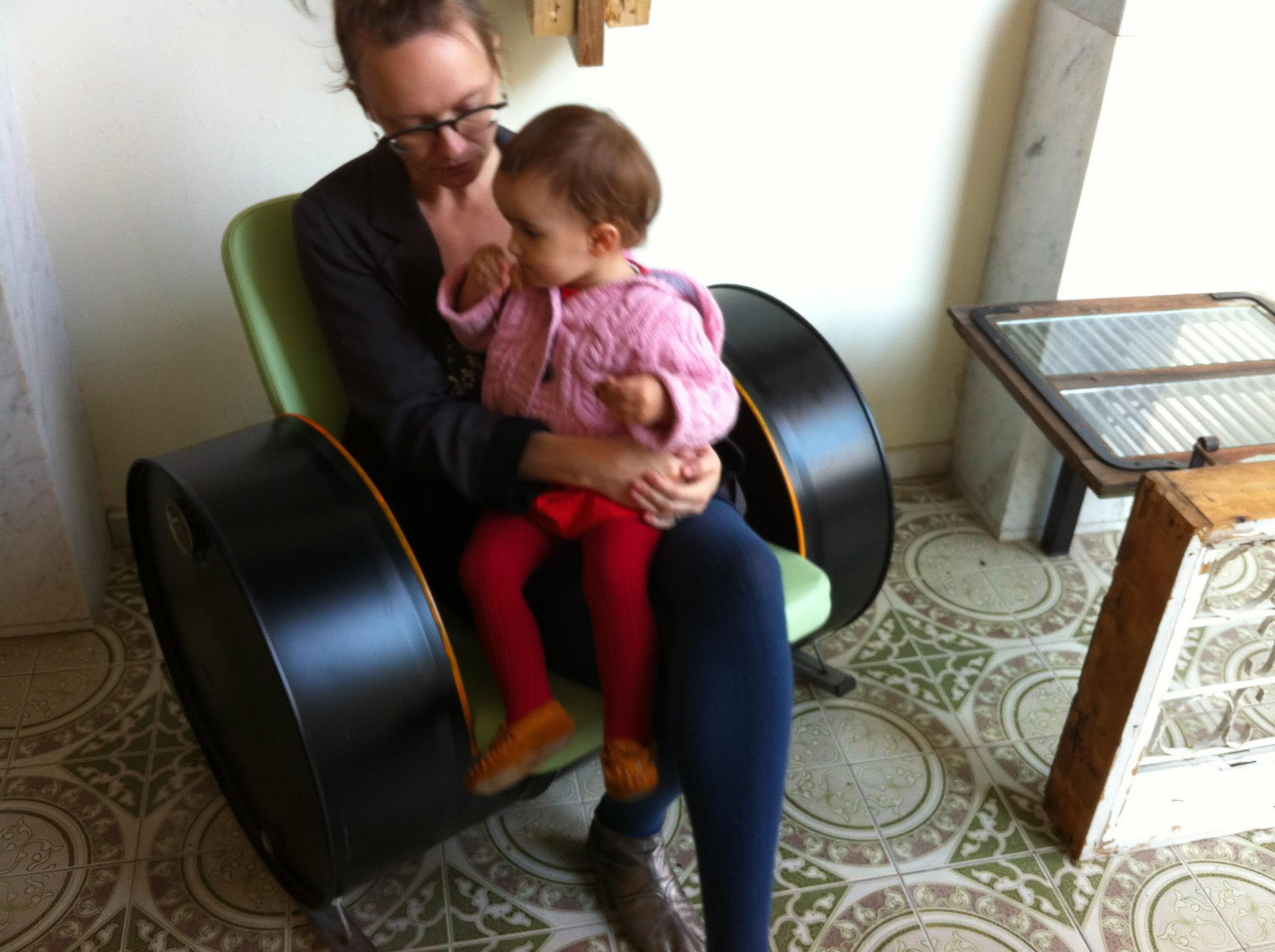
juntion barrel seat drum seat
Green Prophet’s Karin Kloosterman finds a seat in Jaffa with her baby

The last time we covered Junktion Studio – a Tel Aviv based design studio that creates whimsical designs out of reused and repurposed “junk” – they were making medicine cabinets out of old suitcases and foosbal soccer player hangers.  Their designs took the material of the original items completely out of context in a manner that was both comical and surprisingly functional.

Their designs also kept the original items out of the landfill, proving to us that we should always think twice before throwing things away.  Because who knows?  That chipped mug may have a second or third life still in it, and those outdated t-shirts could still surprise you.

Seats made out of wooden window shades

So just when we thought that the folks at Junktion couldn’t get any more creative or hilarious, their latest set of designs proved us wrong.  Check out the telephone desk lamp above, or the seats made out of old wooden window shades to the right.

Shower head hangers
Shower head hangers

As Junktion has described itself, “Junktion people take everyday objects out of context, sometimes attaching them to others, unrelated, and at other times just turn them upside down on the table, take a step back and say: hmmmm….  Junktion people love seeing objects in new ways, stuff that makes us think, stuff that makes us act, stuff that makes us laugh.”

Junktion's Telephone Desk Lamp (comes in blue and pink)
Junktion’s Telephone Desk Lamp 

All of Junktion’s products are handmade and one-of-a-kind, bringing a warm human touch to discarded, industrially mass-produced items.

:: Junktion

More upcycled design:

Elanit Neutra 

“Waste Lb” Design Company Encourages Lebanese to Waste Fewer Plastic Bags

Merav Feiglin Doesn’t Make Light of Trash, She Makes TRASHLIGHTS

Beer Sheva's Old City Battles Shopping Malls

8

shachar-udi-3One of the most pressing needs in countries with little open space is to make urban life desirable enough that city folk won’t want to flee to the suburbs. But in Beer Sheva, a strange phenomenon is underfoot – suburbanization inside the city that drags commerce away from the historic district. A story I wrote for Tablet Magazine explores whether Israel is turning into sprawling California, particularly in light of the recent land reform.

Memorable quote by urban planner Yodan Rofe, discussing a major Beer Sheva strip mall: “It’s the 1950s style of the U.S. A big parking lot surrounded with sh*t.”

Jordan Water Company Organized Water Festival for Kids, With a Focus on Conservation

6

jordan water conservation festivalLast week we heard about the Jordan Water Company (Miyahuna) going into private homes in Amman and installing water conservation devices, but now they’ve gone straight to Jordan’s youth.

Aiming to raise children’s awareness of the importance of water conservation, the Jordan Water Company held its first ever children’s water festival in Amman last Tuesday.  350 kids between the ages of six and twelve participated.

According to Miyahuna Executive Director Zakareya Tarawneh, the festival aimed “to inculcate a sense of responsibility amongs children in terms of the value of water, water use and the commitment to do something to protect water.”  He added that it was important to educate children on the real and positive impact they could have on the preservation of water resources.

Green Ramadan Org Plans to Focus on the Environment During Ramadan

New Green Ramadan LogoA new NGO, known as Green Ramadan, plans to make Muslims and non-Muslims more aware of protecting the environment. Daniella touched on the new Ramadan project earlier.  Meanwhile the organization is so new that its website, www.greenramadan.org is still in the development stages.

Yet, the message being given will hopefully bring a new awareness among Muslims, particularly younger ones, concerning the importance of protecting and preserving the natural environment in countries where many of live.

Some of these countries, where environmental mismanagement has resulted in severe damage to both land and water habitats, include Indonesia and Malaysia, the countries bordering on the Persian Gulf and other bodies of water (the Gulf of Aden, Bay of Bengal, Mediterranean and Red Seas, for example); and those situated in and adjacent to large desert regions such as in North Africa and other parts of the Middle East.

Istanbul Considers 3rd Bridge Over Bosphorus

2

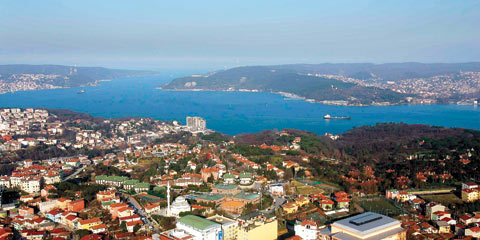
bosphorus-istanbul

With one half in Asia and the other in Europe, the cultural hub of Turkey has long depended on two bridges to link the city over the Bosphorus Straits (above).  But a proposed third one has raised the ire of environmentalists who say it will damage the city’s forests and water resources, reports the English-language Turkish paper Today’s Zaman.

Supporters of the new bridge say it will make Turkey an important transportation corridor. They point to other highways that have crossed the three largest water reservoirs of Istanbul as evidence that mega infrastructure projects can be built safely. Cahit Turan, general director of public highways in Ankara, told Zaman:

“The important part of the project is preventing the construction on the direction of the third bridge. To discourage new buildings around the route, there will be a few necessary connection points from the main road to the city and these connections will not be throughout the forests but to already populated areas like Ümraniye and Beykoz.”

Will Rihanna perform on Tel Aviv’s old garbage dump?

7

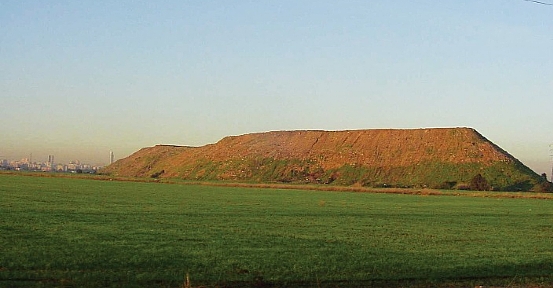
hiria garbage mountainThe greater Tel Aviv area has made its trash mountain, and now it has to be seated and entertained in it.  A 50,000 seat amphitheater is currently being planned for Hiria – the former site of Israel’s largest garbage dump.  We guess you could say that the park is being re-purposed or recycled into an amphitheater. Israel’s largest garbage dump was decommissioned for several reasons – one being bird crashes with airplanes, proving a flight risk for planes coming in and out of Ben Gurion Airport.

The site is now an eco park.

The amphitheater will be built in the northern section of the park, and is being planned by German landscape architects Latz + Partner as well as Israeli landscape architect firms Broida-Maoz and Moria Sekely. (As of 2024, the amphitheatre has not been built).

Members of former Israeli prime minister Ariel Sharon’s family, after whom the park is named, were the ones to express interest in building an amphitheater.

According to Danny Sternberg, the Ayalon Park project director, the family was “looking for something they could give to the Israeli public.  It’s an opportunity to plan, from scratch, a large, open-air theater with all the necessary infrastructure.  It will also bring ticket prices down significantly, because [promoters] won’t need to set up the stage and barriers and lay all the cables each time.”

Watching Beyonce on a trash mountain
Listening to Beyonce on a trash mountain?

In order to facilitate environmentally responsible transportation to the amphitheater, a train station is going to be built nearby.  They will also be building a parking lot to accomadate thousands of vehicles, but we hope that people going to performances in the amphitheater will choose greener, public transportation.

But all of this preparation will take some time. Approval of the final plans make take up to three years, with planners of the amphitheater expecting it to be completed by 2014.

Sternberg talked about the transformation of the garbage mountain into an amphitheater for the masses, saying that “until now Hiria was a backyard that everyone suffered from, and now everyone will be able to enjoy it. This used to be a garbage dump – now it will be a park that will serve as the gateway to Israel for those coming from abroad.”

Read more about Hiriya::

Hiria Garbage Mountain Gets Green Lighting from Clean Energy

Hiria: A Garbage Dump Turned Recycling Dream

Going On a Picnic to Tel Aviv’s Garbage Mountain

Lebanon Farmers Market Makes Food Not War

5

lebanon-farmers-marketAlthough Lebanon’s Christian and Muslim communities live in an uneasy balance, a trendy farmers market has helped bring the nation’s diverse groups together to sell traditional food.

According to Agence France-Presse, 47 families sell fruit, vegetables, preserves and bread in Beirut’s Souq El Tayeb, the first farmers market in the country.

Chef and TV personality Kamal Mouzawak started the souq in 2004, and refused to close it during the 2006 war between the Hizbollah terror group and Israel.

He told AFP, “Whether Christian or Muslim, we all eat the same foods. The differences are more regional.”

Souq El Tayeb is part of a farmers market trend across the Middle East: Eco-Baladi markets Palestinian produce, while Tel Aviv hosts a slow food market at the city’s port.

Related: Pope Leo visits Lebanon in an act of faith and peace

Mouzawak has also begun a traveling with his vendors to reach other parts of Lebanon. A new restaurant called Tawlet Souq El Tayeb featuring freshly made regional fare will soon open as well. According to AFP, far from pursuing political turmoil, the farmers’ focus on pushing good food out the door:

Their interests revolve more around who can bake the best kebbeh (or kibbeh), a traditional dish made of minced meat and burghul (crushed wheat), or come up with the tastiest tabbouleh, a parsley-based salad, or grow the most mouth-watering vegetables and fruits.

One caveat of the farmers market may be it audience: the vendors cater to “well-heeled Beirutis.”

Green Prophet writer Jeff Yoskowitz visited the Tel Aviv market last summer and noticed a serious class problem:

This farmers market was so ridiculously expensive as compared to the shuk that I only bought purple potatoes and blackberries and then left after sampling all the free foods I could. The choice to hold the market at the port, in the North of Tel Aviv, pretty much shows the kind of constituency they’re hoping to develop: yuppy Tel Aviv types. Had they held the market more in the center of the city perhaps the ideals would spread. Instead I was surrounded by iphone carrying Israelis enjoying a luxury market.

On the other hand, high prices may be the only way to keep rural farmers in business. Whatever the case, we wish Souq El Tayeb good luck.


Taga Hybrid Bike-Stroller and 8 Israel-related Cleantech Headlines, Week of August 16, 2009

4

taga-stroller-mom-kids-israel

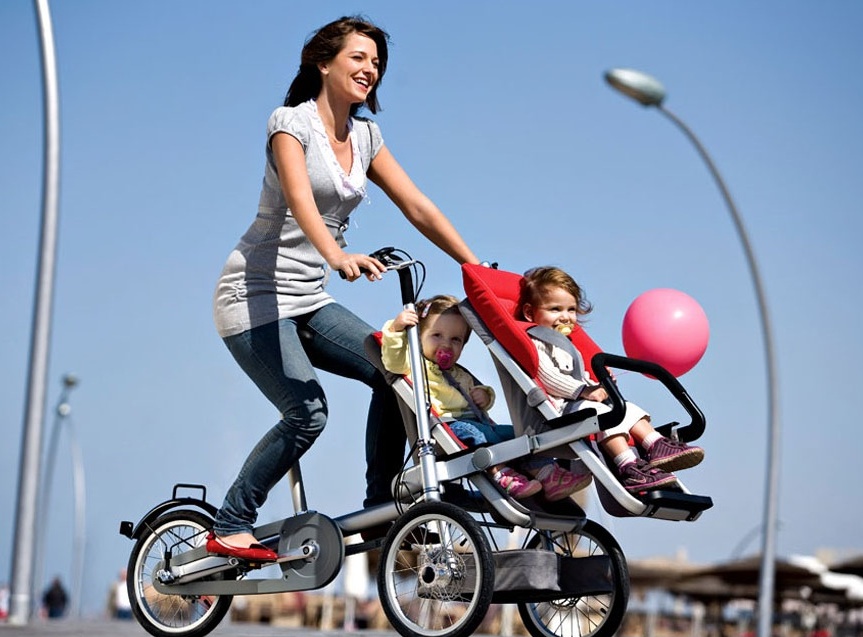
During the week of August 16, 2009, researchers from Ben Gurion University began taking steps towards commercializing their cheaper method of reverse-osmosis desalination to clean dirty groundwater. GreenProphet covered Taga’s hybrid bicycle and baby stroller in one and Globes reported on plans to install solar energy systems at Ben Gurion Airport. For these stories and more, check out this week’s 8 Israel-related cleantech headlines below.

Water
Water Desalination Using Novel Method Of Reverse Osmosis Promises High Recovery Levels

Aqua Soft’s Drone Plane Collects Water From Air, Drops It As Rain

Israeli researchers start pilot for new desal technology

Solar/Wind
HelioFocus harnesses the power of wind and sun for electricity

Investments and Partnerships
Venture Capitalists Decrease Risk Appetite

Central Florida seeks business deals with Israel

Inside Israel
Ben Gurion Airport to install solar energy systems

The Taga Hybrid Bike-Stroller Goes from Road to Whole Foods Shopping in 30s Flat

Israeli Parents Organize "Walking Bus" to Transport Schoolchildren

Walking Schoolbus in Missouri, USA

Groups of parents in the Israeli cities of Kiryat Ono, Raanana and elsewhere have organized “walking schoolbuses” to transport children to school in the mornings.

Elementary-school children walking to school used to be a common sight in Israel. But modernization has led large numbers of parents to take them in the car each morning. Recent campaigns warning against allowing children under 9 to cross the street alone have further discouraged walking.

Chicago Muslims Launch Green Ramadan

minaret-mosque-jaffa-israel-islam-photo

Suburban mosques in Illinois are preaching carpools, recycling and reduced meat consumption this month as part of a Green Ramadan campaign launched by the Council of Islamic Organizations of Greater Chicago. According to the Daily Herald, the Council includes 50 mosques with 40,000 members.

Five mosques have officially signed on, including the first solar mosque in the United States, the Bridgeview Mosque Foundation (left).

From the Herald:

“Ramadan is the month where you change your lifestyle, so it makes a lot of sense to use the month to change our behavior in terms of consumption, environmental consciousness and stewardship,” said Zaher Sahloul, Bridgeview Mosque Foundation president and chairman of the Council of Islamic Organizations of Greater Chicago.

Aqua Soft’s Drone Plane Collects Water From Air, Drops It As Rain

3

solar-drone-plane-water-photo-aqua-softGlobal warming increasingly threatens humankind’s reliance on rainfall, but now an Israeli inventor has come up with an ingenious solution to diminishing water sources: a hovering unmanned plane powered by solar energy that harvests water from the air and drops it to the ground as rainwater.

The idea may sound wacky, but Mayer Fitoussi, CEO of Aqua Soft, a Haifa-based company specializing in environmentally friendly solutions to real-life problems, is serious.

“Have you noticed how condensation forms on airplane windscreens at high elevations because of the water vapor contained in clouds?” he asks. “That’s water that doesn’t necessarily reach the ground, and there are millions of tons of it in the atmosphere.”

Fitoussi, 53, an avid inventor with a knack for thinking outside the box, already has seven US patents registered to his name, despite dropping out of high school at an early age. “I’m autodidactic,” he explains. “Everything I know I taught myself.”

After his compulsory military service he traveled for 15 years throughout North America, including several years spent in Santa Clara at the time when the term ‘Silicon Valley’ was entering public consciousness. “My neighbors
down the road were busy in their garage developing the first version of Apple computers,” he recalls.


Higher flights mean more water

His vast and varied technical knowledge, he says, was acquired mainly in the libraries of Stanford and Berkeley, where he would immerse himself in informal studies. “Of course, that was in the days before the internet changed the world. Later, back in Israel, it reached the stage where the Technion’s librarian knew me so well that she offered me coffee every morning.”

He returned to Israel 15 years ago. Since then, he has earned the support of Israel’s Chief Scientist’s office in his quest to develop some of his innovative products. “I’m probably the only person in the world to receive a government development grant despite not having a formal education,” he quips.

Fitoussi says his team has completed a feasibility study of the water-producing drone project, and is looking for an investor to finance the construction of a pilot.

“The system involves harvesting water from air, and can be adapted to a pilotless plane,” he tells Israel21c. “The higher the plane flies, the colder it is and more water can be harvested. The water from air is garnered using a well-known technology. What we did was to combine this technology together with solar, wind, heating and cooling energy to make the water production more efficient and much cheaper.

“The drone will be powered by natural energy sources: the sun, wind and evaporation. There is no limit to the amount of water it can produce. Air circulation powers its turbines. This invention combines existing technologies. Beyond this, I cannot tell you more.”

A prototype in Israel’s north

For now, the project remains just an idea on paper. “We have to generate some $2 million to bring it to the pilot stage. The prototype will not fly – it will stand on a high place in the Galilee or Golan Heights and produce water. The colder it is there, the more water it will produce. Once we’ve proved that the system works, we will be able to advance to the product development stage.”

Israel is a world leader in the development of unmanned aerial vehicles, mainly for military purposes although civilian applications are increasingly in demand. No longer resembling children’s toys, UAVs can now be the size of jets. They can stay in the air much longer than manned airplanes, fly higher and further, and negate the need for considering the pilot’s personal comfort and safety.

Drones are increasingly being used worldwide for applications such as traffic monitoring, policing, airborne irrigation, scientific research and ionization of the atmosphere above large cities suffering from air pollution.

“A drone can be controlled from the ground and guided through strong winds,” Fitoussi points out. “Rafael Advanced Defense Systems and the Israel Aerospace Industries have already expressed interest in the project.”

Fitoussi says that the idea is economically feasible. “It currently costs between 60 and 80 cents to produce a cubic meter of water via desalination. Using this system, the price will be five cents per cubic meter,” he claims.

A glider with wings like solar water heaters

“The amount of water produced will depend on the size of the plane – the larger it is, the more economical. Each square meter of solar cells will be able to produce 500 liters (1,057 pints) per day. The wings will resemble solar water heaters, like those on the roofs of almost every house in Israel. It will stay in the air like a glider, and never needs to land.”

The rain-generating drone is but one of Fitoussi’s inventions, developed and marketed through Aqua Soft. The start-up spent four years based in a technological incubator in Beer Sheva before Fitoussi returned to his native Haifa a year ago. “The company is growing at a tremendous rate – green products are the way forward,” he says.

Aqua Soft’s main money generator is its unique natural water filter, which consumes no energy or chemicals, eliminates chlorine tastes, locks pollutants, dissolves minerals into easily absorbed particles, needs no filter replacement and produces no scale. “It’s for all your life, and the magnetized water is as tasty as mineral water,” he enthuses.

Another field his resourceful mind has delved into is that of producing ‘green’ fuel. “We know how to make gas from air using the ZSM-5 catalyst [a heterogeneous catalyst for hydrocarbon isomerization reactions patented by the Mobil oil company in 1975 and widely used in the petroleum industry]. I’ve been developing this method for seven gears, and have improved the production costs by 80 percent by recycling the organic materials,” he says.

“The added advantage is that the catalyst is produced using solar and wind energy – like everything else I do, the whole process is green.”



Is Egypt back-tracking on GM crops ban?

1

GM biohazard

The Egyptian government has apparently performed an astonishing U-turn on banning controversial Genetically Modified crops from the country. According to reports in the press earlier this month (hat tip: Treehugger and Reuters), authorities declared that Egypt had officially become the Middle East’s first GM-free nation. On 12 August, Egyptian Agriculture Minister, Amin Abaza, told the government news agency MENA:

“…it was necessary that all crops imported from abroad and exported from Egypt be accompanied by a certificate from the country of origin stating they are free of genetically modified materials.”

“No agricultural products especially wheat, corn and soya bean would enter except after examining samples from the cargo.”

But it was too good to be true apparently.