Home Blog Page 682

7 Solar Innovators From Israel That Could Fuel Our Planet

20

solel-solar-energy-tech-photo

They are on investors’ hit lists and the green tech media is keen to monitor their progress. Key policy makers from the United States urge them on. Israeli solar technology innovators are channelling and shaping the sun’s energy and breaking the world’s dependence on oil.

With organizations like the Cleantech Group, an international business development firm that’s listing Israel in a league of its own, world rankings show that Israel is no small player in solar energy innovation – and clean technology.

A recent survey released by the Guardian newspaper in the UK and the Cleantech Group chose five Israeli-based and two Israeli-developed cleantech companies among a global listing of 100. That’s a significant number, considering that Israel is about the size of a small American state.

Here are 7 of my favorites:

On Abu Dhabi's "Al Reem Island" – Who's Protecting (Artificial) Open Spaces In The Arab World?

9

al-reem-island-model-abu-dhabiA model of Al Reem Island in Abu Dhabi. A playground for foreigners or ecological nightmare?

Looking at this gigantic real estate project, one might wonder if there will ever be an end to all of the monstrosities that being erected on every piece of available land in the United Arab Emirates and other parts of the Persian Gulf.

Located on Abu Dhabi’s Al Reem Island, a mere 600 meters from the island of Abu Dahbi itself,  the grandiose project called al Reem Island is being undertaken by three groups: Sorouh Real Estate PJSC , Reem Developers,  and Tamouh Investments. The project has gained interest as one of the first free zones in Abu Dhabi, where foreign nationals can buy property as leasehold.

On Al Reem, some 600 meters from the coast, developers are building a large marina on the island, a central business district and a special entertainment center known as the City of Lights.

Do I NEED to Use that Disposable…

3

tooth brushAs creatures of habit we tend to get into bad ones… Habits that is.

Here’s an eco-suggestion:

Try to re-evaluate what disposable products you REALLY need to use. For instance. Do you go out for picnics? Can you buy a set of cheap reusable plastic plates and cups instead of disposables?

How about the cup you use when you brush your teeth? Is IT disposable? Can you use a glass instead?

You’ll be surprised how many way you can improve your lifestyle when you take the opportunity to take a conscience look at it.

Sufis Are Islam’s Eco Guardians

“Defenders of the environment,” Shireen Qudosi explores the “green” beliefs of Islam’s Sufis.

Sufism is the undiscovered sect within Islam known only through its most famous disciple, the 13th century philosopher poet Rumi whose work reflected strong themes pairing nature and spirituality.  Sufis, “heirs of a mystical ancient tradition”, helped propagate the faith to the height of its expansion in Islam’s coined “Golden Age”.  The then flourishing multiculturalism played a key role resulting in the large number of Muslims today, roughly 1.5 billion followers worldwide. A great but under represented percentage this figure are still Sufi Muslims.

https://www.youtube.com/watch?v=P2FZUzEa74o

Initially rising out of a reaction to materialism and over indulgence resulting from excess wealth and power, Sufis are mystics at heart, lovers of the natural world inclined toward heterodoxy in a culture in which ego and possession is the norm. The key aim of any Sufi is to separate themselves from the material and seek enlightenment by way of serving God, achieved through an internal process that shifts perspectives away from to ego and toward the divine.

The process is usually performed through one of two ways. The less frequented approach is the view of “Signifier to signs”, in which Sufis work to look at the world through a macro to micro lens – in other words, understanding the bigger picture and then applying it to the individual instance. However, the majority of Sufis use the “signs to the Signifier” approach. The Signifier being a divine source, the analogy is similar to the process of understanding an artist through studying his creations.  In this way, many Sufis embrace the natural world, and as such it’s no surprise that Sufis are great defenders of the environment.

green-muslims-sufis-glasgow

Relevance of Sufism within the Arab World

Sufism emphasizes “eco-spirituality” – the fundamental belief in the sacred virtue of nature. Since Gnostic teachings, the Kabalah, Hinduism, Buddhism, etc, all hold this as a key truth, it’s easy to see how Sufism has the capacity to bridge perceived divides between Islam and other faith groups.

According to Sufi expert and director at the Moroccan Ministry of Religious Affairs in Rabat, Ahmad Kostas, “Progress and change are basic tenets of Sufi philosophy.”  With this in mind, and with the premise of mutual appreciation for environmental initiatives, the common interest in eco-spirituality is a potential conduit for possible future partnerships between Mid East nations and their neighbors.

A Green Middle East

With the reasoning that a physical environment is reflective of a moral and cultural environment, proactive Sufi efforts to protect the environment can be seen in Morocco, where local Sufi youth gather regularly to “debate timely topics of social and political importance, ranging from the protection of the environment and social charity to the war on drugs and the threat of terrorism.” It’s no wonder that this esoteric branch of Islam is now not only gaining increased worldwide attention as a possible solution to prevailing conflicts, but is also helping pave the way for a greener Mid East.

A green Mid East is slow in the making – mostly because as Green Prophet’s Karin Kloosterman points out, “environmental education is seriously lacking.” And while Sufis make up about 1/3 of all Muslims, unfortunately their reach and global presence is still limited. It’s Saudi Arabia that’s still the front runner role when it comes to Islam and Mid East issues. If there’s to be a trickle down effect of green Muslims in the region, then Saudi Arabia is a good place to start.

– This guest post is written by Shireen Qudosi.

Shireen Qudosi is writer and natural living enthusiast who believes that despite political attitudes towards climate change, there is no harm in trying to live a more sustainable life. Her passion for conservation and the environment is reflected in her Sufi beliefs, which has a deep respect for the natural world.  Her interest in Sufi philosophy is also what inspires her work as editor of The Qudosi Chronicles, an online journal that looks at issues stemming from Islam and the Middle East.  For more information, visit www.Qudosi.com

Based in Los Angeles, Shireen considers herself a galley slave to pen and ink, and hopes to some day carry out her indentured servitude from literally green pastures.

Image via Flickr’s tawel

Green housing construction gets underway in Israel, creates jobs in Negev town of Yeruham

8

REAL-green-housing-Yeruham green building israelThe first green, affordable home designed by an Israeli company has just come off the production line in the Negev town of Yeruham.

Following years of planning and design by REAL Housing, the 190 m2 house was inaugurated by Mayor of Yeruham and former Labour Party leader, Amram Mitzna.

The three-room, NIS 785,000 house (about $200,000 USD) is partly constructed from recycled materials and includes solar electricity panels and energy-efficient insulation as standard features.

The company, set up by World Trade Centre engineer, Prof Chaim Brown, also aims to be economically sustainable by providing employment in the sparsely-populated Negev desert. REAL Housing predicts that their new assembly plant and structural insulated panel (SIP) factory in Yeruham will create 120 new jobs in the next year.

Video: Meet Some of America's Green Muslims Fueling Change In The Middle East

Planting green roots in the Muslim community in America, this video points out the Islam-inspired Green movements in Washington and California. Like the Jewish eco-groups established for years already in the US, we see over here in Israel how the green values from America translates well to Israel.

America’s environment culture has a positive knock-on effect around the world. A Muslim group in this video is working with villagers in Egypt.

Let’s hope the green Muslims in America can fuel even more change in the Middle East where environmental education is seriously lacking.

Read up on Islam and the environment:
Saudi Sheik Says Ethanol Breaches Muslim Law
Chicago Muslims Launch Green Ramadan
Amman Subsidizes Vegetables for Ramadan
Meet Israel’s Green Bedouin
Immersion Arabic Course in First Solar Bedouin Village in Israel
Ben Gurion University Helps Green Bedouin City of Rahat
Saudi Arabia Adding Eco-guardians To Its Police Force
Go On Green Hajj With High Speed Train

China's ET Solar Enters Israeli Market Via Local Rep

9

china solar israelChina company enlisted to fuel the hungry demand for solar power installations in Israel.

Although Israel is considered to be a leader in the field of solar energy, it still does not have enough local production to make the solar panels that are used in these solar energy projects. To fulfill the demand, a well known Chinese solar energy products company, ET Solar, has entered into an agreement with Mr. Rafi Kirshenbaum to provide solar energy modular panels and solar trackers for both commercial and private solar energy plants.

Kirshenbaum, of the internet communications company Ventura Communications Internet Israel Ltd (VCI) will represent the Chinese company, who will be better able to supply local solar energy companies with required solar panels.

Alanna Mitchell Plunges Deeply In 'Seasick'

Seasick alanna mitchell book cover review Alanna Mitchell’s new book, ‘Seasick‘ encompasses two and a half years of aquatic research over five continents.

She has literally gone to the oceans depths to see and report upon the hidden ecological crisis of the global ocean. Reading it, a reader becomes profoundly aware of the oceans breadth, width and depth.

Salient facts leap out: a third of the CO2 that we emit goes straight into the ocean, and approximately 80% of the extra heat generated by global warming is being absorbed by the ocean.

“Still, the feeling of vulnerability is a thing alive. We four representatives of our voracious, casually destructive species are here in the belly of the planet’s fundamental life force, at the mercy of a system we are only beginning to understand. We are immersed.

“There’s no way out except back up the way we came. Then we hit bottom: 914.4 metres.

“It’s now 5.9 degrees Celsius.

“The cold is viscous.”

Israel to Highlight Energy for 2010 World Expo in Shanghai

12

Israel china environment photo
Model of the Israel pavilion that focuses on energy for upcoming World Expo in China.

Israel plans on building a special country-shaped pavilion for the 2010 World Exposition, scheduled to open on May 1 next year in the Chinese city of Shanghai. The six month “world’s fair” will be based on ways to improve the quality of life in the world’s urban environments. It’s appropriately entitled Better City, Better Life. The fair organizers hope to have an attendance of more the 70 million visitors during its long run.

The Israel pavilion is meant to become a “platform” for further cooperation between the two countries in the areas of agriculture, energy, and various forms of clean technology, according to Yaffa Ben Ari, Israel’s Deputy Commissioner General for the exposition.

The Holon Museum Designs on Sand

11

holon-design-museum-photoModel of the new Design Museum Holon building, designed by Israeli-UK designer Ron Arad.

Design inspires art and craft. It can make life easier, more beautiful, sinful or divine. Design can also reflect the values of a place. It asks questions and explores cultural values. It can invite new green building materials, and make our lives more beautiful as we live in ecological harmony with our surroundings.

Currently without a home, Israeli design lovers are about to inaugurate a new museum in the city of Holon, expected to attract the highest caliber works in the field.

To be completed this winter, the Design Museum Holon was created by Israeli Ron Arad, who is considered one of the world’s top five designers. A recent retrospective of Arad’s work at the Center Pompidou in Paris and an exhibition at the MoMA in New York this past summer attracted droves of visitors.

Can "Green Cities" Like Masdar Translate in Abu Dhabi?

20

green city of abu dhabi photoAbu Dhabi to build new green city in Middle East.

It sits in the middle of a harsh, barren desert, sweltering in searing heat. It has no clean water, its sea is polluted and there is no topsoil, just a covering of sand. It is also the biggest per capita consumer of fuel, massively reliant on cars, power-hungry desalination and air-conditioning.

And with all this, can the United Arab Emirate state of Abu Dhabi really succeed in building a new “green city” in the Middle East?

If you can believe visionary people like architect Gerard Evenden (his words above), from the British architectural firm Foster & Partners, yes it can. Billions of dollars are riding on the assumption.

EcoOcean Opening a New Marine Research and Education Center This Week

4

EcoOcean is an Israeli non-profit organization that has been working since 2002 towards maintaining a healthy marine environment in the eastern Mediterranean and the Red Sea.  The organization’s team of Israeli scientists does this by conducting research and running ecological education programs. (You can read here about its director’s Andreas’ swim with the whales).

Education is a very important part of what EcoOcean is all about.  The organization’s goals are to “make people more aware of the importance of maintaining a healthy and vibrant marine environment, motivate them to act and enjoy such an environment, and affect decision makers to promote legislation towards protecting it for the future.”

One of the the ways that EcoOcean achieves these goals is through their Megalim Center – a Hebrew pun that plays on the word for “discovery” as well as the word for “waves”.  EcoOcean will be opening a new Megalim Center (and new offices) this week at Kibbutz Sdot Yam.

andreas weil, founder of ecoocean marine Israel sweden
EcoOcean founder Andreas Weil

Closed to the public, the ceremony will inaugurate the new Megalim Center (which is intended mainly for students coming for day-long visits) for visitors to learn about:

* Typical ecosystems of the rocky, sandy, and estuarine shore in the Mediterranean

* Adaptations of animals and vegetation to these environments

* Impacts of man on coastal and marine environments

* Adaptations of organisms to environmental changes.

The hope is that the programs at the Megalim Center raise awareness and concern for the natural marine environment.

Read more about marine research all over the Middle East:

Monitoring Stations Installed in Qatar and UAE to Track Stressed Out Coral
Iran Battles Red Tide, A Soap-like Super Foam That’s Killing Fish
Jordan Authorities To Flag and Key Red Sea Green Beach Projects

::Ecoocean

Jordanian Uranium Discoveries Could Devastate Fragile Ecosystem

14

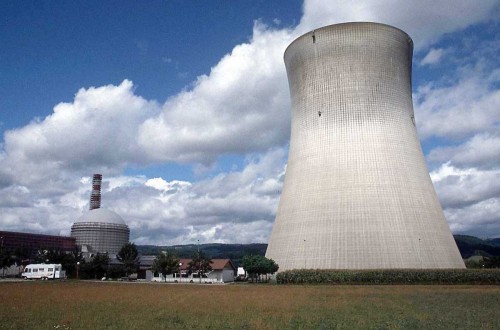
nuclear energy at key lake, uranium jordan

The news that Jordan “strikes it rich” by recent discoveries of high-grade uranium ore only five feet below the surface may come as a mixed blessing for this energy-strapped country of 6 million inhabitants.

In a recent article by the Jerusalem Post, the amount of uranium deposits said to be available for mining, and of course its easy proximity for open pit mining operations, may wind up being a environmental nightmare for a country that already has a severe water shortage problem and a very delicate ecological balance in regards to its plant and animal life; as has often been noted by representatives of Jordan Environmental Society established  back in 1948 to preserve Jordan’s unique desert and mountain environment.

Jordan has entered into agreements with the French energy giant AREVA, which specializes in nuclear energy plants in Europe and other parts of the world, including Asia.

The Kingdom has also made agreements with Canada, the USA and France for the peaceful development of nuclear energy.

Jordan is planning to build a nuclear power station in an area south of the port of Aqaba, along the Red Sea coast, and has signed a $12 million agreement with a Belgian firm to survey the area where this nuclear plant might be built, a part of which borders with Saudi Arabia.

Bustan's Mud Huts With Plasma Screens

bustan-bedouin israel solar energyIsraeli Bedouin go back to the green roots they’ve always had.

Sometimes, when an irresistible force meets an immovable object – like when the government decides to go through with a development plan in a certain area, despite the objections of local residents – you get a “big bang.”

But in Israel’s Negev desert, an organization with a unique project may just prevent that explosion. With Bustan, Raed Al-Mickawi and Alon Shepon seek to achieve social and environmental justice and sustainable community action through a compromise between the government’s urban modernity and the traditional farming society of the Bedouin.

Most of the time, the modern and traditional in Israel manage to peacefully co-exist. But in southern Israel, the Bedouin residents say government plans to build large residential neighborhoods with adjacent industrial zones and shopping districts on land they use for farming is something that needs resisting.

Giving Dialysis To Our Cities' Aquifers

7

water-dialysis-JNF-photo yaron zinger jnfWhen rain pours down on our city streets, it feels cleansing.

It looks cleansing too as the water pounds into the pavement and strips oil from the roads, small bits of plastic and paper from the sewer grates, and ice cream stains from sidewalks.

But urban rain is anything but clean and fresh, and it’s doing irreversible damage to our aquifiers, says Yaron Zinger, an Israeli engineer who has a plan that cities, people, rivers and wildlife will love.

Zinger’s system collects rainwater, cleans it, and returns it to urban aquifers.

Consisting of layers of soil and plants with deep roots, it can make water suitable for irrigating gardens, for flushing toilets, and one day even for drinking, he says.