Home Blog Page 629

Enjoy Summer With 7 Mediterranean Recipes

0
Pea pod soup
Pea Pod soup

The temperature’s rising! Part of your perfect summer meal must be fresh and fruity! Naomi gathers 7 excellent recipes for your feast.

Did you ever feel like you were running out of options for summer meals? When it comes to meal time in the summer, it is always a challenge to balance the desire to eat something delicious and filling, with the need for something light and refreshing. Well here we have several mouth-watering summer treats, perfect for the humid heat of the Middle East.

(1) Pea Pod Soup: Winter nearly always means starting a meal with a nice hot bowl of soup, well there’s no reason not to transfer this tradition to summer – just replace it with a bowl of chilled pea pod soup.

Instead of shelling peas and throwing away the pods, you can use them to make a fantastic, nourishing cold soup with this simple pea pod soup recipe.

(2) Homemade sourdough bread: To accompany your soup, the best thing is a thick piece of toast and if you want to give your taste buds an extra treat, try out this recipe for home made sourdough. One of the advantages of eating sour dough, is that it controls your blood sugar levels, as well as helping with digestion.

eggplant for bab ghanoush

Try having a slice in the morning, with (3) home made baba ghanoush, a classic Middle Eastern eggplant spread, and experience for yourself the long-lasting benefits of home-made sourdough.

(4) To continue a summer feast, it is always interesting to try something a little different, like a zucchini blossom frittata. This is not something you will find in the supermarket, but you might luck into some at a farmer’s market – or try growing some yourself. Turning them into a frittata balances your meal perfectly, with a combination of all the important parts of the food pyramid; vegetables, protein and calcium.

Fava bean salad

(5) Fava bean salad. Of course no meal would be complete without a tasty salad or two on the side, but we have some salad suggestions that are worthy of a central place at your table. Many salads combine multiple ingredients, but the fava bean salad is extremely simple, in fact it is so delicious, that you decide to try it as main course.

(6) Pomegranate salad: If you are looking for a slightly sweet take on the salad scenario, you can always try out pomegranate-nut-salad. While it uses ingredients which are traditional for Rosh Hashanah, Jewish New Year, it can quickly become a welcome addition to your summer table since it is such a light and festive treat.

(7) Plum buckle: Going from slightly sweet salad, the next step has to be dessert. With the season of stone fruit upon us, there can be no better choice than a plum buckle.

This unusual name is one you won’t want to forget once you have tried and tasted this dessert, which is basically a simple fruit flan and easy to bake.

Your summer feast is now set, all light easy dishes, simple and quick to whip up. With the long days of heat ahead, you now don’t have to dread hours in front of a hot stove!

Read more about choices of summer desserts:
Indulgence, Locavore Style: Homemade Strawberry Jam
RECIPE: Home Made Ice-Cream

From Cairo to Alexandria – tourists trample the White Desert

5
white-desert-egypt Oasis
Egypt’s oases are getting ruined by tourism. Some locals fear that too much environmental regulation will imperil crucial source of income 

Prior to the installation of an asphalt highway connecting the once peaceful region of Bahariya to Cairo, the oasis was mostly hidden from the greater world. Then archaeologists re-discovered the Valley of the Golden Mummies and tourism in Egypt soared, generating valuable income for the local community. However, the influx with tourists travelling from Cairo to Alexandria stopping at the White Desert, comes with a considerable environmental cost.

Eleven million people visit Egypt each year, of which 10% forego the traditional tourist destination and opt instead for the desert oases, according to Jon Jensen, a Cairo-based journalist.

Tourists trampling and 4x4ing over the White Desert

In Bahariya Oasis, one-third of the 40,000 residents now work in the tourism industry, which accounts for a large portion of this community’s income.

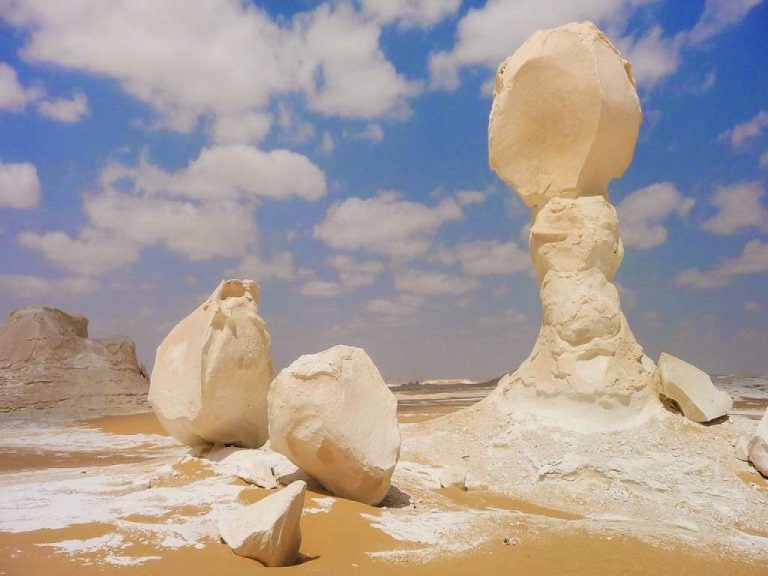
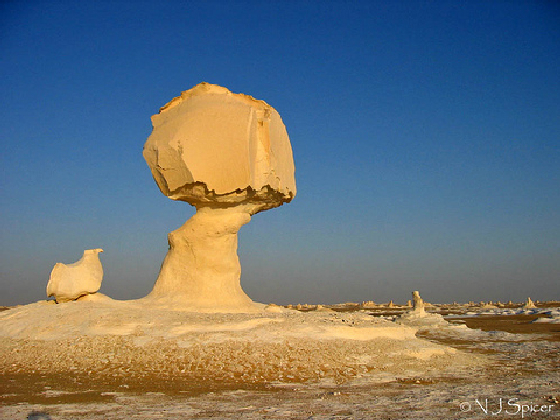
Bahariya oasis siwa Egypt, white stone formations
White stone formations at Bahariya

In addition to archaeological gems, the mystic white desert lures tourists and the locals who guide them. 4×4 Jeep adventures and camping are favorite activities, but drivers travel without thought to ecological sensitivity, and the pack in and pack out concept has not yet caught fire. As a result, the landscape is sullied with tracks and litter abounds. Last year 4 tons of this waste was collected, tour guide Dina Mahmoud tells Jensen.

Not far away in Israel, Israelis are banned from bringing in 4×4 cars to Sinai for this very reason, with the early peace draft and environmental plan developed by an Israeli leader who understood why roads along the sea should be set back for tourists and hotels and that is what they did.

icahn school of medicine mount sinai
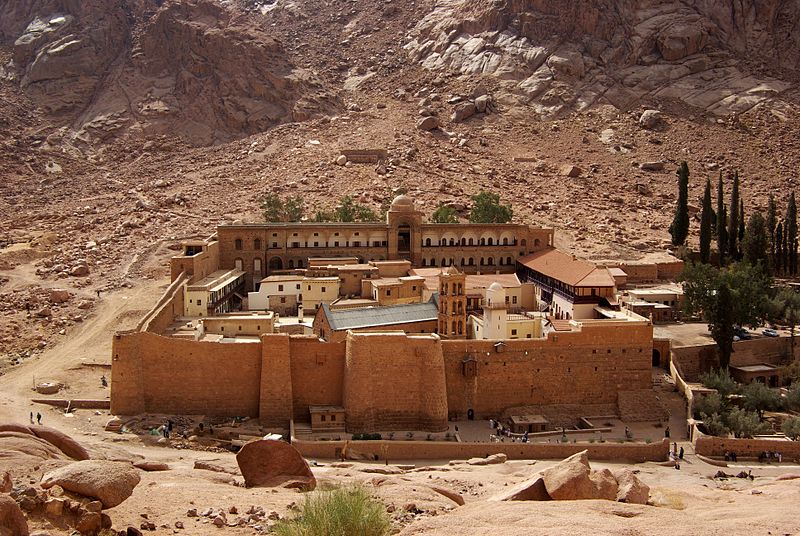
St Catherine’s Monastery in Sinai

In response to the now obvious degradation, the Egyptian Environmental Affairs Agency established a national park in order to protect the region, fining drivers who go off established paths up to LE400. But it is not yet clear that these new policies are effective. A survey conducted by the Center of Environmental Research and Studies at Cairo University demonstrates that in the Giza protectorate, of which Bahariya is a part, garbage is one of the biggest barriers to enhanced environmental awareness.

The government also seeks to limit tourist traffic in order to maintain ecological integrity, but this idea is not popular with everyone. Assam Tawkif, who relies on sales to safari operators, explained to Jensen that the government needs to encourage even more visitors, not less. And others still doubt that the government will follow through at the of risk financial loss.

But eco-tourism, by design, need not deter from the economic and environmental plight of sensitive areas. The International Ecotourism Society includes these principles in their definition of a truly sustainable operation: minimal impact, heightened environmental and cultural awareness, positive experience for visitors and hosts, direct benefits for conservation, financial empowerment, and raised sensitivity to host country’s political, environmental and social climate.

Although Egypt’s overall environmental record is paltry, these may be steps in the right direction, combined as they are with recent educational programs aimed at improving environmental awareness.  Once locals understand that protecting Bahariya in the short term will generate more income in the long term, it is possible that the community will adjust.

More News From Egypt:
Red Sea Spill Causes Oil Company Stocks to Drop
Egyptians Question the Health of Their Tap Water
Taking Israel’s Lead, Solar Water Heater Use on Rise in Egypt

Israel Cleantech Intelligence: Water Fights and 10 More Headlines

Water-Wars-in-IsraelResearchers attracted to Israel, good news for cycling freaks, Israeli investments in Asia and more headlines related to Israeli cleantech and the environment. Image via hoyasmeg.

The annual Tel Aviv Water Fight took place this past Friday but pales in comparison to other water problems in Israel, including ongoing disputes between Arabs and Israelis and the latest class action suit against bottled water companies Neviot and Mey Eden. Meanwhile, cleantech is offering a renewal for Israel’s kibbutzim and an annual cleantech conference last week showed the promise of cleantech as a growth engine for Israel. For these stories and more, see this week’s headlines below.

Enjoy EcoBike’s Eco-Friendly Cycling Tours of Israel with a Cold Beer (Or Clean Conscience)

1

ecobike beer israel tel avivBikes, beer and maybe even babes part of EcoBike: bringing eco-friendly cycling tours to a whole new demographic – the beer lover.

Cycling, as fellow Green Prophet Karin has pointed out, has become very popular in Israel.  Despite the dangers of braving streets shared with temperamental Middle Eastern drivers, cycling has evolved to fulfill a variety of functions in Israel – from eco-tourism to messenger services, and simple daily transportation to powering eco-friendly rock concerts.  Joining the ranks of Israel’s emerging cycling eco-tours is EcoBike with a new spin (pun intended) on seeing the country and cycling: Bike & Beer.

Palestine’s First Solar Power Electric Car Takes to the Streets of Hebron

palestine solar powered electric carThe Palestinian electric car isn’t much to look at, and it couldn’t carry a large Arab family, but it is solar powered!

Just when we all thought Shai Agassi’s Better Place electric car company had the electric car technology field sewed up in this part of the world,  some university students in the Palestinian West Bank city of Hebron have come up with someelectric car innovation of their own, reports Maan News.

Although not as sophisticated as Agassi’s technology, which involves developing not only a full size electric car, the Renault Fluence, and an exchangeable lithium- ion batter pack to power it; these unknown Palestinians have developed a home-made version of an electric powered vehicles whose batteries are charged by solar energy.

Israel Becomes A Nation of Pedalers (Cycling Freaks)

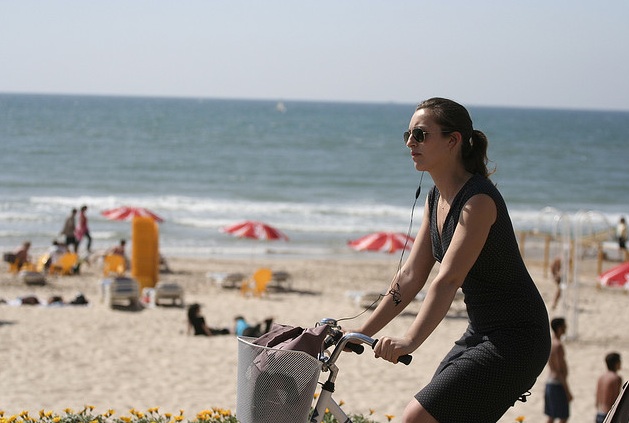
israel cycling tel aviv promenade beach boardwalk photo of womanYou can lose your life cycling on the roads in Israel. Almost once a month, a cyclist gets killed by a car by a drunk or negligent driver. Despite the risks, the sport is catching on like wildfire.

Bonnie Eshel, president of the Israel Cycling Federation says biking in Israel today is super-dangerous: “We live today facing the threat of death every time we decide to hit the road on a bike.

“Practically every day there are accidents, and the fact that we don’t have a higher number of fatalities is more a matter of luck. I feel this personally. One time they will throw things at me from a car that is traveling 80 kilometers an hour, another time they spray water, and once they even held a knife to me from out of the car window,” she says.

“Just last Friday, a truck passed me and honked when it was right next to me as it tried to get close to me and just at the last minute I managed to control the bike, but I was very close there to sprawling onto the road.”

Despite the dangers, Bonnie joins a growing number of Israelis who are buying road and mountain bikes and who are hitting the city streets, highways and cycling trails. Cycling in Israel, and cycling in the Middle East as eco-tourism has a lot of benefits. This piece looks at the cycling movement in Israel.

Better Place Smart Grid To Solve Storage Issues Preventing A True Clean Grid

better place coffee cupJack meets with Better Place in Israel and talks shop about how their rechargeable battery solution can fix the grid.

One of the biggest problems with switching an electric grid over to clean energy is storage. Most clean energy solutions are unreliable over short periods of time – when clouds come out, solar panels don’t produce. If the wind changes direction, or stops, wind turbines don’t produce. However, if the energy could be stored efficiently, then energy companies could produce excess during peak production times and otherwise reserve it for a rainy day… literally.

“The lack of good storage options has plagued utility operators for generations,” according to a recent Nature article: “Obligated to provide a steady supply of electricity to meet constantly varying demand, they have conventionally resorted to the costly and inefficient method of adjusting the output of a coal-fired plant, say, or by turning on a gas-powered ‘peaker’ plant during periods of high demand.”

Storage is a must for any promises of electric vehicles to work. Better Place, the electric car company says their solution provides clean transport and a solution for the grid.

Greening The Grid

In a recent visit to Better Place, as part of the PresenTense Summer Global Institute, I had the fortune of meeting with Mike Granoff, head of oil independence policies at Better Place. He explained that he is often asked if their solution for our dependency on fossil fuels, of bringing electric cars to the masses, is truly a “green” solution.

The Best Baba Ghanoush Recipe in the World

baba ghanoush baladi eggplant pictureBaba ganoush, baba ghannouj or baba ghannoug (Arabic بابا غنوج ) is an Arab dish of eggplant (aubergine) mashed and mixed with various seasonings. It’s one of the best flavors the Middle East has to offer.

Scientists say after seven or so years your body’s bones and organs regenerate, meaning most of us are a lot younger than we think, and that we truly do become what we eat over a short period of time. So those of us who live in the Middle East are eventually built from the amazing variety of fresh food one finds here. Among which is the magical and versatile eggplant, one of the most consumed vegetables in the Middle East, which like the tomato, is actually a fruit.

If we are going to be made of eggplant, it might as well be the best eggplant out there. And if you are looking for the king of all eggplant dip recipes, go no further. This one, I’ve developed over a few years is sure to make your guests salivating and waiting for an invitation to dinner, no matter how informal. The trick is in the oven, the eggplant and the tehini (tehina), you use. And take it from this lazy vegewarian, it’s one of the simplest things you can do in the kitchen.

The best baba ghanoush in the world – the recipe:

Ingredients:
Eggplants
Lemon juice
Tehina
Garlic
Salt
Olive oil
Parsley (optional)
Bread for dipping

Choosing your eggplant:

When choosing your eggplant, find one that’s firm, heavy in the hand, and which has a shiny skin. If you are lucky enough to lay your hands on a “wrinkled” variety, known in some parts of the Levant as baladi eggplant, meaning ‘wild’ or ‘from the land’ in Arabic, then you are almost guaranteed the best eggplant dip in the world. If you do lay your hands on the baladi variety (see my picture above), buy more than one.

They are not always in season, and most chefs would argue that these make the most splendid dip. Big thick grooves, a deep purple color, and a wide rather than a long fruit is what defines the baladi. Their cooked meat tends to be darker, and with fewer seeds and less water. Find them in markets, ones that tend to cater either to the gourmand or to the average working class person.

Smokin’ eggplants that sometimes explode

Now that you have your eggplant/s in hand, you want to cook it. Throw it in the oven at pretty much the highest temperature your oven can go. There is no need to prick the eggplant, but you may want to put a bit of tin foil under it, or a tray to catch the juice that might spill out. This is one of the rare moments when lazy chefs like myself can burn the food, and say that I’ve done it on purpose when the family complains of the smoke.

And you want the eggplant to smoke. So whether you are cooking in C or Fahrenheit, let the oven blast. If you are energy-saving conscious, cook the eggplants with other foods that need high heat, like potatoes or a casserole.

There is no set time for cooking. It depends on how much water is in the eggplant, and how high you want to go. I estimate an hour of high temp cooking will do the job. Keep the door closed. Having a convection oven can keep away the smoke. Small toaster ovens don’t really work well, but if you don’t have a fancy high-powered German oven like I do, you could try tossing them on the barbecue or into the coals of a fire (wrapped in tinfoil) to achieve the same, if not better, effect. The smoke is what adds to the flavor.

After adequate baking (you also have to make sure that the eggplants don’t totally dry up), take them out of them oven and sit on a plate to cool. You can also serve the dip hot or warm if you can’t wait, so up to you.

Putting the eggplant dip together

Slice open the eggplant with a knife. If the innards looks a bit deflated with some brownish broth swirling around, you’ve probably done a good job cooking. If the meat of the eggplant is tough and really juicy, light green, and hasn’t deflated, chances are you need to cook it longer. You need to be the judge of that.

baladi eggplant dip baba ghanoushBaladi eggplant innards straight from the oven.

Scoop out all the eggplant innards, scraping even some darkened caramelized bits from the inside. Place it all in a medium sized bowl, leaving the hard skin behind. I’d drain the liquid. It’s bitter.

Now depending on how rich you want the dip to be, you add tehina, or tehini, however you call it, to taste. Don’t use tehina already prepared as a dip. But the raw unmixed variety that comes in a jar, plastic or glass. Tehina is a sesame seed paste which can be bought throughout the Middle East, and in health food stores or the ethnic sections of most grocery stores in America, the UK, and Canada.

Sometimes I pour half a 350 ml jar into the eggplant innards, or sometimes – like in the hotter weather when you want it to be more light – I add in only a few tablespoons. Whole, organic tehina tastes best, especially when there are crunchy bits in there, and make sure you stir it before you add it in. Don’t just pour in the oil that tends to collect on top of the tehina jar.

baba ghanoush recipe eggplant dip baladiThe trick to a good baba ghanoush is fresh, high quality ingredients. Organic and local if you can get them.

Now you want to add lemon juice. Real lemon juice. The bottled variety doesn’t cut it. Neither does vinegar. Again depending on taste, add in a half lemon or up to two whole lemons (the juice) depending on how much eggplant you have and how much juice is in the lemon. One part of my family likes it sour, the other part less so. I make it both ways to please all, at least some of the time. Half to one whole lemon per medium sized eggplant is a good estimate.

Now add in fresh garlic. Again, dried or frozen garlic doesn’t work. You can add two or three teeth per eggplant with a garlic press. Add in some rough sea salt to taste, a few tablespoons of high grade olive oil, and some *fresh* parsley to garnish. The parsley is optional.

Mix it all together with a big spoon. No need to blenderize it as Hamutal suggests in another baba ghanoush recipe we’re featured.

If you’ve added a lot of tehina paste you might want to thin out the dip by adding some water. Go for dip which has the consistency of porridge, or a bit thinner than hummous spread, depending on your reference point. The more often you make this dip, the better it gets. At least that’s what my family tells me. Try it yourself. It’s pretty much a recipe that you can’t go wrong by. The key here is not in the precise quantity of ingredients you use, but how fresh they are.

Baba ghanoush, or eggplant dip, ready for devouring.

When your baba ghanoush dip is ready, serve it on crusty bread, on your home made pita, serve it on crackers, dollop it on pasta, or just scoop it into your mouth. It can store in the fridge for about a week. But it’s usually gobbled up well before the due date.

Want some more vegetarian recipes?

More baba ganoush
Shakshuka Tunisian Tomato Eggs Recipe
Za’atar-topped Pita
Moroccan Stuffed Artichoke Hearts
Apricot Chutney

Green Prophet Flies To: Mazen Abboud's Environment Blog in Lebanon

green prophet blog review
Green Prophet launches a new weekly series taking an in-depth look at the Middle East “green” blogosphere. This week: Mazen Abboud – a Christian minority’s view on green issues in Lebanon.

The growing awareness of environmental issues throughout the Middle East is manifested in the Internet, which includes an ever growing number of websites, forums and blogs focusing on the environment. Some of the blogs are written in Arabic, others are written in Arabic and include translation into English, and, yet, others are written only in English.

In this weekly review “Green Prophet Flies To…”, we’ll look at a blog from a different country in the Middle East. We aim to give clues to the current environmental issues that each country is dealing with, as well as talk about the identity of the bloggers and the environmental agendas they pursue in their own countries and in the region at large. Here you will find valuable data, opinions and news on environmental topics and exploits which are not discussed anywhere else.

This week we fly to Lebanon and look at Mazen Abboud’s Blog, active from April 2009. In his blog Mazen Abboud writes that he is “an environmentalist, a freelance journalist and a businessman.”

Sustainable Muslims break the terrorism link

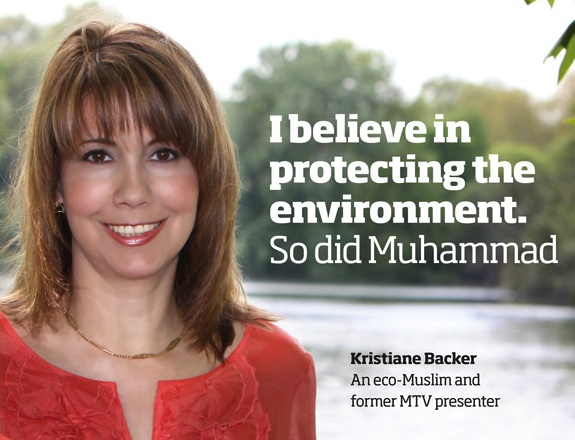
environment muslim qu'ran muhammad photo kristiane backer
Muslims everywhere can be at “peace with the earth and be at peace with heaven” by adopting environment message from the Qu’ran, advocates new UK campaign launched by Muslim convert.

Shocking statistics and a love for the environment have inspired a new campaign which highlights Islam’s Eco message in order to break the link between Islam and extremism. Inspired by Muhammed is a new campaign which showcases Muslims who have been inspired by their faith to contribute positively to society and focuses on areas such as women’s rights, social justice as well as the environment. Its message can impact the Middle East and the world.

Launched by the Muslim convert Kristiane Backer (pictured above) on behalf of the Exploring Islam Foundation, the campaign hopes to improve public understanding of the more positive aspects of Islam.

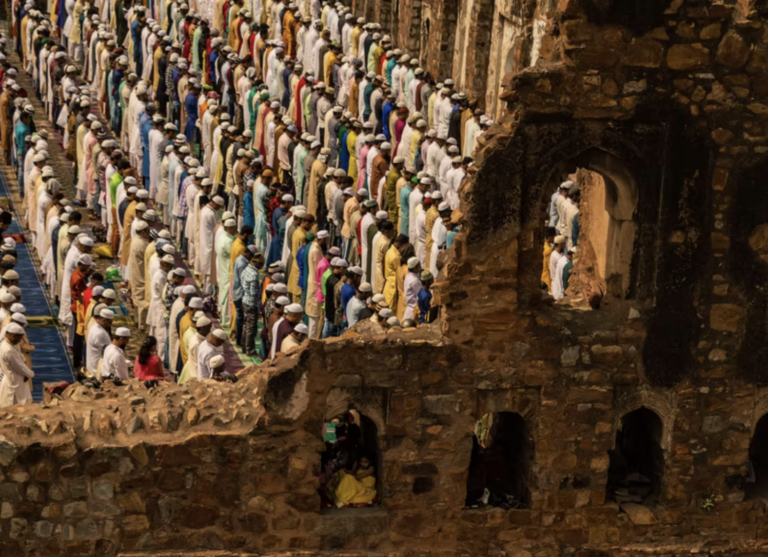
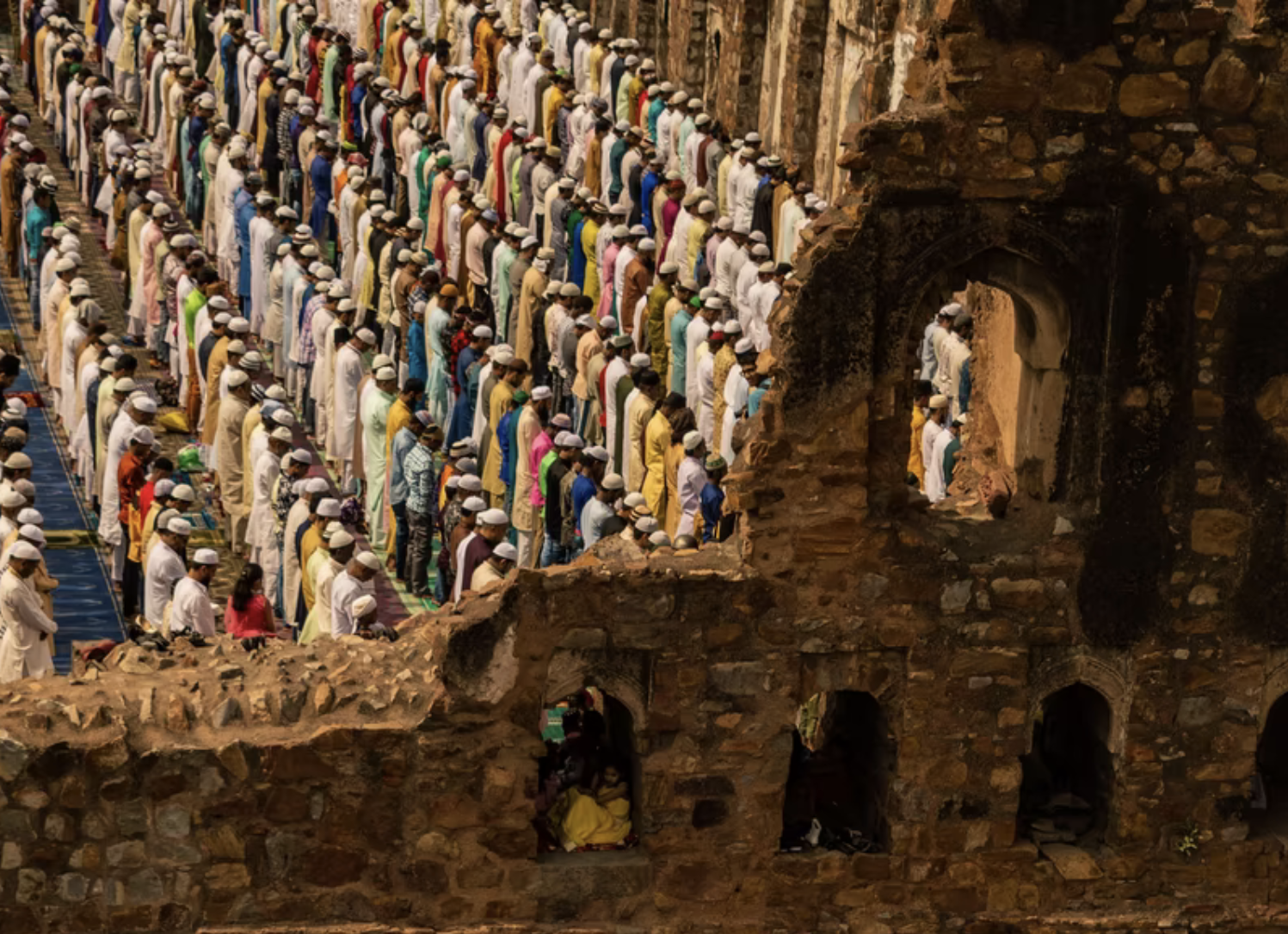
Islam muslims praying Pakistan
Muslims praying in Pakistan

The campaign was prompted by shocking finds from a May 2010 national poll in Britain which found that more than half the British population associated Islam with extremism (58%) and terrorism (50%). The opinion poll also discovered that just 6% of the British population believe that Islam promotes active measures to protect the environment.

inspired muhammad environment logoKristiane, the former MTV presenter from Germany, is one of the campaign profiles and talks about her awareness of green issues and how she’s adopted an environmentally-friendly lifestyle to suit her Islamic beliefs.

She explains: “Green living and the preservation of our resources are essential principles of Islam. ‘Don’t be wasteful, for God does not like the wasters,’ the Qur’an tells us. Prophet Muhammad reminded his companions to respect nature and use its resources moderately, not to waste water even when next to a flowing river.”

inspired by muhammad environment islam muslim

Backer explains: “The environment is everyone’s concern. According to Islam, life is sacred, as is everything in the natural world. Many verses in the Quran are concerned with nature, the earth and its resources. The earth is a trust from God and we are its ‘stewards’, a role we need to fulfil with responsibility and respect towards all creation.

The Koran tells Muslims to not be wasteful

“I have always cared for the environment. In Germany, where I grew up before I moved to the UK, green conscience is part of the national psyche since the Green movement was founded there in the 1970s. Similarly, green living and the preservation of our resources are essential principles of Islam. “Don’t be wasteful, for God does not like the wasters,” the Quran tells us. Prophet Muhammad reminded his companions to respect nature and use its resources moderately, not to waste water even when next to a flowing river.

“Having done courses in Sustainable Environment at a London university, I know there are many small things each of us can do to care for the environment. They will have an immense impact in the end, it is the ripple effect. If every household replaced just three 60-watt incandescent bulbs with efficient bulbs, the pollution savings would be like taking 3.5 million cars off the road!

“I do what I can. I recycle, switch off the lights when not at home and ride my bicycle around the neighbourhood. I eat organic halal meat, feed the birds with leftover bread and boil the kettle half full and I try to use green, organic products whenever I can from fruits and vegetables, and skincare to cleaning materials.

“Today we can all draw inspiration from Muhammad and try a little harder to live green, to recycle and to conserve energy. And to re-establish harmony between us and the world around us.”

The high profile media campaign is really hoping to change people’s perceptions of Islam in the UK and includes adverts at bus stops, tube stations and even on London’s iconic black cabs. A fun and informative website www.inspiredbymuhammad.com has been launched to explain Islam’s ethical principles and includes short videos to explain Islam’s more environmentally-friendly aspects.

Following Muhammad’s “green” ethics

The prophet Muhammad’s ethic that the planet is sacred and should be cared for is highlighted as is his respect for the environment. Muhammad encouraged water conservation (see Waqf for Water), planting trees and turning forests into protected conservation areas called hima as well as limiting waste.

Other high-profile Muslims on the website also discuss how Islam has inspired animal welfare through the prophet’s example who taught that animals should be treated with the same respect as a person.

The campaign is a great way of getting the message of peace and understanding within Islam to the wider general public and also reminding Muslims of their duties towards the environment. Its affects could reverberate to the entire Middle East.

As Kristiane says, “Today we can all draw inspiration from Muhammad and try a little harder to live green, to recycle and to conserve energy. And to re-establish harmony between us and the world around us.”

::Inspired by Muhammed website

Read more on greening Islam:
Water Conservation Values in Islam
The Muslim World Wants to Green Hajj
Breast Feed Baby in Hijab

Fast Forward Asks, "What is the Best Mode for Public Transportation in Lebanon?"

public transport lebanon cycling

A bicycle?  A train?  A bus? What is the best mode of public transportation for Lebanon? [image via: 350.org]

Fast Forward, the organization that led a protest composed of 150 cyclists storming the streets of Beirut a few weeks ago in order to promote sustainable transportation, isn’t tired yet.

It believes that the Lebanese people “deserve a modern public transportation system that can make our lives easier” and more sustainably, and will not rest until its message has been received.

It recently approached the public at large via the organization’s Facebook page and asked, “What’s the best mode for public transportation in Lebanon?”  Some responses were thoughtful, some impractical, but above all it was refreshing to see people thinking about the problem.

Israeli Citizen Group "Save Adullam" To Fight Oil Shale Plans

8

adullam-park-oil-shale Israel’s Energy Initiatives’ (IEI) oil shale ambitions threaten the environment, and livelihood of Judean hills residents. [image courtesy of Moshe Moreno]

By now, with the world’s worst oil spill off the Gulf of Mexico causing irreparable damage, and with numerous cleaner alternatives to choose from, a wiser civilization might leave destructive, polluting energy in the ground, or below the sea, and harness the sun and the wind instead. But the American IDT Corporation is pushing a potentially ruinous oil shale scheme in Israel with a license that permits them to bypass environmental assessments or community engagement.

Israeli Company Makhteshim-Agan Industries Invests $1 Billion in Pesticides

3

Makhteshim-Agan Industries pesticidesAgrochemicals might be big business, but they are a bad deal for the environment and human health.

Israeli firm, Makhteshim-Agan Industries, believes that there is a bright future for chemical pesticides. It has just bet $1 billion dollars on this hope, buying out the Albough chemical manufacturer in a move which, according to Ha’aretz, will transform the Israeli company into the “biggest generic player” in North America’s pesticides industry.

There’s big money to be made from agrochemicals, although whether Makhteshim-Agan’s investment was wise financially remains a moot point since since Albough’s businesses focuses on a single product – the broad-spectrum herbicide, glyphosate:

Making Innovation Matter in Water's Terms

Ambika, a research analyst who specializes on Middle East environment issues including conflict and water, reports on her trip to Sweden, where she finds grassroots solutions like the Peepoo Bag –  ones that could impact the developing world.

Along the banks of the beautiful Lake Siljan, in the idyllic town of Leksand, Sweden, over 1600 people from 120 countries came together for the 5th Global YES Summit in partnership with the Tallberg Foundation. The Summit brought together almost 150 projects and new ideas, developed by people who have a desire to tackle the challenges facing us today.

These projects and initiatives attempt to solve issues of social cohesion, climate change, environmental degradation, poverty, and youth unemployment. These ideas, which are focused mainly on the grassroots and community level, have the potential to start an innovation revolution in developing societies.

The projects were divided into five broad themes of water, energy, land, cities and people. Each project was not only environmentally sustainable in its own way, but extremely innovative in its approach. Several of these projects, such as the Peepoople bags, SolarCool, KickStart, Solvatten, and others, simply adapted existing knowledge into effective inventive solutions for the future. These exciting new innovations are mostly uncomplicated and easy to implement, with the power to change and transform the society they are introduced into.

Syria Campaigns to Curb Country's Voracious Plastic Bag Appetite

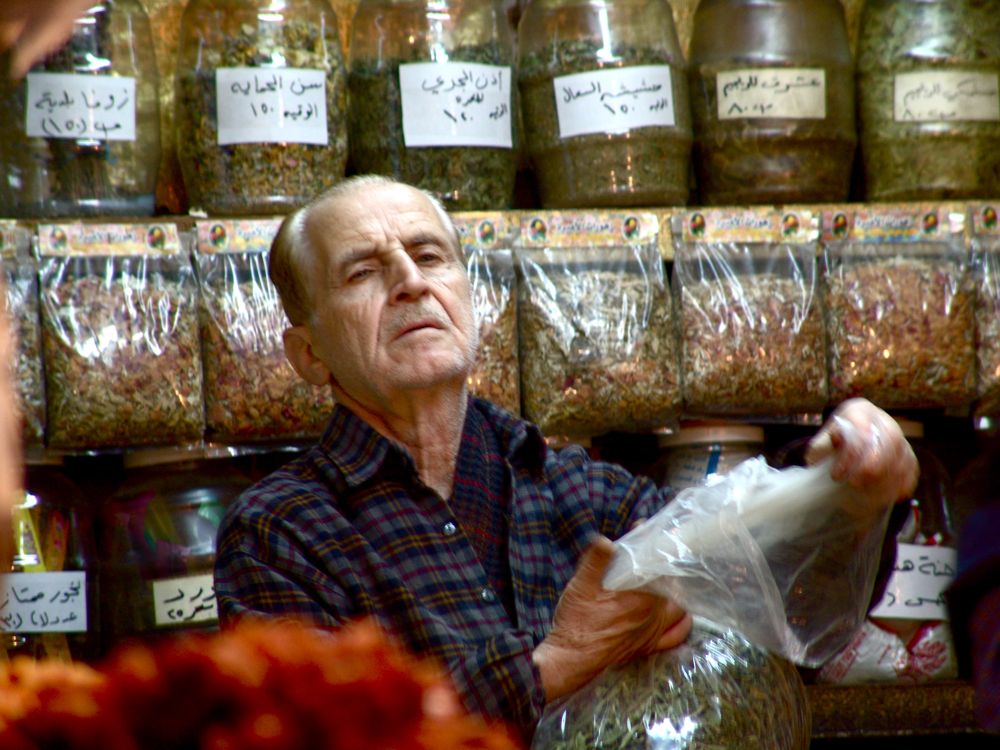
plastic bags syria damascus market spice phot0 Estimates of 15 million bags per day consumed in Damascus alone! Moshe uncovers news in Arabic – that Syrians are launching a campaign to “say no to plastic bags.”

Where bags litter highways, byways and in a region where camels choke on plastic bags, Syria is joining other countries in the Middle East, such as Lebanon, the UAE, campaigning to ban plastic bags. The Syrian Ministry of Environment is launching a campain to cut down on plastic bags because of their bad effects to human beings as well as to the environment.