Home Blog Page 594

American Elections Are Bad For The Nile Delta

0

swallow-nile-delta

If temperatures continue to increase and icecaps melt, scientists say a one meter rise in sea level will swallow the Nile Delta.

In order to protect the good life: big cars, up to three or four or more in one family, massive homes, fancy food, and five star trips to the Bahamas, (all unavailable to those on the losing end of this racket), Americans recently elected some of the most dangerous people in the world. Dangerous because they deliberately suppress climate science, blatantly prioritizing corporate interests over everyone else.

This is bad news for the Middle East too. Unregulated, America’s cars and factories send greenhouse gases into the atmosphere. These then trap heat. Which melts glaciers and in general plays havoc with our weather patterns. As ice melts, sea levels rise and will eventually consume certain shorelines. Egyptian scientists recently announced the Nile Delta will be one of them, but their government wasn’t listening.

Israel Cleantech Intelligence: LAN-cancer link and 9 More Headlines

2

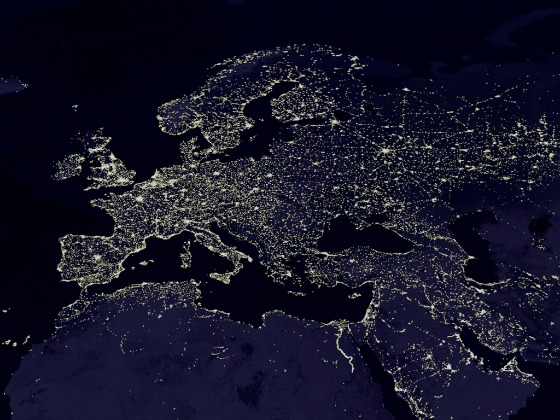
Light pollution in Europe

Water shortages caused by malfunctioning, wind power in Israel, Better Place in San Francisco and more headlines related to Israeli cleantech and the environment.

During the past week, Israeli researchers released findings that supports the link between Light At Night (LAN) pollution and cancer. European leaders convened in Israel to discuss R&D and a new reservoir near Sderot is helping agriculture in Israel’s south continue to thrive. For these stories and the rest of this week’s headlines, see below.

Pesticides In Pregnant Jerusalemites Higher Than NYC Counterparts

4

Pregnant women in Jerusalem might not be receiving adequate protection against harmful pesticides, while those with graduate degrees had the highest levels of all.

Given the choice between a roach-free house or one filled with scattering critters, most people will take the former. But in some parts of the Middle East, such as the UAE, pests are becoming more pernicious – attributed to rising temperatures and deepening the challenge to get rid of them.

Unfortunately, chemical concoctions used to exterminate pests can be harmful to their “unintended targets,” such as cats, dogs, and pregnant women. So the Hebrew University of Jerusalem’s recent findings – that pregnant women in Israel’s capital had high levels of various pesticides in their plasma and urine – is particularly alarming.

Successful Ormat Waste Heat Recovery Test Could Green Dying Oil Fields

0


Israeli geothermal energy company Ormat is soaking up excess energy from an oil field in Wyoming.

One of the most interesting of the US Recovery Act geothermal funding recipients – it received $4.5 Million – is Ormat Industries, the Israel-based vertically integrated geothermal energy and waste heat recovery specialist. Working with the US Department of Energy, Ormat Technologies has the results of a two year test of the exploitation of a completely new and renewable energy source at a fully operational oil field in Wyoming, which the US Department of Energy makes available for trying out new technology.

Normally the hot water that drives a geothermal turbine system comes from naturally occurring geothermal hot springs. But Ormat is developing a way to use the oil and water found naturally during drilling to make energy by first separating out the oil, and then running the hot water through a heat recovery device, to make electricity.

Beirut Politicizes The City’s Dirty, Dangerous Green Inch

0

beirut-green-spaceAs the media and residents continue to unleash frustration at Beirut’s lack of healthy public spaces, the Green Party deftly moves in with solutions.

After an era of uninhibited urbanization, Lebanon’s Green Party is politicizing Beirut’s absence of “green space.” Tel Aviv has Hayarkon, Cairo has Al-Azhar, and Dubai has the Ras al Khor Wildlife Sanctuary –  all slivers of nature amidst the smog and noise that typify life in many cities. These natural enclaves are designed to offer respite from an otherwise “unnatural” environment of hot tar and glass and the endless clang of construction.

The degree to which cities incorporate parks and other public spaces into their urban plans determines residents’ well-being, while failure to prioritize nature can lead to violence. At least, this is the view of Lebanon’s Green Party head, Phillip Skaff, who hopes to add thousands of green square meters to the capital. 

Turkey to Pipe Fresh Water to Northern Cyprus Undersea – A World First

0

cyprus mapDivided by politics and now water: Turkey to take care of its occupied half of Northern Cyprus by diverting fresh water in a 48 mile undersea pipeline.

Turkey seems to be serious about carrying out a project to bring fresh water to northern Cyprus by means of an undersea pipeline, according to Turkey’s Environment Minister Veysel Eroglu. Reported in the Turkish World Bulletin Minister Eroglu announced:  “Thus, we will be connected to [the] Turkish Republic of Northern Cyprus with water.” Water for the pipeline will be supplied by constructing two dams; one at Geicitkoy to be finished in 3 years, and the other at Alakopru that will be competed in 4 years. It will be a world first.

Turkey-Environment-MinisterBuilding dams in Turkey to store water has been mentioned previously, and one such dam, at Allianoi in Northwestern Turkey is feared to result in the flooding of an ancient Roman spa that is still more than 80% non-excavated.

Turkey has also constructed a series of dams on both the Tigress and Euphrates rivers, which has curtailed the flow of these historical rivers to other countries in the region.

Cyprus is currently suffering from a very severe water shortage problem, which has resulted in its streams and reservoirs literally running dry.  Besides constructing desalination plants in the Greek populated southern section of the divided island, the aforementioned water pipeline in the northern, Turkish controlled sector, will bring water from southern Turkey to the small village of Geçitköy in northern Cyprus.

The pipeline project will be a difficult one and the first of its type in world, according to Turkish Environment Minister Eroglu. Even if successful, the project will take several years to build, including the construction of the dams at Alakopru and Geicitkoy. Connecting the northern portion of the island to the Turkish mainland by this water pipeline will also continue to emphasize the division of the island into both Greek and Turkish controlled portions, with the result of the two sections working separately to solve the islands water needs instead of working together, as might be the case if the island’s two divided portions were unified.

As for Turkey, its own water supplies are not so abundant as to be able to be so generous in its desire to share its own dwindling water resources with Northern Cyprus. This only points out the continuing political rivalries going on between Greece and Turkey that has resulted in so many problems in Cyprus over the years.

Meanwhile Cypriots think the 48 mile undersea pipeline in “very deep water” is just a pipe dream.

::World Bulletin

More on Turkey, Cyprus and other regional water issues:
Planning Flooding of Roman Spa in Turkey Shows Disregard for Archeological Sites
Cyprus Water Problems Worse Than those of Other Area Countries
Strategic Foresight Group’s Forecast for Water in the Middle East

UN World Development Information Day Conference Takes Place in Israel for the First Time

0

"jerusalem sustainable development conference"For the very first time, UN World Development Information Day was observed by a conference in Israel.

Since 1972, the United Nations has observed World Development Information Day every year on October 24th (which coincides with United Nations Day).  The goal of this day is to concentrate global public opinion on international development problems and the need for strengthening cooperation between nations in order to solve them.  This year Mashav (Israel’s Agency for International Development Cooperation that is part of the Ministry of Foreign Affairs) conducted a World Development Information Day Conference – constituting the first time that Israel has held such an event.

Green Your Thumb and Start Gardening For Food

2

image-humus-hardboiled-egg

Will we really have to face a world without humus? Green Prophet explores urban gardening to offset food shortages.

Climate change has already made historical marks on the planet, but for the most part, we’ve been complacent about our food supply. Water comes out of the tap. Supermarket shelves look well stocked. We still wonder how to get through all the greens in our weekly CSA delivery. And yet shortages have already started to occur.

This summer’s soaring temperatures created a tomato shortage in Jordan, Egypt and Israel, with shocking price spikes.  Butter has been scarce – in the extraordinary heat, dairy cows produce less milk.  We read gloomy forecasts of fewer, less attractive, and more expensive vegetables, legumes – s0 less cooking oil – herbs, and fruit.

Humus aficionados worry that the Middle East’s favorite spread will go the way of the Dodo – although it’s hard to imagine a future without humus. (See our humus recipe in this post.) While famine is only a distant spot on the horizon for  people owning computers and able to read this post, shrinking food supplies are already a reality. What are you and I going to do about it?

Dubai Expat On Cloud Lucky Wins Nat Geo Photo Competition

1

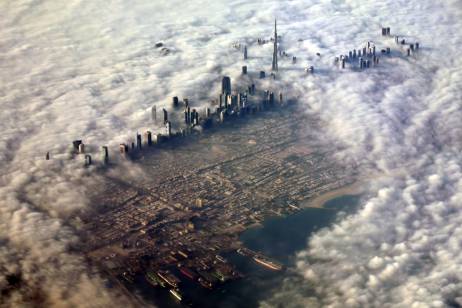
dubai from cloudsWinjnand Van Till captured what would become National Geographic’s 2010 top Landscape photo in The Netherlands edition.

An amateur photographer has captured the most telling image of Dubai to date, winning a National Geographic photo competition for his effort. We’ve seen this Emirate from the underground metro, holiday shots depict its scraper-spattered skyline, and many a curious streetwalker has tweaked their neck to see the tip of the Burj from the ground. But this latest image demonstrates to what extent Emaar Properties, the Burj Khalifa’s ambitious developers, reached for the clouds when they conceived the world’s tallest building.

Wijnand Van Till – a 34 year old Dutch Citizen currently working in Dubai’s telecommunications industry –  explained to The National how the photo came about.

“It was just a lucky shot,” he told the paper. “It proves that you should always keep your camera close by.”

Lucky for him, Mr. Van Till’s happy snapping produced a timeless image chosen as the best out of a pool of 20,000 hopefuls. He traveled last Wednesday to the Royal Tropical Institute accept first place in the landscape category of the Netherlands edition of National Geographic.

Some people feel lucky when they win on slots: Even though the expatriate is not a professional photographer, Jochem Wijnands, a National Geographic photographer and one of the judges said that Mr. Van Till deserved to win because of his “go-getting attitude.”

“For us, this kind of image was spectacular, like something from another world,” Mr. Wijnands said.

Meanwhile, the image of Dubai peering through last April’s clouds has also gained mileage within the Emirates, receiving recognition for being the overall winner in the Canon Competition. In addition to organizing this competition, the Dubai-based photographers group Gulf Photo Plus is nourishing other promising photographers with workshops and exhibitions.

“Photography in the area is rapidly improving,” said Mohamed Somji, the organisation’s director. The group currently has 14,000 members.

Mr. Van Till won an all-expenses paid trip to Kenya, where he hopes to expand his photographic repertoire.

:: The National

More about Dubai:

More Signs Of Dubai’s Foul Ecology At Jumeirah Islands

Burj Khalifa Takes Project of the Year At Middle East Architecture Awards

Dubai Gas Stations Running Out of Gas

Reclaiming Bahrain’s Coastal Architecture In Venice

0

[youtube]http://www.youtube.com/watch?v=xc-KLWyxSCc[/youtube]
For the first time, the Gulf Kingdom of Bahrain is participating at the La Biennale International Architecture Exhibition in Venice. But theirs is an unusual approach. In accord with this year’s theme – to experience rather than merely observe architecture – Bahrain’s National Pavilion comprises a multidimensional, sensory depiction of an earlier, more integrated, and slower Bahrain.

The exhibition, which has leaned on a slew of top-notch architects, organizers, photographers, and researchers  to render its urbane greatness, was commissioned by Bahrain’s first female Minister of Culture, Sheikha Mai. A visionary beyond compare, Sheikha Mai is the driving force behind many of Bahrain’s preservation projects. This latest effort captures the magnificent essence of Bahrain’s illustrious coastal history, a legacy she hopes to Reclaim as stakeholders decide the Kingdom’s future.

I visit beehives and get swarmed

4

image-Epstein-bee-farm

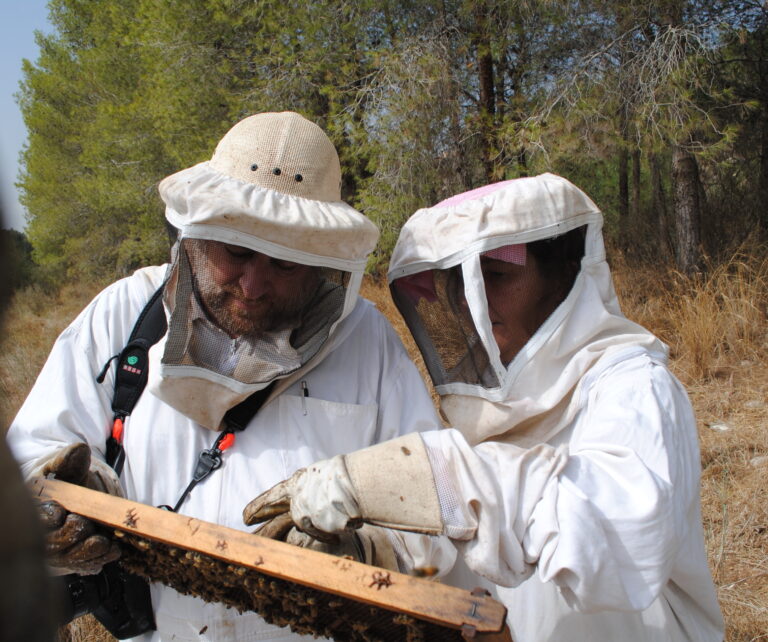
A solution to colony collapse disorder? Miriam meets the Black Bear apiary in Israel where they are breeding bees back to their ancestral size.

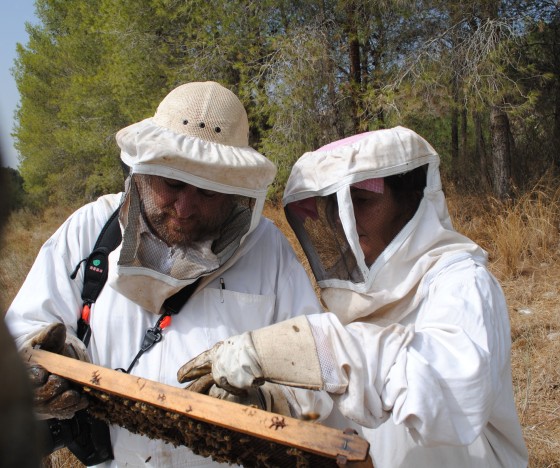
Stephen and Alison Epstein, from Canada and the US, walked up and down, inspecting the tiny apiary. They slid frames laden with honey, wax, pollen, and bees – plenty of bees – out of the white boxes. (Read more about the difficulties of beekeeping in Israel here.)

They were monitoring the creation of new queen bees, without which there would be no eggs and no new workers to make honey and take care of the hive.

Today’s bees produce lots of honey per hive, but they’re susceptible to the varroa mite that has caused colony collapse disorder in many parts of the world. Green Prophet posted about colony collapse disorder here. Instead of treating the bees with chemicals and antibiotics, the Epsteins are turning the clock back 100 years to when smaller, sturdier bees resisted diseases and survived.

Israel, Jordan and PA Water/Peace Group Get Onassis €250,000 Prize

0

onassis germany hamburgAristotle Onassis is alive and kicking in the environment through the new International Prize for the Protection of the Environment. This year it goes to Friends of the Earth Middle East

The environmental organization “Friends of the Earth Middle East (FoEME)” and a friend to Green Prophet is the first organization chosen as the winner of the Onassis Prize for the Protection of the Environment, which was established in May 2009. The official award ceremony will take place in the City Hall of Hamburg, on November 17, 2010.

Friends of the Earth Middle East (FoEME) is an environmental organization of the Middle East that brings together Israeli, Jordanian and Palestinian representatives. For a long time FoEME has been active towards maintaining the River Jordan as a vital natural resource for all people living within the borders of Israel, Palestine and Jordan.

The core aim of FoEME is to consider water as a fundamental natural resource for the development of the region. They do work together to protect the Jordan River, for example.

“Mekkah Metro” Marks A Green Hajj For Pilgrims

0

green-hajj-mecca-mekkah-metro

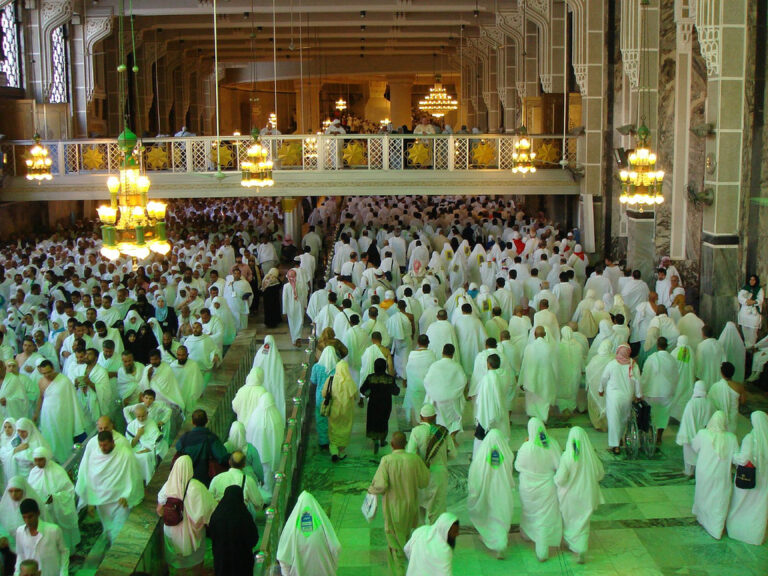
A high speed train to Mecca in Saudi Arabia will cut down on carbon emissions during hajj this year, but its reach is limited.

Every year, around three million Muslims from across the world prepare for the spiritual journey of a lifetime. Many will have been saving up for the trip for years and will be prepared to travel thousands of miles to reach their destination: Mecca in Saudi Arabia to perform the hajj.

As one of the five pillars of Islam, every Muslim who has the financial and physical ability is encouraged to make the pilgrimage to Mecca which is Islam’s most holy site. The question is can this spiritual pilgrimage, which leaves behind a trail of waste and carbon emissions, really be transformed into something more green?

Inspired By Nature, Water Tips For The Middle East #1

0

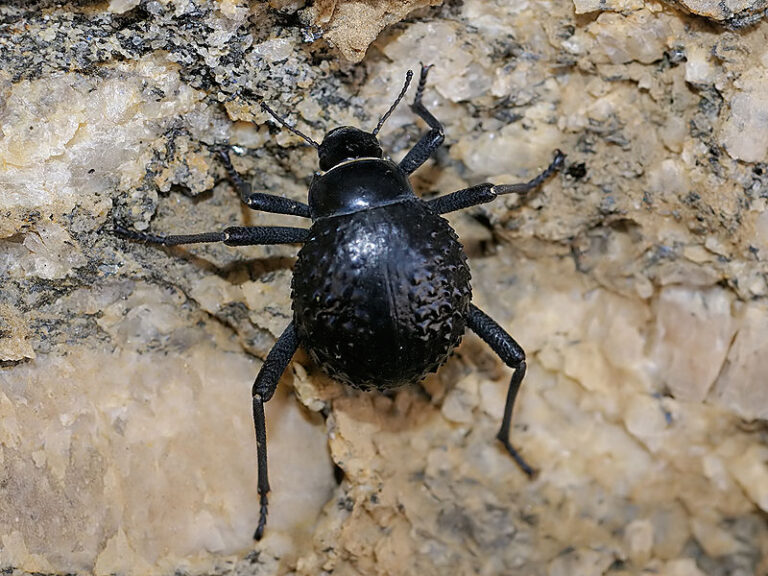
stenocara-desert-beetleIn a region where water grows increasingly scarce, we look to nature for various tips on how to make the most of what we have.

Melissa Sterry, a futurologist and scientist whose “Bionic City” incorporates lessons from biomimicry, resilience theory, and living architecture to create a city model that can withstand any extreme natural phenomena, explained that nature has thousands of solutions to the Middle East’s water problems.

Inspired by this, we’ve decided to embark on a quest to bring our readers examples of fauna and flora that have adapted shrewd solutions to water conservation, extraction, or filtration. We’re kicking off with an inconspicuous little beetle from the Namib desert that has a few slick tricks on its wings.

Yemen’s Water Crisis Could Worsen Security

0

yemen-water-shortagesThe Federation of American Scientists urge Yemen to take up “science diplomacy” – otherwise existing security problems could get worse.

Yemen looks like the bust of a flat-faced woman floating on the Gulf of Aden. Recently this harsh stretch of land, which shares its northwestern and most volatile border with Saudi Arabia and is flanked by Oman in the east, has been the scene of much hullabaloo over a terror plot in the US. Most of the country’s problems are attributed to Al-Qa‘ida’s presence in the Arabian Peninsula (AQAP), a disruptive presence indeed. But scientists are trying to draw attention to another crucial source of present and future danger: water scarcity.