Jean Pierre Conte is the chairman and managing director of Genstar Capital, a leading middle-market private equity firm with investments in healthcare, software, financial services and industrial technology.
Two thousand years ago, someone scratched a web of lines into stone in a Roman settlement on the empire’s northern edge. Soldiers, traders, or locals passing time in Coriovallum—now Heerlen in the Netherlands, moved small counters across those lines in a tactical duel of blockade and entrapment.
Unlike most recordings from this era, which were lost as early media deteriorated, the audograph discs survived and appear to have been uniquely used for underwater sound — making them a rare, possibly singular example of early ocean listening preserved from the dawn of marine acoustics.
Jean Pierre Conte is the chairman and managing director of Genstar Capital, a leading middle-market private equity firm with investments in healthcare, software, financial services and industrial technology.
Two thousand years ago, someone scratched a web of lines into stone in a Roman settlement on the empire’s northern edge. Soldiers, traders, or locals passing time in Coriovallum—now Heerlen in the Netherlands, moved small counters across those lines in a tactical duel of blockade and entrapment.
Unlike most recordings from this era, which were lost as early media deteriorated, the audograph discs survived and appear to have been uniquely used for underwater sound — making them a rare, possibly singular example of early ocean listening preserved from the dawn of marine acoustics.
Jean Pierre Conte is the chairman and managing director of Genstar Capital, a leading middle-market private equity firm with investments in healthcare, software, financial services and industrial technology.
Two thousand years ago, someone scratched a web of lines into stone in a Roman settlement on the empire’s northern edge. Soldiers, traders, or locals passing time in Coriovallum—now Heerlen in the Netherlands, moved small counters across those lines in a tactical duel of blockade and entrapment.
Unlike most recordings from this era, which were lost as early media deteriorated, the audograph discs survived and appear to have been uniquely used for underwater sound — making them a rare, possibly singular example of early ocean listening preserved from the dawn of marine acoustics.
Jean Pierre Conte is the chairman and managing director of Genstar Capital, a leading middle-market private equity firm with investments in healthcare, software, financial services and industrial technology.
Two thousand years ago, someone scratched a web of lines into stone in a Roman settlement on the empire’s northern edge. Soldiers, traders, or locals passing time in Coriovallum—now Heerlen in the Netherlands, moved small counters across those lines in a tactical duel of blockade and entrapment.
Unlike most recordings from this era, which were lost as early media deteriorated, the audograph discs survived and appear to have been uniquely used for underwater sound — making them a rare, possibly singular example of early ocean listening preserved from the dawn of marine acoustics.
Jean Pierre Conte is the chairman and managing director of Genstar Capital, a leading middle-market private equity firm with investments in healthcare, software, financial services and industrial technology.
Two thousand years ago, someone scratched a web of lines into stone in a Roman settlement on the empire’s northern edge. Soldiers, traders, or locals passing time in Coriovallum—now Heerlen in the Netherlands, moved small counters across those lines in a tactical duel of blockade and entrapment.
Unlike most recordings from this era, which were lost as early media deteriorated, the audograph discs survived and appear to have been uniquely used for underwater sound — making them a rare, possibly singular example of early ocean listening preserved from the dawn of marine acoustics.
Jean Pierre Conte is the chairman and managing director of Genstar Capital, a leading middle-market private equity firm with investments in healthcare, software, financial services and industrial technology.
Two thousand years ago, someone scratched a web of lines into stone in a Roman settlement on the empire’s northern edge. Soldiers, traders, or locals passing time in Coriovallum—now Heerlen in the Netherlands, moved small counters across those lines in a tactical duel of blockade and entrapment.
Unlike most recordings from this era, which were lost as early media deteriorated, the audograph discs survived and appear to have been uniquely used for underwater sound — making them a rare, possibly singular example of early ocean listening preserved from the dawn of marine acoustics.
Jean Pierre Conte is the chairman and managing director of Genstar Capital, a leading middle-market private equity firm with investments in healthcare, software, financial services and industrial technology.
Two thousand years ago, someone scratched a web of lines into stone in a Roman settlement on the empire’s northern edge. Soldiers, traders, or locals passing time in Coriovallum—now Heerlen in the Netherlands, moved small counters across those lines in a tactical duel of blockade and entrapment.
Unlike most recordings from this era, which were lost as early media deteriorated, the audograph discs survived and appear to have been uniquely used for underwater sound — making them a rare, possibly singular example of early ocean listening preserved from the dawn of marine acoustics.
Jean Pierre Conte is the chairman and managing director of Genstar Capital, a leading middle-market private equity firm with investments in healthcare, software, financial services and industrial technology.
Two thousand years ago, someone scratched a web of lines into stone in a Roman settlement on the empire’s northern edge. Soldiers, traders, or locals passing time in Coriovallum—now Heerlen in the Netherlands, moved small counters across those lines in a tactical duel of blockade and entrapment.
Unlike most recordings from this era, which were lost as early media deteriorated, the audograph discs survived and appear to have been uniquely used for underwater sound — making them a rare, possibly singular example of early ocean listening preserved from the dawn of marine acoustics.
Ramallah celebrated Palestine’s first environment festival March 19-21 2011
This past weekend, Ramallah celebrated what is believed to be Palestine’s first dedicated environment festival. Large-scale ‘green’ development has been making big news in Palestine recently. But this event was on a much more personal scale. According to organisers from community support organisation Juhoud, the Basateen (‘groves’ or ‘orchards’) festival attracted between 1,500 and 2,000 visitors, many of them schoolchildren and young people getting their first taste of environmental activities.
Every time I find more news about the solar-power generating windows made by Pythagoras Solar, I am inspired – for my own house. We are currently selling our own house – which somehow grew too big for us since our kids grew up and left – and switching from reading books to reading on an electronic device seems to make a lot of space redundant, too. Hopefully we will be designing and building again, much smaller.
…about solar powering our next house too with the see-through glass solar power that Pythagoras has created. We have solar on this house, and I love seeing my tiny electricity bill now. But Pythagoras makes solar that is the next generation- it looks like part of the architecture – glass.
Optics on the surface filter light to let daylight through, while mirrors reflect light onto solar cells laid in thin strips that generate power.
Their powerful glass can be used as windows, but also, and this is my favorite – as skylights. The skylight solar panel makes just as much power as a regular solar panel of the same size – 13 watts a sq foot. It will cost about $125 per square foot – at least in the US – about comparable with solar panels.
One big 200 square foot skylight would be a 2.6 KW solar system, which on average could produce around 400-500 kilowatt hours a month – depending on variables like the region’s insolation and shading of course – and would cost about $25,000, about what equivalent square footage of solar panels cost. (So essentially, the energy saving glass skylight itself – is free!)
Their solar glass is not yet at the commercial stage, but my dream house would be an open space glass house with a transparent Pythagoras skylight-cum-power station in the middle of the roof! As you’d drive up past it, you’d see the sky right through the center of the roof, and never suspect that the gorgeous view of the sky was also supplying all the power!
Imagine cities full of power-generating skyscrapers!
A solar window that potentially turns any skyscraper into a into massive power producer has just installed a pilot test in Chicago, at the landmark Sears Tower, according to Jetson Green. If the pilot goes well, the Sears Tower could end with a 2 MW solar power station, distributed vertically among its many windows.
Shai Agassi unveils his very thorough recharging plan for Better Place EVs.
No stranger to Green Prophet, we’ve been tracking Shai Agassi and Better Place for as long as we can remember. So it’s pretty exciting to report the company recently announced its recharging plan. In addition to thousands of recharging stations and 40 battery replacement stations, the company has also unveiled its EV logistics center.
A marine turtle in Florida passed 74 foreign objects over a period of one month. Conference in Honolulu tries to get a grip on plastic pollution.
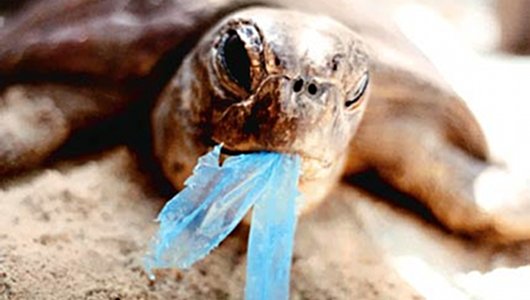
Let’s not mince our words: plastic pollution sucks. The source of David de Rothschild’s inspiration to sail the Pacific on a lumbering catamaran made from 12, 500 plastic bottles, plastic exacts a terrible toll on about 100,000 marine creatures every year. And if you’re still not convinced, this latest story from Mother Nature Network is certain to make you look at your plastic bottle twice. One turtle in Florida was discovered with so much marine debris in its system that it pooped plastic for a month. This news comes from a report issued by Seaturtle.org at the Fifth International Marine Debris Conference in Honololulu, Hawaii.
Is biofuel from the Jatropha tree- which Jordan is experimenting with- really as green and sustainable as we think?
In a recent article, I debated whether we should encourage the Middle East to embrace biofuels as a real and sustainable alternative to the region’s current dependence on gas and oil. It followed an announcement from the Jordanian government that they would be experimenting with planting the jatropha plant, an oil-bearing shrub which produces bio-diesel that can be used in cars.
In the end, it seemed illogical to use up resources (water, land space) to produce fuel for cars which could be used to grow food and I argued against biofuels. However, comments from our esteemed readers- who argued that there was no harm in growing a plant which flourishes in places where crops couldn’t- have raised some important issues which I have tried to address here.
Israel’s aging nuclear facilities are “beyond safe operating ages“.
It sits in the middle of Israel’s Negev desert region, far from the Mediterranean seacoast and the possibility of a catastrophic 14 meter high Tsunami like the one which severely damaged the Japanese Fukushima nuclear power plant. It’s also not in nearly as serious an earthquake zone as the Japanese nuke plants. Yet, Israel’s aging and outdated scientific nuclear reactor near the town of Dimona could very well be approaching the possibility of facing a meltdown crisis of its own if the 50 year old cooling system fails to protect the reactor’s nuclear core.
Imagine having teeth like these printed while you wait… thanks to Object Geometries Ltd., that might not be such a futuristic idea.
Gone are the days of gooey molds and three week waiting periods. Always at the forefront of cleantech innovation, Israel takes digital dentistry one step further. Using their 3D printing technology Objet Eden260V, Objet Geometries Ltd. can print veneers, orthodontic appliances, and even denture try-ins while you wait. Eliminating human error (and jobs?), this fascinating new technology was recently exhibited at a digital dentistry conference in Germany.
What does it take to make people stop wearing fur? Maybe this recent campaign launched by the Anti-Fur Coalition in Israel.
Israel took a historic step last year to ban the import and marketing of animal fur, except for Streimels used by Ultra-Orthodox Jews.
Pamela Andersen, honorary ambassador of People for the Ethical Treatment of Animals (PETA), lauded the bill and encouraged Ultra-Orthodox to consider alternatives.
Even so, following pressure from pro-fur groups, the bill was put on hold, much to the disgust of the Anti-Fur Coalition. With help from the Draftfcb+ Shimoni Finkelstein Barki ad agency, the group launched the “There’s no beauty in cruelty” campaign.
Although shark fining was completely unheard of in the region at one point – as it’s not part of Arabian cuisine- the practice is gaining momentum and shark fishing is definitely on the rise.
UAE Is Market Hub for Shark Fins
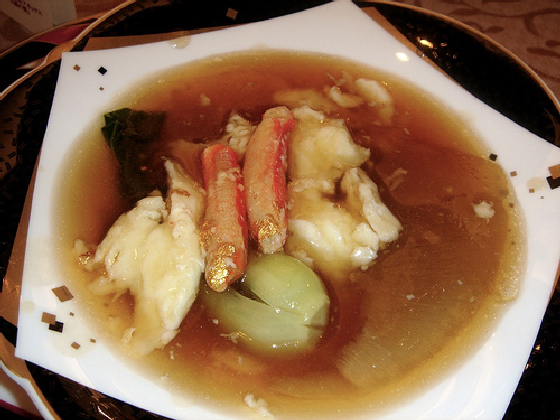
A week ago, shark fin soup served at a Dubai function did court controversy but the fact remains that shark fin soup is ‘not uncommon in Dubai’. According to a news report on the issue by UAE 7 Days (link not working in 2022), the UAE still plays its part in the controversial trade and is the market hub for what is still seen as a high-status delicacy.
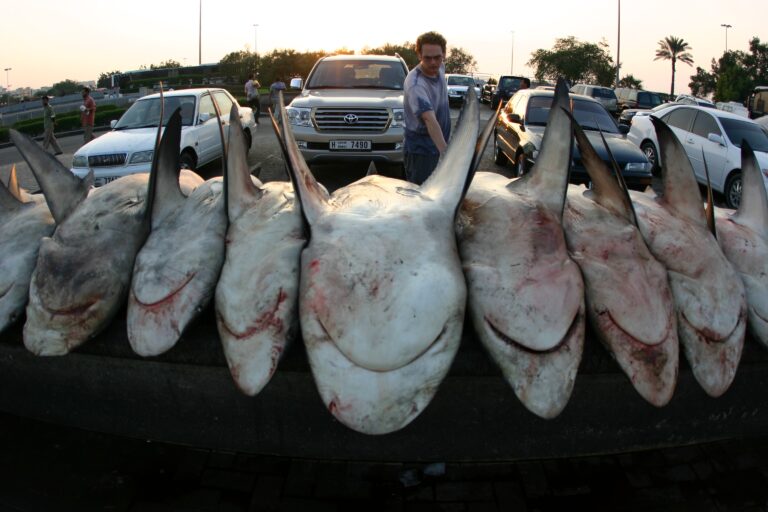
Although shark fining was banned in the United Arab Emirates in 2008, sharks fins are openly sold in the fish markets of Dubai. It is estimated that around 70 million sharks are killed for their fins each year and the UAE provides nearly 10 percent of this world total supply of shark fins.
Shark Dissection Carried Out In Name of Nature
The complete disregard for the shark population was illustrated by another incident around a month ago in Abu Dhabi where a group of teenagers dissected two sharks- all in the name of learning about the environment.
Apparently, the activity was organised by a diving and education charity Tawasul which aims to teach children about marine biodiversity. Even more shocking is the fact that the dissection was supervised by Rima Jabado who, according to the UAE National, “has been working for more than a year to determine how much local fishing is contributing to the rapid decline of sharks, which are also disappearing globally.”
Fining and Death of Pups Major Threat
The biggest threat to the shark population comes from hunting shark pups, catching pregnant females and fining. Ibrahim Al Zu’bi from the Emirate Diving Association told UAE 7 Days that continued shark fining and indiscriminate fishing could spell disaster for the ecosystem.
“If you over-fish anything, you will eventually see a negative impact on the marine system,” Al Zu’bi explained.
Image via Julia Spaet- KAUST PhD student researching shark populations in the Red Sea.
These sick baby turtles covered in barnacles are two of many turtles received for treatment in Dubai.
Scientists are puzzled over the record number of mostly endangered Hawksbill turtles being admitted to the Dubai Turtle Rehabilitation Project. The 210 turtles that have been brought in for treatment significantly exceeds the numbers received in previous years. While the cause for this increase is unclear, it appears that with coral reefs that nurture turtle food in drastic decline, the sick reptiles are not able to acquire sufficient food.
Garbage dumps roll into the sea? Rola suggests ways for energy intensive Lebanon to help ease its waste and energy problems.
As Lebanon enters another waste crisis in the cities of Sidon and Tyre, with reportedly thousands of tons of waste piled up on the streets, the country finds itself once again looking for an urgent solution for its overfilled land capacity. With equally pressing power supply shortages, it’s time domestic petty politics are set aside and more attention is given to opportunities that modern waste management technology has to offer.
Cycling holidays are tempting travellers to eco-friendly ways of seeing the Middle East
In recent months Green Prophet has reported on all aspects of cycling in the Middle East, from new resources for visitors wanting to visit the Middle East by bicycle, to calls for a Critical Mass-style ‘cycling revolution’ in Cairo. In line with the growing enthusiasm for this cheap, green means of transport, two new initiatives are making it easier for travellers in the Middle East to opt for eco-friendly ways of getting around.
In Jordan, tour operator Terhaal has launched its ‘Dead 2 Red’ biking holidays, travelling from Madaba, via historic sights such the memorial to Moses on Mount Nebo, the ‘rose-red’ Nabataean city of Petra and the Crusader castle of Kerak, and via eco-tourism destinations such as the Nature Reserve at Dana. The trip concludes at the Red Sea resort of Aqaba. As well as environmentally conscious tourism, Terhaal also emphasises a community element, with cyclists getting to eat and stay with local families.
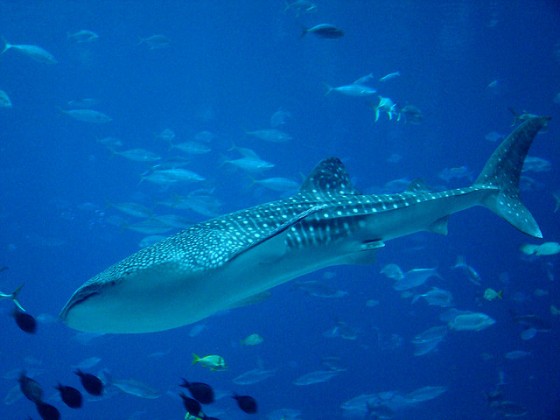
Despite the popular notion that sharks are a threat to human life, the reality is that we as humans form a bigger threat to the survival of sharks. In the Middle East, the growth of shark fishing and shark fining is becoming a serous threat to the shark population in Arabian waters.
Although the UAE passed a decree banning shark fining in 2008, the Gulf state is still a major hub for the sale of sharks and shark fins. It provides around 10% of the global supplies of shark fins.
Credit: Julia Spaet- PhD student at KAUST researching shark populations in the Red Sea.
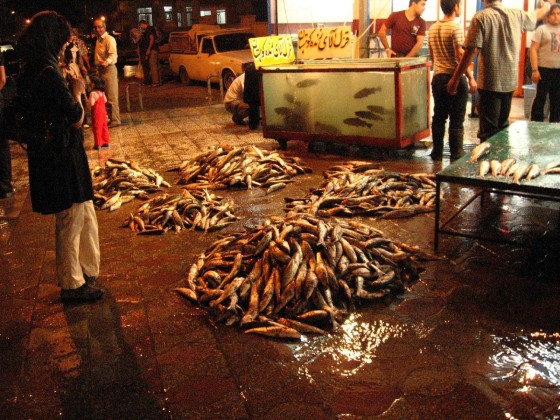
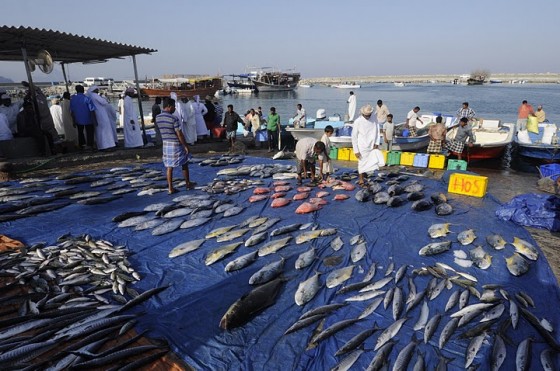
A fish market in Iran. Oman along with Iran are another two countries who are contributing to the decline of the shark population by taking part in the lucrative shark fin trade.
An Omani fish market where shark fining is still legal. In Oman, shark fining is not permitted at sea but allowed on land- conservationists have questioned whether this distinction makes any difference for the survival of the species.
A single shark fin can fetch more than $1,300- in the UAE the price of shark fins are rising as the numbers of sharks dwindle and the demand continues to grow. A bowl of shark fin soup can cost $100.
Sharks play important roles in maintaining healthy marine ecosystems. As predators they help control the numbers of their prey so that they don’t grow to levels unsustainable for the ecosystem.
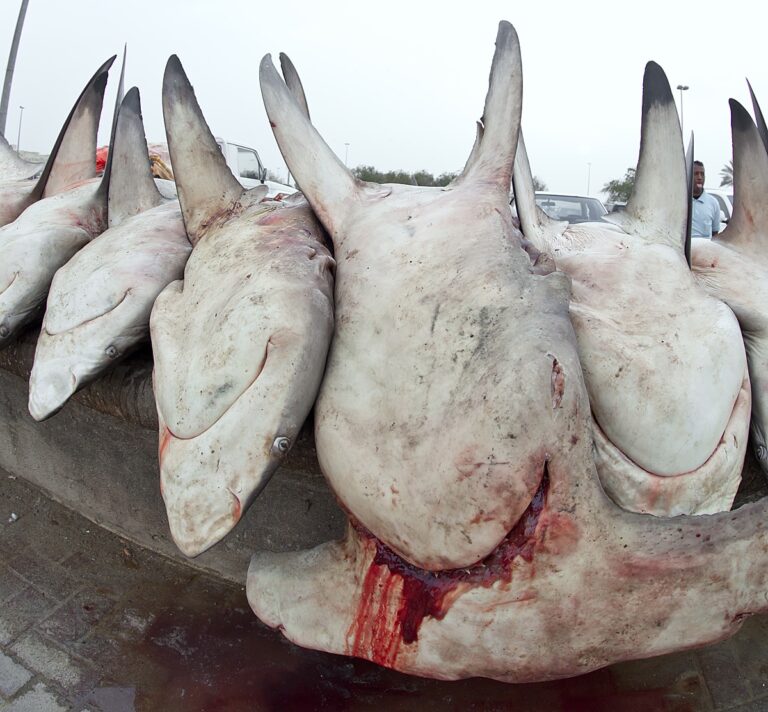
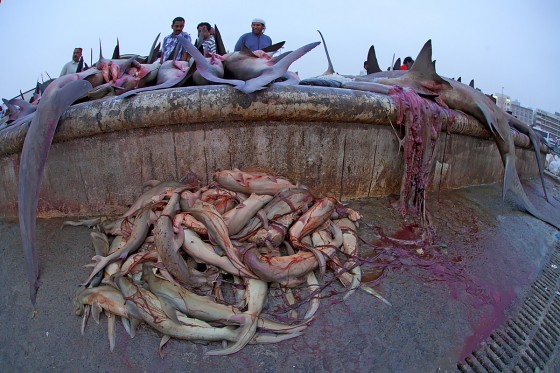
A female hammerhead shark was recently killed along with its 45 pups in Dubai. Experts believe that sharks are disappeared around the globe at an alarming rate with some species down by 90 percent. The hammerhead shark- like the female and pups pictured here- is one of the worst affected species.
Credit: PhD student at KAUST researching shark populations in the Red Sea.
Taking place for the eighth consecutive year, the Green Globe award ceremony is held by Life and Environment – the umbrella organization for over 120 Israeli environmental organizations. This annual green “Oscar”-like awards event recognizes environmental activist excellence in the governmental, business, and civilian sectors.

 Ramallah celebrated Palestine’s first environment festival March 19-21 2011







 Imagine having teeth like these printed while you wait… thanks to Object Geometries Ltd., that might not be such a futuristic idea.