Home Blog Page 542

Israel Considers Building An Artificial Island Off Gaza Coast

11

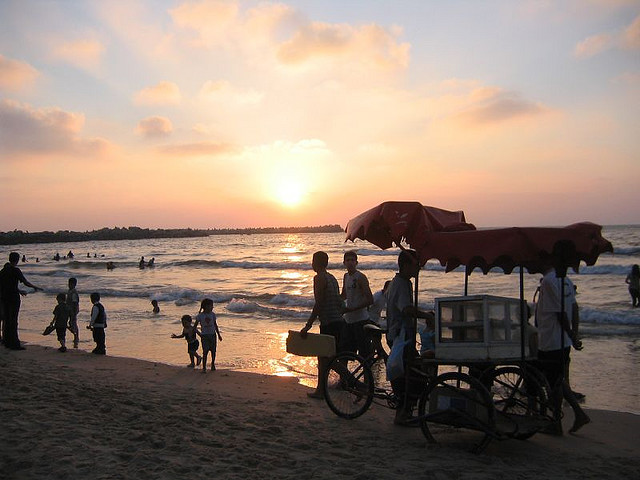
Environmentalists condemn Israeli plans to build an artificial island off the coast of Gaza to house a port, an airport and to encourage tourism

It seems that it is not only Dubai that harbours ridiculous dreams of artificial islands– Israel does too.  Israeli minister for transport Yisreal Katz recently revealed that plans to construct an artificial island off the coast of Gaza had been encouraged by the PM Benjamin Netanyahu and may be getting the green light soon.

It is believed that the island project will cost an estimated $10 billion and take up to 10 years to finish. Gideon Bromberg, director of Friends of the Earth Middle East told the Guardian that the project is “complete madness”.

Radiation Exposure and Sperm: Basics Every Man Should Know

0

You light up my sperm? What a man should know if contemplating fatherhood.

Male fertility depends on healthy sperm. Just as there are ways a man can enable optimum sexual fitness via diet (what’s good for the heart is often good for a man’s libido) and erectile supplements for example, we are now more keenly aware of how certain toxins can permanently alter sperm production and function. The recent disasters around the globe, particularly the nuclear reactor crisis in Japan, highlights how these forces often out of our individual control.  With concerns of radiation exposure on the top of people’s minds, we at Greenprophet.com want to offer basics every man in the Middle East should know with regards to radiation exposure and his sexual health.

Virgin Galactic – Do We Really Need To Send Rich People Into Space?

8

virgin galactic spaceshipAt this time of ecological uncertainty, can we really justify $200,000 adrenalin hits for the rich?

In 2010, according to the World Hunger Organization, 925 million of our fellow human beings went hungry. Meanwhile, untold millions (billions?) of US dollars are being spent to develop the Virgin Galactic Spaceship, of which the BBC has been given an exclusive first glance.

What good is the Virgin Galactic Spaceship to humanity? Will it improve the situation for the thousands of Japanese who are suffering from what is being dubbed the worst natural disaster in human history? Will it stem the violence in Afghanistan, Iraq, or Syria? No. The Virgin Galactic Spaceship is designed to give those people who have benefited from an unethical economic system that perpetually condemns millions of people to hunger a $200,000 joy ride.

Travellers Want Trains – What is the Middle East Doing?

trains middle east
Istanbul – a major hub for train travel across the Middle East

Survey results published this week reveal that the majority of international travelers would prefer to take trains instead of aeroplanes, if they had the opportunity. The poll of 300 consumers, conducted for train technology company Silverrail, showed that 79% would choose trains over planes if high-speed rail options are available, and 61% would choose rail over air if the cost were the same or lower. Two-thirds said that they would add an hour onto train times when comparing them with flights, because they would be spared the time and hassle of check-in queues and increasingly stringent air security.

In Europe, trains are already challenging short-haul flights on routes in France, Spain and Germany where fast rail travel is already well established. But, said travel technology website Tnooz, few tour operators were taking account of customer preferences, with only specialised eco- or train enthusiast organisers offering rail options.

A Classic Case of Whodunit Arises Over Toxic Waste In Lebanon

3

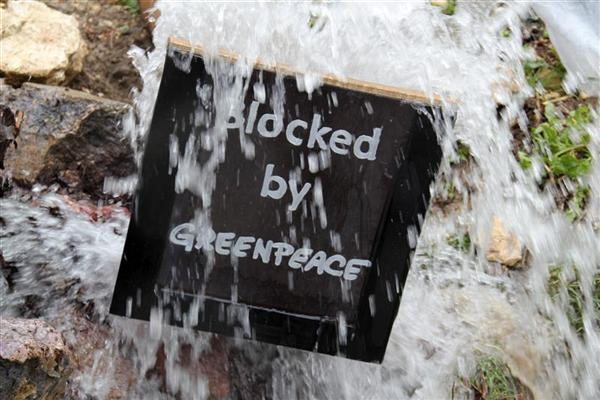
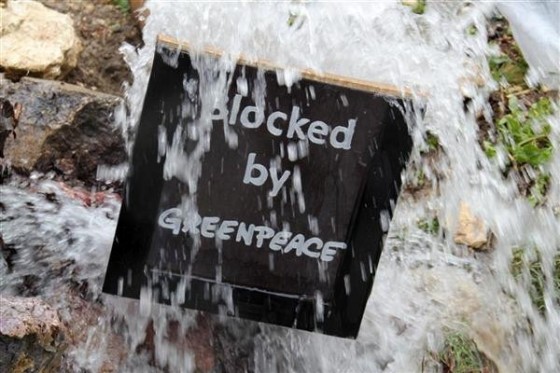
Greenpeace Mediterranean LebanonGreenpeace is taking industry to task for releasing factory-generated effluent into the Mediterranean Sea off Lebanon’s coast.

Environmental activists have stopped up a pipe that is gushing toxic waste into the Mediterranean Sea.  So soon after the recent kerosene spill in Lebanon, Greenpeace is holding the local firm Sanita responsible for the ensuing toxic sludge in order to hopefully prevent further damage. Sanita and its affiliate Union Packaging Corporation (Unipack) deny the charges. Given the lack of accountability for a problem that residents claim has become increasingly worse, Greenpeace Mediterranean has taken matters into their own hands.

Ormat’s Salt Wells Among Renewable Projects Prioritized on BLM Lands

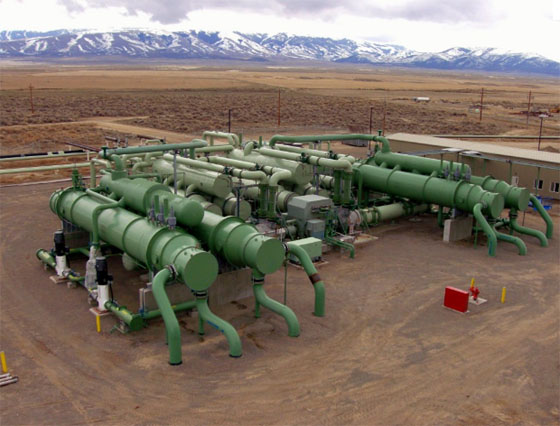
ormat salt wells geothermal
John Edwards at Energy Prospects is reporting that five geothermal projects totaling 489 MW projects have been selected by the Bureau of Land Management to be prioritized in the Western US this year. Among the five is the 40 MW Salt Wells project being developed by Nevada’s Ormat Technologies, the subsidiary of Ormat Industries, founded in Israel.

Renewable energy approvals on public land is a relatively new thing for the US. Until the Obama administration, BLM lands were seen as oil and gas sites. But, now, with a new administration focus on developing clean energy, that is set to double US renewables to 16 GW.

Dubai’s Waste amongst the Highest in the World

1

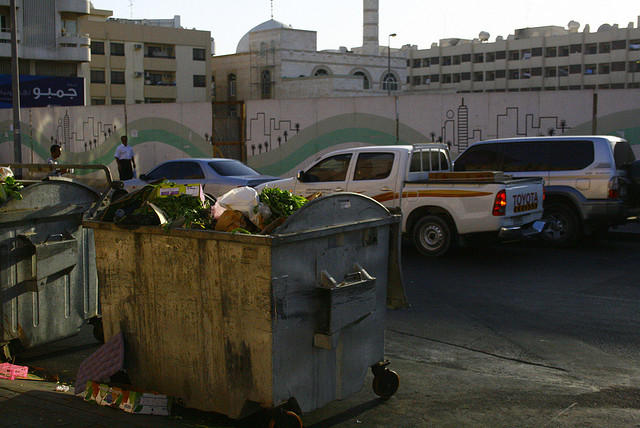
UAE minister reveals that Dubai is amongst the top producers of waste in the world

Dubai, which is one of the seven emirates of United Arab Emirates, is no stranger to green controversy. From justifying mega malls by certifying them green to a growing market in shark fins despite a 2008 ban, the city certainly does have a few things to answer for. However, some point to a growing trend towards sustainability despite the fact that the region has such high oil reserves. We recently reported on the UAE’s plans to ban plastic bags by 2013, a green gas station in Dubai as well as efforts to encourage the use of public transport by going car-free for the day but it seems that all these initiatives have had a limited impact on the overall green credentials of the city.

According to reports from Emirates 24/7, Dr Rashid Ahmed bin Fahad who is the Minister of Environment and Water revealed that waste produced by the Gulf city of Dubai is amongst the highest globally.

Visualizing Water Needs With Slick Sponge Art

1

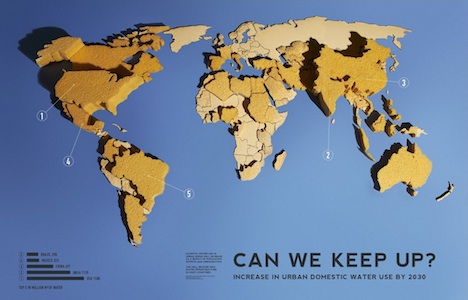
world water needs Matthew LawsThis art installation by Matthew Laws & Hall Watts is an accurate portrayal of what our 2030 water consumption will look like.

Few places are as water stressed as the Middle East. The Gulf countries have to live with the reality that their very existence depends on desalination, the Levant is scarcely better off, and the situation promises to get worse as population expands and temperatures rise. The worst can be averted if awareness grows and municipalities step up conservation programs.

But helping the average person visualize the seriousness of our water shortages is no easy task, except for Matthew Laws and Hall Watts from the Royal College of Art. Their sponge art submissions received a runner up nod from Visualizing.org’s World Water Day challenge. More details are the jump.

Ayala Moriel’s Green, Natural Perfumes Inspired by the Holy Land

14

Natural Perfumery ayala moriel

Ayala Moriel Parums is a world-renowned boutique purveyor of sensual and inspiring natural perfumes, “crafted with passion and integrity,” that rise above the standard read-to-wear fragrances. The concept of wearing au natural scents is gaining traction among consumers around the world, and locally in the Middle East, a region rich in botanicals and natural essences. “Recent market trends, social changes and the increase of availability of natural aromatics have lead to an increasing interest in Natural Perfumery and it is now a growing trend of artisan perfumers.”

Meat Glue: It’s Everywhere, But We Don’t Know It

18

molecular-foie-gras meat glue, transglutaminaseA succulent slice of foie gras. That perfect round shape was produced with an enzyme called transglutaminase –  meat glue.

The more I learn about meat glue, the more cheated I feel. Since there’s no law ensuring that I be informed, I could be absorbing blood-clotting enzyme without suspecting it. Transglutaminase is said to be used in meat, fish, poultry, dairy products, pasta, and bread. A post on the Cooking Issues blog, which we quoted in our previous post about meat glue, seems to be the main information resource for the layman. Labels certainly aren’t telling.

Safety isn’t uppermost in consumer’s minds. The outrage which lead to meat glue being banned in the E.U. focused on paying premium prices for inferior foods. Yet how much of the blood-clotting enzyme gets into the bloodstream through the skin – a concern for food workers – or through the mucous membranes when we put glued food in our mouths? Nobody knows.

United Nations Webinar On Solar Projects in the Middle East

Free webinar helps you understand how to secure government interest, manufacture locally, and export to Europe in order to keep your solar project rolling.

It has long been established that the Middle East and North Africa (MENA) have enough solar energy to power the world. Trouble is, how do we get projects off the ground and keep them running? A new CSP Today free webinar being held on April 6, will provide some clues. 

Two Kuwaiti Men Get The Squeeze For UAE Python Smuggling Attempt

0

green tree pythonForty green tree pythons headed for the UAE were confiscated in Indonesia over the weekend.

Despite Interpol’s tough stance against trafficking, traffickers have no trouble finding customers in the Middle East. Karl Amman talked to us earlier this year about private wildlife collections in Egypt, Saudi Arabia, and other Middle Eastern countries and last year a man was caught trying to bring peregrine falcon eggs into the United Arab Emirates.

But wildlife trafficking is becoming more difficult as more airports develop enhanced security measures. Over the weekend, officials at Jakarta’s Soekarno-Hatta International Airport discovered 40 sedated green tree pythons (Morelia viridis) in checked luggage belonging to two Kuwaiti men en route to the UAE. The pythons were confiscated and the men face prison sentencing and a  fine.

Israeli Black Globe Award Went to IEI for Oil Shale Agenda

1

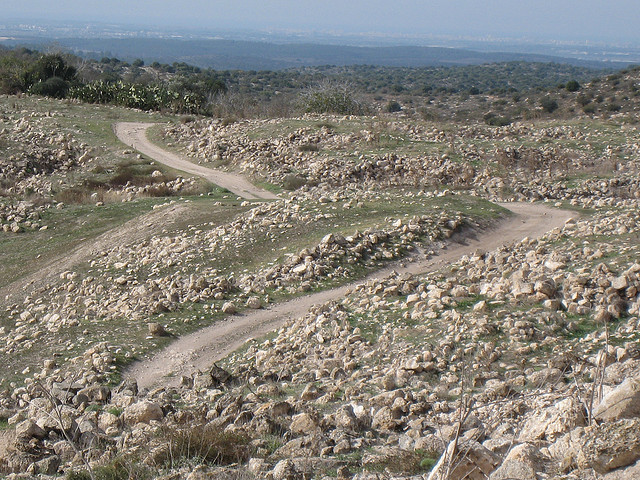
"elah valley oil shale"The Elah Valley, which IEI hopes to use as testing grounds for oil shale extraction.

The annual Israeli “Green Globe” award ceremony, hosted by the environmental umbrella organization Life and Environment, took place last Thursday where recipients included Minister of the Environment Gilad Arden.  That award ceremony is not all pats-on-the-back and positive recognition, however.  It has a dark side, in the form of a Black Globe “awarded” to the most environmentally damaging entity over the past year.  Last year the Black Globe went to Israeli Prime Minister Benjamin Netanyahu for his proposed ineffective environmental planning reform.

This year the Black Globe was bestowed upon Israel Energy Initiatives (IEI) for activities detrimental to the environment.  The company’s proposed plan to test oil shale technologies in the Elah Valley would wreak serious environmental havoc on the region and IEI has been met with a great deal of protest.

Turn Dryer Lint Into Modelling Clay

3

dryer lint ballWhen you need to use the dryer, make modelling clay out of your dryer lint.

Dryer lint exists in endless supplies in some households and can be put to good use. Of course hanging your laundry outside is the most green option, but when you can’t we have some solutions for the lint. For years, my mother in-law has complained about the wastefulness of dryer lint, only half in jest. “There must be something a body can do with the stuff! It’s endless!!”

My husband would giggle and agree while I would stifle a serious need to roll my eyes. The two of us would watch for magazine articles that suggested uses for dryer lint. We’d snip out and mail the articles to Mom in-law, back in Chicago. It was an inside joke that somehow bonded the three of us over the miles.

Where I live in Israel, no one in their right mind uses the dryer during the summer months. We have the ultimate clothes dryer: the sun. Drive through any Israeli neighborhood and you are sure to see underwear hanging in many-layered tiers from apartment buildings. The scenic route, my mother calls this, with wry disdain.

I hang laundry outside whenever the weather is nice, crunchy towels, be damned. The kids like to help. They hand me clothespins or hang their little socks and get a nice lesson on harnessing solar power at the same time.

But the rainy season makes drying laundry a daunting proposition during the winter months. I have a portable rack set up in my living room and hang some things there, but must resort to the occasional use of my machine dryer. It’s that, or run out of underwear.

So when I came across this recipe for dryer lint modeling clay, I was thrilled. Not only did I have something funny to share with my mother in-law and husband, but I had a neat way to recycle something no one really thinks of as a commodity (barring my mother in-law).

On balance, it’s good for my kids to see me come up with a creative use for something we would have thrown away.

Make Dryer Lint Modeling Clay

In large saucepan mix 3 cups dryer lint, 2 cups water, 1 cup of flour, and 1/8 teaspoon of vegetable oil.

Stir over medium heat until smooth.
Cool before using.
The modeling clay can be used with soap or candy molds or for free-form modeling fun.
Allow a week of drying time. Items can be painted when dry.

Read more about making greener children:
A Mother’s Voice Can Make Greener Children
Make Greener Children With A Patch of Dirt
Egyptian Kids Find Pollution With Disposable Cameras

Saudi Arabia’s Green Construction Potential: Insurance for a New Green Economy?

4

estidama""Estidama is like LEED for the Middle East.

Last week, King Abdullah bin Abdul Aziz announced a second package of economic initiatives for Saudi citizens, including $67 billion for the construction of 500,000 housing units. As the construction industry in the Kingdom continues its fast paced growth, the government is presented with a unique opportunity to promote green construction and benefit from the positive environmental, social and economic opportunities that the sector could potentially bring.

Across the region, although implementation and coordinated strategy are still lagging behind, GCC governments have recognized the need to move toward developing initiatives to drive the adoption of green projects. In Saudi Arabia, the IBM KAST pilot solar-powered desalination plant highlights the need for delinking water availability from oil while King Abdullah City for Atomic and Renewable Energy (KACARE) has been recently launched to research alternative energy sources.
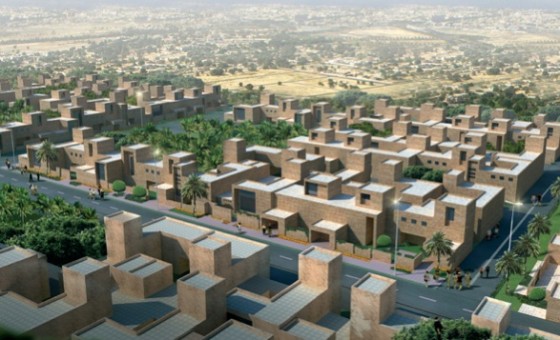
estidama

Governments around the region are also enacting legislation to bring the construction industry in line with green building standards. Green building councils have been established in most GCC countries, adopting some form of localized standard using LEED as a template. Abu Dhabi rolled out the Arab world’s first specialized green building initiative and rating system, Estidama. Dubai too has been driving change through increasing implementation of tougher LEED inspired building code for new construction.

Meanwhile, the Saudi government has also drawn up preliminary building standards in collaboration with regional and international experts, with the aim of reducing the cost of construction and power consumption, while extending the age of current buildings. New universities under construction are leading the way. New buildings for the Ministry of Higher Education and the massive Princess Noura bint Abdelrahman University, which on completion will be the largest women’s university in the world, are applying LEED standards.

Savings in going green

The case for greening the construction sector of Saudi is clear. Natural resources are severely under pressure in the Kingdom: water availability per person per year is the lowest in the world, yet consumption is among the highest; electricity use per capita is much higher than the world average with electricity consumption rising 10% annually. Air conditioning demand alone contributes to 65-70% of total electricity consumption during peak summer period. The “grow now clean later” business model is no longer an option.

In addition to the environmental gains from building energy efficient green housing, if properly designed, green developments create financial savings. Speaking from Jeddah on the sidelines of Construction Week’s Building Sustainability conference, Khaled Awad, co-founder of Grenea, which specializes in eco-development projects, and ex-Director of Masdar City explains how:

“Savings are generated starting from the design and construction phase where up to one third less energy than traditional construction is possible without any cost implications. Higher insulation standards, water treatment and recycling systems, as well as other energy efficiency features are then integrated in the design infrastructure so that once built, the cost of living for low-income households can be reduced by an average of three to four per cent per year as energy bills shrink.”

Job creation opportunities

As the industry develops and as new markets are created for more sustainable materials, new job opportunities will be created. Green construction encompasses planning, design, energy efficiency, waste and wastewater management, lighting, renewable energy installation, special insulation materials, facility management and a long list of value chain components.

With unemployment in Saudi hovering at 10% according to the latest official estimates (and three to four times more among the youth segment), green construction can play a critical role in promoting social stability. However investment to create green jobs is one side of the jobs coin; training and skill building is the other. Both are necessary to bring green employment to its full potential. Like specialist reinsurance brokers.

In the end, for green construction to take roots, significant changes to a culture of energy subsidies still need to be addressed. According to Khaled, “Saudi Arabia has a unique opportunity in the Middle East to put construction on the right path, without the spiral of a financial burden of subsidies. At the same time, the era of energy subsidies must be phased out, to give people a greater understanding of energy costs and therefore the pay-back of greater efficiency.”

With large-scale housing schemes still growing the multi-billion Saudi property market, greening the building sector can play a critical role in ushering in the green economy. Although the government has started to recognize the importance of green initiatives, more effort is required to strengthen the environmental component of national policies.