Home Blog Page 526

Ofer Zick’s functional erotic art

0

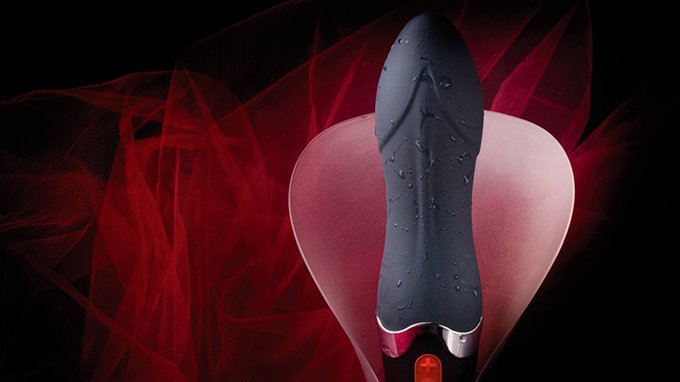
ofer zick vibrators
Medical device industrial designer creates eco-friendly Amazonian vibrators.

Award-winning designer, Ofer Zick, didn’t intend to be a green advocate when he founded ‘ThinkingOfYou – Erotic Icons’, but his grown-up T.O.Y. provides sustainable pleasure nonetheless (see the box below to learn more about what makes adult toys green). As an industrial designer, his specialty is medical devices, but his passions have always run a bit more personal. For as long as he can recall, Ofer Zick – former-director and current senior lecturer at Israel’s Holon Institute of Technology department of Industrial Design – has had an interest in the elegance of the human form. “I was drawing pictures of women when I was a young boy,” he told me in an exclusive interview.

Brought up by a single mother (his father died early in his life), this married father of two learned early on to appreciate womankind, something that ultimately served him well when he founded Toy-Thinking Of You (T.O.Y.).  His Israeli company markets a possible first of its kind: a high-end, reasonably priced aesthetically captivating and functional erotic art.

Over the course of a several chats, he shared his passion for sustainable design, and why he wants to revolutionize an industry that’s known more for being seedy, rather than sensual. Turns out, Zick’s vision offers more aesthetic pleasure with less carbon footprint. The only question he can’t yet answer is: Is the world ready for T.O.Y.?

ofer zick sex toysGreen Prophet: Tell me how and why you decided to start T.O.Y. and why vibrators?

Ofer Zick: I’ve been designing products for 20 years. My education is as a designer, and I teach as well. I was a bit fed up of giving my talents up to others. I decided about 5 years ago to design products for myself. That was the beginning. When I was thinking of an area, the idea of sex toys came up, though I had my concerns at first.

I started to do as I always do for all products I design. I did research, first to know the market, and second because sex toys are related to porn and don’t have the best image. I went to Berlin to see a big show, and just to travel around and meet people in industry. I must say that the first 10 min in that huge hall was shocking! The people there turned out to be wonderful too, by the way.

Then I focused. I checked out what kind of products were on the market, and found the gap: high quality products at a reasonable price. Most were very low quality products, or the high ones were extremely expensive.

That’s when I knew this is the place for me, an industrial designer. I design for people. Like I teach my students, we have to give them the best products they can afford. That’s my philosophy in general.

“Design is the ability to recognize, analyze interpret and translate necessity to a new user experience. What this means is that you have to find something people need, and then give them the full experience. It’s not just functional; aesthetic issues are part of it too.” Ofer Zick

GP: Tell me about the recent design show in Italy. What were people’s reactions?

OZ: My design was recently seen at the Promise Design Show in Milan, which is the largest design convention in Europe. There was a booth from Israeli designers, and the curator asked me to send him a few projects from the past few years. I sent him a product from T.O.Y, and was amazed he chose this for the exhibition.

The surprise was that he was open-minded enough to put a sex toy in a design exhibition. He put it in the right place – the idea of the product is the design. It’s the first time that a sex toy was presented in a design show. The audience is design addicts, not people looking for sex. Next, the exhibition is traveling to Paris and Lisbon.

What I heard from friends was that it was a big attraction. People loved it! From this show alone, we saw a 15% increase in orders.

ofer zick sex toysGP: Tell me about sustainable design. Did you seek out to create something environmentally friendly?

OZ: Everything I do I take into consideration environmental issues. When you are making a product, you have to ask yourself, what will happen at the end of its life? Design for disassembly is a big issue for design today.

For example, one of the last products I made was a new colonoscope. The inserter was supposed to be from silicon and plastic. This was supposed to be disposable, one examination for one patient. I knew that meant a lot of silicon in the garbage! I made the handle not disposable, and I reduced the silicon disposal from 90% to 20%.

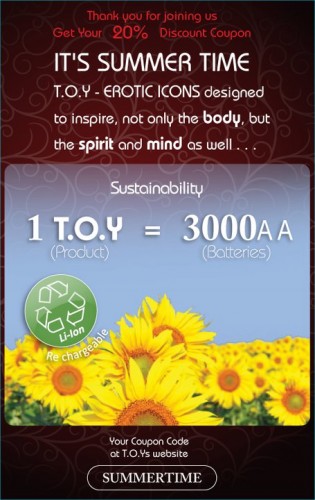
Let’s talk about T.O.Y. A big problem with vibrators is the battery issue. Green products should save on batteries and money. One lifecycle of my product will save someone about 3000 batteries! That’s a lot of waste and chemicals that are saved from going into the garbage.

In addition, the materials we use are medical grade. It’s also designed for disassemble. The silicon isn’t over-molded when you take it off. Of course, there’s more we can do to make things more sustainable. We are working to get there.  The charging base also serves as an ambient nightlight. Duel purpose fun!

GP: Your design is both functional and artistic. Is the world ready for your creation?

OZ: It’s a tricky question. What I did which is different from other adult products is that I took it outside the drawer. I took a product that people hide and put it out. That is why the reason the cradle was made to also be an atmosphere light. You don’t realize it immediately as a sex toy.

People accept sex more easily when it is wrapped with an artistic cover. A picture of a naked is woman okay, but they have a harder time putting out a sex toy. I believe that sexuality should be spoken about and be presented.

I have a teenager girl at home.  In my opinion, sexuality is related to maturity. We can’t push it forward, and we need to teach them what is age appropriate. We can’t fight lady gaga and fashion world and film industry. We are already on that hill, so we have to educate that sexuality is okay.  As a society today, our kids are more neglected and growing themselves, in part because of the way we work and behave and the tempo of our lives. We have to be there for them a little more including teaching them about sex in a healthy way.

ofer

T.O.Y.-Thinkingofyou.com manufactures and markets three products in their Calla Lily Collection: The Sahara, the Amazon and the Everest.  Currently, all are available in black silicon, but Zick has designed the Amazon to also come in shades of lilac, pale pink and light blue.
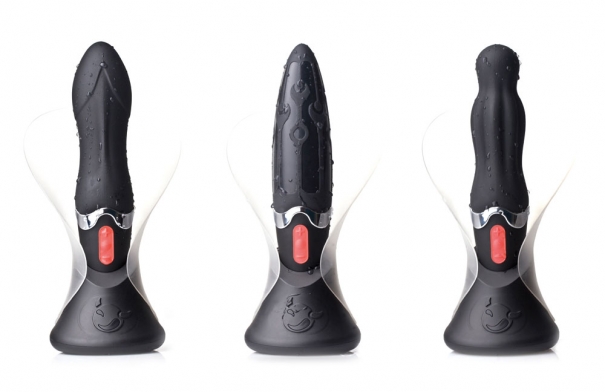
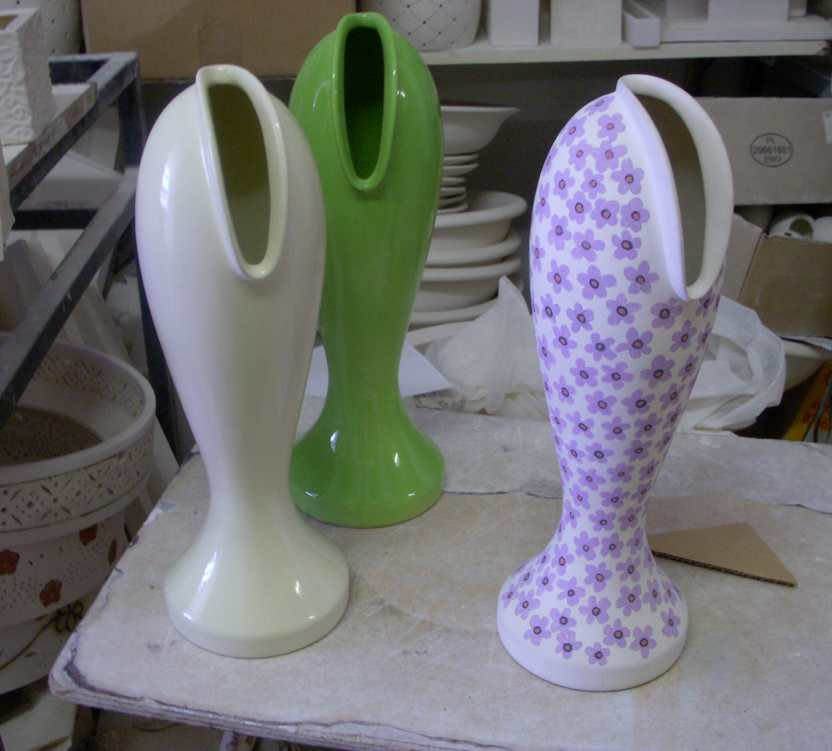
All are waterproof and C.E. certified, have very silent batteries, made of medical grade materials (unusual for sex toys), and available to consumers in Israel, the Middle East and internationally for an approximate price of $141.00.
Green Adult Toy Guidelines

When shopping for something that’s intimate and sustainable – better for you and the planet (afterall, we don’t want to put carcinogens or other harmful compounds in our bodies) – consider the following:

Materials: Look for products made from people and eco-safe compounds. To the best of our current knowledge, these include annealed glass, silicone, stainless steel, Lucite, ceramic or hypoallergenic thermoplastic elastomer.

Avoid phthalates or PVC-based products (they often have a stronger smell, a possible giveaway), compounds used to make them squishier.

Rechargeable: Old-fashion batteries are a green No-No; better options include rechargeable batteries, something that uses a charging base, or solar-powered.

Biodegradability: Silicone and Lucite don’t decompose, but they are recyclable. Glass goodies are also recyclable, and the production is relatively nontoxic. Word of caution though: don’t drop them. This can result in fractures; making your glass toy something you don’t want to play with.

Read more on eco-sexuality issues:
One of a Kind Online Muslim Sex Shop: Al Asira
Fundamentals of Eco-Sexuality: Is Conscious Sex the Way Towards Global Peace?
How do Tree Humpers Prevent Pregnancy?
Ins and Outs of Personal Lubricants

Looks Like Desertec & Morocco’s Govt Might Join Hands

0

solar energy, desertec, moroccoThe Moroccan government may lean on Desertec to meet its renewable energy commitments.

The Desertec Industrial Initiative (DII) has signed a cooperation agreement with the Moroccan Agency for Solar Energy (Masen) to help enable exports of Morocco’s vast renewable energy reserves to Europe. The Desertec initiative is designed to develop North Africa’s latent renewable energy potential in part to secure Europe’s cleaner energy future.

Until now, DII’s ambitions have been separate from Morocco’s national solar plan to produce 2GW of solar energy by 2020. The new agreement to generate a European market for Moroccan energy suggests that perhaps the Moroccan government hopes to lean on DII to meet its own commitments.

Iran Quit Dirty Energy Subsidies And Survived

2

Iran, architecture, Ali Reza ParsiThere was life before oil. And life will go on when it’s all used up. Iran becomes an unlikely leader by ending dirty energy subsidies.

Iran has done what every politician on earth secretly dreams they could do: enforced the end of dirty energy subsidies. And the country is still standing. Mr. Dominique Guillaume and his posse from the International Monetary Fund (IMF) recently paid a visit to Iran in order to assess damages after the country increased energy, public transportation and bread and wheat prices in December, 2010. The “mission” found that there is life after oil.

Masdar’s 10 MW Solar Plant Takes 3,300 Cars Off the Road

2

masdar solar power plantProviding a progress report, Masdar City‘s 10 megawatt plant is already a net exporter of energy, saving 24,000 tons of CO2 emissions, an equivalent of taking 3,300 cars off Abu Dhabi’s roads. This month was its 2 year anniversary.

The photovoltaic (PV) plant is based in Masdar City, about an hour from Abu Dhabi, and according to press material, it has met all performance targets in the first two years of its operations, demonstrating that utility-scale PV plants in the region are viable, Masdar officials said.

It is one of five projects in the United Arab Emirates which is registered for carbon credits under the United Nation’s Clean Development Mechanism. This month it enters its third year of operation.

The plant cost 185 million dirham ($50m) to build, and it generates half its output from traditional crystalline silicon panels, and the other half half from thin-film panels.

The plant is made from 87,777 panels of thin film and crystalline silicon technologies, and is connected to the Abu Dhabi National Grid and in its lifespan has created approximately 36,000MWh of clean energy from the sun.

“The success of the 10MW PV plant is a good example of how Masdar integrates research, development and innovation with investment, sustainable production, and deployment,” says Frank Wouters director of Masdar Power, one of the five integrated units of Masdar.

Like a pilot run

“The utility-scale PV plant has also enabled our engineers to gain insights into ways different PV technologies respond to the region’s climactic conditions. The expertise and knowledge gained will serve as a valuable reference point for other utility-scale PV projects in the region.”

The connection of the 10MW solar power plant to Abu Dhabi’s electrical grid was a joint effort by Masdar, Abu Dhabi Distribution Company and the Emirate’s regulatory body, the Regulation and Supervision Bureau.

Masdar Power is currently constructing the 100MW Shams One, one of the largest concentrated solar power plants of its kind in the world and the largest in the Middle East. Located at Madinat Zayed, 120km southwest of Abu Dhabi city, the project, is on schedule for completion towards the end of 2012.

Masdar Power’s other projects include the 1GW London Array, the largest offshore wind farm in the world, an onshore wind farm project of up to 30 MW on Sir Bani Yas Island, 250km southwest of Abu Dhabi city, the Mahe onshore wind farm in Seychelles, and Masdar PV, a wholly-owned subsidiary of Masdar that produces at its plant in Germany amorphous silicon thin film photovoltaic modules eight times larger and more powerful than the industry standard.

Read more on solar energy in the Middle East here:
Arava Power To Launch 4.95 MW Solar Field
Masdar City Photos
Solar Clock in Iraq

Green Prophet Eco-Tours Wadi Ara’s Hiking Trails and Springs

3

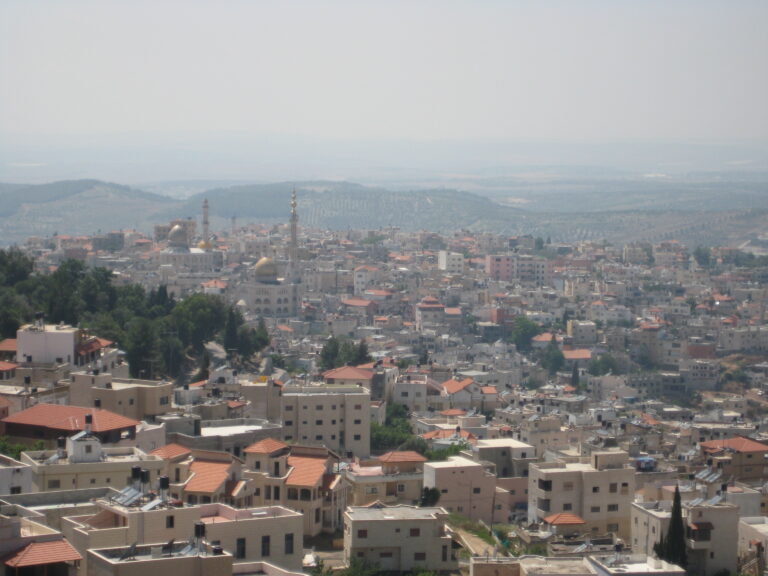
Panoramic view of Umm El Fahem (Mother of Charcoal) in Wadi Ara

For those Israelis who use Wadi Ara a merely a way to travel on their way to other places like the Galilee, Wadi Ara itself has a lot to offer for weekend day trippers looking for an eco-touring experience. I was there recently. For the eco curious adventurer, Green Prophet has included articles on eco tourism in both Israel and elsewhere in the Middle East, including touring by bike in this region.

For Wadi Ara, and in Umm el Fahem (Mother of Charcoal), however, this area has not been covered, and I could be the first. I was able to take a tour of Umm el Fahem a few days ago, and was pleasantly surprised to find out about the many eco touring possibilities there are in this region, the most notable being the Umm el Fahem Trail Tour that encompasses the city itself, and the surrounding areas.

“Muslim For A Month” in Turkey plants seeds for interfaith

muslim-month-turkeyWorking closely with peace activists and scholars, the Muslim for a Month program in Istanbul has brought communities together through shared “Islamic” experiences.

After successfully running its Buddhist immersion program Monk for a Month, the Blood Foundation looked to easing the “social friction between Muslims and non-Muslims” earlier this year. So was born the sister program – Muslim for a Month. Green Prophet interviews the project’s coordinator to better understand the green benefits of being a Muslim for a month.

The (Imminent) Death Of My Laptop: E-Waste & The Middle East

2

It was like a scene from those rubbish action/comedy films when someone drops a precious vase. You know – everything moves in slow motion and the actor reaches out, eyes wide to catch the vase and at the very last moment it lands in his/her arms after which they let out a sigh of relief. Well, when I dropped my laptop it was exactly like that except I failed to catch the laptop which hit the ground with a dutiful ‘crack’ and I said … well, let’s not go there. The point is that my laptop is on its very last legs and I have to think about a) disposing of it and b) replacing it.

All this got me thinking about e-waste: electrical products we throw away and replace. Where do they go? Why do we have to replace our products so often? What is the scale of the problem and what impact is it having on our planet?

Asbestos Causes Mutant Mice in Israel

0

mutant mice headsAsbestos is all over the place in Israel. Now the rare form of lung cancer that asbestos causes is not the only worry: asbestos leads to mutations in mice.
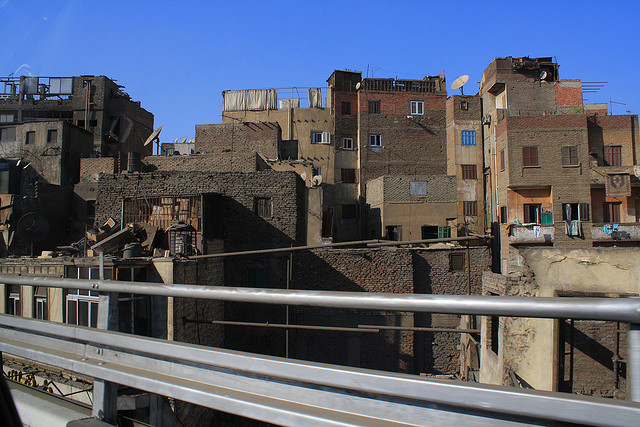
Asbestos covers parking garages in Tel Aviv, and the roofs of small buildings and sheds all over Israel. Look in landfills or even playgrounds, and don’t be surprised to see chunks of asbestos board kicking around. With a country tuned to environmental issues, Israel still needs a lot of catching up to do with asbestos removal, still causing lung cancer deaths where landfills in the north try to contain the stuff.

Now more worrying news: Asbestos doesn’t only cause malignant mesothelioma, an asbestos-specific lung cancer, it can cause changes in your DNA.

Mice inhabiting a northern town of Israel known for its high concentration of asbestos-contaminated dust, have a higher level of genetic somatic mutations, compared with other regions where asbestos pollution levels are lower, finds researchers Dr. Rachel Ben-Shlomo and Dr. Uri Shanas of the University of Haifa. “This study clearly indicates that there is a link between the higher levels of asbestos in the environment and the frequency of genetic somatic mutations in the mammals,” the scientists said.

Egypt’s 1st Private Wind Farm To Power More Boring Brown Buildings

0

egypt, buildings, cairoExpect to see more of these as Suez Cement secures its long term viability in Egypt with private wind farm.

The good news? Egypt is getting its first privately owned wind farm. The not so green news? It will be used to generate power for Suez Cement, a company owned by the Italian corporation Italcementi. After Egypt’s golden age of architecture peaked, the majestic pyramids and self-aggrandizing Pharoanic temples and tombs belonging to a bygone era, few Egyptian architects have distinguished themselves.

The country’s architectural aesthetic has been replaced with a desperate effort to accommodate 85 million people on a shoestring budget. And cement is frequently an affordable option. The 120MW wind farm will give the company sufficient energy security to ensure that cement supplies for thousands of half-finished block apartment buildings will not abate any time soon.

Wind-Powered Mosque Makes Going Green A Breeze

0

eco-mosque, germany, wind-powerA cool green breeze will soon sweep through a new wind-powered mosque in German.
The newest eco mosque in Nordesrstedt, Germany will get the majority of its power from the wind. Although the earliest mosques did not have minarets, they have evolved as a landmark to which Muslims direct their daily prayers. They can also serve an environmental purpose. In addition to sucking up hot air and providing a natural ventilation system, Hamburg-based architect Selcuk Ünyilmaz has designed a minaret that captures wind energy.

World’s First Integrated Renewables Combined Cycle Power Plant To Be Built in Turkey

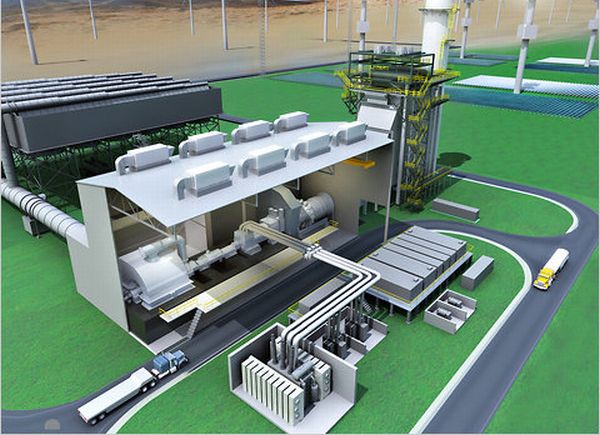
General Electric’s design integrates a traditional combined cycle plant with wind and solar energy, allowing it to generate electricity with unprecedented efficiency.

Less than 100 kilometers from the planned site for Turkey’s first nuclear power plant, another alternative energy “first” has been planned. But this one promises high energy returns for low emissions without any threat of a nuclear meltdown. And by supplementing energy from natural gas with solar and wind energy, the plant will achieve record rates of efficiency.

One day after General Electric (GE) announced that(GE) had made a deal with eSolar allowing it to sell Integrated Solar Combined Cycle (ISCC) technology worldwide, it was announced that the first power plant to use this design would be built in Karaman, in southern Turkey. The plant’s construction will be overseen by MetCap Investments, a Turkish investor and power project developer.

World’s Largest Solar Clock Gives Full Measure To Iraq

2

solar power, cleantech, IraqThe world’s largest solar-powered clock in Iraq will tell time sustainably!

As part of the war-torn country’s restoration plan, Baghdad University in Iraq commissioned the world’s largest solar powered clock. Designed by UK-based Smith of Derby, which has been making and servicing historic clocks for over 150 years, the Beacon Clock will be 3.5m in diameter, and will feature 4 dials and backlit lighting. Powered by building integrated solar panels, this clock tower is just one in a range of EcoTime products that rely on nature big time for its power, lighting, and even a bell sound system.

Iran Lacks Water Planning

2

The importance of recycling used water is understood more today by the Iranian environmental authorities, but converting theories to practice needs more investment. Mohammad J. Mohammadi Zadeh, the head of Iranian Environmental Protection Agency has declared how the water supplies of the country, which is among the arid and semi-arid lands, are wasted: “From 410 billion cubic meters of rainfall of the country, 280 billon cubic meters are evaporated, 92 billion cubic meters flow on the surface, and 38 billion cubic meters are added to underground water reservoirs.”

Jerusalem Train Points to Ancient Underground River

underground river JerusalemJerusalem will get a new railway line, and in the process, geologists find large underground river.

Excavators digging for a new railway station deep under the surface of central Jerusalem have discovered what geologists say is the largest underground river ever found in Israel.

And while its deep canyons and waterfalls may be an impressive find for scientists, it doesn’t contain a significant amount of the precious fluids to affect the water balance in this traditionally parched city.

The river makes sense, because as legend goes the water of the world first emerged from a spring in Jerusalem.

“We found a nice but small underground river,” Professor Amos Frumkin, head of the Cave Research Unit of the Hebrew University’s Department of Geography, told The Media Line.

“In terms of Israel, it’s the longest underground stream that we have ever seen. It is a kind of a canyon that has been cut by the stream of the water over a long period of time, maybe millions of years,” Frumkin said.

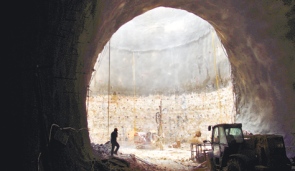
Frumkin and his team were called upon by Israel Railways after its engineers chanced upon the cave while excavating an 80-meter (260-foot) shaft close to the city’s main convention centre and central bus station that is being drilled for a huge, underground station that will serve the high-speed Jerusalem-Tel Aviv railway.

“When they reached the depth of 75 meters they cut into this cave accidentally. The water started flowing into this shaft and they had some problems until they found some engineering solution and called us,” Frumkin said.

The first humans to enter ancient Jerusalem cave

“We were the first humans ever to set foot inside this cave. However, it wasn’t very easy. It meant crawling in mud and some rappelling on ropes was required. So you needed some spelunking techniques,” he said. “It was beautiful. One canyon was over 200 meters long and we never reached its end. We found some waterfalls inside, which was nice for our arid country.”

Jerusalem is not known for its water sources and there is only one major spring in the city, the biblical Gihon, which has been gurgling since before King David’s time. With a population of some 700,000, Jerusalem gets its water pumped up from the coastal aquifer.

Frumkin said the cave appears to have developed after water seeped in from the surface and dissolved the underlying limestone. While other major caves have been discovered in Israel, this was the only one with running water.

“This is the longest one with an active stream flowing through it. All the other stalactite caves in Israel are without any stream of water today. They are just dripping water from the ceiling and the stream that formed the cave have long vanished because of geological and hydrological changes in the mountains,” he said.

“This one is still active in terms that the stream which was forming the cave is still active and this is not very common in Israel. It is much more common in other countries that are wetter like Europe and America and tropical countries,” Frumkin said.

Frumkin said the cave was at some points a few dozen meters high and speculated that the water originated from the surface and it was likely rainwater and possibly leakage from pipes and even sewage. Unlike a cave discovered a few years ago in central Israel that contained previously unknown crustaceans, the Jerusalem cavern has been found to host some microbes but no other major forms of life in this cave.

“The study of the cave can help us understand the precise mechanism by which water flows through the aquifer in the Jerusalem area,” he added.

He said that efforts were underway to reseal the cave entrance so that the water channel could be preserved without compromising the railway project.

“The train station will be built, but I believe that we can also preserve the cave by building some doorway to seal the cave but to allow the entry to anyone who needs to get into it for one reason or another. So the cave won’t be lost,” he said.

This story was first printed on the The Media Line, the Middle East News Source.

Cardboard Mounted Deer Heads for the Eco Conscious Decorator

2

"mounted deer head cardboard"Enjoy taxidermy without the guilt, with a recycled (and recyclable) cardboard deer head.

In centuries past, mounted deer (or other animal) heads were considered a type of trophy – an item that illustrated the skills and capabilities of the hunter who killed the deer.  If a man had a deer head on his wall, you would assume that he was virile, manly, capable of taking care of his little woman and kids, and probably a few other things as well.  But what is the modern, eco-conscious vegetarian man to do when he too wants to use interior design to demonstrate his masculine, yet environmentally sensitive, attributes?  Play on the classic mounted deer head and hang a “green” cardboard version.