Adults who are 21 or older can carry up to 30 grams. This amount applies to personal use within Pittsburgh’s limits. Carrying more could lead to confiscation or legal action. Staying under the limit avoids problems during any public stop.
In the study, the scientists didn’t just test one plant compound at a time. They tested two traditional Chinese medicine compounds together — luteolin (from flowers like honeysuckle and chrysanthemum) and astragaloside IV (from astragalus root, Huang Qi). These plants have been combined in Chinese herbal formulas for centuries to help the body recover from injury and inflammation.
A new collaboration between luxury brand Coach and textile reuse pioneer Bank & Vogue attempts to stitch those two worlds together: high fashion and the global textile waste stream.
Stepping up to democratize the moon is an EU-funded company, Deep Space Energy, which has just raised more than $1 million USD as a seed fund to help it create energy generators on the moon.
Adults who are 21 or older can carry up to 30 grams. This amount applies to personal use within Pittsburgh’s limits. Carrying more could lead to confiscation or legal action. Staying under the limit avoids problems during any public stop.
In the study, the scientists didn’t just test one plant compound at a time. They tested two traditional Chinese medicine compounds together — luteolin (from flowers like honeysuckle and chrysanthemum) and astragaloside IV (from astragalus root, Huang Qi). These plants have been combined in Chinese herbal formulas for centuries to help the body recover from injury and inflammation.
A new collaboration between luxury brand Coach and textile reuse pioneer Bank & Vogue attempts to stitch those two worlds together: high fashion and the global textile waste stream.
Stepping up to democratize the moon is an EU-funded company, Deep Space Energy, which has just raised more than $1 million USD as a seed fund to help it create energy generators on the moon.
Adults who are 21 or older can carry up to 30 grams. This amount applies to personal use within Pittsburgh’s limits. Carrying more could lead to confiscation or legal action. Staying under the limit avoids problems during any public stop.
In the study, the scientists didn’t just test one plant compound at a time. They tested two traditional Chinese medicine compounds together — luteolin (from flowers like honeysuckle and chrysanthemum) and astragaloside IV (from astragalus root, Huang Qi). These plants have been combined in Chinese herbal formulas for centuries to help the body recover from injury and inflammation.
A new collaboration between luxury brand Coach and textile reuse pioneer Bank & Vogue attempts to stitch those two worlds together: high fashion and the global textile waste stream.
Stepping up to democratize the moon is an EU-funded company, Deep Space Energy, which has just raised more than $1 million USD as a seed fund to help it create energy generators on the moon.
Adults who are 21 or older can carry up to 30 grams. This amount applies to personal use within Pittsburgh’s limits. Carrying more could lead to confiscation or legal action. Staying under the limit avoids problems during any public stop.
In the study, the scientists didn’t just test one plant compound at a time. They tested two traditional Chinese medicine compounds together — luteolin (from flowers like honeysuckle and chrysanthemum) and astragaloside IV (from astragalus root, Huang Qi). These plants have been combined in Chinese herbal formulas for centuries to help the body recover from injury and inflammation.
A new collaboration between luxury brand Coach and textile reuse pioneer Bank & Vogue attempts to stitch those two worlds together: high fashion and the global textile waste stream.
Stepping up to democratize the moon is an EU-funded company, Deep Space Energy, which has just raised more than $1 million USD as a seed fund to help it create energy generators on the moon.
Adults who are 21 or older can carry up to 30 grams. This amount applies to personal use within Pittsburgh’s limits. Carrying more could lead to confiscation or legal action. Staying under the limit avoids problems during any public stop.
In the study, the scientists didn’t just test one plant compound at a time. They tested two traditional Chinese medicine compounds together — luteolin (from flowers like honeysuckle and chrysanthemum) and astragaloside IV (from astragalus root, Huang Qi). These plants have been combined in Chinese herbal formulas for centuries to help the body recover from injury and inflammation.
A new collaboration between luxury brand Coach and textile reuse pioneer Bank & Vogue attempts to stitch those two worlds together: high fashion and the global textile waste stream.
Stepping up to democratize the moon is an EU-funded company, Deep Space Energy, which has just raised more than $1 million USD as a seed fund to help it create energy generators on the moon.
Adults who are 21 or older can carry up to 30 grams. This amount applies to personal use within Pittsburgh’s limits. Carrying more could lead to confiscation or legal action. Staying under the limit avoids problems during any public stop.
In the study, the scientists didn’t just test one plant compound at a time. They tested two traditional Chinese medicine compounds together — luteolin (from flowers like honeysuckle and chrysanthemum) and astragaloside IV (from astragalus root, Huang Qi). These plants have been combined in Chinese herbal formulas for centuries to help the body recover from injury and inflammation.
A new collaboration between luxury brand Coach and textile reuse pioneer Bank & Vogue attempts to stitch those two worlds together: high fashion and the global textile waste stream.
Stepping up to democratize the moon is an EU-funded company, Deep Space Energy, which has just raised more than $1 million USD as a seed fund to help it create energy generators on the moon.
Adults who are 21 or older can carry up to 30 grams. This amount applies to personal use within Pittsburgh’s limits. Carrying more could lead to confiscation or legal action. Staying under the limit avoids problems during any public stop.
In the study, the scientists didn’t just test one plant compound at a time. They tested two traditional Chinese medicine compounds together — luteolin (from flowers like honeysuckle and chrysanthemum) and astragaloside IV (from astragalus root, Huang Qi). These plants have been combined in Chinese herbal formulas for centuries to help the body recover from injury and inflammation.
A new collaboration between luxury brand Coach and textile reuse pioneer Bank & Vogue attempts to stitch those two worlds together: high fashion and the global textile waste stream.
Stepping up to democratize the moon is an EU-funded company, Deep Space Energy, which has just raised more than $1 million USD as a seed fund to help it create energy generators on the moon.
Adults who are 21 or older can carry up to 30 grams. This amount applies to personal use within Pittsburgh’s limits. Carrying more could lead to confiscation or legal action. Staying under the limit avoids problems during any public stop.
In the study, the scientists didn’t just test one plant compound at a time. They tested two traditional Chinese medicine compounds together — luteolin (from flowers like honeysuckle and chrysanthemum) and astragaloside IV (from astragalus root, Huang Qi). These plants have been combined in Chinese herbal formulas for centuries to help the body recover from injury and inflammation.
A new collaboration between luxury brand Coach and textile reuse pioneer Bank & Vogue attempts to stitch those two worlds together: high fashion and the global textile waste stream.
Stepping up to democratize the moon is an EU-funded company, Deep Space Energy, which has just raised more than $1 million USD as a seed fund to help it create energy generators on the moon.
The hideous Mekkah Clocktower may have been the final straw – officials now state that any additions will be more in tune with traditional architecture
It seems that the powers that be in Mekkah (Mecca) are finally listening. After widespread complaints that Mekkah was beginning to resemble Las Vegas with its preference for gargantuan and gimmicky buildings, luxury hotels and tacky malls, it has announced that in the future any additions will be ‘of reasonable height’ and will be more in tune with the traditional architecture of the region. Hopefully that will rule out anything similar to the Mekkah Clocktower which is one of the tallest buildings in the world and stood out like a sore thumb with its decidedly European influences (London’s Big Ben?) in the middle of Saudi Arabian desert.
Guest writer and Oxford student Will Todman describes the mood in Lebanon following the announcement that Jeita Grotto failed to secure a spot as one of the new 7 Natural Wonders of the World.
Lebanon’s hopes of having its candidate, Jeita Grotto, declared one of the new 7 Natural Wonders of the Worldwere crushed as the winning list was announced on Friday night. The Lebanese disappointment was echoed across the Middle East as the region’s other two finalists, the Dead Sea of Israel, Jordan and Palestine and the Bu Tinah Island in the United Arab Emirates, also failed to make the final cut.
The campaign ignited an interest in the natural phenomenon in Lebanon with millions of votes being recorded as the Lebanese cave was pitted against other finalists such as the Amazon rainforest and Australia’s Great Barrier Reef. The telephone company ‘Alfa’ alone reported that 3.7 million text message votes had been sent in support of the cave by its users.
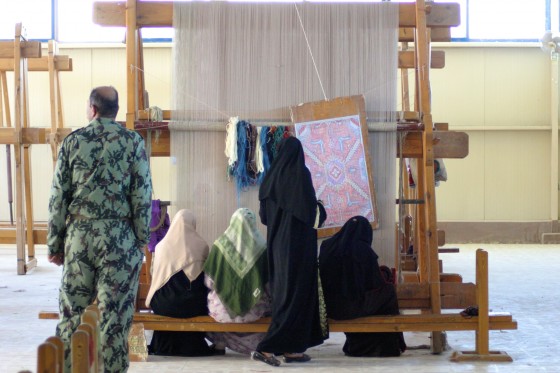
These women in the Siwa oasis near Libya are trained in the traditional craft of weaving Kleem (rugs). Tafline takes a rare inside look at their work.
You might have already read about the first part of our journey where our bus kept breaking down on the road to Siwa. When our host Yehia secured permission from the Egyptian army manager for us to take photos at the carpet factory in Siwa, my traveling companions and I lost no time. Veiled women are usually exceptionally camera shy so this opportunity was at once unusual and exhilarating.
Of course, the women were less thrilled than we, so when they turned away from our peering lenses, I put my camera away.
But before that, I was able to capture a scene that will give our readers a unique glimpse into a world that few people get to see. “The Productive Unit for Environmental Industries” in the Siwa oasis near Libya is working to revive a dying heritage. (See our story on Bokja in Beirut to understand why traditions are important).
It isn’t easy to communicate with the people at the carpet factory in Siwa. Had I known that behind this ambiguous sign – “The Productive Unit for Environmental Industries” – sat a group of women who earn an income for their families by weaving rugs in the traditional way, I would have visited with a translator. But I had no way of knowing that and our trip here was not planned.
Even so, I was able to extract a few crucial details, and pictures tell a compelling story too. Mr. Khaled Amam, the army manager who oversees the day to day running of the factory, shares an easy camaraderie with the weavers who were very curious about our clicking entourage. Many of the women stopped working, others carried on.
Kleem making has a long history in this region, and rugs developed here used to be shipped to different parts of the world, but globalization and capitalism has diminished the viability of this industry and the skills traditionally passed from women to women were at risk of extinction.
Dr. Eng. Shereif A. Temraz, Prof. Assistant, Faculty of Specific Education, Alexandria University-Egypt says that “The significance of the popular heritage (folklore) in studying of the design is…linked to our roots and ammunition against the cultural invasion aiming to deprive us from our Egyptian entity and the future of the traditional crafts.”
For the last 15 years, dozens of women have been trained to use longstanding symbols such as circles, representing the completion of life, and triangles that show the link between earth and sky, in unique designs woven with weft and warp technique.
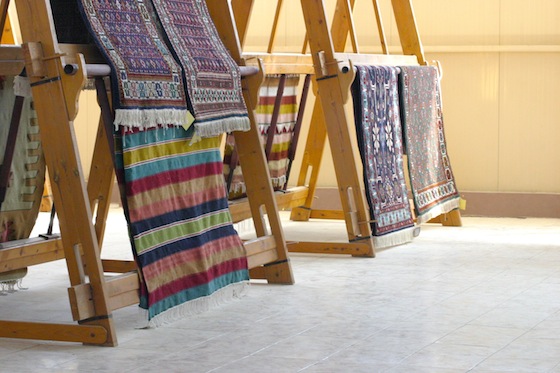
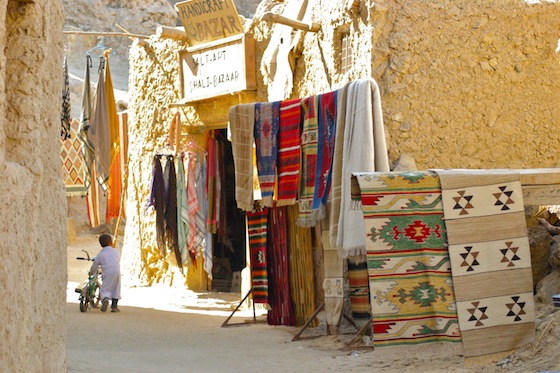
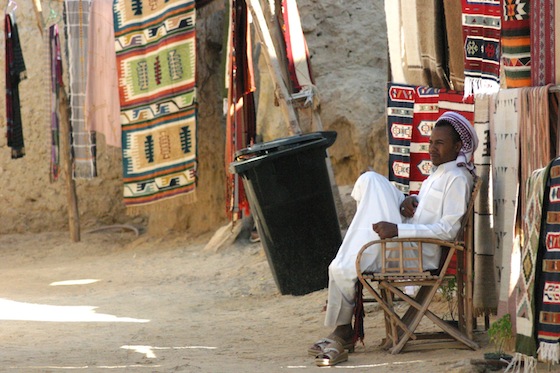
Siwa carpets on display
Roughly 25 weavers and their families currently benefit from this cottage industry, though it is unclear who initiated it, who funded that initiation, and whether the project continues to receive outside help. What is clear is that these rugs, along with bags and other accessories, are sold in the factory, in downtown Siwa, and in Cairo, Alexandria, and other commercial centers scattered throughout the country. Mr. Aman said that the women receive a small stipend in addition to commissions on rugs sold, so it may be that the project is self-sustaining by now.
The Wikipedia definition of sustainable development is as follows: “a pattern of resource use that aims to meet human needs while preserving the environment so that these needs can be met not only in the present, but also for generations to come (sometimes taught as ELF-Environment, Local people, Future).”
While it won’t make them rich, this effort to empower the weavers of Siwa is an inspiring example of sustainable development. Last year we wrote about an Egyptian photographer’s efforts to draw attention to the way in which unsustainable development and tourism threatens the unique culture of this beautiful oasis town. Let this post be a testament to their resilience.
I see that solar panels are now commonplace on rooftops in Barcelona
European countries, especially Spain are becoming stronger on green projects like renewable energy and recycling. This was the impression I received while on a recent trip to the Spanish coastal city of Barcelona, where recycling efforts and water conservation are widely practiced and solar energy is also gaining in popularity. Spain has been a leader in solar energy projects, and recently Spanish companies have partnered with those in the Middle East, such as the one with Abu Dhabi’s Masdar renewable energy company and Spain’s Torresol Energy using concentrated solar energy plants incorporating concentrated solar power (CSP).
But as a tourist, I was more interested to see what private citizens are doing there to both conserve energy and resources, as well as create energy from renewable sources. These are some examples that the Middle East can pick up on. Come with me on my tour.
Israelis discuss the problem of getting nuclear neighbors.
In a small region like the Middle East, a single country’s decision to build nuclear power can easily spill over borders.
At a panel last Monday, Israeli energy experts spoke on the risks and benefits of nuclear power, noting that even if Israel avoided the risks of nuclear, the country would have to shoulder the burden should a neighboring country choose to develop nuclear power. Israel’s nuclear energy program has been “in a state of ambiguity” for years due mostly to security, human health and environmental concerns.
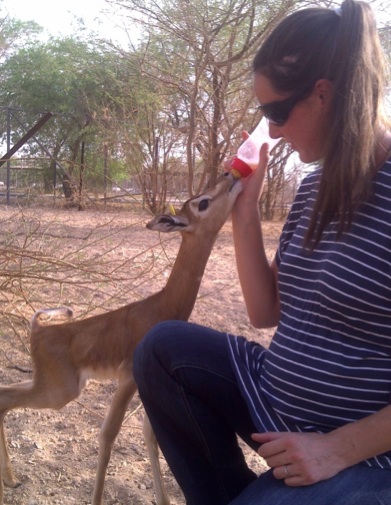
His mother passed away at birth. Now zookeepers at the Al Ain Zoo in Abu Dhabi are asking the public to give this baby gazelle a name. No Splashypants please!
Remember Mr. Splashypants the whale that was named during an online Greenpeace campaign? Like it or not, that’s what voters chose for the whale now being tracked as part of the Great Whale Trail Expedition. Picking up on naming competitions as a way to educate people about animals, zookeepers at an Abu Dhabi zoo are hoping to create some positive publicity for gazelles. Can you name this baby orphaned Mhorr gazelle pictured above?
This was the plan: leave at 8pm Friday night from Turgoman station in Cairo. Arrive in Siwa at 5.30am and meet my friend Gwen from France at the Siwa Inn Hotel. Bestow copious hugs and kisses before finding Vivek, a Couchsurfing buddy who traveled from Alexandria. And then, after introducing my friends, relax in this beautiful oasis just 30 miles east of Libya before taking the Sunday overnight bus back to Cairo.
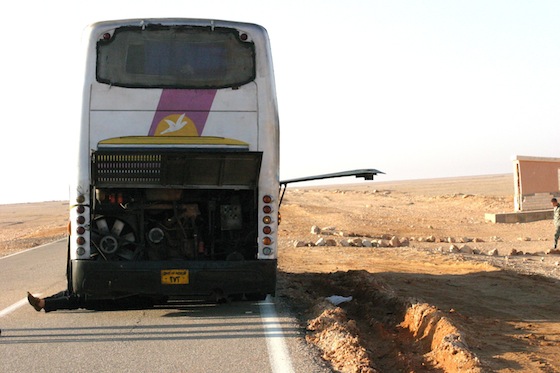
Expect delays. The bus kept breaking down on the way to Siwa
Here’s what really happened: the bus showed up with a broken belt, but I and a handful of other passengers, including a couple from Sicily, climbed on anyway. We were driven to a greasy junkyard, where we were given a bus that I was sure had not seen the light of day in months but that pacified a group of now grumpy Egyptian passengers. Finally, three hours behind schedule, bus #2 with the wheezy engine finally hit the road… and then broke down the following morning one hour shy of our destination!
Siwa market
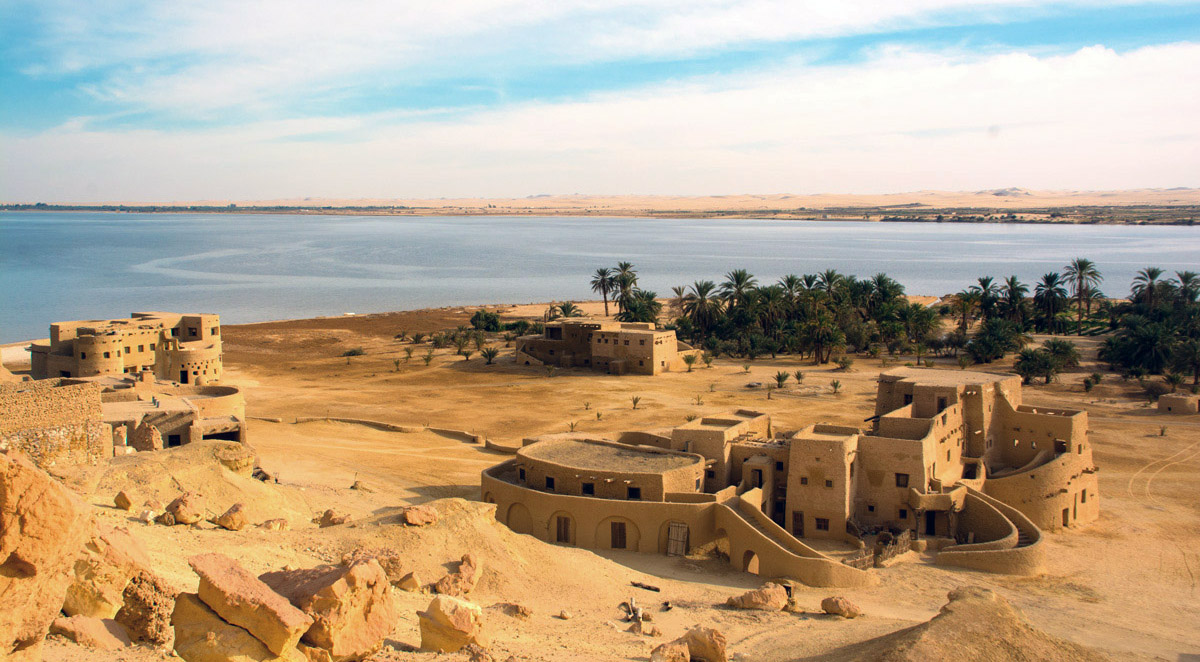
Siwa is a colorful, sleepy town that lies in a depression roughly 30 feet below sea level. In the summer, fair-skinned people need not come by. But in November, the sun eases off during the day and the evenings are cool enough for a camp fire.
The area is known for its dates, olives, olive oil, and a few other cottage industries. It is also renowned for its green building techniques (more on all of this to come). Because of its remote and tranquil location 350 miles away from the hustle and bustle of an increasingly-tense Cairo, it has become a popular destination. But this isn’t necessarily great for the locals, who are beginning to face serious water shortages. Although there are signs of destructive tourism operations, we received a rare look at the same soporific inner workings that have sustained this community for hundreds of years.
The population currently stands at roughly 23,000, comprised mostly of Berbers. While they share the same gentle, hospitable attitude of the Berbers that Karin and I met during our respective stays in Morocco, the Siwi language here is distinctly different.
Gwen and Yehia, a prominent local man whose 19 brothers and sisters (from two mothers, I should add) own a lot of agricultural property in and around Siwa, came to my rescue at the side of the highway at 9am on Saturday morning. Bus #3 showed up two minutes later, but we didn’t care. We left that bus in our dust!
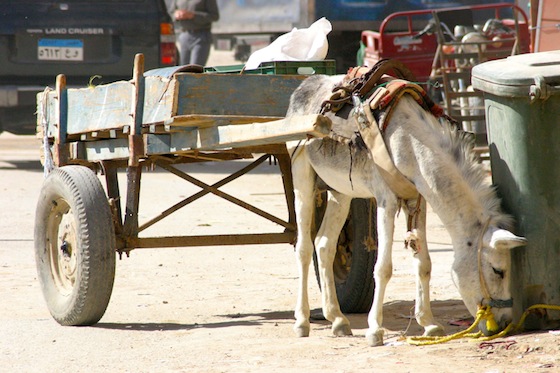
It’s easy to lose track of time wondering among the dusty streets alongside donkeys and tuk tuks, watching young boys and men completing their daily chores, or else sipping sugary chai in the shade.
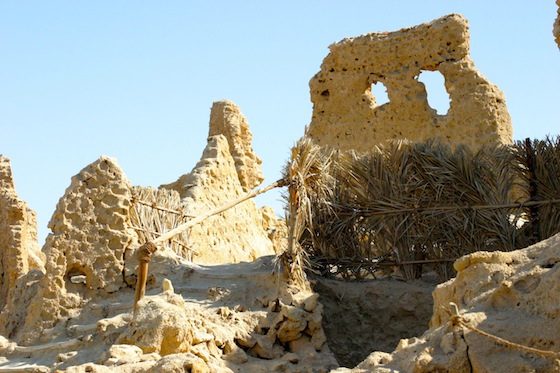
A short climb up the melted Shali fortress made of mud-brick and salt provides a wonderful sense of perspective. From the top, there are views of two small salt lakes, a valley full of leafy green palms used for pretty much everything, and the necropolis or mountain of the dead rises in a lumpy mound on the outskirts of town.
The planned group of three turned to six: the couple from Sicily joined our party, I called them Juicy and Crunchy, Vivek met Pierre from Quebec on his bus, Gwen spent the day meandering through town with us before leaving on Saturday night, and then there was me.. happy as can be away from the city again.
Stay tuned over the next few days for a peek at a group of woman in Siwa who make carpets under the army’s watchful management, the man who lost an eye to salt crafts, Siwa’s veteran green builder, and the man who makes olive oil that is good enough to drink…
We speak to Fazlun Khalid who set up The Islamic Foundation For Ecology And Environmental Sciences about the highs and lows of over two decades of work
The link between Islam and the environment is slowly gaining recognition amongst the wider public and The Islamic Foundation For Ecology And Environmental Sciences (IFEES) may have something to do with that. Over the last two decades, the UK-based organization has been reaching out to Muslims and non-Muslims alike about the role that faith can play in environmental protection. IFEES has worked particularly hard to highlight the Islamic teachings on nature and have set up their EcoIslam newsletter and published various green guides with that aim in mind. The organization has also campaigned to end dynamite fishing in Zanzibar and encourage tree planting in Indonesia through Islamic teachings. I caught up Fazlun Khalid who established the charity to talk more.
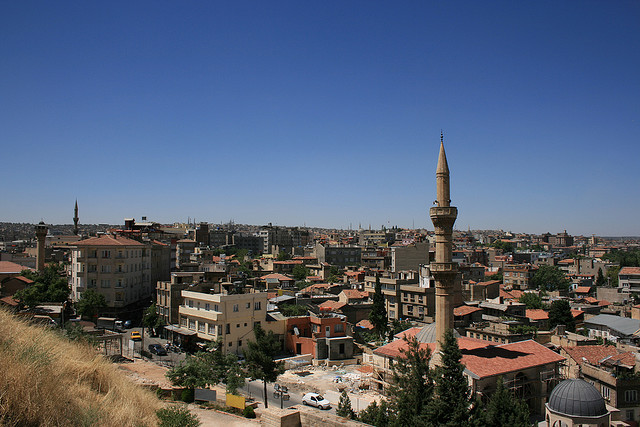
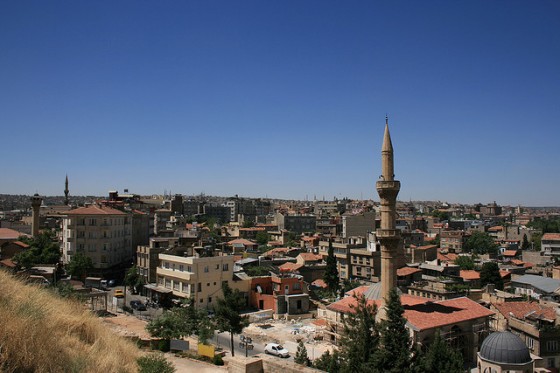
Gaziantep is the only city in Turkey with its own climate change action plan.
Everything from sustainable agriculture to waste-to-energy technology will be on the agenda today, as dozens of mayors, academics, and NGO representatives assemble in Istanbul for the 2011 Sustainable Cities conference, a project of Turkey’s Regional Environment Center. Municipalities often accomplish environmental goals more swiftly and efficiently than national governments, according to Barış Baykan, author of a recent study on the Turkish government’s lackluster efforts to reduce carbon emissions.
While participants learn how to draft and fund environmental action plans in their respective cities, we’ll take a look at the most sustainable towns and cities in Turkey today.
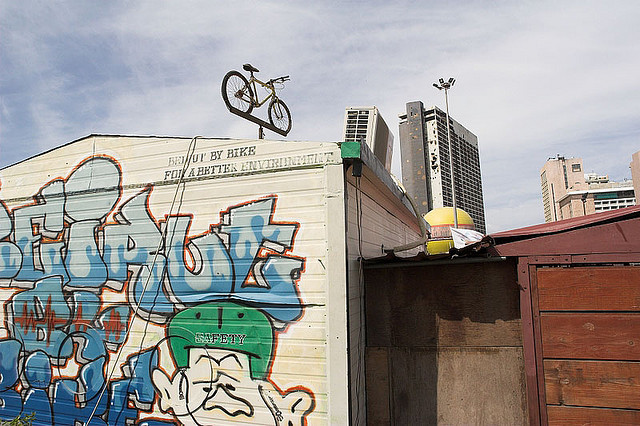
In a tweet a couple weeks ago (yes, he tweets), Prime Minister Najib Mikati wrote that “the example of Vélib’ rental bikes in Paris is interesting for Beirut to be more ecologically/pedestrian friendly and reduce traffic. Agree?!”
Ocean bricks are underwater infrastructure for wind turbines and more futuristic ideas.
Here’s a business that might do really well in the future. Israeli inventors Yoram Alkon and Dr. Eli Kent have come up with a giant “ocean brick” concept that would have many uses in the strange new world that we are inadvertently creating – a world of rising sea levels, sinking aquifers, flooding wetlands and melting permafrost.
Their invention is simple. A scalable, modular building block with a largely hollow base that can be used to meet many needs for support upon which to build a kind of artificial land, wherever needed, on both land and sea.
An SSC Tuatara at 444km/hour or a Nissan Leaf? As Europe, North America and even Israel rolls out modest EVs and hybrid cars, they are a no-go for the luxury brand shoppers in the Gulf region.
“Hybrid cars still can’t cut it in United Arab Emirates,” is the sub-heading sum-up of an article in this week’s Gulf News covering the Dubai Motor Show. The business editor Orlando Crowcroft goes on to brag how few people can sit through Al Gore‘s eco-educational film: “After all, I’d rather feel like a racing driver than an ex-presidential candidate who, if we’re honest, few of us really listen to and — if we’re even more honest — fewer still have sat all the way through An Inconvenient Truth.”
Meet Karin at the WATEC conference this week in Tel Aviv.
It happens every two years, and this week delegations from all corners of the planet are expected to converge in Tel Aviv, Israel for the two-day water conference and expo called WATEC. I interviewed Booky Oren this year, the conference chair, about what to expect. Formerly the chair and CEO of Mekorot, Israel’s national water carrier, Oren says that this year’s conference focuses on I2I: Innovation to Implementation.
Israel has experience in water technology innovation and implementation, and the country is aiming to attract open-source water partnerships with cities around the world to solve water shortage and energy efficiency problems on a global scale.
The event – for first-timers – is a great way to meet some local innovators, and big water companies like IDE. For local entrepreneurs it’s a good way to rub shoulders with potential investors.
Last week Tafline was at the Dii Desertec conference in Cairo, and this week I will be at Watec on November 15. To connect with me email [email protected].
A pregnant me at the very sunny Better Place visitor center last year.
With the launch of the first nationwide electric car networks rolling out in Israel and with Denmark just months away, the electric car company Better Place today reports that it has secured another $200 million in financing, on top of the $55o million already invested in it. The company which is developing infrastructure for electric cars and thus speeding up the process of getting a quick “charge” needed for electric cars, says it will use the money to expand its business in Western Europe. It will also build on projects in Northern California, Southern China, Japan, Ontario, Canada, and Hawaii.
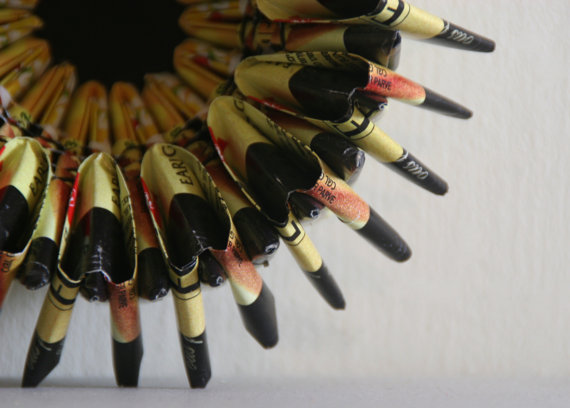
Origami and some creativity saved these Earl Grey tea bag wrappers from the recycling bin and made them functional again.
We are constantly surrounded by paper. It is in our mailboxes, surrounding our dry food items, and pretty much everywhere. It is all too easy to toss unwanted or used papers into a wastepaper basket or recycling bin (a more valid ecological choice), but it would be even better if one or more uses could be gotten out of something before it is recycled. Israeli crafter Ruti Ben Dror, who has a love for reusing pre-existing materials and color-matching, has found a use for her used tea bag wrappers and other paper scraps in the form of origami. Her origami creations are not merely decorative, however, and are highly sturdy and functional.










 Meet Karin at the WATEC conference this week in Tel Aviv.
 A pregnant me at the very sunny Better Place visitor center last year.