Home Blog Page 444

An Israel Alone, Dependant On Natural Gas

1

Shaul Zemach (left) shakes hands with Zvi Rome of Petco (right) at the Asia House in Tel Aviv this Tuesday morningShaul Zemach (left) shakes hands with Zvi Rome of Petco (right) at the Asia House in Tel Aviv this Tuesday morning

With Israeli electricity prices set to rise nearly 9%, government officials are trying to plan for the long-term, at least until the next energy crisis.

At a breakfast event this Tuesday in Tel Aviv sponsored by Washington-based international energy consulting company Petco, the Director General of Israel’s Ministry of Energy and Water Resources Shaul Zemach spoke about the challenges facing Israel as it struggles to keep up with rising electricity and gas demand.

Israel’s Public Utility Authority – Electricity is raising electricity prices because a shortage of natural gas supply and a projected increase in electricity demand this summer will literally max out the country’s grid. Unfortunately for Israelis, this is not the first time that demand will outpace supply for the tiny Middle Eastern country that, according to Zemach, cannot rely on its neighbors for back-up power.

“We cannot rely on natural gas that is imported from a foreign country,” Zemach told the fifty or so gathered energy industry professionals in Hebrew. “This was something we knew before the problems with Egypt. Even then, the situation was not stable, but at the time we did not put enough emphasis on diversifying the country’s energy portfolio.”

Although Israel has recently discovered several significant offshore natural gas wells in the Mediterranean Sea, only the Leviathan well—with over 400 BCM (billion cubic meters) of natural gas—has been tapped and connected with a pipeline to generators. But with over 40% of Israel’s electricity produced with natural gas, Leviathan is quickly emptying just as supply from post-revolution Egypt is dwindling.

Zemach said the government knew there would be a gap in supply as Leviathan drained and the newly discovered 200 BCM Tamar well was tapped, but the government mistakenly assumed that Egyptian natural gas would fill the gap.

“Everyone thought we could buy time,” said Zemach. So when the government realized that would not be happening, it scurried to begin development of the Tamar well, but a gap in supply this summer is still inevitable.

And because the Israeli grid is so dependant on natural gas, Zemach said it will be nearly impossible for the country to transition to alternative energy sources anytime in the near future.

“We are in a natural gas crisis, so we have to develop [the wells we have] as quickly as possible,” said Zemach. But like everything in Israel, obtaining the necessary permits has been challenging for natural gas developers that have to jump through the hoops of government bureaucracy and local residents that are fighting the construction of pipelines near their homes.

“Israel has become a crowded countries in terms of infrastruct ure, said Zemach. But he said the government has to do a better job of prioritizing national interests over the protests of local communities.

In 2010, Israel also faced an energy crisis and at the time the government approved construction of four emergency power plants. Currently 34% of Israel’s power is generated from coal. But only three of the plants were built which is why the PUA is still struggling to keep ahead of supply two years later. Zemach said that included in the demand numbers is a relatively generous cushion of excess energy that Israel feels is necessary because it cannot rely on a neighboring country for backup power.

While many small isolated countries have chosen to invest in renewables rather than import natural gas, Zemach said the lack of energy partnerships with neighboring countries makes the Israeli PUA uncomfortable relying on renewable energy for any significant amount of power.

And the lack of abundant water resources makes hydropower, which in many small countries a significant part of a renewable energy portfolio, an impossibility in Israel.

By 2020, the country has set a goal of 10% renewable power, but it is an initial goal that is being used only as a preliminary test, Zemach said in response to a question from GreenProphet. There is currently no plan for further expansion after the 2020 target is met. For that target, the PUA will develop wind (30% of total renewables) and biomass (21% of total renewables) but will focus heavily on solar. And for a country with nearly constant sunshine, that technology may prove most effective.

What’s in season in March?

0

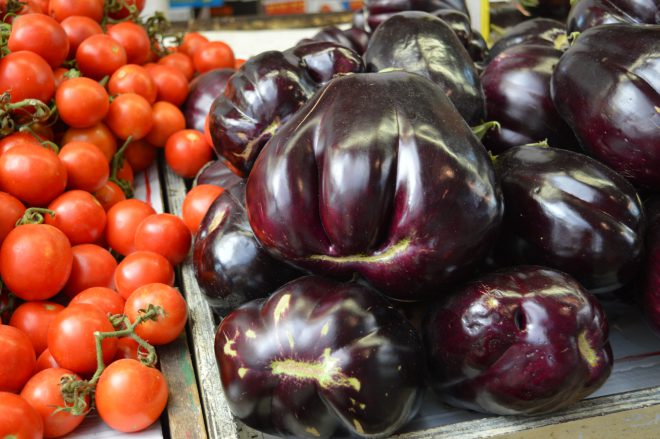
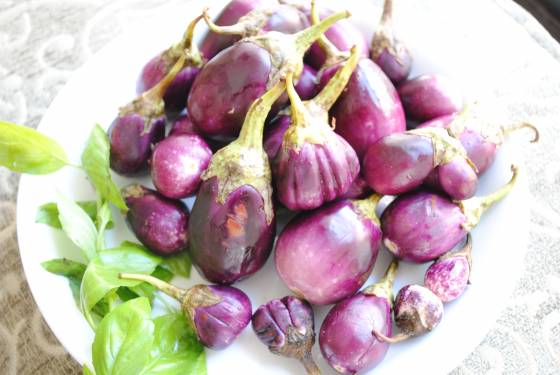
image-baby-eggplantsEver wonder what to do with eggplants? Read on for some Middle Eastern eggplant ideas.

At the start of the month, markets didn’t have much new. Everything in February’s post still appliedNewcomers like strawberries were still expensive and not sweet yet. Now, seasonal produce is on the upward swing towards summer’s abundance and those piles of strawberries fill the air with their fragrance as you move from vendor to vendor in the shuk. Strawberry prices will continue to fall slightly as spring progresses, but if you want to put jam up now, you won’t regret it.

More fruit in season: Avocados must be the best bargain in fruit right now. Black, wrinkly Hass avocados are sold dead ripe and ready for eating right now.  Try our natural moisturizing blend with some of these ripe avocados. The larger smooth green varieties are mostly sold hard for ripening at home.

Melons have begun. The smaller varieties are sweet already, but I advise waiting for hotter weather to buy watermelons. Oranges and clementines are still around, but fading out of the picture. Lemons are still abundant and good. Bananas are attractive, with prices slightly lower than at the beginning of the month.

Apples and pears are mostly imported and although attractive, not especially sweet. International shipping and perhaps refrigeration seem to draw the sweetness and flavor out of fruit. However, loquats are out in quantity, and they are a purely local fruit.

Other springtime arrivals are passion fruit, and kiwi fruit, both highly priced. Passion fruit vines grow easily in our climate, with fruit dropping off garden fences onto sidewalks, but kiwi is produced by farmers in the colder hilly regions. Quinces are available and look beautiful, but are most expensive.  Papaya fruit has now arrived, although scanty and expensive. Yellow guavas, with their unforgettable heady odor, are another springtime newcomer.

Lebanese Quince Jam, A Sweet Winter Recipe

Vegetables: Timeless cooking principle: cook seasonal produce together. Right now eggplants, peppers and tomatoes are fat and glossy, so cooks here naturally grill, then blend them together with garlic and olive oil. It’s a delicious spread with the slightly charred flavor that says Middle East. Or try grilling chunks of vegetables, our way.

Shakshoukah, eggs poached in a tomato sauce with bell peppers, is another brilliant way to combine seasonal vegetables.

shakshouka eggs stew

Those prime ingredients for Middle-Eastern chopped salad, cucumbers and tomatoes, are excellent now and prices are coming down as summer approaches.

Bell peppers in all their colors are fat and prime for stuffing, grilling and pickling. Red bell peppers are slightly more expensive than their yellow, orange, and green cousins. Beware peppers imported from Turkey though. Buy organic if you can. Peppers are worth buying for salad or muhamarra spread now, but wait for full summer to buy quantities for pickling.

Eggplants again: both long, slender and full-bodied varieties, are worth buying now. Once the hot weather starts eggplants are the first to spoil and buckle in the heat, so buy now and enjoy.

image-eggplants-israel

Squash varieties like pumpkins and zucchini are handsome and excellent for light springtime soups.

Green string beans and yellow wax beans are more in evidence although their prices are still on the high side. Artichokes are full and heavy; this is prime season for them.

Red, white, and baby potatoes of both colors are excellent, as always in spring. Onions are improving – you can ignore the sprouty ones that vendors are still trying to get rid of for the fresh new crops.

Short-season vegetables. Peas are in the markets now, as are green fava beans. Cardoons are in the markets. The cardoon, Cynara cardunculus, also called the artichoke thistle, is a thistle in the sunflower family. It is a naturally occurring species that also has many cultivated forms, including the globe artichoke.

Fresh green garlic is here and if you like it, now’s the time to buy for drying or preserving. Two ways to preserve fresh garlic are peeling and freezing it, or burying the cloves or entire cleaned bulbs in olive oil and herbs and baking till soft. This confit of garlic also freezes well. And eggplants yet again: baby eggplants for pickling are available in some markets. Buy now if you like them.

Some cold-weather vegetables are still firm and worth buying: cabbages, kohlrabi, beets, turnips, carrots, celeriac, parsley root.

Leafy vegetables like lettuces, Swiss chard and celery are very good. Broccoli has been looking rather old, but cauliflowers are going strong, fat, and white.

Herbs are so exuberantly beautiful and plentiful that they deserve space all to themselves. Mint,  thyme, rosemary, parsley, dill, watercress, aragula,  rocket, bitter wormwood for a sprig in tea, coriander leaf, fresh  fenugreek leaves, which are favored by the Indian community, a garlicky Persian leaf called” richu,” basil, scallions,  leeks, fresh ginger and “shav,” or sour grass for soup. A variety of savory that tastes like za’atar is being sold now.

Forager’s notes: Mulberry trees have put out leaves, good for stuffing or drying and crumbling later for tea. Shepherd’s purse is flowering and getting leggy, but the heart-shaped seed pods make a peppery accent in salads. Wild marigolds and chamomile flowers are very abundant wherever they’re allowed to grow.

Nettles, chickweed and mallows are no longer worth picking. Plantain leaf is especially abundant now because of the recent heavy rains. Fumaria and cleavers are still good. Mandrakes may be seen in cold regions, but beware – the intriguing purple fruit is toxic.

We promised you eggplant ideas, and here they are:

Baba Ganoush

Eggplant with Tahin/Labneh Sauce

Creamy Eggplant Soup

World’s Longest Solar-Powered Flight Will Land in Morocco!

Solar Impulse, solar-powered flight, Morocco, Switzerland, world's longest solar-powered flight
The Solar Impulse flies from Switzerland into the Moroccan sun.

Just 107 years after the Wright Brothers became famous for successfully flying the world’s first airplane, Swiss pilots Bertrand Piccard and André Borschberg made history in July, 2010 by piloting the longest solar-powered flight at 26 hours, 10 minutes, and 19 seconds. Now they have announced plans to break their own record in May or June by flying their Solar Impulse plane from Switzerland to Morocco in preparation of their round-the-world trip scheduled for next year.

Saudi Artist Sucks Oxygen From a Plastic-Wrapped Tree

0

green design, Sharjah Biennale, environmental art, Abdulnasser Gharem, United Arab Emirates, nature, trees, urban planningSaudi Artist Abdulnasser Gharem is surviving on oxygen released by this tree in the Gulf.

If you’ve ever had a plastic bag around your face, even for a second, you will know how quickly it cuts off the oxygen supply. Depending on your character, this can result in immediate panic, or in my case, extreme violence until the idiot who put the bag there in the first place gets it off!

Which is why Saudi artist Abdulnasser Gharem’s exhibit for the 8th Sharjah Biennale is so surprising. Gharem wrapped plastic around imported Cornocarpus Erectus trees and then stepped inside one of them, relying only on oxygen released from the tree for survival. This exhibit was shown in 2007, but we definitely think its message is still relevant today.

It’s Game Over for Global Warming Unless We Act This Decade

0

http://www.shutterstock.com/cat.mhtml?lang=en&search_source=search_form&version=llv1&anyorall=all&safesearch=1&searchterm=planet+on+fire&search_group=#id=46587661&src=429bd998cf7d4de9640e832ce1f52825-1-3Scientists warn that we are about to hit a tipping point beyond which it will be impossible to curb runaway global warming.

Scientists gathered at the Planet Under Pressure Conference in London warn that failure to drastically slash greenhouse gas emissions this decade could push the planet past certain thresholds that would keep climate change manageable, according to a Reuters report. If carbon emissions continue to rise, the overall global temperature could increase by a full six degrees celsius by the end of the century. That might seem negligible, but such changes would render certain parts of earth uninhabitable.

Ksour – Adobe Granaries That Keep Food Cool Berber Style

1

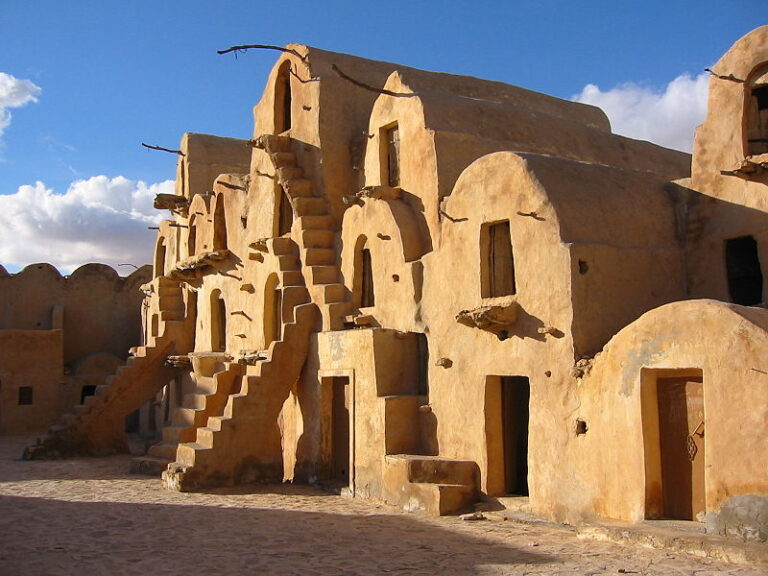
green design, earth architecture, adobe architecture, green building, Tunisia, granary, Berber, culture, travel, nature, architectureThis beautifully-restored adobe granary in Tunisia keeps food cool without any kind of mechanical intervention.

The benefits of earth architecture have been well-documented on Green Prophet, so we were very excited to discover these wonderful adobe granaries called Ksar (Ksour is plural) on our Tunisian journey. Possibly built as early as the 12th century by ancient Berbers, who had water management and agricultural skills that rival any modern farmer, these multilevel structures keep food cool without any kind of mechanical intervention!

Toxic Chemicals in Everyday Items

1

plastic, pollution, carcinogens, plastic and environment, health, nature, Gulf, United Arab Emirates, breast cancerPlastic is pervasive and so are the carcinogenic chemicals that leach from them.

The rapid growth and urbanization of the United Arab Emirates is associated with increased uses of plastic in every aspect of modern life. In 2008, the World Health Organization voiced concerns that rapid urbanization may be negatively impacting people’s lives. Rapid growth is causing air quality to decline in large cities, due in part to industrial emissions and increased a number of vehicles.

This is evident in the increased incidence of respiratory diseases in the last 10 years. But another urgent yet unstated concern is the health impact of chemicals leaching out of the mountains of imported plastic items: plastic toys, canned food, consumer goods and so much more.

Plastic is everywhere!

Since the turn of the 20th century, plastic has entered almost every aspect of our lives: medicine, transportation, construction and consumer products. There seems to be no end to cheap, lightweight, colorful plastic. In the past 10 years alone, we have consumed more plastic than in all decades of use before.

plastic soup, boy with plastic heap at sea
Plastic Soup is a website that draws an atlas of plastics and where it is accumulating around the world.

And while plastic offers great many price and feature advantages, a growing body of scientific evidence suggests some serious connections to human health. In the UAE, as in many other countries, breast cancer is the most frequent cause of cancer-related death. It makes sense to begin to explore possible environmental causes for this devastating disease.

What exactly is the problem? All plastic products start their life as “nurdles”, small pieces of resin product. In order to make a plastic bottle, a shower curtain, a toy or any other product, manufacturers add chemicals, which give the final products color, malleability, sturdiness, inflammability or other qualities. In other words, these chemicals make the final plastic products what they are.

Human carcinogens

This is where the problem emerges: most of these additive chemicals are well known and documented human carcinogens or synthetic hormones, acting as endocrine disruptors. They include PVC, or polyvinyl chloride, which leaches phthalates; polycarbonate, which leaches Bisphenol-A; polystyrene, which leaches styrene, a well-known carcinogen.

These chemicals leach out during the prolonged life of plastic products, especially in high temperatures, or during stress such as freezing and defrosting. A just released study by twelve leading world scientists confirms the danger of endocrine disruptors and hormones at low doses.

What do we know about these chemicals? Where do they come from?

  • Polyvinyl Chloride (PVC) – Found in #3 plastic. Also in cling wrap, some plastic squeeze bottles, vinyl shower curtains, wall and floor coverings PVC has been linked to increased mortality from breast cancer and has been designated as a known human carcinogen by the International Agency for Research on Cancer (IARC).
  • Bisphenol A (BPA) – Found in #7 plastic and also in thousands of consumer products, including lining of baby formula and soup cans, dental fillings, food packaging, coating of grocery receipts, etc. BPA is an unstable polymer and tends to leach out of plastic. It is also lipophilic, which means it tends to seek fatty substances to attach to. The leaching process accelerates when BPA is heated. BPA has been linked to prostate cancer, lower sperm count, and reproductive abnormalities. New studies are linking BPA to obesity and diabetes, which is on the rise in the UAE as well as the rest of the world.
  • Phthalates – Found in #3 plastic, and also in children’s toys, cosmetics, pharmaceuticals, baby care products, building materials, modeling clay, automobiles, cleaning materials and insecticides. Phthalates are added to plastic products to make them soft and malleable. Phthalates are a well-known endocrine disruptor and have been shown to disrupt the development and functioning of male and female reproductive systems by interfering with the production of testosterone and an estrogen known as estradiol.
  • Dioxin – Found in #3 plastic. Like PVC, dioxins have been designated as a known human carcinogen by the IARC. It is also a known endocrine disruptor.
  • Styrene – Found in #6 plastic and Styrofoam items such as Styrofoam food trays, egg cartons, disposable cups and bowls, carryout containers and opaque plastic cutlery It has been designated as a known human carcinogen by the IARC,

While attention is given to Breast Cancer Awareness Week and other vehicles to share information about this disease, it is really important to begin raising awareness on (1) environmental causes for cancer, and (2) ways to prevent it. By reducing our use of disposable plastic and cutting down on our reliance on this complex material, we can make healthier choices and educate others about the dangerous chemicals that leach out of our everyday products.

This post was contributed to Green Prophet by Daniella Dimitrova Russo, Co-founder and Executive Director, Plastic Pollution Coalition.

More Reasons to Ban Plastic From Your Life:

OP ED: Bioplastics Will Not Solve the Plastic Pollution Problem

Inspired by Oman Caves, Take Green Prophet’s Plastic Bag Challenge

Half of UAE’s Falaj Mualla Camels Choked on Plastic

Love Lipstick, Love Formaldehyde?

5

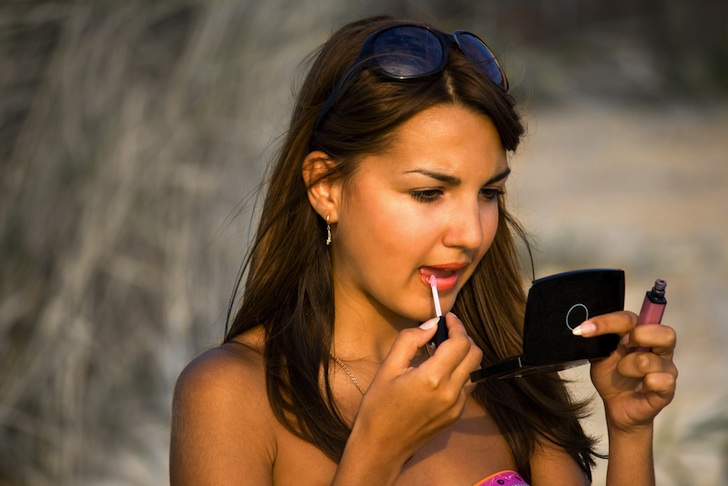
toxic chemicals lipstick formaldehyde, parabensFaisal spring cleans with her daughter and is shocked at the toxic chemicals she finds in her cupboards. Teens are especially at risk. 
When your ancestral roots include a tangle of Irish housewives, you instinctively interpret “Vernal Equinox” as “spring cleaning”. I live in a furnished apartment. I’ve shed most of my superfluous stuff after a couple international moves. So mine is a micro spring-cleanup.  Sort photos; recycle books; shakeout a closet and the bathroom shelves.

The bathroom shelves sound simple enough.  But I have a teenage daughter. So, we suit up in old clothes, open windows to air out long-spilt nail polish remover and exploded body wash, and jump in. Boxes of ancient lotions; mini-shampoos and conditioners swiped from a year’s-worth of hotels; dust-covered toiletry gift sets, never opened; and then, the nail polishes.

Crazy thing is this kid doesn’t use make-up.  She just loves scent.  Her motley collection would disappear if only I could source scratch ‘n sniff wallpaper. She agrees. We start sorting.  As we unscrew each cap to whiff and judge the fantasticness of each smell, I read labels.

It starts with parabens, benzoates and xylens. Moves on to butyl, methyl, ethyl and propylisobutyl.  In comes formaldehyde, nonylphenol, octylphenol, and tongue-twisting alkylphenol ethoxylates.  Top it all off with perfumes.  It’s a chemistry lab Madame Curie would kill for, neatly packaged in pretty bottles and teensy tubes.

I swap stories with a mother of twin 6-year-olds.  Her girls are mad for nail polish, the next rung up from bubble bath on the kiddie-cosmetics ladder.  Twenty minutes of internet meandering on this and we both have headaches.

The Campaign for Safe Cosmetics (CSC -links to website) is a coalition of women’s health, environmental health and consumer-rights organizations. They publish reports, host a website, and run a companion blog exposing the chemical truth about toiletries we all use. They relentlessly query cosmetic giants on flash-points like how can products pitched to women contain ingredients linked to reproductive illness?  Can companies self-marketed as leaders against breast cancer use chemical ingredients that might cause the disease?

The Environmental Working Group (EWG),  one of the CSC’s founders, strives to expose health and environmental threats hidden in everyday products. Their excellent website broadcasts some dizzying findings.

In industrialized nations, nine out of ten girls regularly wear makeup by age 14.  Pubescent girls are most vulnerable to makeup’s chemical ingredients, some of which have proven links to breast cancer. In a study of 20 teenagers, EWG found evidence of 13 different hormone-altering chemicals in the girls’ blood and urine samples.  Their research shows that a typical kid is exposed to about 27 product ingredients that haven’t been found safe for growing bodies.

EWG claims that 77 percent of the ingredients in 1,700 child-specific products have yet to be assessed for safety.  CSC’s 2009 report, No More Toxic Tub, revealed that dozens of bestselling kid’s bath products  are contaminated with cancer-causing formaldehyde and 1,4-dioxane.

The toxins in your make-up:

beauty, cosmetics, David Suzuki Foundation, make up, chemicals, cancer, carcinogens, hormone disruptors
Lipstick toxins

1. Phthalates – Used in hairsprays, perfume and nail polish; they act as hormone disruptors and affect fertility.  They cause allergies, damage kidneys, and have been linked to asthma.  Phthalates are banned from US children’s toys, but not toiletries.

2. Parabens – Used as a preservative in deodorants, moisturizers and toothpaste; parabens are estrogen mimics. They’re linked to breast and testicular cancers.

3. Xylene – Used as a nail polish solvents; it irritates the skin and respiratory tract, may cause liver damage, and is narcotic in high concentrations.

4. Formaldehyde – Used as a disinfectant, germicide, fungicide and preservative in deodorants, shampoos, handwash and nail polish;  it’s been found to cause lung cancer in rats. It irritates eyes, respiratory tract and mucous membranes.

5. Alkylphenol ethoxylates – Used to make shampoos foam; these are hormone disruptors and extremely toxic. They may be carcinogenic.  They cause asthma and eczema, and damage the central nervous system.

6. Perfume – Synthetic fragrances are linked to breathing difficulties and allergies. About 2,600 chemicals are commonly used in perfume; 95% of chemicals used to scent cosmetics are synthetic compounds derived from petroleum. Twenty-six of these chemicals are on the EU banned list.

That’s why we only use natural perfume.

Ayala Moriel makes perfume natural, naturally

Cosmetic ingredients are often considered trade secrets, and they’re exempt from labeling laws. The industry is widely unregulated.  The very nature of these products hold their greatest danger: applied directly to the skin, chemicals are easily absorbed and pass into the bloodstream.

Consider the youngest users. These chemicals are found in baby shampoos, lotions and soaps. How often is your baby rub-a-dub-dubbed in the chemical tub?

How to shop for make-up without toxins:

Product standards vary internationally. Ingredients within a same-name product can differ based on point of manufacture. Testing standards are globally inconsistent; chemicals banned by one nation may be acceptable in another. Consumer protection websites can educate and inform, but we’re fully responsible to take care before we buy.  CSC offers these few tips on how to shop smart:

  • Simplify: Select products with fewer ingredients and no synthetic fragrance or dyes. Use fewer products overall. Look for natural creams and deodorants with materials you recognise. Good face creams may need to be kept refrigerated.
  • Choose safety:  Learn more. Check out EWG’s Skin Deep Cosmetic Database  and search almost 70,000 products.  Learn about ingredients and associated risks. See if they test on animals. Find safer alternatives. See also their Safety Guide to Children’s Personal Care Products.
  • Read labels: Select products that don’t contain any of the ingredients mentioned in this article.

It’s not all ugly.  Hundreds of companies meet CSC safety standards, and another hundred are making measurable progress towards those goals.  These industry champions show it’s possible to make safe products, that work great (and, yes, kid, they smell fabulous) without using hazardous chemicals.

Asthma? Allergies? Eczema? Maybe she’s born with it – but maybe it’s her choice of toiletries.

Dubai Dumps its Dumps

0

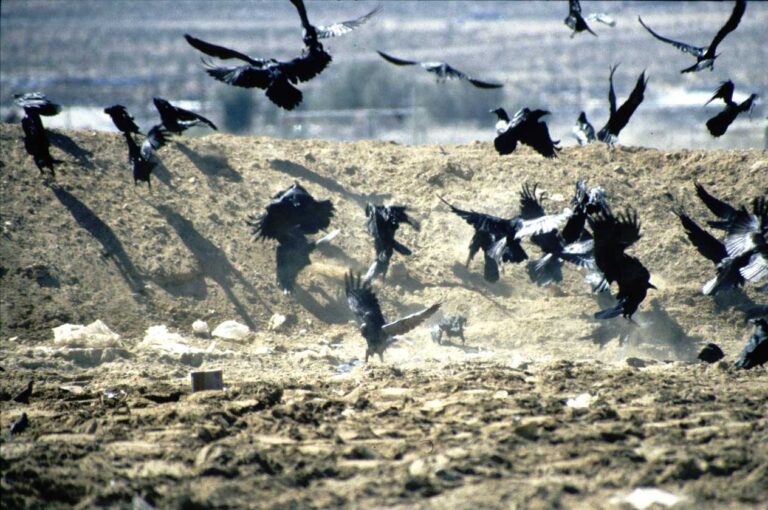
birds at a landfill siteThousands of Emirati families have been clearing space for their brand new recycling bins, distributed as part of a new waste management program started this month.

Dubai Municipality is growing a culture of recycling in both national and expat residents by providing almost 4,000 families with bins for separating household waste. Bin recipients were taught basic recycling principles; families and their maids learned to segregate household waste into food and non-food containers. Collection is via three private waste companies, and the service is free for residents.

Neighboring Sharjah already beat them to the punch, launching a similar project in February, and last year, Green Prophet told you how Abu Dhabi distributed solar-powered recycling bins throughout the capital.

Dumpster Diving for Hotel Food in Eilat, Israel

1

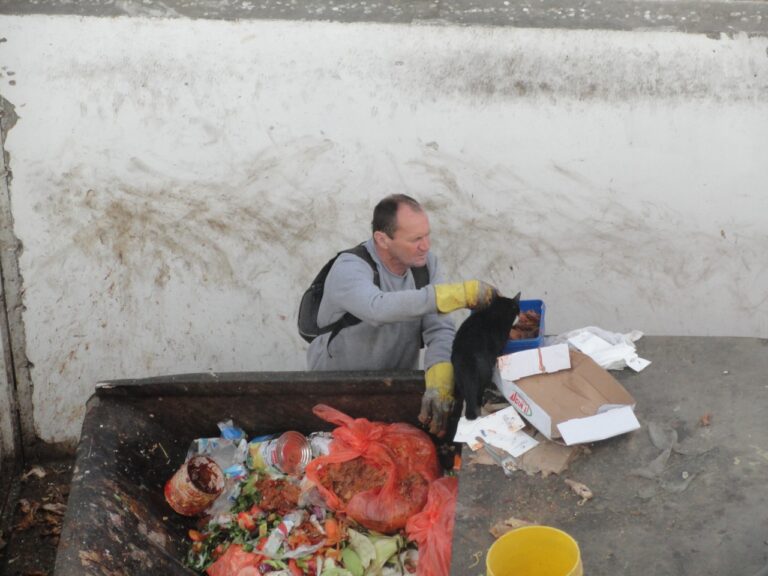
dumpster diving eilat, israel for food

The poor man’s Riviera, that’s how we see it: Eilat is a vacation hotspot for tourists looking to catch some cheap winter sun, and for local Israelis who want a quick jaunt out of the north without having to change time zones and a wad of cash into foreign currency. Not necessarily a poor town, the location and isolation does drive a lot of opportunities for locals, especially if they don’t work in the tourism industry.

For want of food, or a simpler way of life, here a Green Prophet reader spots a dumpster diver in the city of Eilat, just inside the hotel zone along the sea. Taken from the third story of a mid-range hotel that offers an unlimited feast of breakfast and buffet-style dinner, we can just imagine the tonnes of perfectly good food that gets thrown out here every year. It certainly isn’t being composted. Multiply the waste from this bin times 100 or more to account for all the hotels in the area. 

Climate Change Might Not Get Our Wine

0

agriculture, wine, climate change, environment, Negev Desert, Derech Eretz Winery, IsraelThis man singlehandedly produces up to 5,500 bottles of delicious red wine each year, despite living in a frequently drought-stricken region

Dave Levitan from Onearth, one of our favorite environmental blogs, traveled to Israel to meet with a hardy winemaker in the Negev desert and came away gushing. No, not from all the red wine he drank, though he insists it was good (his emphasis, not ours), but because he was so impressed by how well Daniel Kish manages his vineyard even though the region receives less than four inches of rain a year.

(Earlier this year Maurice called for a boycott of other vineyards that are a deathtrap for wildlife.) Many insights came from this excellent profile, but here’s the most exciting: climate change could destroy everything in its wake, but it might not get our wine!

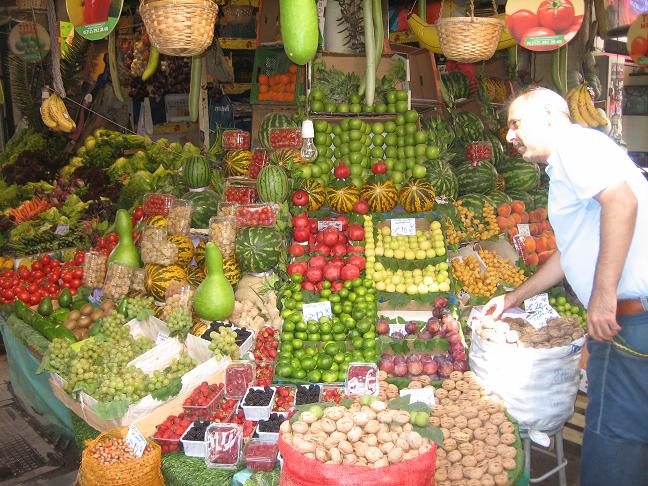
Beware: Peppers, Pears and Grapes From Turkey Are Most Toxic Produce In Europe, Study Finds

13

toxic fruit pesticides turkeyFresh produce stands like this one are popular all over Turkey. But these colorful displays contain a toxic blend of pesticides, according to a new Greenpeace report (in German).

Of 76 different fruits and vegetables recently evaluated, Turkish peppers contained the most excessive and dangerous amounts of pesticide chemicals, according to Food Without Pesticides, a new 26-page guide to European food released this week by Greenpeace Germany.

Dubai Malls That Fail to Recycle Waste Will be Fined

0

recycling, Dubai, lawThe Dubai Mall is just one in the emirate that will be required by law to recycle waste.

A few years ago, many Emiratis didn’t even though that it is possible to recycle a plastic container, but now it is unlawful not to – at least in Dubai malls. A new law puts the burden of recycling plastic, glass, metal, and other recyclables upon mall management, which is required to use recycling bins provided by the municipality. The National reports that affected facilities have been informed of the new mandate by postal circulars, and it will go into effect on 1 May, 2012.

Local Architect Questions the Logic of Qatar’s 2022 World Cup Groundwork

0

green design, urban planning, Qatar, World Cup 2022, architecture, Doha, sustainable development, unsustainable development, designDoha-based architect Romi Sebastian questions the feasibility of Qatar’s urban planning ahead of the 2022 World Cup

Qatar is moving rapidly towards its vision to host the world cup in 2022. Yet if scrutinised, current progress in urban infrastructure and architecture seems to be frail in terms of character and functional approach. Is the idea of developing an ‘instant city’ going to be a harmful one? Are designs being developed on the burden of unnecessary stylistic demands? Will the city planners commit to making the same mistakes made in the other developed cities in the Middle East region?

Architecture here is already being needlessly influenced by predominantly western concepts. One should not forget that most of the iconic designs are developed by expatriates who don’t understand that cities in the Middle East lack a public realm. The skyline of the west-bay area already resembles Sheikh Zayed road in Dubai.

What Modern Society Can Learn From a 2,800 Year Old Earthen Water Well

8

dead sea, Israel water conservation, water issues, desalination, wastewater treatment, ancient water technology, world water day, Turkey, Istanbul,Leading researchers from around the world gathered in Istanbul, Turkey last week to marvel at the sustainability of ancient water conservation methods.

Even though World Water Day is behind us, many researchers are looking to our forebears for inspiration to deal with ever present challenges. At the third Conference on Water and Wastewater Technologies in Ancient Civilizations (WWTAC) held last week in Turkey, attendees from Libya to Australia and Israel revealed technologies used by their respective ancestors that were in many cases far more sustainable than our modern interventions. Case in point: a 56 km 2,800 year old earthen water well from Eastern Anatolia that still works today!