Home Blog Page 438

Aqaba’s Got Norwegian Wood — Isn’t it Good?

0

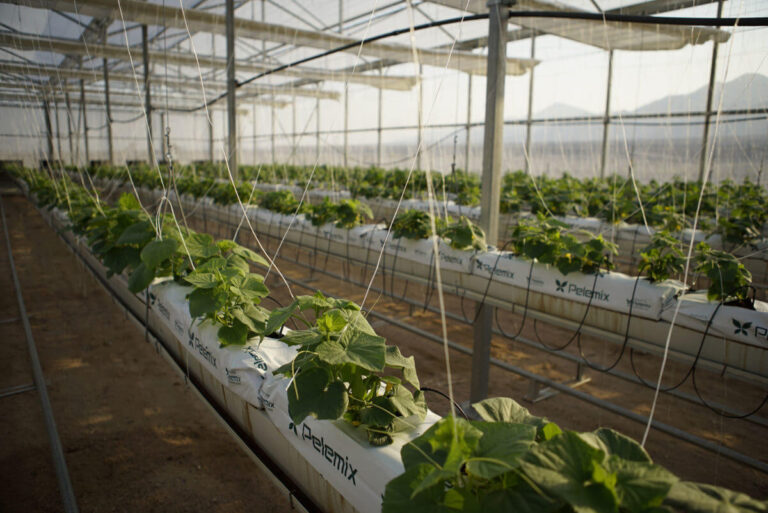
sahara forest projectGreenhouses will sprout in Aqaba’s desert under a pilot called The Sahara Forest Project – led by Norway. 

The ambitious Sahara Forest Project (SFP) aims to revegetate areas of desert and create green jobs through production of high-value crops and biomass. And, in the process, generate clean energy and fresh water. Farming the Jordan’s deserts as it’s to be done in Qatar sounds like a fantastical solution for Jordan’s resource problems.

“We aim to use what we have enough or too much of — saltwater, sun, arid land, and carbon dioxide — to make what we need more of — clean energy, fresh water and food,” Sahara Forest Project CEO Joakim Hauge told the Jordan Times.
Sahara Forest Project

How do you build a biomachine?

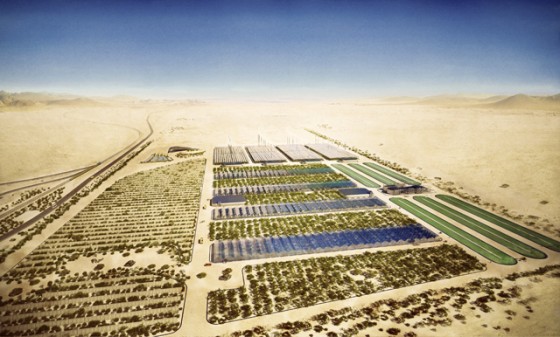
The Norway-based company operates on a threefold premise: construct saltwater-cooled greenhouses, generate electricity from concentrated solar power (CSP), and reintroduce desert flora. The technologies are complementary, and integrated to work as a holistic “biomachine”.

The first concept study of SFP was launched in 2009 at the United Nations climate negotiations in Copenhagen. The developers boldly assert that their engineered oasis has potential to produce enough energy for the Middle East – North Africa region and all of Europe.

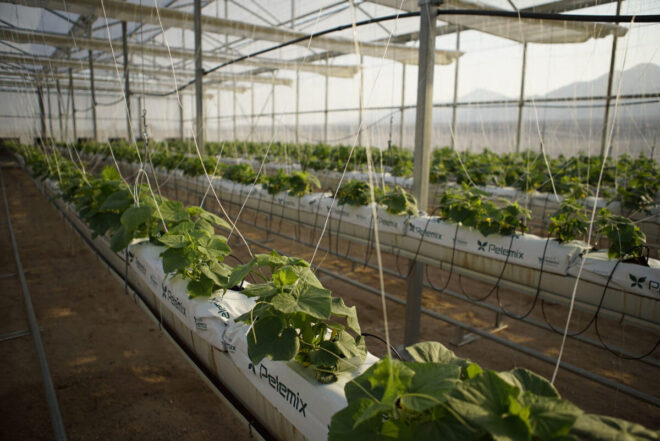
Saltwater will be used to provide evaporative cooling and humidification within the greenhouses. Seawater will also be tapped as interstitial coolant within the walls, producing distilled water as a byproduct. Potable water requirements are thus minimized, while maximizing crop yields.
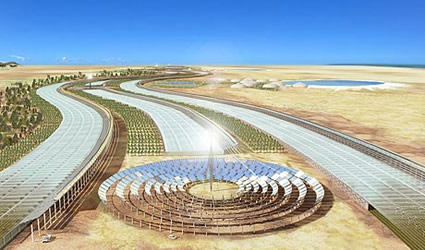
sahara desert project with solar panels
Sahara Desert Project

The Aqaba Special Economic Zone Authority and SFP signed a memorandum of understanding kicking off three feasibility studies for the project, which were financed by the Norwegian Ministry of Foreign Affairs.

The results of the studies were announced last week at a seminar that Hauge says, “…marks the start of a dialogue between international and Jordanian experts and policy makers, which we believe will establish the necessary framework for establishing a test and demonstration center in Jordan.”

That proposed center will serve as a testing ground, and as the project’s educational and innovation epicenter. This micro-Masdar will be sited at an unspecified Aqaba location, approximately 15 km inland and 40 m above sea level.  The 20 hectare pilot center will be designed to allow easy expansion to a 200 hectare commercial facility.

Support for the Jordan project will be via private and public funding: total price tag is estimated at $105 million. A pilot project is also underway in Qatar.

Downsides to the Sahara Desert Project

The project sounds logical. Seawater greenhouses and CSP (concentrated solar photovoltaic) technologies are well-suited to work in hot, dry climates.

It’s also impractical. Generating energy so far from end-users will never be a winning cost model: that’s one of the biggest challenges facing wind and wave technologies. Same argument works against commercial crops: these ultra-organic and carbon neutral veggies will be priced out of most Jordanians reach.  Shipping produce to urban centers will raise its carbon footprint up a few shoe sizes.
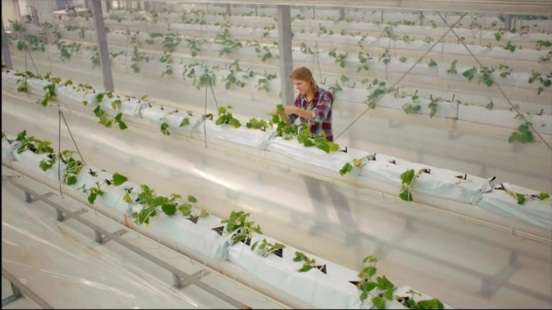
sahara forest project cucumbers desalination solar

And as for assisting local populations with green jobs? Consider instead training local farmers how to preserve and store water and employ efficient irrigation. Enact a program of biochar soil enhancement: desert land that’s useless for farming can be converted to rich agricultural land over time through this technique.  Commence  reforestation even on the smallest scale, efforts, irrigation infrastructures and micro-manage erosion.

Greening up the world’s deserts is simply fantastic – in the most literal sense.
::Sahara Forest Project

Turkey’s Asmacati Shopping Center Replaces Green Ivy With Metal

0

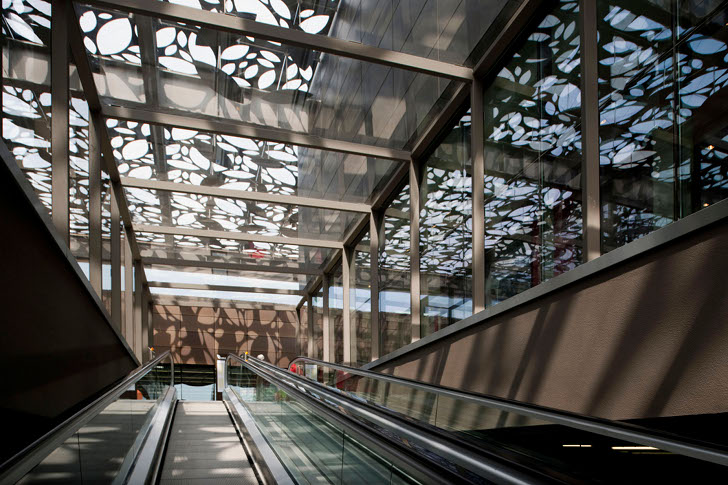
green design, sustainable design, eco-design, Turkey, sustainable architecture, green buildingIn the Middle East and North Africa, although it’s still possible to shop in the slow, traditional way – to buy fresh food from the butchery, the dairy and the bakery – it is sadly becoming less common. This is especially true in the big cities, where people live high-flying lifestyles and prefer one-stop-shopping. Izmir in Turkey lies somewhere in-between these two extremes.

With a population of nearly 4 million, the Aegaen city is a thriving metropolis and a holiday destination but people still make the effort to spend quality time together. To capitalize on this and promote some kind of outdoor engagement, Tabanlioglu Architects has designed the new Asmaçatı Shopping Center as a modern gazebo covered not in real green ivy, but a striking metal roof featuring leafy cutouts.

Drifting Driving a Sin in Saudi Arabia

You see all kinds of weird transportation in the Middle East: but the worst is drifting where young Arab males purposefully “drift” their cars into crowds of people. 
I don’t understand the lust for cars.  I’m unresponsive to the siren call of Formula 1, NASCAR, and Top Gear. I think commuter trains and subways are the greatest invention since – well – the wheel. So, last week, I shrugged off reports that the Grand Mufti of Dubai proclaimed it a sin to violate traffic rules.  No worries for this straphanger. My soul keeps its new car smell.

In other Gulf news, a young Saudi was sentenced to 150 lashes for “drifting” his car after police repeatedly caught him driving like a maniac.  Police Director Maj Yehya Al-Biladi urges young men to abstain from drifting, and guarantees severe penalties for future offenders. He told ArabianBusiness it was a “completely wrong” concept that Islam discourages seat belts “as safety is in God’s hand.”

Nader Khalili Earth Architecture Arrives in Kuwait

0

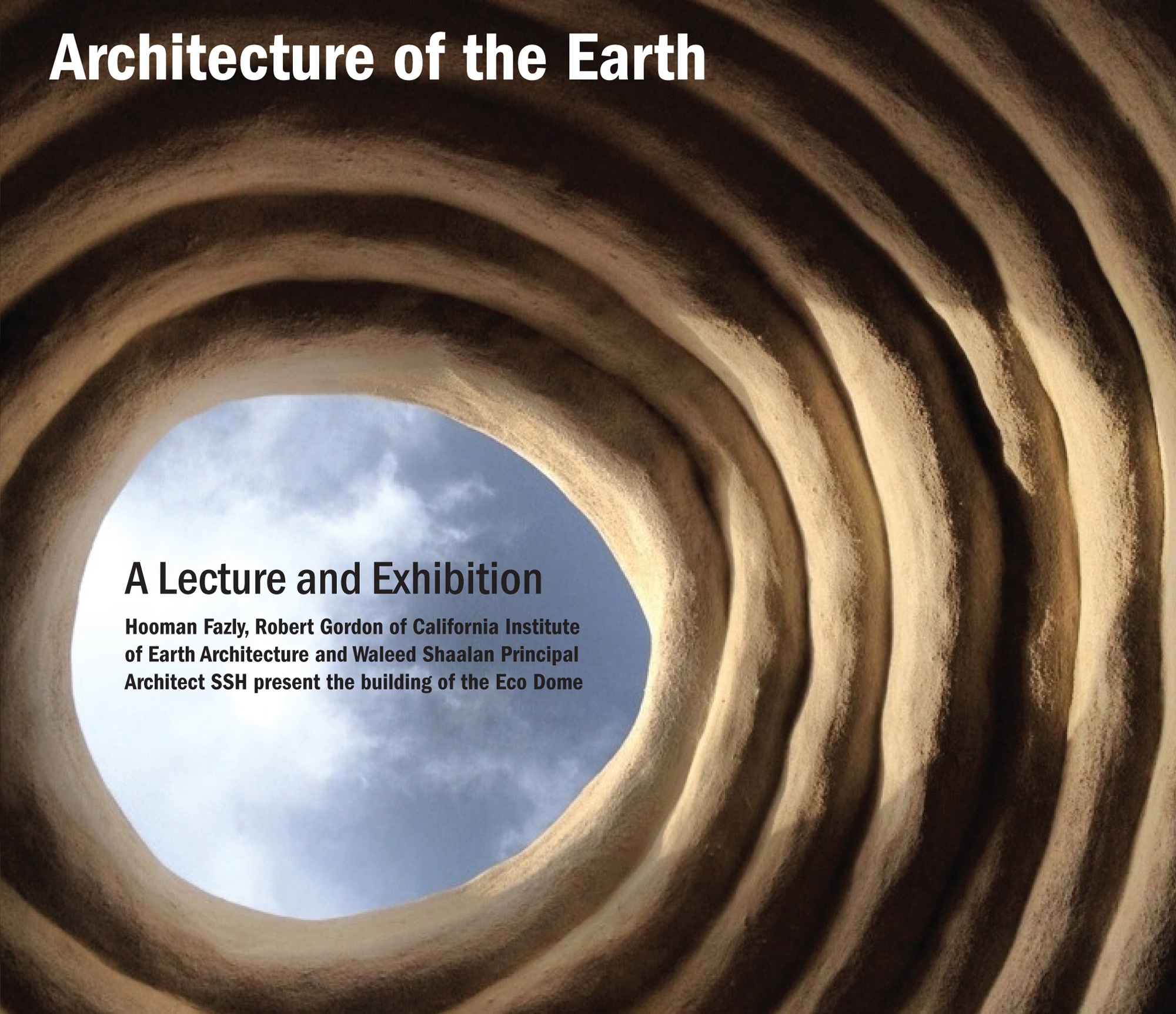
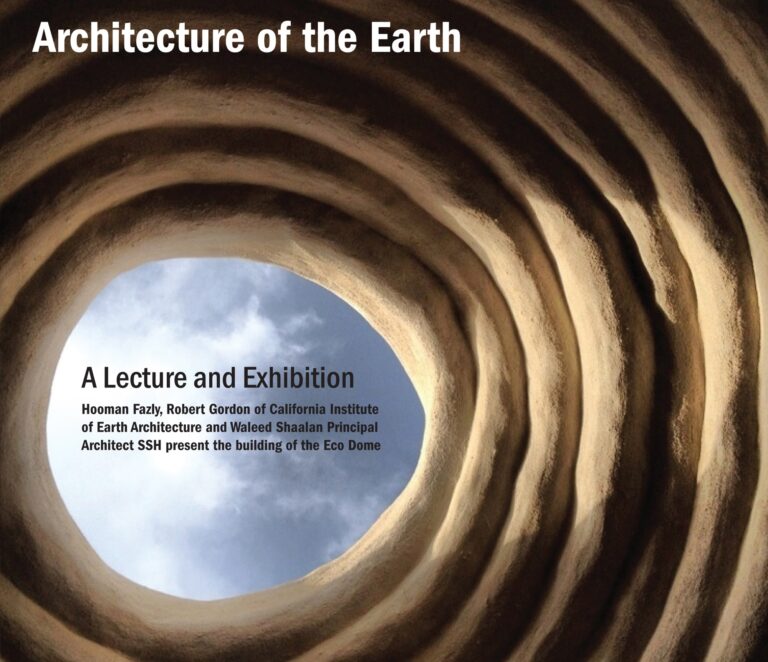
earth architecture, green building, eco-design, sustainable design, Cal-Earth, Nader Khalili, Kuwait, earth bag constructionBringing the merits and techniques of earth architecture to those unable to travel to the California Institute of Earth Architecture founded by Nader Khalili in 1986 was always the internationally-renowned architect’s priority, and it finally came to fruition in 2011 at the first six-day onsite International Workshop in Australia.

Now Hooman Fazly and Robert Gordon from Cal-Earth will be conducting an afternoon lecture tomorrow at the Khaldiya Campus of Kuwait University, where they will team up with Principal Architect Waleed Shalaan to teach students about the eco-dome. 

Rare Strain of Foot and Mouth Disease Hits Gaza Strip Animals

0

foot mouth disease cattle, cows gaza stripIsrael works to create a buffer zone around Egypt and Gaza fearing rare strain of foot and mouth disease will spread.

With vaccines in short supply the Food and Agriculture Association of the United Nations warn that animals should not be moved around Gaza to stop the spread of a new strain of foot and mouth disease. The UN body says international efforts need to step in to stop the virus from spreading further in the Middle East and North Africa.

Following outbreaks of the SAT2 strain of the virus in Egypt and Libya in February, fears that it might jump to neighboring areas were confirmed on 19 April when sick animals were detected in Rafah, a town in the Gaza Strip bordering Egypt. The SAT2 variant is new to the region, meaning that animals do not have any acquired resistance to it.

Sudanese Invents Artificial Pancreas to Eradicate Arab World Diabetes

5

Mohammad Baloola sudan diabetes
Sudan’s Mohammad Baloola says his invention can eradicate an emerging Gulf disease: diabetes.

As a biomedical engineering student at Ajman University of Science and Technology, Mohammad Baloola found homegrown inspiration for his final year project.  Four members of his family are diabetic, a collective muse for his ingenious artificial pancreas. The pancreas is the body’s sole provider of insulin, its functionality critcally linked to diabetes.

MENA Is Changing Drastically & NASA Has The Pictures To Prove It

2

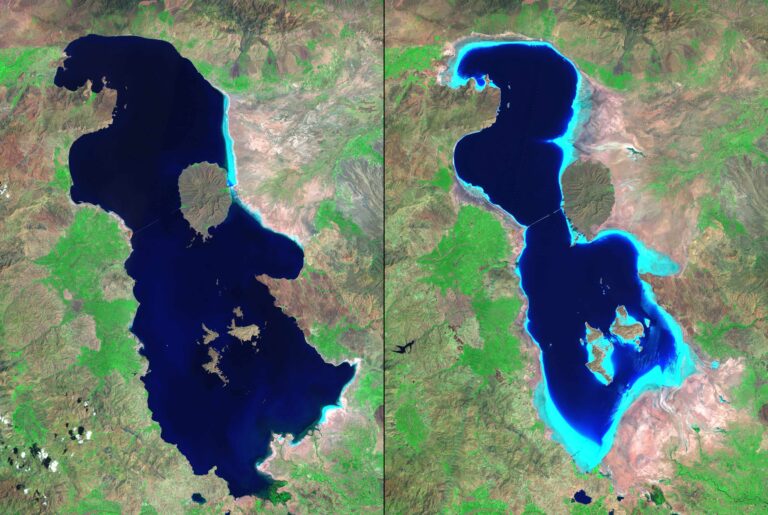
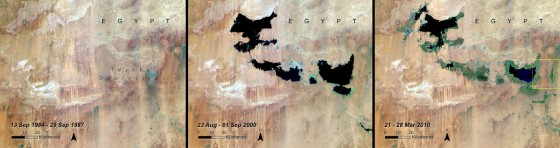
lake shrinking egypt From urbanisation in Morocco to lake shrinkage in Iran, these shocking NASA photos prove how this region is in dramatic ecological flux.

Unless you have been living in a consumer-induced coma, it will not have escaped your attention that the world is under serious environmental stress. And a large chunk of that stress has been human-induced. Whilst the exact influence of human behaviour is hard to measure, the carbon we keep pumping into the atmosphere is definitely not helping.

Indeed we are seeing more floods, droughts, melting ice, desertification and a continued gutting of our seas. The Middle East is no different and NASA has the pictures to prove it. So brace yourself – this is not going to be pretty.

Turkey Begins Controversial Drilling In Cyprus

0

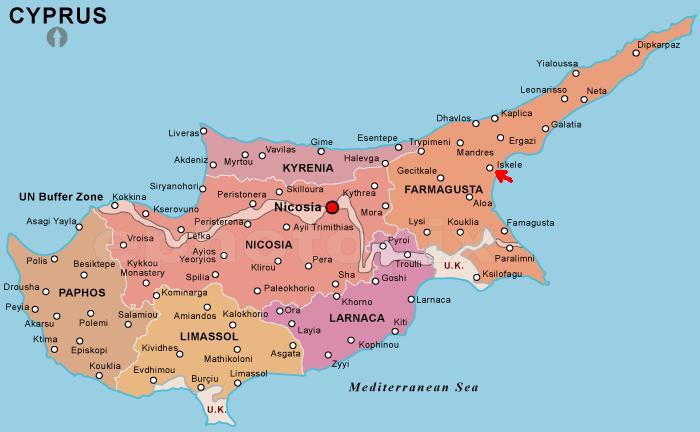
map of cyprus, oil drillingTurkey has started exploratory drilling for oil and gas in the town of Iskele in northern Cyprus (red arrow), angering the government of the Greek-controlled southern region.

The Turkish Petroleum Corporation began onshore drilling operations on April 26 at a 3,000-meter-deep well, named “Türkyurdu-1” (“Turkish Homeland”), which Turkish Energy Minister Taner Yıldız called a “force for peace in Cyprus.”

So far, however, the well has proven to be just the opposite.

Destroying the Planet for Beef

meat, climate change, methane, greenhouse gas emissions, global warming, livestockFew ideas are more absurd to me than this: because people refuse to cut back on beef consumption, catastrophic levels of methane are being released into the atmosphere each year. Even Forbes wrote in a recent report that cutting back on meat is one of the fastest ways we can slash our carbon emissions and slow down the pace of global warming.

One cow produces up to 120kg of methane each year, and there are 1.5 billion of them on the planet. This is serious, because as we demonstrated in Giant Plumes of Gurgling Methane Could Fastrack Planetary Warming, methane is 21 times more efficient at trapping heat than carbon dioxide, and by 2050, livestock production is expected to double. 

Beirut’s Giant Tire Fire Intentionally Set?

0

tire fire beirutBlack smoke billows out of Karantina dump tire fire, near Beirut this weekend. Green groups think the fire was set to pull metal from the rubber tires.

Landfills and garbage dumps in Lebanon have had their share of environmental issues. This reality is an ongoing problem for environmentalists there, and involves giant, smelly garbage mounds in cities like Sidon, as well as garbage trucks dumping their loads straight into the sea.

Giant landfills often contain all kinds of waste items, including discarded appliances, construction materials, and especially old tires form both both cars, trucks, and buses.

Masdar Puts Nearly Half of its Green Future in Emirati Control

0

Masdar, education, sustainable development, energy, environment, climateTwelve new UAE graduates have been employed to work with the Masdar Institute.

In 2010, Emiratis made up only 13% of their own country’s population. The oil industry and Dubai’s construction boom attracted millions of foreigners, including Indian laborers that just two years ago comprised a whopping 50% of the population, resulting in a tragic dilution of local culture and tradition.

In an interview last year, the Green Sheikh identified restoring the Emirati identity as an important priority and the Masdar Institute is leading the charge with Madeem – a sustainable, skill-based Emirazation Program.

Netafim’s Drip Irrigation Pipes are Compostable

0

green plastic shenkar israel irrigationResearchers in Israel have developed a new green plastic for irrigation pipes

Drip irrigation is currently  one of the most effective ways for farmers and gardeners to save water. But the method relies on plastic pipes and routinely creates non-recyclable  waste. Recently Israeli scientists and professors from the Plastics Engineering department of Shenkar Art School in Tel Aviv collaborated with drip irrigation company Netafim to invent a new biodegradable plastic.This plastic, made from substances such as sugar, corn or lactic acid, is durable enough to make pipes for drip irrigation and yet is still completely compostable.

“When they are put in the ground bio-organisms in the ground begin to dismantle them and thus closes the circle of nature. The goal is to avoid polymers produced by fossil carbon,” said Prof. Shmuel Kenig, dean of Shenkar College of Engineering.

Creating this plastic substance has taken nearly a decade. Developers expect it will take several years until their product can be mass-produced. But when it does hit the market it has the potential to revolutionize sustainable agriculture.

Today, about 40 percent of water used in agricultural irrigation is wasted because of unsustainable practices. Drip irrigation has proven to be among the most feasible, water conserving methods for commercial agriculture. But the byproduct of used, plastic piping that cannot be recycled and needs to be ripped out of the ground each season, is currently one of the method’s greatest downfalls.

According to Avi Schweitzer, VP of Development at Netafim: “The patent application is still far away…It will take a few years before we reach commercial distribution.”

Will Chernobyl’s New Cover Change the Ugly Face of Nuclear?

1

chernobyl cover nuclearUkranian president Viktor Yanukovych dedicates construction of  new protective cover for damaged Chernobyl reactors

To mark the 26th anniversary of the 1986 Chernobyl nuclear plant accident, Ukrainian president Viktor Yanukovych presided at a ceremony at the site of the ruined nuclear plant in which a new construction project is being launched. The country will  build a new protective cover over the plant that when completed will enable the safe dismantling of the destroyed reactors which still contain “hot spots” of radiation contamination.

Lab Monkeys in Israel Get Reprieve – For Now

6

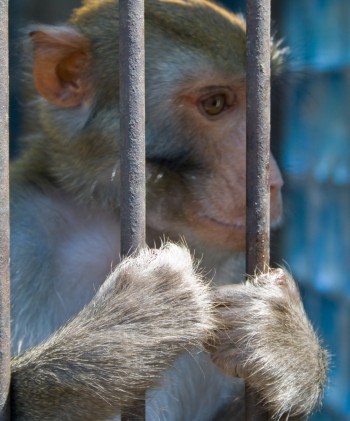
monkey behind barsA recent Israeli Supreme Court decision has temporarily barred the shipment of 90 monkeys to research labs in the United States.  Mazor Farm, where the monkeys are being farmed, must now provide documentation proving it operates within Israel’s legal framework for captive animals.

Many people imagine the typical Israeli farm as a peaceful, lush, agrarian landscape.  In the case of Mazor Farm, they would be wrong.

Founded in 1991, this breeding facility for laboratory monkeys has become a primary target of Israel’s animal rights community.  Mazor Farm receives monkeys caught in the wild predominantly from the island of Mauritius.  These animals are then bred and the offspring sold to laboratories around the world for use in various types of research.  The facility currently holds an estimated 1,500 long tailed macaque monkeys.

Spencer Tunick Photos of Naked Israelis are Worth $2,000!

2

naked israelis, photography, art, Spencer Tunick, Dead Sea, environmental awareness, Spencer Tunick is one of the world’s most celebrated and controversial photographers with no fewer than 75 large-scale nude photo shoots under his proverbial belt. The New York-based artist has amassed thousands of volunteers to pose nude in dozens of symbolic locations across the planet, from Brazil to Ireland and most recently in Israel.

To the horror of some and delight of thousands, Tunick’s latest shoot brought the Dead Sea’s shrinking state to the awareness of 15 million people around the world. And now it’s possible for collectors to place bids on an 11×14 C-print of his remarkable images, which are valued at $2,000 each.