Home Blog Page 435

Netafim’s Drip Irrigation Pipes are Compostable

green plastic shenkar israel irrigationResearchers in Israel have developed a new green plastic for irrigation pipes

Drip irrigation is currently  one of the most effective ways for farmers and gardeners to save water. But the method relies on plastic pipes and routinely creates non-recyclable  waste. Recently Israeli scientists and professors from the Plastics Engineering department of Shenkar Art School in Tel Aviv collaborated with drip irrigation company Netafim to invent a new biodegradable plastic.This plastic, made from substances such as sugar, corn or lactic acid, is durable enough to make pipes for drip irrigation and yet is still completely compostable.

“When they are put in the ground bio-organisms in the ground begin to dismantle them and thus closes the circle of nature. The goal is to avoid polymers produced by fossil carbon,” said Prof. Shmuel Kenig, dean of Shenkar College of Engineering.

Creating this plastic substance has taken nearly a decade. Developers expect it will take several years until their product can be mass-produced. But when it does hit the market it has the potential to revolutionize sustainable agriculture.

Today, about 40 percent of water used in agricultural irrigation is wasted because of unsustainable practices. Drip irrigation has proven to be among the most feasible, water conserving methods for commercial agriculture. But the byproduct of used, plastic piping that cannot be recycled and needs to be ripped out of the ground each season, is currently one of the method’s greatest downfalls.

According to Avi Schweitzer, VP of Development at Netafim: “The patent application is still far away…It will take a few years before we reach commercial distribution.”


Will Chernobyl’s New Cover Change the Ugly Face of Nuclear?

1

chernobyl cover nuclearUkranian president Viktor Yanukovych dedicates construction of  new protective cover for damaged Chernobyl reactors

To mark the 26th anniversary of the 1986 Chernobyl nuclear plant accident, Ukrainian president Viktor Yanukovych presided at a ceremony at the site of the ruined nuclear plant in which a new construction project is being launched. The country will  build a new protective cover over the plant that when completed will enable the safe dismantling of the destroyed reactors which still contain “hot spots” of radiation contamination.

Lab Monkeys in Israel Get Reprieve – For Now

6

monkey behind barsA recent Israeli Supreme Court decision has temporarily barred the shipment of 90 monkeys to research labs in the United States.  Mazor Farm, where the monkeys are being farmed, must now provide documentation proving it operates within Israel’s legal framework for captive animals.

Many people imagine the typical Israeli farm as a peaceful, lush, agrarian landscape.  In the case of Mazor Farm, they would be wrong.

Founded in 1991, this breeding facility for laboratory monkeys has become a primary target of Israel’s animal rights community.  Mazor Farm receives monkeys caught in the wild predominantly from the island of Mauritius.  These animals are then bred and the offspring sold to laboratories around the world for use in various types of research.  The facility currently holds an estimated 1,500 long tailed macaque monkeys.

Spencer Tunick Photos of Naked Israelis are Worth $2,000!

2

naked israelis, photography, art, Spencer Tunick, Dead Sea, environmental awareness, Spencer Tunick is one of the world’s most celebrated and controversial photographers with no fewer than 75 large-scale nude photo shoots under his proverbial belt. The New York-based artist has amassed thousands of volunteers to pose nude in dozens of symbolic locations across the planet, from Brazil to Ireland and most recently in Israel.

To the horror of some and delight of thousands, Tunick’s latest shoot brought the Dead Sea’s shrinking state to the awareness of 15 million people around the world. And now it’s possible for collectors to place bids on an 11×14 C-print of his remarkable images, which are valued at $2,000 each.

Make your own toxin-free herbal moisturizer

1

herbal skin cream
DIY, make your own chemical-free hand and body lotion.

At the end of our post on 5 natural ways to keep your skin beautiful, we note how important it is to moisturize. Now, take a good squint at the ingredients on your moisturizer’s label. There’s petroleum in one form or another. Alcohol. One or more kind of parabens, a preservative that has a weak estrogen-like effect.

Mercury –  the American Food and Drug Administration issued a warning about high levels of mercury in skin products, as of this past March. To enhance the fragrance, phthalates; chemicals that may act as hormone disruptors.

To top the soup off, there’s retinyl palmitatederived from Vitamin A and which may increase skin cancer risk when the moisturized skin is exposed to the sun.

Yes, commercial moisturizers are so lovely and fragrant. But as with so many industrial products, you pay for fast satisfaction with your health. We’ve written about scary things in skin-care products in the past, and here’s an extensive list. It’s so easy to avoid the chemicals and make your own silky, fragrant moisturizer that it’s silly not to. All it takes is four ingredients, a small jar and some ziploc bags.

Natural Hand and Body Moisturizer 

Makes 2 cups

Ingredients:

1 cup good-quality water or strong, strained herb tea. Suggested herbs: chamomile, marigold, lavender.
¾ cup sweet almond, avocado, or olive oil
3 tablespoons grated beeswax (or use shea butter if vegan)
5 drops essential oil of lavender or other favored essential oil (rose, jasmine and ylang ylang, while expensive, are heavenly)

Equipment:

A standing blender or a stick blender

If using a stick blender, you will need a jar or bowl with a 3- cup capacity.

1 small jar for daily use, washed in very hot water and absolutely dry

Small zip-loc or freezer bags

Rubber spatula

An improvised double-boiler: one smaller pot on top of a larger one containing water half-way up the top pot.

Put the beeswax and the oil in the smaller pot. Bring the water to a boil, then lower the heat to allow the wax to melt gently. When the wax has incorporated into the oil, remove the pot from the hot water and set aside.

Put the water in the blender jar or bowl. Blend it for a few minutes to agitate it.

Slowly add the wax/oil mixture to the water, blending meanwhile. Keep blending until you have obtained a smooth emulsion: this may take several minutes.

Blend in the essential oil.

Cover the cream with a clean cloth. Allow it to cool to room temperature.

Use the spatula to fill the small jar for daily use. Transfer the bulk of the cream to as many small zip-loc bags as it takes. Seal the bags shut and freeze the cream. Thaw it out as needed to replace the contents of the small jar.

Notes:

Wash and dry the jar thoroughly before filling it with newly-thawed cream.

The fragrance of the essential oils made fade with freezing. In that case, add a drop or two – no more – to each thawed batch.

As there’s no preservative in this cream, store the jar for daily use in the refrigerator. Very refreshing to apply cold cream on a hot day!

This cream is considered too heavy to use as a facial moisturizer, but some people use it as such and like it.

More on natural beauty from Green Prophet:

Jordan’s Dinosaur Grid to Get a “Smart” Upgrade?

0

smart grid, smart meter, energy efficiency, oil-shale, nuclear, renewable energyIt has been three decades since Jordan’s national grid has seen substantial infrastructural changes, but the US Trade and Development Agency (USTDA) has recently donated $1.15 million to the kingdom so that it can explore the option of implementing a “smart” upgrade. As new renewable, nuclear and oil-shale power plants are slated to come online in the next decade, a digital electrical system would enhance energy efficiency and safety, writes the Jordan Times. Hit the jump to learn more.

Ormat Rising Stocks A Boon For Israel Geothermal

0

ormat geothermal plant

For years, the goldmine for Israeli cleantech companies has been the American economy. And as Israel deploys innovative technologies across the Atlantic, it is increasingly breaking ground and gaining profits ahead of American companies.

Just last week, shares of the Reno, Nevada-based unit of Israeli geothermal company, Ormat Technologies (NYSE: ORA), rose more than 2.7 percent to $18.78 in the US stock exchange yesterday, the most since Feb. 24,  Bloomberg Businessweek reported. The rise came from a new $61.2 million engineering, procurement and construction (EPC) contract the company signed on April 25–for two air-cooled Ormat Energy Converters that will be installed at an unspecified North American geothermal plant–that has traders expecting company earnings per share to jump by 30 cents over 2012 and 2013, according to Avondale Partners LLC, interviewed in the article.

The Weird Science of Pedestrian Behavior Might Help Hajj

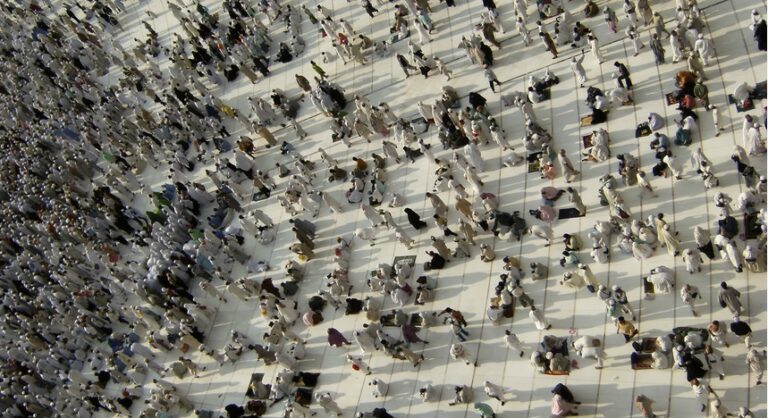
mecca hajj saudi ArabiaMath helps us understand how people flow, and just maybe it could help Hajj pilgrims stay safe.
A Californian jogs to the beach.  Coming towards him on the sidewalk is a Texan. Unless one steps aside they’ll collide. Quick: which way does the jogger move? If this is in Europe or the USA, heavy odds he moves to his right. In Asia (with Asians), the slide would likely be left. A crazy-making observation, and it’s not connected to driving: Irish drive on the left side of the road, but they’ll step to the right on the pavement.

The folks at Berlin’s Max Planck Institute (MPI) say this behavior is based on an improbable marriage of psychology and mathematical probability.  When we correctly guess another’s intentions, we get a positive subconscious boost. We’ll probably choose the same move when the same situation arises; get another subliminal “high-five”.

Sinai’s Ecological Future Hangs in the Balance

12

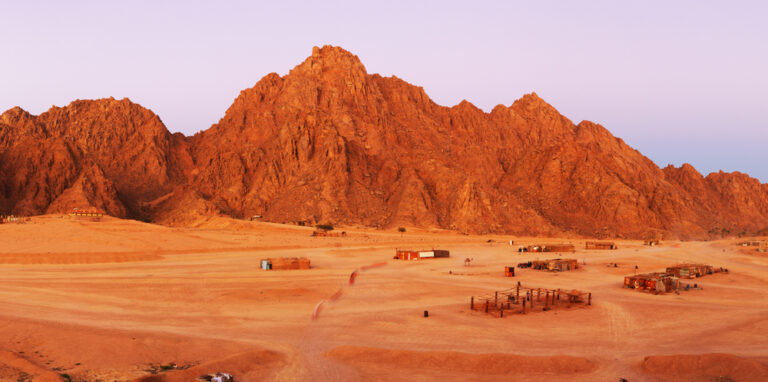
Red Sea, Mediterranean Sea, Sinai Peninsula, ecology, development, sustainable development, EgyptAs part of the 1979 peace treaty with Israel, the Sinai Peninsula was restored to Egyptian control – an event that the country celebrated with some fanfare on April 25th, 2012. On that same day, the Egyptian Prime Minister Kamal Ganzouri witnessed two separate development plans that were signed between the Social Development Fund (SFD) and governors of both the Northern and Southern Sinai governorates.

The main goal of these agreements is to extend water networks and create jobs – a welcome move for a largely neglected area of the country. But Sinai development has also become a hot pitching point for presidential candidates, and environmentalists are worried.

Play God With NASA’s Flood Maps

0

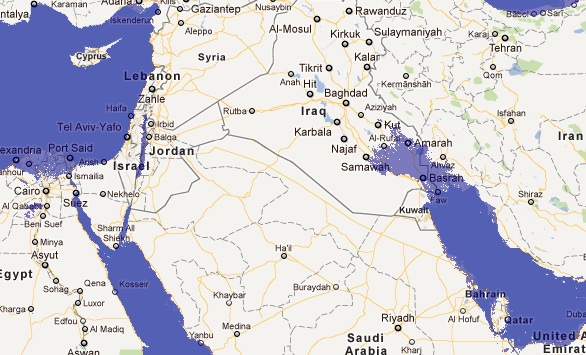
middle east flood mapsWhat the Middle East will look like with a 9 meter raise. Play God with the online map to see what we’ll lose. 

When you click around NASA’s online flood maps you can instantly view impacts on the world’s coastal communities. A single meter increase soaks Alexandria and Basra, and rattles the nerves of eastern Saudi shores. Jump sea levels 20 meters and Bahrain becomes an atoll, southern Iraq is submerged, and all of Cairo becomes beachfront property.

Barriers to Solid Waste Recycling in Saudi Arabia

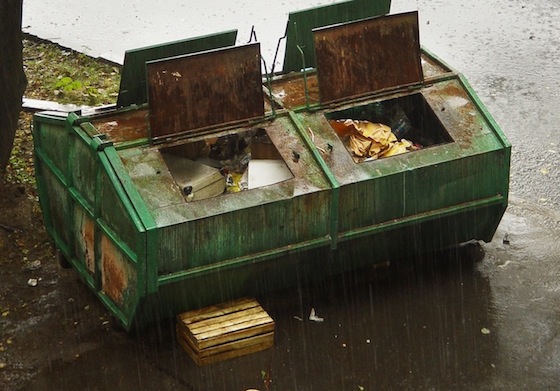
solid waste saudi arabiaExcellent at recycling oil, what are the barriers to Saudi Arabia in recycling other valuables?

There are significant barriers that hinder the wide application of reverse logistics in some industries of Saudi Arabia. Let me first present the definition of the concept. Iran’s S. Dowlatshahi defined reverse logistics as the process by which a manufacturing entity systematically retrieves previously shipped products or parts from the point-of-consumption for possible recycling, remanufacturing, or disposal.

Lebanon’s Largest Solar Project Lights up a Green Highway

Lebanon, cleantech, solar, transportation

Like Egypt, Israel, and Jordan, Lebanon has been beset with energy shortages recently –  a crisis that will escalate as demand grows alongside an ever-expanding population. Sidestepping these constraints and taking advantage of almost year-round sunshine, the Transportation Ministry has installed 766 solar-powered street lights on a 10km stretch of relatively unpolluted highway in Hermel. Some residents are grateful and excited about the $1,072,000 project, but others are skeptical.

Morocco to Build Cars in Zero Carbon Factory

Morocco’s zero-carbon car factory opening earlier this month, via NY Times.

The CEO of Renault–Nissan alliance Carlos Ghosn and Moroccan King Mohammed VI inaugerated French automaker’s one-billion-euro plant in Tangier which is set to boost Morocco’s automobile industry.The plant will build several new ‘low cost’ vehicles with an annual capacity that could reach ups 400,000 units.

Morocco has only one car plant in Casablanca and seeks to develop its car industry further with Renault Group which will be exempt from both corporate and export taxes for five years.

The 300-hectare plant, which is located 30 kilometres from the new Tanger Med port and only few kilometres away from the Spanish coast, will reach a production capacity of up to 170,000 vehicles per year at first. This capacity is then set to rise to 340,000 units in 2013 or 400,000 units if the plant operates in weekends.

Is Better Place Building An EV Monopoly?

1

better place charging station israel

Despite concern that Better Place is losing millions as it slowly brings electric vehicles to market in Israel and Denmark, some in the cleantech industry are also worried that the Israel electric vehicle (EV) company is the only one out there trying to make the business work.

A recent article titled, ‘Does Better Place Have A Monopoly On Electric Cars In Israel?,’ Business Insider analyzed Better Place’s role in the Israeli market, noting that once the company starts to sell its cars in Israel, it will have the only electric vehicle available in Israel and will control the country’s only legal EV charging network. Is this a good or bad thing?

Bassam El-Okeily Converted a Tiny Garage into this Gorgeous Narrow House

0

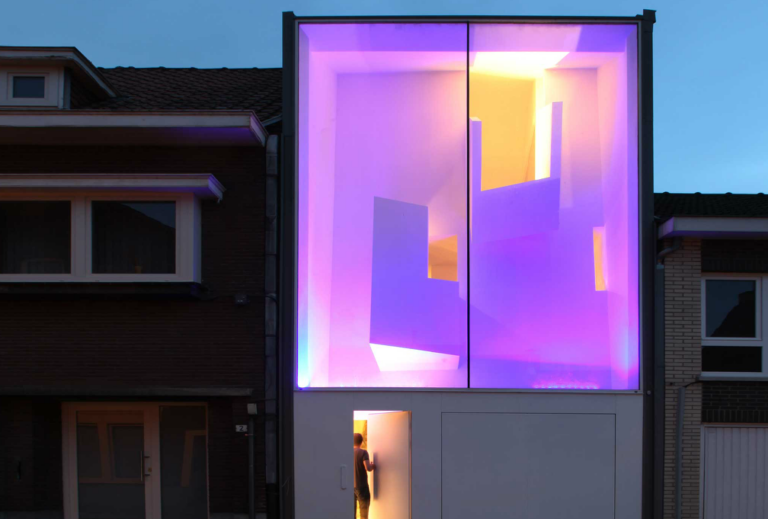
green design, minimalist design, architecture, Egypt, Narrow House, Bassam El-OkeilyEgyptians are among the most romantic thinkers I’ve met. Their hearts are so often tangled up in their work, resulting not only in a lot of drama, but incomparable and resplendent art. And Bassam El Okeily’s striking Narrow House in Belgium is no exception. Previously a dingy garage, the new Bilzen home now features a transparent glass facade, an expansive but minimalist interior and an exciting reverie of light and shadow play. Although he is less known in the Arab world, the Brussels and Paris based designer easily competes with any of the world’s most renowned “starchitects.” Step in to see beautiful images of this unusual home.