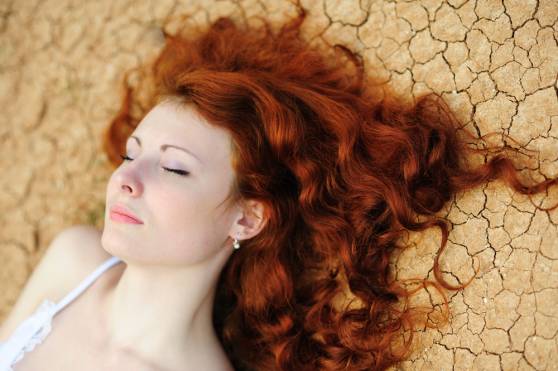
If you want naturally beautiful hair (or temporary tattoos), turn to henna.
Anyone living in the Middle East has often seen little old ladies with kerchiefs tied under their chins and long, orange-colored braids falling down their backs. They dye their hair with henna, the dried and powdered leaves of Lawsonia lythraceae.
But modern women know methods of applying henna that yield lovely shades of hair color, from strawberry-blond to mahogany and even raven black. All this without any of the 500 synthetic chemicals in commercial hair dyes. (And for another shocker, find out what’s in your lipstick.)
Or what new toxin is in your eyeliner.
There are some doubts as to long-term health consequences of conventional hair dyes. While science waits for conclusive evidence of links between cancer and hair dyes, here at Green Prophet we always favor the natural way.
Another advantage of henna is that it’s as good for your hair as our natural moisturizer is for your skin. Any woman used to commercial hair dyes either puts up with dry, itchy, flaky scalp, or treats it with specialized shampoos and hair masks. Henna, on the other hand conditions the hair, leaving it silky-soft and strong.
Some claim henna cures dandruff and even that it gets rid of lice. The last claim may have something to it: the paste may suffocate the insects and their eggs.
There are other herbs that are called henna, also used over centuries to treat hair. So-called “neutral henna” is Cassia obovata, used to strengthen and condition hair without dramatic color change. However, it will stain white or grey hair yellow. There is also “black henna” which is indigo. It gives a harsh, blue-black color to hair and is best mixed with henna for a softer, more natural black.
Pure, natural henna grants only one color change: to red. Depending on your hair color before application, the result will be lighter or darker, but some shade of red it will be. It takes combining henna with other herbs, and a little experimentation to obtain the shade you want. (Suggestions for herbal combinations below.)
You will see that most of the work involves protecting the skin from staining. Applying henna takes just a few minutes, and then you will need at least an hour to sit around while it does its work. Time-intensive and messy? Yes. But think of how less expensive it is than a session at the hairdresser’s. And you won’t need dandruff shampoos and hair masks anymore either.
How to Apply Henna
The smartest way to experiment is to test your herbal combination on hairs taken from your hairbrush, taking notes every step of the way. After applying, rinse the strand with conditioner and then with warm water. If you’re not satisfied, try another herb or re-apply your combination to the same hairs after they dry.
Make sure to buy body art-quality henna powder. It should be a light green and smell like hay. Packaged henna products that include a “developer” contain synthetic ingredients. If you are tempted by a product offering pre-mixed colors, examine the label carefully. If it claims to have 100% henna, it is false. Remember, henna makes hair red, and only red. There are reputable products with mixes of henna and herbs. Their labels list all the ingredients.
Ingredients and equipment:
3 tablespoons body art-quality henna powder
1/2 cup boiling herbal infusion made with distilled water, or plain distilled water
A medium bowl dedicated to this purpose (it will get stained)
An old spoon or a chopstick
A few sheets of newspaper to stand the bowl on
Shower cap, bathing cap, or plastic wrap
Gloves
An old long-sleeved shirt
Conditioner
How to use Henna
12 hours before dying the hair, mix the henna with just enough boiling water (or herbal infusion) to make a thick paste. Stir with a chopstick or another utensil you don’t mind getting stained. Be careful not to splash. Put aside any extra herbal infusion.
Cover the henna paste and let it stand at room temperature 12 hours. Check once or twice to make sure it’s not drying out. If it does, moisten it again, taking care to keep it thick, not runny.
Have a roll of plastic wrap ready, or a rubber cap. Wear an old long-sleeved shirt to protect arms and shoulders from dye stains. Use gloves – this is essential. You do not want to dye your hands orange. Rub non-petroleum jelly or cream around your hairline to protect your face from the dye.
Massage the moist henna paste into your hair. Take your time and be thorough.
Cover your hair with the plastic wrap or cap. You may ask, what did all those grannies do before there was plastic? Well, next time you come across one, look at how uneven her dye job is. Where henna dries out, it stops working.
Keep the henna paste on your hair for an hour at least. It will continue dying the hair as long as you leave it on. 2-3 hours is even better.
To wash the henna out, apply handfuls of conditioner to the hair, still wearing gloves. Massage well and rinse out. Repeat if necessary.
Notes:
- The initial color may be different than expected for the first day or two, while it undergoes oxidation. Be patient and wait to judge if you need another application or prefer to try another herbal infusion. If you’ve done your experimenting on hair collected from your hairbrush beforehand, you will have an accurate idea of what to expect when you apply your mix to all your hair.
- Henna color is permanent. It will change with blow drying or additional treatments, but it will remain until it grows out.
- Extra henna paste can be frozen for the next time.
Some suggested herbal mixes:
- Infuse green walnut leaves in boiling water for 1 hour for rich brown shades.
- Hibiscus tea mixed with henna yields auburn tones.
- Chamomile tea yields blond highlights.
- Marigold flowers yield blond-red color.
- Black coffee mixed with “neutral” henna will darken grey hair.
- Rosemary darkens hair. So does black tea.
- Honey, especially mixed with cinnamon, will lighten hair for quite a long time.
- Lemon peel infused in boiling water also lightens hair.
Cautions:
- Coffee, black tea and rosemary in henna will keep you awake, just as if you had drunk a strong cup of one. If using one of these, apply your henna mix in the morning or early afternoon.
- Likewise, herbs that are used as medicine, for example St. John’s Wort, are sometimes recommended to mix with henna. Avoid them.
- Do not assume that ingredients you’re allergic to won’t affect you. They absolutely will. If in doubt, dab a spot of your mix on your arm or leg and wait 24 hours.
- Lemon juice damages hair. Infuse lemon peel as suggested above, instead. A reader suggests that some may be sensitive to this, so a spot test is a good idea with it.
- Use distilled water only. Minerals from tap or well water may give unexpected results (like blue or green shades).
More on natural beauty from Green Prophet:
5 Things to Avoid to Keep Your Complexion Beautiful
Eco-Conscious Cosmetics
5 Natural Ways to Keep Your Skin Beautiful
Soothing Masks and Cleansers for Summer Skin


 Jordan has supported a parliamentary committee recommendation to suspend Jordan’s projected nuclear programme


 As Israeli rigs start drilling for natural gas, a new disaster prevention agency is proposed to avert another BP-Florida Gulf disaster.