

It’s hard to ignore the lack of infrastructure and safety for cyclists in the Middle East. In Egypt you might get sexually harassed if you are a woman riding a bike in Cairo. With the raised sidewalks, when they exist in Amman, Jordan; and the deathly traffic and smog, riding in Amman isn’t such a great exercise in sustainability either. But Middle Eastern cities looking to cut smog and the health effects of car transport might consider installing a super highway for bikes, like a new project in Denmark that has paved an 18 km cycling pathway for Danish commuters around Copenhagen.
Denmark Gets Cycling Superhighway to Copenhagen
BPA Chemical Banned from Baby Bottles, Cups in the US

America, next to some European countries, has the most stringent environmental policies on health and safety. In 2008 America’s Food and Health Administrations (the FDA) declared BPA, or bisphenol A, an estrogen mimic used in plastics, as safe. But in 2010 it started backpedaling over concerns that it might have health risks, especially in children. Yesterday it was announced that BPA is now banned in baby bottles and sippy cups across America. What does that mean for the health of babies around the planet?
Jerusalem’s Natural History Museum is a Green-Roofed Subterranean Monument
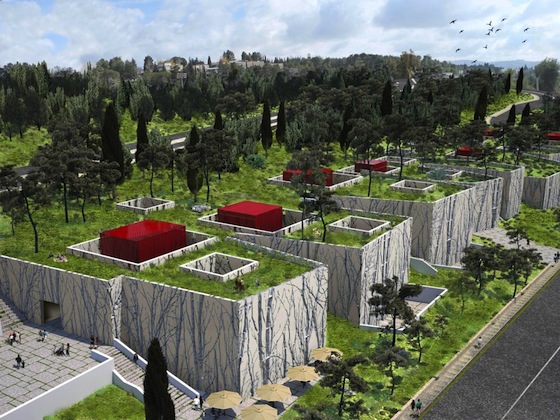
Although building a monument to nature is something of a contradiction in terms, o2a studio has done a wonderful job of finding balance between the built and unbuilt in this striking design for the Natural History Museum in Jerusalem. A subterranean facility with stone cladding, the museum is topped with a green roof that creates a continuation of the surrounding green space.
China’s Trina Solar Wants to Spend $200 Million in Jordan

The disruption to Jordan’s natural gas supply from Egypt has finally awoken a sleeping giant: renewable energy. Long focused on oil shale and nuclear energy instead of renewable sources, the Kingdom has recently entered negotiations with no fewer than 20 international wind and solar-energy suppliers.
These are mostly small or medium-sized firms that will provide up to 80MW each. Among them, China’s Trina Solar has expressed willingness to invest $200 million on a photovoltaic plant.
Tunisian Water Distributor Puts People Ahead of Commerce Amid Shortages
A sweltering heat wave has swept through Tunisia, disrupting both electrical and water supplies just days before Ramadan begins. Extreme heat destabilizes electrical cables, with as many as three cables a day fraying under the pressure in some cities. Disruptions in the electricity supply in turn cause water pipes to malfunction, leaving many homes, businesses and hospitals without a steady supply of either.
In a surprise but welcome move that prioritizes people over commerce, the National Water Supply and Distribution Company (SONEDE) in Gabes cut its water supply to a chemical company that has long threatened the southern city’s water resource.
Unprecedented Highs in Tunisia
The National Institute of Meteorology reports that an unprecedented rise in atmospheric pressure from the great desert is responsible for the heat wave that has caused such havoc in Tunisia, according to Tunisia-Live.
Temperatures of 42-47°C have been recorded in the past week, reports engineer Sahar Shickhawi.
“All the temperature data that we gather are from shaded areas, but sunny areas are normally 4-7 °C hotter, so we must account for that. In the summer, we are used to the temperature being in between 32-36 °C in the coastal areas and 38 to 42 °C the interior regions in the month of July,” Shickhawi explained.
Although energy shortages have rarely lasted for more than two hours, according to SONEDE employee Mohamed Sadoke, which pales in comparison to 12 hour energy shortages in Lebanon, Gabes residents preparing for the Ramadan fast are concerned.
Energy and Water Shortages Become “Complicated”
One housewife told Tunisia-Live that the situation is becoming more “complicated.”
But for hospital workers and patients, the shortages are more than complicated. Men and women with broken legs haven’t received treatment at the Regional Hospital of Gabes since the X-Ray machines can’t function without electricity. And Hospital Tahr Sfar atop a mountain on the coast was without water for nearly a week.
In order to alleviate supply disruptions to Gabes residents, SONEDE has cut off water supply to the local chemical manufacturing plant which has historically used more than its fair share of both water and electricity.
“We cut the water supply on the chemical complex because we have to prioritize,” said Mbarak Haddad, the switch board operator of Gabes SONEDE.
In Gabes, people are more important than chemicals.
More on the Region’s Heat Wave:
Safari Animals Get Blood, Fruit and Fish Popsicles to Cool Off
The Wrath of Global Warming and the Middle East
Israeli Environment Minister Proposes Cuts to Gaza Electricity to Bridge Energy Shortfalls
Better Air Cleans Sick Buildings With Probiotics

Turn sick buildings healthy with a probiotic air filter from Israel. Above, dust mites.
Better Air of Rishon LeZion, Israel is using a new approach to improve indoor air quality. Their probiotic Biozone cleaners harness natural bacteria to break down biofilms and reduce contamination from molds and other allergens. This approach is intended to prevent sick building syndrome (SBS.)
Heavy smokers get textual healing

Want to quit smoking? There’s an app for that.
Last week, experts lit up an Israeli conference with new strategies to curb smoking using email, text messages and smartphone apps. Hebrew University’s School for Public Health, in cooperation with The Medical Society for Smoking Prevention and Cessation in Israel and the Hadassah Medical Organization, sponsored a forum focused on using modern communication to help smokers kick the habit.
At the conference George Washington University‘s Dr. Lorien Abroms delivered the keynote lecture, “Using Mobile Phones for Smoking Cessation”. Abroms researches the influence of modern communication technologies on human behavior: how emails, text messaging, and smartphone apps can alter unhealthy habits. She developed several quit-smoking programs, including an iPhone app and a smoking cessation kit for young adults. She created a text-messaging program for adult smokers, a service currently offered to callers in selected American states.
We live on our phones. They feed our demand for immediate information. We’re instantly reachable and can perform functions that only recently became common verbs: google the best restaurant, mapquest our way there, then facebook friends so we can meet up. It’s inevitable that this connectivity will be exploited for other uses.
We’ve seen social media be tapped to solicit wide-scale emergency fund-raising: consider relief money raised in the aftermath of the Haitian earthquake. Now political candidates and charities have jumped on mobile phone fundraising.
Phones convey environmental messages: Green Prophet’s reported on an SMS campaign that encourages water conservation in Jordan. Phones also promote fitness. My healthier friends use exercise applications on their phones to guide workouts and track calories consumed. Apps are constantly being developed to support other lifestyle choices. Like extinguishing smokes.
Conference topics included use of social networks to quit smoking and the impact of online information searches on smoker habits. Dr. Diane Levin-Zamir, director of the Department of Health Education and Promotion for Clalit Health Services, discussed the role of mass media in conveying health data and influencing behavior in her presentation “Media, Media Health Literacy and Smoking Among Adolescents”.
Other speakers included Dr. Hagai Levine of the School of Public Health, and Haim Pilosof, the smoking cessation call center manager at Maccabi Health Services, Israel’s second largest healthcare provider.
The Simple Message: Do or Die
Tobacco use is the most common preventable cause of death: half of all longterm smokers will die of smoking-related problems.
Quitting isn’t easy. Short-term effects such as weight gain, irritability and anxiety top the list of turn-offs for folks who try to stop. But for those who stay the course, soon after stubbing out the last butt, circulation begins to improve and blood pressure starts to return to normal. Sense of smell and taste return and breathing becomes easier. Your risk of getting cancer decreases with each year you stay smoke-free.
Now the tools to tackle quitting can be texted to you anywhere. Pick your own pocket: grab the pack of smokes or choose to check your phone. Green Prophet hopes you answer the call to quit.
Social Protests Connect the Dots to the Environment

Egypt’s social protests deeply rooted in issues connected to environmental ones.
It’s definitely a hot time in our world this summer: there are massive brush and forest fires in the American states of Colorado and South Dakota, there’s a full fledged civil war going on in Syria that has resulted in indigenous plant seeds being stored away in a vault in Norway ; and worst of all, a 58-year-old down and out man in Israel who set himself on fire during a night time social protest rally in Jerusalem. How are all these events connected?
Novel-tee Charges Your Phone, Someday

Charging our clothes to credit cards is nothing new. Now our clothes may be doing the charging.
Scientists at the University of South Carolina (USC) have devised a way to turn the material in a cotton T-shirt into a source of electrical power. They envision a future where electronics are part of our wardrobe.
A few years back, my daughter haunted me for a hoodie with built-in ear buds, a novelty garment that allowed her to look stylin’ and also stay connected to her ubiquitous digital music device. USC Professor Xiaodong Li, the tee-shirt project mastermind, takes tech fashion to new heights, anticipating an emerging need for flexible energy storage: new methods of juicing our technical tools in remote locations, off the grid, and on the go.
Obese Gulf Boy Suffers Fatal Heart Attack Aboard Flight to Bangkok
The Gulf obesity epidemic in has come under increased scrutiny recently. Supersized boys and girls are barely recognizable and four of the world’s fattest countries hail from Gulf nations – a staggering number that has increasingly tragic consequences.
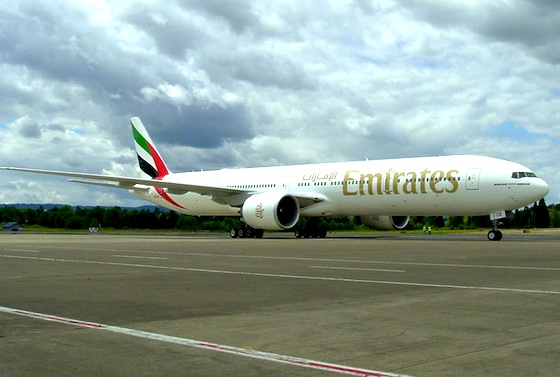
Just 19 years old, an Emirati boy who weighed 170 kilograms was flying from Dubai to Bangkok to receive treatment for obesity when he suffered a fatal heart attack. The pilots of Emirates Airline Flight EK 374 were then forced to make an emergency landing in Hyderabad, where the teenager was pronounced dead at the Apollo Clinic.
His body will be flown back to Dubai on another flight.
Government officials in Dubai have launched a fitness competition that will take place during Ramadan in order to combat this growing problem. Although people fast during the day, at night, when they break the fast, they tend to make up the lost calories without doing any kind of exercise.
The event sponsored by Majid Bin Mohammed Bin Rashid Al-Maktourm, Chairman of the Dubai Culture and Arts Authority and Fitness First Middle East will award massive cash prizes to the “Fittest Man” and “Fittest Woman” in Dubai and hopefully encourage more citizens to lose the extra weight they’re carrying around.
:: Gulf News
Qatar’s City of Birds and Islam’s Teachings On Animals (INTERVIEW)

“In Qatar, the birds have built their own hidden city. They live in the towers and stairwells of an abandoned palace…”
Over at Guernica Magazine, I stumbled across a beautiful short story by Autumn Watts who is a lecturer of writing at Weill Cornell Medical College in Qatar. Evoking the hidden and unseen aspects of nature and the animal kingdom, ‘The Cities of Animals’ is a stunning must-read. In it she talks about the dark and abandoned places that animals such as birds, cats and horses learn to live and also harsh ‘kingdom’s of asphalt’ where they die. A thought-provoking story which I just had to share. Especially as it reminds us of the rugged beauty and resilience of nature in the Middle East. I also got in touch with Autumn Watts to ask here what inspired her short story.
Turks Trade Gold for Iran’s Energy Allegiance

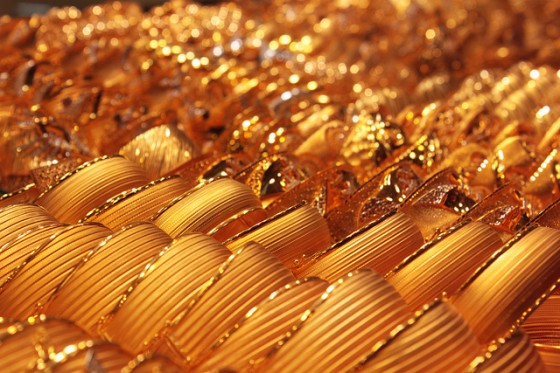 To continue feeding its addiction to Iranian oil, Turkey exported eight times as much gold to Iran in the first five months of 2012 versus 2011.
In March, the United States and the European Union imposed sanctions on Iran in response to its uranium enrichment program. Later that month, Iran was cut off from Swift, the global bank communication network, barring the country from international financial transactions. To keep sales of its main export, crude oil, from crashing, Iran has since begun accepting alternative currencies — including a very large amount of Turkish gold, reports the Turko-file at Eurasianet.
Spencer Tunick Plans Naked Dead Sea Shoot Anniversary Float
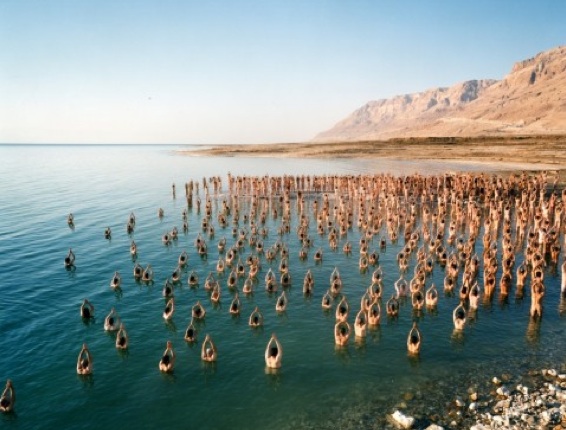
Spencer Tunick will return to Israel this September to celebrate the anniversary of last year’s wildly controversial Dead Sea naked photo shoot. Designed to draw attention to the plight of the hyper-saline (and dangerously endangered) lake shared by Israel, Jordan and the Palestinian Territories, the art campaign was enormously successful even though it drew widespread criticism from local politicians and religious groups opposed to public nudity. This year’s float serves a dual purpose: to maintain the momentum against activities that jeopardize the lake and to support freedom of artistic expression.
Deluxe Iranian Residential Complex is Built Around the Trees

This building is located in Niavaran, Tehran – a district in the northern foothills. The climate in this area is completely different than the south and center of Tehran because of the nearby Alborz Mountains. Unfortunately, many old gardens in the area have been destroyed by urbanization projects over the last century. But Mohammed Reza Nikbahkt took a different approach with the Niavaran residential complex by building around existing trees in order to preserve them.
Better Place Electric Car Sales Now Open to Public in Israel

After a test trial on about 250 cars Israel’s Better Place electric car company has opened its doors to the general public this week. Apart from announcing new pay-as-you-charge deals, instead of the off-putting flat rate, the company offers a new twist on the limited mobility of EVs: battery switch stations located throughout the country for people who need a quick charge. Normally it can take hours for an electric battery to recharge, thus limiting the range and driving distance of cars.