Home Blog Page 39

Sustainable Waste Management Practices in Asheville: Leading the Way in Green Solutions

0
Ashville sustainable waste

Asheville, North Carolina, is known for its picturesque landscapes, vibrant arts scene, and a strong commitment to environmental sustainability. The city’s progressive attitude towards waste management has become a model for other regions seeking to implement eco-friendly solutions. One key area where Asheville shines is its waste management practices, with initiatives focused on reducing landfill waste, promoting recycling, and supporting sustainable businesses.

In particular, the availability of services such Ashville’s blended compost is an example of an amazing local company doing good for the planet. This is a project providing environmentally conscious solutions for residents and businesses. By understanding the city’s approach to waste management, we can gain insights into how Asheville is leading the charge in the green movement.

The Rise of Zero-Waste Initiatives in Asheville

Asheville has set itself apart as a leader in the zero-waste movement. The city aims to divert as much waste as possible from landfills and dumpsters by encouraging recycling, composting, and reusing materials. Zero-waste initiatives are centered around the idea that all materials can be reused in some form, reducing the need for new raw materials and decreasing the environmental impact of production. Many businesses in Asheville, including local restaurants and shops, have adopted zero-waste principles by minimizing their use of single-use plastics and packaging. Composting programs are also gaining popularity, allowing residents to dispose of organic waste in a way that enriches the local soil instead of contributing to landfill mass.

The city’s waste management services support these efforts and are designed to facilitate recycling and composting on a larger scale. The city’s curbside recycling program and recyclable drop-off locations ensure that materials such as glass, paper, and plastics are properly processed and reused. Composting bins are also available for residents who want to manage organic waste at home, contributing to Asheville’s zero-waste goals. The local waste management infrastructure supports individuals in their sustainability efforts and encourages businesses to adopt eco-friendly practices.

Collaboration with Green Businesses and Innovations in Waste Management

Asheville’s waste management practices are not just about reducing the amount of waste generated but also about innovating new ways to handle and repurpose waste. One of the city’s more notable initiatives is the growing collaboration with green businesses that provide waste reduction and recycling solutions. Local companies have developed systems that help residents and businesses minimize their environmental impact by providing services such as paper shredding, e-waste disposal, and hazardous waste collection. These services are both environmentally responsible and convenient, allowing Asheville’s residents to dispose of materials in a way that does not contribute to pollution or waste accumulation.

Another innovation area is waste-to-energy technology, which converts non-recyclable waste into energy. This technology is being explored to reduce landfill waste further while providing the community with renewable energy. As part of these efforts, Asheville has invested in state-of-the-art waste treatment facilities that employ environmentally responsible methods to handle waste. These facilities are part of the city’s broader strategy to reduce reliance on traditional waste disposal methods while increasing the efficiency of waste management systems.

Furthermore, Asheville is home to a growing number of businesses that offer eco-friendly waste management solutions, such as roll-off dumpsters designed to minimize the environmental impact of waste disposal. These companies work with local governments and individuals to ensure that large-scale projects, like construction and renovation, are handled eco-consciously, allowing clients to dispose of debris responsibly. This collaborative effort keeps Asheville’s streets clean and strengthens the local economy by supporting businesses dedicated to sustainability.

Public Awareness and Education: Empowering Residents

A crucial component of Asheville’s successful waste management system is its emphasis on public education and community involvement. The city works hard to raise awareness about the importance of waste reduction, recycling, and composting through various programs and outreach initiatives. Schools, local organizations, and community groups significantly educate residents about sustainable practices and waste management. Workshops, seminars, and informational campaigns teach people what can be recycled, the benefits of composting, and how they can reduce their overall waste footprint.

Here are five eco-friendly projects in Asheville focused on waste reduction and composting:

20 Items that can be composted

  1. Food Scraps Drop-Off Program: Initiated in 2021, this collaborative effort between the City of Asheville and Buncombe County provides residents with free drop-off sites for food scraps. As of January 2024, over 671,000 pounds of organic waste have been diverted from landfills through this program.

  2. Composting at Thomas Wolfe Auditorium: Launched as a pilot program, the Thomas Wolfe Auditorium introduced triple-stream waste stations to collect compostable materials during events. This initiative aims to divert an estimated 11 tons of waste from landfills annually.

  3. Residential Composting Services by Compost Asheville: Compost Asheville offers a convenient service for residents to compost household food waste. They provide weekly pickups and ensure that the organic waste is transformed into nutrient-rich compost, supporting local sustainability efforts via Compost Asheville
  4. Home Composting Workshops: In partnership with Asheville GreenWorks, the City of Asheville offers free workshops to educate residents on effective home composting techniques. These sessions aim to empower individuals to recycle organic waste and enrich their gardens.

  5. Buncombe County Landfill Gas-to-Energy Project: This project captures methane gas produced by decomposing waste in the landfill and converts it into electricity. The generator produces 1.4 megawatts of electricity, enough to power approximately 1,100 homes annually, reducing greenhouse gas emissions and harnessing renewable energy.



Seychelles’ UNESCO island under threat from luxury development and Qatari-linked terror funds

0
The Adabra atoll is known as the outpost for evolution.
The Aldabra Atoll is known as an outpost for evolution. Qatari brothers, linked to terror organizations, are funding the development of an ultra-luxury project on the nearby Assomption Island.

An island in Africa’s smallest country is under scrutiny as conservationists raise alarm over an ultra-luxury development project on Assomption Island, Seychelles. Backed by Qatari investors with ties to controversial financial dealings (and alleged terror funds), the resort poses a potential threat to the Aldabra Atoll—one of the world’s most significant biodiversity hotspots and a designated UNESCO World Heritage Site.

We spoke with a local conservationist Adriam Skerret, bird expert and chairman of the Island Conservation Society on Mahé, whose interview we will publish next week. He told us that construction workers are already on the ground in Assomption and that there is no oversight.

“We are very concerned – there is no supervision. They are on the island and no one is there. Construction teams are there. They wanted 1500 construction workers and we said that’s too many. Never should there be more than 500. Who knows what’s goes on.”

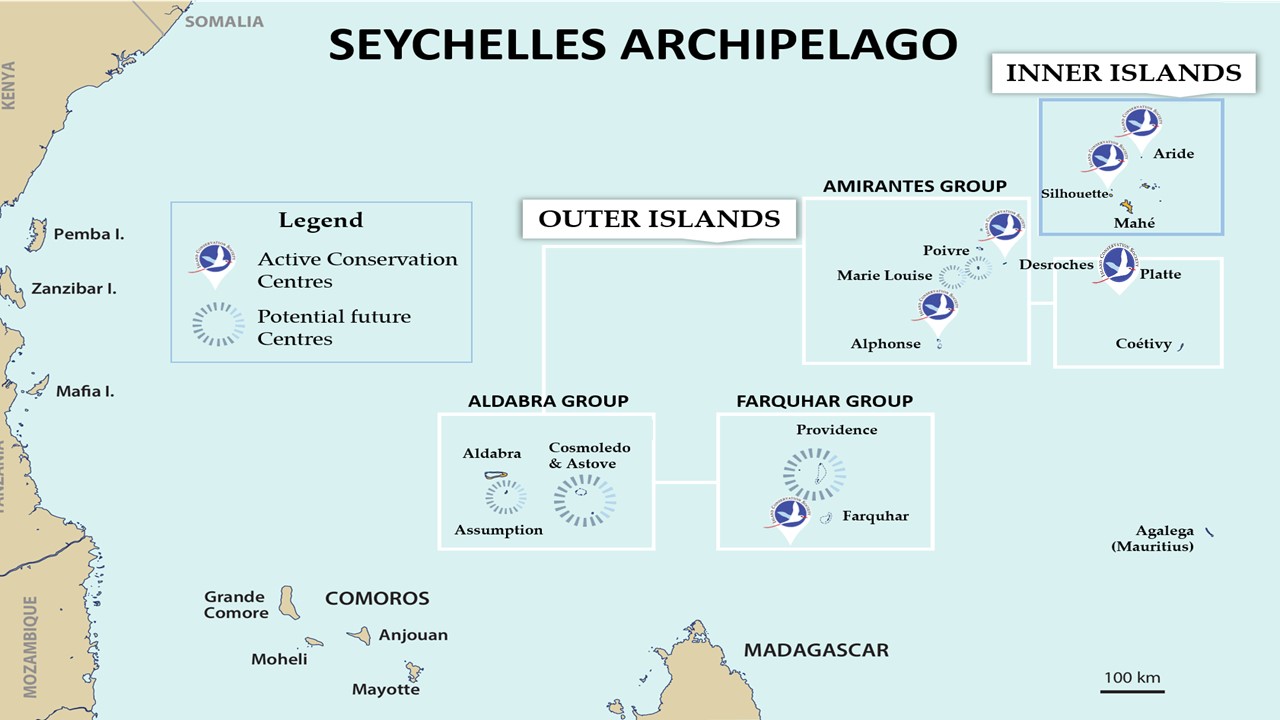
Assomption Island lies roughly 20 miles from Aldabra Atoll, often called an “outpost for evolution” due to its unique ecological makeup and high concentration of endemic species. The island is home to endangered nesting sea turtles, giant tortoises, and over 400 species found nowhere else on Earth.

Map of the Seychelles
Map of the Seychelles via the Island Conservation Society

Construction has reportedly begun on Assomption Island for a development that includes luxury villas, a wellness spa, extended airstrip, and other high-end amenities. Conservationists argue this could devastate fragile habitats and pave the way for further commercial encroachment in the Aldabra region.

A 3-mile stretch of beach on Assomption is one of the best beaches in the Seychelles and a main breeding ground for the green turtle, says Skerret.

Despite opposition from some environmental NGOs and local communities (Skerret personally is for development, but in the right way), the Seychelles government has approved the project. Critics have questioned the transparency of the environmental impact assessment (EIA) process, alleging it was expedited and potentially influenced by vested interests.

Adabra Atoll and Assomption Island
Adabra Atoll and Assomption Island are about 25 miles from each other.

Qatari Influence and Allegations

The development is backed by the Assets Group, led by the Al-Khayyat brothers, whose business dealings have attracted international scrutiny. The pair have been implicated in UK court proceedings alleging ties to extremist financing—though these allegations remain under legal review.

Assets Group, the Qatari conglomerate behind the Assomption Island development, is led by the Al-Khayyat brothers—figures currently embroiled in UK legal proceedings over allegations of financing terrorist organizations. Court documents and investigative reports have linked the group to funneling funds through charitable fronts and construction firms tied to extremist networks, raising serious ethical and geopolitical concerns about their involvement in high-profile international projects.

When the Seychelles put out a tender for a development, Qatar was the only one who responded.

Observers such as the Friends of Aldabra fear that the resort is part of a broader geopolitical strategy: using opaque investment structures to gain strategic footholds in vulnerable island nations. Qatar’s expansion into tourism infrastructure across the Global South has raised similar concerns elsewhere.

A Troubled History of Assomption

Chris Feare
Chris Feare

According to ornithologist and conservationist Chris Feare, Assomption has already suffered catastrophic ecological damage due to guano mining in the 20th century. “Virtually all of its birds, some of them endemic forms, all of its Giant Tortoises and most of its vegetation were lost,” says Feare. The current development could undo decades of slow ecological recovery.

Assomption also serves as a critical logistical access point to the Aldabra region. Conservationists argue that once the airstrip is expanded to accommodate private jets, increased development pressure will follow across other islands in the Outer Islands District.

The Seychelles has long promoted itself as a global leader in marine conservation through its Blue Economy initiatives and high-profile international environmental partnerships. The Assomption project could undermine that reputation, and with national elections on the horizon, public scrutiny is mounting.

Despite concern from prominent figures, including Nirmal Shah, CEO of Nature Seychelles, institutional influence appears limited. “I have no role in any regulatory matter. I run an NGO,” he commented via LinkedIn. We have sent him more questions and he says he will return to us next week.

Visual materials shared by Assets Group show an ultra-luxury resort featuring up to 40 beachfront villas, an outdoor cinema, children’s clubs, diving experiences, and atoll sunset tours—all under the guise of “sustainable luxury.” The resort operator is expected to be announced in 2025, with an opening scheduled for 2027.

Assets Group image of the ultra-wealthy development on the Seychelles Island of Assomption

Meanwhile, activists continue to raise awareness and rally support to halt the development. The Island Conservation Society produced this environment assessment.

Starting spring on MoonCool’s ebike

mooncool ebike trike
The MoonCool bike comes 80% assembled in a big box, ready to roll. Easy for older people to put together. Raven takes hers out of the box and it sits next to the tractor waiting for the summer to make the forest trails easier to navigate.

Early April in Northern Ontario, Canada and finally a few dry spots to test the MoonCool e-bike. This was my first attempt at putting together and riding an e-bike. First off if I had looked at the video online I would have opened the box in a few seconds. I hadn’t so 1/2 hour later I managed to open it. I needed a stronger arm to unfold the frame.

The Mooncool bike comes 80% assembled in a big box, ready to roll. Easy for older people to put together.

Everything fits easily according to instruction manual except for the front light wire. I had to redo that part to make it fit (kind of short). I charged the battery in November when it arrived. It snowed the next day do had to wait till now, April to test it. The battery, which I kept in the house over the winter, held its full charge for 4 months.

Today I locked the battery in position with the key. It took  a few readings of the instructions to realize that there is an on/off switch on the battery itself before the power activates the display.

Raven in her forest, Gnomeland in Canada Raven in her forest in the summer

Mind you I am a senior putting all this together and the excitement of finally being able to go for a ride between mud & ice spots might of made me a bit inattentive while reading the instructions.

Once I figured out the part of the throttle to turn I was in my way. Laughter could be heard by all the animals in the forest.
To be continued!!

A guide to rewilding your cities

Rewild your city
Re-wild your city

Cities like Tel Aviv are giving out free trees to create a food forest. And in Berlin, researchers like Ingo Kowarik are laying the blueprint for how to create sustainable cities using what we’ve already got. The illustrated handout above works to understand some of the principles developed by Ingo Kowarik and his team of urban planne

Ingo Kowarik imagines rewilding cities
Ingo Kowarik imagines re-wilding cities

As urbanization continues to dominate the global landscape, cities are faced with the challenge of accommodating growing populations while maintaining a healthy relationship with nature. This is important for mental health and also for urban plants and animals. Ingo Kawarik, a leading urban ecologist from Berlin, proposes a revolutionary approach to greening cities, where space—an ever-precious commodity in urban settings—is utilized to foster biodiversity and support ecological resilience.

Kawarik’s approach resonates deeply with a group of ecologists, geographers, and urban planners, who together advocate for the intelligent optimization of urban environments to benefit both people and the natural world. They have a plan and blueprint they have shared on Nature Reviews.

Related: Chicago’s coyotes live longer around people

As cities expand, they increasingly encroach on natural habitats, contributing to the loss of biodiversity and diminishing the quality of life for residents. Urban environments often become hotbeds of pollution, limited green spaces, and artificial lighting, which negatively impact both human health and local ecosystems. In response to these challenges, urban planners are exploring innovative methods to transform cities into more sustainable, nature-friendly spaces.

Kawarik’s approach presents an opportunity to address these issues, focusing on sustainable design practices that integrate biodiversity into the very fabric of urban life.

Related: bats like the food diversity of cities

Kawarik’s approach is centered around the idea that even in densely populated urban areas, space can be optimized to promote ecological balance. By rethinking the way cities are designed, planners can incorporate nature-based solutions that simultaneously enhance the environment and improve residents’ well-being.

Here are some key strategies proposed by Kawarik and supported by ecologists and urban planners:

1. Reducing Urban Lighting

One of the primary sources of disruption to urban biodiversity is excessive artificial lighting, which not only wastes energy but also affects the behavior and health of nocturnal species. Kawarik suggests that cities can reduce urban lighting to minimize light pollution, which can hinder the natural processes of plants and animals. Strategies like dimming streetlights or implementing motion sensors in low-traffic areas can conserve energy while promoting healthier ecosystems. Unnatural light isn’t good for humans either. See LED light and human health.

2. Creating Multi-Functional Greenbelts and Parks

Greenbelts and parks are essential components of any sustainable city, offering green spaces for recreation, wildlife habitats, and ecological services. Kawarik advocates for multi-functional green spaces that serve not only as recreational areas but also as corridors for wildlife, helping to restore fragmented ecosystems.

These greenbelts can provide refuge for a variety of species while also improving air quality, reducing the urban heat island effect, and promoting mental well-being for urban dwellers. Greenbelts can be small, like in the streets of space between buildings in Montreal, or large like in huge rural spaces like north of Toronto.

3. Incentivizing Green Roofs

With space at a premium, the rooftop offers an untapped resource for urban greening. Green roofs—vegetated surfaces on buildings—are a powerful tool in Kawarik’s strategy. Not only do green roofs provide habitat for birds, insects, and plants, but they also help to reduce the urban heat island effect, improve energy efficiency in buildings, and capture rainwater. Kawarik suggests that city governments incentivize the installation of green roofs through tax breaks or grants, making it a viable option for developers and homeowners alike. Green roofs do require management and may lead to leaks and other concerns, but when done right the risks outweigh the benefits.

4. Increasing Tree Cover

Trees are critical for urban ecosystems, providing shade, improving air quality, and supporting biodiversity. Kawarik advocates for increasing tree cover in urban areas, particularly in densely built environments where green space is limited. Planting more trees in streetscapes, parks, and even along highways can create vital corridors for wildlife, absorb carbon dioxide, and mitigate the negative impacts of urbanization. Tree planting initiatives can also engage communities, fostering a greater sense of connection between people and nature. See the MIT study on which cities have become greener in their urban tree maps.

MIT city tree researcher

Kawarik’s vision emphasizes that greening cities is not just about creating spaces for biodiversity—it is also about enhancing the quality of life for urban residents. A greener city can offer numerous benefits, from cleaner air and cooler temperatures to opportunities for recreation and relaxation. Moreover, integrating nature into urban environments has been shown to have positive effects on mental health, reducing stress and increasing overall well-being.

Can the shingles vaccine ward of dementia?

0
hydroponics garden
Can the shingles vaccine stop dementia?

If you have ever seen a loved one suffer from shingles, you might have wished they got the vaccine before the first outbreak. My dad said it felt like hot coals being pressed on his back and arms. And for those that do go ahead and get vaccinated, there is new research news from Stanford University in the UK: that people who have been vaccinated against shingles may be protected better against the ravages of dementia.

In the retrospective study (which means they looked back at historical data), researchers analyzed the health records of older Welsh adults and discovered that those who received the shingles vaccine were 20% less likely to develop dementia over the next seven years than those who did not receive the vaccine.

Related: dementia and the microplastics link

The remarkable findings, published April 2 in Nature, a leading science journal, support an emerging theory that viruses that affect the nervous system can increase the risk of dementia. If further confirmed, these new findings suggest that a preventive intervention for dementia is already close at hand.

Previous studies based on health records have linked the shingles vaccine with lower dementia rates, but they could not account for a major source of bias: People who are vaccinated also tend to be more health conscious in myriad, difficult-to-measure ways. Behaviors such as diet and exercise, for instance, are known to influence dementia rates, but are not included in health records.

“All these associational studies suffer from the basic problem that people who get vaccinated have different health behaviors than those who don’t,” said Pascal Geldsetzer, MD, PhD, assistant professor of medicine and senior author of the new study. “In general, they’re seen as not being solid enough evidence to make any recommendations on.”

Dementia affects more than 55 million people worldwide, with an estimated 10 million new cases every year. Decades of dementia research has largely focused on the accumulation of plaques and tangles in the brains of people with Alzheimer’s, the most common form of dementia. But with no breakthroughs in prevention or treatment, some researchers are exploring other avenues — including the role of certain viral infections.

Shingles, a viral infection that produces a painful rash, is caused by the same virus that causes chicken pox — varicella-zoster. After people contract chicken pox, usually in childhood, the virus stays dormant in the nerve cells for life. In people who are older or have weakened immune systems, the dormant virus can reactivate and cause shingles.

Related: Alzheimer’s drug is based on ancient Egypt medicine

Two years ago Geldsetzer recognized a fortuitous “natural experiment” in the rollout of the shingles vaccine in Wales that seemed to sidestep the bias. The vaccine used at that time contained a live-attenuated, or weakened, form of the virus.

The vaccination program, which began Sept. 1, 2013, specified that anyone who was 79 on that date was eligible for the vaccine for one year. (People who were 78 would become eligible the next year for one year, and so on.) People who were 80 or older on Sept. 1, 2013, were out of luck — they would never become eligible for the vaccine.

These rules, designed to ration the limited supply of the vaccine, also meant that the slight difference in age between 79- and 80-year-olds made all the difference in who had access to the vaccine. By comparing people who turned 80 just before Sept. 1, 2013, with people who turned 80 just after, the researchers could isolate the effect of being eligible for the vaccine. By 2020, one in eight older adults, who were by then 86 and 87, had been diagnosed with dementia.

But those who received the shingles vaccine were 20% less likely to develop dementia than the unvaccinated. “It was a really striking finding,” Geldsetzer said. “This huge protective signal was there, any which way you looked at the data.” Future studies will be needed to figure out how to develop a vaccine and this may take years. We aren’t going to push vaccines on anyone, but this might convince some people to take the shingles vaccine as a precaution. Also, there are 5 times more microplastics found in the brains of people with dementia. Finding ways such as sauna treatments might help us sweat those plastics out of the system.

Are your Mac’s desktop icons disappearing? Here’s how to solve it!

0
mac computer
Help your computer run more efficiently

We all install lots of apps and want to have direct access to them via our desktop. That’s why it has become common to have a plethora of icons on desktop, which can prove to be quite problematic in the long run. No matter how organized you are, that clutter will have an impact on how you work and results as a whole. Sometimes, icons might disappear out of nowhere as well. Addressing that fast is going to help, and you have to find how to solve such an issue as quickly as possible.

Why are the icons disappearing from your desktop?

  • System issues and malfunctions will sometimes remove icons from the desktop. It certainly happens, and it’s one of those issues that only makes things worse at times.
  • The preference file can be corrupt, which in turn can lead to icons disappearing or even crashes in some situations.
  • In case you use the iCloud Drive Desktop and Documents features, the icons tend to either disappear or they might even get relocated. Not a huge issue, but an annoying one for sure.
  • It can also be due to human error. Sometimes, people end up dragging the icons to Trash accidentally, and then they don’t know where those icons went. A lot of the time, human error could be a part of this process.
  • The same thing is valid when it comes to Finder settings. Maybe you changed some of the Finder settings by mistake. And in doing so, you ended up hiding a lot of apps or icons from your device. It certainly can happen, and while it’s a problem, it’s something easy to solve.

Fix the problem by relaunching Finder

It doesn’t have to be very complicated. The first fix you may want to try for this is to just relaunch finder. You press Option+Command+Escape and then you choose to relaunch Finder from that Force Quit menu. It doesn’t seem like much, but it definitely works and it will help improve your overall experience. Which in turn is what you want to focus on as the first attempt.

See if you made any Desktop and Dock changes

Enter the System Settings, check the Desktop and Dock settings, and then right under the Desktop and Stage manager, you want to see if the Show Items option is set to On Desktop. It’s not a hard thing to do, and it will certainly help ensure everything works smoothly, without any complications.

Restart your Mac

Of course, you can just restart your Mac. Maybe there is some type of error in the background, and restarting your Mac will usually do the trick. Granted, that might not always work, but along with relaunching Finder, these can be easy fixes. Even if they won’t always fix everything, it will give you the means to solve the issue and ensure it all works effectively in the end. Which is what you need the most anyway.

Turn off the Stacks feature

Stacks make it easy to group similar files. The problem is that you may end up grouping individual items on top of one another, and that’s going to come with its fair share of challenges. Turn it off by pressing Control-Click on the desktop. Deselect the “use Stacks” option and you will be good to go here.

Unhide icons via the Terminal

The cool thing about the Terminal is that it can also help you with this type of situation. A lot of the time, you just open the terminal, and then you have to type in this “defaults write com.apple.Finder CreateDesktop true”. After you do that, you enter “killall Finder” to relaunch Finder with the new additions. It’s an excellent approach and it will certainly help streamline the process in a more effective way than expected. 

Update your Mac OS

Another solution that will help is to just update Mac OS if you can. What that does is it allows you to ensure that you update everything properly and if there are any vulnerabilities or crashes, a system update will usually solve that. It’s a very effective solution and one that you can start implementing rather quickly. Yes, it can do wonders, and it will also help save a significant amount of time from your side.

Will you have icons disappearing from your device at times? Of course, and the best approach with stuff like this is to do a restart or relaunch Finder. A system update might also help as well. Then you can go into more complex solutions if you want. Remember, a lot of the time these icons disappear due to human error. You want to remove them as fast as you can, and if you do that wisely, it will help you more than expected. Plus, using these tips can ensure that you don’t lose access to vital icons that you need daily!

Make your bike ugly and theft-proof

The ZUV Tricycle Is Quite Ugly, but It Still Puts Your e-Bike to Shame

I’ve had about 6 bikes stolen over the years in the city,  and then later when my ugly little Ukrainian throwback got stolen, possibly “removed” from my street, it got me thinking about the best strategies for keeping my bike safe and sound.

Writes Rick Polito, author of a bike guide writes: “Nature is a master of disguise. The tiger swallowtail caterpillar starts out as a bird dropping to discourage hungry birds…having an ugly bike doesn’t mean having a junky bike. A bike thief may see the gem under the Krylon, but he also knows he can’t sell it as quickly as the tricked out speedster at the other end of the bike rack.”

How to make your bike ugly and theft-proof

When I buy shiny new bikes, I take care of them. I bring them in my house, I buy them a good lock, they feel safe and secure to drive… but after my last new metallic purple street bike got stolen, I imagined it was time to buy the ugliest bike I could get my hands on. Certainly no thief wants an ugly bike. It turns out they do, but it takes longer for the ultimate act to take place.

Some tips to “ugly” your bike:

1. Remove any flashy stickers or brand name labels from your bike.

2. Buy second hand so the bike already looks worn.

3. Repaint it with a cheap matte black or army green spray paint. Don’t be modest with the paint. Over-spraying is a good thing. Not on the gears, chain, or brakes though. 

4. Decorate it with ugly stickers, possibly a car air freshener, or fake animal fur.

5. Attach a milk crate or a rusty rack for carrying stuff.

6. Fake rust your bike with modern spray paint from the hardware store.

7. Tear a hole in your saddle (when it’s raining cover with plastic bag).

8. Add some duct tape to the frame.

9. Consider adding some streamers or spokey dokeys.

10. Visit U-G-L-Y Your Bike, a great how-to guide that offers step-by-step tips to keep your “first class ride” from the hands of thieves.

Tip: buy it ugly new. Here are some fugly e-bikes you might want to try.


The Role of AI in Amazon Seller Analytics & Forecasting

0
Are you selling eco packaging on Amazon? Or solar panels? Are you using AI?

In e-commerce, Artificial Intelligence (AI) plays a crucial role in enabling businesses to transition from traditional methods to more advanced, data-driven approaches. Among its many applications, AI’s impact on Amazon seller analytics and forecasting stands out as one of its most significant contributions. This technology helps sellers develop more effective strategies to navigate and succeed in an increasingly competitive marketplace.

The Thing About Amazon Seller Analytics

Amazon, as a massive platform, generates billions of rows of data every day. Even the most seasoned sellers can feel overwhelmed by the sheer volume of information they need to sift through. This is where AI comes into play—transforming raw data into actionable intelligence. Through machine learning algorithms, sellers gain clearer insights into customer behavior, product performance, and market trends. AI-powered Amazon analytics for sellers analyze customer reviews, sales patterns, and search terms to create a comprehensive and nuanced picture of market activity.

Improving the Accuracy of Forecasts

Demand forecasting, the process of predicting future demand, is crucial for maintaining optimal inventory levels and minimizing costs. Traditional forecasting methods typically rely on historical sales data, which can lack the flexibility to adapt to sudden market changes. This is where AI excels—by considering a wider range of variables. AI enhances demand forecasting accuracy by analyzing factors such as social media trends, economic indicators, and climate patterns. This results in much more precise predictions, helping sellers avoid overstocking and stockouts, ultimately leading to improved inventory management and greater customer satisfaction.

Improving Inventory Control

Inventory management will continue to be a focal point for e-commerce businesses. AI improves this process by predicting the right amount of stock needed at any given time. With the help of advanced algorithms, sellers are notified when to reorder their products, minimizing the risk of either excess inventory or stockouts. AI can also help sellers identify slow-moving products, enabling them to run discounts or create bundles to move stagnant inventory. These insights lead to a balanced inventory, thereby lowering storage costs and enhancing cash flow.

Refining Pricing Strategies

Pricing is one of the most important factors in attracting new customers and increasing profit. Structured pricing models can lead to missed opportunities or loss of margins. With the help of AI, sellers can create an automated pricing strategy that adjusts in real time based on competitor pricing, shifts in demand, and customer behavior. Using AI, sellers can find price points that drive sales without compromising profitability. Additionally, AI tools can recommend price changes during high-demand season sales events to ensure competitiveness and keep prices up to date in the market.

How Well Do You Know Your Customers?

home office, eco green carbonless
Do you know your customer?

Customer feedback is an important source of knowledge about product efficiency and application. AI can gather reviews and ratings and then analyze them to provide trends on customer sentiment. This type of analysis highlights areas for improvement or innovation, helping sellers develop new products or refine their customer support. Moreover, understanding customer sentiment allows for more targeted and personalized marketing campaigns, making them more focused on individual audiences.

Streamlining Marketing Efforts

office workers, startup wework New York, recycling

The digital age requires agile and precise marketing. AI equips sellers with the tools to simplify their marketing campaigns, refine ad placements, and target specific demographic groups. By understanding user behavior and preferences, AI can suggest the most effective channels and messaging strategies. This ensures that no money is wasted on marketing budgets by reaching the target audience at the right time. Additionally, a major benefit of AI in marketing is its ability to provide detailed analysis of overall campaign performance, allowing you to make real-time adjustments to maximize impact.

Reducing Operational Costs

Cost continues to be the cornerstone of business sustainability. AI also helps automate everyday processes, such as order processing, customer queries, and supply chain management. By automating these processes, businesses can reduce human error, leading to increased efficiency and lower labor costs. Additionally, AI helps allocate capital optimally for sellers, allowing them to focus on value-based operations rather than getting bogged down in operational details.

Closing Thoughts

Amazon seller analytics and forecasting are evolving thanks to AI. With its ability to analyze vast amounts of data, predict market trends, and optimize various aspects of the business, it is clear that AI plays a crucial role in e-commerce. Amid the growing complexities of the online market, AI has become a trusted companion for sellers, guiding them toward success and sustainability.


Six Dead in Red Sea Tourist Submarine Disaster, Raising Concerns Over Egypt’s Maritime Safety

Egypt sub sinks Six people have died after a tourist submarine operated by Sindbad sank in the Red Sea near Hurghada, Egypt, at approximately 10:00 local time (08:00 GMT) on March 27. The cause of the sinking remains unclear, but the incident has reignited concerns over Egypt’s lax maritime safety standards, shoddy equipment, and lack of effective emergency response measures.

Two of the casualties are children, another couple has died, leaving their surviving children orphaned.

A local Egyptian guide told Green Prophet, neglect was the reason: “It is dilapidated and not maintained. The glass window [was] broken and [the sub was] 20 meters deep,” when the accident happened, he said.

Local reports say the sub was out less than a mile when the accident happened. All the tourists were Russian.

Egypt’s waters have been the site of numerous maritime disasters in recent years, particularly among the diving and tourism industry, where safety protocols are often ignored, and equipment maintenance is subpar. Past incidents, such as the 2022 sinking of the Carlton Queen dive boat and the 2021 fire aboard the diving vessel Heaven One, highlight a troubling trend in Egypt’s Red Sea tourism sector, where safety takes a back seat to profit.

Eleven people died in November, 2024 in the Sea Story incident when a dive boat sank and to this day no one knows the real cause or why the Egyptian Navy failed to rescue people quickly as the boat bobbed above the water for 2 days. We have a survivor story here.

In this latest incident, authorities confirmed that six tourists died, while 39 others were rescued. The victims included a married couple who were both doctors, with their two children now recovering in the hospital.

What Went Wrong?

Survivors have given conflicting accounts of what caused the accident. One Russian tourist, Ekaterina, told Russian outlet Ren TV that as passengers were boarding the submarine, water began pouring in due to two open hatches. She described it as if the vessel had fallen from its mooring, sending it plunging underwater before anyone could react. Other reports suggest the submarine may have hit a reef at a depth of 20 meters, causing it to lose pressure and take on water rapidly.

Compounding the disaster, the Sindbad company—responsible for the vessel—has provided little information. All upcoming submarine tours have been canceled pending an investigation, but for many, this response is too little, too late. Critics argue that Egyptian authorities should have enforced stricter safety protocols long ago, preventing such tragedies from occurring in the first place.

Tourists who have previously taken Sindbad submarine tours are now speaking out about the concerning lack of safety protocols. British tourist Roy Gillson, who was on a trip just last week, admitted, “Looking back, we had no safety drill whatsoever.” Another tourist stated that a recorded safety briefing was played, but there was no real enforcement of emergency procedures.

One reviewer posting on TripAdvisor said in October 2024: “‘They also ‘big up’ the qualifications of the captain. “But constantly bumping the sub on the sea floor is not good for the sea life, sea floor, my sanity of ultimately I’d say the sub!”

This aligns with broader issues in Egypt’s diving and maritime tourism sector. I have interviewed about 10 people connected to the Sea Story tragedy and all confirmed lack of functioning safety gear. Many operators in Egypt cut corners to maximize profits, resulting in poorly maintained vessels, inadequate crew training, and ineffective emergency response capabilities. Unlike in countries with stringent maritime regulations, Egypt lacks a dedicated, well-equipped rescue infrastructure, leaving victims to rely on often ill-prepared local resources when disasters strike.

Even going on a low-key boat trip can be dangerous in Egypt. One reader sent us this story about boating with children. 

Egyptian authorities have launched an investigation, but many fear it will be yet another superficial review with little real impact. In previous maritime accidents, accountability has been rare, and companies often resume operations with minimal consequences.

As one survivor put it, “This could have been prevented. How many more people have to die before they take safety seriously?”

Egypt relies heavily on tourism as a key sector of its economy. Before the COVID-19 pandemic, tourism contributed about 12% to Egypt’s GDP and was one of the country’s largest sources of foreign currency. The industry also provided jobs for around 10% of Egypt’s workforce, directly and indirectly supporting millions of people.

Tourism revenue fluctuates based on global events, security concerns, and economic conditions. In 2019, Egypt earned $13 billion from tourism, but the pandemic caused a sharp decline in 2020. However, the industry has been recovering, especially with the rise in visitors to historic sites like the Pyramids, Luxor, and the Red Sea resorts.

To reduce dependence on tourism, Egypt has been investing in infrastructure, manufacturing, and its Suez Canal revenues. But the Houthi Yemeni terrorism has also taken a toll on Egypt’s shipping routes in this regard. Some people are turning to the Red Sea Islands in Saudi Arabia as an alternative but the prices there can’t match the affordability in Sinai and Egypt.

Philippe Starck’s Floating Mansion: The Hollow Spectacle of Modern Architecture

0
Philippe Starck, floating mansion, modern architecture, surreal building, luxury hotel, metal-clad tower, architectural whimsy, design spectacle, contemporary construction, urban skyline
A surreal architectural structure featuring a 19th-century-style mansion perched atop a modern, monolithic skyscraper. The juxtaposition of old-world elegance and stark minimalism highlights the absurdity of contemporary design trends.

The modern architectural world has become so absurd, so self-referential, that we are now finding whimsy in a grotesque pastiche of a mansion hoisted onto a soulless skyscraper—rather than restoring the very real, crumbling mansions that lie abandoned in the European countryside. This is art eating itself, an ouroboros of design where irony and spectacle matter more than substance or authenticity.

Philippe Starck interior, luxury mansion, whimsical design, surreal architecture, eclectic decor, 19th-century style, design spectacle, architectural contrast, floating house, hotel interiors
A conceptual rendering of Manfred Heler’s mansion being lifted into the sky, as if a giant cookie-cutter extracted it from the landscape. This fantastical scene captures the surreal narrative used to justify the bizarre architectural creation.

Philippe Starck’s latest creation, a fictionalized 19th-century mansion perched atop a nine-story tower, exemplifies this decay of meaning. The hotel in Metz, France clad entirely in metal, is presented as a fantastical tale:

“Manfred Heler has inherited his parents’ beautiful house,” explained Starck. “As an orphan, he finds himself all alone, in this mansion surrounded by a large park. Everything’s going well for him, until he starts to get bored.”

The interior of the mansion atop the tower, showcasing opulent 19th-century-inspired decor with whimsical objects like crystal hammers and inverted rocking chairs. The contrast between historical grandeur and artificial whimsy embodies modern architecture’s self-referential excess.

And so, like modern architecture itself, Heler’s boredom spurs him into excess. He does not restore, he does not root himself in the land—he invents. The mansion, a relic of aristocratic Europe, is yanked from the earth and mounted atop a monolithic tower, as if a cruel god had taken a cookie-cutter to the landscape and willed it skyward.

“He climbs and climbs and climbs, until the shaking stops,” Starck describes. “Then there’s silence. Manfred is high above the city. His house has been extruded.”

This surrealist vision is the perfect metaphor for contemporary sustainable architecture, which prides itself on innovation but often leaves genuine preservation behind. Instead of rehabilitating historic estates, we spend millions constructing imitations in unnatural settings, stripping them of their purpose and transforming them into profitable, sterilized attractions. This is not conservation. This is spectacle.

 Philippe Starck interior, luxury mansion, whimsical design, surreal architecture, eclectic decor, 19th-century style, design spectacle, architectural contrast, floating house, hotel interiors

And what lies below, beneath this folly-in-the-sky? A cold, utilitarian tower with 104 spartan suites. “Stripped of any superficiality,” says Starck, as if modern minimalism is the necessary antidote to the whimsy of the mansion above. Concrete, stark white walls, and industrial elements form a dull contrast to the theatrical excess above. If the mansion is a dream of the past, the tower is the nightmare of the present: soulless, efficient, lacking any sense of history or romance.

Meanwhile, real mansions in the European countryside crumble. Their grand halls sit empty, their gardens overgrown, their histories fading into oblivion. Instead of revitalizing these structures—preserving their materials, their craftsmanship, their connection to the land—we fabricate their ghosts and pin them onto the skyline like trophies. This is what modern architecture calls progress.

The perception of numerous abandoned châteaux in France is partly influenced by the visibility of certain iconic ruins. Notable examples include Château de la Mothe-Chandeniers: Located in Les Trois-Moutiers, this 13th-century castle fell into ruin after a fire in 1932. In 2017, a crowdfunding campaign successfully raised funds to purchase and begin preserving the structure.

Château Burrus: Situated in Sainte-Croix-aux-Mines, this neo-baroque château was built in 1900 as the family home of tobacco magnate Maurice Burrus. After changing ownership and periods of abandonment, it was purchased in 2022 by a family committed to its renovation.

There are an estimated 3 million abandoned homes in France according to Insee, the French national statistics office.

Perhaps the most fitting element of this entire spectacle is Heler himself, this imagined Renaissance man who, in his boredom, creates without meaning. “An extraordinarily rigorous and inventive man, he doesn’t necessarily succeed in everything he undertakes, but it’s always done with intelligence and poetry, guided by a naive desire to create meticulously at all costs.”

 Philippe Starck interior, luxury mansion, whimsical design, surreal architecture, eclectic decor, 19th-century style, design spectacle, architectural contrast, floating house, hotel interiors

In that, he is the perfect patron saint of modern architecture—meticulous, inventive, and tragically misguided. He builds because he can, not because he should. And in doing so, he becomes the very thing he sought to escape: a prisoner of his own creation, high above the real world, detached from the land and the history beneath him.

This is the art of our time: consuming itself, applauding its own cleverness, while the true beauty of the past lies forgotten.

Do Tattoos Cause Cancer? What Science Says About the Risks of Modern Ink

0
Our findings suggested that tattoo exposure was associated with an increased risk of malignant lymphoma. More epidemiologic research is urgently needed to establish causality.
Are tattoos the ultimate expression or putting you at risk for lymphoma?

Tattoos have long been a form of self-expression, a way to etch stories, beliefs, and memories onto the skin. But as tattoo culture grows, so do questions about its long-term health effects. Could your ink be doing more than just decorating your body?

Assessing the cancer risk of modern tattoo ink has proven tricky. Unlike cosmetics or pharmaceuticals, tattoo ink isn’t strictly regulated, and its ingredients can vary widely. Some formulas contain heavy metals, industrial pigments, and preservatives that aren’t always meant for use under the skin. You can easily buy tattoo ink on the Internet and you can’t guarantee safety or the source.

tattoo hands
Tattooed hands

Recent studies suggest a possible link between tattoos and certain cancers, including lymphoma and skin cancer, particularly for those with large tattoos. One theory is that tattoo ink triggers a chronic immune response, as the body continuously tries to break down and remove foreign particles similar to women who get breast implants. Or the feeling you have when you have been wearing contact lenses for too long.

A recent study from Sweden and published in the acclaimed medical science journal The Lancet, found a risk: “Our findings suggested that tattoo exposure was associated with an increased risk of malignant lymphoma. More epidemiologic research is urgently needed to establish causality,” the researchers say.

They explained in the study that when ink is injected into the skin, the body’s immune system reacts, causing some of the pigment to travel to lymph nodes. But does this process contribute to lymphoma, a type of blood cancer?

Henna
Henna is an alternative to tattoos

To find out, researchers in Sweden analyzed health records of nearly 12,000 people, comparing those with and without tattoos. They found that people with tattoos had a slightly higher risk of developing lymphoma, especially if they got their first tattoo within the last two years. Interestingly, the risk seemed to drop for people who had tattoos for three to ten years but then increased again for those who had been tattooed for over a decade.

Like microplastics in gum, tampons and aligners, the buildup of foreign things our bodies don’t want puts pressure on our immune system. A weakened immune system lowers the defense against cancer cells constantly circulating in the blood.

In another study, researchers also found a link with the greatest incidence of skin cancer associated with red ink.

But before you start regretting your ink, scientists caution that the research is still in its early stages. Much larger studies are needed to determine the long-term problems.

Chewing gum releases thousands of bits of microplastics in your mouth

0
chewing gum pieces, microplastics in gum, synthetic gum, natural gum, saliva with microplastics, plastic particles in saliva, chewing gum research, microplastic contamination, UCLA research on gum, microplastics released from gum, gum base made from plastic, plastic in everyday products, environmental impact of gum, lab research on chewing gum, microplastics from synthetic products, plastic pollution and health risks, people chewing gum with plastic particles
Microplastics are in your gum

Plastic is everywhere. It’s in the things we use daily—cutting boards, clothing, cleaning sponges—and now, it seems, it’s even in the gum we chew. As the presence of microplastics in our environment grows, researchers are starting to investigate the potential impact of plastic particles on our health. In a pilot study, researchers revealed that chewing gum—both natural and synthetic—can release hundreds to thousands of microplastics into saliva, which could eventually be ingested. But what does this mean for us, and how did we get here?

Microplastics are tiny plastic particles, typically less than five millimeters in diameter, that can enter the body through ingestion or inhalation. These particles are found in numerous everyday products, from teeth aligners, to toothbrushes and toothpaste to tampons, sleep retainers, and even implants. Recent research suggests that these microplastics may have adverse effects on human health, but the science is still in its early stages.

In 2025, a pilot study on chewing gum presented at the American Chemical Society (ACS) Spring Meeting unveiled troubling findings. Researchers discovered that both natural and synthetic chewing gum released microplastics into saliva, potentially contributing to the growing ingestion of microplastics by humans.

“Our goal is not to alarm anybody,” says Sanjay Mohanty, principal investigator and UCLA engineering professor. “Scientists don’t know if microplastics are unsafe to us or not. There are no human trials. But we know we are exposed to plastics in everyday life, and that’s what we wanted to examine here.”

While animal studies and studies with human cells suggest microplastics could cause harm, definitive answers on their impact on human health remain elusive. However, this study raises an important question: if we are unknowingly ingesting microplastics from products like gum, what are the cumulative effects on our bodies?

The amount of microplastics in chewing gum may seem small at first, but consider the numbers: an average person chews 160 to 180 pieces of gum per year. With each piece potentially releasing up to 3,000 microplastic particles, this could lead to the ingestion of tens of thousands of plastic particles each year. While the full health implications are still unknown, reducing exposure to microplastics is something experts agree is important.

The Rise of Plastic Gum: A Transition from Natural to Synthetic

chewing gum pieces, microplastics in gum, synthetic gum, natural gum, saliva with microplastics, plastic particles in saliva, chewing gum research, microplastic contamination, UCLA research on gum, microplastics released from gum, gum base made from plastic, plastic in everyday products, environmental impact of gum, lab research on chewing gum, microplastics from synthetic products, plastic pollution and health risks, people chewing gum with plastic particles

“Our initial hypothesis was that the synthetic gums would have a lot more microplastics because the base is a type of plastic,” says Lowe, who started the project as an undergraduate intern at UCLA and the presenter of this research. The researchers tested five brands of synthetic gum and five brands of natural gum, all of which are commercially available.

Mohanty says they wanted to reduce the human factor of varied chewing patterns and saliva, so they had seven pieces from each brand all chewed by one person. In the lab, the person chewed the piece of gum for 4 minutes, producing samples of saliva every 30 seconds, then a final mouth rinse with clean water, all of which got combined into a single sample.

In another experiment, saliva samples were collected periodically over 20 minutes to look at the release rate of microplastics from each piece of gum. Then, the researchers measured the number of microplastics present in each saliva sample. Plastic particles were either stained red and counted under a microscope or analyzed by Fourier-transform infrared spectroscopy, which also provided the polymer composition.

Lowe measured an average of 100 microplastics released per gram of gum, though some individual gum pieces released as many as 600 microplastics per gram. A typical piece of gum weighs between 2 and 6 grams, meaning a large piece of gum could release up to 3,000 plastic particles.

If the average person chews 160 to 180 small sticks of gum per year, the researchers estimated that could result in the ingestion of around 30,000 microplastics. If the average person consumes tens of thousands of microplastics per year, gum chewing could greatly increase the ingested amount.

“Surprisingly, both synthetic and natural gums had similar amounts of microplastics released when we chewed them,” says Lowe. And they also contained the same polymers: polyolefins, polyethylene terephthalates, polyacrylamides and polystyrenes. The most abundant polymers for both types of gum were polyolefins, a group of plastics that includes polyethylene and polypropylene.

The history of gum

To understand the shift to plastic in chewing gum, we need to take a step back in history. Chewing gum, once made from natural tree sap, has a long history. Indigenous cultures in North America chewed sap from trees like the spruce, and the Mayans chewed a substance called chicle, derived from the sap of the sapodilla tree, as early as the 19th century. Chicle was prized for its chewiness, and for many years, it served as the base for gum products.

The 20th century, however, brought about a shift. The development of synthetic rubber during World War II led to the replacement of natural tree sap with petroleum-based materials. In 1928, the Wrigley Company began using synthetic gum bases, which are made from plastic compounds such as polyolefins, polyethylene, and polypropylene. These materials, while cheaper and more easily mass-produced, are not biodegradable, unlike the natural ingredients used in traditional gum.

The transition to plastic gum base was largely driven by convenience, cost-effectiveness, and the ability to make longer-lasting products. However, the shift from natural to synthetic has raised questions about the potential health risks of long-term exposure to microplastics. “We were transitioning to a world of convenience,” says Dr. Jessica Lee, an environmental scientist at the University of Colorado. “But that convenience came at the cost of environmental and health considerations.”

Synthetic gum bases release microplastics during chewing, as found in the recent UCLA study, but even natural gum, once considered an eco-friendly option, releases similar plastic particles. These findings raise concerns about how much plastic we are unknowingly consuming through everyday products like gum.

A Future of Microplastics: What Can We Do?

chewing gum pieces, microplastics in gum, synthetic gum, natural gum, saliva with microplastics, plastic particles in saliva, chewing gum research, microplastic contamination, UCLA research on gum, microplastics released from gum, gum base made from plastic, plastic in everyday products, environmental impact of gum, lab research on chewing gum, microplastics from synthetic products, plastic pollution and health risks, people chewing gum with plastic particles

The study on microplastics in gum is just one example of the growing presence of plastic in our lives. From dental aligners and toothbrushes to sleep retainers and even microplastics coming out of your tampons, microplastics are increasingly being found in products we rely on for daily hygiene and comfort. Research on the effects of these particles is still in its early stages, but scientists are increasingly concerned about their long-term impact on human health and the environment.

As we wait for more conclusive data, researchers like Mohanty and Lowe urge individuals to take proactive steps to reduce their exposure to microplastics. “If people want to reduce their potential exposure to microplastics from gum,” Lowe suggests, “they can chew one piece longer instead of popping in a new one.”

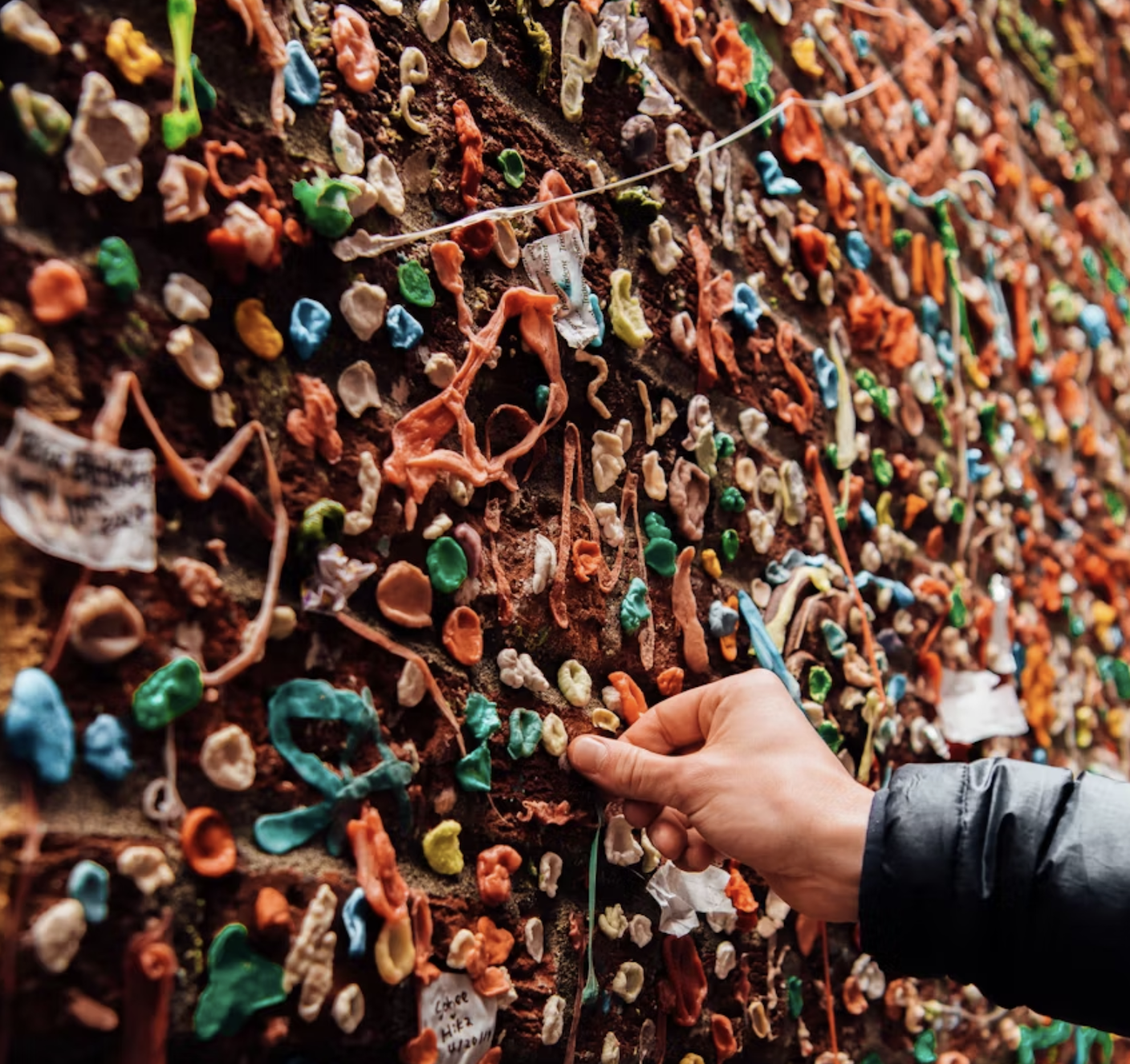
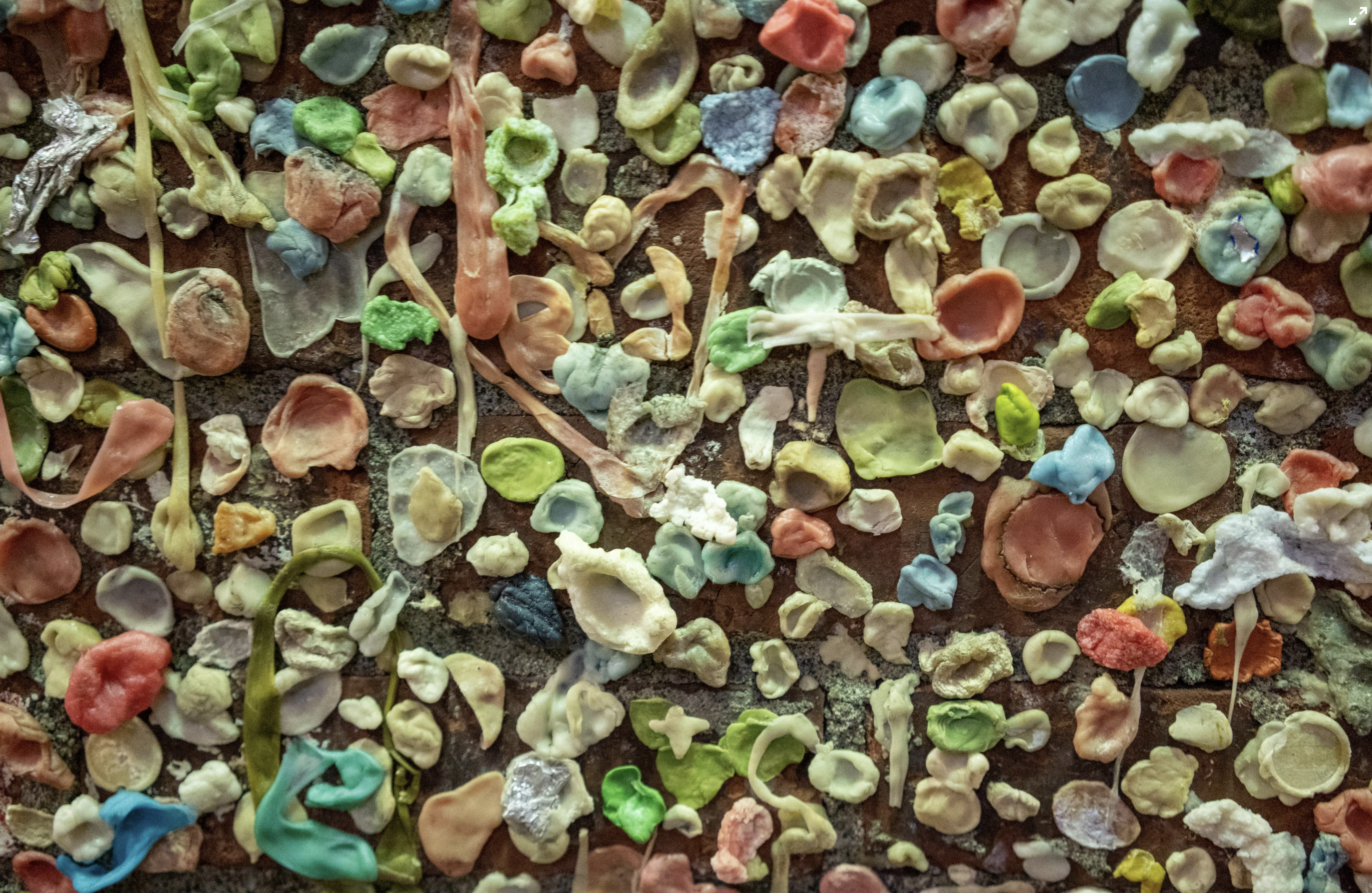
Beyond personal choices, this research highlights the importance of addressing plastic pollution at the manufacturing level. “The plastic released into saliva is a small fraction of the plastic that’s in the gum,” Mohanty concludes. “So, be mindful about the environment and don’t just throw it outside or stick it to a gum wall.”

Proper disposal of gum and other plastic products can help reduce their environmental impact, but ultimately, more research is needed to understand the full scope of how microplastics affect our health.

From the Ka and Ba to the Ka’bah – A Universal Path of Unity and Sustainability

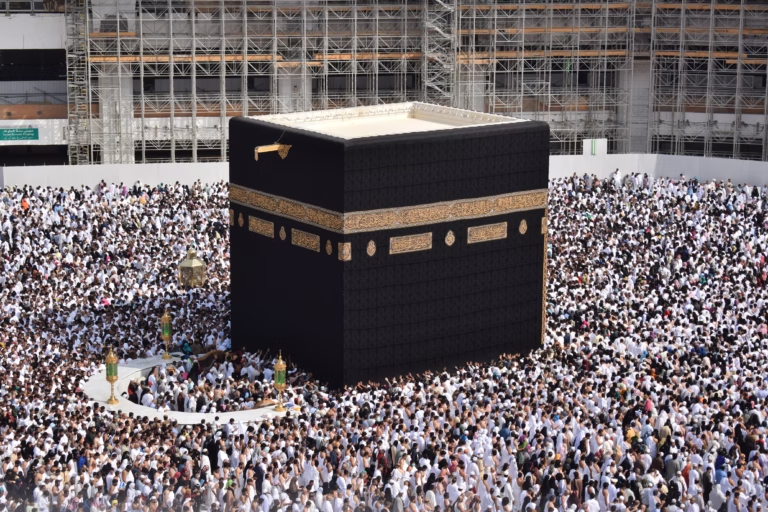
The Kabba in Saudi Arabia surrounded by a throng of people

In a world that is becoming increasingly aware of the need for spiritual growth alongside ecological sustainability, many of us are drawn to ancient wisdoms that transcend time, culture, and religion. One of the most profound revelations is how spiritual concepts across different cultures and traditions share common threads that emphasize unity, interconnectedness, and balance. Today, we’ll explore the intriguing connections between Ka and Ba from Egyptian mysticism, Merkabah mysticism in Kabbalah, and the Ka’bah in Saudi Arabia, and how these ancient ideas may hold valuable lessons for a sustainable future.

The Ka and Ba: The Soul’s Journey in Ancient Egypt

In ancient Egyptian spirituality, the Ka and Ba were two aspects of the human soul. The Ka was considered the life force, the essential energy that flows through all living beings. It represented vitality and the essence of being. The Ba, on the other hand, was thought to be the personality and the soul’s ability to transcend the physical realm, allowing one to journey between worlds.

Together, the Ka and Ba formed the complete soul — the eternal, divine essence of the individual that connects to the cosmos. This union symbolized the journey of the soul towards spiritual ascension, where the individual becomes one with the divine and the universe. In a modern context, we could interpret the Ka and Ba as symbolic of the balance between mind and spirit, the physical and the spiritual — a harmony that is increasingly necessary in today’s world if we are to achieve sustainable living and holistic growth.

The Ka’bah: A Sacred Center of Unity

Ka and Ba in Egyptian hieroglyphics

Fast forward thousands of years to the Ka’bah in Mecca, Saudi Arabia, one of the most sacred sites in Islam. Pilgrims from around the world visit the Ka’bah as part of the Hajj pilgrimage, a physical journey of spiritual significance. The Ka’bah is considered the metaphysical center of the universe, symbolizing the unification of all believers with the divine. Each circle made by pilgrims around the Ka’bah represents a symbolic return to the core, a reconnection to the divine source, and a reaffirmation of the interconnectedness of all things.

While it may seem far removed from ancient Egyptian ideas, the Ka’bah shares a similar theme: the Ka as the life force, and the soul’s journey toward unity with the divine. In this sense, the Ka’bah acts as a sacred, grounding point where the physical and spiritual realms meet — a place of transcendence and connection that draws people from all walks of life to experience unity with the cosmos.

Merkabah Mysticism: Divine Ascension and Sacred Geometry

The Merkabah mysticism of Kabbalah further deepens the connection between these ancient ideas. Rooted in Jewish spiritual teachings, Merkabah mysticism speaks of a divine throne chariot that connects the physical world to the divine realm. Through intense meditation and spiritual practice, the soul can ascend through various levels of consciousness, ultimately reaching a state of divine unity and enlightenment.

At the heart of Merkabah mysticism is the idea of spiritual ascent and purification. In many ways, this concept mirrors the ancient Egyptian belief in the union of the Ka and Ba. It also shares a resonance with the symbolism of the Ka’bah as a point of spiritual convergence. All these traditions emphasize a journey of personal transformation — a movement from individual consciousness to universal, divine awareness.

Additionally, the concept of sacred geometry in Merkabah mysticism and the Ka’bah shares an intriguing connection. Sacred geometry reveals that the universe operates according to certain principles of order, balance, and harmony. The shape of the Ka’bah itself, a cube, can be interpreted through the lens of sacred geometry as a symbol of unity and balance, reflecting the harmonious interconnectedness of all life.

So, what do these spiritual concepts mean for us today? In a time when sustainability and interconnectedness are paramount, these ancient teachings offer profound insights. They remind us that the physical world and the spiritual world are not separate, but deeply intertwined. Just as the Ka and Ba unite to form the complete soul, so too must we integrate our spiritual values with our actions in the physical world, particularly when it comes to caring for our planet.

The Ka’bah, as a central point of unity, teaches us that the world is interconnected — every action we take has a ripple effect. As we seek balance and harmony in our personal and collective lives, we also need to foster a sense of connection with nature, recognizing that we are part of a larger web of life. Just as the Ka and Ba reflect the union of life force and personality, our approach to sustainability must unite the needs of people with the health of the Earth.

Recipe: Make Your Own Delicious Turkey Jerky

0

jerky

Jerky, a favorite protein snack. Convenient to take on a hike, a camping trip, or just a grab-and-go bite when you’re in a hurry. Great to have on hand when tired, hungry kids start whining but the next meal is a still a way down the road.  But unless you make your own, it’s expensive.

In the spirit of preserving meat and saving money, we offer this recipe for making jerky at home (we discussed freezing meat in this post). You can use a dehydrator, oven-dry the meat. Instructions for both are below.

What meat makes good jerky? A glance at Wikipedia’s article on jerky teaches us that jerky’s made from a surprising variety of meats. People tend to preserve what’s abundant now for eating later, so let’s see what meat you can get in your area….

“Jerky from domesticated animals includes beef, pork, goat and mutton or lamb and game animals such as deer, kudu, springbok, kangaroo, and bison are also used. Recently, other animals such as turkey, ostrich, salmon, chicken, duck, goose, shrimps, oxen, squids, octopuses, alligator, pigeon, crocodile, tuna, emu, horse, camel, lion, bear, snake and earthworm have entered the market.”

While I’m willing to imagine kangaroo, alligator and even octopus jerky – which would involve a lot of processing – I don’t really see snake and earthworm in my pantry, no matter how marinated, dehydrated, and combobulated.

Luckily, standard ground meat makes great jerky, and without great complications. Let’s go with ground turkey, as an inexpensive and healthy alternative to the commercial stuff. Ground beef works here too if you prefer .Just make sure that your hamburger contains no more than 10% fat. More, and the jerky will be greasy, and spoil fast.

Ground meat jerky’s texture is softer, less leathery than the cellophane-wrapped product you buy. And since you’re making it yourself, you control the flavors. I suggest making jerky once by the recipe below, then play around with the seasonings next time.

Make Your Own Ground Turkey Jerky

A recipe for a delicious, healthy protein snack

  • Dehydrator or conventional ovenn
  • 1 lemon (zested and juiced)
  • 2 tablespoons onion (grated)
  • 1 tablespoon soy sauce (or tamari)
  • 1 tablespoon Worcestershire sauce
  • 1 tablespoon sugar
  • 1 tablespoon olive oil
  • 2 teaspoons sweet paprika
  • 1 clove garlic (grated)
  • 1 teaspoon salt (or to taste)
  • 1 teaspoon ground black pepper
  • 1/2 teaspoon Liquid Smoke (optional)
  • 1/8 teaspoon cayenne pepper (optional)
  • 1 pound ground turkey (or hamburger)
Snack
American
High-Protein, Preserved Food, Recipe

How To Make Ground Turkey Jerky

Keep the ground turkey meat chilled until you are ready to use it.
In a large bowl, mix together lemon juice and zest, onion, soy sauce, Worcestershire sauce, sugar, olive oil, paprika, garlic, salt, pepper and optional liquid smoke and cayenne pepper.
Add the ground turkey and combine well, kneading the mass with clean, gloved hands.
Refrigerate the seasoned meat for 1 hour.
Lay out a sheet of waxed or parchment paper on a work surface. Scoop about 1/4 of the jerky mixture onto it.
Put a second sheet of waxed or parchment paper on top and roll it out to a thickness of 1/4 – 1/8 inch.
Remove the top sheet of waxed or parchment paper. Put one of the dehydrator trays on top of the jerky and flip it over, thus transferring the jerky to the dehydrator tray.
Remove the remaining sheet of waxed or parchment paper.
Patch any holes by patting in more raw jerky mixture.
With a knife, draw parallel vertical lines through the mass. You don’t have to separate it into slices; the pieces will easily snap apart after dried.
Dehydrate for 4 to 6 hours at 155 F. Check after four hours.

When Is The Jerky Ready?

The jerky will be fully dried but chewy, not brittle. To try it out, take a piece out of the dehydrator and let it cool completely. You should be able to bend a finished, cooled strip in half without breaking it.
To ensure a safe product, when your jerky seems dried but still chewy, transfer it to baking trays and finish it off in a preheated 275 F oven for 10 minutes. This finishing step in the oven ensures it’s fully cooked to a safe temperature. It cooks the meat but does not replace the lengthier step of drying the meat in the dehydrator.

The Oven Method

Lacking a dehydrator, you can oven-dry the jerky. Roll the seasoned meat out between two sheets of parchment paper. Carefully lift the thin mass onto a baking sheet. Remove the top parchment sheet. Draw parallel vertical lines in the mass with a knife. Heat the meat for 10 minutes at 300°F with the oven door closed. Then turn the temperature down to the oven lowest setting (about 170°F). Prop the door open slightly with a long-handled wooden spoon to allow moisture to escape. Turn the baking tray around at 3 hours’ cooking. It will take 6-8 hours to finish; you’ll simply have to check once in a while.

ground turkey jerky

Storing Jerky

Your turkey jerky must be completely dried and cooled before you package it, to avoid moisture condensing in the packaging, which would cause it to spoil.
Store it in a glass jar or a plastic zip-lock bag (press out all the air you can from the bag).
The jerky will keep at room temperature in a cool dark place for a week, two weeks in the fridge, or 2 months in the freezer.
Vacuum-sealing extends the life of this ground meat jerky by 1 month in a cool dark place, 2 months in the fridge, and 6 months in the freezer.
Once you open your vacuum sealed bag of ground beef jerky, it should be eaten within two days, or a week if refrigerated after opening.

The recipe was adapted from “Preserving Everything” by Leda Meredith, Countryman Press.

More about preserved foods on Green Prophet:

Make preserved, fermented Egyptian lemons for a taste of Sinai VIDEO

RECIPE: Apricot Chutney

How Academic Transcript Translation Affects International Admissions

0
academic translation services, AI
Are you looking to work in cleantech and need your solar engineering degree credits translated into English?

International student enrollment in colleges and universities continues to rise each year. As more students look to study abroad, the need for accurate academic transcript translations is crucial for admissions officers to fairly evaluate international applicants. Proper translations eliminate confusion, provide clarity, and give context to grades and courses from overseas institutions.

The stakes are high, as a spotty translation can derail an applicant’s chances or lead to a mistaken denial. On the other hand, a clear and precise rendering of academic records aids admissions committees in assembling a well-rounded, diverse student body. As the translation industry works to meet demand, both students and universities are finding better ways to handle this indispensable part of the admissions process.

How Transcript Translation Affects Admissions Decisions

Without accurate academic transcript translation, admissions officers face a difficult task evaluating international applicants. They need transcripts that faithfully convey an applicant’s educational background and academic achievements. This requires a clear interpretation of grading scales that vary widely between countries. In particular, how to translate degree classifications is crucial, as different educational systems have distinct ways of assessing academic performance.

Such as, a “70” grade in the U.S. grading system is near failing, but may be considered an “A” grade in other countries. The differences must be taken into account when translations are made so that students can’t be unfairly penalized. At the very least, things like distributions in grading, the examination periods, and credit hours in a course should be clear in the translation.

But proper transcript translation also gives more helpful context to an applicant’s choice of courses, fields of study, and educational milestones. It helps with admissions officers matching student backgrounds to the focus areas of the institution. In addition, it also helps to identify candidates who are most likely to thrive in their programs and campus environments.

Even high-performing students can accidentally submit transcripts that make people wonder, or that do not convey their achievements, without the benefit of accurate translations. But small mistakes can easily cost otherwise brilliant candidates not getting admission, that is, in an extremely competitive world.

Key Players in the Transcript Translation Process

International admissions involve cooperation between applicants, translators, and university admissions staff. Each plays an important role in ensuring applications portray candidates accurately while moving efficiently through the process.

Students provide verifiable academic documents from previous institutions. This includes transcripts, mark sheets, degree certificates, and other supporting documents. Students are best served by working with recognized translation services rather than attempting do-it-yourself translations.

Academic translators possess specialized expertise in conveying discipline-specific content, educational systems, and the cultural nuances embedded in academic language. Trusted translators hold accreditations signifying advanced training and education. They keep current on the evolving grading systems, educational norms, and terminology used around the world.

University admissions officers facilitate evaluation by clearly communicating admissions requirements and priorities for each academic year. They provide grading guidance, watch for red flags, and help guard against fraudulent submissions. Admissions staff play a key role in partnering with qualified translators to ensure institutional standards are met.

Bridging Language and Cultural Gaps

ADHD startups

Academic credentials cross both language and cultural barriers as transcripts make their way from local institutions to overseas universities. Reliable translators adeptly traverse these divides.

Translating services employ professionals fluent in the original language while intimately familiar with norms and standards in the destination country. Top services often assign two linguists to a translation project. The first possesses native-level fluency in the original language and renders an initial translation. The second linguist then reviews it to ensure the adaptation accurately conveys the source material while mirroring accepted practices in the target region.

These services also maintain updated grading references and educational resources from academic systems worldwide. By bridging linguistic and cultural gaps, they empower admissions committees to view students through a localized lens even when applying from overseas.

Technology and Academic Transcript Translation

Advancements in translation technology are also making the process faster and more accurate. Machine translation programs continue to improve, powered by artificial intelligence capable of adapting to new languages and contexts. These tools excel at translating common phrases and standard document formats like academic transcripts.

The best services combine AI capabilities with human expertise to optimize output. Advanced tools identify when machine translation likely falls short and automatically route the content to credentialed linguists to finalize. This allows humans to focus their skills on tackling complex discipline-specific passages unlikely to translate well automatically.

Some platforms provide specialized optical character recognition (OCR) able to scan and convert transcripts into editable electronic documents. This facilitates machine and human translation, reducing delays and costs associated with hard copy transcripts.

These technologies enable more students than ever to access high-quality translation services. By lowering barriers, they support universities in evaluating a broader, more diverse applicant pool drawn from across the globe.

Best Practices for Academic Transcript Translation

office workers, startup wework New York, recycling

Students and universities can take proactive steps to ensure application materials like academic transcripts aren’t lost in translation. By working with trained linguists from the early stages, applicants avoid scrambled translations that fail to convey their academic journeys.

Universities benefit by aligning with certified services that make student evaluation more equitable. When translations provide clarity, admissions officers can concentrate on selecting well-matched candidates most likely to excel at their institutions.

Here are the best practices that enable academic transcripts to bolster study abroad applications:

  1. Start early. Students should request transcripts and coordinate official translation as soon as they decide to apply overseas. Waiting risks delays that can cause students to miss admissions deadlines.
  2. Request multiple copies. Originals should be preserved for student records, while duplicate transcripts go to the translator. Additional copies ensure backup materials are available if translations are unclear or information is missing.
  3. Verify accreditations. Not all translation services are created equal. Students should confirm that linguists hold regional accreditation and specialize in academic translation. Many list these credentials directly on their websites.
  4. Submit translations alongside originals. Universities often require transcripts in both the original language and translated English. Both versions provide helpful reference points for evaluators.
  5. Include contact info with translations. Linguists should provide contact details with finished translations. This allows admissions officers to request clarification or ask follow-up questions if needed.
  6. Choose services with technology. Tech-enabled platforms often produce faster, more accurate translations. Optical character recognition and machine translation also reduce costs that can mount up when translating lengthy documents.

By choosing qualified translation services, students gain peace of mind knowing their academic achievements will not get lost crossing linguistic and cultural boundaries. For qualifying applicants, accurate transcript translation paves the pathway to overseas education.

The Future of Academic Transcript Translation

As more and more of the world’s population gains access to quality secondary education, more of the world’s population will continue applying to international universities. Along with this, translation services will be influenced by various frontiers like machine learning, artificial intelligence, and natural language processing.

Recently, Microsoft announced a breakthrough in machine translation that translated news articles from Chinese to English at the human level. Although AI is targeted at general language models, the same AI is expected to boost efficiency in translating specialized content like academic transcripts.

With increasing demand, faster and cheaper services will be offered as this technology matures. High-stakes assessments such as those needed for university admissions are likely to be handled by combined human and machine approaches. In these cases, initial draft translations are handled by automation and linguists are used for final quality assurance.

And universities will get tools to evaluate candidates in an increasingly global talent pool. OCR, machine translation, and linguistic review of international transcripts leveraged through cloud-based platforms eliminate further reliance for uploading and assessing. Universities are key to the development of future generations of people able to play on the international stage as more global connectivity allows worldwide collaboration.