
 Just when we thought that urban cycling had reached its zenith, Israeli designer Udi Rimon essentially rendered Tel Aviv’s cars redundant with his design of Tel-O-Porter – a genius bike trailer that connects to the city’s shared Tel-O-Fun bicycles. Made of aluminum tubes and stainless steel mesh, the trailer doubles as a hand held cart and holds up to 45kg of cargo.
Clever Tel-O-Porter Bike Trailer Boosts Israel’s Shared Bike Program
The Best Electric Cars of 2012, According to the American Buzz

 The Fisker Karma electric hybrid sport: Not everybody’s car at $98,000
Electric cars cruising the roads of the Middle East and elsewhere in the world have been frequent Green Prophet clean technology articles ever since Better Place’s founder Shai Agassi launched his unique electric car network concept back in early 2008. Since then, a number of other electric car players have entered the electric or “zero emissions” (ZE) field, especially companies like Ford, General Motors Volt electric hybrid, which began rolling into GM dealerships in late 2010; Nissan’s total electric Leaf Model; and particularly Tesla Motor’s hot and expensive sports and roadster electric car models. But out of all these cars which translate well in the Middle East?
Luxury Fisker Karma Electric Vehicle Hits the Middle East

 There really isn’t a better market than the Arabian Gulf for Fisker’s luxury electric vehicle, that smooth and opulent 5,000 pound Karma, so it comes as no surprise to learn that one of the world’s most expensive electric vehicles will soon be spotted flying down roads throughout the Middle East.
While many western buyers are crippled by economic hardships, except for the so-called one percent and Justin Bieber, certain residents of the United Arab Emirates, Qatar, Kuwait and Saudi Arabia coasting on oil money can still afford the $136,000 – $163, 320 (AED 500,000 – 600,000) price tag that comes with this ‘eco-friendly sedan.’
Israelis Design Cardboard Wheelchairs for Africa

Izhar Gafni and the same team behind the already world-famous cardboard bicycle have added a few other items to their repertoire, including a cardboard wheelchair. After news of the dirt-cheap cardboard bicycle raced around the globe, an international non-profit organization contacted Israelis Nimrod Elmish and Izhar Gafni of I.G. Cardboard Technologies about developing a cardboard wheelchair that could be distributed to disabled Africans. So they set about making a prototype, which, it turns out, was actually less complicated than the bicycle.
Steep Decline of Dead Sea Levels Due to Fertilizer Industry

Friends of the Earth Middle East state that half of the record shrinkage of the Dead Sea is caused by Israeli and Jordanian fertilizer companies
Over the last year alone, the Dead Sea has shrunk by a record 1.5 metres. This ecological catastrophe however isn’t caused by environmental factors alone – according to the environmental organisation Middle East Friends of the Earth, half of the shrinkage was caused by two local fertilizer companies. Speaking to Bloomberg, Gidon Bromberg who is the Israeli director of the Friends of the Earth Middle East, urged Israel Chemicals Ltd and Jordan’s Arab Potash to stop siphoning off so much water and allow the Dead Sea to recover.
Natural Holy Land Healing Research Center in Jerusalem
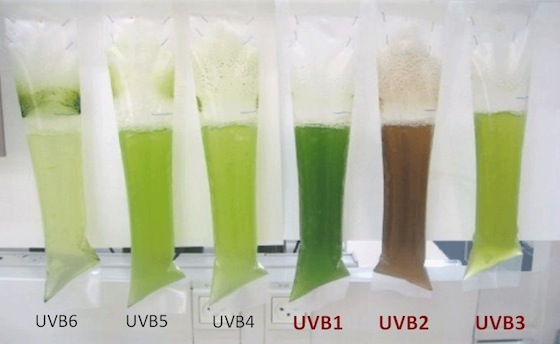

Seaweed is prolific in Israel’s Mediterranean Sea. It makes sense, then, that Middle Eastern ancients used it to help alleviate a host of ailments from peptic ulcers to fungal infections and wounds.
Based on past and present literature, archeology, history, biology, linguistics and botany, the Natural Medicine Research Unit for the Study of Complementary, Alternative and Integrated Medicine at Hadassah Medical Organization in Jerusalem is looking into how seaweed can be utilized for its nutritional and medicinal properties. Staffers have been working with Canadian partners to grow the novel idea into commercial projects.
Green Waste Processing for Boutique Olive Oil Presses and Wineries
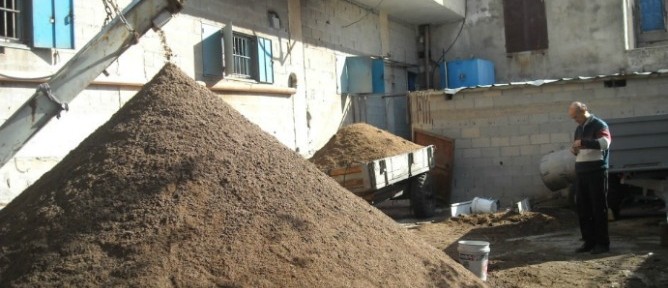
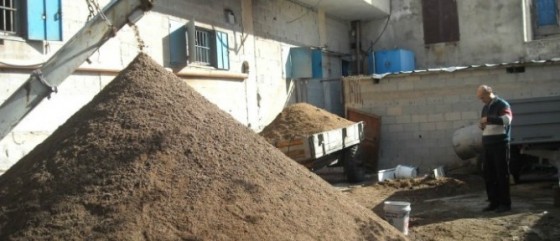
An Israeli company makes a mini-sewage plant to help small wineries, olive oil and cheese-makers deal with the pollutants from their industries.
Waste from small olive presses, cheese factories and wineries is not good for the water or soil. Organic farming and the 100-Mile Diet have influenced new college graduates to establish farms instead of seeking jobs in finance. The last decade has seen an explosion of cottage industries in everything from cheese- to wine-making.
Jerusalem’s Machane Yehuda Market – How to Eat Your Way Through It
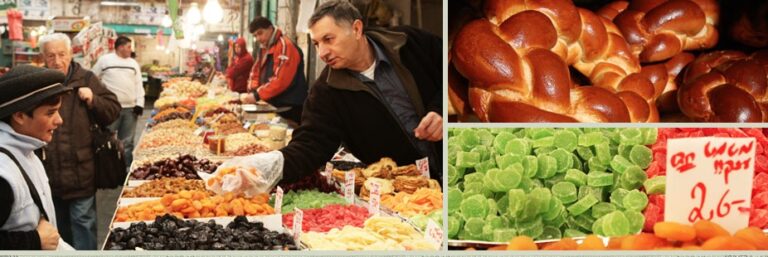
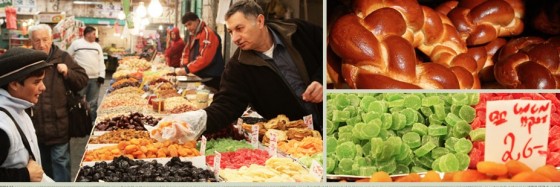
Shuk Bites – for $26 you can eat your way through Jerusalem’s famous food market
There are plenty of self-guided tours in Jerusalem, and even a few culinary tours. But combining the two approaches, “Shuk Bites” is the first self-guided culinary tour. [“Shuk” is the Middle Eastern word for market place, seen commonly throughout the region. It often suggests an outdoor presence. – ed.] A cross between a treasure hunt, a scavenger hunt and a walking tour, “Shuk Bites” offers stops and tastings at ten different shops within the Machane Yehuda market, central Jerusalem’s “shuk.”
Wallboards from Waste Using Cow Pies

A novel way to turn cow poop into profits. Would you wear this molded fibre on your wall?
The quest for construction materials with low environmental impact is leading product developers to new pastures. Literally, in the case of Noble Environmental Technologies Corporation, whose ECORE line of bio-based panels are made from cow poop. American farms produce an estimated 2 trillion pounds of manure each year (comparable stats for Middle East ranchers not readily available).
The smartest way to turn a buck is to convert a problem into a solution that gets you paid both coming and going: get paid to collect a waste (or buy it at deep discount over alternative raw material), and then convert that waste into a resale product.
New Lake Rose 35 Feet in the Arabian Desert This Past Year Alone

A handful of new lakes popping up in the vast and formidable Arabian desert are creating whole new ecosystems and attracting rare bird species that breed among the dunes. And, technically, it’s not a naturally-occurring phenomenon.
NPR traveled to the United Arab Emirates to witness firsthand one such lake that rose 35 feet in the last year alone. It was populated by cormorants, herons and even Ferruginous ducks, as well as fish and other species that couldn’t normally survive the harsh desert environment.
Siemens Exits Israel’s Solel Solar Initiative

Even as some solar projects are just taking flight in Israel, underlining a new wave of optimism about the technology’s ability to succeed in the country, other solar giants are taking their leave of Israel. International energy and infrastructure giant, Siemens, announced last Monday that it was closing down its Siemens-Solel plant in Beit Shemesh, Israel. In the process, 70 of the concentrated solar power (CSP) plant’s employees were laid off.
Angry Cow Murders Its Gazan Slaughterer During Muslim Eid Festival


Amateur slaughterers are often injured on the job. Should slaughtering be left to the professionals?
The annual Hajj pilgrimage, on which we wrote about efforts to make it more green, has also become an event in which animals are being slaughtered inhumanely for the accompanying Ein al-Adha or the Muslim Feast of the Sacrifice holiday. This form of ritual slaughtering is also becoming an issue by animal rights activists. An attempt at slaughtering a cow went wrong this year as a Gazan animal took revenge by killing the man about to slaughter it.
Noble Energy May be Pushing its Luck by Drilling for Deep Oil in the Med

Satellite view of Deepwater Horizen oil spill slick, April 30, 2010: Photo by US National Oceanic and Atmospheric Administration (NOAA)
Noble Energy, the Houston based energy company, has been working with both Israel and Cyprus to find commercial quantities of natural gas under the eastern Mediterranean seabed . Noble Energy’s Mediterranean undersea energy exploration has included the Leviathan and Tamar gas fields, together with energy tycoons like Delek Energy’s Yitzhak Tshuva. The natural gas finds so far are estimated to be able to provide Israel with enough natural gas to satisfy energy needs for 150 years – if handled wisely.
Further exploration by Noble and other energy companies are now revealing that oil deposits, located under some of the gas fields, may also be worth going after; even though this would involve very deep and environmentally risky drilling processes. These gas fields include the Leviathan field, off Israel’s coastal city of Haifa; and the Aphrodite gas field off the southern coast of Cyprus.
Seed Money Available to Protect Mediterranean Basin Birds

Seed money up to $1 million to protect your local birds. Apply today.
Sick of reading about Cyprus songbirds killed and pickled for snacks? Weary of wild killing sprees like Egypt’s sanctioned bird hunt ? Or maybe the downed flamingos in Kuwait ruffled your feathers?
BirdLife International has created a fund to underwrite environmental preservation projects in one of the world’s top biodiversity hotspots: the Mediterranean Basin. Check out their new website to learn more about the group and their work. Especially nice is a link where you can enter your country and see which species are at risk and find resources to get involved locally. A search on Jordan, as example, leads to The Royal Society for the Conservation of Nature, BirdLife’s partner in Jordan, which in turn will advise on in-kingdom conservation.
Jordan Struggles To Provide Water For Syrian Refugees

The 19-month conflict in Syria goes from bad to worse – and there are environmental impacts for the region too
“The situation is bad and getting worse,” U.N.-Arab League peace envoy Lakhdar Brahimi said today, lamenting the collapse of the truce he helped broker over the Eid al-Adha holiday. A car bomb which exploded near a Damascus mosque shattered the fragile ceasefire which had done little to stem violence across the country. And so, the 19-month conflict rages on with costs to the Syrian people and the region. In a previous post, I covered how poor water policies may have aggravated the conflict in Syria but Jordan – which has taken in over 200,000 Syrians- is now struggling with its own water supplies for refugees.