Walk through almost any Saudi city today and one form dominates residential streets: the detached villa, sitting on its own plot, separated from its neighbors, usually surrounded by a wall and reached by car. It feels thoroughly Saudi. But much of the architectural DNA of the modern Saudi house comes from American suburbia.
EIT Pharma CEO Leen Kawas is advancing lonafarnib for chronic hepatitis D, showing how stalled late-stage drug programs can be revived and carried toward regulatory review.
Smart glasses are changing the economics of eyewear by turning conventional frames into higher-priced technology products. What used to be mainly a sale built around frame design, lenses, prescription needs and brand preference is now also a sale built around cameras, audio, AI features, app support and connected-device setup.
The film itself is about a Special Forces officer, played by Pitt, stranded in the Alaskan wilderness with his combat dog Odin after a plane crash. Odin is played by Uber, a highly trained German shepherd from a military and law-enforcement breeding line.
Walk through almost any Saudi city today and one form dominates residential streets: the detached villa, sitting on its own plot, separated from its neighbors, usually surrounded by a wall and reached by car. It feels thoroughly Saudi. But much of the architectural DNA of the modern Saudi house comes from American suburbia.
EIT Pharma CEO Leen Kawas is advancing lonafarnib for chronic hepatitis D, showing how stalled late-stage drug programs can be revived and carried toward regulatory review.
Smart glasses are changing the economics of eyewear by turning conventional frames into higher-priced technology products. What used to be mainly a sale built around frame design, lenses, prescription needs and brand preference is now also a sale built around cameras, audio, AI features, app support and connected-device setup.
The film itself is about a Special Forces officer, played by Pitt, stranded in the Alaskan wilderness with his combat dog Odin after a plane crash. Odin is played by Uber, a highly trained German shepherd from a military and law-enforcement breeding line.
Walk through almost any Saudi city today and one form dominates residential streets: the detached villa, sitting on its own plot, separated from its neighbors, usually surrounded by a wall and reached by car. It feels thoroughly Saudi. But much of the architectural DNA of the modern Saudi house comes from American suburbia.
EIT Pharma CEO Leen Kawas is advancing lonafarnib for chronic hepatitis D, showing how stalled late-stage drug programs can be revived and carried toward regulatory review.
Smart glasses are changing the economics of eyewear by turning conventional frames into higher-priced technology products. What used to be mainly a sale built around frame design, lenses, prescription needs and brand preference is now also a sale built around cameras, audio, AI features, app support and connected-device setup.
The film itself is about a Special Forces officer, played by Pitt, stranded in the Alaskan wilderness with his combat dog Odin after a plane crash. Odin is played by Uber, a highly trained German shepherd from a military and law-enforcement breeding line.
Walk through almost any Saudi city today and one form dominates residential streets: the detached villa, sitting on its own plot, separated from its neighbors, usually surrounded by a wall and reached by car. It feels thoroughly Saudi. But much of the architectural DNA of the modern Saudi house comes from American suburbia.
EIT Pharma CEO Leen Kawas is advancing lonafarnib for chronic hepatitis D, showing how stalled late-stage drug programs can be revived and carried toward regulatory review.
Smart glasses are changing the economics of eyewear by turning conventional frames into higher-priced technology products. What used to be mainly a sale built around frame design, lenses, prescription needs and brand preference is now also a sale built around cameras, audio, AI features, app support and connected-device setup.
The film itself is about a Special Forces officer, played by Pitt, stranded in the Alaskan wilderness with his combat dog Odin after a plane crash. Odin is played by Uber, a highly trained German shepherd from a military and law-enforcement breeding line.
Walk through almost any Saudi city today and one form dominates residential streets: the detached villa, sitting on its own plot, separated from its neighbors, usually surrounded by a wall and reached by car. It feels thoroughly Saudi. But much of the architectural DNA of the modern Saudi house comes from American suburbia.
EIT Pharma CEO Leen Kawas is advancing lonafarnib for chronic hepatitis D, showing how stalled late-stage drug programs can be revived and carried toward regulatory review.
Smart glasses are changing the economics of eyewear by turning conventional frames into higher-priced technology products. What used to be mainly a sale built around frame design, lenses, prescription needs and brand preference is now also a sale built around cameras, audio, AI features, app support and connected-device setup.
The film itself is about a Special Forces officer, played by Pitt, stranded in the Alaskan wilderness with his combat dog Odin after a plane crash. Odin is played by Uber, a highly trained German shepherd from a military and law-enforcement breeding line.
Walk through almost any Saudi city today and one form dominates residential streets: the detached villa, sitting on its own plot, separated from its neighbors, usually surrounded by a wall and reached by car. It feels thoroughly Saudi. But much of the architectural DNA of the modern Saudi house comes from American suburbia.
EIT Pharma CEO Leen Kawas is advancing lonafarnib for chronic hepatitis D, showing how stalled late-stage drug programs can be revived and carried toward regulatory review.
Smart glasses are changing the economics of eyewear by turning conventional frames into higher-priced technology products. What used to be mainly a sale built around frame design, lenses, prescription needs and brand preference is now also a sale built around cameras, audio, AI features, app support and connected-device setup.
The film itself is about a Special Forces officer, played by Pitt, stranded in the Alaskan wilderness with his combat dog Odin after a plane crash. Odin is played by Uber, a highly trained German shepherd from a military and law-enforcement breeding line.
Walk through almost any Saudi city today and one form dominates residential streets: the detached villa, sitting on its own plot, separated from its neighbors, usually surrounded by a wall and reached by car. It feels thoroughly Saudi. But much of the architectural DNA of the modern Saudi house comes from American suburbia.
EIT Pharma CEO Leen Kawas is advancing lonafarnib for chronic hepatitis D, showing how stalled late-stage drug programs can be revived and carried toward regulatory review.
Smart glasses are changing the economics of eyewear by turning conventional frames into higher-priced technology products. What used to be mainly a sale built around frame design, lenses, prescription needs and brand preference is now also a sale built around cameras, audio, AI features, app support and connected-device setup.
The film itself is about a Special Forces officer, played by Pitt, stranded in the Alaskan wilderness with his combat dog Odin after a plane crash. Odin is played by Uber, a highly trained German shepherd from a military and law-enforcement breeding line.
Walk through almost any Saudi city today and one form dominates residential streets: the detached villa, sitting on its own plot, separated from its neighbors, usually surrounded by a wall and reached by car. It feels thoroughly Saudi. But much of the architectural DNA of the modern Saudi house comes from American suburbia.
EIT Pharma CEO Leen Kawas is advancing lonafarnib for chronic hepatitis D, showing how stalled late-stage drug programs can be revived and carried toward regulatory review.
Smart glasses are changing the economics of eyewear by turning conventional frames into higher-priced technology products. What used to be mainly a sale built around frame design, lenses, prescription needs and brand preference is now also a sale built around cameras, audio, AI features, app support and connected-device setup.
The film itself is about a Special Forces officer, played by Pitt, stranded in the Alaskan wilderness with his combat dog Odin after a plane crash. Odin is played by Uber, a highly trained German shepherd from a military and law-enforcement breeding line.
Treading the path of righteousness involves the ecology too.
It had never occurred to me that if I were to go camping on Mt. Meron for the upcoming Lag B’Omer celebration, that I’d actually be on pilgrimage. I never thought of my visits to the Western Wall in Jerusalem as a pilgrimage. But during the days I attended the First International Symposium on Green and Accessible Pilgrimage, I realized that these these trips are in effect, pilgrimages.
An astounding 300 million people leave their homes and travel on pilgrimages every year.This is an unprecedented historical migration, and the effects on the environments where pilgrims pass through are becoming disastrous. Huge numbers of pilgrims put a huge strain on local water, energy, transportation, food and waste disposal resources. Basic issues like sanitation become unpleasant, and even dangerous challenges.
Thousands of years ago the area around the Giza Pyramids was abuzz with activity as a throng of workers built the pyramid of Pharaoh Menkaure – the smallest of the three, and also the last. According to Live Science, researchers who have spent more than two decades studying the Egyptian archaeology site have long puzzled over how the laborers were fed.
Now, after painstakingly documenting all found objects, including heaps of sheep, goat, cattle and pig bones, discovered at a worker’s camp located 1300 feet south of the Sphinx, they believe they know the answer.
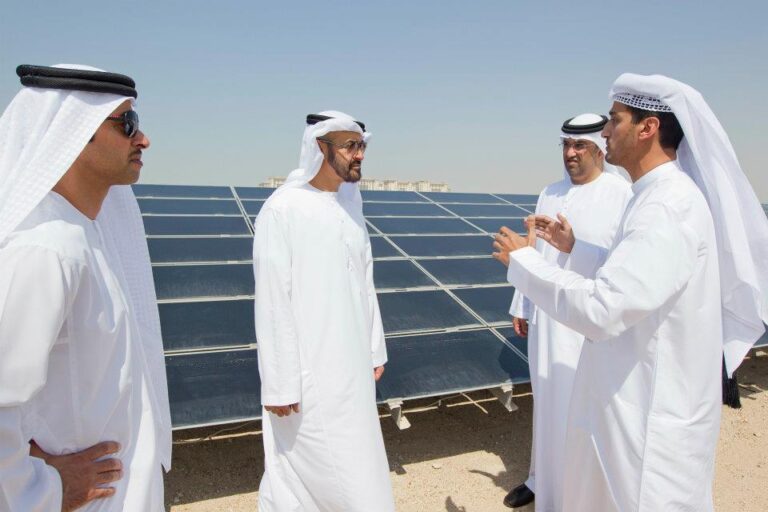
HH General Sheikh Mohamed bin Zayed Al Nahyan Crown Prince of Abu Dhabi (left), HH Sheikh Hazza bin Zayed Al Nahyan National Security Advisor for the UAE and Vice Chairman of the Abu Dhabi Executive Council visit Masdar City’s 10 MW PV plant in 2011.
Proponents of environmental reform (renewable energy, greener economy) are racing against the forces of environmental destruction (fossil fuel industry, global warming), while the rest of us wait to see which will reach the finish line first.
In the Middle East and Africa (MEA), fossil fuels are way ahead. Many countries, South Africa in particular, rely too much on coal, while others like Saudi Arabia and Abu Dhabi have played a crucial role in our oil addiction. But there may be hope. Leading analysts for the photovoltaic industry, NPD Solarbuzz recently reported that PV demand in the MEA has soared in the last year with an astounding 625 percent increase.
Packaged food from a supermarket in Jordan or anywhere. Images by Laurie Balbo, for Green Prophet
Random dumping and burning of plastic garbage, which constitutes a fifth of the Kingdom’s solid waste, are negatively affecting the environment and public health, said a Jordanian official.
Good morning, Jordan! Glad to see you waking up to your plastic addiction and outrageously dirty dumping disorder. Plastics, widely introduced to world markets in the 1960’s, have been soiling the kingdom’s landscape for half a century in the form of disposable bottles, bags and product packaging. Rising population in an increasingly urban setting helps speed the use (or disuse) of the nasty buggers.
Manufacturing is heavily reliant on plastics for packaging, our mostly imported goods come swaddled in the stuff, and the kingdom is mad for clear wrap (walk out of any grocery store with yards of plastic around your purchases – see what came with my latest run to the market, above). The problem is when you throw it all out – see below.
Plastic in Jordan
Environment Ministry Secretary General Ahmad Qatarneh said as much during a one-day conference for school kids on the environmental and health impacts of plastic.
“As the ministry bans the burning and dumping of plastic waste, it encourages the public to reduce the use of plastic, recycle it and dispose of it properly,” said Qatarneh, according to The Jordan Times.
Environment Ministry figures indicate alarming plastic pollution statistics for Jordan:
• Each Jordanian generates on average 2.2 pounds of solid waste daily
• Jordanians use an average of 1.5 plastic bags per day – that’s 500 plastic bags each, yearly!
• 3 billion plastic bags are used in the country annually, only 20% find their way to landfills
Qatarneh said the ministry has prepared a draft law for regulating waste management, which includes a plastic waste management plan and a policy for limiting the negative impact of plastic bags.
“We are hopeful that the policies will be adopted on a national level by using the Regulatory Impact Analysis [RIA], which will be applied for the first time in the Arab region,” Qatarneh noted. An RIA is created before new regulations are introduced to examine potential impact and success potential.
Qatarneh underscored that conventional plastic disposal methods, such as burying, are no longer environmentally or economically feasible, and that limiting plastic production and recycling it to generate energy are examples of the future integrated management plan.
Sounds swell, but why not also jump on the simple three step program proven successful in so many nations? Ban plastic bags (as our Israeli neighbors have done), implement a recycling culture, and roll-out a public education campaign beginning with our schools.
Littering is a serious problem in Jordan, where trash collection infrastructure is poorly developed and people are nonplussed by tossing trash in public and open spaces.
Plastic bags are one of the most prevalent types of land litter. Plastic debris can clog drainage systems and contribute to flooding. It kills hapless animals who ingest it. And even landlocked Jordan is experiencing marine pollution problems as its trash makes its way into the Dead and Red Seas.
A couple of years ago in Dubai we interviewed the Green Sheikh – a beloved figure in the United Arab Emirates who is a devoted father and husband, hyper productive activist, and a faith leader. Plus he is smart- PhD smart.
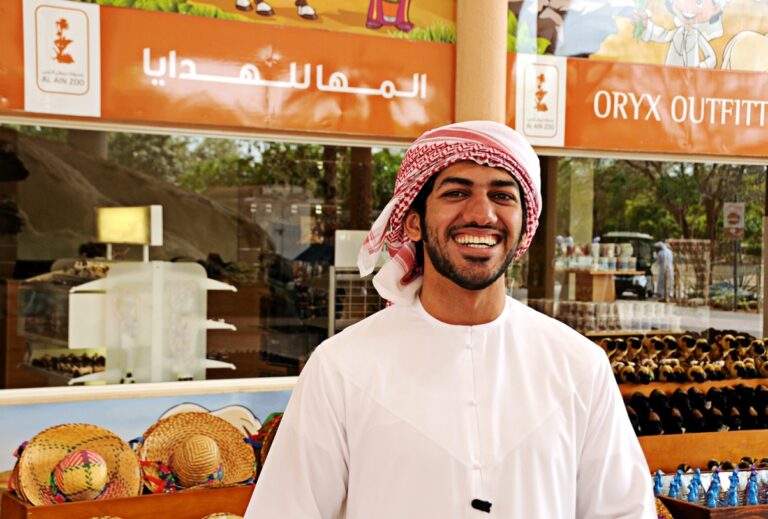
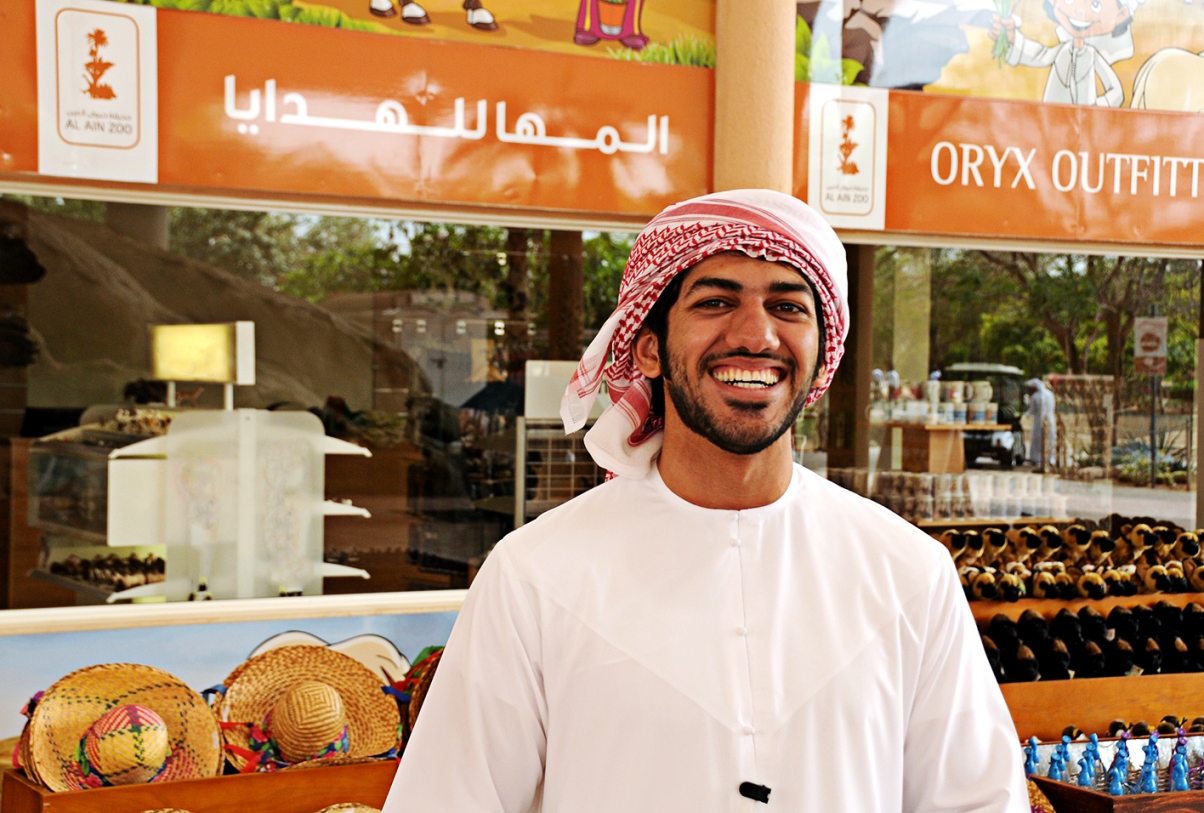
Referencing the many expatriates living (and generating wealth) in the country, he said something I’ve never forgotten: “In my own country, when I speak to people in Arabic, they answer me in English. Everywhere I go. Can you imagine? We are a minority in our own country.” Now, nearly two years later, the Al Ain Zoo reports that Emiratis make up 33 percent of their workforce. That’s 160 young Arabs working for a zoo.
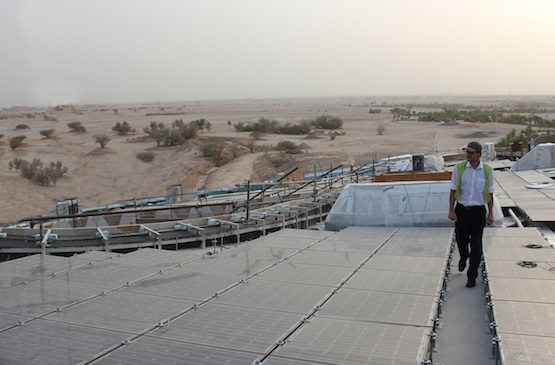
Dieter Moor of ertex solar examines the installation of his company’s solar project in Al Ain.
Finally the Middle East is attuned to the numerous benefits of solar energy, and large scale Photovoltaic (PV) and Concentrated Solar Power (CSP) plants are popping up all over the region. There’s Shams 1 outside of Abu Dhabi, the largest CSP plant in the world, Egypt’s hybrid CSP plant, Kuraymat, and most recently, Masdar inaugurated the largest PV plant in Africa, which is now generating a whopping 10 percent of Mauritania’s energy supply.
But small scale solar is catching on less quickly. In addition to being prohibitively expensive for most people, the government offers very little incentive for residents of the Middle East and North Africa (MENA) to coat their roofs with costly solar modules. It’s a shame, because a new study shows that affixing Building Integrated Photovoltaics (BIPV) to windows in Abu Dhabi could slash energy costs by as much as 33.5 percent.
Campaigners step up their lobbying for a nuclear-free Jordan as the final decision with regards to the chosen firm approaches. The Jordanian government will pick the firm which will build Jordan’s first nuclear station in May.
Greenpeace campaigners in Jordan have urged the government to consider “the dire risks” the proposed nuclear project will have on current and future generations. “Nuclear reactors can never be safe. That is the reality,” said Safa’ Jayoussi, Greenpeace Climate and Energy Campaigner in Jordan. “It is time the government takes seriously our proposition for an energy policy based on renewables.” Greenpeace have issued a report entitled ‘The Future of Energy in Jordan’ illustrating the vast potential for renewable energy in the form of wind and solar energy.
The Mediterranean Sea off the coast of Lebanon has seen better days. Elders might recall a time when the water was clear and teeming with color and life, but for the few last years, the waters have been practically devoid of life, and scuba diving more apocalyptic than fun.
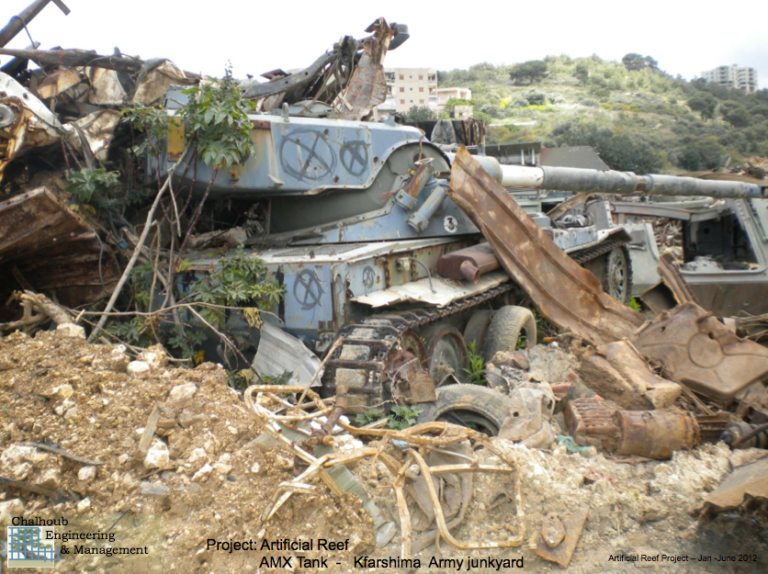
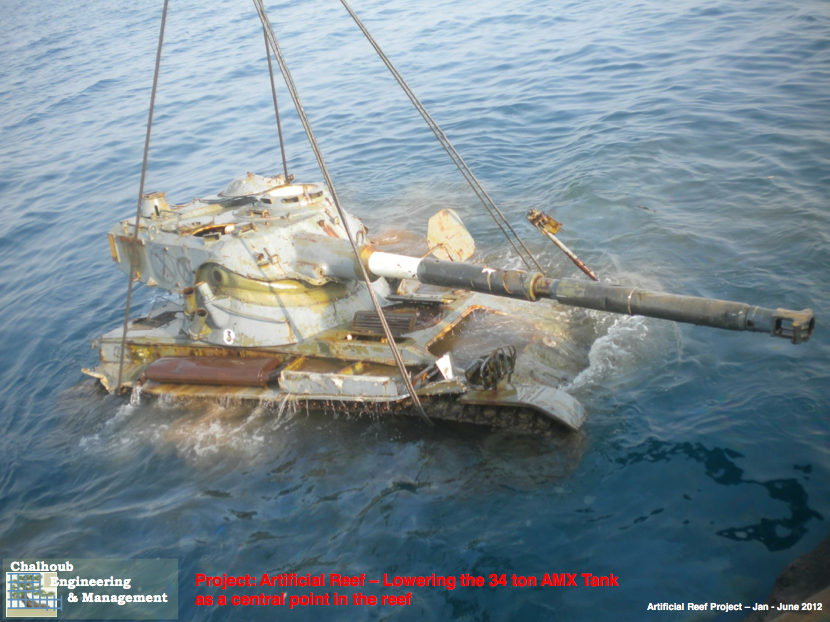
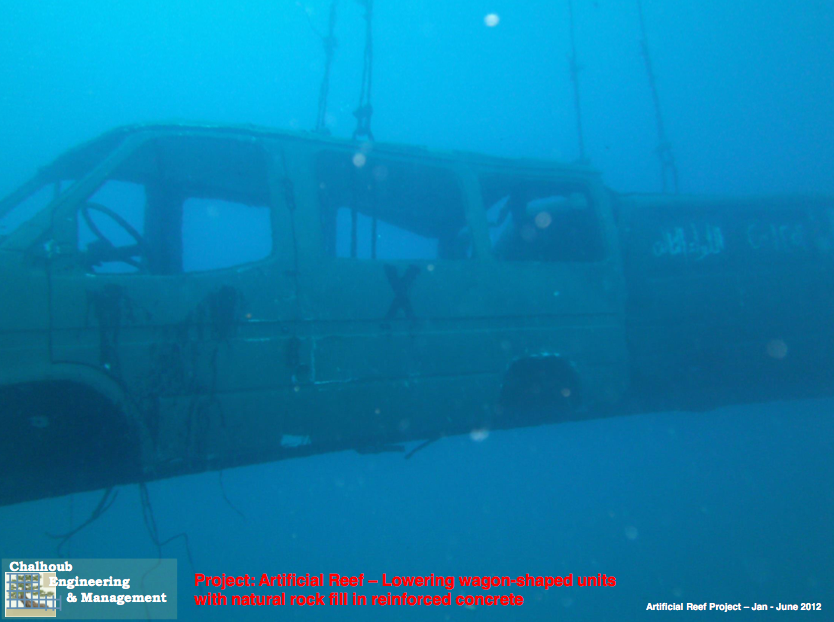
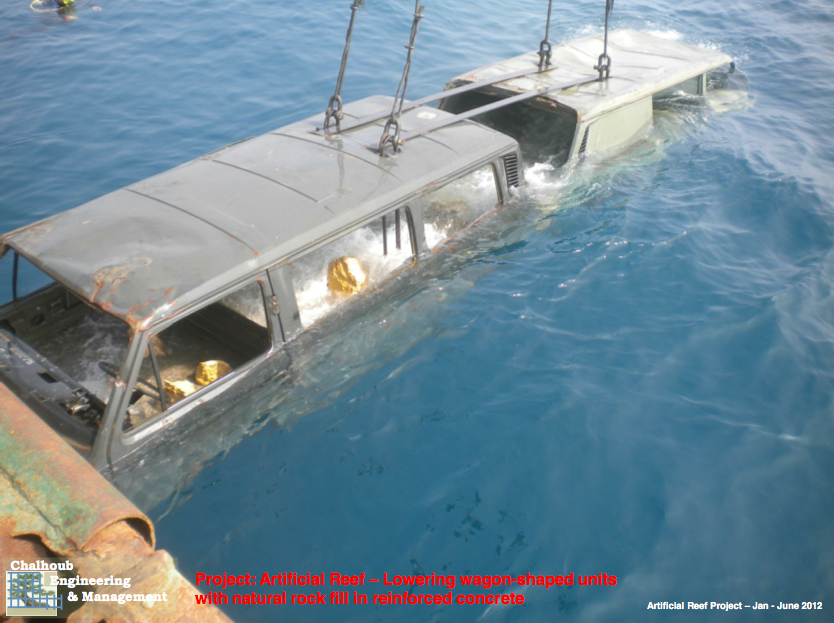
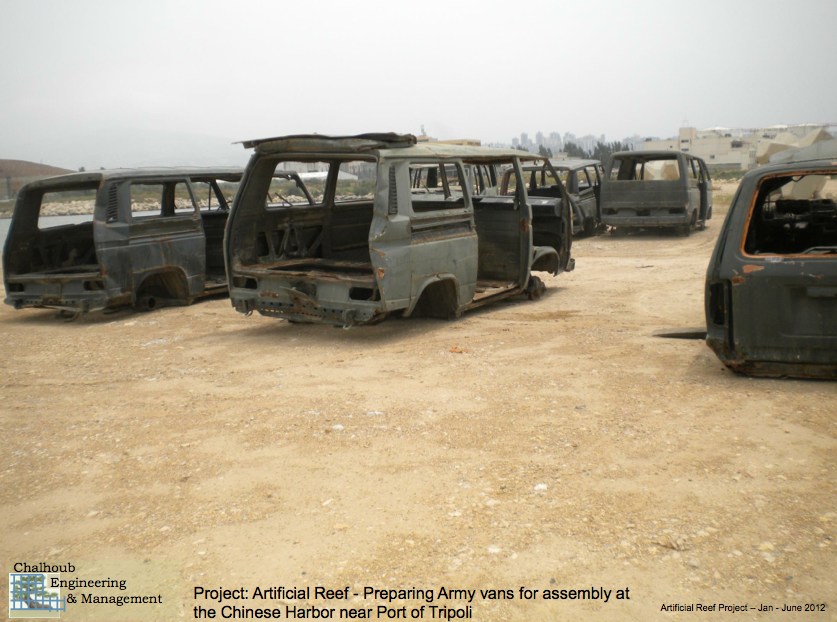
Until Dr. Michel Chalhoub, a Beirut-based engineer, secured funding to make a patch of sea off the coast of Tripoli beautiful again by sinking a huge pile of army vehicles about 12 km from the coast. Disused tanks, vans, and even a barge and crane were lowered into the water to establish a new artificial reef that was completed in June, 2012.
Almost one year later, the American-educated Dr. Chalhoub is reluctant to say whether or not sinking the tanks and vans has made a measurable difference in Tripoli’s marine health, he told Green Prophet.
Unlike mega developers Nakheel in Dubai, who promised to build 500 artificial reefs along the Gulf Coast in order to offset the damage of their many construction projects, and Bahrain, who boasted that their artificial reef restored their waters within a fast 16 weeks, Dr. Chalhoub takes a more conservative approach to his work.
“We will be providing underwater inspection this year. We expect that it is still somewhat early to draw conclusions,” he told Green Prophet.
He was similarly matter-of-fact about the materials used to create the artificial reef, which is a particular magnate for algae, bacteria, corals and egg-laying fish:
“I used (1) vans that I joined two-by-two like train wagons on common chassis, (2) natural rock, (3) special concrete inside the vans, (4) Army scrap steel beds which I used to reinforce the concrete, (5) Army tanks, (6) Army barge/marine carrier, (7) a separate floating 110 tom capacity crane. The reef is made of several pieces deployed at distances between 70 – 100 m approx. from each other.”
But maybe he’ll be wrong. Maybe the army vehicles taken from Lebanon’s Kfarshima army junkyard, with permission of course, will be crawling with funky creatures when the follow-up mission starts.
Like the Red Sea and the Arabian/Persian Gulf, the Mediterranean has changed in recent years thanks to rising temperatures, acidification, poorly managed coastal development, overfishing and a host of other harmful feedback loops.
“Waters have deteriorated due to waste dumping and faced an acute pollution problem in 2006 from oil spills during bombardments,” Dr. Chalhoub said in an email.
But the artificial reef is expected to rejuvenate the eastern Mediterranean in the same way that shiprecks spawn such incredible biodiversity – by providing a place for fish and flora to reproduce.
If successful, the project in theory should jumpstart the local fishing industry and become a new, more upbeat, recreational scuba diving destination.
A great collection of short stories inspired by the ecological crisis which are honest, creative and sometimes really funny
I don’t know if it’s just me but whenever someone recommends a book that is for charity or even a song that is ‘worthy’ – alarm bells go off. Alarms that tell me to stay away and to avoid contact at all costs. ‘If they want money, then just ask and don’t put us through the hassle to reading drivel written by virtuous people or music designed for hippies with only the strongest stamina’ I reason. As such, you can imagine my delight when I did actually read a book of climate-inspired short stories which is not only giving all the royalties to the ‘Stop Climate Chaos Coalition’ but is also genuinely worth recommending. This can’t happen often – or I hope not, as I might be missing out on some great stuff.
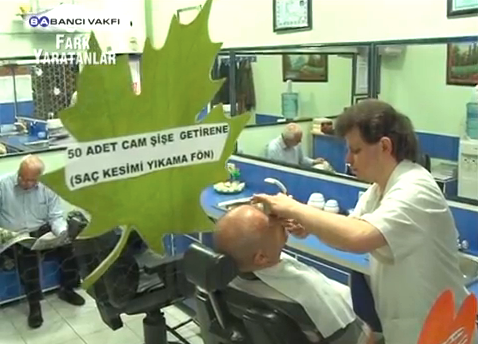
The barbershop tradition in Turkey is far more vibrant than the Hair Cutteries of America. In Turkey, men gather for their weekly shave and catch up on the politics du jour while drinking strong muddy coffee often laced with cardamom. The barber is naturally a key figure in this street culture, so when he takes an environmental or social stand, people pay attention.
Rasim Uyan was promoted as last week’s “Changemaker” – a Hacı Ömer Sabancı Foundation program in Turkey that recognizes 64 individuals who promote social development, community engagement and education – for turning his small shop in Kocaeli into a mini recycling center.
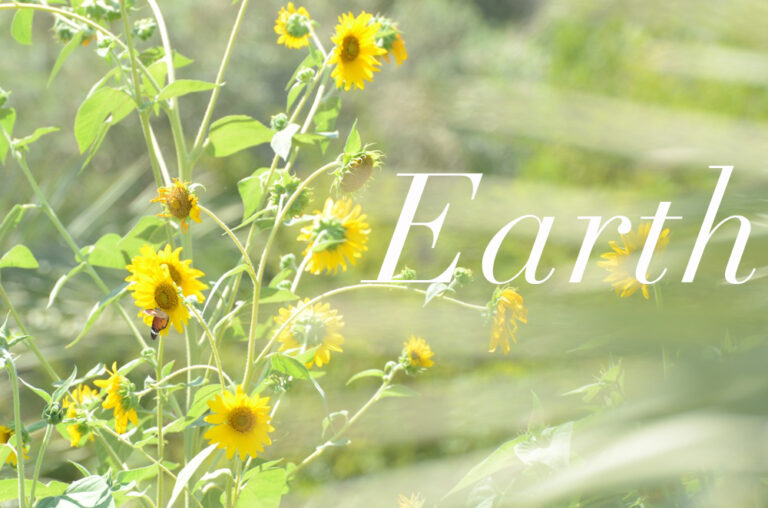
It’s Earth Day, which means you will see at least 100 stories in your Facebook and Twitter feeds that will list the many ways that you can become a better earthly citizen. And most of them are valid. Yet I yearned to find a more meaningful way to honor the day, so this year I have collected 13 of my favorite photographs that depict the miracle that is our planet and every living organism on it.
With my trusted camera by my side, I have explored many reaches of the earth – from the deserts of Egypt to the cobbled streets of Ghent in Belgium, from an island in Kenya to the rolling hills of Virginia, and though I’ve barely scraped the surface and there are many photographers more skilled than I, my travels have challenged me to simplify my life, eat healthy food, drive less, and be a more loving, grounded person.
It is my deepest hope that these 13 images will stir your soul so that you too will be inspired to protect our remaining resources – today and every other day of the year.
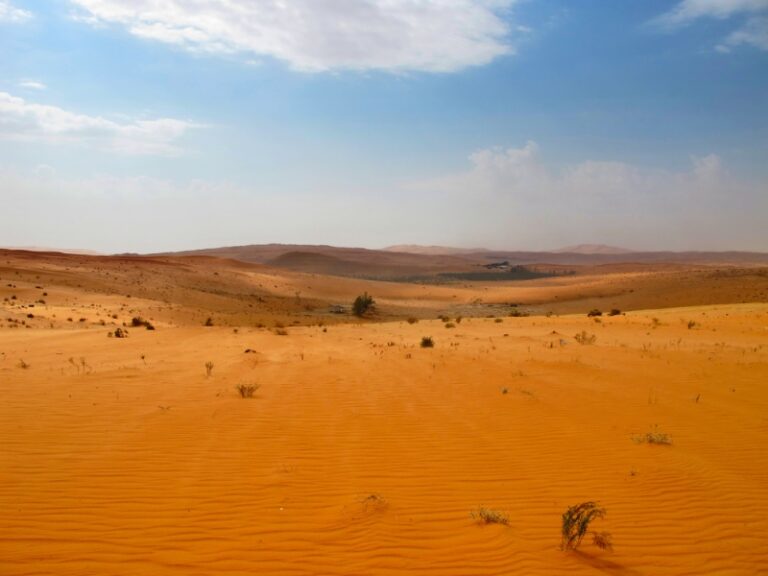
Saudi Arabia and climate change do not mix well as this photo indicates
As Earth Day 2013 approaches on April 22, issues of water options in arid countries like Saudi Arabia will be high on the agenda. Countries in the Middle East that face increasing water shortages, especially those situated on the Arabian Peninsula, have to rely more on energy intensive desalination and “importing” water from other locations, including the over-stressed Nile River. The current water crises in Saudi Arabia, for example, has pushed them to build the world’s largest desalination plant to provide enough drinking water for its population. Desalination has not been the answer for the country’s agriculture efforts, however.
We love the creative eco design coming out of Tel Aviv. Israel faces nationwide challenges of mismanaged waste and insufficient recycling infrastructure, but from the deserts of Morocco to the streets of Tel Aviv, artists like Yotam Shifroni and Gidi Gilam are seeking solutions through creativity. Around four months ago, Shifroni and Gilam opened Studio Sfog in Tel Aviv. Sfog means “sponge” in Hebrew. And the studio lives up to that vision, soaking up influences from the city and people around it.
Campaigners in Lebanon are asking for support to protect an ancient Phoenician coastline which is under threat due to a port project
Lebanese environment campaigners are calling on nature lovers far and wide to help them protect an important piece of their natural heritage along the Mediterranean Sea. It seems that a beautiful part of the Southern coastline, the Naqura cliffs and beach, which is home to turtles is the site of a possible petroleum port development project. In an online petition they are calling on the government to declare the coastal area in south of Lebanon that stretches from the Naqura Cliffs to the Tyre Reserve a nationally protected area.
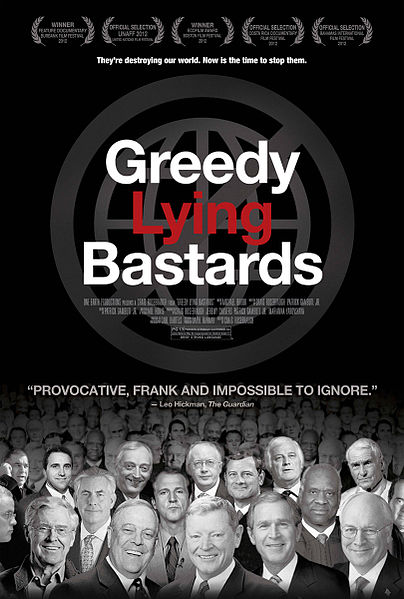
‘Greedy Lying Bastards’ opens with an image of environmental destruction, and a voiceover announces: “what if I told you all this was preventable?”
This is a powerful opening for an in your face movie that is bound to win plaudits for its exposure of those who deny, and actually do their bit to cause, and profit from, global climate change.
How you respond to the film will depend on your own journey within the environmental movement: from hard-line activist to armchair academic. It is a film for everyone to see: not a must-see, like I would suggest ‘Age Of Stupid’ is, but certainly one that will stimulate action, discussion, and as the credits announce at the end, possible change through pressure and advocacy.
Craig Scott Rosebraugh’s new documentary is a hard-hitting, pull no punches style of film that exposes the greed and political machinations behind the big corporations that are funding the climate change denial Industry.
In essence it is about eco-systems and human stability. We see drought conditions affecting farmers in the Mid West of the US, and the rising wheat prices due to the low yield.
We see examples of coastal erosion affecting a village in Alaska, where faced with the entire village needing to move (and the efforts to find the huge cost of this from Federal Government), a Tribal Elder says: “we have lost pretty much half the ground I walked on as a little boy…. our people have lost their peace of mind.”
The village hit back in 2008 by suing 24 fossil fuel exploitation companies (Shell, etc) to raise the funds to move.