Home Blog Page 356

Are Pork-fed “Porkfish” Kosher and Halal?

16

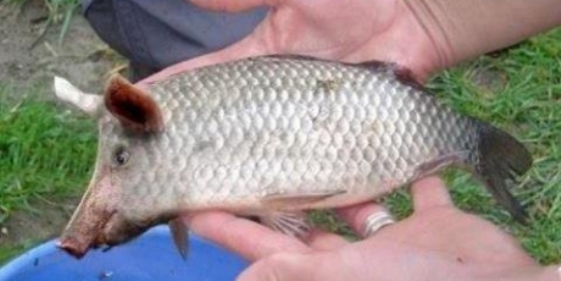
porkfish

The European Commission (EC) approved a pork-based feedstock for farm-raised fish.  Next year, your mullet and trout might contain chicken and pork:

Horsemeat in burgers, meatballs and frozen lasagna is startling, but while these products include a “secret ingredient”, they remain as advertised: meat-based foods.  But what happens when the fish on your dish also contains meat?

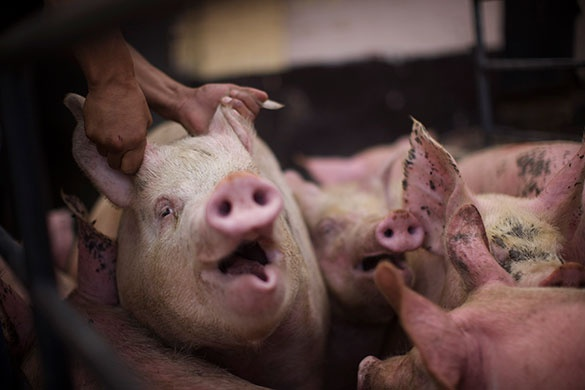
Wild salmon won’t be tucking in to a pork roast, but their farmed cousins will soon be dining on ground up pig parts.  A variety of animal byproducts are processed into an animal protein powder, also called meat meal, which is now approved as an additive to fish food.  Byproducts include pork-sourced cartilage (from ears, tails), hooves and organs, and it’s not particularly clear that those parts come from perfectly healthy piggies either.

The Middle East is a large importer of European seafood

Seafood labeling is widely a slipshod business: in a study last year, non-profit Oceana performed DNA testing on seafood sold at 74 retail outlets in Los Angeles. Results showed that 55% of 119 fish samples were misidentified. If California can’t get species properly sorted, what’s the likelihood that the Middle East can take it a step further and also identify each fish’s diet?

How’s this swim with Jews and Muslims and pescatarians?

How can you know if your fish purchases are kosher, or halal, or just pure fish? Will the absence of dietary surety mean an exodus of shoppers from the seafood aisle? It could be that the EC is cutting off it’s own metaphorical body part in a misguided attempt to help its aquaculture industry.

In 1997, a similar fish feed was banned for its connection to Mad Cow Disease.  Debate raged over the global food network.  Was it ethical to feed cow products to cows?  Was it safe?  But time passed and rules softened, and in 2008 fish meal was reintroduced to pig and poultry feeds. This latest step flips the food chain, now feeding pork and poultry meat meal to fish.

The news is muffled.  Food Navigator gave it a few paragraphs, as did EurActiv.  But what’s the reaction in Israel and Jordan? Why no squeals from the Gulf states or snorts from Egypt?

Global web mover and shaker Avaaz is raising a stink (appropriate for a subject that combines fish and pigs).

They’ve got a petition in play to pressure governments to stop porkfish from entering our markets. Avaaz has incited over 1 million people to petition against genetically modified food in Europe, and another million to take action against mutant salmon “frankenfish”. Want to join the movement?  Click this link and sign, share with everyone interested in controlling what they eat.

More comfortable sitting back, allowing governments to meddle with your menu?  Then perhaps you should memorize a new take on an old rhyme:

This little cod went to market; this little salmon stayed home, this little tuna ate roast beef, and little tilapia had none. And this little porkfish ran all the way home!

Browse more on this in our archives: , , , , ,

Green-Roofed Istanbul International Financial Center Breaks Ground

0

green roof, renewable energy, HOK, Istanbul, International Financial Center, Urban design, architecture, clean tech, green spaceIstanbul residents have been dreading this moment: construction has broken ground on an enormous International Financial Center designed to position the Turkish economy among the world’s top ten. Despite some green concessions, including green roofs, on-site renewable energy generation, and plenty of urban green space, locals who must contend with greater traffic congestion and other hazards are unlikely to be moved.

Seedy 40 Ton GMO Shipment in Egypt Shrouded in Mystery

5

GMOs, genetically modified organisms, monsanto, ISAAA, egypt, agriculture, food, poverty, healthA new report published by a non-for-profit organization that promotes crop biotechnology has cast doubt on the status of a 40 ton shipment of genetically modified Monsanto maize that entered Egypt last year, local paper Egypt Independent recently reported.

Hot on the trail of GMOs in the food-scarce country, journalist Louise Sarant talked with activists and bio-safety insiders who expressed concern about discrepancies between The International Service for the Acquisition of Agri-biotech Applications (ISAAA)’s assertion that 1000 hectares of MON810 maize was planted in Egypt and the Ministry of Agriculture’s claims that the entire shipment of insect-resistant seeds was destroyed

Gaza Marathon Cancelled Over Girls and “Headaches” for Dads

Gaza Marathon

Hamas in Gaza does not want pretty women running in the streets. UN cancels the marathon that had almost 400 women registered for participation.

While Israel gears up for its 42k marathon next week, the United Nations cancels Gaza marathon after Hamas rulers ban women from participating. The ban is the latest attempt by the Palestinian political party to impose its ideology inside the crowded Gaza Strip. Gaza women athletes accepted the news, noting that even before the ban societal pressures made training problematic.

Islam has no specific ban on women running.  Green Prophet has reported extensively on difficulties faced by Islamic women athletes during last summer’s London Olympics.  The majority of Gaza women wear hijab and many also wear abaya.  Unlike Formula One racers “The Speed Sisters“, many Palestinian sportswomen tend to limit their exercise to indoor gyms. So why the ban?

According to National Public Radio, Gaza’s Cabinet secretary, Abdul-Salam Siam, said women running in public violated Palestinian custom,”We don’t want any woman running uncovered.” Siam said only adult women were banned: girls could participate in the April 10 race.  He wouldn’t say why Hamas didn’t ban women from the previous two races.

Over 800 runners had registered, including 266 Palestinian and 119 foreign women, according to UN spokesman Sami Mshasha.  Organizers have always been careful to encourage modest dress: runners typically wore full-length running pants and long-sleeved shirts.

Gaza rights groups urged the UN to hold the marathon, arguing that Hamas has no right to discriminate against women.

Runner Nader Masri, who represented Palestine in the 2008 Beijing Olympics in the 5k race, said Gaza’s conservative culture makes it impossible for women to run in public. “Who would allow his daughter or sister to run in the street?” Masri asked. “When a girl of 16 or 17 is running in the street, that’s not acceptable.”

Woroud Sawalha represented Palestine in the 2012 London Olympics in the 800 meters. “It means a lot for me that I am female and representing Palestine,” she told CNN’s Aiming For Gold.

The UN does not recognize a Palestinian state but the International Olympic Committee has permitted athletes to compete under a Palestinian flag since 1996.

“My dad told me that I’m a pretty woman now, and not a girl anymore, so I can’t run in the streets. It will be a headache for him because people will gossip,” said Noura Shukri, a high school student who ran in the 2011 and 2012 marathons.

Critics suggest that the cancellation shows a shift in political power.  “The decision highlights the influence of the hard-liners in the Gaza government,”  Gaza political analyst Mukheimar Abu Sada told NPR.

“We did not tell UN Relief and Works Agency to cancel the marathon and we haven’t prevented it, but we laid down some conditions: We don’t want women and men mixing in the same place,” Abdessalam Siyyam, cabinet secretary of the Hamas government, told AFP.

The race would have been the third annual  UNRWA Gaza Marathon, raising funds for the agency’s summer program for Gazan children.  The news comes days before the Tel Aviv Gillette Marathon, Israel’s largest sporting event held on held on March 15, attracting over 35,000 runners.

Update: Due to a heat wave the Tel Aviv marathon will be postponed by a week.

Why It’s Hard To Celebrate World Water Day In the Middle East

2

middle east water scarcity world water day 2013With the region getting drier ‘at an alarming rate’, what is there to celebrate this World Water Day?

In the lead up to World Water Day which will take place next Friday, I have gathered some interesting water-based facts on the issue. The Middle East and North Africa region is famously one of the driest regions in the world and things don’t look like they are getting better. So what is there to actually celebrate? Read on for the bad news and also some rather great news…

Mediterranean Sharks Almost Gone Forever

2

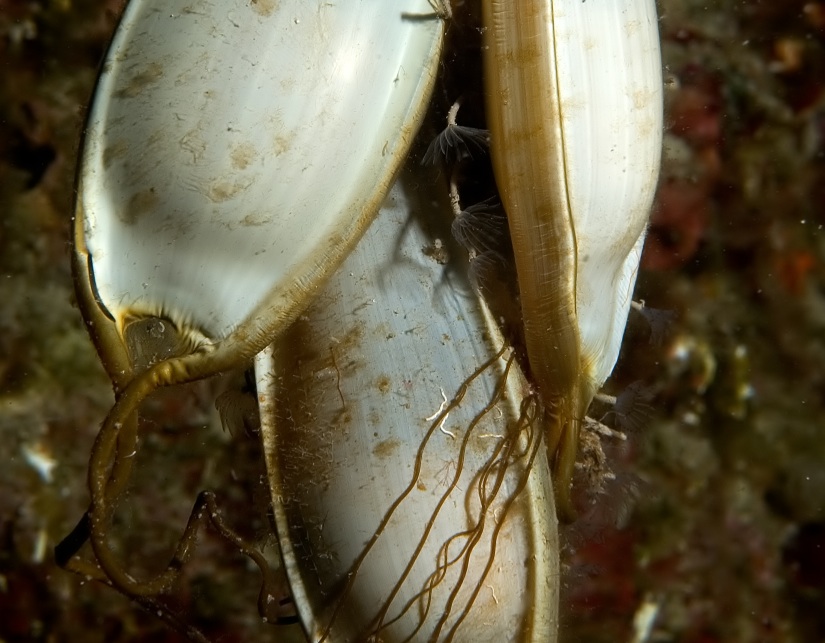
shark eggs in the sea
Mediterranean sharks risk extinction while “serious implications” feared for marine ecosystems and beyond. Accidental catches and sharks for fin soup are to blame

Shark populations in the Mediterranean and Black Sea have dropped dramatically over the last two centuries and now risk extinction, with serious implications for the region’s entire marine ecosystem and food chains, according to a new study by the UN’s Food and Agriculture Administration.

“Sharks in the Mediterranean Sea have declined by more than 97 percent in number and ‘catch weight’ over the last 200 years. They risk extinction if current fishing pressure continues,” the study found.

Libya’s Oil Reserves Pale in Comparison to Solar

1

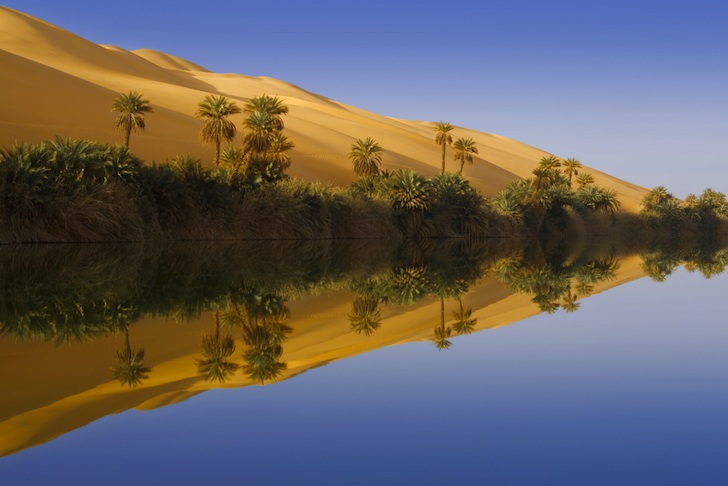
solar power, clean tech, sahara desert, mediterranean sea, DESERTEC, renewable energyLibya has long relied on its crude oil resources for revenue, but the country possesses a natural resource far more abundant and hardly tapped at all: sun.  Nearly 90 percent of the country is comprised of sun-drenched desert or semi desert and only 1.03 percent of the land is arable. Match this with solar irradiation that far north countries would die for, and Libya is sitting on a veritable gold mine.

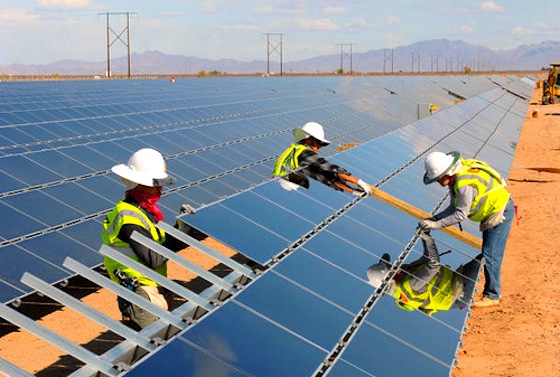
In a recent article published in the journal Renewable Energy, researchers estimate that while Libya currently produces approximately 1.4 million barrels of crude oil a day, covering just 0.1 percent of Libya with solar panels could produce the energy equivalent of seven million gallons of crude oil. But that is easier said than done.

Jordan’s Solar Mamas Betrayed by Apathy and Misogyny

2

Barefoot college, solar engineers, Jordan, Solar Mamas, renewable energy, clean tech, solar power, documentary, fundingWe all had so much hope for Jordan’s Solar Mamas – two women who traveled from a dusty village to India in order to become “solar engineers.” During their six month training, they learned to install and maintain small-scale solar systems back home and proceeded, upon their return, to implement 80 of them back home.

Rafea Al Raja and her Aunt Seiha Al Raja (Um Bader) became famous with fans across the globe rooting for them; Mona Eldaif even filmed a short documentary to tell their story, which was screened in Amman for the first time last week. But they didn’t receive sufficient financial support to achieve their goals and their family resented their new-found esteem. What resulted is a betrayal of unimaginable proportions.

The Big Ask – Is Islamic Sustainability The Answer To Our Green Prayers?

1

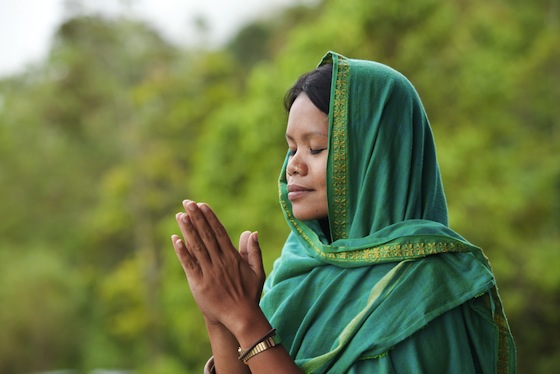
green prayerI interview Professor Al Jayoussi about Islamic notions of sustainability and whether they could ever be seen as universally applicable

In a previous post, I raised concerns over what an Islamic worldview can realistically offer those looking for a new sustainability model. After reading Odeh Al Jayoussi’s book on the topic, I felt that there were a lot more lingering questions than answers. Would Islamic sustainability really be considered an option outside the Middle East? What about those wary of any religious-based doctrine? Also after years following the ‘Western model of sustainability’, did we really want to be promoting another universal model? I caught up with Al Jayoussi,  the current vice president of Jordan’s Royal Scientific Society, and put these very questions to him. Read on for his responses.

Israel’s Self-Sufficient Solar Decathlon Home Shapes Up

1

green design, china, solar decathlon 2013, israel, Shenkar, TAU, solar power, prefabricated design, green wall, IsraelIn 2012, Green Prophet reported from the front lines of the Solar Decathlon in Spain, but this year the event is taking place in China and students from Israel’s Shenkar College of Engineering and Design will be there.

A US Department of Energy initiative, the biennial competition gives international architecture and engineering students a chance to actually participate in the design and construction of a solar-powered prefabricated home. Israeli students are currently assembling their model in Haifa, after which the 70 square meter home will be disassembled, packed up and shipped to China in time for the start of the weeks-long competition that starts in August, 2013.

Fresh green Iranian fava beans – a sustainable persian recipe

1

iranian green fava bean recipe

Available for only a short season, green favas are considered a delicacy in the Middle East.

Springtime in the market (shuk), and lots of prime greens have made their once-yearly appearance. Fresh green peas and artichokes, which I love to eat stuffed. Fresh green garlic to hang up and dry for the year. And fresh green fava beans, meaty, yet far more delicately flavored than the dried version.

Green favas may be cooked with herbs and spices, added to meat, mashed, puréed, or stewed. But I’m most fond of eating fresh favas in simple dishes, so that their green flavor shines. Here is such a recipe – Iranian favas with rice and yogurt, from the fabulous cookbook author Claudia Roden.

It’s true that preparing the beans is a bit of a process. They must be removed from their pods and then cooked enough to remove the stiff outer skin off each bean. If you’re lucky enough to find the fava beans peeled away from their pods in the market, half your work is done.

I choose a quiet time in the kitchen to do the manual work of peeling the skins off – which is necessary, because it’s a little bitter and tough. Listening to music and thinking my thoughts, peeling favas is a meditative task, an excuse to be quietly by myself and let the busy world go by for a while.

This is how you do it. Once the beans are out of their pods, boil plenty of water in a pan and add the beans. Cook for no more than three minutes and then transfer to a bowl of cold water with a slotted spoon – or drain in a colander and put in cold water. The flexible grey skin must be slit open with a small, sharp knife (or your nail) and then you can pop the bean out.

Of course you can bypass the procedure by using frozen beans, but that won’t capture the light flavor of fresh.

Fava Beans with Rice and Yogurt Recipe

Yield : 6 servings
INGREDIENTS:

1¼ cups  long grain rice

4-5 tablespoons mild olive oil

Bunch of dill or mint, finely chopped

White pepper to taste

14 ounces shelled fava beans, fresh or frozen

2 cups plain whole milk yogurt

1 clove garlic, crushed

Salt

METHOD

Pour the rice into plenty of  boiling water. Boil hard for about 14 minutes, until it is almost but not entirely tender.

Drain and put back into the pan.

Stir in 3 tablespoons of the oil, the herbs, and salt and pepper to taste. Put the lid on and leave the pan on very low heat for the rice to steam for about 15 minutes, or until tender.

Boil the fava beans in lightly salted water for a few minutes, until tender, then drain. Stir gently into the rice with the remaining oil.

Serve hot or cold with the yogurt, beaten with crushed garlic and a little salt. Serve the yogurt separately or spoon it over the rice and favas.

Enjoy!

More seasonal Middle Eastern Recipes from Green Prophet:

First Solar Takes on More Serious Desertec Role

1

First Solar, Dii, Desertec, clean tech, solar power, renewable energy, MENA, North Africa, Middle EastFirst Solar has until recently participated as an associate partner of the Dii initiative designed to develop renewable energy projects throughout the Middle East and North Africa for eventual evacuation to Europe. But now one of the world’s most prolific renewable energy producers has taken on a more serious role as shareholder.

Particularly well poised to supply solar modules to countries in the MENA region given that their thin film solar cells can withstand high temperatures and minimal water, First Solar already has a firm foot in the renewable door with a host of solar projects in various Gulf countries.

Award-Winning Egyptian Traffic App Hits the World Stage

1

cairo, traffic, clean tech, ICT, World Bank, mobile app, Egypt, Beliaa, smartphones, Egypt, pollution


Cairo’s traffic is the stuff of legends. It’s easy to spend hours in total gridlock while trying to get from one side of the city to the other, with people honking and shouting.

Then there is the smog that spews from aging vehicles. But what to do about this economic, personal and social hazard?

The World Bank teamed up with Egypt’s Communications and Transportation Ministries to stage the first Cairo Transport App Challenge (Cairo TApp).

Local innovators were invited to submit homegrown mobile apps that address various aspects of the traffic problem, from aging infrastructure to public transportation, and the winning team then went on to the 2013 Mobile World Congress in Barcelona.

Is Pig-fed kosher or halal?

0

fish fed on pork

The European Commission (EC) approved a meat-based feedstock for farm-raised fish.  Next year, your mullet and trout might contain chicken and pork.

Horsemeat in burgers, meatballs and frozen lasagna is startling, but while these products include a “secret ingredient”, they remain as advertised: meat-based foods.  But what happens when the fish on your dish also contains meat?

Wild salmon won’t be tucking in to a pork roast, but their farmed cousins will soon be dining on ground up pig parts.  A variety of animal byproducts are processed into an animal protein powder, also called meat meal, which is now approved as an additive to fish food.  Byproducts include cartilage (ears, tails), hooves and organs, and it’s not particularly clear that those parts come from perfectly healthy piggies.

The Middle East is a large importer of European seafood.

Seafood labeling is widely a slipshod business: in a study last year, non-profit Oceana performed DNA testing on seafood sold at 74 retail outlets in Los Angeles. Results showed that 55% of 119 fish samples were misidentified. If California can’t get species properly sorted, what’s the likelihood that the Middle East can take it a step further and also identify each fish’s diet?

porkfish

How’s this swim with Jews and Muslims and pescatarians?

How can you know if your fish purchases are kosher, or halal, or just pure fish? Will the absence of dietary surety mean an exodus of shoppers from the seafood aisle? It could be that the EC is cutting off it’s own metaphorical body part in a misguided attempt to help its aquaculture industry.

In 1997, a similar fish feed was banned for its connection to Mad Cow Disease.  Debate raged over the global food network.  Was it ethical to feed cow products to cows?  Was it safe?  But time passed and rules softened, and in 2008 fish meal was reintroduced to pig and poultry feeds. This latest step flips the food chain, now feeding pork and poultry meat meal to fish.

The news is muffled.  Food Navigator gave it a few paragraphs, as did EurActiv.  But what’s the reaction in Israel and Jordan? Why no squeals from the Gulf states or snorts from Egypt?

Global web mover and shaker Avaaz is raising a stink (appropriate for a subject that combines fish and pigs).  They’ve got a petition in play to pressure governments to stop porkfish from entering our markets. Avaaz has incited over 1 million people to petition against genetically modified food in Europe, and another million to take action against mutant salmon “frankenfish”. Want to join the movement?  Click this link and sign, share with everyone interested in controlling what they eat.

More comfortable sitting back, allowing governments to meddle with your menu?  Then perhaps you should memorize a new take on an old rhyme:

This little cod went to market; this little salmon stayed home, this little tuna ate roast beef, and this little tilapia had none.  And this little porkfish ran all the way home!

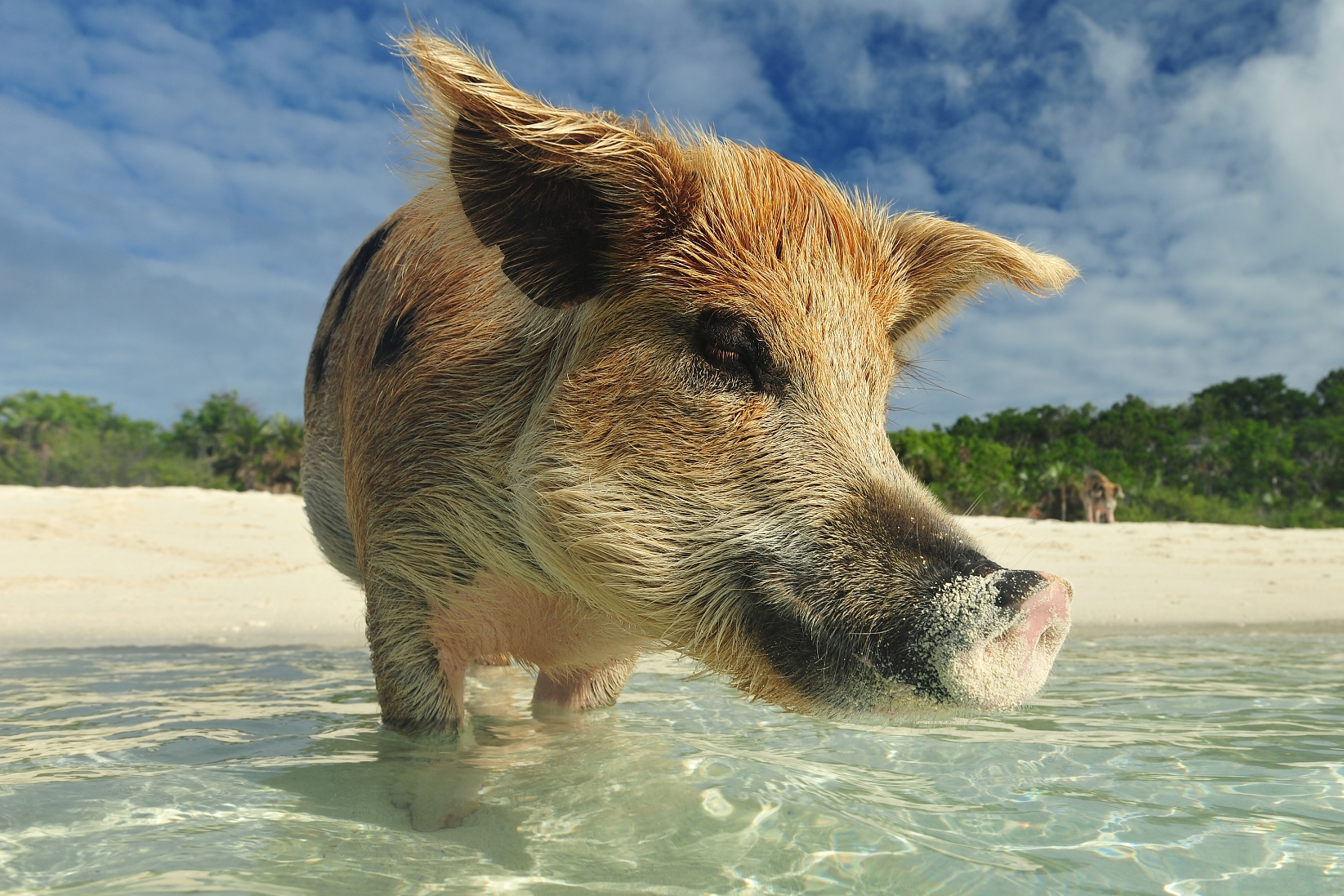
 Image of porkfish from Avaaz, and of  salt-water pig from Shutterstock

OMA to Mastermind Doha Airport City in Time for 2022 World Cup

1

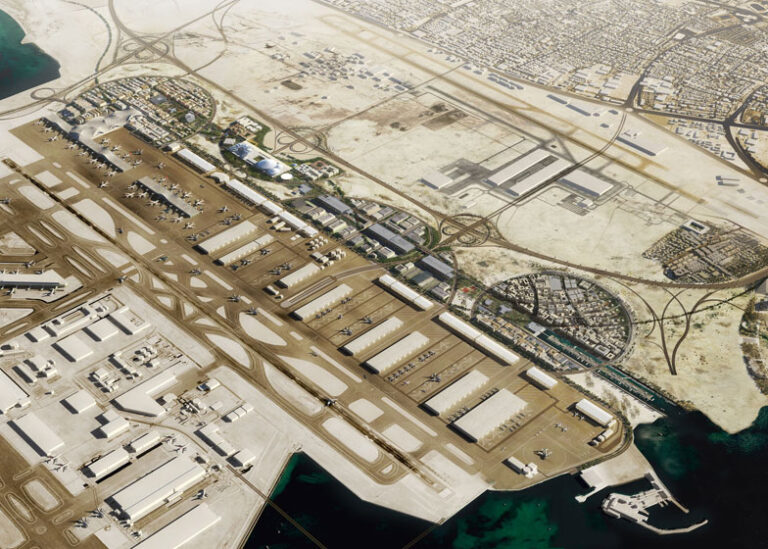
OMA, Qatar, Airport City, Doha, Hamad International Airport, 2022 World Cup, urban design, green spaceStarchitects OMA have won an international design competition to be the master planners for Doha’s new Airport City in Qatar. Occupying a 10 kilometer square space that will link the new Hamad International Airport with Doha, the mixed-use complex will be comprised of four circular districts connected by a “green spine.” Phase One of the 30 year plan includes business, logistics, retail, hotel, and residential facilities that will mostly be completed in time for the 2022 World Cup.