
A US developer recently approached Barcelona City Hall with plans to build a soaring Dubai-style “Space Hotel” complete with a zero gravity spa, but the city mayor rejected the concept on the grounds that it would create too much of a “spectacle.”
A US developer recently approached Barcelona City Hall with plans to build a soaring Dubai-style “Space Hotel” complete with a zero gravity spa, but the city mayor rejected the concept on the grounds that it would create too much of a “spectacle.”
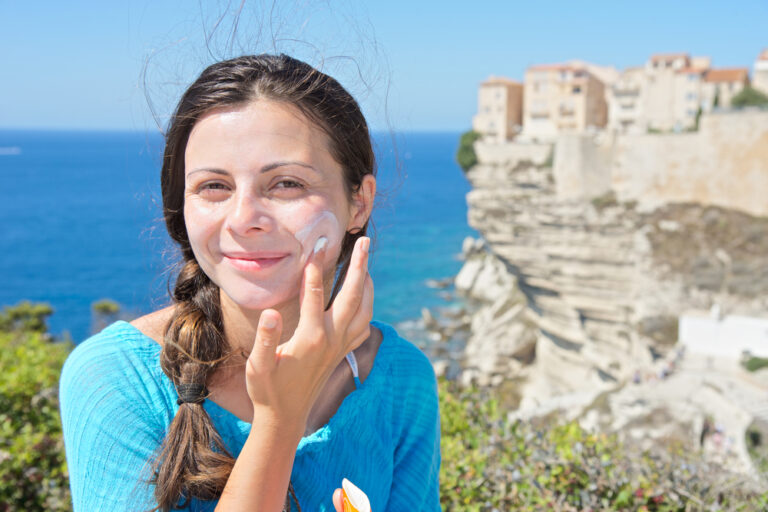
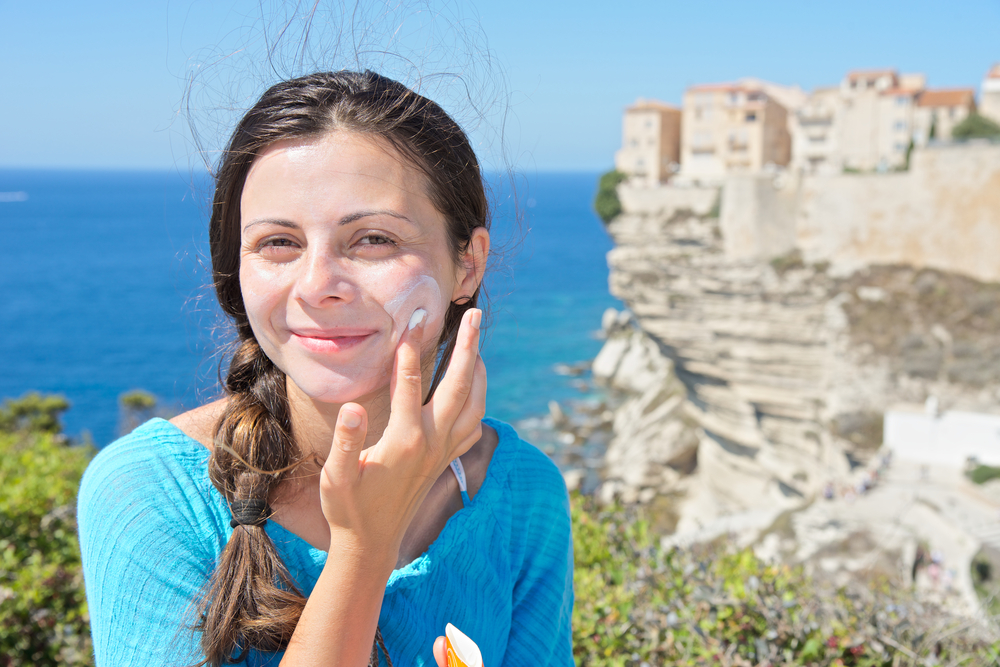
Now that the sun is out in full force, and you’ve tried this recipe for sugar wax, it’s time to up the ante and make a paraban-free, organic, and skin-nourishing sunscreen.
Last summer 2020, The Wall Street Journal reports that chemicals in our sunscreen may be building up in our bodies faster than we thought, so natural alternatives may be a relief at least for lower sunlight exposures and everyday use.
I was an adorable child. No, really. I have photos to prove it. There I was, age four at the pool in the afternoon sunshine, in a cute bathing suit and getting really, really sunburned. I got sunburned every summer of my life. Nobody took “suntan lotion” very seriously back then.
Since those careless times, I’ve learned that sunburns continue destroying skin cells even years later, so our previous post about protecting children’s skin from the sun struck a note with me.
I wasn’t surprised when my dermatologist told me I had two basel cell carcinomas that had best be removed. Skin cancer from those old sunburns? Probably, says the doctor.
Naturally, I never risk exposing my skin to the sun anymore, unless I slather on plenty of sunscreen before leaving the house. But commercial sunscreens are so far from natural – see the scary list of chemicals that they contain – that I was happy to find an inexpensive and effective natural sunscreen I can make by myself.
I can’t say how much sun protection factor this lotion has. I can say that I’m quite fair-skinned and burn easily, but using the lotion, I stay burn-free – as long as I reapply it every couple of hours, which is true of commercial sunscreens also.
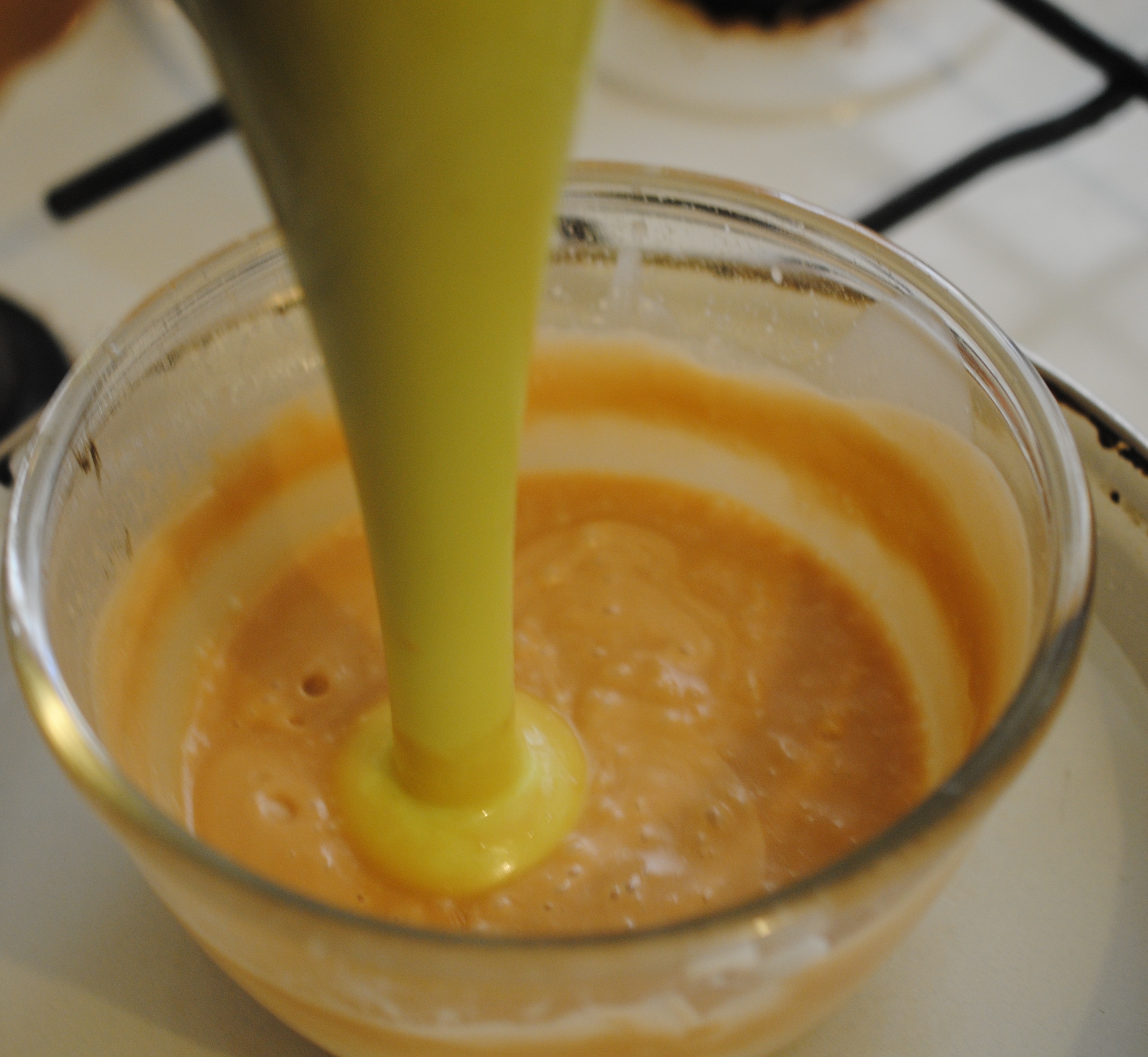
The tea-based lotion initially feels greasy. But once massaged on, it withstands water and sweat. It nourishes the skin, too, leaving it supple and soft.
Inexpensive, effective and all-natural sunscreen. Gotta love it.
Equipment:
Glass bowl or measuring cup that holds 2 cups volume, or two cooking pots that fit one inside the other
Pan big enough for the bowl/cup to sit in
Spatula
Blender
If using stick blender, a clean towel to rest stick blender on
For storage and use: Very clean, very dry small jars, or ziplock bags, or empty, clean, and dry re-used shampoo bottles.
Ingredients (choose organic if you can):
1/2 oz. – a well-filled tablespoon – of natural beeswax. I use beeswax pellets, but you may simply chop up a natural beeswax candle and measure the wax. When the wax melts, you simply fish the wicks out.
1/2 cup boiling water
3 black tea bags
1/2 cup sesame oil, no other
Optional: 2 drops lavender essential oil. Lavender is healing to skin itself, but it’s included here mostly to perfume the lotion. Don’t go overboard with the essential oil, especially if you mean to apply the lotion to children. Essential oils are powerful.
Make a strong tea infusion with the teabags and water. Cover and allow to steep at least 20 minutes. Remove the bags before proceeding, squeezing them out to extract as much tea as possible.
Place the bowl in a pan with water in it, or if using pots, fill the bottom pot halfway up with water. Place the smaller pot on top. Heat the water over medium heat.
Put the beeswax and oil in the bowl (or top pot). When the wax has melted, remove the bowl or pot from the heat. If using Pyrex, place it on a folded kitchen towel to prevent shattering.
If the tea has cooled down completely, warm it over a low flame. It doesn’t need to boil, just be warm.
If using a stick blender, start blending the oil/beeswax mix. If using a standing blender, pour the mix in.
Very slowly, pour the warm tea into the oil mix, blending at high speed. Keep blending while the lotion takes shape. It will become somewhat paler as it cools down and eventually become quite thick.
Add the essential oil if using, blend again thoroughly, and spoon into storage containers.
Fill a squat lotion tube, like the one in the top photo, or a small shampoo bottle, if you want to take the lotion out with you.
Keep the lotion refrigerated. It will last 3 months. Extra may be frozen – just label it with contents and date or someone may mistake it for dulce de leche. If you are looking for another sunscreen recipe to try, check out this one for organic sunscreen.
More natural skin care suggestions:
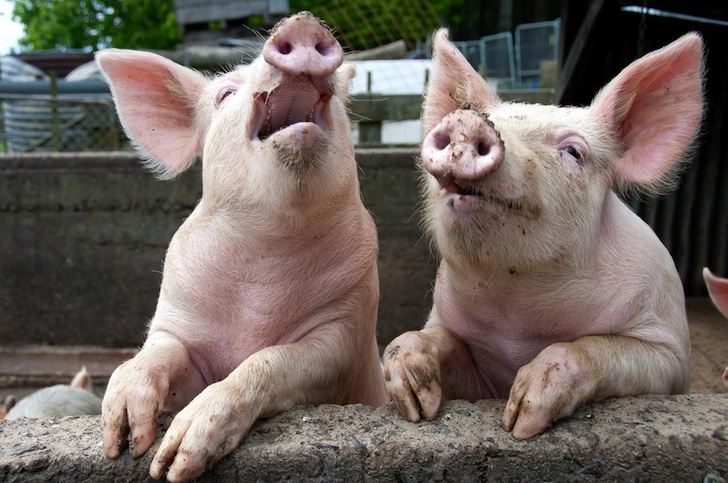
In 2009 during the height of the swine flu epidemic, Egyptian law officials ordered the culling of thousands of pigs belonging to the Coptic Christian community in Cairo. The pigs were used to chomp down the city’s organic waste, which grew to disgusting new heights in garbage city when they were killed. But now they’re back – in hiding.
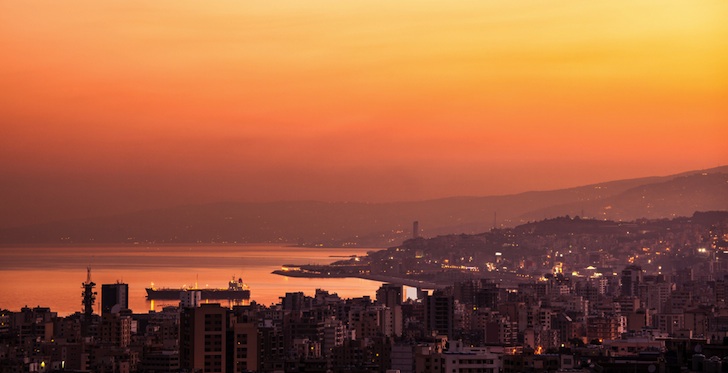
Imagine for a second that Washington D.C., London, Brussels or Denmark ran out of power for up to nine hours every single day for the last week or so. And then imagine (if it will stretch that far)that most of the country has been experiencing such cuts for the last eight years. This is Lebanon’s reality right now, and it offers a cautionary tale.
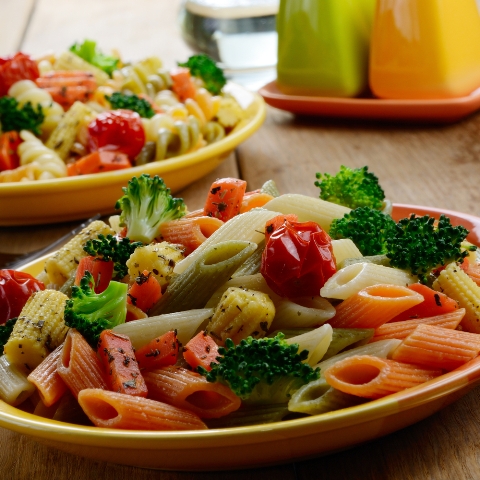
With the hot days, the desire to spend time cooking in the kitchen dwindles, although the desire to eat remains. This past salad recipe works for hot summer days.


The safety of the balloon industry is again questioned in the wake of a hot air balloon crash near Cappadocia, Turkey today that killed two, officials announced. Some 23 other tourists from Brazil, Spain and Argentina have been injured as the hot air balloon hit another’s basket mid-air while drifting over volcanic rock formations.
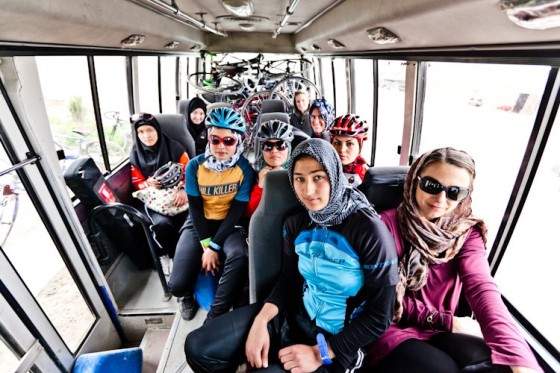
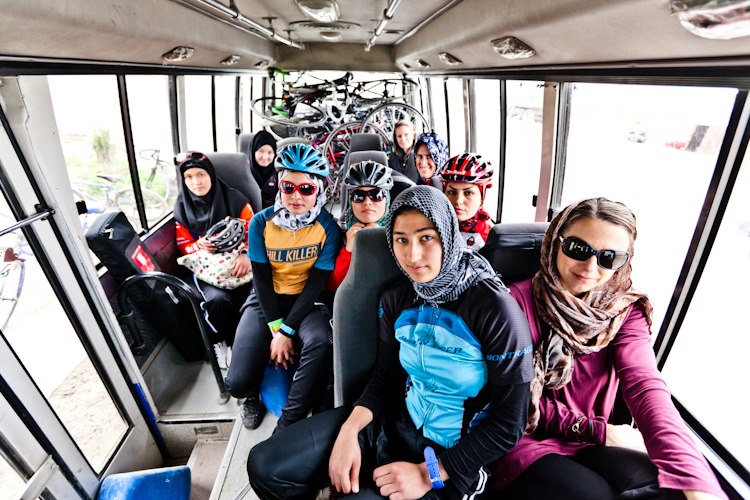 Cartoonist Charles Schulz wrote, “Life is like a ten speed bicycle. Most of us have gears we never use.”
A group of women in the mountains of Afghanistan, who likely never read his strip, don’t agree.
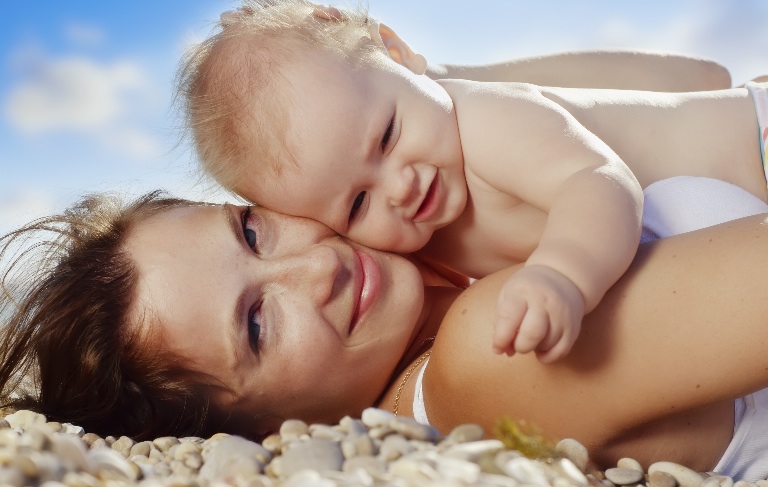
Wearing full body clothing might not be the thing for everyone in the Middle East: but cover up the very young – especially those with light skin. Middle East sun exposure in the young leads to higher rates of skin cancer later in life.

A business man in the Gaza Strip has found a lucrative way of satisfying the urge for KFC by smuggling it through underground tunnels. It may be four hours cold, with a side of soggy chips, but for Gazans it is a taste of freedom.
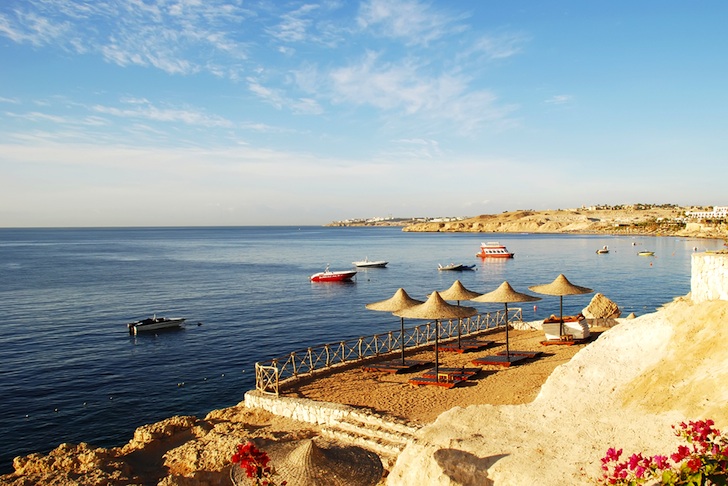
Just months after announcing that the ruinous scheme to construct a land and sea bridge between Saudi Arabia and Egypt is still on track, officials from both countries have jointly pledged to protect the Red Sea and its compromised ecological bounty.
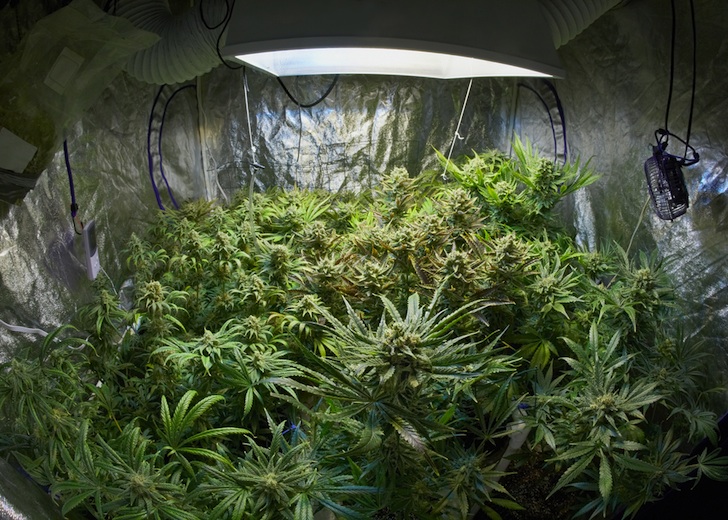
When authorities discovered a lab full of marijuana plants in a bomb shelter beneath an all girls Orthodox Jewish school south of Tel Aviv, they proposed that outsiders must be responsible – because Haredim girls would never smoke pot, right?
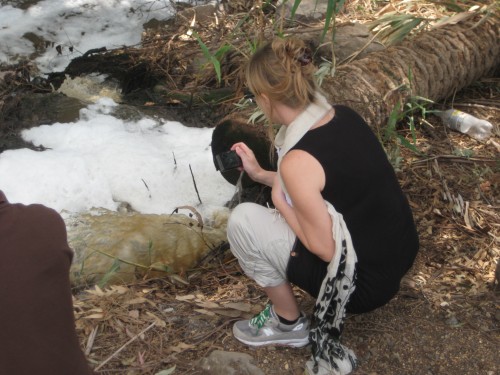

The Lower Jordan River, the baptismal river of Jesus, has been dead at its source for some time. For the first time in ages, Israel is releasing native waters via a pump back to the historic waterway.
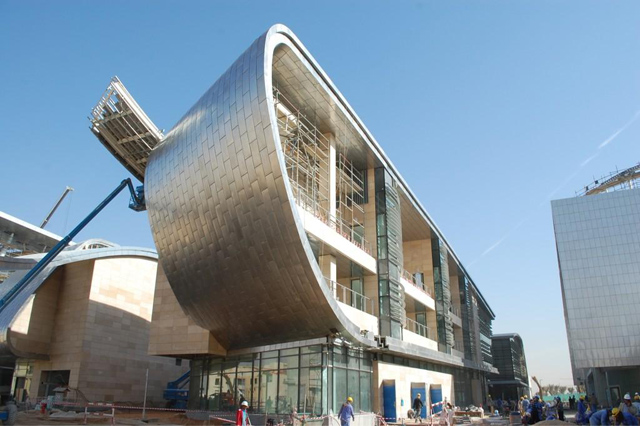
The irony here is clear: the first international LEED certified housing complex is built by an oil research facility in Saudi Arabia.
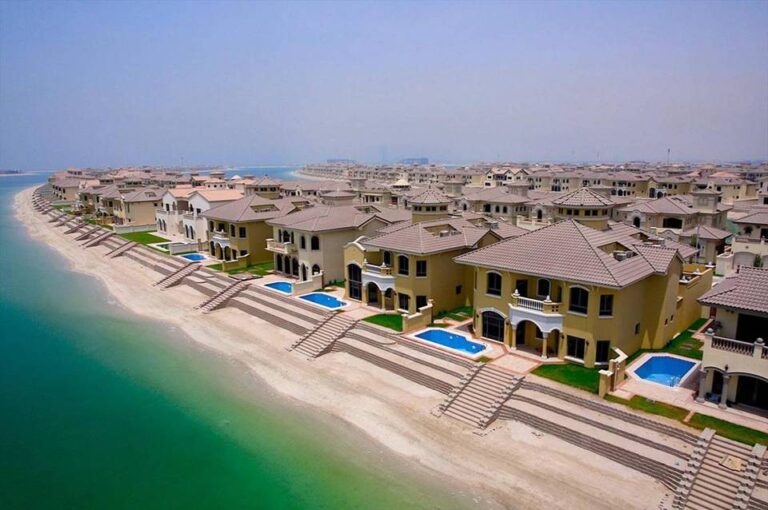

With Dubai’s government close to finalizing legislation, property owners in the Emirate may soon have the option to feed solar power into the grid so they can make money from feed-in tariffs.
As of recently, there has been much encouragement from industry sources for the use of solar power on rooftops. Mounting photovoltaic panels on rooftops of residential and office buildings or industrial facilities can be beneficial for they can provide electricity and create a surplus that can be fed into the grid.
“In the next 12 months, we will see a constant increase of solar infrastructure. Not only standalone facilities, but to actually power our villas, our parks, our residential communities,” said Ivano Iannelli to The National. He is the chief executive of the government-owned advisory company Dubai Carbon Centre of Excellence.
However, the legislation may reach some hurdles. Other countries that receive solar energy from small-scale sources, suppliers receive a feed-in tariff from the government. This is a tactic that is under consideration in Dubai. Feed-in tariffs are usually above the market rate, making installation for the solar technology profitable.
“Feed-in tariffs are part of the different activities that are being looked upon,” he noted.
Despite the tariffs being under consideration, industry players are still interested in the appeal for Dubai’s move towards solar energy. SolarWorld, one of Germany’s biggest solar panel producers, opened a showroom in Dubai Creek where its product will be sold by local distributor PTL Solar.
Reliant on fossil fuels, solar energy is a possible alternative energy source for Dubai to take advantage of. The Emirate is already seeking to generate five percent of its electricity from the sun by 2030 and last year, the Dubai Supreme Council for Energy announced its plans for the Mohammad bin Rashad Al Maktoum Solar Park; the contract was awarded for the first plans to take place in October.
Solar energy will also divert attention away from Dubai’s power plants’ reliance on natural gases, which are imported.
The expense is especially high during the summer months when air conditioning is frequently used and the emirate must turn to costly liquefied natural gas.
This expense is then passed on to consumers with a fuel surcharge. Fortunately, solar panels are becoming cheaper as the technology advances and fierce competition controls the prices.
Thanks to the emergence of solar energy, Dubai can also reach its goal of reducing the carbon footprint of its power generation – like Abu Dhabi, which launched the Shams1 Concentrated Solar Plant (CSP) in March 2013.
Shams, impressively, at 100 megawatts, is the largest solar installation in the Middle East. Green Prophet visited Shams earlier this year and you can see pictures here. This installation will contribute to the Emirate’s plan to derive seven percent of its electricity from renewable resources by 2020.
We are rooting for them.
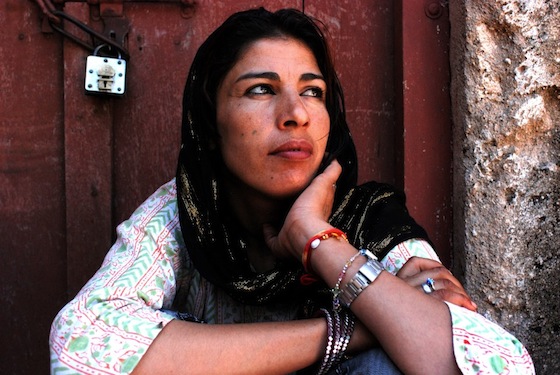
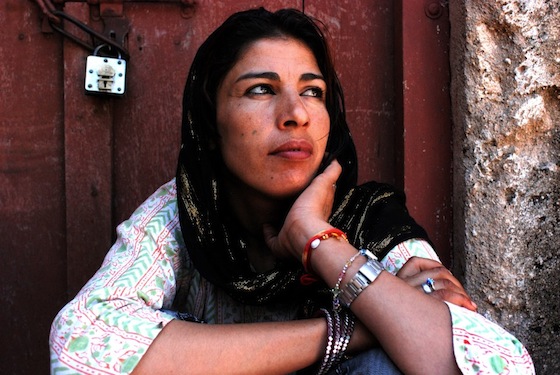
They can’t read or write but a couple of brave Bedouin women from Jordan travelled far and wide to help their villages become solar powered.

Have news to share? Renewable energy news, architectural, artificial intelligence, biotech, sustainable design ideas, eco-architecture, green travel?
Email us: [email protected]
Get important news delivered directly to your inbox and stay connected!
© 2007 to 2026 Green Prophet, All Rights Reserved