Home Blog Page 330

Tapping Middle East Biogas Potential in Lebanon and Pakistan

0

Energy From Waste burning cornLebanon and Pakistan have each announced new biogas projects, tapping into a sustainable energy source that, unlike other renewable energy streams, solves two municipal problems – energy creation and waste processing.

Biogas, primarily a mixture of carbon dioxide, methane, and hydrogen, is produced by decomposing organic matter.  Add oxygen and create a high-efficiency fuel for heating or to convert into electricity. The compressible gas can also be used to power motor vehicles.

General Electric (GE) just announced sale of its Jenbacher J312 engine to a landfill gas-to-energy project operated by Averda International in Naameh, Lebanon, near Beirut. The pilot scale project will generate approximately 637 kW of power and can be expanded to take full advantage of this landfill, the largest controlled dumpsite in Lebanon. The project will become operational by year end.

“The potential benefit of the Naameh project is that it could encourage other landfill sites to use the gas (that is currently being flared) for conversion to electricity. The contribution of the project to the environment and the energy sector makes it a great value to the community,” said Nabil Habayeb, GE president and CEO for the Middle East, North Africa and Turkey (MENAT) region.

Pakistan’s project establishes an anaerobic digestion facility in Landhi Cattle Colony region that will convert a daily stream of 4,200 tons of animal waste and 700 tons of food waste into biogas which can generate up to 30 MW of power. The project will be delivered in two phases, each providing 15 MW of capacity.

Karachi Electric Supply Company, one of the project developers, said in a press release that this is the first time that renewable energy will be utilized on a commercial scale in Pakistan.

“This project is a prime example of how innovation can be used to tackle some of Pakistan’s most pressing development issues,” Mouayed Makhlouf, International Finance Corporations (IFC) Director for the Middle East and North Africa told Biomass Magazine.  In addition to providing seed capital, IFC is advising the company on plant development.

Solar springs to mind as the optimal energy producer in the sunny, arid Middle East. There is tremendous  untapped potential for generating biogas by exploiting waste generated by industry and agriculture, municipal solid wastes, and sewage.

Municipal solid waste is an optimal feedstock for anaerobic digestion because on average, over 50% of Middle Eastern municipal waste consists of biodegradable, organic material. Anaerobic digestion of organic waste is an environmentally positive method of recycling biodegradable materials while producing economical energy as a byproduct.

Diverting waste from traditional dumpsites and instead, routing it to plants and controlled landfills which can convert it into biogas (and biomass) transforms a liability into an asset. Biogas technology is well suited for further exploitation in this region as both a remedy for urbanization and a producer of clean energy.

Image of burning corn from Shutterstock

Yariv Goldfarb Uses 3D-Printing to ‘Play with Poop’

1
art, 3d printing, cleantech, design, bezalel academy, play with poop, yariv goldfarb
We guess it’s a joke that this designer has used 3D printing to manipulate faeces. While others like Cody Wilson are using 3D printing to make guns.

We’ve seen a lot of really useful applications for 3D printing, like making homes but Yariv Goldfarb’s graduation project for the Bezalel Academy of Arts and Design in Jerusalem is not one of them: printing plastic molds in order to “play with poop.”

art, 3d printing, cleantech, design, bezalel academy, play with poop, yariv goldfarb

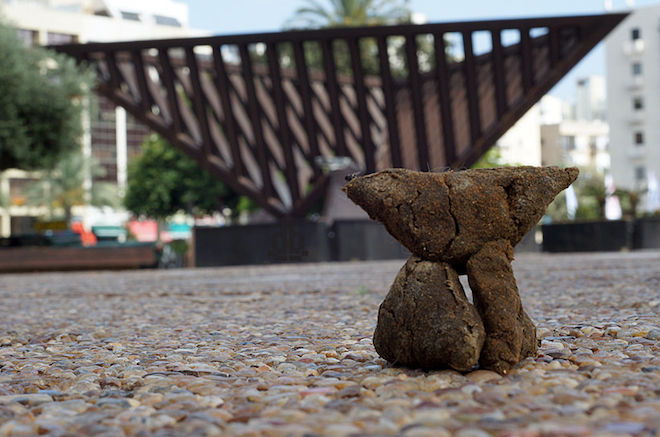
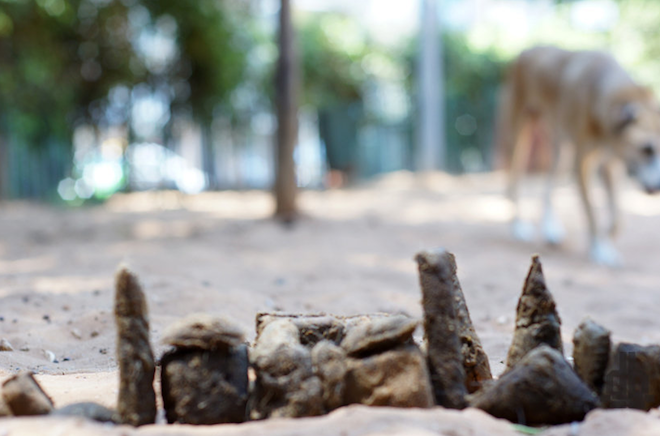
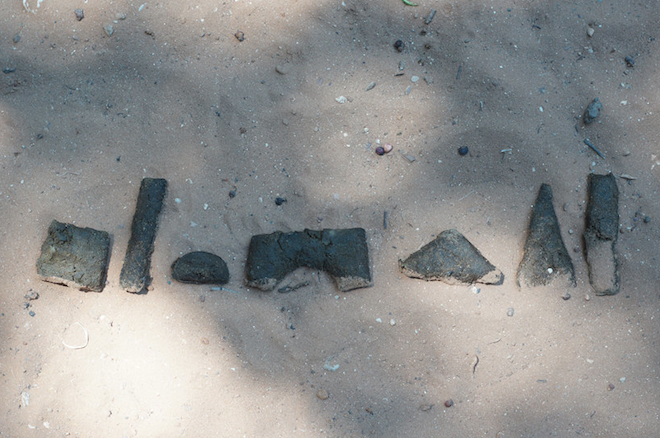
Goldfarb says that he printed the molds in order to form dog poop! The doggy waste came out of the molds in all sorts of funky geometric shapes, and then he hit the town. Israelis like to push the limits in design no matter the shock value. See this getaway dress by Yael Mer for escaping global warming. Mer has a slipper rocker getup for the winter.

Back to the poo: as a comment on how people either don’t bother to notice or completely take for granted the works of urban art and architecture around them, Goldfarb used the unconventional material to break through the city stupor.

He arranged his poop shapes to resemble various landmarks across Tel Aviv, including the soaring Azrieli Center, the large sculpture outside of City Hall, as well as the leaning steel ellipses that are on display in Habima Square.

art, 3d printing, cleantech, design, bezalel academy, play with poop, yariv goldfarb

As part of his graduation project’s design brief, Goldfarb says that he wanted to “Challenge normal social rules and behavior.”

“‘Play with Poop’ helps to raise people’s awareness of their surroundings. the mini poop sculptures were placed in front of several landmarks in tel aviv in the shape of these same landmarks –- reminding the people who walk next to them everyday to take a second look, instead of ignoring them,” Goldfarb says.

art, 3d printing, cleantech, design, bezalel academy, play with poop, yariv goldfarb

It’s unclear whether he achieved his objective, but at least his abuse of 3D printing technology is far more benign than the printed plastic gun that made it past security at Israel’s parliament building, twice, without being detected. Or the 3D printable gun factory made by Cody Wilson in Austin, Texas.

Cody Wilson, 3D printed gun
Sex offender Cody Wilson thinks showing people how to print their own gun factories is a moral imperative.

Thank goodness for the people who are using 3D technology to make the planet a cleaner, saner place.

Or for celebrating religious ones like a 3D printed green dome mosque.

3D print green dome mosque

Arsenic In Your Food? Consumers Push Regulation

3

child-drinking-juice-arsenic

When I first thought of arsenic in my food, I remembered “Arsenic and Old Lace,” a movie from the 1940s where two old ladies nonchalantly poison their elderly suitors with a little arsenic in their elderflower tea. We’re not keeling over from the levels of arsenic in our food – yet – but the concern exists. Much of our fruit juice, especially apple and grape juice, is laced with inorganic arsenic. So is much of our rice. And so are some of our chickens.

On a Middle Eastern note, Moslems returning from the Hajj bring back Zamzam water from a holy well in Mecca, water which, according to a BBC report, is contaminated with an extremely high arsenic level. Initially refuting the BBC report, the Saudi Arabian government has since begun a Zamzam water distribution project which will hopefully clean the water up.

Qoros Electric Vehicle: China and Israel Partner with USA

Qoros 3, Geneva Motor Show, Israel Corp, AAM auto supplier, North America, electric vehicles, Dead Sea Works, green transportationAfter losing the Better Place electric vehicle company, Israel Corporation moved forward with a different holding in the same industry. Qoros Auto Company Ltd., a 50:50 joint venture between Israel Corp and China’s Chery Automobile Co. Ltd., has agreed to purchase EV and hybrid parts from American Axle Manufacturing Inc. (AAM).

Bulldozers Raze Ancient Urban Farm in Turkey

5

Istanbul, This Turkish Life, Urban park in Istanbul, Gezi Park, Turkey, urban planning, citiesThe Yedikule neighborhood of Istanbul is on edge as bulldozers recently razed two gardens that have been cultivated for the last 1,500 years, The Atlantic Cities reports. This is taking place in tandem with the ongoing Gezi Park saga despite a court’s ruling that the latter should not be cleared to make way for a shopping mall.

Zayed Prize-Winning School Inches Closer to Zero Carbon

0

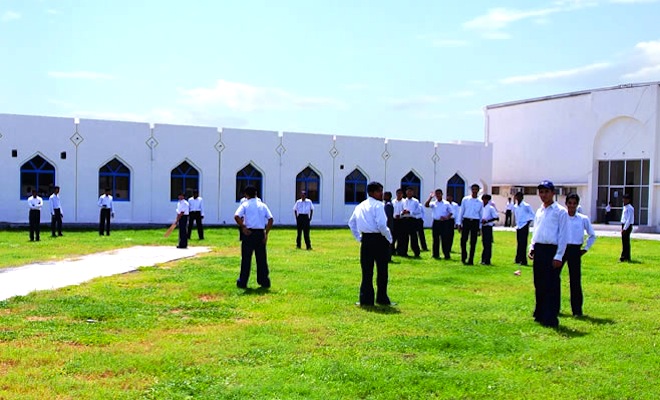
Shaikh Khalifa Bin Zayed Bangladeshi Islamia School, Sheikh Zayed Energy Prize, solar power, United Arab Emirates, green education, renewable energy, solar powerThe school was the first in the oil-rich United Arab Emirates to scoop the prestigious $100,000 Zayed Future Energy Prize in the Global High School category and they have already put the money to good use. The Shaikh Khalifa Bin Zayed Bangladesh Islamia School installed an 11.52 KW rooftop solar array.

Have you tried a camel milk beauty bar?

1

camel milk, EICM, Dubai, camel cosmetics, beauty bars, Cleopatra beauty secrets, Bedouin, natural healing, lifestyle, camel products

Two years ago, the western world didn’t know much about camel milk, even though Bedouins across the Middle East have long understood its role in preserving good health. Now it’s the next best thing since Morocco’s Argan oil.

Submarine Rail Linking Morocco and Spain Gets UN Push

submarine rail, Morocco, Spain, UNECOSOC, transportation, underwater railway, trade, developmentThe United Nations Economic and Social Council (ECOSOC) is pushing to revive a thirty year old plan to build a submarine rail link between Morocco and Spain, local Moroccan press reports.

Ancient “Weed” Could Save Middle East Wheat

2

bread, wheat, science, stem rust, wheat resistant to stem rust, food, health, agriculture, Middle EastA particularly virulent strain of stem rust that first struck Uganda’s wheat crops in1999 before it spread up into Sudan and Yemen, Ug99 might have met its match in a 5,000 year old weed.

14 Animal-Free Foods That Are Not Vegetarian

6

animal products in vegetarian foodLast night at dinner, two seasoned lacto-vegetarians exchanged an ingredient slap-down about seemingly animal-free foods that really aren’t. My friends talk endlessly about vegetarianism. They can be evangelical, comical and tedious. Don’t hear me wrong.  I’m omnivorous, but eat mostly plants. I love eating and I love eating with friends, but I hate talking about what my friends and I are eating.  But this conversation was an eye-opener.

Animal products often hide in processed foods. As example, dairy derivatives whey and casein, included in commercial baked goods, may be acceptable to vegetarians but avoided by vegans. Where you draw the line is a personal choice, but those choices need to be informed.

How many of these veggie-imposters surprise you?

  1. Beer and Wine,  particularly those made in Britain, use isinglass (a byproduct of fish bladders) in the clarification process. Most is removed in production, but traces can remain.
  2. Fruit Juice frequently contains Vitamin D derived from lanolin (sheep oil), Omega-3 sourced from fish oil, and gelatin (a collagen obtained from beef skin and pig hide). Apple juice is often clarified using isinglass (refer back to Beer and Wine).
  3. Enhanced Breads, as with juices, may include Omega-3 amino acids originating from fish oil. Commercial baked goods may also contain non-vegan ingredients such as milk, eggs, butter, whey, and honey.
  4. Parmesan Cheese and other regional cheeses such as Pecorino Romano, are required by law to use rennet in the curdling process to retain their “authenticity”. Rennet, sometimes called “enzymes” on product labels, is derived from animal stomachs.
  5. Boxed Cake Mix uses beef fat, sometimes listed as lard, as a common ingredient. It’s also present in many cakes, cupcakes, and cookies.
  6. Bagels use a dough conditioner “enzyme L. Cysteine”, commonly sourced from duck and chicken feathers. It’s used in other processed bread products, particularly those served in fast food joints. (Dunkin Donuts, Pizza Hut  and McDonald’s  all admit to the practice respectively in their donuts, garlic bread, and apple pie.)
  7. White Sugar bags typically list only “sugar” as an ingredient, but most processed sugar (including brown and confectioner’s) is whitened by a process that uses bone char.
  8. Red Candy and most any food that’s colored red contains pigments extracted from the female Dactylopius coccus costa.  This red bug dye is typically listed as cochineal, carminic acid or carmine in the ingredients.  It’s found in candy, wine, vinegar, juice and colored pasta. Many candies are also coated with shellac, a resin excreted by the lac bug, which is usually listed as “confectioner’s glaze:”.
  9. Soups, particularly those prepared in restaurant kitchens, are usually made with stock made from chicken, beef, or fish.  Canned vegetable soups can also contain animal stock and gelatin thickeners.
  10. Salad Dressings in restaurants often start with bacon fat for added flavor, undermining the classic vegetarian go-to in restaurants. Caesar dressing contains anchovies, and creamy dressings often include gelatin.
  11. BBQ-Flavored Chips,  well, if you’re tucking into a bag of greasy chips, food purity may not be paramount.  But know that most brands of BBQ-flavored chips get their punch from chicken fat.
  12. Worcestershire Sauce is made with anchovies.
  13. Packaged Peanuts, high in quality protein, are an easy snack, but beware of gelatin coatings.
  14. Breath Mints, Gummy Bears, Marshmallows, Jello and Fruit Jellies frequently contain gelatin made from animal skin and bones.

This duplicity has nutritional, philosophical and  religious implications: a triple motivation for the buyer to beware.   It comes down to buying organic, single ingredient foods.  Or making your own food using these ingredients. Or reading the labels with a dictionary handy.

More reasons for ditching processed foods.

Image of a veggie dog from Shutterstock.

George Orwell Never Imagined These Deluxe Farms for Bees and Animals

0

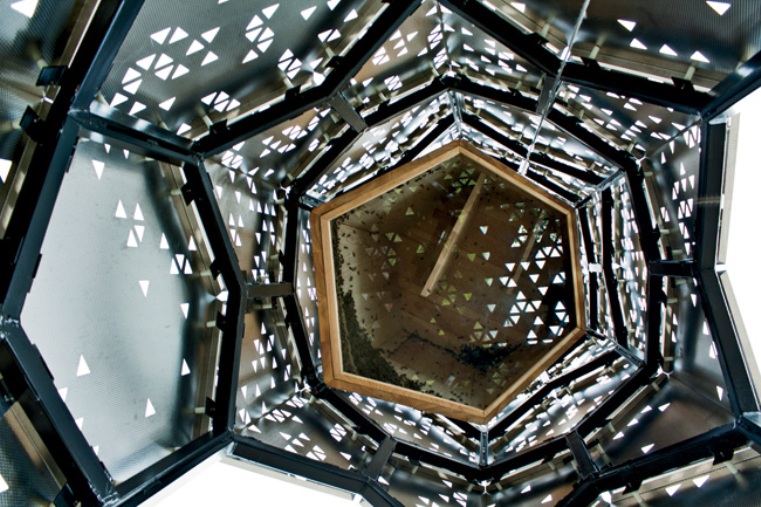
Elevator B at Buffalo University bee hiveAnimals have a hard life in the Middle East. Working beasts endure grueling outdoor elements and pet culture is unfamiliar.  In a region where millions of displaced people lack adequate housing, is it an indulgence to create comfortable homes for critters?

Tucking into sushi at one of Amman’s rooftop restaurants; the sinking sun painting distant hills pinkish gold. The adhan – Islamic call to prayer – wafting on gentle breezes, and then came the barking, baleful and persistent, from a large dog chained to a pipe on a roof across the street. The black roof surface looked molten, and there was no water bowl or shade for the pup. It broke my heart and ruined my meal.

Soonafter, I read a story about architects designing bespoke housing for animals.

Lebanon’s Reconstructed Refugee Camp in Tripoli Up for Aga Khan Award

6

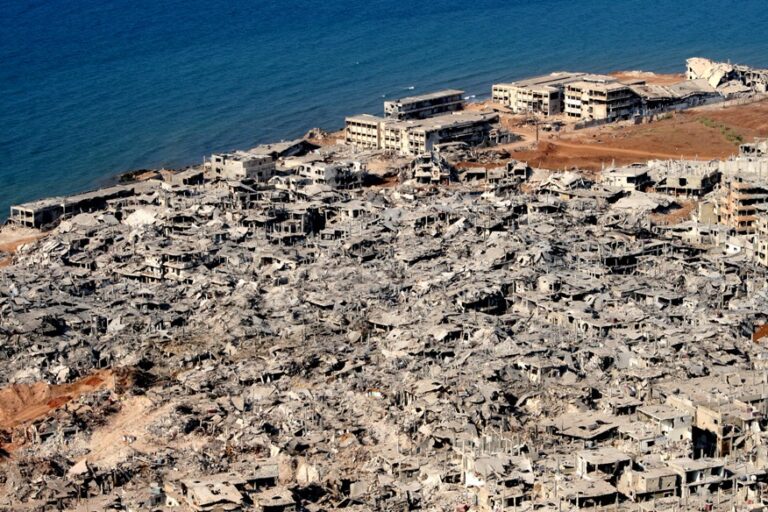
Nahr el-Bared Refugee Camp in tripoli Why do we love “makeovers”?  What draws us to images of women dunked in hair dye and better lighting, or old furniture stylin’ after sanding and new hardware? The reconstruction of the Nahr el-Bared Refugee Camp in Tripoli, Lebanon is an architectural “before” and “after” with improvements far deeper than a slap-on of fresh paint.  The project is a contender for a 2013 Aga Khan Award for Architecture,  a $1 million award to be awarded in September.

Powdered Water Hydrates Drought-Stricken Farms

7

Solid Rain, powdered water, farming, agriculture, solutions to drought, water conservationMexican farmers have been fighting drought with Solid Rain for more than a decade, but the powdered water designed by chemical engineer Sergio Jésus Rico Velasco only hit the American market last year. A highly absorbent substance with a potassium base, Solid Rain stores one liter of water in just 10 grams!

Bird’s Nest: Solar-Powered Studio Perches on School Roofs

6

Bird's Nest, ONZ Architects, Parasitic Architecture, Green design Turkey, eco architects Turkey, solar power, green design, sustainable design,

Onat Öktem,  and Zeynep Öktem are among the most exciting eco-minded architects working in Turkey, and Bird’s Nest is also among their most unique projects. Eschewing the bigger is better thought pattern, this solar-powered accessory dwelling “perches” on existing buildings to create extra space.

Reed Beds: Cleaning Waste Water in the Desert

Art, constructed wetland, photography, Richard Allenby-Pratt, United Arab Emirates, water conservationEarlier this year I decided to visit a strange looking waste management site in Um Al Quwain – one of seven emirates in the United Arab Emirates. From satellite imagery it looked like raw sewage was being dumped in the desert, just a couple of kilometres from Um Al Quwain’s precious mangrove estuary.