
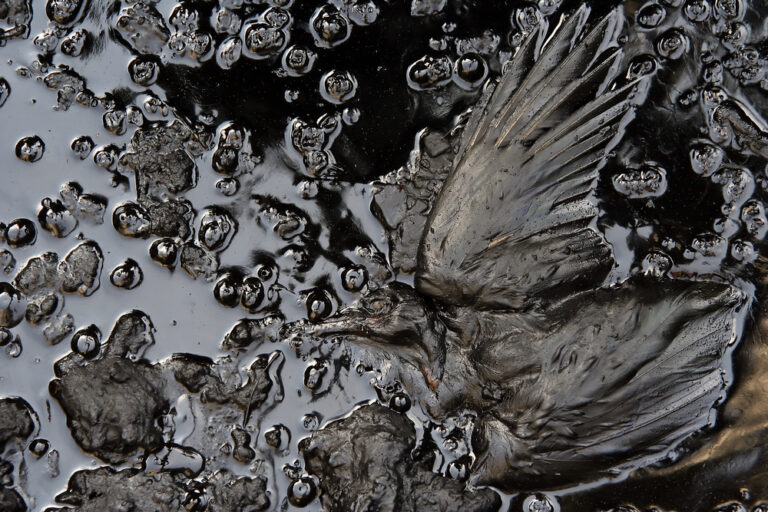
 Better call out that airborne Mediterranean pollution surveillance crew Tafline just wrote about! Last Tuesday, an oil tanker delivering fuel to a power plant in the Turkish Cypriot-controlled north of Cyprus spilled approximately 40 tons of oil into the Mediterranean Sea.
Cyprus Oil Spill Threatens Pristine Coastline
The Absurdity of Selling Israel’s Private Water to the Highest Bidder
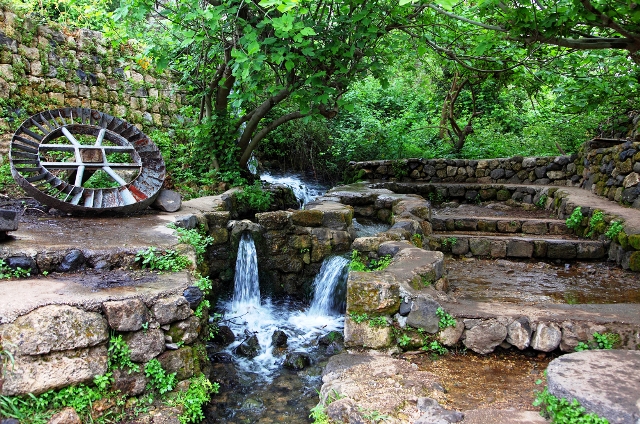
Chronic and even acute supplies of fresh water in Israel and other parts of the Middle East has resulted in over-dependence on desalination. Even more ominous are predictions for the future of inadequate fresh water supplies following a NASA Image Technology survey of the accelerated disappearance of a large underground fresh water sea under Syria, Turkey, Iraq and Iran.
New Hybrids on the Horizon for the Middle East
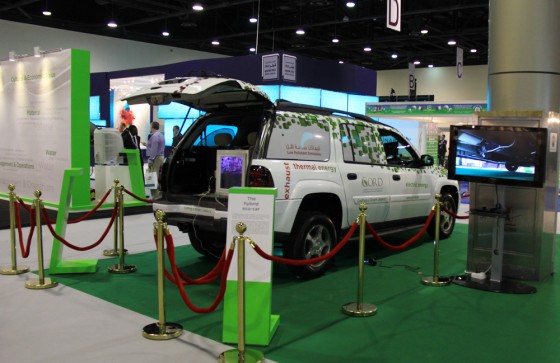

Hybrid cars have had a slow start in the Middle East in comparison to other markets. One factor influencing sales is the fact that fuel costs tend to be lower than in other parts of the world, creating less demand for electric vehicles. However, a new crop of sport and luxury models could help change that.
The Hyundai Motor Company has just launched their first hybrid car in the region, with the new Sonata hybrid. Is the Middle East ready for a new rash of hybrids and electric vehicles? Hyundai’s Vice President Tom Lee believes so, stating that increasing awareness in the region of environmental issues makes it a good time to meet the new demand for green cars. It’s worth taking a closer look at the new Sonata and some other upcoming luxury hybrids which are due to hit motoring car news sites in the next year or two.
Sol Chip’s Everlasting Solar Battery is a World First

Israeli’s Sol-Chip has developed an everlasting solar battery that can power mobile and remote devices continuously using energy from the sun.
Israel’s Caravan Collective Puts the E in Cycling Apparel

Caravan Collective is a fresh new cycling apparel studio from Israel that fuses quirky graphic design with a passion for cycling, people, and the earth.

Mediterranean Net-Zero Home Based on 3,500-Year-Old Israeli Design
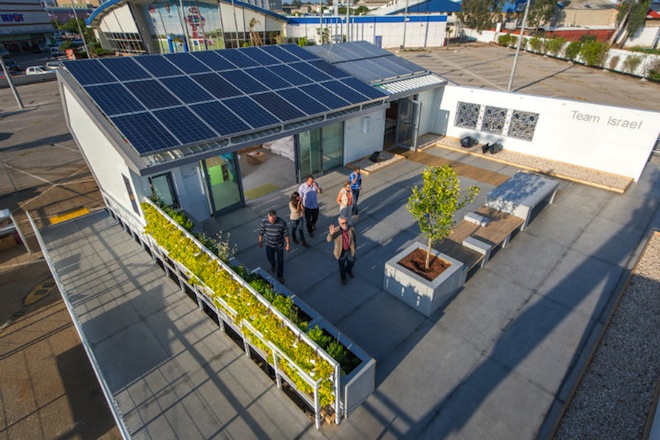
Team Israel is all pumped up to show off their design skills at the upcoming 2013 international Solar Decathlon competition in China with All [e] Land – a Mediterranean net-zero prefab dwelling based on a 3,500-year-old archetypal Israeli design.
Egyptians Hunt Down Migratory Birds for Natural Viagra

It is a little known fact outside of conservation and hunting circles, Sherif Baha el Din from Nature Conservation Egypt told The Guardian, but Egyptian hunters will destroy thousands of migratory birds in the coming weeks as they make their way from Europe back to Africa for the winter.
King David’s Palace Discovered
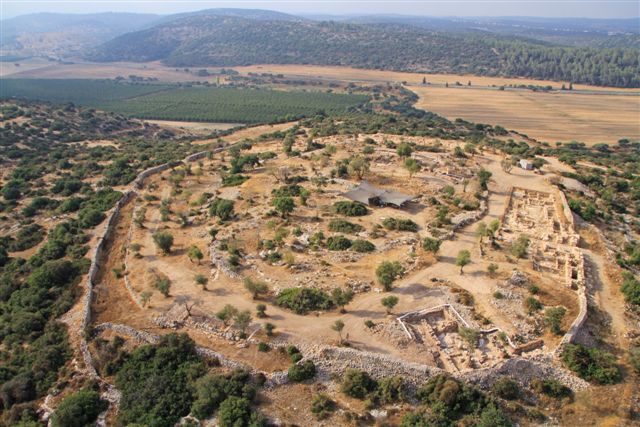
The ruins of a fortified complex at Khirbet Qeiyafa, west of Jerusalem, are the remains of one of King David’s palaces, says Dr. Yossi Garfinkel, archeologist from the Hebrew University of Jerusalem. Working together with Saar Ganor of Israel’s Antiquities Authority, Garfinkel has worked to uncover the site for the past seven years.
According to Professor Yossi Garfinkel and Sa’ar Ganor, “Khirbet Qeiyafa is the best example exposed to date of a fortified city from the time of King David.” Maybe the great king ordered citron trees like the ones that flourished in Jerusalem at around the same time to be planted there.
Kazakh Children Keep Ramadan Caroling Alive

 Children in Central Asia practice a tradition in the lead-up to iftar (the evening breaking of the Ramadan fast – read our green iftar guide here) that has a decidedly Western resonance: they go Ramadan caroling. As with Christmas caroling, the children go door-to-door singing their neighbors holiday songs. After performing, carolers ask for a treat, usually receiving sweets or pocket change.
As in the West, the tradition is loved or hated with equal energy. The difference is, as with Ramadan, this songfest can last an entire month. (Click on this link to hear and see a sample of Ramadan carols.)
“Small kids come every day singing,” Lola Yunusova from Tashkent told Radio Free Europe. “We give them money. But when the same children come every day, we say, ‘That’s enough. Don’t come again.’ Many parents don’t allow their children to go out singing and neither do we. They are like beggars. Nobody likes them. They pound on your door and keep ringing the doorbell. When you come out, there are usually three or four of them shouting, ‘Blah, blah, blah, blah…give us some money.'”
Her neighbor said he enjoys Ramadan caroling, greeting the children with a smile and asking them to sing more. And the kids seem to love the tradition. It’s the only time of the year when they run around with their friends, getting away with cheekiness to adults, and end up with some free candy to boot.
Ramadan carols often reflect the societal enthusiasm for the birth of a healthy boy. A typical Uzbek song says, “We came and sang a Ramadan song at your door. We are wishing you’ll have in your cradle a boy who is as strong as a ram.” But beware the lyrics if you don’t offer treats, “We came and you heard us sing, but you didn’t give us anything. May your newborn turnout to be a girl!”
Turkmen children sing similarly misogynistic verses, “Let a girl be born to those who give less. Let a boy be born to those who give more.”
Singers may improvise on traditional verses, but some teenagers abuse lyrics by shouting rudely at those who don’t offer gifts, “We will never come to your doorstep again and we are putting a stick in your [key] hole,” sang a group stiffed by a homeowner.
In Kazakhstan, Ramadan caroling was suppressed during the Soviet era, when Kazakh Muslims secretly fasted to avoid being targeted as troublemakers. Today, carolers can openly sing, “May the Lord Almighty accept your prayers and to all who are fasting for Ramadan, may the Lord be good to you.” Now free to practice their faith, but it always goes back to the candy, “We are children of Muhammad. We are one community. If you give us some treats, it will make us stronger.”
Ramadan carolling was also popular across Afghanistan before the 1979 Soviet invasion, but the tradition disappeared during subsequent decades of war and the emergence of the Taliban, which considered all music to be un-Islamic. Caroling has resurfaced only recently in some of northern Afghanistan’s ethnic Uzbek, ethnic Turkmen, and ethnic Tajik neighborhoods.
In Kyrgyzstan, most carolling takes place during the three days leading up to Eid. (The video above shows young men in national dress from Kyrgyzstan’s Issyk-Kul region singing Ramadan songs.) Western materialism has crept in, with Bishkek children wishing listeners the good fortune of being able to “have a pocketful of US dollars” and “drive a Mercedes“.
Songs in northern Tajikistan often dispense religion altogether, instead singing folklore rhymes.
According to an excellent article by Radio Free Europe’s Ron Synovitz, Ramadan caroling extends far beyond Central Asia. Children in Bosnia-Herzegovina collect money by shouting “Ramadan bank” as they move door to door. Egyptian street drummers play for cash during Holy Month celebrations.
Ultraconservative Sunni Wahabbists argue that Ramadan carolling is un-Islamic and should be forbidden, but according to Tora Mirzayev, professor of folklore at Uzbekistan’s Academy of Science, Central Asia’s caroling tradition has pre-Islamic roots.
“In old times Ramadan songs were sung by adults,” he told Synovitz. “But since the beginning of the 20th century, these songs have been sung only as children’s songs. There is a mixture of different pre-Islamic rituals like ‘calling for rain’ or ‘stopping the wind.’ When Islam came to the region, these rituals were transformed into Islamic rituals.”
It was a lovely discovery to stumble upon this story. Let the children sing.
Gulf Countries Fear Leaks from Iranian Nuclear Plant

Representatives from six Arab Gulf countries that form the Gulf Cooperation Council (GCC) recently expressed concern about the Bushehr nuclear power plant in Southwest Iran after an earthquake with a magnitude of 6.3 on the Richter scale struct the region earlier this year.
Tunisian Desert Dunes Threaten Darth Vader’s Tatooine Home
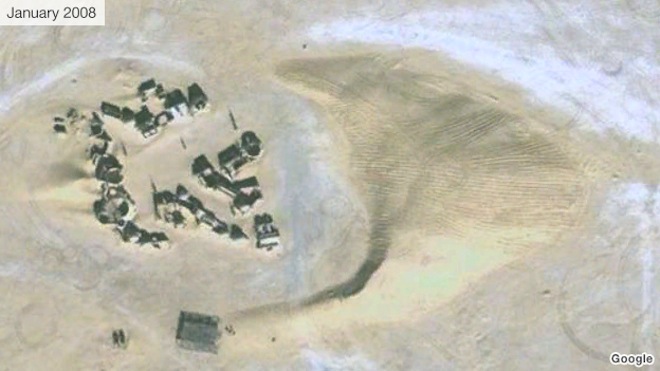
Star Wars fans lovingly restored Luke Skywalker’s Tatooine home in Tunisia recently, but the former home of young Anakin, who would eventually become Darth Vader, is about to be engulfed by fast-moving desert sand dunes.
Abu Dhabi Five-Star Leisure at Saadiyat Island Puts Ecology First
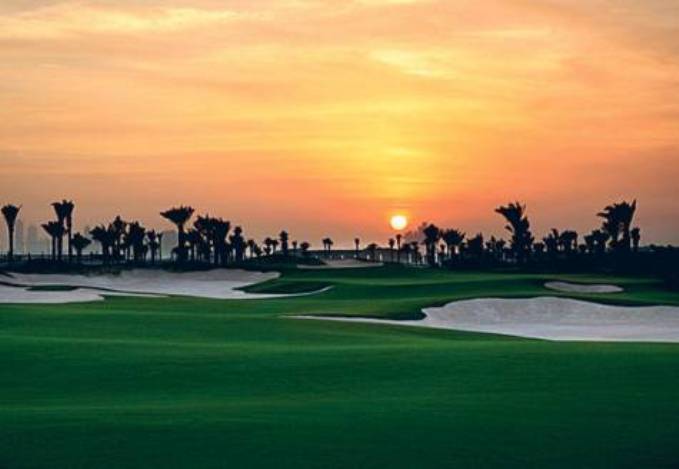
A five star hotel will offer chefs, tennis and golf pros, hairdressers and masseuses, but the Park Hyatt Abu Dhabi just upped the ante by adding a marine biologist to its permanent staff. The resort’s resident marine expert will be organizing workshops and eco-excursions to educate and entertain guests, but her primary mandate is to ensure that the hotel adheres to strict environmental standards laid down by the emirate.
Israel’s Itay Kirshenbaum Grows Backyard Furniture
What is up with Israeli designers? On the whole, they’re an eco-conscious group that use their creative genius to churn out groundbreaking designs, but two young students seem to be heading in the wrong direction.
We recently featured Yariv Goldfarb’s Bezalel graduation project with 3d printing technology called “Play with Poop.”
In order to deviate from social norms, Goldfarb 3D printed plastic molds to sculpt dog poop into a variety of geometric shapes. He then took the resulting shapes into the heart of Tel Aviv and arranged them to look like major landmarks throughout the city.
His intentions are in the right place, since he is trying to encourage Israelis to be more aware of their surroundings, but his methods are a bit absurd. Sort of like Yael Mer’s Evacuation dress to escape climate change. How about finding a way to slow climate change by working with more ecologically sound ideas? Rather than an every man for himself?
Itay Kirshenbaum’s design, on other hand, has no redeeming social or environmental value at all.
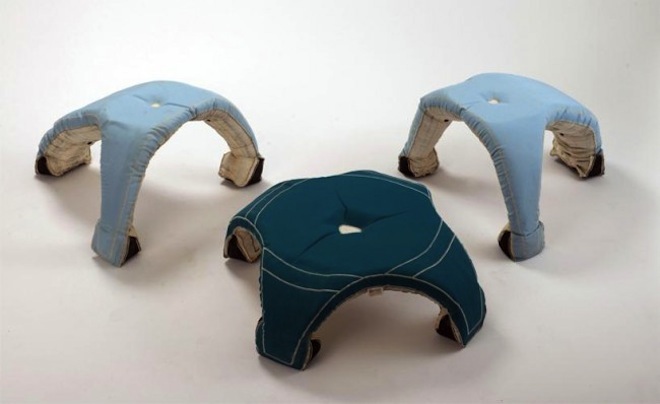
For his final project at Haddasah College, Kirshenbaum designed a furniture collection that grows itself – the first backyard furniture set we know of with this curious skill.
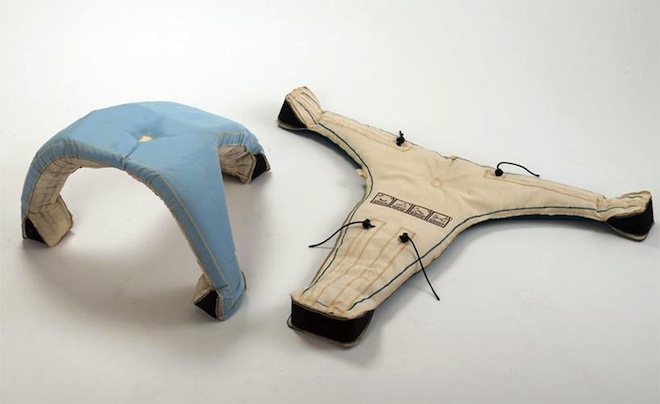
Comprised of different colored canvas sacks, the furniture initially looks like jackets lying on the ground. But when a sprinkling of water interacts with the concrete powder that fills them, the sacks spring to life.
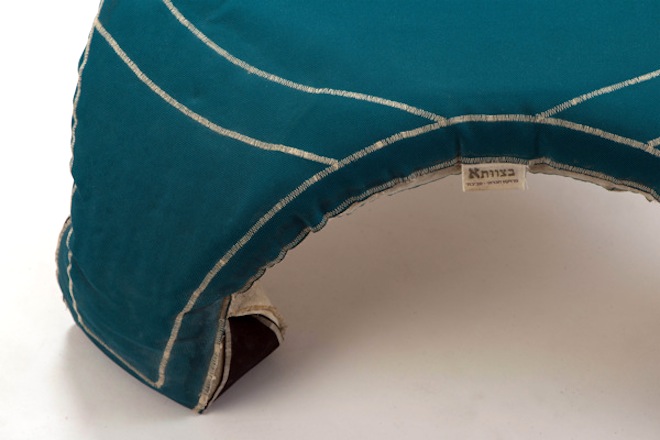
Wire pulls allow the user to mold the canvas bags as seats and within 24 hours of drying, they can be used as chairs and tables.
Don’t get me wrong. I think the concept is clever. But the material choice is disappointing. How can this idea be done better? Maybe using an idea of furniture or buildings to come to life for refugees. See these 10 shelters for refugees that top our list.
As for Goldfarb. Should we tell you that concrete has the highest embodied footprint of just about any other material commonly used today. Which means that using it – whether in construction projects, homes or DIY furniture, is irresponsible.
It’s also unnecessary. Many Israeli designers who are working with more earth-friendly materials that biodegrade that have virtually no environmental impact. Or this
It’s time to step up to the times, boys. Luckily, you still have the chance.
Other slightly insane Israeli design ideas:
Tapping Middle East Biogas Potential in Lebanon and Pakistan

 Lebanon and Pakistan have each announced new biogas projects, tapping into a sustainable energy source that, unlike other renewable energy streams, solves two municipal problems – energy creation and waste processing.
Biogas, primarily a mixture of carbon dioxide, methane, and hydrogen, is produced by decomposing organic matter. Add oxygen and create a high-efficiency fuel for heating or to convert into electricity. The compressible gas can also be used to power motor vehicles.
General Electric (GE) just announced sale of its Jenbacher J312 engine to a landfill gas-to-energy project operated by Averda International in Naameh, Lebanon, near Beirut. The pilot scale project will generate approximately 637 kW of power and can be expanded to take full advantage of this landfill, the largest controlled dumpsite in Lebanon. The project will become operational by year end.
“The potential benefit of the Naameh project is that it could encourage other landfill sites to use the gas (that is currently being flared) for conversion to electricity. The contribution of the project to the environment and the energy sector makes it a great value to the community,” said Nabil Habayeb, GE president and CEO for the Middle East, North Africa and Turkey (MENAT) region.
Pakistan’s project establishes an anaerobic digestion facility in Landhi Cattle Colony region that will convert a daily stream of 4,200 tons of animal waste and 700 tons of food waste into biogas which can generate up to 30 MW of power. The project will be delivered in two phases, each providing 15 MW of capacity.
Karachi Electric Supply Company, one of the project developers, said in a press release that this is the first time that renewable energy will be utilized on a commercial scale in Pakistan.
“This project is a prime example of how innovation can be used to tackle some of Pakistan’s most pressing development issues,” Mouayed Makhlouf, International Finance Corporations (IFC) Director for the Middle East and North Africa told Biomass Magazine. In addition to providing seed capital, IFC is advising the company on plant development.
Solar springs to mind as the optimal energy producer in the sunny, arid Middle East. There is tremendous untapped potential for generating biogas by exploiting waste generated by industry and agriculture, municipal solid wastes, and sewage.
Municipal solid waste is an optimal feedstock for anaerobic digestion because on average, over 50% of Middle Eastern municipal waste consists of biodegradable, organic material. Anaerobic digestion of organic waste is an environmentally positive method of recycling biodegradable materials while producing economical energy as a byproduct.
Diverting waste from traditional dumpsites and instead, routing it to plants and controlled landfills which can convert it into biogas (and biomass) transforms a liability into an asset. Biogas technology is well suited for further exploitation in this region as both a remedy for urbanization and a producer of clean energy.
Image of burning corn from Shutterstock