Home Blog Page 325

Eatwith, The Airbnb for Foodies

0

eatwith Yemen diningThere’s a new business afloat that links people to people for the purpose of sharing authentic local dining experiences.  I found EatWith.com a month too late for this summer’s vacation, but there’s always next time.

I’m fresh back from a few weeks in Europe, a family reunion through Paris and Venice and Rome that doubled as a Tour de Overeating.  Our literal pig-out on sausage, pancetta, soppressata, and prosciutto was a vacation from the fabulous food in my adopted Amman, Jordan hometown, but those holiday restaurant menus started to blur.

Next trip, wouldn’t it be great to drop the chowing down a notch? Veer away from other tourists, enjoy local food with the locals?

Entrepreneur Guy Michlin had a similar thought, which he acted on by creating a foodie version of Airbnb: it’s a winning recipe. Michlin is co-founder and CEO of EatWith.com, an internet marketplace offering alternative food-sharing around the world – in people’s homes. (Michlin graduated from Hebrew University, topped that off with an Stanford MBA, and the man knows food.)

Story goes that a home-cooked meal he ate while vacationing in Crete inspired the former lawyer to ditch his job at one of Israel’s leading solar energy companies and devise a system to allow users to replicate his magical travel meal anywhere in the world.
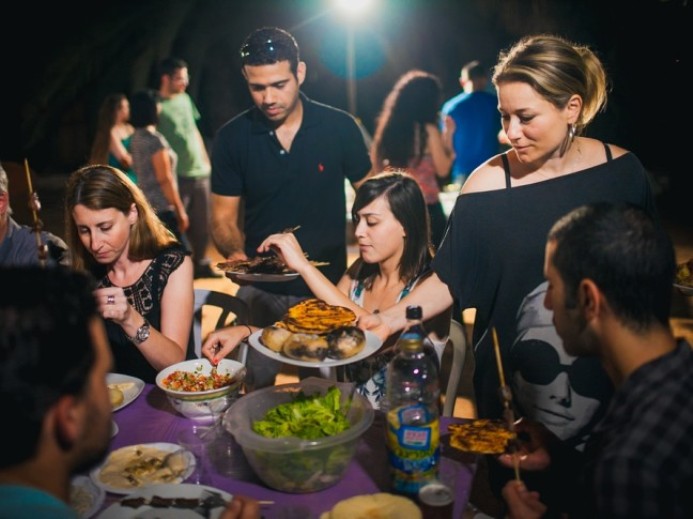
EatWithSo far, Israel is the only participating Middle Eastern country. Click on David if you want to book a Tel Aviv-style Shabbat dinner, or check out Vita and Jet for a scrumptious vegan feast in Kfar Vradim. Email Esther in Beit Arif whose husband (both pictured in the lead photo above) will whip up recipes handed down from his Yemenite mama, served up in their backyard tent (image below).

You can also dine on homemade paella from a backyard grill in Toledo, Spain or a BYOB Thai-Brazilian feast in a Sao Paolo flat.  (We’ll be seeing cooks in Bethlehem and Jerash and Beirut on board soon.)
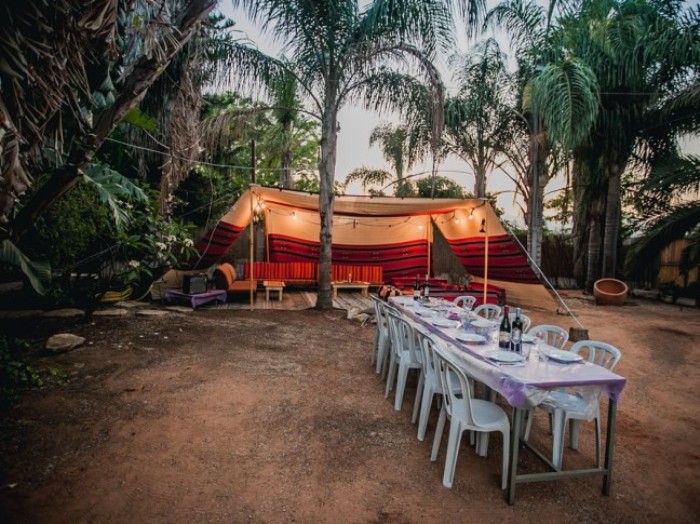
eatwith Yemen village diningLaunched last year, EatWith offers users two options:

1)    Host your own pop-up restaurant by preparing your favorite dishes, served up in your home with a side of your  cultural perspective. In the process, meet interesting people and earn some extra income.

2)    Move a bit out of your traditional dining comfort zone and sign up as a guest.  Taste new foods and local lifestyles for fair prices, and – again – meet new people.

“Most tourists don’t get a chance to meet the locals except maybe the taxi driver, or the waiter in the restaurant,” Michlin told TechCrunch, “but EatWith aims to change this.”

Michlin started with meal offerings in Tel Aviv and Barcelona.  He added New York City and quickly expanded across the Americas and Europe. He’s received host applications from more than 80 countries.  To ensure guest safety, the company employs a strict host vetting process and holds a $1 million insurance plan should something go wrong.

Hosts set the prices (EatWith takes 15%) and define the menu and scope of any entertainment (visits to local markets, musical performances, guest speakers and cooking workshops). A few offer to come to your home as visiting chef.

Each host page includes useful information describing the host’s style and experience, number of guests allowed, and event duration.  Locations are mapped and venue amenities listed (disabled access, kid-friendliness, pets on premises, smoking policy, parking and access to mass transit).

So far, EatWith reports that the majority of guests are actually local to the hosts.  So maybe the Airbnb analogy is not the best fit. EatWith may be a more tasteful regression from Facebook, social networking the old fashioned way.

Now, would someone pass the bread?

All images from EatWith

World Cup 2022 in Qatar and the Energy Debate Over Artificial Clouds

104

Qatar World Cup 2022For soccer fans (or football in Europe!) The Qatar World Cup Games don’t start for almost a decade, but officials are still kicking the ball around over the irrational choice of tiny, wealthy, overweight Qatar as host nation for 2022 FIFA World Cup. With summer temperatures in Qatar reaching as high as 50°C (122°F),  African and Arab teams might cope, but European athletes would be competing in temperatures double to those they’re accustomed to.

Why Teen Drivers Should Listen to Barry Manilow When Driving

teen driver music
In countries like Saudi Arabia where the dangerous and fatal “sport” of drifting cars into crowds of people is considered a past-time, we wonder – can music be to be blame? According to a new study from Israel teens who are listening to their favorite songs while driving are more likely to make errors while driving. Males, are most at risk, the study points out.

The Ben Gurion University study looked at 85 young drivers accompanied by a researcher or driving instructor. Each driver took six challenging 40-minute trips; two with music from their own playlists; two with background music designed to increase driver safety (easy listening, soft rock, light jazz), and two additional trips without any music.

The study was conducted by BGU Director of Music Science Research Warren Brodsky and researcher Zack Slor to assess distraction by measuring driver deficiencies (miscalculation, inaccuracy, aggressiveness, and violations) as well as decreased vehicle performance.

When the teen drivers listened to their preferred music, virtually all (98 percent) demonstrated an average of three deficient driving behaviors in at least one of the trips.

Nearly a third of those (32 percent) required a a sudden verbal warning or command for action, and 20 percent needed an assisted steering or braking maneuver to prevent an imminent accident. These errors included speeding, tailgating, careless lane switching, passing vehicles and one-handed driving.

Without any music, 92 percent of the young drivers made errors. However, when driving with an alternative music background designed by Brodsky and Israeli music composer Micha Kisner deficient driving behaviors decreased by 20 percent.

“Most drivers worldwide prefer to listen to music in a car and those between ages 16 to 30 choose driving to pop, rock, dance, hip-hop and rap,” Brodsky explains. “Young drivers also tend to play this highly energetic, fast-paced music very loudly – approximately 120 to 130 decibels.”

“Drivers in general are not aware that as they get drawn-in by a song, they move from an extra-personal space involving driving tasks, to a more personal space of active music listening.”

Image of teens driving from Shutterstock

Saudi Gazelle Massacre Sparks Outcry

7

Saudi Arabia, gazelle, endangered species, wildlife conservation, social mediaA video of Saudi men boasting about their multi-day massacre of several Arabian gazelles has sparked an outcry across social media networks, local newspaper Sabq recently reported.

SkyTran: World’s First Levitating Transit System Heads to Tel Aviv

SkyTran, NASA, Israel, Tel Aviv, maglev, levitating pods, world's first magnetic transit system in Israel, public transportation, urban development

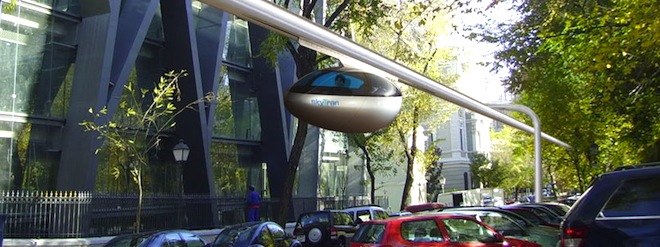
Tel Aviv will be the first city to install a magnetic levitating transit system (maglev) designed by NASA and SkyTran, and the electric train in the sky will be almost entirely solar-powered.

The SkyTran Personal Rapid Transit system first proposed by inventor Douglas Malewicki in 1990 is currently under construction at NASA’s Ames Research Center in California, Designboom reports.

SkyTran, NASA, Israel, Tel Aviv, maglev, levitating pods, world's first magnetic transit system in Israel, public transportation, urban development

Instead of relying on wheels and axles, the SkyTran consists of a series of levitating pods that are magnetically levitated from suspended rails lifted roughly 20 feet off the ground. Solar panels attached to the modular guideways will eventually power almost the entire system.

Passengers can call up a pod on their smartphones using mobile apps and get dropped off wherever they need to go.

SkyTran, NASA, Israel, Tel Aviv, maglev, levitating pods, world's first magnetic transit system in Israel, public transportation, urban development

Stations are simple with just a platform and a stairway every quarter of a mile or so, reducing the kind of infrastructure necessary to expand railway transportation and therefore mitigating public transportation’s overall environmental impact.

As an antidote to the Mediterranean city’s chronic traffic congestion and pollution, which also results in decreased productivity and sanity, Tel Aviv has appointed US consultancy Jenkins Gales & Martinez to bring the maglev system to Israel.

SkyTran, NASA, Israel, Tel Aviv, maglev, levitating pods, world's first magnetic transit system in Israel, public transportation, urban development

The pods have the ability to travel as fast as 150mph, but in Tel Aviv, they should transport passengers at a speed no faster than 100mph. And there won’t be any traffic jams at stations since a sidetrack will allow other pods to pass.

SkyTran CEO Jerry Sanders says that a standard SkyTran trip will be more expensive than a bus ride, but faster, and cheaper than a taxi ride. Other cities in Israel are also considering importing this futuristic transportation system.

In the meantime, 14 percent of Tel Aviv’s residents have taken up cycling in order to reduce their carbon footprint and avoid traffic.

Don’t be Fooled by Saudi Aramco’s LEED Platinum Tower

2

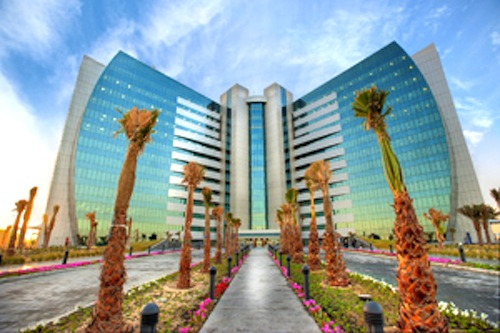
Al-Midra Tower, Saudi Aramco, LEED, USGBC, fossil fuels, climate changeOne of the world’s largest oil producers has just received LEED Platinum for its Al-Madra Tower in Saudi Arabia, highlighting the pitfalls of a system designed to recognize environmental stewardship.

Massive Concrete Amphitheater Lies Disused Outside Dubai

1

Amphitheater, Ampitheatre, Richard Allenby Pratt, eco photography, dubai desert, concrete building, art, photographyA friend tipped me off about this strange structure out in the desert a short drive from Dubai. I tried to figure out what it was on Google Earth before driving out to discover a mysterious, disused, concrete amphitheatre.

Heaviest Man in Saudi Gets Royal Treatment

0

world's heaviest man, Saudi Arabia, obesity, Gulf, Arab countries, health, Saudi Arabian King Abdullah has intervened to help save the life of his largest subject, ordering Khalid bin Mohsen to be specially transported from the southern border province of Jazan to the country’s capital to undergo treatment. Nineteen-year-old Shaari, who weighs 1,345 pounds, is believed to be one of the world’s heaviest humans.

Middle East Solar Manufacturing Boom Imminent Say Industry Experts

5

solar, Saudi Arabia, Qatar, United Arab Emirates, Middle East solar, solar boom, China, flooded solar market, solar energy, solar power, renewable energyEnergy industry experts are predicting a new solar manufacturing boom next year after an extended slump, and they claim that the Middle East is ranked among the top three leading markets in the industry.

Israel and Jordan Strike Brilliant Water Trade Deal

2

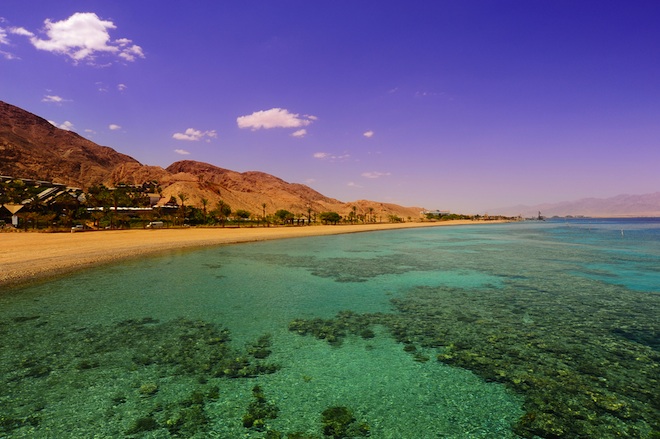
Jordan, Red Sea, Israel and Jordan trade water, Wadi Araba, desalination, water scarcity, Middle EastWhen the $10 billion Red-Dead Canal plan got the axe earlier in August, we discussed plan B for restoring some sense of water security to northern Jordan: a smaller desalination plant in Wadi Araba to trade water with Israel and Palestine.

Iran’s Water Woes More Worrying than War

3

Tehran Skyline, Iran, war, water issues, water scarcity, climate change, global warming, Israel, nuclear, politicsInternational media is so obsessed with Iran’s forbidden access to nuclear energy and the possibility of war that a host of other issues far more worrying than war are being ignored. And it starts with water.

Turmeric Heals The Way Drugs Do, Only Better

1

turmeric cancer

There are two good reasons for cooking with turmeric. The first one is that the spice’s attractive yellow color and pungent flavor satisfy the sense of having eaten real food. The second, as folk wisdom has always known, is that it’s good for you. Our previous post on turmeric vs. arthritis offers a wide view of the root’s healing properties.

Masdar Aims to Detect Red Algae Before Coral and Desalination Damage

0

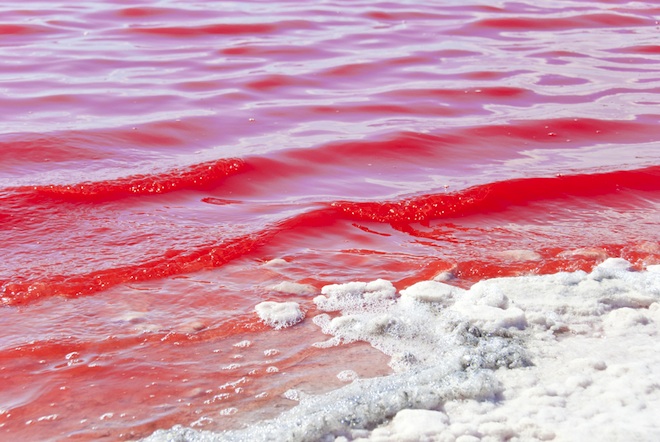
red algae, red tide, algae bloom, Masdar Institute, Arabian Gulf, Persian Gulf, Middle East, Satellite Water MonitoringRed tides are toxic to both coral reefs and desalination plants in the Arabian/Persian Gulf, according to The National, so Masdar Institute has teamed up with government-backed Bayanat for Mapping and Surveying Services to predict and protect against harmful algae blooms.

Louvre Abu Dhabi Finally Breaks Ground on Saadiyat Island

0

Abu Dhabi, Louvre, Saadiyat, Jean Nouvel, passive design, Islamic Architecture, Louvre Abu Dhabi, green design, sustainable designIt has been more than three years since France’s Pritzker prize winning architect Jean Nouvel won the bid to design a sparkling new art museum for Abu Dhabi, and now construction on the new Louvre has finally broken ground.

“Fly” Through Morocco on Three Wheels with Twike Maroc

3

Twike, electric vehicles, hybrid vehicles, moroccan travel, green transportation, sustainable travel, human powered electric bikes

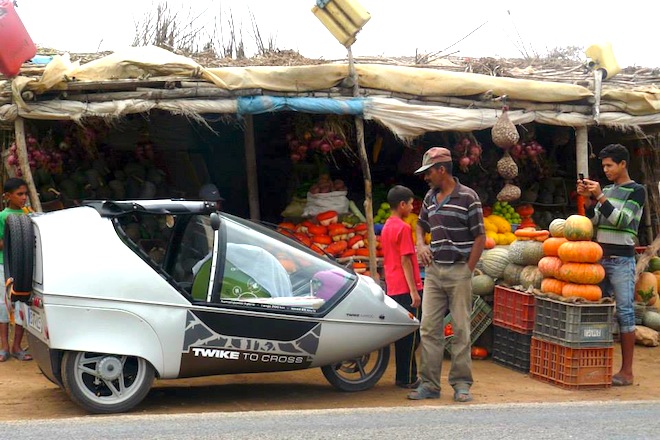
Twikes have been around for 15 years, but they have only now made their way to Morocco. A hybrid electric vehicle on three wheels, this ergonomic two seater can travel 10,000km on the equivalent of just 50 liters of fuel, and you can ride one yourself.