Home Blog Page 312

Polluting the Final Frontier With Space Junk

1
space junk debrisWith space labs, astronaut gloves and even a toothbrush floating in space, is there no limits to where we’ve flung our junk?

Thirty-four years ago the charred remains of a spaceship fell to earth. The spaceship was named Skylab and it was the last orbiting remnant of NASA’s grandiose Apollo era when Saturn V moon rockets with twenty-five times the cargo capacity of the space shuttle lifted humans 240,000 miles to the moon, one thousand times higher than the orbit of the International Space Station (ISS).

Skylab was a recycled spaceship. It was made from an empty Saturn V fuel tank decorated with solar panels and furniture. One solar panel and a heat-shield fell off during launch, forcing astronauts to jury-rig a parasol based on $12.95 fishing poles and a parachute canopy.

Skylab was massive, at launch it was already nearly as big as the fully completed International Space Station. No one wanted this house-sized spaceship to crash. It was supposed to be boosted into a higher orbit by NASA’s newly invented space shuttle. But when the space shuttle was delayed, Skylab’s orbit gradually decayed until it crashed in 1979.

Russia entered the litterbug space race the previous year when its COSMOS 954 nuclear-powered spy satellite fell from the sky and spread highly radioactive uranium across hundreds of thousands of square miles of western Canada.
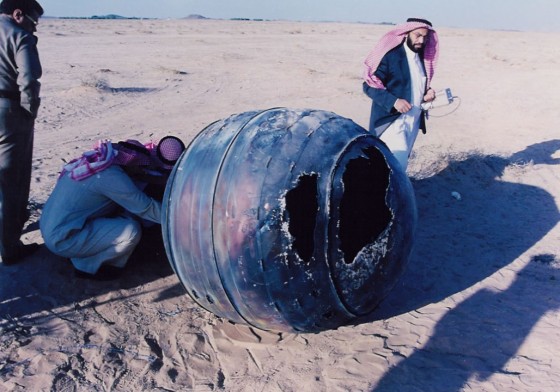
space junk lands in the middle east
Space junk found in the Middle East, in Saudi Arabia

Space Junk Cost and Liability
Under international agreement, space-faring countries are liable for the damage caused by their junk and debris so Canada sent the bill for the $6 billion radioactive clean-up to the Soviets who eventually paid a fraction of that amount. NASA never paid the $500 littering fine imposed by the remote Australian shire where Skylab landed.

China enters the space junk race
China was a latecomer to the space junk race but it made up for lost time when it deliberately crashed a kill satellite into its Fengyun weather satellite in 2007. This collision created an estimated 150,000 fragments of hypersonic shrapnel which expanded to fill thousands of cubic miles. The satellite was in a particularly high orbit where its fragments will threaten space travel for centuries. Shards are already known to have passed near the International Space Station and one piece destroyed a Russian satellite in January 2013. When Canadian astronaut Chris Hadfield photographed what looked like a bullet hole in one of the International Space Station’s solar panels he said it was caused by a small stone from space. But it’s far more likely to have been caused by man-made litter from earth.

Peeing in our water bowl
The pattern of human pollution is all too predictable. Our middens become mountains. Earth’s landscapes, lakes, rivers and oceans become our dumps. Like a mad dog we pee in our own bowl and only notice a problem when civilization’s belly begins to ache from the stench. Humans eventually polluted earth’s seven great continents, its atmosphere and its oceans. So it shouldn’t surprise anyone that we’re beginning to fill space with trash.

Space is big but…
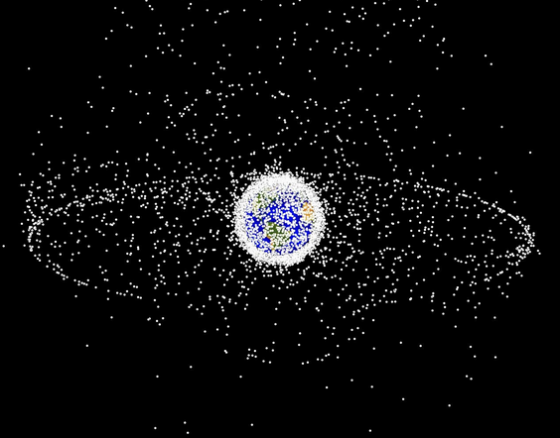
Space is big, but the amount of space in useful earth orbits is relatively small. Astronauts typically orbit at altitudes between 150 and 300 miles above sea level, no more than the distance between Alexandria, Egypt and Paphos, Cyprus. Geosynchronous communications and weather satellites must all orbit the earth at the same altitude, 22236 miles above sea level. So unless we’re very careful, space will eventually be so full that each collision with orbiting debris will create more orbiting debris.

The resulting chain-reaction is known as Kessler’s syndrome and is a plot complication in the newly released film Gravity. The resulting ring of debris may be beautiful but it could make space travel too risky and set back the advances in space technology since 1959. Imagine a world without satellite TV, GPS navigation, satellite weather forecasts and the Internet.

What can be done to remove space junk?
There are strategies for reducing the dangers of space junk but the the first order of business is tracking it. America’s NORAD is one of the agencies tasked with this space traffic control.

People at NORAD keep track of thousands of orbiting objects including everything from rocket fuel tanks to an astronaut’s lost glove and toothbrush. The ESA, NASA and other space agencies have collaborated on strategies for space junk mitigation. Russia’s COSMOS 954 used one of these strategies. It was designed to eject its nuclear reactor core into a higher “graveyard” orbit, but that strategy failed. The Mir space station outlived the Soviet empire that launched it but a controlled de-orbit in the spring of 2001 burned up as much as possible and dropped the remainder into a remote part of the South Pacific.

We don’t yet have a solution for removing smaller items but engineers have suggested everything from sailing space robots to aerogels and lasers. It’s clearly an environmental problem we will have to deal with very soon.

Update 2020: orbital sustainability happening thanks to Astroscale.

Public domain images of Skylab, orbiting objects, and space debris in Saudi Arabia via NASA.

Zaha Hadid’s 2020 Olympic Stadium Thwarted by Japanese Peers

0

Japan National Stadium, Zaha Hadid Architects, geothermal energy, 2020 Olympics Stadium, green design, sustainable design, eco-design

A consortium of Japanese architects got together to protest Zaha Hadid’s winning design for the main stadium of the 2020 Tokyo Olympics, and despite all her fame and glory, the Japanese government listened.

Zaha Hadid has been in the news a lot recently. For many, she is an incredible, visionary designer whose work is unparalleled, and her projects are appearing all over the world – including Qatar.

But a group of Japanese architects banded together to protest the enormous scope and size of the 80,000 seat stadium in Tokyo, which will host both the opening and closing ceremonies, as well as the Games’ athletics, football and rugby events.

Japan National Stadium, Zaha Hadid Architects, geothermal energy, 2020 Olympics Stadium, green design, sustainable design, eco-design

Fumihiko Maki, Toyo Ito, Sou Fujimoto and Kengo Kuma – all renowned for their own work – organized a meeting to convey how the stadium approved six months ago is poorly suited for the urban context in which it is slated to appear.

“We are NOT against Zaha,” said Fujimoto in a tweet. “We just think the basic requirement of the competition was too big for the surroundings.”

After listening to the Japanese consortium’s concerns about Hadid’s design, sports minister Hakubun Shimomura overruled the initial project approval – in part because the £1.8 billion construction budget is “too massive,” reports Dezeen.

“We need to rethink this to scale it down,” he said. “Urban planning must meet people’s needs.”

Japan National Stadium, Zaha Hadid Architects, geothermal energy, 2020 Olympics Stadium, green design, sustainable design, eco-design

When they approved the project roughly six months ago, the design jury loved Hadid’s design. In addition to incorporating geothermal energy, recycled rainwater and grey water reuse, thereby upping the green ante in a first for the Iraqi architect, the stadium will serve multiple functions.

More than just a temporary stadium for the 2020 Olympics, the Tokyo National Olympic Stadium to be constructed in Tokyo’s Yoyogi Park will also host the 2019 Rugby World Cup.

But for now – thanks to a few outspoken Japanese designers who value their city, Hadid has been forced to revisit the drawing board to produce something that is a little less cumbersome for its already-dense setting.

:: Dezeen

The Shard Architect Designs Ultra Lightweight Dragonfly Wind Turbine

1

Dragonfly Wind Turbine, Renzo Piano, wind energy Mediterranean Coast, clean energy, Mediterranean clean tech, The Shard, The Shard architect designs Dragonfly wind turbine

The Shard architect Renzo Piano has partnered with Italy’s Enel Green Power to design a new ultra lightweight wind turbine that has a smaller visual impact on the landscape than conventional wind turbines.

Amman, Jordan Named World’s 3rd Ugliest City

7

Amman-Jordan-voted-Ugliest-CityMy hometown of Amman, Jordan has just been slammed as one of the least attractive cities on the planet. Online travel adviser U.CityGuide posted their 10 Ugliest Cities of the World, with Amman nabbing third place.

I have to concede that in the urban looks department, and as much as I love Amman, Jordan’s capital city is pretty craptastic. On the bright side, it’s the only Middle Eastern entry on the roster they self-bill as “unbiased”.

Amman boasts streets strewn with litter and uncollected trash and, like most of our sister cities across the Middle East, uninspired glass towers sprouting with absolute disconnection to neighborhood context or traffic flows.

Our concrete and limestone buildings are coated with soot, sand and car exhaust because, absent the lashing rains of Seattle or Dublin, Amman filth sticks. And don’t get me started on unwalkable sidewalks and minimal green space.

Check out the other nine and see if your town is named and shamed – link here.

And people of Amman, do you think the title is deserved?

Eco artist and designer Pablo Solomon comments: “On ugly cities. We are always horrified to see cities devoid of greenery. As you know, I have preached for decades that planting enough greenery would be the cheapest and easiest way to counter manmade CO2 emissions.

“I put the term vertical greening into the common vocabulary and preached the Trillion Tree Project (now a reality). How one can live in a city without greenery is unimaginable. Gray water, collected rain water, desalinated seawater, etc. can be used to provide the necessary water. However, it takes determination, work, dedication and tenacity on the part of humans to turn their cities/living areas into more beautiful, more healthy and more earth friendly places.

“Being born into an ugly city is sad. Accepting living in an ugly city is even sadder,” he tells Green Prophet.

So what are you going to do about it Jordan?

“No Woman, No Drive” Video by Saudi Comedian Hisham Fageeh, With Lyrics

Hisham Fageeh's video no woman, no drive

This is the best pro-women’s rights stuff we’ve seen out of Saudi Arabia, ever. Saudi comedian Hisham Fageeh has posted his excellent No Woman, No Drive video to bring attention to the plight of women in the Middle Eastern country.

Hookah Pipe Dangers Exposed Yet Again

2

jabba-hut-hookah-shisha

Smoking the hookah, nargilah or shisha pipe is a truly fun and social way to connect in the Middle East. It’s an oriental fantasy for newcomers and even for women in private circles who want to wind down and let loose. But one session can be like smoking 600 cigarettes! 

Jerusalem’s Eco Bike “Festigalgal” Says Ride to Work!

0

Festigalgal, Jerusalem

Jerusalem’s Festigalgal bicycle riding festival winds up next week with emphasis on using bicycles more for in-city transportation.

Latest Purchase Deal for Bankrupt Better Place Company Falls Through

3

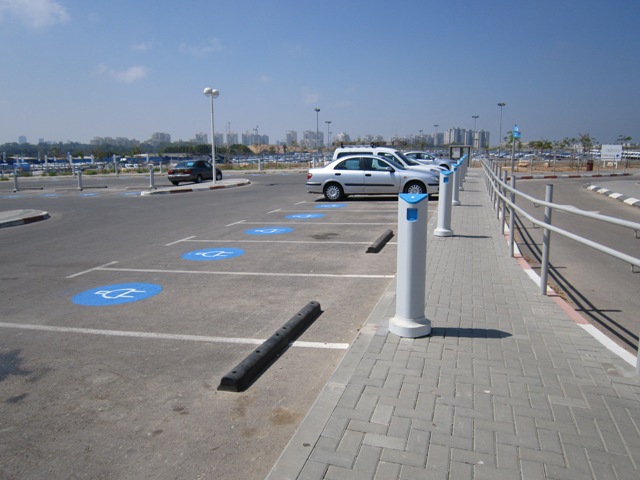
Better Place, ZE car empty charging postsThe forlorn photo of empty EV car charging posts says it all. Better Place, the electric car infrastructure company founded by entrepreneur Shai Agassi has still not found a buyer willing to come up with the actual money needed to purchase it.

Israel’s Nova Lumos puts solar power into off-grid African communities

1

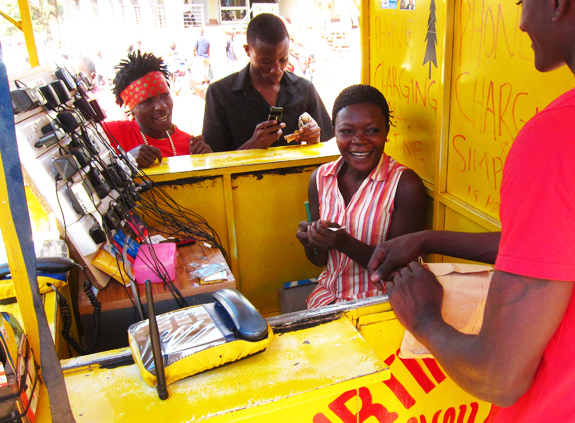
cell phone charging in AfricaIt’s hard to imagine the concept of a “power pimp” in Africa unless you have lived there. But it makes sense and cents on a continent that lacks a unified power system. There is basically no electric power in most rural places unless you are enterprising enough to own a battery and generator of some sort –– making you the “pimp” by letting other people charge their cell phones at crazy inflated prices.

It’s a problem that humanitarians worldwide seek to address, but an Israeli solution would do this using a cell phone. The idea of Nova Lumos is to buy solar power by phone on a needs basis, putting the middleman (that pimp) out of business.

Nova Lumos, Electricity in a box, solar energy, Israel clean tech, developing world energy, solar energy cheaper than kerosene

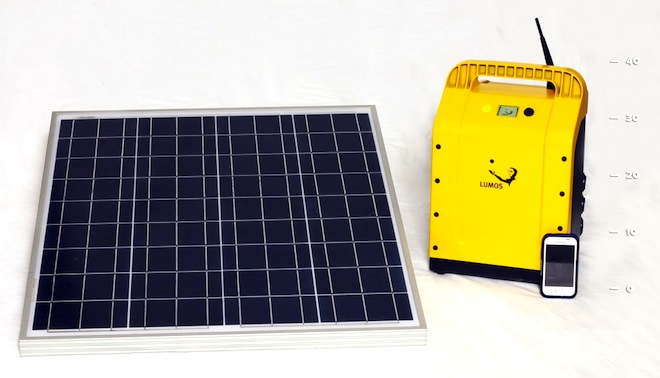
Davidi Vortman, general manager of the company, tells ISRAEL21c that the idea is to sell small mobile solar systems to individuals –– for charging cell phones, lights or small appliances –– paid for in affordable increments using a cell phone.

“The system is small enough for one person to carry and simple enough for a person to put on the roof. Just connect it without any technician; and use a cell phone to operate it through a mobile phone with a simple SMS,” Vortman tells me.

Off-grid and green

Could Lumos save the day for about 1.5 billion people in Africa and Asia who don’t have access to power? The system provides access to green energy, a practical off-grid solution, a security system to protect the mobile pack and a good business opportunity to mobile providers in Africa, who can lease the Lumos pack as a bundled service.

“Africans don’t talk as much as they’d like to, not because they don’t have money to talk, but because they don’t have money to buy the charge,” explains Vortman. “When you think about the alternatives, there are the electricity pimps, a local entrepreneur with a car battery and generator and a kerosene candle for light, or a generator, which 99 percent cannot afford.

“With no grid there is no way to buy electricity. We believe distributed electricity would make more sense,” he says.

Cell phones for Africans are lifelines: a tool for banking, communicating and accessing the Internet. Some 800 million cell phones are being used across the continent, and it is clearly an important emerging market in both high-tech communications and green technologies.

“We need to make technology available in a way that is different,” says Vortman. “If they would have said years ago that 80 percent of Africans would have cell phones today, you’d think they were joking. There are no landlines, but they just leaped to mobile. The same with banking, where they use their cell phone and now have the largest market for that. They just leaped. I think with energy it must work the same way.”

Pilots in two countries

Energy is a harder sell than apps.

While apps from Israel to manage police forces (like Nowforce) or low-tech browsers (like VascoDe) are an easy sell, it has proven harder to get Africans hooked on green power – mainly because of the prohibitive cost.

Paying in increments by phone could eliminate this barrier. The challenging part will be securing the systems and penetrating the market before other companies jump on the bandwagon.

Nova Lumos was founded in 2012 and is now carrying out pilot projects to test the system using several hundred units in Nigeria and Guinea.

In the far future, the plan is to offer this unique approach to developed countries in need of a secure and reliable solution for far-flung locations. For example, Lumos could also be a provider of pay-as-you-go systems that purify water.

Founders of the company all come with expertise in large-scale solar energy installations in Israel, and in the networking and communications high-tech business. Vortman used to work at Nice and Comverse, managing large business units.

“I always felt that I wanted to do something different – something that impacts people,” he says.

Merging the two worlds of green energy and high-tech, as many Israeli companies are starting to do, might just save the day — and the planet.

Qatar Emir Selects Arched Design ‘Vaulted Spaces’ for Doha Metro

1

Doha Metro, Vaulted Spaces, Doha Metro Design, green transportation, urban planning, 2022 World Cup,As Qatar prepares for the 2022 World Cup amid bribery allegations and gross human rights violations, the world is watching every move. Which may explain why the Emir controls every major and minor decision – including the new Doha metro design.

Sneak Peek at World’s Largest Women-Only University in Saudi Arabia

13

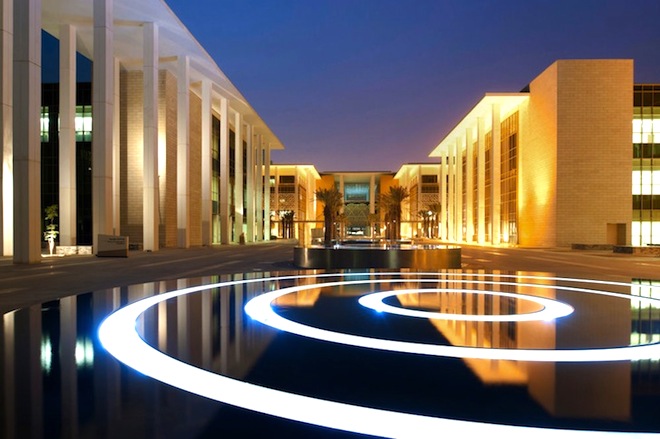
Princess Nora Bint Abdulrahman University, Perkins+Will, World's largest women-only university, Saudi Arabia, LEED buildings Saudi, mashrabiya screens, green design in Saudi Arabia

Most westerners imagine that Saudi women are completely deprived of opportunity, and in some cases that may be true, but the world’s largest women-only university in Riyadh, Princess Nora Bint Abdulrahman University (PNU), may steer the kingdom in a more egalitarian direction.

Enlight’s 58 MW Wind Farm Gets Israeli Approval for Golan Heights

0

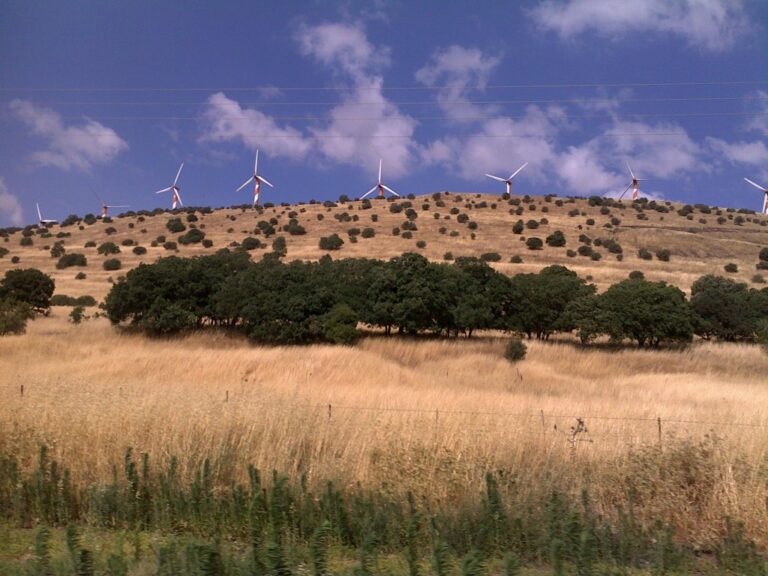
israel wind farm golan heights

It ain’t Chicago, but Israel does have a little bit of wind potential on the Golan Heights. A local company called Enlight, which has been active in solar energy, has just received a conditional license to build 34 more wind turbines in the Golan Heights totalling some 58 MW of renewable energy.

Dubai Opens 13 MW Solar Plant, The Largest PV Plant in Mideast

2

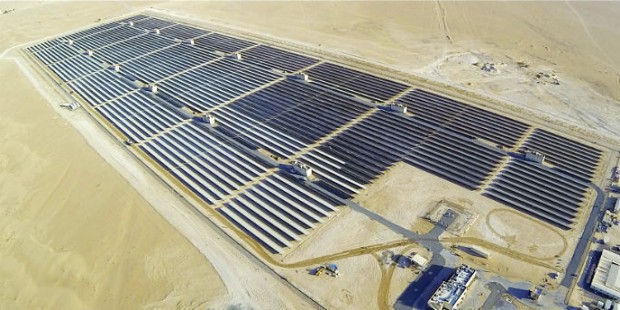
dubai solar energy plant

In an attempt to diversify its energy balance, Dubai has just turned on a 13 MW solar energy plant. The oil wealthy nation is an OPEC member, and one of the first to make a bold statement away from oil. This makes it the largest solar photovoltaic (PV) plant in the Middle East North Africa. 

The Dam that May Damn Egypt’s Future

21

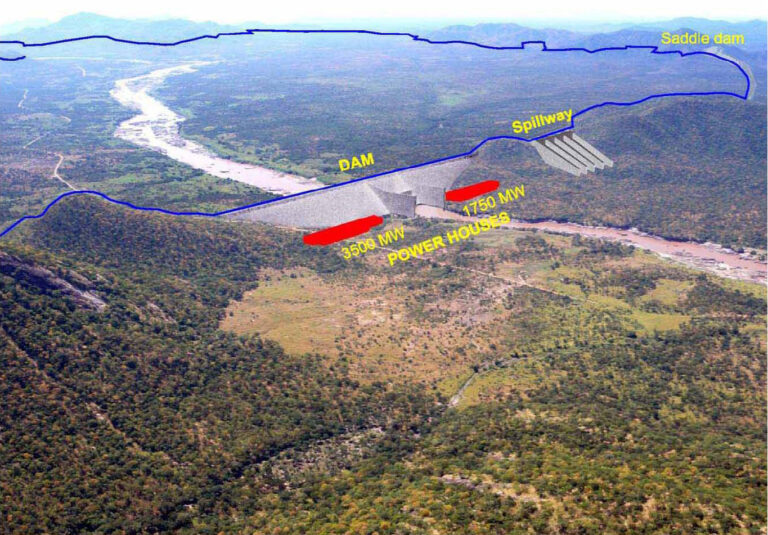
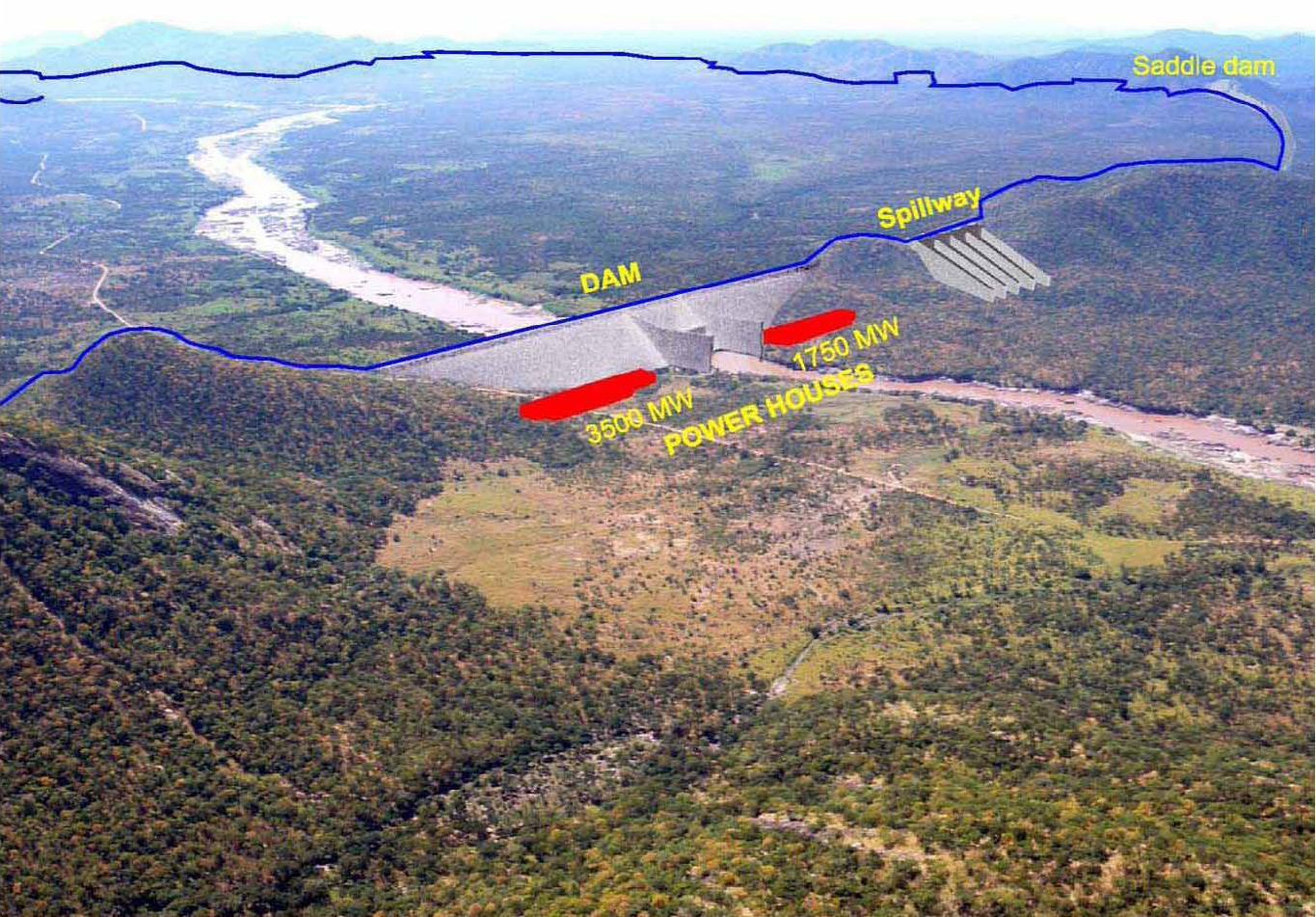
Grand Ethiopian Renaissance Dam

In a strange and surprising twist, Egypt says it will consider participating with its neighbour Ethiopia in the construction of the Renaissance Dam, a project which it had staunchly opposed (and even suggested sabotaging).

Israel’s Kaiima Seed-Tech Company Raises $65 Million

2

kaiima seed technology

Since the Sixties “green revolution,” when Norman Borlaug introduced the concept of cross-breeding and hybridization of plants to boost output, not much has changed, according to Doron Gal, CEO of the Israeli seed technology company Kaiima Agro-Biotech. Kaiima, which means “sustainability” in Hebrew, hopes to be that change.