Home Blog Page 285

Meditative LED bowl lamp recharges with circular motions

1

Kinetically rechargeable LED lamp, Shlomi Mir, tibetan singing bowls, meditation lamps, kinetically-charged lamps, LED lamps, Israeli designer, green design from Israel, renewable energy, alternative energy, clean tech

Shlomi Mir is one of Israel’s most visionary designers whose recent tumbleweed anti-desertification project earned him a Lexus Design Award alongside giants like Toyo Ito. But its his beautiful rechargeable LED bowl lamp that we are drooling over today – an elegant combination of art, design, tradition, technology and even spirituality.

Climate change is sucking nutrition from our crops

empty-plate-climate-change

Researchers now say in a revealing Nature paper that the most significant health threat from climate change has started to happen.

Lebanon’s water problems

0

water-lebanon-time-pine-cone
Lebanon is always bracing for severe summer droughts. As in nearby Jordan, longstanding water management problems are stressed to the breaking point following the driest year on record and a winter exacerbated by a massive influx of Syrian refugees.

Lebanon has a water problem. See the root causes of it in this 15 minute video we featured a while back.

Lebanon has received just 431 mm (17 inches) of rain since September tis year, less than half last year’s 905.8 mm and far below the yearly average of 812 mm.

Lebanon’s meteorological service says the country hasn’t seen such low levels since 1932, when just 335 mm was recorded, according to Hadi Jaafar, assistant professor of irrigation engineering and water management at the American University in Beirut.

In Ammiq, in the east of the country, the effects of the dry winter are already visible. Farmer Khaled al-Kaabi has begun watering his fields a month earlier than usual because the rains that ordinarily feed his lands never came.

“Usually we do this at the end of May, but this year the lack of rain has forced us to do it now,” he said as he irrigating rows of wheat for animal feed. But the increase in the country’s population since then makes this year’s drought far more serious, he said.

“This year, and although we received a little bit above 400 mm, it is far worse,” he said. “Back then, the population was less than half of today’s, and so were the agricultural areas,” he added.

“Relatively speaking, it is the driest year on record for the inhabitants in this country.”

Ordinarily, Lebanese farmers irrigate their fields by digging channels that divert water from local rivers or wells that fill with rainwater.

But the rain and snow that usually feed the rivers and wells never arrived.

“This year, we will have to pump up water from below ground, but if this drought continues next year, there’ll only be five percent of that groundwater left,” Kaabi said.

Syrian refugees compound crisis

Lebanon has the highest proportion of arable land to residents in the Arab world, but just 12 percent of the land is cultivated, and agriculture contributes only 11.7 percent to GDP, behind services and industry.

Still, farmers can ill-afford to leave their lands unwatered, despite warnings from Jaafar and others about tapping the country’s groundwater reserves.

“The water demand for Lebanon is projected at about 1.8 billion cubic meters per year,” he said.

“Most of this water needs to come from groundwater pumping this year… Renewable groundwater resources will all be depleted and we will be tapping from our strategic reserves.”

Lebanon’s parliamentary committee for public works and energy called in April for the creation of a crisis group to deal with the expected summer shortages.

Technologies to catch the rain

And to this date, this region is not the only one facing this phenomenon. In fact, Australia considers itself as the earth’s driest lived-in continent. It has the smallest region of steady wetland, compared to other continents. Solutions there have been invested to help the citizens cope, like rainwater harvesting where the government strongly imposes its use and provides education to implement the practice.

One company Supatank, a tank manufacturer based in Australia, helps as well and lessens the burden of installation by helping out households to carry out rainwater catchment. But such solutions aren’t yet in use in Jordan.

Over in Lebanon Fadi Comair, director general of hydraulic and electric resources at the energy ministry, described a “truly dramatic situation,” exacerbated by waste and an influx of Syrian refugees.

He said Lebanon could ordinarily expect to have water resources of around 2.7 billion cubic metres in a given year.

Those resources would be sufficient to meet projected annual needs at least until 2020.

“But the influx of Syrian refugees means this balance will tip into the negative by the end of this year,” he said.

The UN refugee agency UNHCR warned in February that the presence of more than a million Syrian refugees alongside four million Lebanese would seriously deplete the country’s renewable water resources.

Comair says that scenario was only made worse by a winter so dry and unseasonably warm that the country’s ski resorts were able to open for just two days.

Mismanagement of water resources

But even under the best of circumstances, Lebanon fails to manage the water resources it has, according to Comair.

The country has just two dams and some 70 percent of the water that flows through its 16 rivers ends up in the Mediterranean.

Comair says 48 percent of the water that is collected is then lost because of poor infrastructure and leakage.

Things are expected to get worse, but farmers are already complaining about crop losses, and in Beirut, residents with the means to do so have been forced to buy water from private suppliers to supplement the flow from the state.

The energy and water ministry has publicly called for citizens to reduce their usage, urging them to avoid washing cars and even to “minimise personal water usage, including showers.”

In March, a group of activists and businessmen launched Blue Gold, an initiative to limit water loss and better manage Lebanon’s resources.
Its proposals include better storage facilities and monitoring, wastewater treatment and more water efficient households and crops.
But corruption, bureaucracy and the country’s perennial political paralysis make the prospects for such changes uncertain.

Comair describes a plan from 2000 to build 27 dams and artificial lakes that has languished unimplemented.

“We haven’t been able to carry out more than one percent of those objectives because there is no political will,” he said.

Egypt’s environmental suicide by coal

0

solar panels

Egypt’s ongoing energy issues, compounded by its current political and economic problems, appear to be going from bad to worse. This is especially so since its natural gas revenues were dramatically curtailed following numerous sabotage attacks on its Sinai gas pipeline to Israel and Jordan.

Up your eco coolness and become a fan of fans

0

paint a rainbow fanSummer’s coming – watch as its warm weather seduces us into abandoning green principles – flipping on the air conditioner (AC) for a fast blast of freeze. Is there a greener way to beat the heat? You bet, and going retro is the smartest way to up your coolness! Look below for this DIY project for fans.

Bill Gates declares war on world’s (surprisingly) deadliest creature

4

world's deadliest animalsSomething’s bugging Microsoft co-founder Bill Gates.  So obsessed is the billionaire philanthropist that he’s dedicated the first week of May to raising awareness to the world’s deadliest creature – the mosquito.

Trash selfies to shame Tunisia’s government

selfipoubella#LacSocial media has again proved to be a powerful tool in Tunisia, where a group of people started a Facebook page that turns the ubiquitous ‘selfie’ into an opportunity to express disgust with the country’s stinking trash problem.

The Big Bambu evolving bamboo sculpture that will hold you, in Jerusalem

big bambu climber jerusalem
A travelling art exhibit made from thousands of bamboo poles has landed in Israel. Inviting the public to climb on it, and inside it, this is one rare art installation made from thousands of bamboo poles which encourages people to be part of it. 

SmartBrick lets you play with LEGO to build your home – for real

5

smartbrick-3d

Following the news that 3D printed homes from China can be built in 24 hours, comes a new Israeli invention called SmartBrick.

Newly discovered Camelopardalis meteor shower

1

camelopardalis_meteors_from_wadi_rumMay Camelopardalis is the name given for a newly discovered meteor shower which may or may not dazzle viewers under clear-dark skies.

Villa Minima #3 looks like a caterpillar on a rocky landscape in Turkey

0

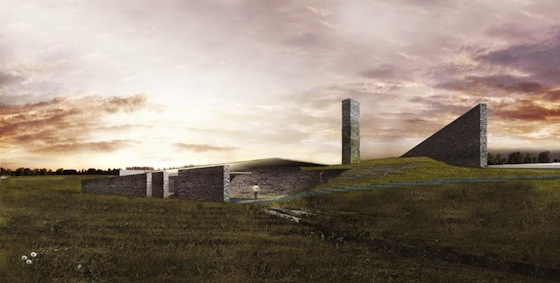
Villa Minima, LAD, Mediterranean Sea, minimalist villa, green villa, minimalist villa, rocky turkey, turkey, caterpillar home, parallelepiped,There’s something so compelling about this minimalistic villa shanghaied on the edge of a rocky Mediterranean landscape. One of five small villas conceptualized for varying landscapes by Italian design studio LAD, Villa Minima #3 is a distorted parallelepiped structure envisioned for a private residence in Turkey.

Kingdom renewables so slow, Saudi oil empire to take over

0

Saudi Aramco, oil platform, Saudi solar, renewable energy, alternative energy, Saudi business, energy newsSaudi Aramco may be taking over the Kingdom’s renewable energy industry in order to hasten the uptake of solar, wind and other alternative sources of energy. The move comes after the government-backed group forecasted a significant slump in export revenue as local oil consumption soars.

The ‘original iPad’ – 1,200 years before Apple

1

byzantine iPad, original iPad, 1200-year-old iPad, ancient iPad, ancient notebook, turkey, archaeology, history, travel, scienceTurkish archaeologists have unearthed what Discovery News calls the ‘Byzantine iPad.” Dated to the 9th century A.D., the wooden tool was found among a shipyard of roughly 37 ancient ships in Istanbul.

The original ‘iPad’ measures roughly seven inches, except it’s thicker and made of wood, and comprises five overlaid carved rectangular panels coated with wax, Discovery reports.

“Yenikapı is a phenomenon with its 37 sunken ships and organic products,” Ufuk Kocabaş, director of Istanbul University’s department of marine archeology and the Yenikapi Shipwrecks Project, told Hurriyet Daily News. Scientists have been excavating the site for 10 years.

“I think these organic products are the most important feature of the excavations,” says Kocabaş.

Thought to have belonged to the ship’s captain for use as a tool, the wooden box has a sliding lid underneath that hides a carved plate.

“When you draw the sliding part, there are small weights used as an assay balance,” Kocabaş said. 

Related: Turkey’s Yalın Mimarlık Wins Ancient Troy Archaeological Museum Design Competition

An assay balance is a super-sensitive tool used to assess gold, silver and other precious metals in order to determine their value. This is an important tool for a merchant ship.

The ‘tablet’ had other uses as well.

Greek writing found carved in the wax suggests that it was used to take notes, and leather straps that hold the layers together made the box relatively portable as well. Nothing compared to modern iPads of course, but portable for 9th century Turkey.

Discovery writes that a “research team from Istanbul University is now restoring the ship, 60 percent of which has survived in good condition, with the aim of having her set sail again by 2015.”

Only this time, it is likely to have more “advanced” tools on board.

Image: The Byzantine notebook. Credit: Ufuk Kocabaş

When in Rome… Keep the Middle East Beautiful

0

red_sea_coral_reef_with_boy
Green Prophet’s Brian travels to Jordan and finds way too much trash out at sea. He asks: What would Iron Eyes Cody do?

Greening your real estate purchase in the Middle East

0

clay-castle-saudi-arabia
If you are shopping around for a home in Saudi Arabia or the Middle East there are conventional places to turn to like Craig’s List, Facebook, AirBNB to see what you like, local real estate agents to help you find properties of interest. But let’s say you are a foreigner or returning national looking to invest in something new in the Middle East.

How can you get the greenest home for your family?

Think small. Air conditioning use goes through the use in spring, summer and fall in the Middle East. The smaller the home the less air conditioning you’ll need to keep it cool. Consider installing an energy-efficient desert cooler or a water-based system to keep your air moist and cool without using too much conventional air con. Maybe not as small as this Etger Keret skinny house wedged between two buildings in Poland. It’s a tight squeeze.

Etgar Keret, Israeli writer, skinny house, Warsaw, Poland, tiny house, Jakub Szczensy, Centrala
Skinny House, Poland

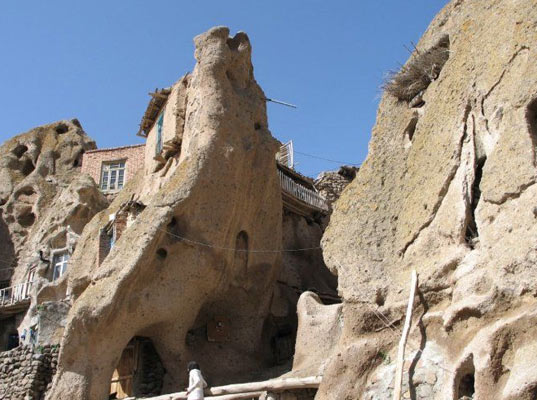
Go traditional. Local Arab homes often incorporate features like inner courtyards which are shaded on all sides from the sun. There is also the issue of the mashrabiya. It’s the Arab version of a brise soleil and does a great job of keeping direct sunlight and heat out of your home.

Go central. The worst thing you can do is buy a property in a suburb in the middle of nowhere. Find something close to where you work and socialize so that driving doesn’t become a key element of your day. Choose a city you can walk in. Not Amman or any city that requires a car.

Go vertical. Find a space with access to a roof or balcony and join a movement of people who are growing food and spices at home. Need a sprig of fresh parsley for the salad? What’s fresh and handy from home is also the greenest. Try hydroponics or building a green roof.

Go social. The best thing you could do for your community is to create a shared garden. Or consider starting a greywater recycling system for your apartment building or neighborhood to share.

Now instead of finding house hunting a chore, make it a way that you can spread some green love into the Middle East. While the trend is for Middle Eastern home purchases to get bigger, start a new trend by making yours more ecological.