A coworking space within walking distance can cut commuting time and give you a reliable place to work, but distance alone does not make it useful. Test the internet, noise, privacy, desk setup, environmental claims and real cost before committing to a membership.
Yazan Al Homsi looks at two very different bets — Aduro Clean Technologies and Rocket Doctor — to show what investors should watch as small-cap companies attempt to move from promising technology to commercial scale.
Breast reconstruction can be an important part of recovery, but persistent pain, infection, changes in breast shape or mesh movement deserve medical attention. Here are the warning signs patients should know after breast mesh surgery.
As ABA practices grow, so can their administrative footprint. Smarter billing and documentation systems can reduce duplicated work, wasted staff time and inefficiencies while supporting sustainable growth.
Meta description:
The Houthis have turned Yemen’s Red Sea coast into part of a global geopolitical crisis. But behind the missiles, shipping disruptions and Suez Canal headlines is Mocha — the ancient Yemeni port that gave the world its name for coffee.
A coworking space within walking distance can cut commuting time and give you a reliable place to work, but distance alone does not make it useful. Test the internet, noise, privacy, desk setup, environmental claims and real cost before committing to a membership.
Yazan Al Homsi looks at two very different bets — Aduro Clean Technologies and Rocket Doctor — to show what investors should watch as small-cap companies attempt to move from promising technology to commercial scale.
Breast reconstruction can be an important part of recovery, but persistent pain, infection, changes in breast shape or mesh movement deserve medical attention. Here are the warning signs patients should know after breast mesh surgery.
As ABA practices grow, so can their administrative footprint. Smarter billing and documentation systems can reduce duplicated work, wasted staff time and inefficiencies while supporting sustainable growth.
Meta description:
The Houthis have turned Yemen’s Red Sea coast into part of a global geopolitical crisis. But behind the missiles, shipping disruptions and Suez Canal headlines is Mocha — the ancient Yemeni port that gave the world its name for coffee.
A coworking space within walking distance can cut commuting time and give you a reliable place to work, but distance alone does not make it useful. Test the internet, noise, privacy, desk setup, environmental claims and real cost before committing to a membership.
Yazan Al Homsi looks at two very different bets — Aduro Clean Technologies and Rocket Doctor — to show what investors should watch as small-cap companies attempt to move from promising technology to commercial scale.
Breast reconstruction can be an important part of recovery, but persistent pain, infection, changes in breast shape or mesh movement deserve medical attention. Here are the warning signs patients should know after breast mesh surgery.
As ABA practices grow, so can their administrative footprint. Smarter billing and documentation systems can reduce duplicated work, wasted staff time and inefficiencies while supporting sustainable growth.
Meta description:
The Houthis have turned Yemen’s Red Sea coast into part of a global geopolitical crisis. But behind the missiles, shipping disruptions and Suez Canal headlines is Mocha — the ancient Yemeni port that gave the world its name for coffee.
A coworking space within walking distance can cut commuting time and give you a reliable place to work, but distance alone does not make it useful. Test the internet, noise, privacy, desk setup, environmental claims and real cost before committing to a membership.
Yazan Al Homsi looks at two very different bets — Aduro Clean Technologies and Rocket Doctor — to show what investors should watch as small-cap companies attempt to move from promising technology to commercial scale.
Breast reconstruction can be an important part of recovery, but persistent pain, infection, changes in breast shape or mesh movement deserve medical attention. Here are the warning signs patients should know after breast mesh surgery.
As ABA practices grow, so can their administrative footprint. Smarter billing and documentation systems can reduce duplicated work, wasted staff time and inefficiencies while supporting sustainable growth.
Meta description:
The Houthis have turned Yemen’s Red Sea coast into part of a global geopolitical crisis. But behind the missiles, shipping disruptions and Suez Canal headlines is Mocha — the ancient Yemeni port that gave the world its name for coffee.
A coworking space within walking distance can cut commuting time and give you a reliable place to work, but distance alone does not make it useful. Test the internet, noise, privacy, desk setup, environmental claims and real cost before committing to a membership.
Yazan Al Homsi looks at two very different bets — Aduro Clean Technologies and Rocket Doctor — to show what investors should watch as small-cap companies attempt to move from promising technology to commercial scale.
Breast reconstruction can be an important part of recovery, but persistent pain, infection, changes in breast shape or mesh movement deserve medical attention. Here are the warning signs patients should know after breast mesh surgery.
As ABA practices grow, so can their administrative footprint. Smarter billing and documentation systems can reduce duplicated work, wasted staff time and inefficiencies while supporting sustainable growth.
Meta description:
The Houthis have turned Yemen’s Red Sea coast into part of a global geopolitical crisis. But behind the missiles, shipping disruptions and Suez Canal headlines is Mocha — the ancient Yemeni port that gave the world its name for coffee.
A coworking space within walking distance can cut commuting time and give you a reliable place to work, but distance alone does not make it useful. Test the internet, noise, privacy, desk setup, environmental claims and real cost before committing to a membership.
Yazan Al Homsi looks at two very different bets — Aduro Clean Technologies and Rocket Doctor — to show what investors should watch as small-cap companies attempt to move from promising technology to commercial scale.
Breast reconstruction can be an important part of recovery, but persistent pain, infection, changes in breast shape or mesh movement deserve medical attention. Here are the warning signs patients should know after breast mesh surgery.
As ABA practices grow, so can their administrative footprint. Smarter billing and documentation systems can reduce duplicated work, wasted staff time and inefficiencies while supporting sustainable growth.
Meta description:
The Houthis have turned Yemen’s Red Sea coast into part of a global geopolitical crisis. But behind the missiles, shipping disruptions and Suez Canal headlines is Mocha — the ancient Yemeni port that gave the world its name for coffee.
A coworking space within walking distance can cut commuting time and give you a reliable place to work, but distance alone does not make it useful. Test the internet, noise, privacy, desk setup, environmental claims and real cost before committing to a membership.
Yazan Al Homsi looks at two very different bets — Aduro Clean Technologies and Rocket Doctor — to show what investors should watch as small-cap companies attempt to move from promising technology to commercial scale.
Breast reconstruction can be an important part of recovery, but persistent pain, infection, changes in breast shape or mesh movement deserve medical attention. Here are the warning signs patients should know after breast mesh surgery.
As ABA practices grow, so can their administrative footprint. Smarter billing and documentation systems can reduce duplicated work, wasted staff time and inefficiencies while supporting sustainable growth.
Meta description:
The Houthis have turned Yemen’s Red Sea coast into part of a global geopolitical crisis. But behind the missiles, shipping disruptions and Suez Canal headlines is Mocha — the ancient Yemeni port that gave the world its name for coffee.
A coworking space within walking distance can cut commuting time and give you a reliable place to work, but distance alone does not make it useful. Test the internet, noise, privacy, desk setup, environmental claims and real cost before committing to a membership.
Yazan Al Homsi looks at two very different bets — Aduro Clean Technologies and Rocket Doctor — to show what investors should watch as small-cap companies attempt to move from promising technology to commercial scale.
Breast reconstruction can be an important part of recovery, but persistent pain, infection, changes in breast shape or mesh movement deserve medical attention. Here are the warning signs patients should know after breast mesh surgery.
As ABA practices grow, so can their administrative footprint. Smarter billing and documentation systems can reduce duplicated work, wasted staff time and inefficiencies while supporting sustainable growth.
Meta description:
The Houthis have turned Yemen’s Red Sea coast into part of a global geopolitical crisis. But behind the missiles, shipping disruptions and Suez Canal headlines is Mocha — the ancient Yemeni port that gave the world its name for coffee.
Madeo eco chic shop in Jaffa for sustainable fashion
Madeo eco-chic is a sustainable shop in the Jaffa Flea Market with many different items from recycled and sustainable materials. Some of these include handbags, clothing, jewelry, cards, and much more. When I visited the shop, I spoke with Lotem, who has been helping her mother run the shop for the last 10 years. All of the items that Lotem sells in her family-run store are imported from countries all around the world which she selects based on sustainability. One fascinating item Lotem sells is a belt made from soda can tabs.
A soda can tab belt
Madeo eco-chic helps to encourage and inspire sustainable retail by selling items that make you feel like you are doing good for the environment. Each item in the shop has a tag attached that provides a description of the item, where it came from, and what it is made of. For example, the shop sells jewelry made from grass created by The Leakey Collection.
Tag from the company “The Leakey Collection” that is sold in Madeo eco-chic. This company creates jewerly made from glass that helps its consumers feel like they are doing good in the world. Not only does the company help create a more sustainable planet, but they also help create financial opportuntites to people in need.
Leakey Collection glass braceletsVintage style glasses made from upcycled plastic. Sunglasses sold in Madeo eco-chic with tags that show the glasses were made from recycled plastic.
I also tried on a pair of glasses from the shop and was shocked at how lightweight they were. Not only did they look good as new, but they were also stylish and came from recycled material. These glasses in specific, came from recycled plastic. If there was no way of telling where the material came from, you would never guess it came from recycled plastic. The shop had a wide variety of sunglasses in all colors and variety that anyone is sure to find something they like.
All of these cards are made from recycled paper.
Overall, I would suggest to any person, whether interested in protecting the environment or not to check out Madeo eco-chic. The store offers a wide variety of items of interest to all people for reasonable prices. I left the store with a top for 189 shekels and will definitely be making another trip to the shop.
Upcycled coins from Israel into laser-cut necklaces
My favorite item in the shop were these necklaces made from recycled coins. The paper underneath the jewelry box provides a picture of what the coin Jewish coins throughout history, from the old version to the new version of the coin. The artist who made these necklaces was able to cut through the coin, leaving only the symbol behind and turning it into a beautiful masterpiece. A lot of these necklaces come in gold or silver, so many people can enjoy it.
Think about a circular economy: where one product ends its life, another begins
In today’s world, where environmental concerns are growing exponentially, businesses have a crucial role to play in reducing their ecological footprint. One effective way to achieve this is by carefully selecting the materials used in manufacturing processes and product development, like those from Teak Isle.
By prioritizing sustainable sourcing, you can significantly minimize your environmental impact while contributing to a greener and more sustainable future.
Understanding the Environmental Impact
Think about it. Every single thing we buy, from that snazzy smartphone to those comfy jeans, has a story to tell. And that story includes the materials used to make it. Those materials have a big ol’ carbon footprint that can wreak havoc on the planet if we’re not careful.
Here’s the deal: when we extract materials from the Earth, it often involves energy-intensive processes that spew out greenhouse gases. Heat gets trapped in the atmosphere by these gases, leading to climate change and all its delightful consequences like extreme weather events and rising sea levels.
And that’s not all. Using certain materials contributes to deforestation, which means we’re cutting down forests left and right. And those forests are like the lungs of our planet, soaking up carbon dioxide and pumping out oxygen. So when we lose them, we’re losing a crucial defense against climate change.
Renewable and Recycled Materials
Renewable and recycled materials are key players in the realm of sustainability, offering significant benefits for the environment and our future.
When we talk about renewable materials, we refer to resources that can be replenished relatively quickly or are naturally regenerative. Examples of renewable materials include bamboo, organic cotton, and hemp.
These materials possess the remarkable ability to grow rapidly, often requiring fewer pesticides, fertilizers, and water compared to conventional options. By opting for products made from renewable materials, we support a more sustainable and responsible approach to resource utilization, reducing our dependence on finite resources.
Life Cycle Assessment
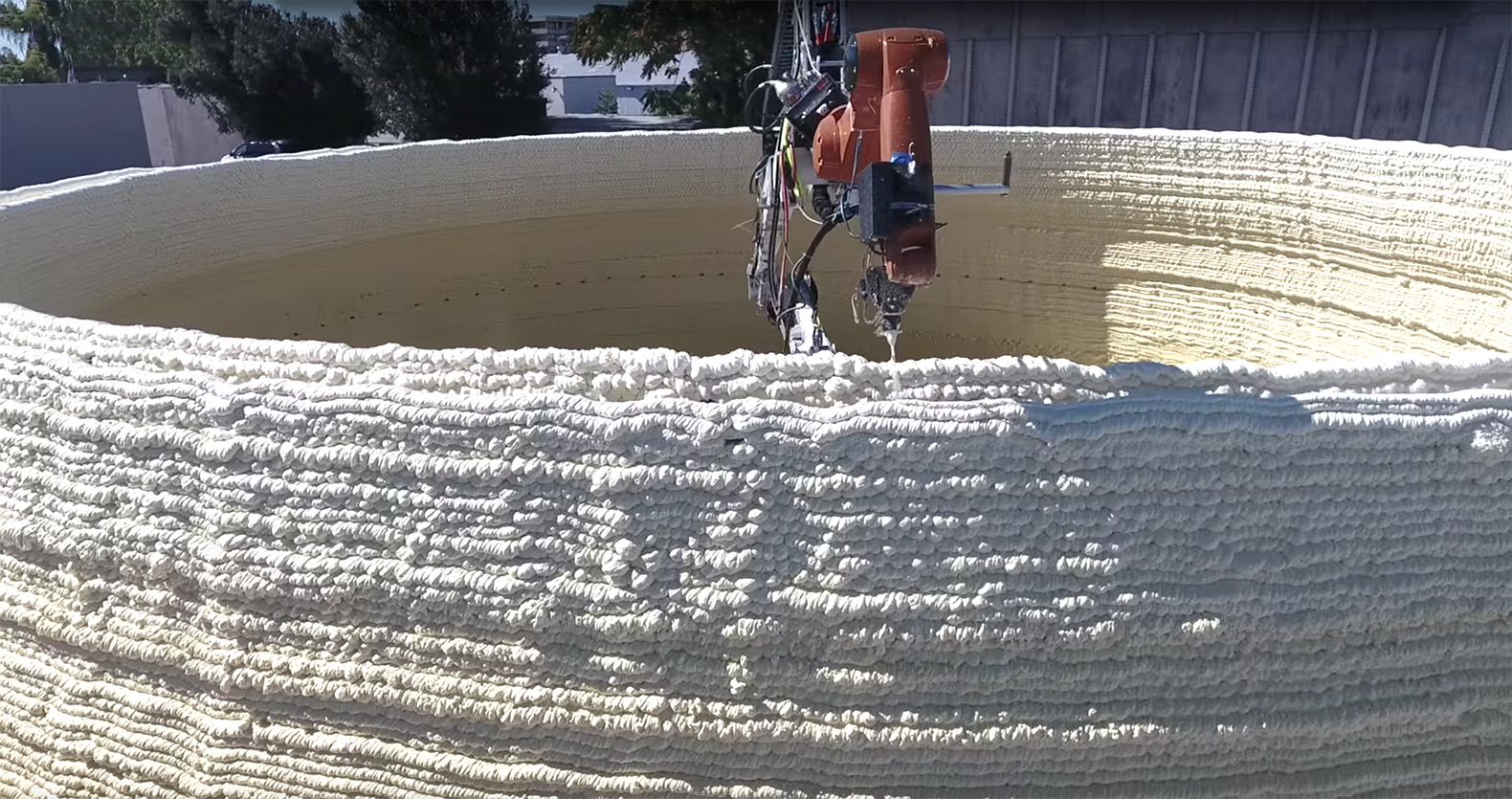
A building being printed with a 3D robot
Life Cycle Assessment (LCA) is a valuable tool that helps us understand and evaluate the environmental impact of products throughout their entire life cycle. It’s like putting on a pair of eco-friendly glasses that allows us to see the big picture and make informed decisions.
LCA considers each stage of a product’s life cycle, from raw material extraction and production to distribution, use, and eventual disposal or recycling. By conducting a thorough analysis, LCA assesses the environmental inputs and outputs associated with each stage, such as energy consumption, greenhouse gas emissions, water usage, waste generation, and the potential for pollution.
The beauty of LCA lies in its ability to provide a holistic view of a product’s environmental footprint. It helps us identify and understand the hotspots or critical points in the life cycle where significant environmental impacts occur. This knowledge empowers businesses to prioritize areas for improvement and make strategic choices that minimize their environmental footprint.
Toxicity and Hazardous Substances
When selecting materials, considering their toxicity and the presence of hazardous substances is of utmost importance. We all want products that are safe for both human health and the environment.
The use of materials free from harmful chemicals and toxic substances is crucial for achieving this goal.
Certain substances, such as lead, mercury, phthalates, and volatile organic compounds (VOCs), can pose significant risks to human health.
Additionally, these substances can have adverse effects on ecosystems and biodiversity when they enter the environment through manufacturing processes or end-of-life disposal.
By prioritizing materials that are certified free from toxic substances, businesses can take a proactive approach to protect human health and the environment. This involves rigorous testing and adherence to regulations and industry standards.
Collaboration and Supply Chain Transparency
Collaboration and supply chain transparency are essential pillars in the quest for sustainable materials and responsible production practices. No business operates in isolation, and understanding the impact of materials goes beyond just what happens within their own walls. It requires engaging with suppliers, manufacturers, and stakeholders to promote sustainability throughout the entire supply chain.
By fostering collaboration, businesses can work hand in hand with their partners to promote sustainable practices and drive positive change. This collaboration can take various forms, such as sharing knowledge, setting common goals, and jointly exploring innovative solutions. When companies align their sustainability objectives and work together towards a shared vision, the impact can be far-reaching and transformative.
Supply chain transparency is a vital aspect of responsible material sourcing and production. It involves having clear visibility into the origin and practices associated with the materials used.
It allows us to trace the journey of materials, ensuring responsible sourcing, ethical labor practices, and environmentally friendly processes.
Waste Generation
Waste generated during manufacturing can take different forms. It includes solid waste, such as scraps and leftover materials, as well as liquid and gaseous waste resulting from industrial processes.
Packaging waste, such as cardboard, plastics, and Styrofoam, is also a significant contributor. Businesses should assess the types of waste they generate and identify opportunities for reduction and responsible disposal.
Waste reduction strategies are crucial for minimizing waste generation. These strategies include process optimization to minimize material waste, inventory management to reduce excess stock and spoilage, and implementing lean manufacturing principles.
By promoting waste reduction at the source, businesses can decrease the volume of waste generated and improve overall resource efficiency. Additionally, collaborating with suppliers to minimize packaging waste and encouraging consumers to recycle or return packaging can further contribute to waste reduction efforts.
Conclusion
By opting for sustainable materials, we become catalysts for change, driving the transition to a more environmentally conscious society. We have the power to reduce deforestation, curb greenhouse gas emissions, conserve water, and divert waste from landfills. Our choices can inspire innovation and drive the demand for greener alternatives, pushing industries to adopt more sustainable practices.
But this isn’t just about saving the planet; it’s about creating a world where humans and nature can coexist harmoniously. By embracing renewable resources, we ensure a future where generations to come can thrive amidst abundant ecosystems.
Sustainability followers on Instagram can enhance the message of your eco-brand.
In today’s digital age, social media platforms like Instagram have become powerful tools for personal branding, business promotion, and influencer marketing. One of the key metrics for success on Instagram is the number of followers. While organic growth is crucial, it can be a slow process. This has led to the rise of websites that offer instant delivery of followers to help individuals and businesses gain an edge on Instagram. In this article, we will explore six of the best websites for buying followers with instant delivery: GoRead.io, FollowersLeader, SocialBoosting, MegaFamous, SocialAdmire, and SocialViral.
GoRead.io
GoRead.io is a reputable website that provides instant delivery of Instagram followers. It offers a range of packages tailored to different needs and budgets. The platform ensures high-quality followers, and the process is safe and secure. With GoRead.io, users can expect genuine engagement from real accounts, enhancing their Instagram presence and credibility. To boost your profile visibility on Instagram, buying followers through Goread.io is the smart choice. As the best website for purchasing Instagram followers, Goread.io provides a reliable solution to increase your follower count and enhance your profile’s visibility. By investing in their services, you can quickly gain a substantial number of followers, attracting more attention to your content and expanding your reach. Increased visibility leads to improved credibility, making it easier for potential followers and customers to discover your profile. With Goread.io’s expertise in delivering genuine and active followers, you can confidently buy Instagram followers and enjoy the benefits of enhanced profile visibility.
FollowersLeader
FollowersLeader is another reliable website that enables users to purchase Instagram followers with instant delivery. It focuses on delivering active followers who are genuinely interested in the user’s content. The website offers various packages to choose from, allowing users to customize their follower growth strategy. FollowersLeader also provides 24/7 customer support to address any concerns or inquiries.
SocialBoosting
SocialBoosting is a popular website that guarantees instant delivery of Instagram followers. The platform ensures a quick and efficient process, allowing users to boost their follower count within minutes. SocialBoosting takes pride in providing real and active followers who are likely to engage with the user’s content, helping to increase visibility and reach.
A sustainable social boost
MegaFamous
MegaFamous is an established website that specializes in providing high-quality Instagram followers with instant delivery. It offers flexible packages to accommodate different user requirements. MegaFamous followers are known for their authenticity and engagement, enabling users to enhance their Instagram presence and build a strong online reputation.
SocialAdmire
SocialAdmire is a trusted website that allows users to buy Instagram followers and receive them instantly. The platform offers a range of packages suitable for individuals, influencers, and businesses. SocialAdmire ensures that followers are genuine and actively interested in the user’s content. With a quick delivery system and reliable customer support, SocialAdmire simplifies the process of boosting Instagram followers.
SocialViral
SocialViral is a well-known website that offers instant delivery of Instagram followers. It aims to provide users with real and engaging followers to help increase their visibility and reach on the platform. SocialViral offers competitive pricing options and ensures a smooth and secure transaction process. The platform also offers other services such as likes and comments to further enhance the user’s Instagram profile.
Conclusion
As the popularity of Instagram and social media continues to soar, the competition to gain visibility and attract followers becomes increasingly challenging. While organic growth is vital, buying followers from reputable websites can provide a much-needed boost. In this article, we explored six of the best websites for buying followers with instant delivery: GoRead.io, FollowersLeader, SocialBoosting, MegaFamous, SocialAdmire, and SocialViral. Each of these platforms offers reliable services, providing users with real, engaging followers to enhance their Instagram presence. However, it is essential to exercise caution and choose reputable websites to ensure a safe and effective follower acquisition strategy.
There’s no doubt about it – with the world the way it is right now, we are in dire need of more lawyers! But, what are the key reasons that are causing this unprecedentedly high demand for legal professionals? Well, one of the reasons is that fewer students are choosing to pursue a higher education qualification in law. They are electing instead to complete more novel areas of study – such as cyber security, for example. Further, fewer law graduates are using their degrees to go into a career as legal professionals. But how to overturn this downturn in lawyers, and meet this increasingly high demand for legal professionals? Just keep reading as we explore this concept further.
Becoming A Lawyer: Higher Education Qualifications in Law
Do you have a strong sense for justice? Stand on the right side of the planet
If you’re interested in becoming a legal professional, you will, of course, be required to complete a tertiary qualification in law. Indeed, courses for lawyers are essential for anyone wanting to pursue a career in the legal field. As part of your law degree, you will learn and develop key skills, capabilities and attributes that are vital to becoming a lawyer. Some of these qualities include communication skills, problem-solving capabilities, time management and organisation skills, negotiation expertise, and attention to detail – just to name a few!
The best thing about this type of degree is that you can choose to complete it online. Importantly, off-campus study is a great way to save both time and money as a student. By completing your course online, you will not have to commute to your university campus – avoiding travel time, as well as transport costs. You will also save on course fees. This is because your university facility will experience reduced overheads if you choose to complete your qualification remotely. As such, they will not need to pass on-campus costs to you. So, your course fees will be lower than if you chose to attend in-person lectures, tutorials, prac labs, and other on-campus events.
More Lawyers: Why Do We Need Them
Fight against wildlife traffickers and those who can’t speak for themselves
There are many reasons why we need more lawyers now than ever before. Some of these reasons include the fact that legal students simply aren’t graduating and progressing their careers fast enough! This is essentially a classic case of supply not meeting demand.
Also, fewer people are choosing to pursue a career in law today. 20% less, in fact! This is because of a decrease in the number of students choosing to enrol in legal studies. This can be attributed to demographic factors, as well as a shift in the areas of study that students are choosing to pursue. A lucrative career in cyber security, for example, is in many ways more appealing to ambitious students aspiring to a high-level, well-paid career pathway.
As such, we need to make studying law and becoming a lawyer more appealing to upcoming students and graduates. We must also allow ourselves to grow our legal ranks by employing more ‘non-lawyer’ legal experts and paralegals.
Legal Career Paths: What Job Prospects are Available to Law Graduates?
Students who complete a law degree have many job options available to them in the legal field upon graduation from their course. Some of these career prospects include:
Lawyer
The role of a lawyer can be extremely varied! However, most of a lawyer’s daily tasks and responsibilities are made up of representing clients at court appearances, for example, or providing legal support. For this reason, being a lawyer can also be somewhat of a legal advisory role.
Barrister
A barrister’s role differs from that of a lawyer, in that rather than being employed by a legal firm, barristers are independent legal practitioners. As such, they will usually be tasked with providing specialised legal advice and guidance.
Solicitor
A solicitor is also a legal advisory or legal counsel role, albeit often less senior than that of a lawyer or barrister. This means that solicitors are usually responsible for the preparation of court documents, as well as negotiations outside of the courtroom.
Legal professionals – in particular, lawyers – are in higher demand than ever before. This increased need for lawyers can be attributed to the fact that fewer students are pursuing legal studies today. Even if they do choose to complete a legal qualification, once they graduate, many students are not choosing to utilise their law degree to become a lawyer. Instead, many are simply aspiring to attain this qualification for prestige!
That being said, we need to make the legal arena more appealing to law graduates. To do this, we need to offer more benefits. A higher salary, perhaps, or a greater work/life balance. Either way, we need to do something to meet our ever-growing demand for more lawyers – before we are left with minimal legal resources to call upon.
The Ionion islands and sustainable travel go hand-in-hand
The Ionian Islands, nestled in the azure waters of the Mediterranean Sea, are renowned for their stunning natural beauty, rich history, and vibrant culture. Those islands, which are a captivating blend of natural beauty, history, and culture, are an ideal destination for travellers. With stunning beaches and crystal-clear waters, these islands provide a perfect setting for relaxation and outdoor activities. Rich in history, visitors can explore ancient ruins, Venetian architecture, and charming villages. In addition, the islands also offer delicious cuisine, vibrant festivals, and warm hospitality, allowing visitors to immerse themselves in the local culture.
Whether seeking a beach getaway, or to get a taste of Greek island life or you are here simply for a historical exploration, Ionian & Aegean Island Holidays provide an unforgettable experience for all. As tourism continues to thrive in this picturesque region, it is vital for visitors to adopt sustainable travel practices that minimize their impact on the environment and support the local communities. Sustainable travel practices have become very essential for minimizing the negative impact of tourism on the environment and local communities. Travellers can make conscious and responsible decisions for the preservation of natural resources and support local economies.
Over tourism in Ionian Islands is creating challenges for both locals and visitors, particularly due to overcrowding during the summer season. The overdevelopment in the area, destruction of local nature and noise pollution is leaving a negative impact on the islands. Tourists and travellers need to be aware the destruction happening due to their represent and minimize their carbon footprint by practicing sustainable travel and following community-based tourism initiatives.
Mr. Panos from Nikoli village at Lefkada Island in the Ionian Sea of Greece. Meet some locals when you travel sustainably.
Let us have a look at some essential sustainable travel tips to ensure a memorable and eco-friendly experience while exploring the enchanting Ionian Islands
Choose Eco-friendly Accommodation
When selecting accommodation, opt for eco-friendly options such as eco-lodges, guesthouses, or hotels with green certifications. Look for accommodations that prioritize energy and water conservation, waste reduction, and use sustainable materials. Additionally, support locally owned establishments to contribute directly to the local economy and foster a sense of community.
Respect Nature and Wildlife The Ionian Islands boast diverse ecosystems, including lush forests, pristine beaches, and marine habitats teeming with wildlife. Preserve these natural wonders by following responsible practices. Avoid disturbing wildlife or removing natural souvenirs such as shells or coral. Stay on designated trails to prevent trampling sensitive vegetation and habitats. Refrain from feeding or touching wild animals, as it can disrupt their natural behaviour and lead to dependency on humans.
Minimize Plastic Waste Plastic pollution is a global concern, and the Ionian Islands are no exception. Reduce your plastic footprint by carrying a reusable water bottle, shopping bag, and cutlery set. Say no to plastic straws and single-use items whenever possible. Choose accommodation providers and restaurants that actively minimize plastic waste by offering alternatives or promoting recycling initiatives. Participate in beach clean-up activities to help preserve the pristine shores of the Ionian Islands.
Save Water and Energy Being mindful of water and energy expenditure is crucial in promoting sustainability. Consider taking shorter showers and reuse the towels, and do not forget to turn off lights and air conditioning when not in use. Conserve water by opting for eco-friendly bathing and cleaning products. Consider staying in accommodations that have implemented water and energy-saving measures, such as low-flow showerheads and energy-efficient appliances.
Support Local Businesses Embrace the local culture and economy by supporting locally owned businesses, including restaurants, shops, and tour operators. Sample traditional Ionian cuisine made from locally sourced ingredients, purchase authentic handmade crafts, and engage in local activities that provide a genuine insight into the island’s traditions. By supporting local businesses, you contribute directly to the livelihoods of the island’s residents and help preserve their unique way of life.
Respect Cultural Heritage
The Ionian Islands have a rich cultural heritage, with ancient ruins, historic sites, and museums that tell captivating stories. Show respect for these cultural treasures by following designated paths, refraining from touching or removing artifacts, and adhering to any rules or guidelines provided by authorities. By appreciating and preserving the cultural heritage, you contribute to the sustainable development and pride of the local communities.
Choose Sustainable Transportation Opt for sustainable transportation options to explore the Ionian Islands. Consider using public transportation, cycling, or walking whenever feasible. If renting a vehicle is necessary, choose eco-friendly options or carpool with other travellers to reduce emissions. Explore the islands’ stunning landscapes through eco-friendly activities such as hiking, kayaking, or sailing, allowing you to experience nature first-hand while minimizing your carbon footprint.
Learn and Engage Take the time to learn about the local environment, culture, and customs of the Ionian Islands. Engage in educational tours, workshops, or volunteer opportunities that promote sustainable practices and conservation efforts. Participate in eco-tourism initiatives that support local conservation projects or marine research, allowing you to contribute directly to the preservation of the Ionian Islands’ natural heritage. It is a great way to support local businesses and artisans and learn more about the traditions.
Stay on proper paths and carry a reusable water bottle As a repsosible traveller, one must always stick to the designated route for hiking or traveling and carry your own reusable water bottle. Straying away from the specified path may damage the local plants and that may coast the local environment. As there are plenty of spots in Ionian islands where you can fill your water bottle for free, it doesn’t make sense to keep buying new water bottles.
Explore local experiences Ionian islands are well known for their hospitality and go to any length to make their guests feel at home. It would be a great idea to join a locally led tour to add to your eco-friendly experience. You can be assured of beeign treated like a special guest, enjoy a great experience as well as lower your carbon footprint. Some good examples are joining a traditional cooking class or taking part in an art class or simply interacting with the local.
As you embark on your journey to the captivating Ionian Islands, remember that sustainable travel is not only about preserving the environment but also about supporting local communities and preserving their cultural heritage. By following these sustainable travel tips, you can enjoy an unforgettable experience while minimizing your ecological impact and leaving a positive footprint on these cherished islands.
Let your visit to the Ionian Islands be a celebration of sustainability, where you connect with nature, immerse yourself in local culture, and contribute to the preservation of this remarkable destination for generations to come. As some parting words, you can learn a few Greek words and show your interest and respect for the local culture and can lead by example by acting sustainably.
After making its debut at Gitex Africa, the Neo car has officially hit the streets of the North African nation. Yes, the NEO Maroc is Morocco’s first 100% locally-designed recyclable car
It’s not electric, but it is recyclable and now part of the circular economy: As soon as July this year the assembly plant in Ain Aouda. Morocco will begin building these Neo Maroc jeeps at an affordable $15,000 and $20,000. Morocco’s king wants his nation to be among the top 10 car-producing countries in the world.
The Neo’s fiberglass body is a stylistic nod to American military jeeps of the 40s, does drink conventional fuel, but its carbon footprint is softened by the fact that it’s completely recyclable, according to the creators. Morocco does not have net-zero target for energy, but its national green initiatives focus on a renewable energy goal, with 52 per cent of its electricity mix coming from renewables by 2030.
From 1960, the sport model was produced under the Sabra brand, and the station wagon, sedan and pick-up models were produced under the Sussita brand name (Sussita (סוסיתא), Sussita 12 and Sussita 13/60 models). Following an agreement with the Greek automotive manufacturer Attica, a small number of Sussita 12 sedans (Carmel) were produced in Greece.nt will build 7,000 NEOs this year.
Another Moroccan car will be launched in 2025, the NamX Hydrogen Utility Vehicle (HUV). The NAM will carry six removable capsules, providing an impressive driving range and lightning-fast refuelling times. Hydrogen-powered fuel cell electric vehicles like the HUV significantly outpace traditional combustion engines in terms of efficiency, and only exhale warm air and water vapour, rendering them a lean, clean driving machine.
Mohammed VI, King of Morocco, has awarded the Order of Intellectual Merit to Faouzi Annajah, the founder of NamX, the young hydrogen car brand. His SUV prototype goes along with “made in Morocco.”
The NEO debuted at Gitex Africa, the region’s main technology showcase where investors and entrepreneurs meet face to face. The car then drive around the city of Rabat. While there are only a handful of prototypes manufactured, a $15 million car plant will build 7,000 NEOs this year.
“This car has been seven years in the making, with thinking, designing and creating a prototype,” said Nassim Belkhayat, chief executive of NEO Motors, who had no prior experience in the automotive industry before funding Morocco’s third car brand. “It is the first Moroccan car that will be mass produced, so it is a dream for us, and all Moroccan people.”
A hybrid model is slated for production.
Morocco: King Mohammed VI presents first model Moroccan car brand NEO
The Fairuz Festival Jaffa showed the world that in times of trouble, we always have dance
A rumor started on a Facebook group in Jaffa that the beloved Lebanese singer Fairuz would be performing. Fairuz is the Ella Fitzgerald of the Arab world and without doubt the biggest musical icon of the Arab world. She is popularly known as “the soul of Lebanon” and has achieved fame despite being a modern, secular woman in an ultra-conservative world lived in by most of her biggest fans.
The 87-year-old singer did not perform that day in May, but in her spirit a dozen girls, Jewish and Arabic, with origins from the Holy Land and as far and wide as Canada and Ireland shared a common dance floor for change –– and led a dance with Faizuz’s music at a new local dance festival that took place in the Old City of Jaffa overlooking the Mediterranean Sea and Tel Aviv. They had been working on the piece since January.
The dance troupe, led by Dalia Chaimsky dance director of the Jewish Arab Center in Israel, embraced a crew of 100 other girls and boys from Arab-speaking schools in the Jaffa area. The idea was to create a safe space for meeting face-to-face in a city that is culturally and religiously divided between rich and poor, secular and traditional, or Jewish, Muslim and Christian.
A group of girls from Jaffa share the hope for peace by creating a dance troupe that brings together schools with the music of Fairuz.
The dance troupe of young women aged 12 to 14 elegantly embraced their role as dance mentors to the other children, as a Middle Eastern orchestra, The Jerusalem Orchestra East West played an entrancing piece made famous by Fairuz. Hand movements and pulses of dancers crowded the stage, but everyone, along with their families in the audience were excited about the moment that the cellphones were off and the children could express themselves. Having 113 children on stage was a bit chaotic but the excitement and deeper meaning palpable.
It’s been a trying time for bringing people with varying backgrounds together in Jaffa, an ancient port city of mixed Muslim, Jewish and Christian heritage that sits side-by-side with the ultra modern Tel Aviv to the north. There were rockets falling in the area a couple of months earlier and while Yulia a lazy seal stretched herself along a Jaffa shore uniting Jaffainians for a moment, the sense in the community was one of distrust, loss of hope and pain.
As a resident of Jaffa and a mother of 3 young boys there, Chaimsky had a personal and professional mission to unite people through culture and dance in her beloved city.
She tells Green Prophet: “After being part of the Jewish Arab Center for 6 years it was important for me to develop the dance culture for the kids in Jaffa, especially the ones in our center. But it’s also important that the dance culture would be developed in Jaffa so that people will see what we are doing and recognizing that art and dance is not only for fun but can connect communities.”
“Dance,” she adds, “can develop kids’ minds, their general knowledge, but also other aspects about their bodies, in music, and in choreography,” says the daughter of Lithuanian doctors who immigrated to Israel as a child. Chaimsky was a professional dancer before she took on the role of supervising the dance department at the Jewish Arab Center. Other disciplines found there include hip-hop, modern dance and ballet.
“The main thing we came out with the Fairuz Project was the 100-plus kids collaborating together from the Jaffa schools Kulna Yahad, Ajial and Al Alhua in Jaffa. We entered the schools with our dance teachers and did a dance project for kids who are non-dancers in their everyday life. It was important for me to choose music connected to the traditional Arabic culture in Jaffa and the Middle East,” Chaimsky explores.
The Fairuz Dance Troupe from the Jewish Arab Center, left is their dance instructor Stav
“The emphasis was on Arabic traditional music so the Arabic kids will be proud of their culture and sound and so that it will be heard in the public area for the Jewish kids to know and hear another culture and tradition that’s not from home.
“The main thing is that we are learning about this culture through movement and that everyone can connect. It was for three months in the school, one hour per week, and in the end we set everything together to one dance and the city worked hard so we’d have a great orchestra to play, the Jerusalem Orchestra East and West.”
Watch the Best of Fairuz
https://www.youtube.com/watch?v=qaBYV-9g63o
It isn’t easy for Chaimsky, as a modern secular Jewish woman, to see young Arab women hidden from the public eye once they start puberty: “It’s important to say that in Jaffa by the age of 12 the girls stop dancing because of their traditions so it was important for me to emphasize Dance as something much more meaningful for life and which can connect the community.
“The fact that it comes out of Jaffa is a political statement,” she notes. “We are Jewish and Arab kids dancing together. We have different things to connect us now, not just the troubles, and yes we also have the good things. And you can see it onstage and you can see it in a very big festival like the one we had.
“But the main goal was to develop dance in the culture of Jaffa, within the kids,” Chaimsky, once a dancer, always a dancer, concludes.
The Fairuz Festival was in cooperation with and supported by the City of Tel Aviv-Jaffa, the Jewish Arab Center, The Mandel Center, the Old City of Jaffa, and the Pisgah Theatre in the Old City of Jaffa.
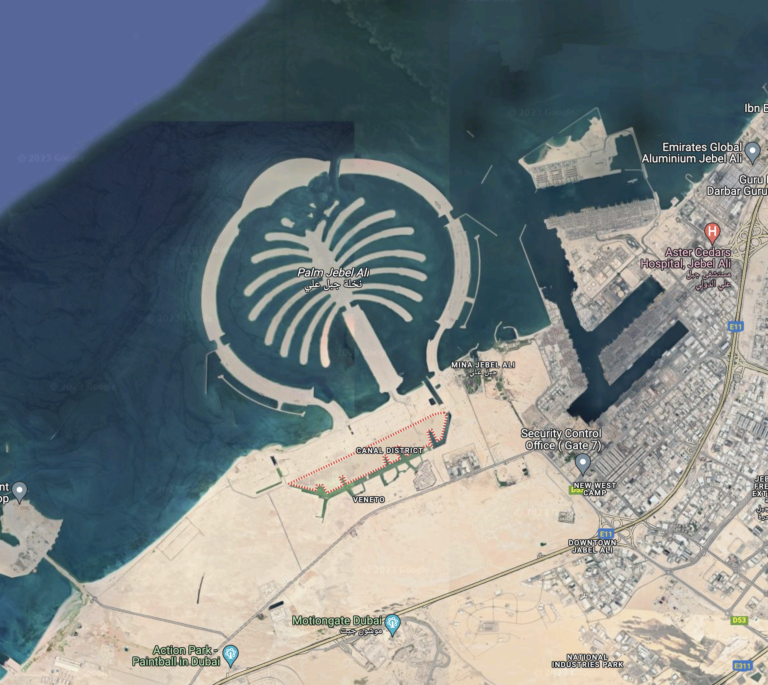
A Google Map of Palm Jebel Ali islands. Work on Palm Jebel Ali was halted soon after Dubai’s property market crashed in 2008. The project is being revived after a huge surge in Dubai property prices.
Palm Jebel Ali (نخلة جبل علي) an artificial archipelago in Dubai, United Arab Emirates, which began construction in October 2002 and which has been on hold since is supposed to be seeing some developments. You can see an updated satellite image that not much has happened and that there is a lot of sand sitting in the ocean waiting for villas, playgrounds, cafes and watersports.
The new master plan includes 80 hotels and resorts, and we hope they will follow the Estidama Pearl Rating System. The Pearl Rating System is a sustainable building code, like LEED, but which better suits the Middle East climate and culture. A project can receive One Pearl to Five Pearls depending on the total point-score a building project achieves. The scoring also gives a good overview of areas where improvements are needed and encourages sustainable management and operations.
The new master plan for the Palm Jebel Ali has been approved by Sheikh Mohammed bin Rashid Al Maktoum, Vice President, Prime Minister, and Ruler of Dubai. The project, which is part of the Dubai 2040 Urban Master Plan, is said to be one of a series of visionary projects being undertaken by master developer Nakheel. Investors from the 2002 days up until the market crash in 2008 are reported to be in limbo.
Palm Jumeira are artificial islands that include housing, hotels, spas and restaurants. Via Google Maps
The new masterplan for the Palm Jebel Ali includes a number of new features, including a nature-inspired waterfront promenade, some fitness centers, various swimming pools, children’s play areas, indoor gardens, as well as leisure facilities within each residential building.
Palm Jebel Island model viewed by Sheikh Mohammed bin Rashid Al Maktoum
The project is expected to be completed in 2027 and hopes to attract a wide range of residents, including families, professionals, and retirees. It is also expected to boost the local economy and create jobs. Some residents of the Palm Jumeira Islands report fetid water smells from lack of circulation around their private moat like island complex and wonder how these issues will be managed in the new iteration of the same concept.
A Google Map overview of the 3 main artificial islands projects in Dubai
In 2009 The Globe and Mail in Canada reported that “down by the docks, a noxious tide of toilet paper, raw sewage and chemical waste has turned the exclusive Jumeirah Beach – once a magnet for Westerners – into foul-smelling sludge. The pollution is bad enough to trigger typhoid and hepatitis in swimmers.”
In 2018 thousands of dead fished washed ashore along with a strange foam. Artificial islands like the ones being built in Dubai are indeed playgrounds of the wealthy as the gates and moats offer seclusion and security from riffraff. But these hugely expensive projects have a negative impact on the planet: dredging destroys marine life, and natural erosion patterns of beaches and sand. A concrete base for the beaches is a tragedy.
“They usually say they are preserving nature,” says author Alastair Bonnett, a professor of social geography at University of Newcastle who has written a book on islands. He said in a National Geographic interview: “They plant trees and plant coral. But there’s a greenwash going on. It’s one of the paradoxes of the industrial world that we destroy nature and then we want it back. We are hungry for the very thing we’ve ruined. It’s like killing the thing you love and then bringing back its ghost.”
Sheikh Mohammed bin Rashid Al Maktoum described in a tweet how this new destination comes as part of an ambitious plan to make the emirate “the most beautiful city in the world”.
“We announced our goal to double Dubai’s economy by 2033 and every day we add a new brick in building the most beautiful city in the world,” he said.
The next time you open a container of carbonated water, sparkling wine or a soft drink you might wonder if the inventors of this green technology were inspired by the pssst fizz sound of carbon dioxide being released from the beverage into the atmosphere? What if this process could be reversed? Could this be used to sequester carbon dioxide?
Climate change is a product of too much carbon dioxide and other greenhouse gases such as methane in the atmosphere. See the forest fires raging in Canada? An effect of climate change.
In some ways nature is ahead of us. Carbon dioxide (CO2) dissolves in water even at normal atmospheric pressure. Captura believes it can take advantage of the natural ability of water to dissolve carbon dioxide.
Billions of tons of carbon dioxide have already dissolved into the water of the world’s rivers lakes and oceans. We can be thankful for this but even nature has a limit. The dissolved CO2 makes carbonic acid which makes these bodies of water more acidic and can impact aquatic life. Acidity is one of the factors affecting coral reef health in the world’s oceans.
Eventually the water loses its ability to absorb more carbon dioxide. When freshwater lake temperature drops to its point of maximum density of 39°F or 3.98°C, surface water sinks to the bottom, displacing CO2 saturated water which rises and releases some of this gas back into the atmosphere. This seasonal turning of lakes happens in temperate climates. It also removes methane and introduces oxygen to deep waters. Certain types of fish such as smelt become active when a lake turns.
In equatorial climates the water temperature never drops to its point of maximum density so many lakes remain stratified and never turn over. Carbon dioxide and other dissolved gases can build up to a point where it is released catastrophically. This happened at Lake Nyos in Cameroon West Africa in August of 1986. The released carbon dioxide killed at least 1700 people.
Captura, from the United States, plans to use renewable energy to gently extract CO2 from the ocean where it can be used for industrial processes. Founded in 2021 using technology developed at Caltech’s laboratories, Captura provides low-cost atmospheric carbon removal by leveraging the world’s largest natural CO2 absorber – the ocean.
They report minimal impacts on the environment and using only renewable electricity and ocean water as inputs, applying a patented electrodialysis process to generate a stream of pure CO2 that can then be sequestered or utilized to make other low-carbon products.
The intake and output are in relatively shallow water with no need for deepwater pipelines or drilling platforms. Most ocean water will not need pre-treatment for the electrodialysis process which separates more acetic carbon dioxide rich water from the alkali water which is released to allow more “breathing room” for shallow ocean waters to absorb CO2 from the atmosphere and pass it down to be absorbed by deeper water.
The CO2 output can be used for industrial processes and provides a verifiable measurement for carbon credit accounting.
A pilot is running in the Pacific ocean off Newport Beach California. It’s one of those ideas that when you see it you wonder why you didn’t think of it the last time you opened a can of soda.
Coaching skills can help you go far. Find your new sustainable career choice. Solar? Energy? Green design?
Performance is essential for success in today’s cutthroat workplace. Outstanding performance not only helps with personal development and career success, but it also makes you eligible for a merit increaseand other types of prizes. This article offers 10 tried-and-true tactics that can help you succeed at work if you’re hoping to improve performance and receive a well-deserved bonus.
Strategy 2: Developing Time Management Skills
Setting definite objectives will help motivate performance. It is difficult to track progress and maintain concentration when there is no goal to work toward. Establish both short- and long term goals first, then divide them into manageable chunks. Make a thorough plan with milestones and due dates to help you stay on track. Keep a close eye on your development and adapt as required to stay on course.
Strategy 3: Enhancing Communication Skills
Success at work requires effective communication abilities. To grasp others’ viewpoints and promote good verbal communication, develop active listening abilities. Recognize nonverbal clues and exercise empathy. In order to communicate concepts simply and succinctly in writing, improve your writing abilities. Collaboration, conflict resolution, and improved performance are all facilitated by developing solid connections through good communication.
Strategy 4: Ongoing education and skill building
Continuous learning is essential for remaining relevant and increasing performance in the fast paced world of today. Keep abreast with developments and trends in the industry. Look for educational possibilities like webinars, seminars, or online courses. To improve your talents, embrace professional development courses and certifications. Develop a growth mentality, accept new difficulties, and actively look for chances to increase your knowledge and skill.
Strategy 5: Maintaining Work-Life Balance
Gardening can help you find the world-life balance.
The secret to continued performance is a balanced work-life balance. To prevent burnout, realize how important it is to take pauses and recharge. Set limits between your personal and professional lives. Give self-care pursuits like exercise, hobbies, and time with loved ones a priority. You’ll boost productivity, enhance general wellbeing, and continue to function at a high level over the long term if you maintain work-life balance.
Strategy 6: Developing a Positive Attitude
Your perspective has a big impact on how well you perform. Develop a positive outlook by emphasizing opportunities rather than constraints. Accept positivity even amid difficult circumstances. To change your attitude and embrace appreciation, practice thankfulness. Talk to yourself in a constructive manner and swap out limiting thoughts with ones that are empowering. You may improve your confidence, resiliency, and general performance by developing a positive mentality.
Strategy 7: Effective Stress Management
Performance and your capacity to realize your full potential can both be hampered by stress. Determine the sources of stress in your workplace and put sensible stress-reduction measures into place. To lower your stress levels, include relaxation exercises, meditation, or other practices in your daily routine. Ask for assistance from coworkers, mentors, or experts as needed. You may improve concentration, productivity, and performance by handling stress well.
Strategy 8: Embracing Feedback and Continuous Improvement
Feedback is an effective tool for both professional and personal development. Ask for input from mentors, coworkers, or bosses on a regular basis. Accept constructive criticism and seize the chance to get better. Assess your performance frequently, pinpoint your areas for growth, and make targets. You’ll increase your performance and go above and beyond expectations if you welcome criticism and dedicate yourself to constant growth.
Strategy 9: Establishing enduring business connections
Collaboration, support, and improved performance are all fostered through developing solid relationships in the workplace. Make connections with colleagues and look for chances to work on projects together. Create mentoring connections to receive insightful advice. In every engagement, show professionalism, respect, and honesty. By cultivating solid business ties, you’ll establish a positive work atmosphere that inspires initiative and boosts output.
Strategy 10: Extending Yourself
Go above and beyond your given obligations to make a statement and increase your chances of receiving a bonus. Take the initiative to suggest new initiatives or areas for improvement. Look for chances to demonstrate your abilities and accept new obligations. Show commitment, dependability, and a solid work ethic. Show people you care about them and the planet. You’ll put yourself in a position for success and raise your chances of receiving a well-deserved bonus by continuously providing great outcomes and leaving a lasting impression.
It takes a determined and focused effort to improve performance and receive a bonus. You may achieve success at work by putting these 10 tried-and-true tactics into practice: goal planning, time management, communication skills, continual learning, work-life balance, positive mentality, stress management, feedback, professional connections, and going above and beyond. Keep in mind that sustained performance needs persistent effort, attention, and a commitment to personal development; it is not an overnight success. Accept these tactics, put them into practice regularly, and watch your performance soar as you get the well-deserved bonus and accomplish your professional objectives.
She’s taking a green MBA and building a robot who can manufacture custom solar panels
Balancing professional employment with the pursuit of higher education can be a challenge – particularly if you are working full-time! Of course, if you are employed full-time, your work commitments are likely to already take up the majority of your weekly schedule. Most full-time employees are expected to work for a minimum of 40 hours a week – if not more, especially in cases where complying with requests for ‘reasonable overtime’ by the employer is stipulated in the employment contract.
As such, it can be difficult to juggle the completion of a higher education qualification with existing professional commitments. However, slotting postgraduate study into your already busy schedule is one that will pay off in the long term. With dedication, planning, and by effectively managing your time, attaining a postgraduate qualification whilst working full-time is achievable.
Nonetheless, if you do plan to study while working, you also need to ensure that you are taking care of yourself. Keep reading for our guide on how to balance professional work and education, as well as the best techniques to employ to ensure you do not burn out from exhaustion and overcommitment!
Postgraduate Qualifications: Why Higher Education is Worth Pursuing
Some nursing and healthcare profession courses can be taken online
If you have been considering pursuing a postgraduate qualification, you will perhaps already be familiar with the many benefits of higher education. You may, however, not realise how easy it is to complete a postgraduate degree through online learning. Importantly, there is a multitude of postgraduate online courses that are available, readily accessible, and quite literally just waiting for you to enrol! Of course, you will need to be able to access the course materials digitally. But with the majority of prospective students already in possession of either a desktop computer or laptop, this shouldn’t be an issue for most people.
Needless to say, you likely already know that the benefits of postgraduate study are abundant – personally, financially, and professionally. But perhaps most importantly, completing a postgraduate degree opens up doorways to opportunities that are often not accessible without one. If you are aspiring to pursue a lucrative career in academia, for example, a postgraduate qualification is essential.
Luckily, with various programs offered by Berry College and similar trusted institutions, gaining access to a higher level of education has never been more achievable. Many of these programs are also designed to accommodate working professionals with flexible schedules.
Managing Your Time: How to Make Combining Professional and Study Commitments Work For You
Coding like the planet depends on it
Once you have enrolled in your online course, you will usually be sent virtual links to the coursework material, to complete in your own time. Studying the course outline at the beginning of your study period will assist immensely in planning out your schedule for the duration of your studies, and will ensure that you can meet the course requirements within the timeline of your degree. Choosing flexible study arrangements – such as studying on a part-time basis, for instance – may make this more manageable, and more achievable for you.
Of course, you will still need to be wary of pre-determined assessment and assignment due dates, as there are hefty penalties for late submissions. This is why it is crucial to manage your time well, throughout your study period. On this subject, it is also important to note that your university study period will vary dependent on your selected educational institution. To clarify, university study periods are usually divided into either semesters or trimesters, or even, a combination of the two!
In addition, you will also need to stay on top of the key study areas – which are usually delivered both thematically, and chronologically. That is to say, the study themes throughout your course will generally each be assigned to a certain week of the semester or trimester. You will be given that particular week to complete readings that relate to the week’s theme or study area. It is of course essential to keep up with the weekly readings, as the related themes are usually discussed and analysed in that particular week’s lectures and tutorials.
Avoiding Burnout: How to Regulate Your Stress Levels When Working and Studying at the Same Time
Needless to say, self-care techniques are essential when you have a lot on your plate. Overcommitting to professional, study and personal activities can take its toll on your energy levels. You can start to experience exhaustion, fatigue, and even burnout! That is why looking after your health when you are working and studying at the same time is crucial to your well-being.
This means not only regulating your mental state by ensuring that your stress levels are manageable but also, taking care of your physical health. You can achieve this by doing daily exercise, as well as consuming a healthy and balanced diet. Of course, it is equally important to rest. Your body needs downtime to recover, refuel and recharge your batteries. As such, it is highly recommended that on top of all your existing activities, you also make sure that you schedule some relaxing, quiet time for yourself.
Undoubtedly, if you commit to postgraduate study while also working at the same time, you will feel a considerable amount of pressure! However, by managing your time and planning out the course milestones throughout your study period, you can get it done. Most importantly, once you have completed your postgraduate degree, the benefits will be worth it – particularly in terms of career opportunities that will be opened up to you.
Gökçe Uygun for Green Prophet. Image by Gürbüz Engin, 2023.
One thing I have noticed over the years while working as a sustainability reporter and editor: we are rarely interviewed by other media despite being experts in our field. It might have something to do with competition in the media, but I’d rather think that we just tend to forget the obvious. We were happy to meet Gökçe Uygun on a social media forum concerned about making Istanbul “eco” and what’s a better way to know Istanbul’s sustainability scene than through a curious reporter.
Gökçe Uygun, 42, and based in the Kadıköy neighborhood of Istanbul is a journalist working for the Gazete Kadıköy (a local newspaper of the Kadıköy Municipality) for the last 13 years. We have some questions for her and here is what she says:
1. Tell us about the environment movement in Turkey? What’s happening? What should we care about?
There are many organizations in Turkey, locally and globally (such as Greenpeace, Turkey).
Uncontrolled mining activities, hydropower plants, reduction of green areas in cities during urban transformation processes, air pollution (especially in metropolitan cities), pollution of the Marmara Sea, the government’s Canal Istanbul Project. Environmentalist organizations and local people are fighting against these kinds of issues.
2. What are your three favorite projects or ideas that are happening? Can you tell us a little more about them?
First; there is a ‘Repair Club’. It’s an Istanbul based social enterprise. They have great projects.
Second Meatless Monday.
Third, Plastbanta (a plastic detox & diet in Swedish)
3. What are the 3 biggest environmental problems in Turkey?
The destruction of forests and water resources, a decrease in green areas, people’s bad habits… some people throw their trash to the streets, still. Can you believe that?!
Gökçe Uygun for Green Prophet. Image by Gürbüz Engin, 2023.
4. How are people dealing with these issues, the government?
First of all I would like to say that it’s very difficult to be an environmentalist in Turkey. Remember the Gezi Park protest… a few people were killed and many injured; some people are still in prison just because they defended trees. So environmentalists are fighting with demonstrations in the field and on the legal side.
Turkish couple murdered for trying to save the land they loved
5. What are the best ways for tourists to experience an eco-friendly day out in Istanbul? Any activities?
If you’re a tourist and take a eco-friendly day out in Istanbul I suggest you visit Kadıköy. Because Kadıköy’s people are very aware about these issues and also the Kadıköy Municipality offers many options. You can start your day with a vegan breakfast. Then shopping Kadıköy Municipality’s zero waste shop. Also you can visit Kadıköy Municipality’s Ecological Life Centre where you can take part some activities. Besides, you can shop at the flea market.
6. If you had a 1 billion Euros to invest in Istanbul what would you do?
I would spent it on public transport. Because there are too many private cars. This investment would reduce that. Also I would give a bicycle to everyone : )
7 . Nature is such a big part of Turkey. Is there any nature tourism around Istanbul
Treehugger Gökçe Uygun. Image by Gürbüz Engin, 2023.
Yes I guess so. There are some groups/travel companies making trekking tours to Istanbul’s ponds, forests
8. Where do sustainability people hang out and what do they do?
They’re mostly vegan people at the same time. So they have their community. For example ı know a vegan group who organise a vegan picnic once a month in Kadıköy. They try to lead a sustainable life; buy second hand clothes, furniture, or swap them, separate their garbage, don’t use plastic bags.. etc.
9. What inspired you to become an environmental reporter?
Actually we can’t say I am just an environmental reporter. I cover stories about any issue. But of course I really care about environmental correspondence and I focus on it from time to time.
10. Did you study?
I graduated from Marmara University in Journalism
11. Tell us about yourself growing up…were you a city kid or a country kid?
Oh, unfortunately I was totally a city kid. I was born and grew up in Istanbul — such a metropolis. My mum didn’t used to let me play at outside. I didn’t have much of a relationship with nature, until I became an adult. Now I realize the value of nature and I am in love with it.
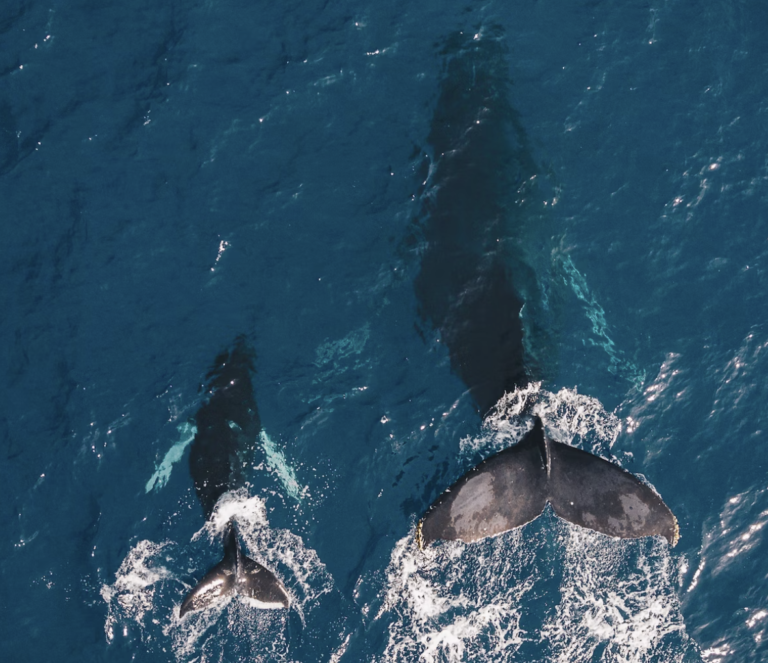
Orcas have been targeting and sinking boats off the coast of Spain, and scientists aren’t quite sure why.
Orcas (Orcinus orca) otherwise known as killer whales have sunk three boats off the Iberian coast of Europe in the last few years, and this naughty behavior towards humans and their watercraft seems to be spreading. It’s as though one mad orca is teaching the others how to revenge role-play.
Biologists first noted the trend happening in 2020 and back then they suspected it to be a defensive behavior, which started with a female orca nicknamed White Gladis after she experienced an unknown trauma. She may have been trapped in a fishing net or hit by a boat.
Iberian orcas are critically endangered, and only 39 were recorded in the last census, in 2011.
On May 25, orcas severely damaged a sailing boat off the coast of Spain, according to local maritime rescue service said on Thursday, adding to the list of dozens of orca attacks on vessels recorded so far this year on Spanish and Portuguese coasts.
In the recent attack a group of orcas broke the rudder and pierced through the hull of a sailing boat on its way to Gibraltar. The crew of four contacted Spanish authorities for help, a spokesman for the maritime rescue service said.
Is the mother teaching her calves?
“There were two smaller and one larger orca,” skipper Werner Schaufelberger told the German publication Yacht. “The little ones shook the rudder at the back while the big one repeatedly backed up and rammed the ship with full force from the side.”
In 2022, there were 207 reports of orca attacks, with 20 reports in the month of May this year alone.
Scientists speculate that a traumatized orca started assaulting boats after a “critical moment of agony” and that this behavior is being taught to other orcas among the population through social learning. In fewer words: orcas are teaching “it’s payback time.”
After 500 attacks starting in 2020 there have been 3 sunken ships.
“The reports of interactions have been continuous since 2020 in places where orcas are found, either in Galicia or in the Strait,” says orca researcher Alfredo López Fernandez, a biologist at the University of Aveiro in Portugal and a representative of the Atlantic Orca Working Group.
“The orcas are doing this on purpose, of course, we don’t know the origin or the motivation, but defensive behavior based on trauma, as the origin of all this, gains more strength for us every day,” López Fernandez, who authored a paper about the behavior, said.
“We do not interpret that the orcas are teaching the young, although the behavior has spread to the young vertically, simply by imitation, and later horizontally among them,” he added, noted that this can be a “fad” behavior that may just pass in time.
China is using satellites to protect nature. But why so secretive? Donghu Lake, Wuhun, China
China is one of the first countries to use satellite monitoring to protect nature-conservation areas from illegal developments, such as mining and construction, offers a new report in Nature. China, which has deployed spy balloons over parts of North America, has also added a fleet of 30 satellites to keep a watchful eye on 3 million square kilometres of land and 150,000 square kilometres of sea, doubling the area that is legally protected in China. The International Union for Conservation of Nature (IUCN) counts China as the third most-biodiverse country in the world.
Scientists in essence hope that China will provide a model for remote sensing for conservation purposes. However, environmental scientists are frustrated owing to the lack of transparency about where the boundaries of protected zones lie.
Without any public record, the opposite of what NASA offers, “there’s a possibility that the local governments might be able to shift their redlines to accommodate future [development] needs,” says conservation biologist Fangyuan Hua in a Nature report.
The worry with China is that the country is veiled about how it uses its data to control its people and exploit planetary resources without any consequence.
Oleato coffee is a new coffee made with olive oil. Find it now in Saudi Arabia.
The Middle East has its own specific coffee culture and methods for brewing Turkish black coffee in a finjan. Taking your time, great hospitality and a sprinkle of cardamon is part of the story, and with everything in the Middle East, every good recipe includes a dash of love. A new intersection of two essential ingredients, a staple for food (as oil and fruit) and a much-loved drink have come together at Starbucks in the United States and now in the Middle East. The latest marriage? Coffee with olive oil. This follows on the heels of a global trend that made a spoon of butter in your coffee a regular thing. And olives (there are over 100 varieties around the world) are a staple of the Mediterranean Diet.
If you grew up with a British parent, dipping buttered toast in tea gave you a primer for butter in coffee or olive oil in coffee. Now Middle Easterners are starting to enjoy the newest coffee beverage – a coffee infused with extra virgin olive oil. The new ‘Oleato’ line is available at Starbucks in Italy, and is now found in new locations in Saudi Arabia.
The CEO of Starbucks, Howard Schultz, was inspired to being great coffee to America after visiting Milan in the 80s. A shot of espresso, consumed at a counter in a cafe (not as take-away) is a part of the Italian tradition. Milan inspired Schultz to bring the Italian coffee experience to Starbucks starting in the US, and which today has 36,000 outlets globally.
Now Starbucks, vying for coffee lovers attention, and an experience easily replicated at home with consumer-focused espresso machines, is looking for new markets. Olive oil is the latest offering.
“Today I feel just as inspired as I did 40 years ago, Oleato has opened our eyes to fresh new possibilities and a transformational way to enjoy our daily coffee,” Schultz said. “Oleato represents the next revolution in coffee that brings together an alchemy of nature’s finest ingredients – Starbucks arabica coffee beans and Partanna cold pressed extra virgin olive oil.”
Adding oil to coffee isn’t new. It’s known that fat reduces the acidity and bitterness of coffee. Non-dairy creamers, a product that many people are already used to, is usually made from vegetable oil. People have been adding butter, coconut oil and MCT oil (medium-chain triglycerides) to coffee for over 10 years for a “bulletproof” coffee that keeps you satiated until lunch. Skipping breakfast is a Mediterranean thing.
You can find a Starbucks and try the olive oil blend or make your own olive oil coffee at home.
How to make your own olive oil cappuccino
Ingredients:
6ox of strong coffee, brewed in a pour-over, or espresso machine
1.5 teaspoons of extra virgin olive oil
Add coffee and olive oil to a blender, preferably a powerful blender like a Vitamix. You want to emulsify the oil and coffee together. Blend until a bit frothy but watch out not to burn yourself. You can add sweetener if you need it. We prefer coconut sugar which is better for your body.
And if you want to just brew the old-fashioned way, we’ve put together a how-to brew with a finjan. Serve in small cups.













 Mr. Panos from Nikoli village at Lefkada Island in the Ionian Sea of Greece. Meet some locals when you travel sustainably.