
Design

Villa Minima #3 looks like a caterpillar on a rocky landscape in Turkey

There's something so compelling about this minimalistic villa shanghaied on the edge of a rocky Mediterranean landscape. One of five small villas conceptualized for varying landscapes by...

Cliche Arab references in Libyan bank design by Henning Larsen Architects

We don't mean to pick on any one firm here, but a string of repetitive competition proposals has culminated most recently in the Central Bank of Libya...

Toilet of the future? Holy crap, it’s here!

The 2012 winners of a competition with a cringe-inducing name teamed up with a powerhouse plumbing manufacturer to design a self-contained restroom that could be...

Tiny trash homes create humanity with salvaged waste

Artist Gregory Kloehn veered off course from a career creating large-scale sculptures, focusing his talents on making tiny buildings from garbage. He erects one-room houses...

Jameel prizewinner reinvents the iconic Middle Eastern rug

Green Prophet's brought you the story behind this year's winner of the Jameel Prize - 3, an international award for contemporary design inspired by...

3-D print your makeup for a gorgeous carbon footprint!

The $55 billion beauty industry may have been dealt a fatal blow by a brainy Harvard Business School beauty! Inventor Grace Choi has come up...

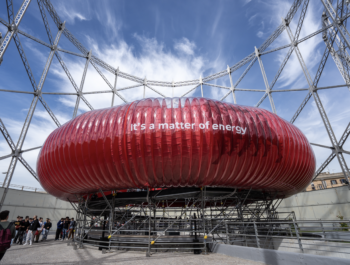
IRIS sea pods make energy and a social statement in Beirut

Remember the old days in Beirut when you could actually see the Mediterranean Sea? The crew over at Najjar & Najjar Architects remember, and...

Tires upcycled as Arabian stools

Rubber tires are pure nastiness, especially when they're no longer useful for cars. They languish in landfills, provide habitat for mosquitoes and rats, and often cause...

Ancient Egyptian secret cracked : how they moved massive stones through desert sand

It's one of the world's biggest mysteries: how did the ancient Egyptians transport massive stones across the desert to create the pyramids?  Scientist from...

Wow-alicious green gifts upcycled by Ex Libris Anonymous

Jacob Deatherage founded a clever company that saved my skin many times over a decade of holidays - letting me serve up clever gifts...

Desypher dispels stereotypes with exquisite Islamic Museum of Australia

Blogging makes a writer vulnerable to hyperbole - anything to capture a corner of the internet. But it's not hyperbole to say that Desypher's architectural expression vis-à-vis...

Trump Gadde: embracing the shipping container in Istanbul

GAD Architects stacked a series of recycled shipping containers on top of a fancy shopping mall in Istanbul to create this remarkable modern day...

Iran’s Hossein Zare captures our wildest dreams in surreal photographs

Iranian photographer Hossein Zare captures in photography what we can only see in our dreams - otherworldly land and cityscapes infused with an sense of eternal...

Saharan refugees learn how to spin old plastic bottles into gold

London’s Victoria & Albert Museum just wrapped a stunning show of Arab-influenced artwork from ten contemporary artists selected as finalists for year’s Jameel Prize...

An urban park that embraces its desert environment

How many times have you seen a big old patch of lawn in the middle of Abu Dhabi and cringed?  Lush green grass does not...

Hot this week

How Torvinen Jaakko’s ugly wood can lay the foundations for green building

Canada's forests generate billions of dollars in economic value each year, yet vast amounts of irregular timber are downgraded to wood chips or biomass. A collaboration between researchers at Carleton University and Aalto University is challenging that model, demonstrating how "ugly wood" can be transformed into high-value architecture while reducing waste and storing more carbon in buildings.

A Face Swap Tool for Training and Internal Comms

Corporate training videos often require repeated filming, travel, and production resources every time policies or personnel change. AI-powered face swap tools offer a more sustainable approach by extending the life of digital training content, reducing unnecessary reshoots, and helping organizations communicate more efficiently—provided they are used transparently with clear consent and ethical governance.

How a tick bite can lead to a life-threatening meat allergy AFG

Imagine developing a severe allergy to steak after a single tick bite. That's the reality for people with alpha-gal syndrome, a rapidly emerging condition linked to lone star ticks and other tick species. As researchers uncover how tick saliva rewires the immune system, health officials warn that hundreds of thousands of Americans may already be living with this unusual red meat allergy.

Russia’s Arctic superdeep oil drill revives debunked ‘infinite oil’ theory

Russia is reviving the controversial abiotic oil theory with plans to drill superdeep holes in the Arctic. While small amounts of abiotic methane exist deep within the Earth, most geologists reject the idea that commercial oil reserves originate from non-biological processes, raising questions about the environmental cost and scientific value of the project.

Code Red from the Galapagos: human drugs and sunscreen are polluting the sea

Millions of visitors swim in the pristine waters of the Galápagos each year, but new research suggests sunscreen chemicals and other human-made pollutants are reaching even the islands' most protected marine habitats. Scientists are calling for urgent monitoring to safeguard one of Earth's most iconic ecosystems.

Topics

How Torvinen Jaakko’s ugly wood can lay the foundations for green building

Canada's forests generate billions of dollars in economic value each year, yet vast amounts of irregular timber are downgraded to wood chips or biomass. A collaboration between researchers at Carleton University and Aalto University is challenging that model, demonstrating how "ugly wood" can be transformed into high-value architecture while reducing waste and storing more carbon in buildings.

A Face Swap Tool for Training and Internal Comms

Corporate training videos often require repeated filming, travel, and production resources every time policies or personnel change. AI-powered face swap tools offer a more sustainable approach by extending the life of digital training content, reducing unnecessary reshoots, and helping organizations communicate more efficiently—provided they are used transparently with clear consent and ethical governance.

How a tick bite can lead to a life-threatening meat allergy AFG

Imagine developing a severe allergy to steak after a single tick bite. That's the reality for people with alpha-gal syndrome, a rapidly emerging condition linked to lone star ticks and other tick species. As researchers uncover how tick saliva rewires the immune system, health officials warn that hundreds of thousands of Americans may already be living with this unusual red meat allergy.

Russia’s Arctic superdeep oil drill revives debunked ‘infinite oil’ theory

Russia is reviving the controversial abiotic oil theory with plans to drill superdeep holes in the Arctic. While small amounts of abiotic methane exist deep within the Earth, most geologists reject the idea that commercial oil reserves originate from non-biological processes, raising questions about the environmental cost and scientific value of the project.

Code Red from the Galapagos: human drugs and sunscreen are polluting the sea

Millions of visitors swim in the pristine waters of the Galápagos each year, but new research suggests sunscreen chemicals and other human-made pollutants are reaching even the islands' most protected marine habitats. Scientists are calling for urgent monitoring to safeguard one of Earth's most iconic ecosystems.

AI will crack the codes from the Dead Sea Scrolls

Artificial intelligence is opening a new chapter in Dead Sea Scrolls research. By combining machine learning with chemical analysis, scientists hope to uncover where the ancient manuscripts were produced, identify connections between scribes, and reveal hidden patterns across more than 25,000 fragments that have remained unsolved for decades.

90% of Americans worry about microplastics

Microplastics are showing up everywhere—from dollar store toys and synthetic clothing to bottled water, toothbrushes and even human sperm. A new Ocean Conservancy survey finds that nearly 9 in 10 Americans are concerned about the health impacts of microplastics, while support is growing for tougher regulations. As scientists uncover plastic particles in the heart, placenta and reproductive organs, the question is no longer whether microplastics are affecting our lives, but how much damage they are already doing.

Understanding Food Production: Karl Studer on the Urban-Rural Knowledge Gap

Karl Studer occupies an unusual position in American business. As President of Quanta Services, he oversees electrical infrastructure operations across the United States, Canada, and Australia, managing thousands of employees and multibillion-dollar projects.
spot_img

Related Articles