


Oman is returning to the Venice Biennale with Zīnah, an immersive installation by artist and curator Haitham Al Busafi that transforms a traditional form of horse adornment into a large-scale sensory experience.
Rooted in the Omani practice of Al-zaanah, where both horse and rider are equally adorned as a sign of mutual respect, the work reimagines this Middle East tradition as something visitors can physically enter.

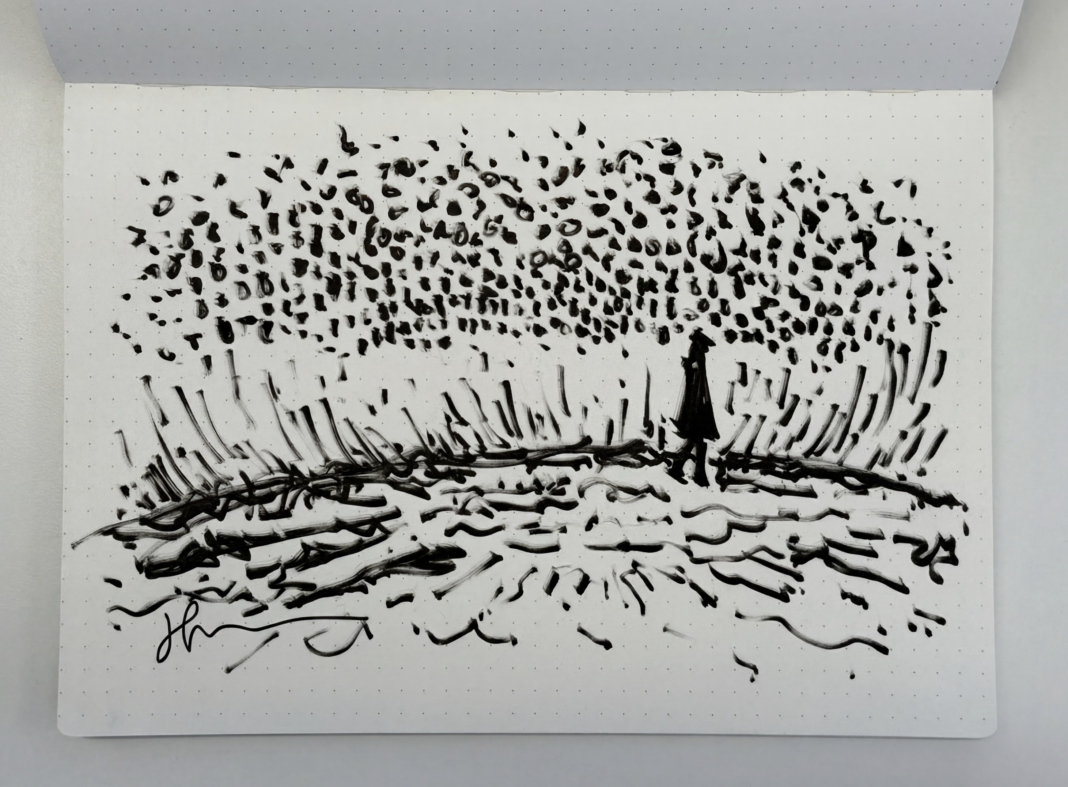
Instead of viewing objects on display, people walk across a sand-covered space beneath suspended silver forms that move and produce sound in response to their steps. A sketch of the installation is provided above.
The result is a shifting environment where each visitor becomes part of the artwork. Movement creates sound. Paths form in the sand and over time, the installation evolves through collective participation rather than remaining fixed.
The piece was also shaped through community involvement in Oman, where artists and members of the public contributed markings to the silver elements. This idea of shared authorship continues in Venice, as each visitor leaves a trace through movement and interaction.

At its core, Zīnah is about rethinking value, extending ideas of beauty, care, and recognition beyond humans to include animals and the environment. It aligns with broader themes at the Biennale calling for more sensory, reflective forms of art rather than spectacle, says the artist.
Presented at the Arsenale in Venice from May to November 2026, the installation marks Oman’s continued effort to bring its cultural knowledge into global conversations.
About Haitham Al Busafi
Haitham Al Busafi (b. 1985, Muscat, Oman) is an interdisciplinary artist, architect, and curator whose practice operates at the intersection of architecture, art, and technology. Educated at the University of Applied Arts Vienna (dieAngewandte), his work foregrounds immersive environments, and the translation of cultural narrative into spatial experience.
Zīnah extends his ongoing investigation into how heritage knowledge can be activated through contemporary immersive form, moving from the participatory frameworks of Memory Grid into a fully kinetic and sonic environment.


