
When the region settles after the American war with Iran, and it will, American and European travelers will come back. Not just for spectacle or headline projects, but for places that feel real. Places that haven’t been engineered to impress and which get into your soul.
We predict that visitors to Saudi Arabia will want to see places like Rijal Alma.
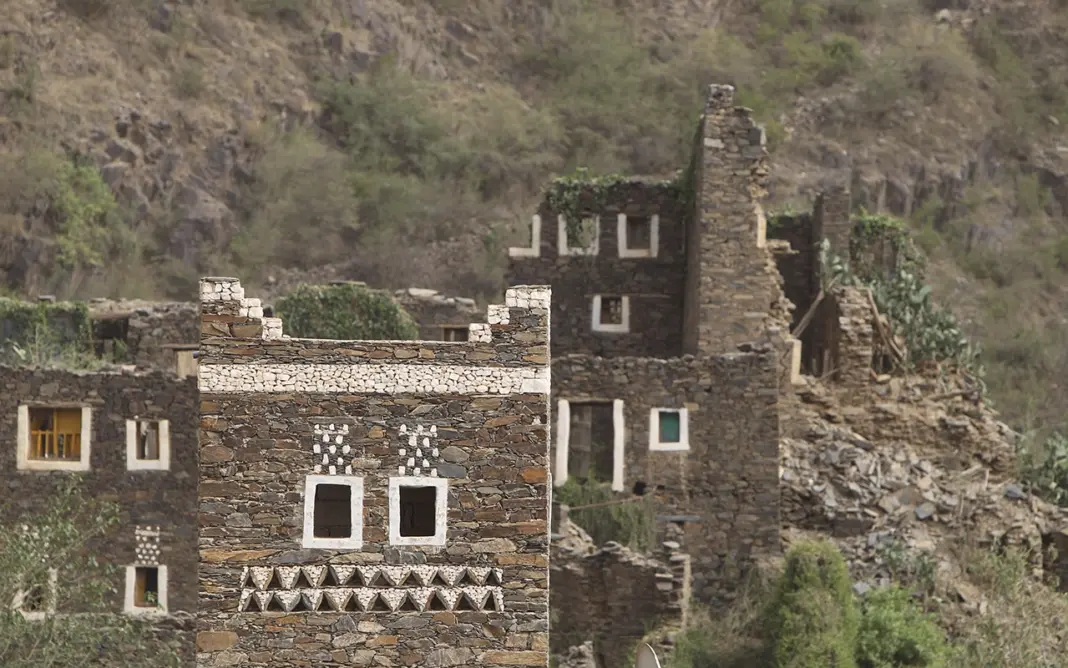
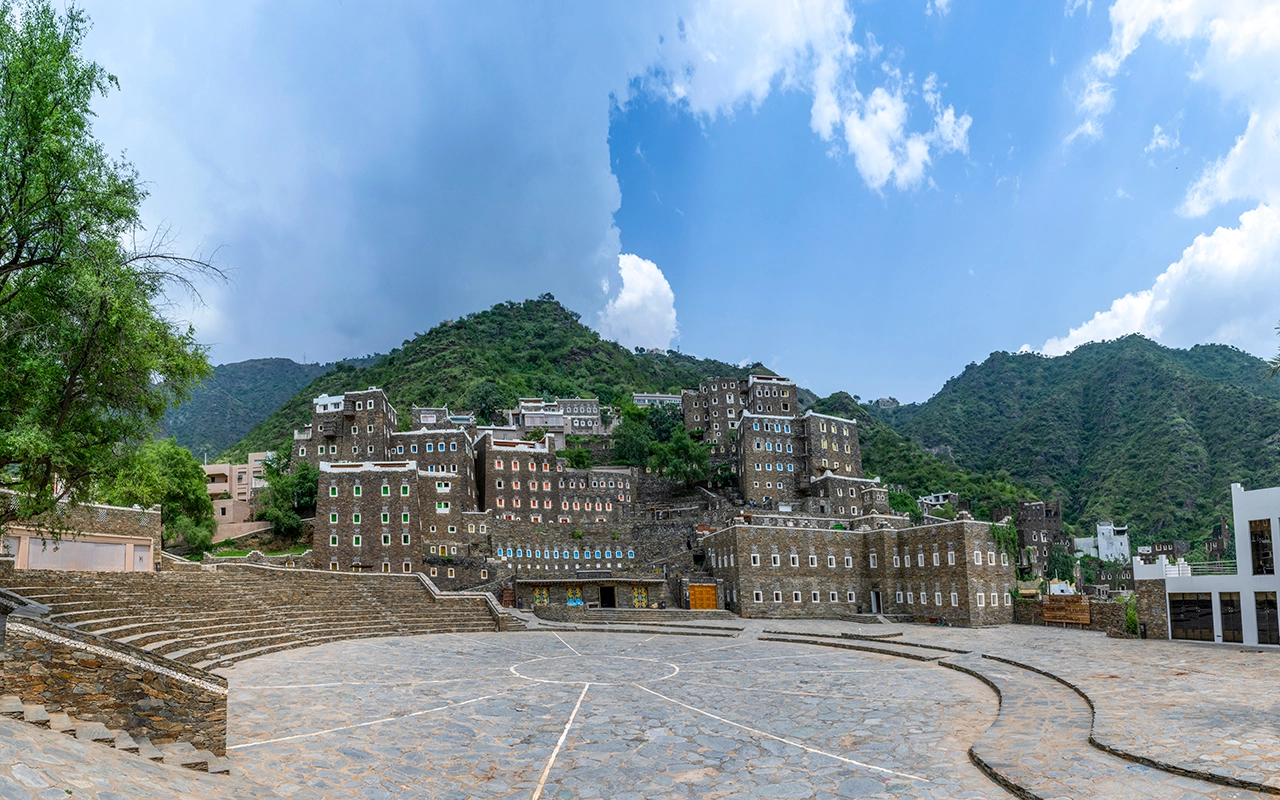
About 28 miles west of Abha, in the mountains of Saudi Arabia’s Asir region, Rijal Alma sits along steep slopes that fall toward the Red Sea. The village is known for its tall, narrow houses, some rising six stories—built from stone, mud, and wood. They’ve been standing for generations, holding their shape in heat, wind, and time.
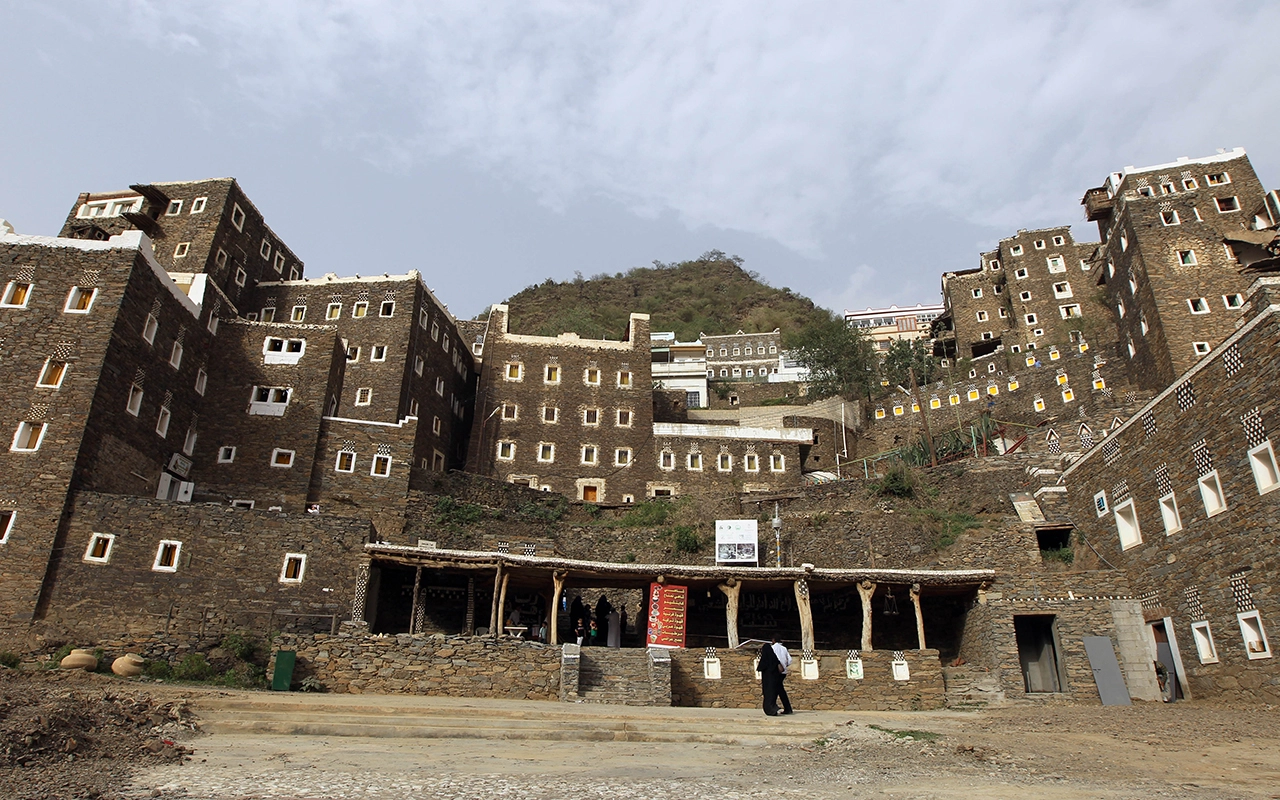
This is vernacular architecture in its pure form. Long before eco, regenerative and sustainability became buzzwords, builders here figured out how to work with the climate. Thick earthen walls absorb heat during the day and release it at night. Small windows limited direct sun and gave privacy which is what Muslim families expect. The stacked design helps air move through the structure. Nothing is decorative for the sake of it. Everything has a purpose.
Saudi Arabia today is pushing forward with massive projects which have either failed or been postponed, like NEOM, Trojena, Shebara—designed to redefine how people live in extreme environments. They’re bold, expensive, and built to draw attention. But they also raise a question. Is oil money only buying the new and fantastic? As the world weans itself on oil, Saudi Arabia and its family owned oil company Saudi Aramco, will return to humble roots like the House of Saud, a ruling family that once lived in a mud palace.

Rijal Alma shows a different approach to building. The materials are local and the scale is human.
Under the House of Saud, there’s been more interest in restoring historic sites like this one. That’s a start. But preservation alone isn’t enough. The real shift would be using these ideas again, not as decoration, but as a base for new construction.

In a hotter world, that kind of thinking matters. Buildings that cool themselves. Materials that don’t rely on long supply chains. Designs that last.

When travel feels safe again, visitors from the US and Europe will likely make their way here. Not just to see something old, but to understand how people built before energy was cheap and space was unlimited. Walk through Rijal Alma and you notice it right away. The temperature drops in the shade. The walls feel solid. The streets are narrow for a reason. Nothing is random.
It’s not nostalgic. It’s practical. And we love that.