


It’s sea turtles which may in the end save islands in the Seychelles. They may also better help us understand climate change. Like rings on a tree, scientists have found a way to read sea turtle shells and how they are impacted by climate change tells a story.
Using radiocarbon methods from archaeology, researchers show that sea turtle shell plates are biological time capsules that record signs of major environmental disturbances in the ocean.
A new study published in the journal Marine Biology, shows that scutes, the hard plates that make up a turtle’s shell, grow continuously and preserve chemical signals that reflect environmental conditions over time. By analyzing these layers, scientists can determine where turtles have been foraging, what they were eating, and how marine environmental stress events affected them.
The research was led by Bethan Linscott, and Amy Wallace, in collaboration with researchers from the University of Florida.
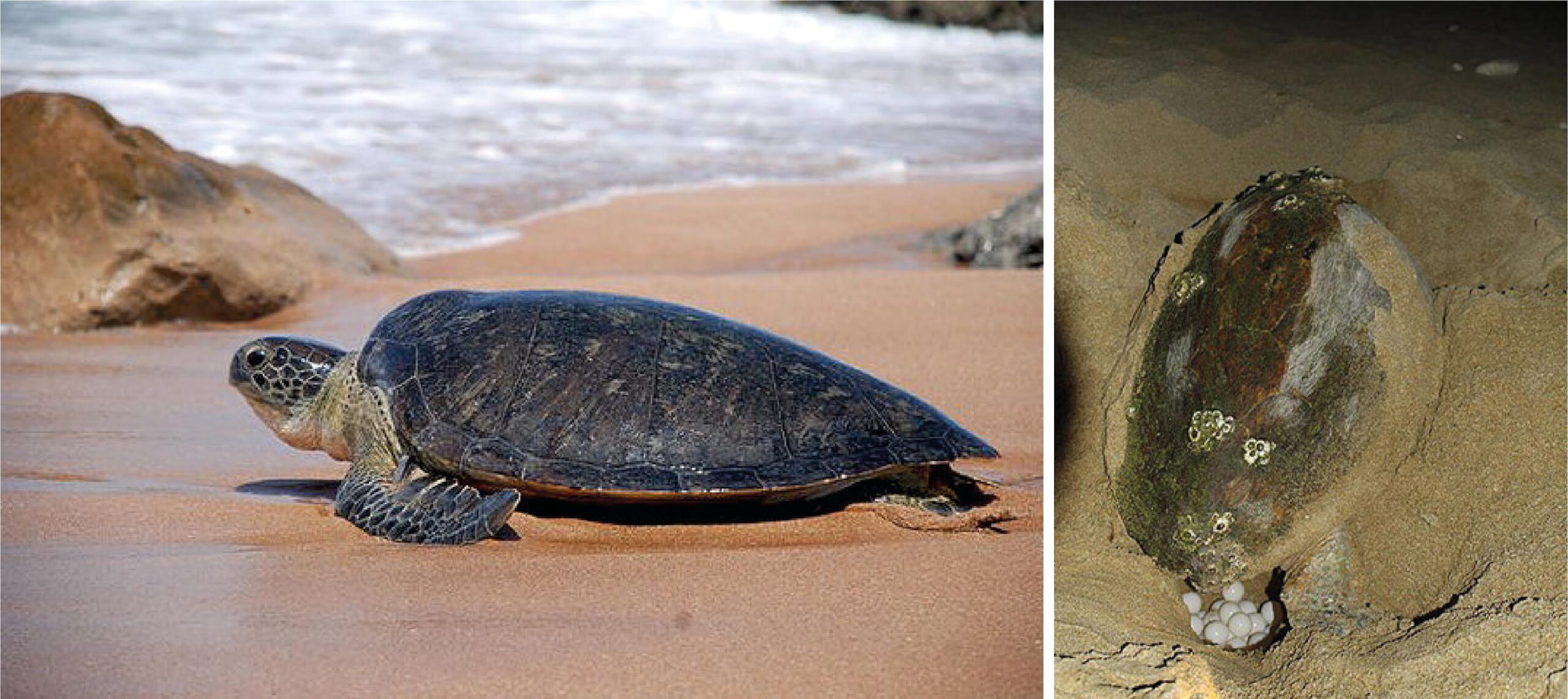
Sea turtle scutes are made of keratin—the same material found in human hair and nails. Keratin grows in successive layers that capture chemical information about a turtle’s diet and environment when the tissue forms. Scientists have long used stable isotope analysis of scutes to study turtle ecology, but the timescale represented by these layers has remained uncertain.

“Sea turtle shells grow continuously throughout their lives, and each layer preserves evidence of past environmental conditions,” said Linscott. “By analyzing these sequential layers, we can reconstruct foraging patterns, diet, and environmental changes over time.”
To determine how quickly the layers form, researchers analyzed shell samples from 24 stranded sea turtles—loggerheads (Caretta caretta) and green turtles (Chelonia mydas)—collected along the Florida coast between 2019 and 2022. The team removed small circular biopsies from the scutes and sliced them into ultra-thin sections approximately 50 microns thick.
Each layer was radiocarbon dated and compared with the mid-20th-century “bomb pulse,” a spike from nuclear weapons testing that serves as an environmental tracer in the marine environment.
The researchers then used Bayesian age-depth modeling, a statistical approach commonly used in archaeology to date sediment layers to estimate how quickly the shell tissue accumulated.
The results showed that scute growth rates vary among turtles, but on average each 50-micron layer represents about seven to nine months of growth.
By reconstructing these timelines, the scientists identified synchronized slowdowns in shell growth across multiple turtles. These slowdowns coincided with major environmental disturbances in Florida waters, including harmful algal blooms known as “red tides” and large Sargassum seaweed events.
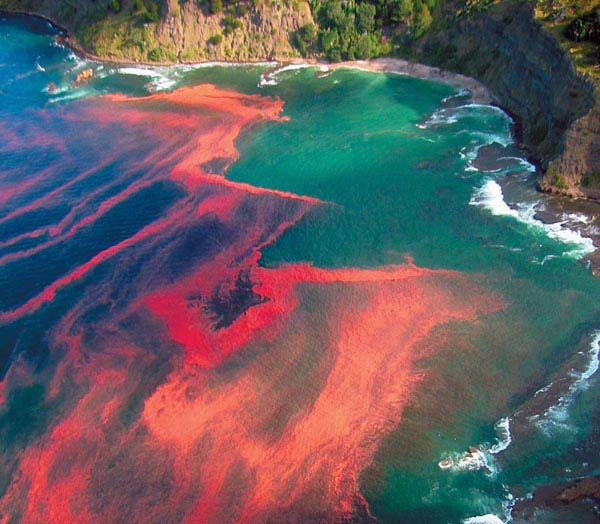
“These shells are effectively recording environmental stress in the ocean,” Linscott said. “It’s a bit like sea turtle forensics. We can use chemical fingerprints preserved in scutes to detect ecological shifts.”
Understanding where sea turtles forage, how their diets change, and how environmental stress affects their growth can help scientists better protect these threatened marine species. Because sea turtles are long-lived and spend much of their lives in the open ocean, directly observing their life histories is often difficult.
“Our findings can help scientists better understand how marine ecosystems are changing and how species respond to those changes.”
