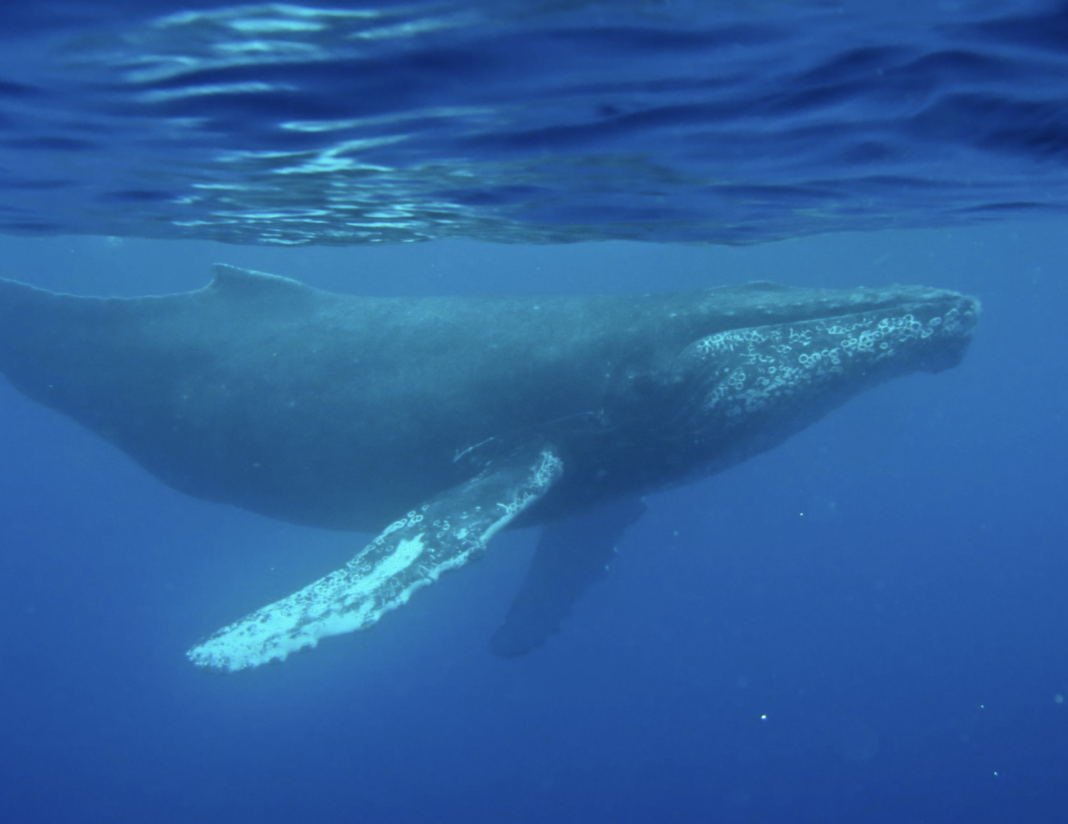
First ever recorded humpback whale recording found from 1949

Some moments define an era: the Moon landing, 9/11. For the natural world, a new milestone has surfaced from the ocean’s past, the oldest known recording of a humpback whale. Listen to the historic recoding played over a modern video of whales, above.

Scientists at Woods Hole Oceanographic Institution (WHOI), one of the world’s leading marine research centers, have uncovered a recording captured on March 7, 1949, near Bermuda.

The sound was preserved on a fragile but remarkably intact audograph disc found in the institute’s archives. At the time, researchers aboard the research vessel Atlantis were testing sonar systems, measuring explosive charges, and conducting acoustic experiments in collaboration with the US Office of Naval Research.
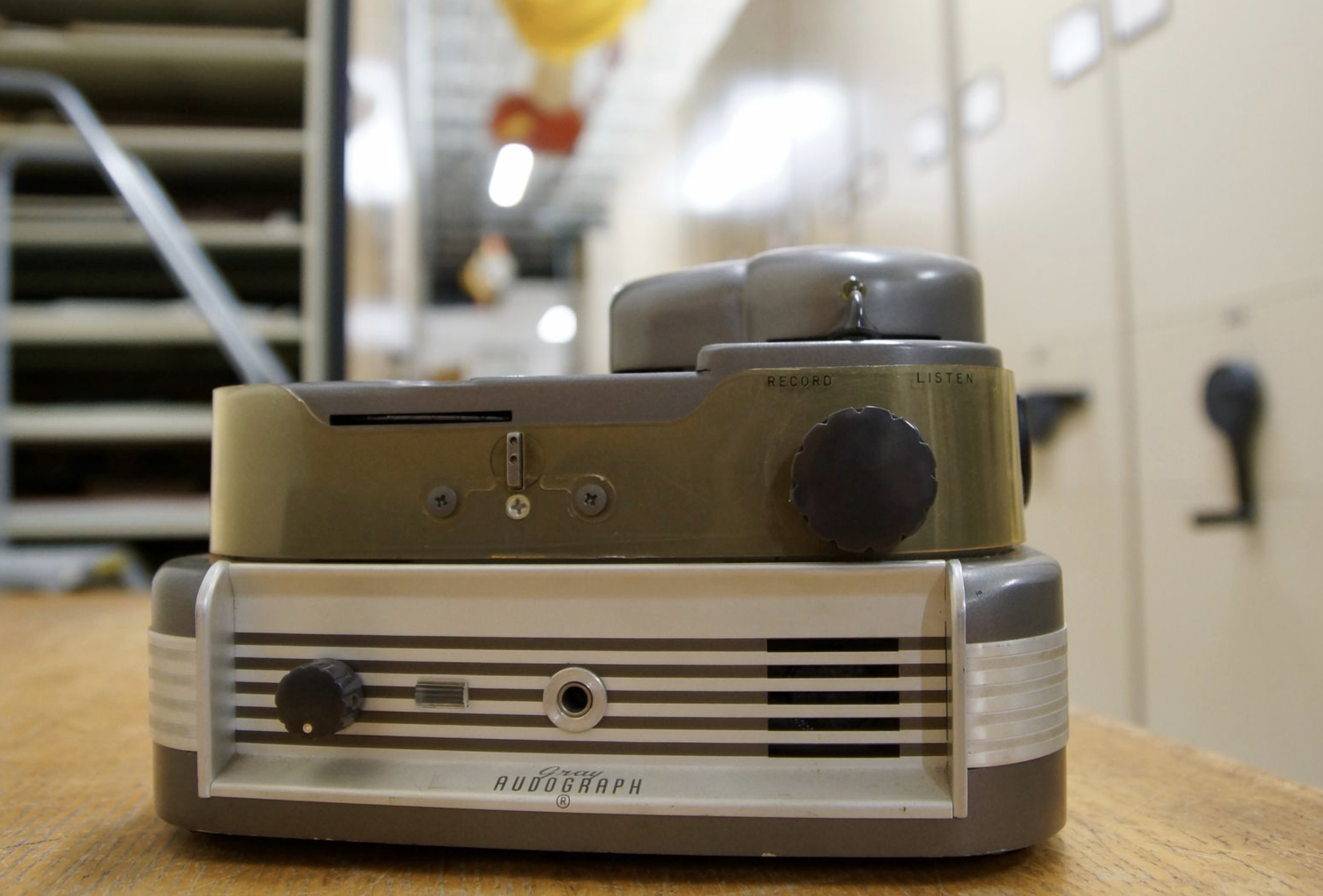
The machine used in the historic recording. Courtesy of Woods Hole.
The machine used in the historic recording of the humpback whale. Courtesy of Woods Hole.

Underwater recording technology was then in its infancy, and scientists still struggled to identify the sources of many ocean sounds.

Around that same period, WHOI scientist William Schevill and his wife Barbara Lawrence — a pioneering mammalogist — were laying the foundations of marine mammal bioacoustics. In 1949 they used a crude hydrophone and dictating machine to record beluga whales from a small boat in Canada’s Saguenay River, the first confirmed recording of wild marine mammals. Many recordings from the late 1940s were poorly preserved or lost, reflecting how early ocean acoustics research struggled with both technology and storage.

“Data from this time period simply don’t exist in most cases,” said Laela Sayigh, a marine bioacoustician and senior research specialist at WHOI. “The ocean is much louder now, with increases in both the number and types of sound sources. This recording can provide insight into how humpback whale sounds have changed over time, and serve as a baseline for measuring how human activity shapes the ocean soundscape.”

Today, WHOI scientists deploy passive acoustic buoys, Slocum gliders, and autonomous hydrophones to monitor ocean soundscapes at scale. These systems generate vast datasets used to study marine life, track ship noise and industrial impacts, and understand long-term environmental change.

The WHOI-led Robots4Whales program focuses specifically on protecting marine mammals using autonomous ocean robots equipped with the Digital Acoustic Monitoring Instrument (DMON). These systems detect whale calls in real time by tracking frequency changes in sound — producing “pitch tracks” from spectrograms that can be matched to known species libraries and transmitted ashore via satellite.

“Underwater sound recordings are a powerful tool for understanding and protecting vulnerable whale populations,” said marine bioacoustician Peter Tyack, emeritus research scholar at WHOI. “By listening to the ocean, we can detect whales where they cannot easily be seen. At the same time, these acoustic tools let us track how human activity — from shipping to industrial noise — alters the ocean soundscape and affects how whales communicate, navigate, and survive.”

Unlike most recordings from this era, which were lost as early media deteriorated, the audograph discs survived and appear to have been uniquely used for underwater sound — making them a rare, possibly singular example of early ocean listening preserved from the dawn of marine acoustics.


Karin Kloosterman
Karin Kloostermanhttp://www.greenprophet.com
Karin Kloosterman is an award-winning journalist, innovation strategist, and founder of Green Prophet, one of the Middle East’s pioneering sustainability platforms. She has ranked in the Top 10 of Verizon innovation competitions, participated in NASA-linked challenges, and spoken worldwide on climate, food security, and future resilience. With an IoT technology patent, features in Canada’s National Post, and leadership inside teams building next-generation agricultural and planetary systems — including Mars-farming concepts — Karin operates at the intersection of storytelling, science, and systems change. She doesn’t report on the future – she helps design it. Reach out directly to [email protected]

TRENDING

Rare whale species spotted for the first time

Beaked whales are among the least understood mammals on Earth. There are 24 known species, most of them rarely seen because they dive deeper and stay underwater longer than any other marine mammal. Many species have only been described from stranded carcasses, and new species continue to be identified, including one as recently as 2021.

We’ve reached the coral tipping point

“Preventing tipping points requires ‘frontloaded’ mitigation pathways that minimise peak global temperature, the duration of the overshoot period above 1.5°C, and the return time below 1.5°C. Sustainable carbon dioxide removal approaches need to be rapidly scaled up to achieve this.”

Is sea acidity a ticking time bomb?

“Ocean acidification isn’t just an environmental crisis —it’s a ticking time‑bomb for marine ecosystems and coastal economies.”

Meet Andreas Weil, the founder of Israel’s EcoOcean, protecting the seas for all

A feature article interviewing Israel's leading marine conservationist, Andreas Weil. He founded EcoOcean and has enabled hundreds of thousands of people to learn about the ecological aspects of marine conservation. He also brought the concept of Blue Flag beaches to Israel.

Washington bans marine aquaculture nets for farmed fish in world first

Washington State made history, becoming the first—and only—place in the world to successfully remove and permanently ban commercial net pen aquaculture.

Should You Invest in the Private Market?

startustartup Unlike public stock exchanges, which offer daily trading, strict...

How to build a 100-year-company

Kongō Gumi is a Japanese construction company, purportedly founded in 578 A.D., making it the world's oldest documented company. What can we learn about building sustainable businesses from them?

From Pilot Plant to Global Stage: How Aduro Clean Technologies’ 2026 Expansion Signals a Turning Point for Chemical Recycling Investors Like Yazan Al Homsi

The company's Next Generation Process (NGP) Pilot Plant in London, Ontario, has officially moved into initial operating campaigns, generating the kind of structured, repeatable data that separates laboratory promise from commercial viability.

How AI Helps SaaS Companies Reduce Repetitive Customer Support Work

SaaS products are designed for large numbers of users with different levels of experience, and also in renewable energy.

Pulling Water from the Air

Faced with water shortage in Amman, Laurie digs up...

Turning Your Energy Consultancy into an LLC: 4 Legal Steps for Founders in Texas

If you are starting a renewable energy business in Texas, learn how to start an LLC by the books.

Tracking the Impacts of a Hydroelectric Dam Along the Tigris River

For the next two months, I'll be taking a break from my usual Green Prophet posts to report on a transnational environmental issue: the Ilısu Dam currently under construction in Turkey, and the ways it will transform life along the Tigris River.

6 Payment Processors With the Fastest Onboarding for SMBs

Get your SMB up and running fast with these 6 payment processors. Compare the quickest onboarding options to start accepting customer payments without delay.

Related Articles

Popular Categories