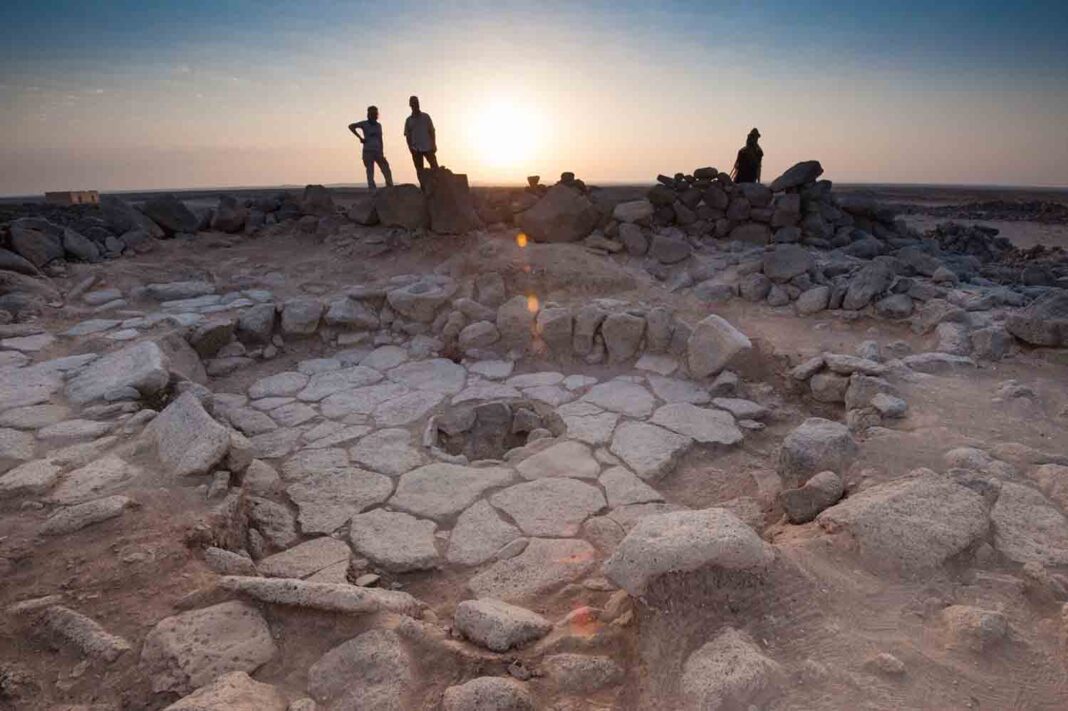

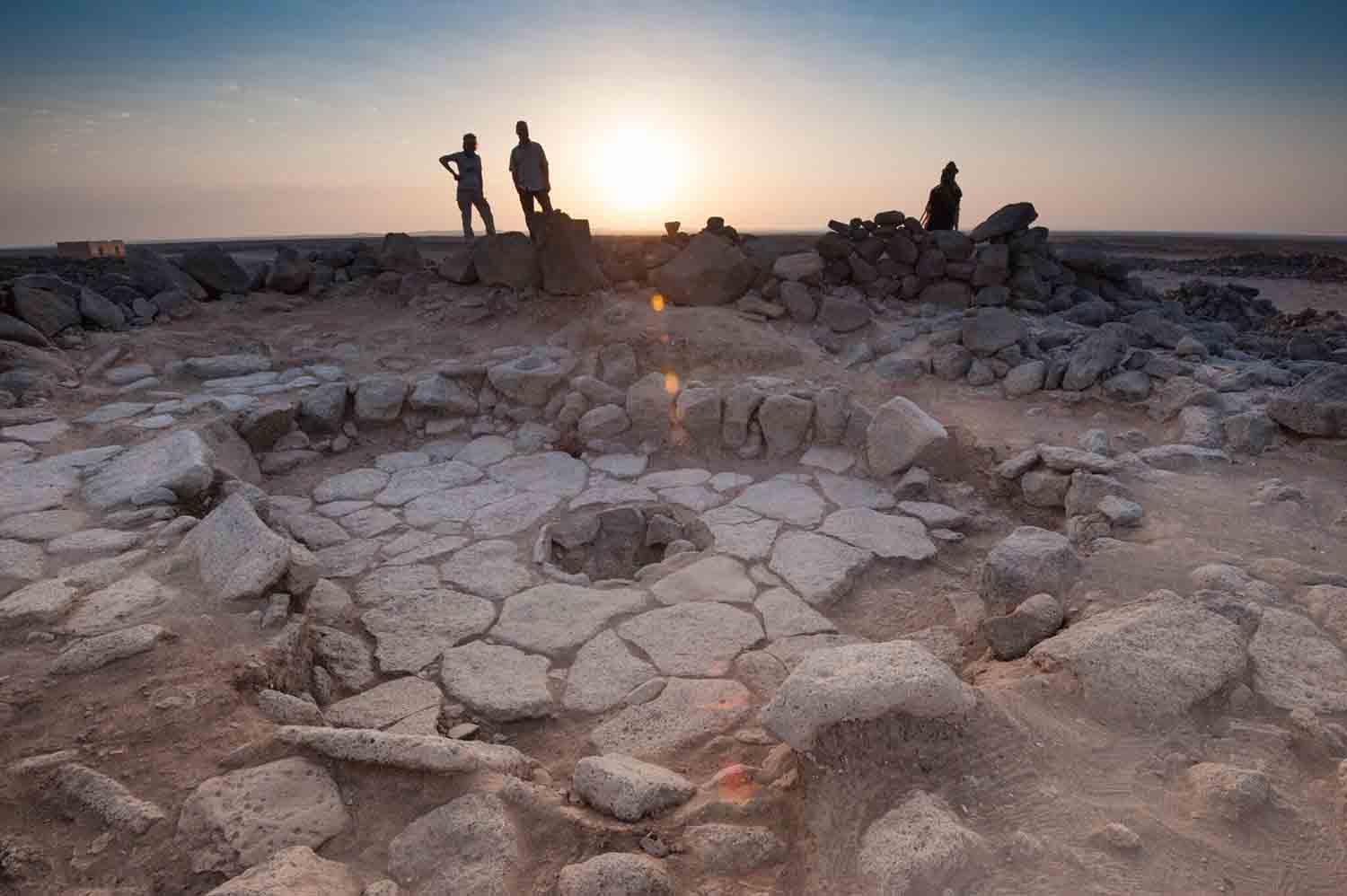
In the volcanic basalt expanse of the Harra’t al-Sham—known in English as the Black Desert of northeastern Jordan—lies the archaeological site of Shubayqa 1. This rugged lava field stretches from southern Syria across eastern Jordan into north-western Saudi Arabia, a stark landscape where early people experimented with fire, flour and stone. The Black Desert’s basalt flows, cinder cones and sparse steppe vegetation set the stage for one of the oldest culinary traces on Earth.
At Shubayqa 1, researchers led by University of Copenhagen archaeobotanist Amaia Arranz-Otaegui sampled two stone hearths dated to roughly 14,400 years ago and identified charred crumbs that are unmistakably bread-like. The research was published in 2018. But archeologists usually know years before a discovery is made public. And it takes many more years until the public is aware.
Microscopy from the site that looks at archeology of plants and food, shows ground and sieved wild cereals and tubers that were mixed into dough and baked as unleavened flatbreads—produced by hunter-gatherers thousands of years before agriculture began in the region. As Arranz-Otaegui put it, “We were very surprised to find bread made before the origins of agriculture.
“Our finds provide empirical data to demonstrate that the preparation and consumption of bread-like products predated the emergence of agriculture by at least 4,000 years.”
Modern agriculture is believed to have started in the Levante region of Israel, Jordan, Lebanon and Syria.
These breads were likely special-occasion foods, not daily staples.
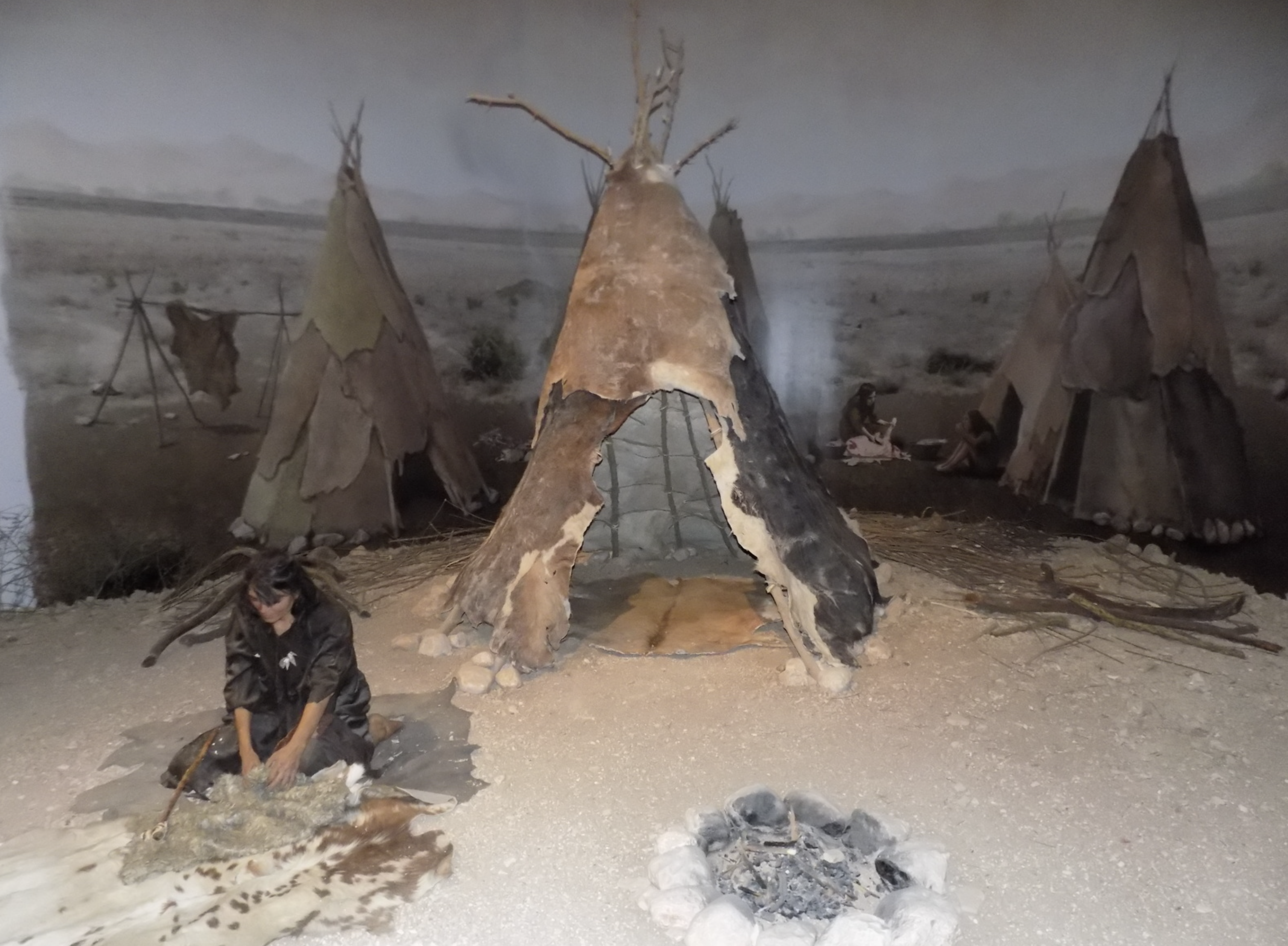
The makers of these ancient flatbreads belonged to what archaeologists call the Natufian culture, a late Epipalaeolithic tradition spread across the Levante. Natufian communities were semi-sedentary in places, like the Arabian Bedouin today found in the Middle East, and they used mortars and grinding stones, and stored foods—behaviors that foreshadowed the shift to farming.

The Shubayqa sequence shows the Natufian presence in eastern Jordan was just as early as in the Mediterranean woodlands, revising old assumptions about a single western “core.”
Fourteen thousand years ago there were no modern nation-states as we know them today. Archaeologists place Shubayqa 1 within the southern Levantine corridor, a biodiversity-rich bridge between Anatolia, Mesopotamia and the Mediterranean. In this context, it makes sense to speak of the “southern Levant” and the eastern Jordan steppe rather than formal ancient polities.
There are no written records for Natufian belief, but the culture left clear signs of symbolism: personal ornaments, intentional burials, and communal features that hint at ritual gatherings and feasting. Preparing a fine flatbread from wild plants—soaking, grinding, kneading and baking—was a careful, time-intensive act likely reserved for moments of significance. Food, in other words, was already a vehicle for ceremony and identity, according to Encyclopedia Brittanica.
Bread before farming—and beer too
Shubayqa 1 shows that bread-making preceded farming by roughly four millennia. A complementary discovery at Israel’s Raqefet Cave adds a second surprise: residues on Natufian stone mortars there show they were brewing a fermented cereal beverage at least 13,000 years ago, long before wheat and barley were domesticated.
Together, these finds suggest that our prehistoric ancestors were bakers and brewers well before they contemplated becoming farmers.
The Natufian hearths from Jordan’s Black Desert invite a reframing of food history. Bread and beer were not simply by-products of agriculture; the desire for these transformed foods may have helped drive cultivation itself. They also remind us that ingenious, place-based foodways—wild grains, tubers, local milling, communal baking—were born in arid lands and basalt fields. As climate stresses grow, that lesson in resilience and resourcefulness from the deep past feels timely.
Want to bake some ancient bread? Take a taste of this 5,000 year old bread from Turkey. Make your own Mesopotamian beer. Try Mersu, the world’s oldest sweet.