Saudi Arabia’s $650M bet on desalination

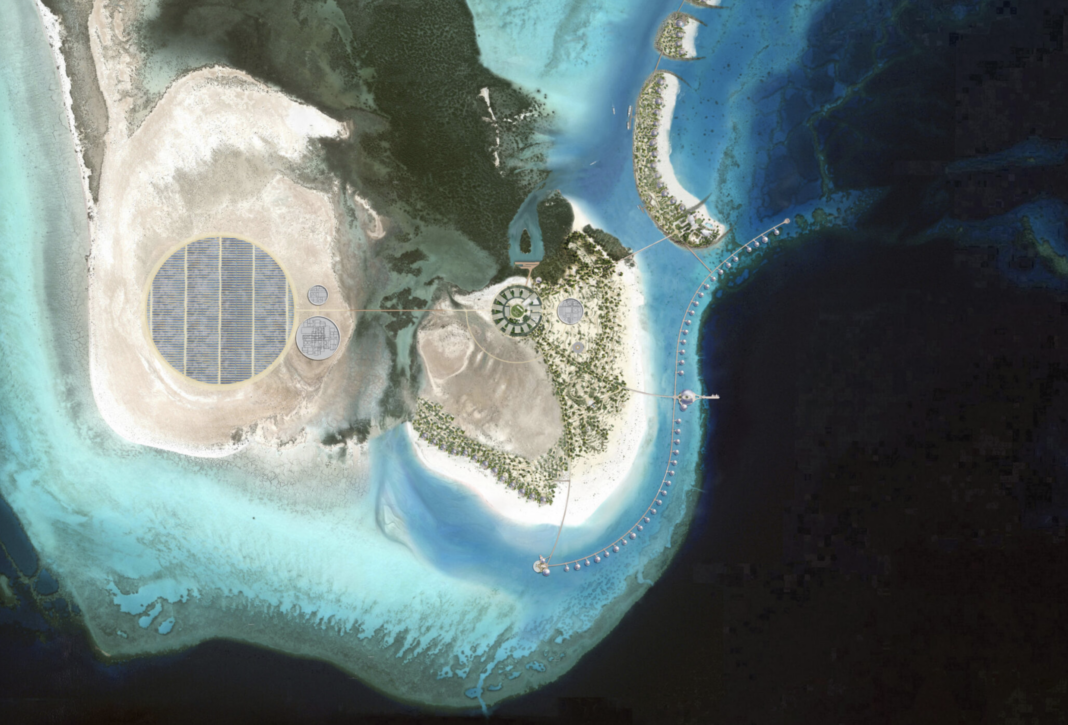
Desalination and power plant powered by the sun
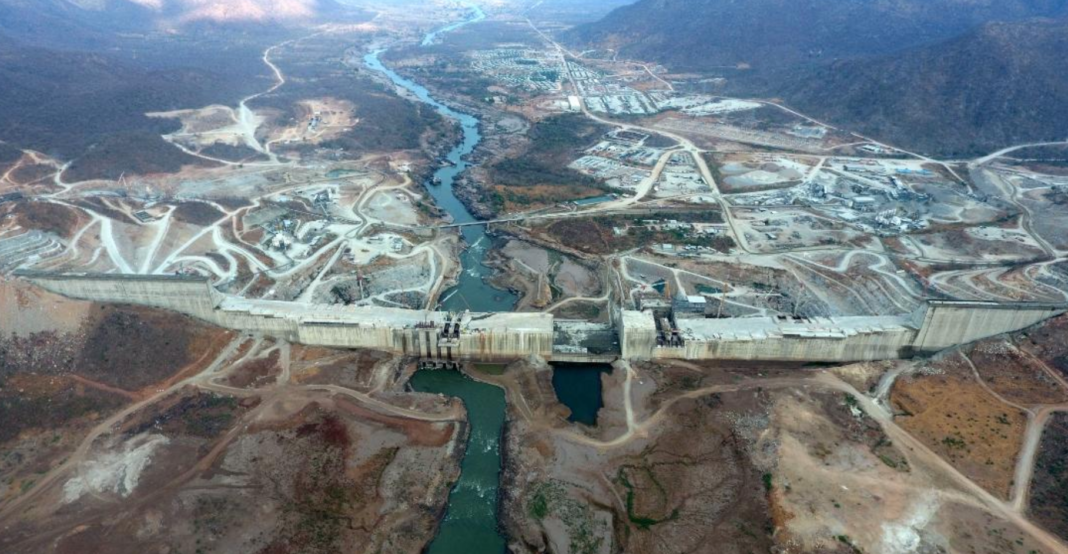
Desalination and power plant powered by the sun in the new ultra-luxury Shebara resort, Saudi Arabia

Saudi Arabia has inked a major financing deal to modernize desalination—again. The Saudi Water Authority (SWA) signed an agreement with the Asian Infrastructure Investment Bank (AIIB) and the Kingdom’s National Infrastructure Fund (Infra) to support upgrades at Jubail Phase I and Khobar Phase II, with total financing of USD 650 million. Signed on the sidelines of AIIB’s Annual Meeting in Beijing (June, 2025), the package will convert aging multi-stage flash (MSF) assets to reverse osmosis (RO)—the global standard for lower-energy, modular desalination.

According to the parties, AIIB will provide the lion’s share—over SAR 1.6 billion (~USD 450 million)—one of the bank’s largest non-sovereign corporate financings to date, while Infra contributes SAR 750 million (~USD 200 million) via a Murabaha facility. SWA executives say the modernization extends plant life by ~20 years, boosts output, and slashes energy intensity—key to Saudi’s climate and efficiency goals under Vision 2030.

Reverse osmosis uses membranes and pressure, not heat, to separate salts from seawater. It’s already the backbone of the world’s newest mega-plants, including Khobar Phase II, which has reached record daily production of ~671,000 m³. By replacing MSF trains with RO skids, operators can cut electricity demand and integrate solar and wind power more easily—vital in a grid pivoting toward renewables and green hydrogen.

But desalination isn’t a silver bullet. RO still concentrates salts and trace pollutants into brine, a disposal challenge for sensitive Red Sea reef ecosystems. Efficiency upgrades matter, yet so do smarter outfalls, brine-to-minerals recovery, and robust monitoring—especially along coastlines already under stress from microplastics and warming seas.

Don’t Forget Brackish Water

Saudi water isn’t only about the sea. The Kingdom also taps brackish inland aquifers—less salty than seawater—where RO can operate at a fraction of the energy and cost. With proper reuse and aquifer-recharge strategies, brackish desalination can relieve pressure on coastal plants and reduce the carbon footprint. The catch? Inland concentrate management. Without coastal dilution, brine needs evaporation ponds, deep-well injection, or recovery of valuable minerals to prevent soil and groundwater impacts.

Alongside hardware upgrades, Saudi utilities are embracing “smart water” analytics—pilots often grouped under initiatives like IRYIS—to track losses, predict failures, and squeeze more value from every cubic meter. Think AI-assisted pressure management, pipeline leak detection, and SCADA-integrated demand forecasting. In a country where urban resilience now hinges on real-time data, the software layer may deliver savings on par with plant retrofits.

Mark Tester, Ryan
IRYIS, formerly Red Sea Farms Founder Mark Tester

NEOM’s Big “Eco” Claim—And the Caveats

No Saudi water story is complete without NEOM, the high-profile giga-project selling a future of “100% renewable desalination,” circular brine chemistry, and hydrogen-powered industry. Ambition is welcome—Saudi needs moonshots to decouple water from oil. Yet branding vast coastal megaprojects as ecological projects raises tough questions about biodiversity impacts, embodied carbon, and social footprints along the Red Sea. But follow the money as plenty of Europeans are readying to greenwash NEOM for hard to ignore dividends.

If “green” is to be more than a marketing color, delivery must match the deck: renewables actually powering RO 24/7, brine managed as a resource not a waste, and transparent reporting on emissions and marine health.

The SWA–AIIB–Infra package signals a maturing water finance market. Blended capital, corporate structures, and performance-based upgrades can scale faster than sovereign megaprojects alone. As AIIB notes, “modernization” is climate adaptation—hardening critical supply while cutting energy per liter. If paired with demand-side efficiency, heritage water know-how, and water-smart urbanism, Saudi could pivot from crisis-driven builds to a resilient, circular water economy.

“This financing represents a significant step toward enhancing the water sector’s sustainability, increasing climate resilience, and improving the efficiency of national projects,” says Eng. Sharekh Al-Sharekh, SWA VP for Technical Affairs and Projects. AIIB calls it a commitment to “long-term water security” through modernization.

Desalination will remain a pillar of Saudi water security. The question is whether this new wave—RO retrofits, brackish efficiency, IRYIS-style analytics, and the grand NEOM promise—can turn “more water” into better water: lower-carbon, nature-literate, and honestly measured against the ecosystems it touches.

What to Watch Next in Saudi Arabia

  • How quickly MSF units are retired and RO capacity ramps without service gaps.
  • Proof that renewables—not oil and gas—are powering more of Saudi’s water.
  • More Saudis in the workforce managing stakes in their own resources
  • Transparent data on brine salinity, temperature, and outfall impacts in the Red Sea.
  • Scaling of wastewater reuse and agri-water efficiency to reduce desal demand growth.

Further reading on Green Prophet


Karin Kloosterman
Karin Kloostermanhttp://www.greenprophet.com
Karin Kloosterman is an award-winning journalist, innovation strategist, and founder of Green Prophet, one of the Middle East’s pioneering sustainability platforms. She has ranked in the Top 10 of Verizon innovation competitions, participated in NASA-linked challenges, and spoken worldwide on climate, food security, and future resilience. With an IoT technology patent, features in Canada’s National Post, and leadership inside teams building next-generation agricultural and planetary systems — including Mars-farming concepts — Karin operates at the intersection of storytelling, science, and systems change. She doesn’t report on the future – she helps design it. Reach out directly to [email protected]

LEAVE A REPLY

Please enter your comment!
Please enter your name here

TRENDING

Astro uses AI to help procure land for renewable energy

For oil-rich, environmentally vigilant Gulf states, Astro isn’t just another startup story. It is a blueprint for accelerating an energy transition that is now existential, not optional.

Leading Through a Dual-Energy Transition: Balancing Decarbonisation with Energy Security

Experience in one area of the energy industry isn't enough to guarantee readiness across all the others. That's where a structured program like an MBA in energy can come in. Today's advanced curricula explore energy economics, finance, policy, and strategic management alongside the technical subjects. And when pursuing an energy MBA online, professionals can skill up and retrain without having to step out of the labor market -- an important perk at a time when skilled professionals are already in short supply.

From Green Energy to Healthy Societies: Why old systems thinking is becoming relevant again

Across the Middle East and North Africa, large investments are being made in green hydrogen, renewable energy, water infrastructure and sustainability. Most of these efforts are discussed in the context of climate change, decarbonization and economic diversification. That framing is important, but it may not capture their full value.

Huge Fish Nursery Discovered Under Freezing Arctic Seas

In 2019, an underwater robot camera exploring the seabed...

Remilk makes cloned milk so cows don’t need to suffer and it’s hormone-free

This week, Israel’s precision-fermentation milk from Remilk is finally appearing on supermarket shelves. Staff members have been posting photos in Hebrew, smiling, tasting, and clearly enjoying the moment — not because it’s science fiction, but because it tastes like the real thing.

Qatar’s climate hypocrisy rides the London Underground

Qatar remains a master of doublethink—burning gas by the megaton while selling “sustainability” to a world desperate for clean air. Wake up from your slumber people.

How Quality of Hire Shapes Modern Recruitment

A 2024 survey by Deloitte found that 76% of talent leaders now consider long-term retention and workforce contribution among their most important hiring success metrics—far surpassing time-to-fill or cost-per-hire. As the expectations for new hires deepen, companies must also confront the inherent challenges in redefining and accurately measuring hiring quality.

8 Team-Building Exercises to Start the Week Off 

Team building to change the world! The best renewable energy companies are ones that function.

Thank you, LinkedIn — and what your Jobs on the Rise report means for sustainable careers

While “green jobs” aren’t always labeled as such, many of the fastest-growing roles are directly enabling the energy transition, climate resilience, and lower-carbon systems: Number one on their list is Artificial Intelligence engineers. But what does that mean? Vibe coding Claude? 

Somali pirates steal oil tankers

The pirates often stage their heists out of Somalia, a lawless country, with a weak central government that is grappling with a violent Islamist insurgency. Using speedboats that swarm the targets, the machine-gun-toting pirates take control of merchant ships and then hold the vessels, crew and cargo for ransom.

Leopoldo Alejandro Betancourt López Turned Ocean Plastic Into Profitable Sunglasses

Few fashion accessories carry the environmental burden of sunglasses. Most frames are constructed from petroleum-based plastics and acrylic polymers that linger in landfills for centuries, shedding microplastics into soil and waterways long after they've been discarded. Leopoldo Alejandro Betancourt López, president of the Spanish eyewear brand Hawkers, saw this problem differently than most industry executives.

Why Dr. Tony Jacob Sees Texas Business Egos as Warning Signs

Everything's bigger in Texas. Except business egos.  Dr. Tony Jacob figured...

Israel and America Sign Renewable Energy Cooperation Deal

Other announcements made at the conference include the Timna Renewable Energy Park, which will be a center for R&D, and the AORA Solar Thermal Module at Kibbutz Samar, the world's first commercial hybrid solar gas-turbine power plant that is already nearing completion. Solel Solar Systems announced it was beginning construction of a 50 MW solar field in Lebrija, Spain, and Brightsource Energy made a pre-conference announcement that it had inked the world's largest solar deal to date with Southern California Edison (SCE).

Related Articles

Popular Categories