Stella McCartney’s Cinnamon-Scented Compostable Sneakers Could Be the Future of Fashion

Cinnamon shoes
Cinnamon shoes

You can now smell the future of fashion—and it smells like cinnamon.

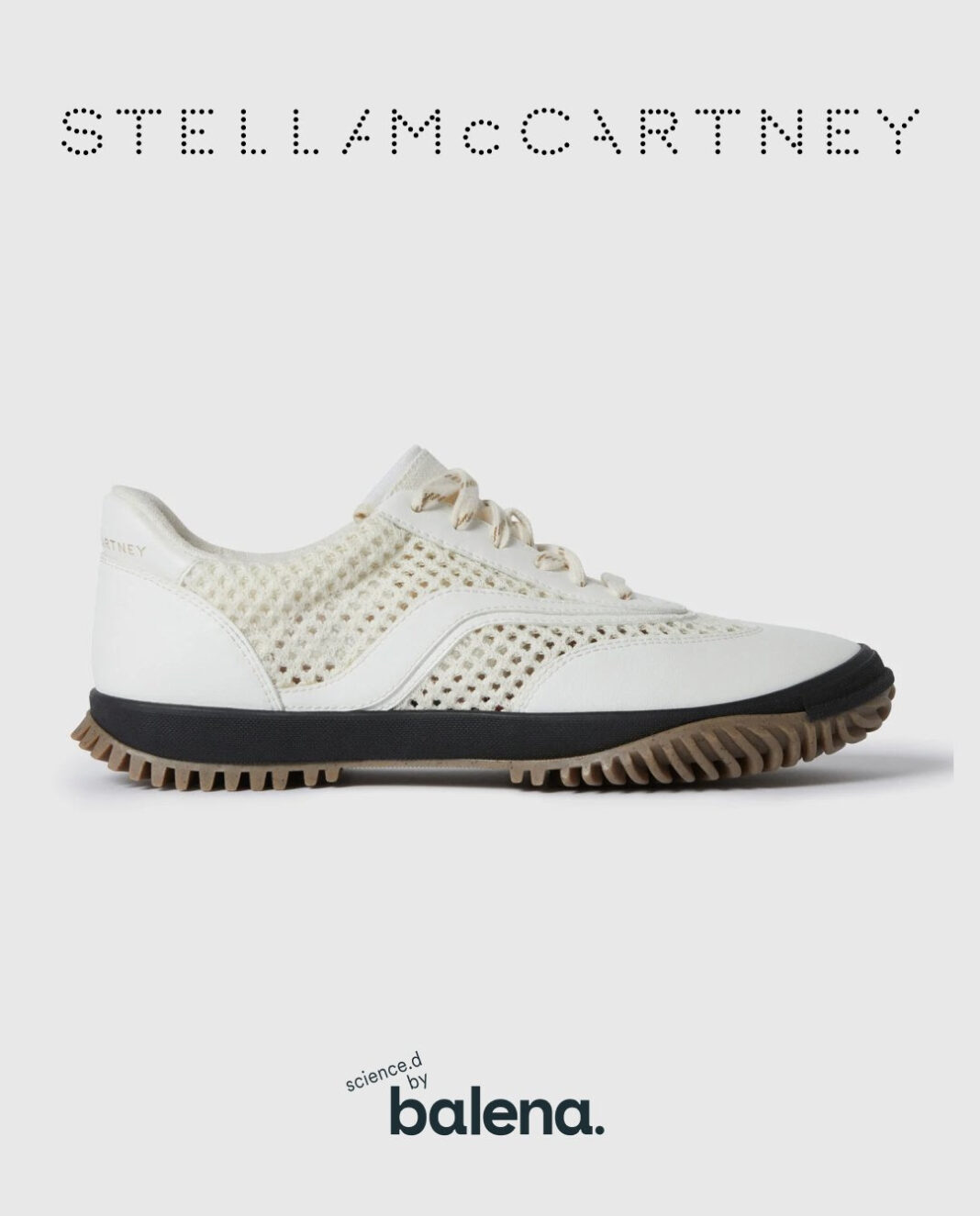
The latest sneaker drop from sustainable fashion pioneer Stella McCartney isn’t just about style or performance. The S-Wave Sport Trainer, part of her Autumn 2025 collection, is a milestone for circular fashion. The shoe is built with BioCir® Flex, a high-performance, compostable, recyclable, and bio-based material developed by the biomaterials startup Balena.

And the sole? It’s dyed with cinnamon waste. So when you lift your foot, you might catch a whiff of spice: “Smell the sole… it smells of cinnamon! … a closed-loop production… zero waste. It is mind-blowing,” Stella McCartney said at the launch.

This is more than a gimmick. The S-Wave sneaker is a signal to the global fashion industry that the age of fossil-based, forever-waste plastics is coming to an end—and that regenerative biomaterials are ready for prime time. The BioCir® Flex sole, developed by Balena in Tel Aviv, is designed for industrial composting and chemical recycling. That means it can degrade into biomass at end-of-life or be repurposed as feedstock for new products—no microplastics, no incineration, no landfill.

It’s made from renewable resources like castor bean oil, natural sugars, and plant-based elastomers, and carefully engineered to match the durability and elasticity of conventional thermoplastic polyurethanes (TPU). In other words, it performs like a modern sports shoe—but returns to the earth or lab when you’re done.

“This collaboration represents a future where materials are truly circular, sustainable, and high-performance,” said David Roubach, founder and CEO of Balena. “It’s a milestone I could only dream of.”

Fashion is one of the most polluting industries on the planet, responsible for up to 10% of global greenhouse gas emissions and an enormous share of synthetic microplastic pollution. Most shoes today—especially those made for sport—are constructed from petroleum-based plastics that take centuries to degrade, if at all.

The S-Wave x Balena project is a proof-of-concept for how future footwear could look, feel, and behave in a circular economy. It’s also a message: luxury and sustainability can co-exist—if designers are willing to work with nature, not against it.

At Green Prophet, we’ve long tracked the rise of engineered living materials (ELMs), algae-based dyes, and circular fashion startups. Balena’s material joins this new wave of bio-innovation, where fashion is no longer just wearable—it’s regenerative.

Balena’s rise reflects a growing biomaterials ecosystem in Israel, where startups are turning food waste, seaweed, and microbial cultures into next-gen plastics, leather alternatives, and fibers. By partnering with a global voice like Stella McCartney—who famously avoids animal leather and is leading LVMH’s sustainability strategy—Balena has fast-tracked its tech from lab bench to luxury shelf.

stella mccartney fungus
Stella McCartney is going beyond traditional dyes and is using fungus to dye her clothes in Bolt leather

“This is what happens when material science meets design with shared values,” says Roubach. “And we’re only getting started.”

The S-Wave isn’t just compostable. It’s beautiful. It’s functional. And it speaks to a growing cultural shift, especially among younger consumers, toward transparency, ethics, and lifecycle design. With brands like Adidas, Allbirds, and Veja experimenting with similar biomaterials, and designers like Stella McCartney putting compostability on the runway, we’re inching toward a world where your favorite sneaker doesn’t outlive you—or the planet.

And in the meantime, it might just make your feet smell like cinnamon.

Green Prophet tracks emerging biomaterials, circular fashion, and environmental innovation from the Middle East and beyond. Want to pitch your green design breakthrough? Reach us at [email protected].

Karin Kloosterman
Karin Kloostermanhttp://www.greenprophet.com
Karin Kloosterman is an award-winning journalist, innovation strategist, and founder of Green Prophet, one of the Middle East’s pioneering sustainability platforms. She has ranked in the Top 10 of Verizon innovation competitions, participated in NASA-linked challenges, and spoken worldwide on climate, food security, and future resilience. With an IoT technology patent, features in Canada’s National Post, and leadership inside teams building next-generation agricultural and planetary systems — including Mars-farming concepts — Karin operates at the intersection of storytelling, science, and systems change. She doesn’t report on the future – she helps design it. Reach out directly to [email protected]

LEAVE A REPLY

Please enter your comment!
Please enter your name here

TRENDING

Levis is teaching Gen Z how to repair their clothes –– download all the teacher guides here

Somewhere between TikTok hauls and next-day delivery, we forgot how to fix things. We forgot how to cook without an app and a pre-made box, grow food without a kit, and sew a button back onto a shirt without throwing the whole garment away. Clothing, once stitched with intention (my mother made her ow dresses!), has become disposable. And with it, a quiet loss of skill, patience, and care.

Hemp Textiles Pave the Way for a Regenerative Economy 

We have the opportunity at Anact, as a nimble and emerging brand, to set the standard for how things should be. This is the beauty of being a start-up in an industry that has great potential to impact sustainability with hemp and regenerative practices. We are creating an ecosystem that is value-added for farmers, employees, customers, banks, and more, which will only be made possible with capital investment and supportive policy. 

She turns Jordan’s onions and olives into fashion

An architectural engineer by training, Al-Rashdan began experimenting with plant-based textiles in 2015. She learned to transform food waste—like beetroot skins, olive pulp, and onion peels—into biodegradable materials. Some are fed into a 3D printer to make handbags, coins, and jewelry; others are spun into fabrics for high-fashion dresses.

Pilsok turns airbags into bags

Pilsok creates sustainable, eco-friendly bags from upcycled airbags, turning automotive waste into stylish, functional accessories. Their innovative approach to recycled materials supports the circular economy, reduces landfill waste, and promotes ethical fashion for a greener future.

A Quick Style Round-Up for Corporate Executives

When you meet someone, you are often judged and...

Qatar’s climate hypocrisy rides the London Underground

Qatar remains a master of doublethink—burning gas by the megaton while selling “sustainability” to a world desperate for clean air. Wake up from your slumber people.

How Quality of Hire Shapes Modern Recruitment

A 2024 survey by Deloitte found that 76% of talent leaders now consider long-term retention and workforce contribution among their most important hiring success metrics—far surpassing time-to-fill or cost-per-hire. As the expectations for new hires deepen, companies must also confront the inherent challenges in redefining and accurately measuring hiring quality.

8 Team-Building Exercises to Start the Week Off 

Team building to change the world! The best renewable energy companies are ones that function.

Thank you, LinkedIn — and what your Jobs on the Rise report means for sustainable careers

While “green jobs” aren’t always labeled as such, many of the fastest-growing roles are directly enabling the energy transition, climate resilience, and lower-carbon systems: Number one on their list is Artificial Intelligence engineers. But what does that mean? Vibe coding Claude? 

Somali pirates steal oil tankers

The pirates often stage their heists out of Somalia, a lawless country, with a weak central government that is grappling with a violent Islamist insurgency. Using speedboats that swarm the targets, the machine-gun-toting pirates take control of merchant ships and then hold the vessels, crew and cargo for ransom.

Leopoldo Alejandro Betancourt López Turned Ocean Plastic Into Profitable Sunglasses

Few fashion accessories carry the environmental burden of sunglasses. Most frames are constructed from petroleum-based plastics and acrylic polymers that linger in landfills for centuries, shedding microplastics into soil and waterways long after they've been discarded. Leopoldo Alejandro Betancourt López, president of the Spanish eyewear brand Hawkers, saw this problem differently than most industry executives.

Why Dr. Tony Jacob Sees Texas Business Egos as Warning Signs

Everything's bigger in Texas. Except business egos.  Dr. Tony Jacob figured...

Israel and America Sign Renewable Energy Cooperation Deal

Other announcements made at the conference include the Timna Renewable Energy Park, which will be a center for R&D, and the AORA Solar Thermal Module at Kibbutz Samar, the world's first commercial hybrid solar gas-turbine power plant that is already nearing completion. Solel Solar Systems announced it was beginning construction of a 50 MW solar field in Lebrija, Spain, and Brightsource Energy made a pre-conference announcement that it had inked the world's largest solar deal to date with Southern California Edison (SCE).

Related Articles

Popular Categories