Climate, Not Just People, Is Driving Central Asia’s Desertification, Study Finds

Mongolian tents in a desert in Asia

In a sweeping analysis of drylands across Central Asia, scientists have found that natural environmental forces—particularly declining snow levels and rising temperatures—are more responsible for desertification than human activity. The study, published in the journal Catena, was led by Professor Tao Hui of the Xinjiang Institute of Ecology and Geography at the Chinese Academy of Sciences.

Using nearly 40 years of satellite data, meteorological records, and socio-economic indicators, the research team mapped how desertification has unfolded between 1982 and 2020. They applied a nonlinear Granger causality model to disentangle the impacts of climate change and human activity.

The findings are stark: “Natural factors accounted for nearly 70% of all newly desertified areas,” said Prof. Tao Hui. “In many dryland systems, snow water equivalent—the amount of water stored in snow—was the dominant ecological driver.”
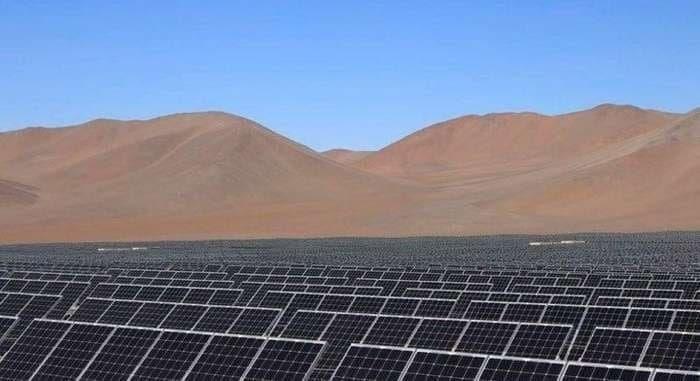
Uzbekistan to get Central Asia’s first renewable energy facility with utility-scale battery storage
Uzbekistan to get Central Asia’s first renewable energy facility with utility-scale battery storage.

Overall, 14.81% of Central Asia’s drylands showed signs of desertification during the study period. While unsustainable agriculture and overgrazing continue to degrade grasslands and arable areas, it is the shifting climate—particularly warmer winters and reduced snowmelt—that is playing the lead role in this transformation. Forests, the study notes, were primarily affected by rising temperatures rather than human encroachment.

The study is misleading by “blaming” the effect on natural processes since climate change is largely assumed to be caused by human development.

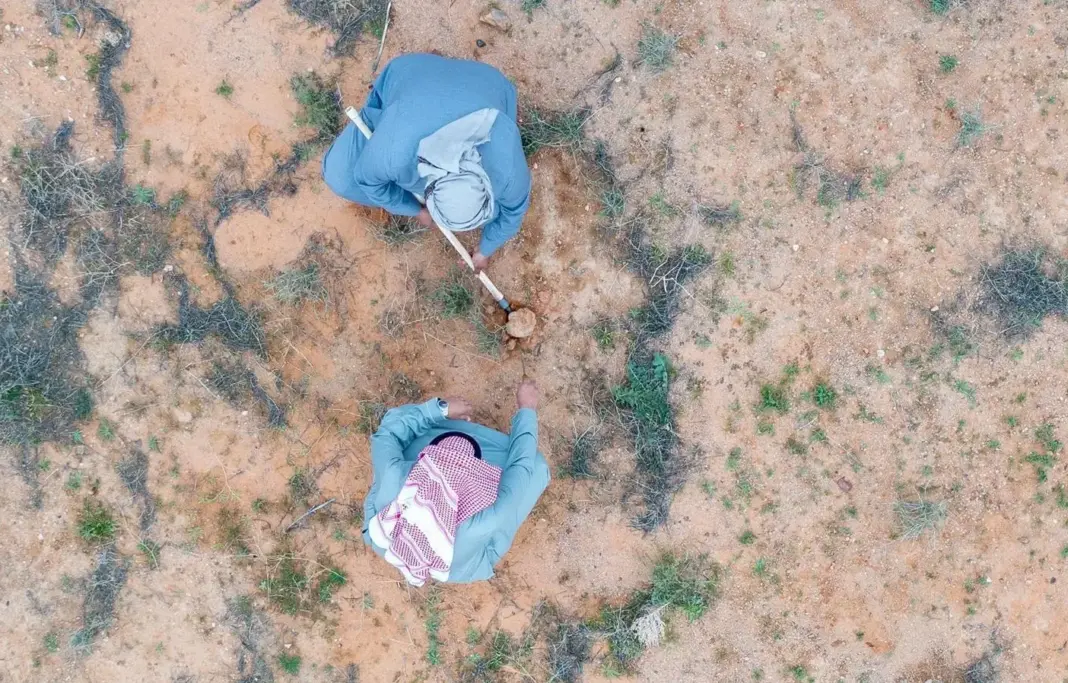
Saudi Arabia is home to desert truffles.
Truffle hunting in the deserts of Saudi Arabia

The revelation that climate is the leading culprit challenges the long-standing assumption that desertification is mainly a result of poor land use. It also complicates regional efforts to halt desert advance, which have typically focused on managing grazing and cultivation.

For countries in the Middle East, including Jordan—one of the most water-scarce nations in the world—the study serves as a climate cautionary tale. With less than 100 cubic meters of renewable water per person annually, Jordan is already facing extreme pressure on its agricultural systems. Sustainable innovations like volcanic soil enrichment may offer hope (as explored in recent efforts near Mafraq), but they must now be scaled in ways that anticipate a rapidly changing climate.
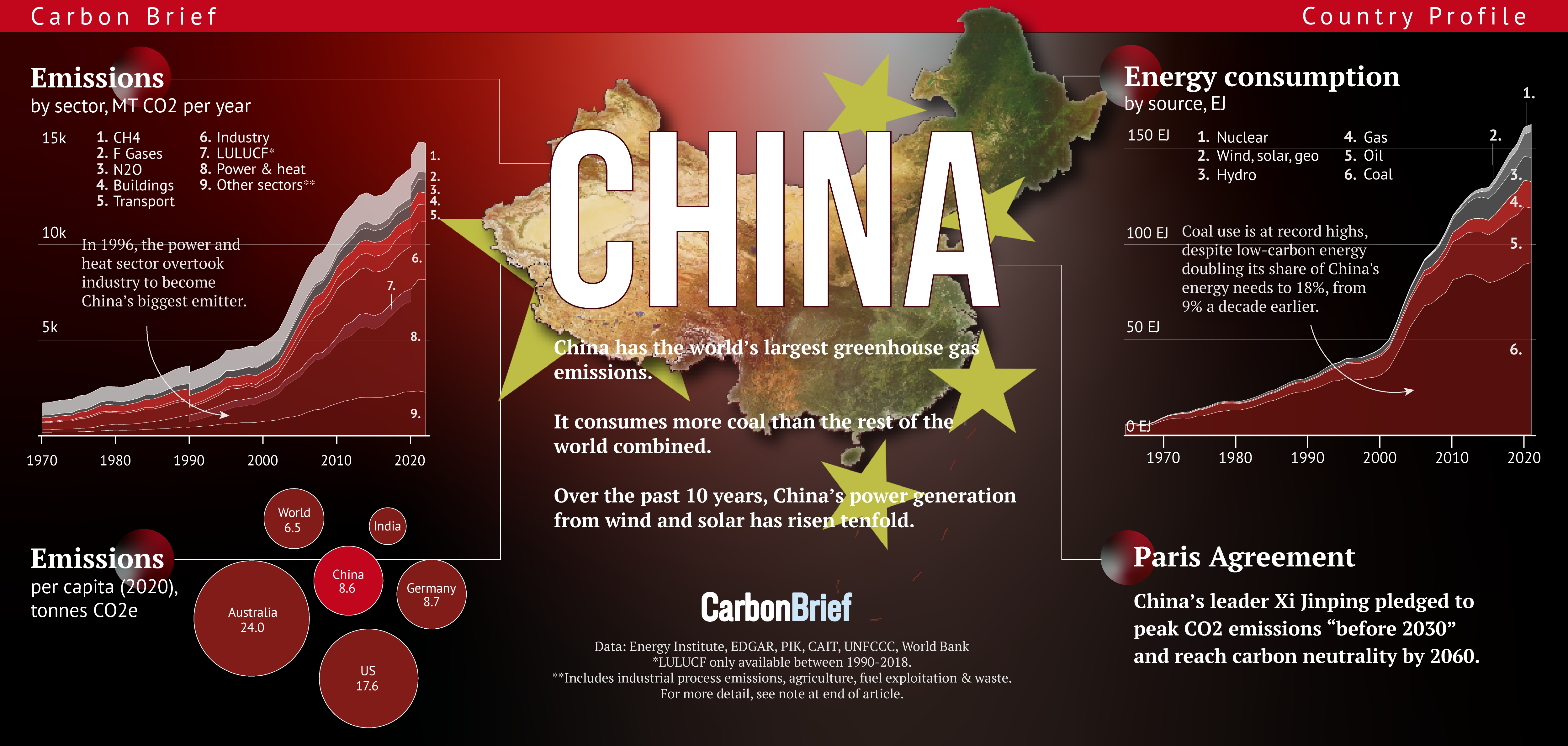
China carbon emissions
Breaking down China’s carbon emissions by Carbon Brief.

China, the factory of the world, is the world’s largest emitter of greenhouse gases, producing about 30% of global CO₂ emissions from fossil fuels and industry. By comparison, the United States emits roughly 13–14%, and the European Union around 8–9% of global emissions. Worth noting that the carbon emissions of China per capita is less than that of Americans and Europeans.

Bhok Thompson
Bhok Thompsonhttp://www.greenprophet.com
Bhok Thompson is an “eco-tinkerer” who thrives at the intersection of sustainability, business, and cutting-edge technology. With a background in mechanical engineering and a deep fascination with renewable energy, Bhok has dedicated his career to developing innovative solutions that bridge environmental consciousness with profitability. A frequent contributor to Green Prophet, Bhok writes about futuristic green tech, urban sustainability, and the latest trends in eco-friendly startups. His passion for engineering meets his love for business as he mentors young entrepreneurs looking to create scalable, impact-driven companies. Beyond his work, Bhok is an avid collector of vintage mechanical watches, believing they represent an era of precision and craftsmanship that modern technology often overlooks. Reach out: [email protected]

LEAVE A REPLY

Please enter your comment!
Please enter your name here

TRENDING

Astro uses AI to help procure land for renewable energy

For oil-rich, environmentally vigilant Gulf states, Astro isn’t just another startup story. It is a blueprint for accelerating an energy transition that is now existential, not optional.

Huge Fish Nursery Discovered Under Freezing Arctic Seas

In 2019, an underwater robot camera exploring the seabed...

Remilk makes cloned milk so cows don’t need to suffer and it’s hormone-free

This week, Israel’s precision-fermentation milk from Remilk is finally appearing on supermarket shelves. Staff members have been posting photos in Hebrew, smiling, tasting, and clearly enjoying the moment — not because it’s science fiction, but because it tastes like the real thing.

The US leaves 66 United Nations organizations to “put America first”

The world needs a reset and to restart well intentioned cooperation projects from start. Because right now the UN and EU projects look like software built on code from the 80s, rickety, patched, slow to adapt, and prone to crashing under the weight of outdated assumptions.

Turkey named as climate change COP31 home in 2026

Murat Kurum as President-Designate of COP31

Qatar’s climate hypocrisy rides the London Underground

Qatar remains a master of doublethink—burning gas by the megaton while selling “sustainability” to a world desperate for clean air. Wake up from your slumber people.

How Quality of Hire Shapes Modern Recruitment

A 2024 survey by Deloitte found that 76% of talent leaders now consider long-term retention and workforce contribution among their most important hiring success metrics—far surpassing time-to-fill or cost-per-hire. As the expectations for new hires deepen, companies must also confront the inherent challenges in redefining and accurately measuring hiring quality.

8 Team-Building Exercises to Start the Week Off 

Team building to change the world! The best renewable energy companies are ones that function.

Thank you, LinkedIn — and what your Jobs on the Rise report means for sustainable careers

While “green jobs” aren’t always labeled as such, many of the fastest-growing roles are directly enabling the energy transition, climate resilience, and lower-carbon systems: Number one on their list is Artificial Intelligence engineers. But what does that mean? Vibe coding Claude? 

Somali pirates steal oil tankers

The pirates often stage their heists out of Somalia, a lawless country, with a weak central government that is grappling with a violent Islamist insurgency. Using speedboats that swarm the targets, the machine-gun-toting pirates take control of merchant ships and then hold the vessels, crew and cargo for ransom.

Leopoldo Alejandro Betancourt López Turned Ocean Plastic Into Profitable Sunglasses

Few fashion accessories carry the environmental burden of sunglasses. Most frames are constructed from petroleum-based plastics and acrylic polymers that linger in landfills for centuries, shedding microplastics into soil and waterways long after they've been discarded. Leopoldo Alejandro Betancourt López, president of the Spanish eyewear brand Hawkers, saw this problem differently than most industry executives.

Why Dr. Tony Jacob Sees Texas Business Egos as Warning Signs

Everything's bigger in Texas. Except business egos.  Dr. Tony Jacob figured...

Israel and America Sign Renewable Energy Cooperation Deal

Other announcements made at the conference include the Timna Renewable Energy Park, which will be a center for R&D, and the AORA Solar Thermal Module at Kibbutz Samar, the world's first commercial hybrid solar gas-turbine power plant that is already nearing completion. Solel Solar Systems announced it was beginning construction of a 50 MW solar field in Lebrija, Spain, and Brightsource Energy made a pre-conference announcement that it had inked the world's largest solar deal to date with Southern California Edison (SCE).

Related Articles

Popular Categories