
In times of hardship, creativity often becomes a lifeline. The “Heroines” exhibition at the Design Museum Holon, running since March 31, 2025, delves into this theme by showcasing how women during World War II used fashion as a means of survival and expression.
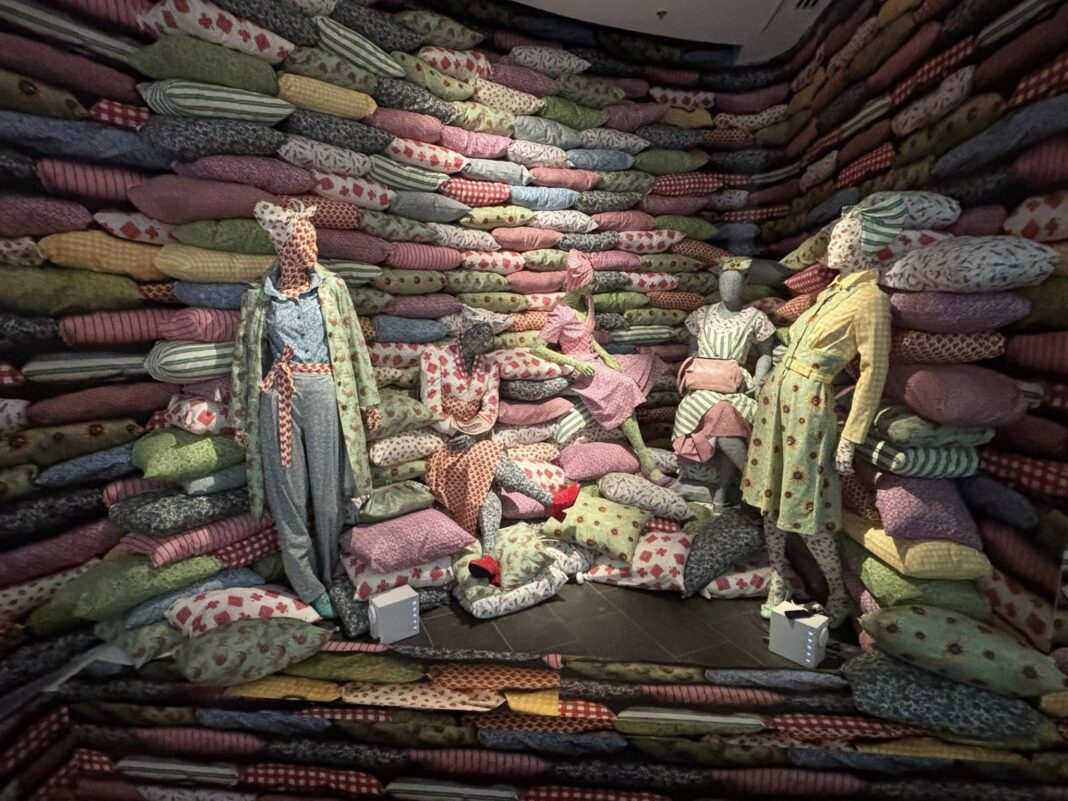
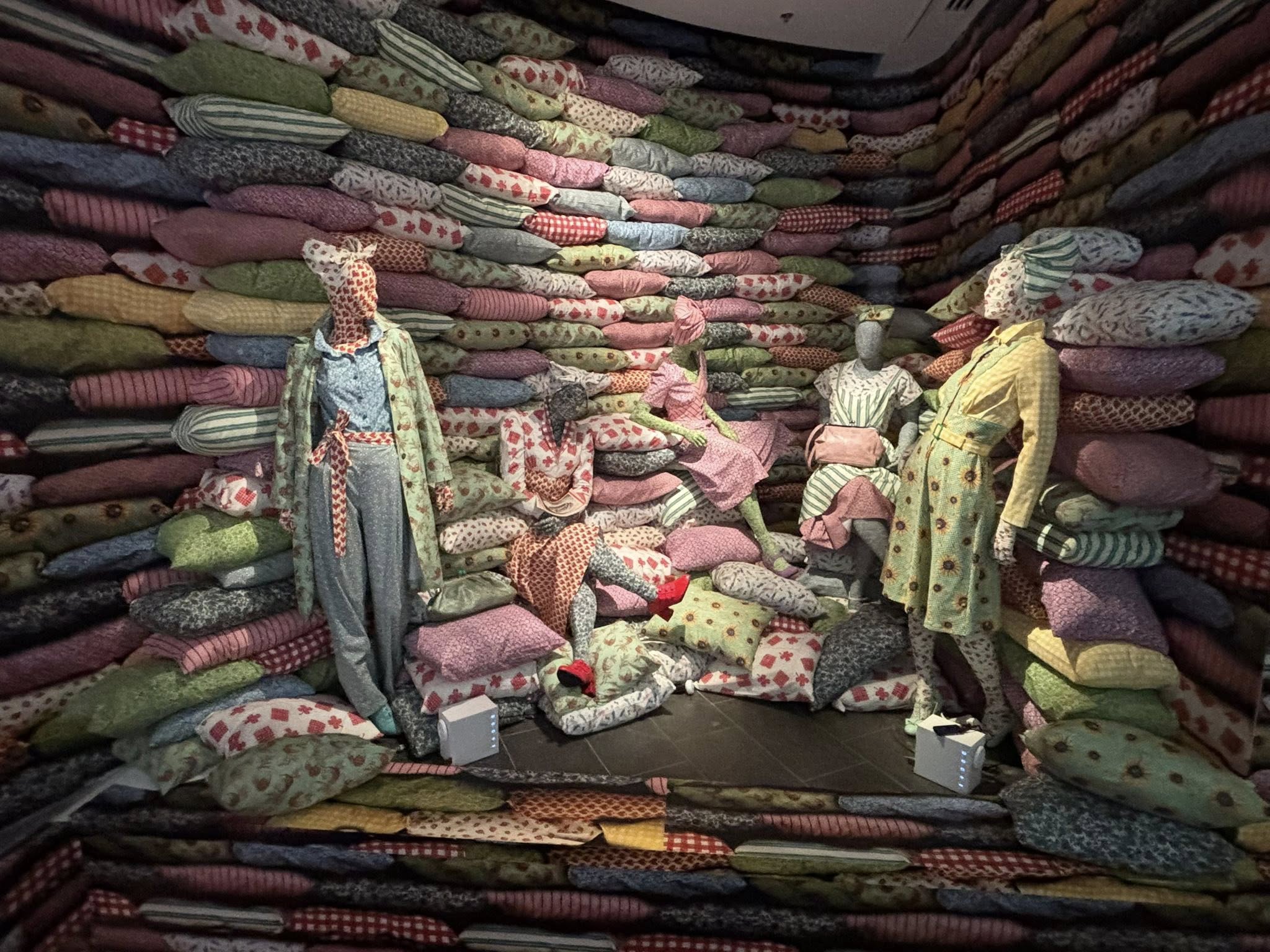
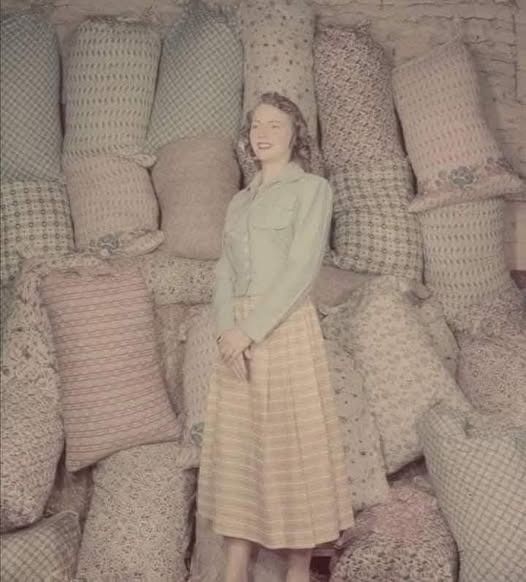
During the Great Depression in the United States, families repurposed cotton flour and grain sacks into clothing. Recognizing this, companies began printing the sacks with colorful patterns, making them more appealing for reuse. Some even included dress patterns directly on the fabric, simplifying the sewing process. This initiative not only provided affordable clothing options but also empowered women to create and sell garments, supporting their families during challenging times.
Silk Maps Transformed
In Britain, women found innovative uses for silk escape maps issued to soldiers during World War II. These durable, lightweight maps were repurposed into dresses, combining practicality with a statement of resilience. The exhibition features such garments, highlighting the ingenuity and adaptability of women who turned tools of war into symbols of hope and normalcy.
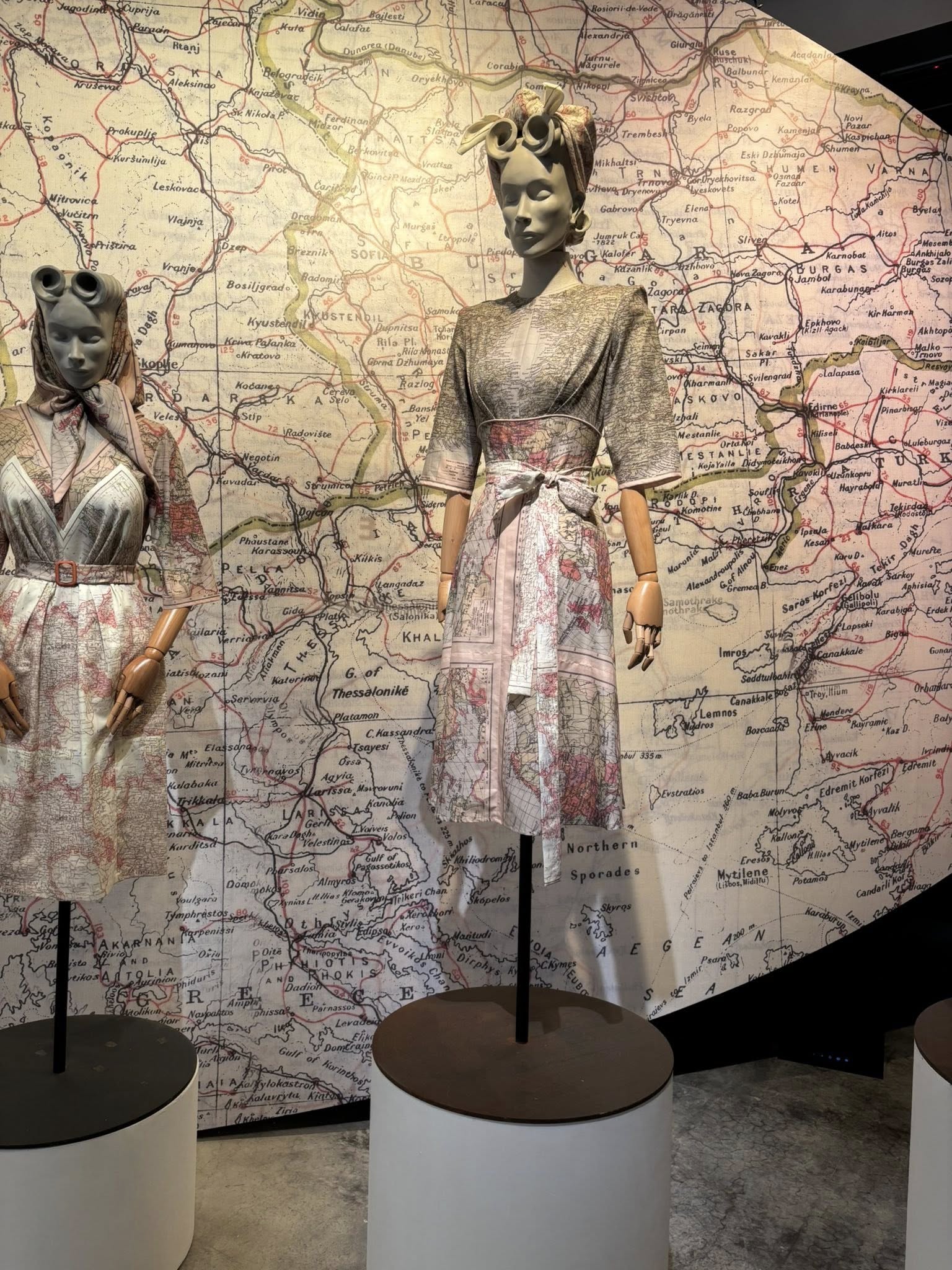
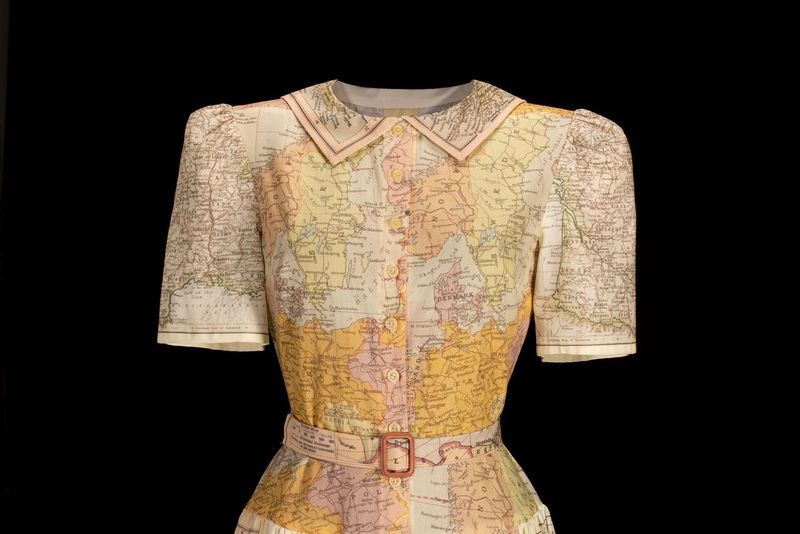
Curated by fashion historian Ya’ara Keydar, “Heroines” presents over 100 ensembles, accessories, and artifacts that narrate stories of courage and creativity. The exhibition spans various geographies, from pre-war Prague to the American and British home fronts, culminating in Israel. It emphasizes fashion’s role not just in aesthetics but as a medium of resistance, identity, and survival.

“Heroines” invites visitors to reflect on the power of fashion beyond its visual appeal, showcasing how, in the darkest times, clothing became a canvas for resilience and hope. Included are fashion items made during the Holocaust, some by pre-eminant fashion designers who ended up in the camps.