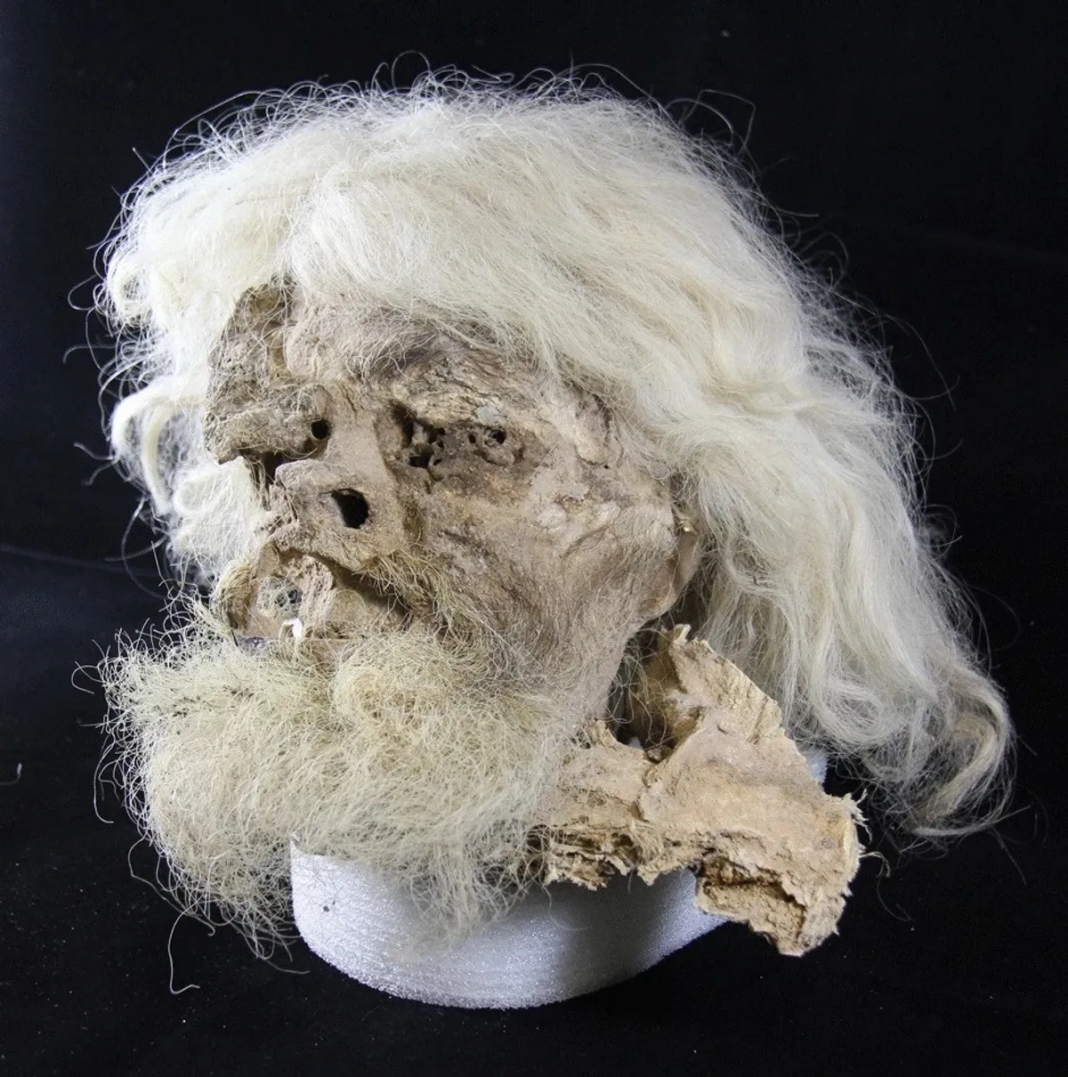


In the winter of 1993, miners at the Chehrabad Salt Mine in Iran made a remarkable discovery while bulldozing for salt. They found a body with long hair, a beard, and several artifacts with it. Among the items found were a lower leg inside a leather boot (pictured below), three iron knives, a woolen half-trouser, a silver needle, a sling, parts of a leather rope, a grindstone, a walnut, pottery shards, fragments of patterned textiles, and broken bones.
The body was buried deep inside a tunnel about 40 yards long. Cause: the salt mines they were working in collapsed. Salt can be bought for a song and a dance today but once it was a much more valuable commodity. Read about the economic importance of salt in this feature article here.

By 2010, the remains of six men had been discovered, and it is believed that most of them accidentally killed by the collapse of galleries in which they were working while they too were mining for salt. The head and left foot of Salt Man 1 are on display at the National Museum of Iran in Tehran.

In 2004, yet another salt man mummy was discovered just 50 feet away, followed by a third in 2005, and later that same year, the remains of a teenage boy.
These “salt men” are ancient corpses that were either killed or crushed in the cave and naturally mummified by the harsh, salty conditions. The dry salinity of the mine preserved hair, flesh, and bone but also internal organs, including stomachs and colons, in remarkable detail.
One salt man found to have the remains of a tapeworm in his gut at the time of death. Parasites lived with us then and they live with us today.

In Egypt mummies are smuggled as loot. Would you be caught smuggling mummy legs? I’d fear some ancient curse.