
What Is the Closest Black Hole to Earth & Should We Fear the Neighbour?

black hole
What Is the Closest Black Hole to Earth

Today, no one doubts the existence of black holes, but until 2019, they remained pure hypothetical speculation – even though the term itself, and logically, the accompanying hypothesis, dates back to the mid-20th century. Well, now that the Event Horizon Telescope has officially confirmed the factual existence of such holes, astronomers have been discovering more and more of them, which raises a pretty relevant question – what is the closest black hole to Earth and should we be anxious about the neighbour?

Not to bury such a dramatic lead, let’s just say that we’re safe for now – actually, we should remain safe for a very long time. And now, in the comfort of our newly confirmed safety, let’s learn a few curious facts about the closest black hole to Earth 2024 astronomical facts we know so far. 

Closest Black Hole to Earth: Gaia BH1

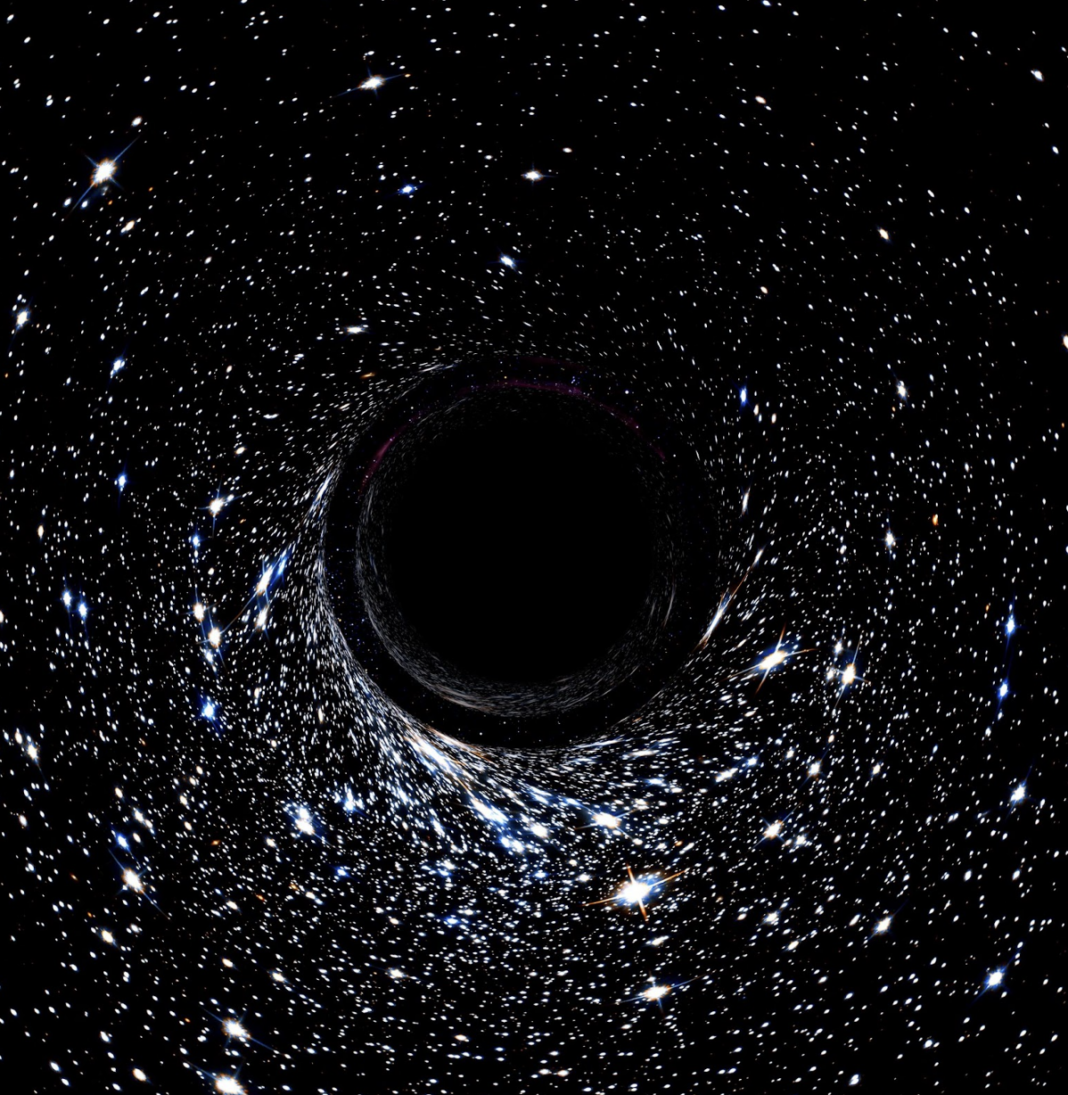
In 2022, the European Space Agency’s Gaia mission, originally set to create a three-dimensional map of our galaxy, discovered a black hole, which, logically enough, was dubbed Gaia. The object is situated in the constellation Ophiuchus and is part of a binary stellar system – that is, a system that consists of two gravitationally tied objects. One of those objects is a star very similar to our Sun, and it’s thanks to the gravitational interconnections that ESA scientists could determine there is a black hole. The thing is, these holes are still tricky to spot with our optics, so the first thing that caught the astronomers’ attention was the slightly unorthodox star behaviour, indicating a strong pull from another object, which turned out to be Gaia.

Another peculiarity that initially made Gaia tricky to spot is its dormant state. Unlike most of its rapidly-feeding and growing ‘sisters,’ Gaia is relatively quiet. But just how quiet and, more importantly, how close? Currently, the closest black hole to Earth distance is estimated at 1,560 light-years from our planet.

On a cosmic scale, that is not too far but consider for a second that our entire solar system stretches only a few light DAYS across. In contrast, the nearest star system, Alpha Centauri, is about 4.37 light-years away — a fraction compared to 1,560 – but still incredibly far. Right, the fastest travelling object humanity has made, the Parker Solar Probe, is heading towards the Sun at 635,266 km/h. But to reach Gaia, it would need 2,650,358 terrestrial years!

Now that you know what’s the closest black hole near Earth? And more importantly, that it’s not that close, we can exhale once again and learn a few more facts about these mysterious matter-devouring objects.

Biggest Black Hole Ever Discovered

While Gaia BH1 is the closest black hole to Earth, it is by no means the largest – not even close!  These holes vary dramatically in mass, from a few times the mass of our Sun to millions or even billions of solar masses. In this regard, Gaia is about ten masses of our Sun. And the biggest title belongs to a quasar TON 618, weighing a staggering 66 billion solar masses! How far is this monster, then? Fortunately, way too far – 18.2 billion light-years!

What Happens if a Black Hole is Near Earth?

Black holes have a scary reputation for devouring everything in their path, but even this process, quick as it may be on a cosmic scale, is incredibly long from our human perspective. Assuming a hole, the mass of our Sun replaced our star at the centre of the solar system (just hypothetically, of course), the solar system planets would keep orbiting as if nothing had changed. We would lose our source of light and energy and freeze to death, but that’s an entirely different hypothesis.

Back to the subject of black holes, one of these would need to venture into the inner solar system to cause immediate trouble for Earth. The thing is, relative to their huge mass, the holes are very small. So, to exert any kind of immediate damage, a planet would really need to be in the hole’s vicinity. And our home system is relatively well-studied, so we can safely state no black holes are lurking around the corner.

Takeaway: Should We Worry about Black Holes?

As you have probably guessed already, the answer to that is a definite no. Even the closest black hole to Earth is incredibly far away on the scale of our solar system. Besides, the gravitational pull of the cosmic monster diminishes with distance – that, as we already explained, needs to be a close one to cause immediate damage. Of course, our telescopes keep developing, and we may discover new cosmic holes soon enough – some of them might even rob Gaia of its closest title. Still, there is every reason to believe our home system and our planet is safe. 

Author: Emma Thorpe

Hot this week

How Renewable Energy is Revolutionizing the Way We Power Our World

Solar has become the star of the transition thanks to modular hardware and straightforward installation. It fits dense cities and remote towns alike. Many companies are turning to rooftop arrays and carport systems - and exploring commercial solar installation as a practical way to lock in future savings.

How does one start prepping?

Faced with an extreme winter storm this year, Americans wonder how to be prepared for catastrophe. Miriam has lived through wars in the Middle East - so she's prepared on giving you a guide to prepping.

Fishermen sue tire manufacturers on behalf of the salmon

A federal trial in San Francisco has brought US tire manufacturers, fishing groups, and environmental scientists into court over a chemical most drivers have never heard of — but which scientists say may be silently reshaping aquatic ecosystems.

Listening to Water: Tarek Atoui’s Next Work for Tate Modern

Born in Beirut, Lebanon in 1980 and now living in Paris, Atoui has spent years building instruments that don’t sit comfortably in concert halls. Many of them involve water, glass, and ceramics — materials that react to sound instead of simply producing it.

Leading Through a Dual-Energy Transition: Balancing Decarbonisation with Energy Security

Experience in one area of the energy industry isn't enough to guarantee readiness across all the others. That's where a structured program like an MBA in energy can come in. Today's advanced curricula explore energy economics, finance, policy, and strategic management alongside the technical subjects. And when pursuing an energy MBA online, professionals can skill up and retrain without having to step out of the labor market -- an important perk at a time when skilled professionals are already in short supply.

Topics

How Renewable Energy is Revolutionizing the Way We Power Our World

Solar has become the star of the transition thanks to modular hardware and straightforward installation. It fits dense cities and remote towns alike. Many companies are turning to rooftop arrays and carport systems - and exploring commercial solar installation as a practical way to lock in future savings.

How does one start prepping?

Faced with an extreme winter storm this year, Americans wonder how to be prepared for catastrophe. Miriam has lived through wars in the Middle East - so she's prepared on giving you a guide to prepping.

Fishermen sue tire manufacturers on behalf of the salmon

A federal trial in San Francisco has brought US tire manufacturers, fishing groups, and environmental scientists into court over a chemical most drivers have never heard of — but which scientists say may be silently reshaping aquatic ecosystems.

Listening to Water: Tarek Atoui’s Next Work for Tate Modern

Born in Beirut, Lebanon in 1980 and now living in Paris, Atoui has spent years building instruments that don’t sit comfortably in concert halls. Many of them involve water, glass, and ceramics — materials that react to sound instead of simply producing it.

Leading Through a Dual-Energy Transition: Balancing Decarbonisation with Energy Security

Experience in one area of the energy industry isn't enough to guarantee readiness across all the others. That's where a structured program like an MBA in energy can come in. Today's advanced curricula explore energy economics, finance, policy, and strategic management alongside the technical subjects. And when pursuing an energy MBA online, professionals can skill up and retrain without having to step out of the labor market -- an important perk at a time when skilled professionals are already in short supply.

From Green Energy to Healthy Societies: Why old systems thinking is becoming relevant again

Across the Middle East and North Africa, large investments are being made in green hydrogen, renewable energy, water infrastructure and sustainability. Most of these efforts are discussed in the context of climate change, decarbonization and economic diversification. That framing is important, but it may not capture their full value.

We saw peace – an interreligious encounter deep in our eyes

They came from Israel, Palestine, Jordan, Iraq, Yemen, Morocco, Tunisia, Lebanon, Egypt… There are Sunni Muslims, Shiite Muslims, Jews (Orthodox and Reform), Orthodox Christians, Coptic Christians, Protestant Christians, Druze, Baha'is, a Scientologist.

Can biochar reduce ‘Forever Chemicals’ in food if it’s used in farms?

Biochar is produced by heating organic material in a low-oxygen environment so it does not burn. This process, known as pyrolysis, transforms plant matter into a stable, carbon-rich material.

Related Articles

Popular Categories