
How Islamic-era agriculture points way to sustainable farming methods

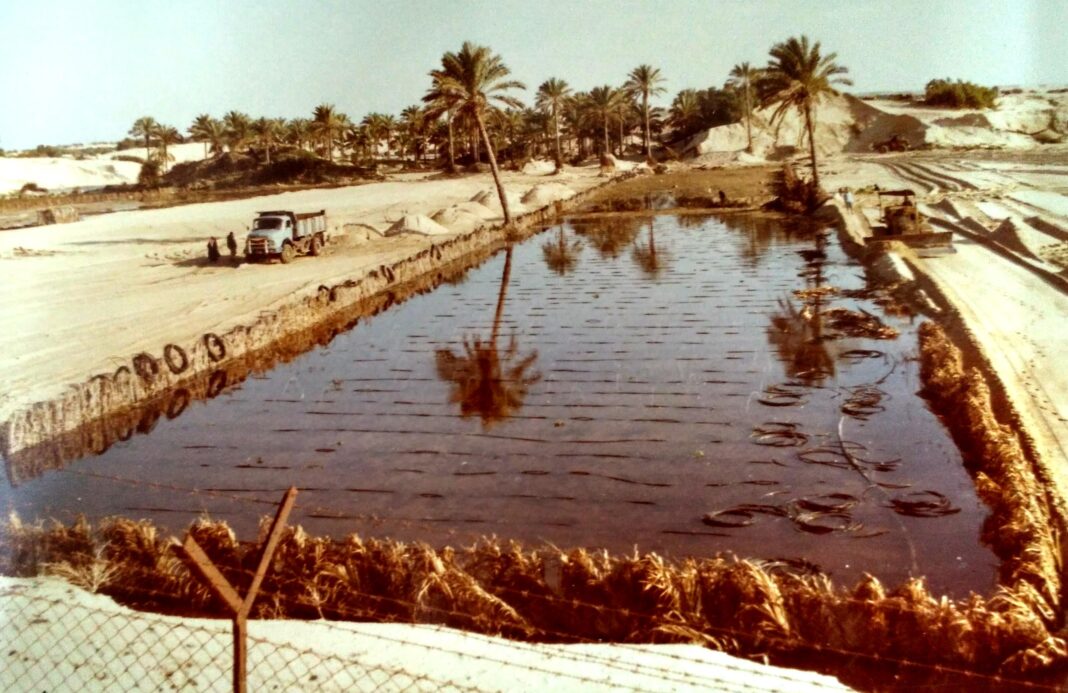
Flooded Mawasi plot (1983) along southern coast of the Gaza StripCredit: Yair Friman
Flooded Mawasi plot (1983) along southern coast of the Gaza Strip Credit: Yair Friman

The researchers suggest that the early Islamic agroecosystems were ahead of their time

As global water resources become more strained, the insights gained from traditional agricultural systems could pave the way for the development of innovative, low-water-use agricultural practices to confront the growing challenges of water scarcity and food insecurity in arid and marginal regions.

A new study exploring traditional sunken groundwater-harvesting agroecosystems in coastal and inland sand (SGHAS) bodies of Israel, Iran, Egypt, Algeria, Gaza, and the Atlantic coast of Iberia offers fresh perspectives on ancient agricultural techniques that could inform modern sustainability practices.

The research, which combines geospatial analysis, archaeological findings, and historical documentation, sheds light on the innovative use of water-harvesting and soil-enrichment technologies developed in the early Islamic period and their continued relevance to contemporary agricultural challenges.

The paper stems from an international workshop at Bar-Ilan University (BIU) in 2023 on continuity-discontinuity of ancient water-harvesting agricultural systems that resulted in a special issue in the journal Environmental Archaeology.

This study on early Islamic (late 9th – early 12th century) Plot-and-Berm (P&B) agroecosystems located along Israel’s Mediterranean coast evolved into an investigation of the long-term viability of regional SGHAS as a sustainable agricultural model.

These methods to utilize water, typically found near urban settlements, leverage local organic material and urban refuse to enrich the inert sandy substrate, creating fertile grounds for growing crops such as vegetables, watermelons, dates, and grapes. Importantly, SGHAS systems provide a model for long-term water security by utilizing shallow groundwater in conjunction with rainfall for irrigation and groundwater replenishment.

The Israel Science Foundation-funded study was jointly headed by Prof. Joel Roskin from the Department of Environment, Planning and Sustainability at BIU and Dr. Itamar Taxel, Archaeological Research Department, Israel Antiquities Authority, along with post-docs Drs. Lotem Robins and Ruben Sanchez (BIU), Prof. Revital Bookman and doctoral candidate M.Sc. Adam Ostrowski (U. of Haifa).

Despite their initial success, early Islamic P&B agricultural systems in Israel were largely abandoned after the Crusader conquest and, surprisingly, were not reestablished. However, these traditional systems found renewed application in regions such as Iran, Algeria, the Gaza Strip, and parts of Iberia since the Middle Ages, where they continue to support agriculture in marginal environments.

With many arid and marginal regions facing expanding populations and decreasing water resources, these ancient water-harvesting practices can address the global challenge of sustainable agriculture.

The long-term use of these agroecosystems contributed to continuous, shallow groundwater availability, which is essential for agricultural production and local food security in arid regions. These systems, which include advanced soil-enrichment techniques and groundwater harvesting methods, show the resilience of traditional agricultural practices and their potential for modern adaptation in water-scarce regions.

Navazo Spain: Oblique aerial photo of modern Navazo agriculture by Sanlucar de Barrameda, Spain. The green pool water is next to a shallow well in the shed by the palm and shady vegetated berms are in the background.Photo courtesy R. Sanchez
Masseira agriculture north in Apulia, northwestern Portugal. Seaweed is collected for sand enrichment. The plot and berm are utilized by irrigation from well into 1 m deep groundwater. Today a wide range of local family-farm produce is sold at stands. Seaweed photos courtesy of Álvaro Campelo. Additional photos by Prof. Joel Roskin. 

The researchers suggest that the early Islamic agroecosystems were ahead of their time, offering a glimpse into agricultural practices that were remarkably advanced compared to later agricultural systems. This understanding helps explain the approximately 400-year gap between the abandonment of early Islamic systems and the reappearance of SGHAS in the 15th century.

“We could not find written or factual evidence of the crops grown in early Islamic times, nor decipher the know-how and motivation for this original, exhaustive and ingenious effort to earthwork, enrich and cultivate sand. However, the inception of traditional Middle Age on SGHASs probably stemmed from a growing demand to cultivate the extensive new world influx of fruits and vegetables from arid zones and the Americas,” notes Prof. Roskin.

“We speculate that the Islamic agroecosystems provided several similar species to those found today in the traditional SGHASs. The reappearance in the Middle Ages and third expansion of SGHASs in the late 19th century early 20th century in Iberia suggests that this type of agriculture is adaptable to varying economic and cultural settings and therefore may possess potential for certain, current socio-agronomic scenarios.”

Masseira gallery: Masseira agriculture north in Apulia, northwestern Portugal. Seaweed is collected for sand enrichment. The plot and berm are utilized by irrigation from well into 1 m deepgroundwater. Today a wide range of local family-farm produce is sold at stands.

Seaweed photos courtesy of Álvaro Campelo. Additional photos by Prof. Joel Roskin.
Navazo Spain: Oblique aerial photo of modern Navazo agriculture by Sanlucar de Barrameda, Spain. The green pool water is next to a shallow well in the shed by the palm and shady vegetated berms are in the background. Photo courtesy R. Sanchez

While modern agriculture often relies on intensive water usage and depleting soil quality, traditional systems like SGHAS offer more sustainable, low-impact alternatives that can be adapted to contemporary needs. The study highlights the value of traditional agroecosystem models as analogues for contemporary agricultural challenges, particularly in the face of climate change and global food security concerns. While traditional agricultural methods cannot entirely replace modern, industrialized farming, they remain valuable in preserving local knowledge and expertise that have been honed over centuries. The study underscores the potential for integrating traditional agricultural practices—such as SGHAS—into modern sustainable agriculture solutions, particularly for communities facing water scarcity and environmental stresses.

The research further suggests that SGHAS-style systems, which rely on rainfall-replenished groundwater, offer a pathway for community-driven, ecologically sensitive farming practices. These systems are not only sustainable but also promote community engagement, resilience to climate change, and environmental stewardship. As traditional farming methods gradually fade in the face of industrial agriculture, these agroecosystems offer important models for creating locally adaptive, sustainable food systems.

Karin Kloosterman
Karin Kloostermanhttp://www.greenprophet.com
Karin Kloosterman is an award-winning journalist, innovation strategist, and founder of Green Prophet, one of the Middle East’s pioneering sustainability platforms. She has ranked in the Top 10 of Verizon innovation competitions, participated in NASA-linked challenges, and spoken worldwide on climate, food security, and future resilience. With an IoT technology patent, features in Canada’s National Post, and leadership inside teams building next-generation agricultural and planetary systems — including Mars-farming concepts — Karin operates at the intersection of storytelling, science, and systems change. She doesn’t report on the future – she helps design it. Reach out directly to [email protected]

Hot this week

How Renewable Energy is Revolutionizing the Way We Power Our World

Solar has become the star of the transition thanks to modular hardware and straightforward installation. It fits dense cities and remote towns alike. Many companies are turning to rooftop arrays and carport systems - and exploring commercial solar installation as a practical way to lock in future savings.

How does one start prepping?

Faced with an extreme winter storm this year, Americans wonder how to be prepared for catastrophe. Miriam has lived through wars in the Middle East - so she's prepared on giving you a guide to prepping.

Fishermen sue tire manufacturers on behalf of the salmon

A federal trial in San Francisco has brought US tire manufacturers, fishing groups, and environmental scientists into court over a chemical most drivers have never heard of — but which scientists say may be silently reshaping aquatic ecosystems.

Listening to Water: Tarek Atoui’s Next Work for Tate Modern

Born in Beirut, Lebanon in 1980 and now living in Paris, Atoui has spent years building instruments that don’t sit comfortably in concert halls. Many of them involve water, glass, and ceramics — materials that react to sound instead of simply producing it.

Leading Through a Dual-Energy Transition: Balancing Decarbonisation with Energy Security

Experience in one area of the energy industry isn't enough to guarantee readiness across all the others. That's where a structured program like an MBA in energy can come in. Today's advanced curricula explore energy economics, finance, policy, and strategic management alongside the technical subjects. And when pursuing an energy MBA online, professionals can skill up and retrain without having to step out of the labor market -- an important perk at a time when skilled professionals are already in short supply.

Topics

How Renewable Energy is Revolutionizing the Way We Power Our World

Solar has become the star of the transition thanks to modular hardware and straightforward installation. It fits dense cities and remote towns alike. Many companies are turning to rooftop arrays and carport systems - and exploring commercial solar installation as a practical way to lock in future savings.

How does one start prepping?

Faced with an extreme winter storm this year, Americans wonder how to be prepared for catastrophe. Miriam has lived through wars in the Middle East - so she's prepared on giving you a guide to prepping.

Fishermen sue tire manufacturers on behalf of the salmon

A federal trial in San Francisco has brought US tire manufacturers, fishing groups, and environmental scientists into court over a chemical most drivers have never heard of — but which scientists say may be silently reshaping aquatic ecosystems.

Listening to Water: Tarek Atoui’s Next Work for Tate Modern

Born in Beirut, Lebanon in 1980 and now living in Paris, Atoui has spent years building instruments that don’t sit comfortably in concert halls. Many of them involve water, glass, and ceramics — materials that react to sound instead of simply producing it.

Leading Through a Dual-Energy Transition: Balancing Decarbonisation with Energy Security

Experience in one area of the energy industry isn't enough to guarantee readiness across all the others. That's where a structured program like an MBA in energy can come in. Today's advanced curricula explore energy economics, finance, policy, and strategic management alongside the technical subjects. And when pursuing an energy MBA online, professionals can skill up and retrain without having to step out of the labor market -- an important perk at a time when skilled professionals are already in short supply.

From Green Energy to Healthy Societies: Why old systems thinking is becoming relevant again

Across the Middle East and North Africa, large investments are being made in green hydrogen, renewable energy, water infrastructure and sustainability. Most of these efforts are discussed in the context of climate change, decarbonization and economic diversification. That framing is important, but it may not capture their full value.

We saw peace – an interreligious encounter deep in our eyes

They came from Israel, Palestine, Jordan, Iraq, Yemen, Morocco, Tunisia, Lebanon, Egypt… There are Sunni Muslims, Shiite Muslims, Jews (Orthodox and Reform), Orthodox Christians, Coptic Christians, Protestant Christians, Druze, Baha'is, a Scientologist.

Can biochar reduce ‘Forever Chemicals’ in food if it’s used in farms?

Biochar is produced by heating organic material in a low-oxygen environment so it does not burn. This process, known as pyrolysis, transforms plant matter into a stable, carbon-rich material.

Related Articles

Popular Categories