

W-Cycle, an innovator in sustainable food packaging, and Melhoramentos, a publicly traded Brazilian company with activities spanning publishing, renewable forestry, and real estate (Altea), announced a strategic partnership. Together, they aim to produce compostable “plastics” or packaging made from renewable materials that naturally decompose within 100 days.
The agreement, valued at a minimum of 3.45M USD and set for an initial term of three years involves the supply by W-Cycle to Melhoramentos Latin America with its proprietary food-grade packaging formula and consulting services. These resources will help Melhoramentos produce its new advanced biodegradable packaging.
Melhoramentos will also incorporate their own high-performance cellulose fibres sourced from their extensive renewable forestry operations covering more than 80 million square meters.
“There has long been a global demand for more sustainable packaging solutions,” says Rafael Gibini, CEO of Melhoramentos. “Our collaboration with W-Cycle opens the door to a new and inspiring use for our cellulose-based natural resources. Together, we’re ushering in a new era that could eventually phase out single-use plastic packaging and pave the way for a more sustainable future.”
“Partnering with such a renowned industry leader is a pivotal moment in our journey,” says Isaac Rome, CEO of W-Cycle. “It will open up a wide scope of opportunities for both companies to deliver impactful, high end affordable packaging solutions by blending expertise and creativity.”
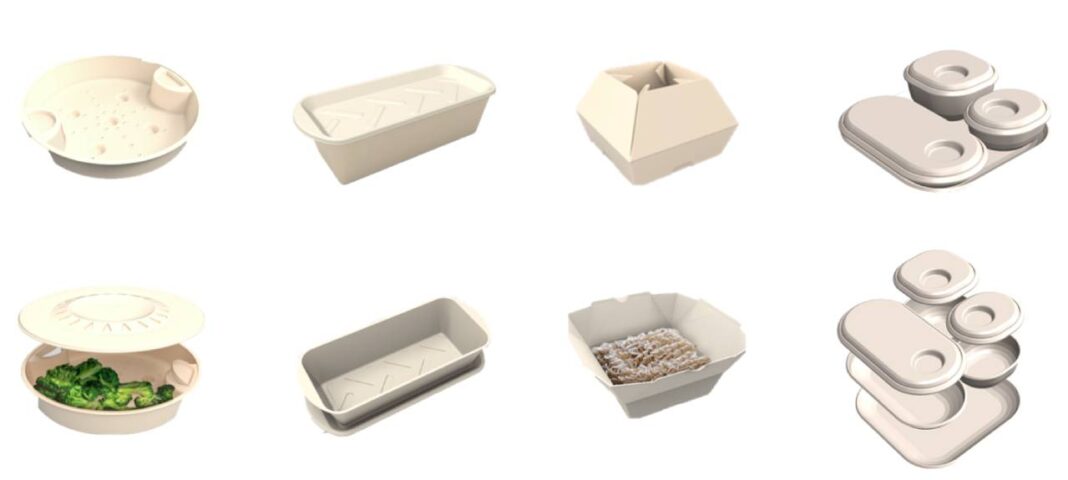
The clean-tech start-up W-cycle made a breakthrough in greener food packaging with its patented food-grade SupraPulp material. SupraPulp comprises a line of formulas that cleverly combines sugarcane waste (known as bagasse) or other sidestreams such as eucalyptus wood fibers and banana leaves with additives to produce molded fiber packaging.

This material is transformed into a new generation of highly functional food trays able to contain both frozen and heated foods. The molded-fiber containers are impervious to oil and water and need no plastic lamination for barriers. SupraPulp trays can sustain any type of frozen food and juice run-off without leakage through the container.
The trays are designed to withstand extreme temperatures ranging from -40° freezing to 220°C heat. And, they are compostable.

Nature’s answer
”Our ecological packaging formulations help food packaging manufacturers break away from plastic PET materials, allowing them to create robust containers that are suitable for freezer to oven/microwave convenience,” says Rome. “The added game-changer of using SupraPulp trays is that they can be tossed away guilt-free: The material will simply decompose, reintegrating back into the earth from which it originated within roughly 100 days.”
Plastic can take hundreds of years to decompose. According to the United Nations Environment Program, approximately 400 million tons of plastic waste is generated per year. Only a small fraction is recycled. The vast majority (95%) ends up in landfills or gets dumped into the ocean, causing havoc to marine life and to the human body where it makes its way through the food chain and through the air we breath.
Related: Tipa makes biodegradable plastics for the cannabis industry
W-cycle’s SupraPulp containers are already helping catering companies, ready-meal producers, in-flight caterers, institutions, food take-away services and multinational food companies to sever ties to plastic containers. In addition to tailoring pulp formulations for Melhoramentos, as part of the partnership W-cycle will provide R&D support in molded fiber production. This includes testing different formulations and their compatibility with various types of fibers, including those produced by Melhoramentos through its forest cultivation operations.
“As pioneers in ecological food packaging, W-cycle brings extensive expertise in molded fiber properties, complementary materials, and their performance under different conditions, along with a deep understanding of manufacturing processes and equipment needs,” says Gibini.“This will be instrumental in helping us design food packaging options that are high performing, cost-effective, and can work in harmony with the environment.”
According to a report by Grand View Research, the global bioplastics market is expected to grow at a compound annual growth rate of 18.8% to reach $44.77 billion by 2030. The growth is attributed to the increased demand for sustainable bio-based products from sectors including consumer goods, food and beverages, and packaging solutions, among others. Invest in bioplastics, invest in the future of our planet.
How can policy makers promote less plastics?
- Ban or charge for single-use plastics — but be careful to tighten any loopholes, such as allowing shops to offer thicker, ‘reusable’ plastic bags that end up in the bin anyway. Like the bags sold at Walmart.
- Make plastic producers pay — by charging by weight, making them pay for recycling, or by rewarding the inclusion of recycled material. This depends on having effective, safe recycling centres.
- Crack down on microplastics by banning microbeads from cosmetics. Microplastic filters in washing machines can help too, but it would be better to promote a shift in how textiles are made — a perfect candidate for an international treaty