Reserve a Red Sea pod hotel at Shebara Island for $2,400 a night

Shebara Report, Saudi Arabia

In an oil wealthy state like Saudi Arabia luxury has no limits. And the latest is LEED certified.

A new Red Sea resort in Saudi Arabia called Shebara Island is already taking pre-bookings for its glamorous pod hotels, a cool SAR 9,000 a night, which equals about $2,400 USD. No big deal if you’ve berthed your mega-yacht at its shores.

Powered by the sun, the resort features 73 pods that rival the best of luxury from the Maldives seeing a downturn in tourism for its racist policies on religious freedom.

 With 73 breathtaking overwater and beachfront villas powered by sunlight, this resort is where nature and sustainability come together at The Red Sea
With 73 overwater and beachfront villas powered by sunlight, this resort is where nature and sustainability come together at The Red Sea

Saudi Arabia is hoping to become booming hotspot for business and tourism and has started creating 15-minute cities like Neom.

Shebaya, the latest from dozens of new projects announced, is LEED-Platinum property which is built to “minimise its environmental and literal environmental footprint by cantilevering the accommodation spaces above the coral reefs with only a few square meters of ground impact at the base of the supporting column.

“The result is an aerial accommodation ‘pod’ that almost seems to defy gravity and suspends the guest directly above and within the beauty of an untouched marine eco-system; an observation platform for guests to witness the fish, birds and turtles that thrive in the area,” says a handout.

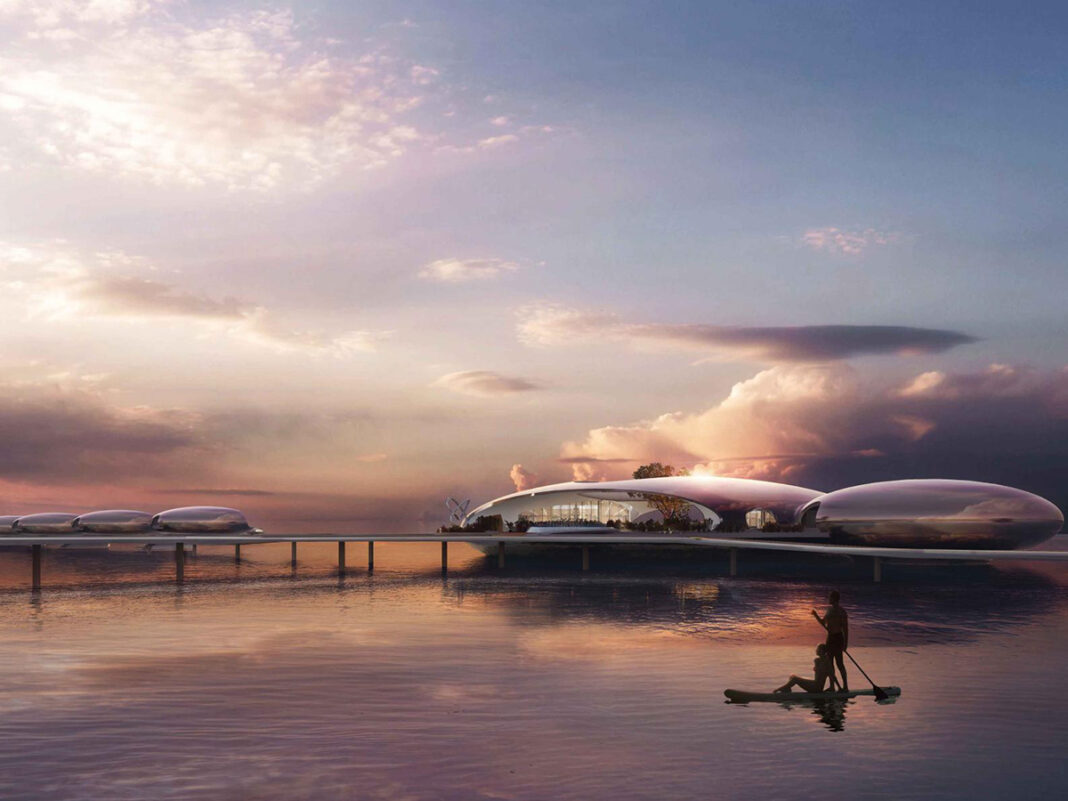
The LEED-Platinum property seeks to minimise its environmental and literal environmental footprint by cantilevering the accommodation spaces above the coral reefs with only a few square meters of ground impact at the base of the supporting column. The result is an aerial accommodation ‘pod’ that almost seems to defy gravity and suspends the guest directly above and within the beauty of an untouched marine eco-system; an observation platform for guests to witness the fish, birds and turtles that thrive in the area. The entire project is powered by a centralized solar farm and fresh water is supplied from a solar powered desalination plant. Recycling of waste material takes place on the island minimizing the need to bring or remove materials from the site. The entire infrastructural backbone of the project forms part of a visitor experience where guest can be exposed to and learn about the approach that goes into making the project a truly self-sustained human development. The design language of the resort compliments the uniqueness of the site. The approach to the façade design has been to minimize visual impact, employing a highly reflective stainless-steel skin polished to a mirror finish. These reflective orbs float, almost imperceptible, reflecting the colors and surface patterns of the ocean, the intense colors of the sky as they change throughout the day. This approach serves to lessen the visual impact of the architecture on the surrounding environment while also greatly improv the building’s energy performance with a near 100% reflection of the solar gain at the mirror surface. These heavily insulated spaces can be effectively cooled with minimal energy losses.

The entire project is powered by a centralized solar farm and fresh water is supplied from a solar powered desalination plant. Recycling of waste material takes place on the island minimizing the need to bring or remove materials from the site.

The LEED-Platinum property seeks to minimise its environmental and literal environmental footprint by cantilevering the accommodation spaces above the coral reefs with only a few square meters of ground impact at the base of the supporting column. The result is an aerial accommodation ‘pod’ that almost seems to defy gravity and suspends the guest directly above and within the beauty of an untouched marine eco-system; an observation platform for guests to witness the fish, birds and turtles that thrive in the area. The entire project is powered by a centralized solar farm and fresh water is supplied from a solar powered desalination plant. Recycling of waste material takes place on the island minimizing the need to bring or remove materials from the site. The entire infrastructural backbone of the project forms part of a visitor experience where guest can be exposed to and learn about the approach that goes into making the project a truly self-sustained human development. The design language of the resort compliments the uniqueness of the site. The approach to the façade design has been to minimize visual impact, employing a highly reflective stainless-steel skin polished to a mirror finish. These reflective orbs float, almost imperceptible, reflecting the colors and surface patterns of the ocean, the intense colors of the sky as they change throughout the day. This approach serves to lessen the visual impact of the architecture on the surrounding environment while also greatly improv the building’s energy performance with a near 100% reflection of the solar gain at the mirror surface. These heavily insulated spaces can be effectively cooled with minimal energy losses. The LEED-Platinum property seeks to minimise its environmental and literal environmental footprint by cantilevering the accommodation spaces above the coral reefs with only a few square meters of ground impact at the base of the supporting column. The result is an aerial accommodation ‘pod’ that almost seems to defy gravity and suspends the guest directly above and within the beauty of an untouched marine eco-system; an observation platform for guests to witness the fish, birds and turtles that thrive in the area. The entire project is powered by a centralized solar farm and fresh water is supplied from a solar powered desalination plant. Recycling of waste material takes place on the island minimizing the need to bring or remove materials from the site. The entire infrastructural backbone of the project forms part of a visitor experience where guest can be exposed to and learn about the approach that goes into making the project a truly self-sustained human development. The design language of the resort compliments the uniqueness of the site. The approach to the façade design has been to minimize visual impact, employing a highly reflective stainless-steel skin polished to a mirror finish. These reflective orbs float, almost imperceptible, reflecting the colors and surface patterns of the ocean, the intense colors of the sky as they change throughout the day. This approach serves to lessen the visual impact of the architecture on the surrounding environment while also greatly improv the building’s energy performance with a near 100% reflection of the solar gain at the mirror surface. These heavily insulated spaces can be effectively cooled with minimal energy losses. The LEED-Platinum property seeks to minimise its environmental and literal environmental footprint by cantilevering the accommodation spaces above the coral reefs with only a few square meters of ground impact at the base of the supporting column. The result is an aerial accommodation ‘pod’ that almost seems to defy gravity and suspends the guest directly above and within the beauty of an untouched marine eco-system; an observation platform for guests to witness the fish, birds and turtles that thrive in the area. The entire project is powered by a centralized solar farm and fresh water is supplied from a solar powered desalination plant. Recycling of waste material takes place on the island minimizing the need to bring or remove materials from the site. The entire infrastructural backbone of the project forms part of a visitor experience where guest can be exposed to and learn about the approach that goes into making the project a truly self-sustained human development. The design language of the resort compliments the uniqueness of the site. The approach to the façade design has been to minimize visual impact, employing a highly reflective stainless-steel skin polished to a mirror finish. These reflective orbs float, almost imperceptible, reflecting the colors and surface patterns of the ocean, the intense colors of the sky as they change throughout the day. This approach serves to lessen the visual impact of the architecture on the surrounding environment while also greatly improv the building’s energy performance with a near 100% reflection of the solar gain at the mirror surface. These heavily insulated spaces can be effectively cooled with minimal energy losses.

The design language of the resort compliments the uniqueness of the site. The approach to the façade design has been to minimize visual impact, employing a highly reflective stainless-steel skin polished to a mirror finish. These reflective orbs float, almost imperceptible, reflecting the colors and surface patterns of the ocean, the intense colors of the sky as they change throughout the day.

Desalination and power plant powered by the sun

This approach serves to lessen the visual impact of the architecture on the surrounding environment while also greatly improv the building’s energy performance with a near 100% reflection of the solar gain at the mirror surface. These heavily insulated spaces can be effectively cooled with minimal energy losses.

The LEED-Platinum property seeks to minimise its environmental and literal environmental footprint by cantilevering the accommodation spaces above the coral reefs with only a few square meters of ground impact at the base of the supporting column. The result is an aerial accommodation ‘pod’ that almost seems to defy gravity and suspends the guest directly above and within the beauty of an untouched marine eco-system; an observation platform for guests to witness the fish, birds and turtles that thrive in the area. The entire project is powered by a centralized solar farm and fresh water is supplied from a solar powered desalination plant. Recycling of waste material takes place on the island minimizing the need to bring or remove materials from the site. The entire infrastructural backbone of the project forms part of a visitor experience where guest can be exposed to and learn about the approach that goes into making the project a truly self-sustained human development. The design language of the resort compliments the uniqueness of the site. The approach to the façade design has been to minimize visual impact, employing a highly reflective stainless-steel skin polished to a mirror finish. These reflective orbs float, almost imperceptible, reflecting the colors and surface patterns of the ocean, the intense colors of the sky as they change throughout the day. This approach serves to lessen the visual impact of the architecture on the surrounding environment while also greatly improv the building’s energy performance with a near 100% reflection of the solar gain at the mirror surface. These heavily insulated spaces can be effectively cooled with minimal energy losses.

The interior space of the project provides spacious room for the guests, with detailing, and finishes inspired by the interiors of luxury yachts. The room offers panoramic views to the sea with sliding doors that open to a deck, a seating area and an infinity pool with uninterrupted views of the sea and horizon beyond.

The project is designed by the UAE based K

Other Red Sea attractions in the region include our favorite place: low-key eco tourism in Sinai. There is also a great list of eco-tourism sites in the Holy Land. A typical trip in the future might look like this:

  1. A cruise down the Nile. The pyramids. A visit to Siwa Oasis in Egypt.
  2. Head over to St. Catherines Monastery, hike God’s Mountain, and spend a few nights diving in Sinai.
  3. Taxi over to Eilat and head to Tel Aviv, Tiberias, Jerusalem, the Dead Sea.
  4. Head across the Allenby Bridge to Jordan and check out Madaba, then down to Petra.
  5. From Petra head to Saudi Arabia to one of its dozens of new Red Sea attractions.


Karin Kloosterman
Karin Kloostermanhttp://www.greenprophet.com
Karin Kloosterman is an award-winning journalist, innovation strategist, and founder of Green Prophet, one of the Middle East’s pioneering sustainability platforms. She has ranked in the Top 10 of Verizon innovation competitions, participated in NASA-linked challenges, and spoken worldwide on climate, food security, and future resilience. With an IoT technology patent, features in Canada’s National Post, and leadership inside teams building next-generation agricultural and planetary systems — including Mars-farming concepts — Karin operates at the intersection of storytelling, science, and systems change. She doesn’t report on the future – she helps design it. Reach out directly to [email protected]

TRENDING

BM Studios is designing systems, not just buildings in the UAE

Balsam Madi is an architect and systems thinker whose work bridges culture, sustainability, and design intelligence across the Middle East and Europe.

Earth building with Dead Sea salt bricks

Researchers develop a brick made largely from recycled Dead Sea salt—offering a potential alternative to carbon-intensive cement.

10 Proven Israeli Technologies to Help Somaliland Build Food, Water, and Energy Security

Israel’s water and agricultural technologies didn’t emerge from ideal conditions. They were developed under pressure: low rainfall, saline water, political isolation, lack of energy resources, and the constant need to feed a growing population with limited land. Over the years, I’ve written about many of these companies not as miracle-makers, but as problem-solvers. That’s what makes them relevant to places like Somaliland. Israel was the first country in the world to recognize Somaliland as an independent state although Ethiopia has been treating the nation as such for decades.

Dead shark on beach injured by fishing nets

  A dead shark that washed ashore this week at...

Investing in the Middle East? These 20 Energy consultants can de-risk your portfolio

For instance is your clean tech firm or company in wastewater treatment considering an office in Riyadh or should you stick with Dubai?  Below is a curated spotlight on 20 firms that shine for their deep expertise and proven ability to manage the complex risks of sustainable energy investment.

Turning Your Energy Consultancy into an LLC: 4 Legal Steps for Founders in Texas

If you are starting a renewable energy business in Texas, learn how to start an LLC by the books.

Tracking the Impacts of a Hydroelectric Dam Along the Tigris River

For the next two months, I'll be taking a break from my usual Green Prophet posts to report on a transnational environmental issue: the Ilısu Dam currently under construction in Turkey, and the ways it will transform life along the Tigris River.

6 Payment Processors With the Fastest Onboarding for SMBs

Get your SMB up and running fast with these 6 payment processors. Compare the quickest onboarding options to start accepting customer payments without delay.

Qatar’s climate hypocrisy rides the London Underground

Qatar remains a master of doublethink—burning gas by the megaton while selling “sustainability” to a world desperate for clean air. Wake up from your slumber people.

How Quality of Hire Shapes Modern Recruitment

A 2024 survey by Deloitte found that 76% of talent leaders now consider long-term retention and workforce contribution among their most important hiring success metrics—far surpassing time-to-fill or cost-per-hire. As the expectations for new hires deepen, companies must also confront the inherent challenges in redefining and accurately measuring hiring quality.

8 Team-Building Exercises to Start the Week Off 

Team building to change the world! The best renewable energy companies are ones that function.

Thank you, LinkedIn — and what your Jobs on the Rise report means for sustainable careers

While “green jobs” aren’t always labeled as such, many of the fastest-growing roles are directly enabling the energy transition, climate resilience, and lower-carbon systems: Number one on their list is Artificial Intelligence engineers. But what does that mean? Vibe coding Claude? 

Somali pirates steal oil tankers

The pirates often stage their heists out of Somalia, a lawless country, with a weak central government that is grappling with a violent Islamist insurgency. Using speedboats that swarm the targets, the machine-gun-toting pirates take control of merchant ships and then hold the vessels, crew and cargo for ransom.

Related Articles

Popular Categories