

The congealed concoction pictured above is actually one of the least repugnant dishes that Americans were so enamored of in the 1950s and 60s, and even into the 1970s. There it is, an elaborately layered composite of garden vegetables safely encased in a nice, neat covering of gelatin. It looks good enough to serve at dinner when Hubby’s boss comes over, right?
But wait, it gets worse.

This appetizer, meant to be spread on crackers, consists of finely chopped ham, cream cheese, sliced green onions, pickle relish, slivered almonds, and Miracle Whip to hold it all together. Imagine a buffet with this creation on the table today. Better not; its rightful place is in the gallery of horrible past foods.
Still, a modern-day blogger whose taste seems to match the palate of the 1950s reproduced the dish, with some adjustments. And good luck to her, I say.
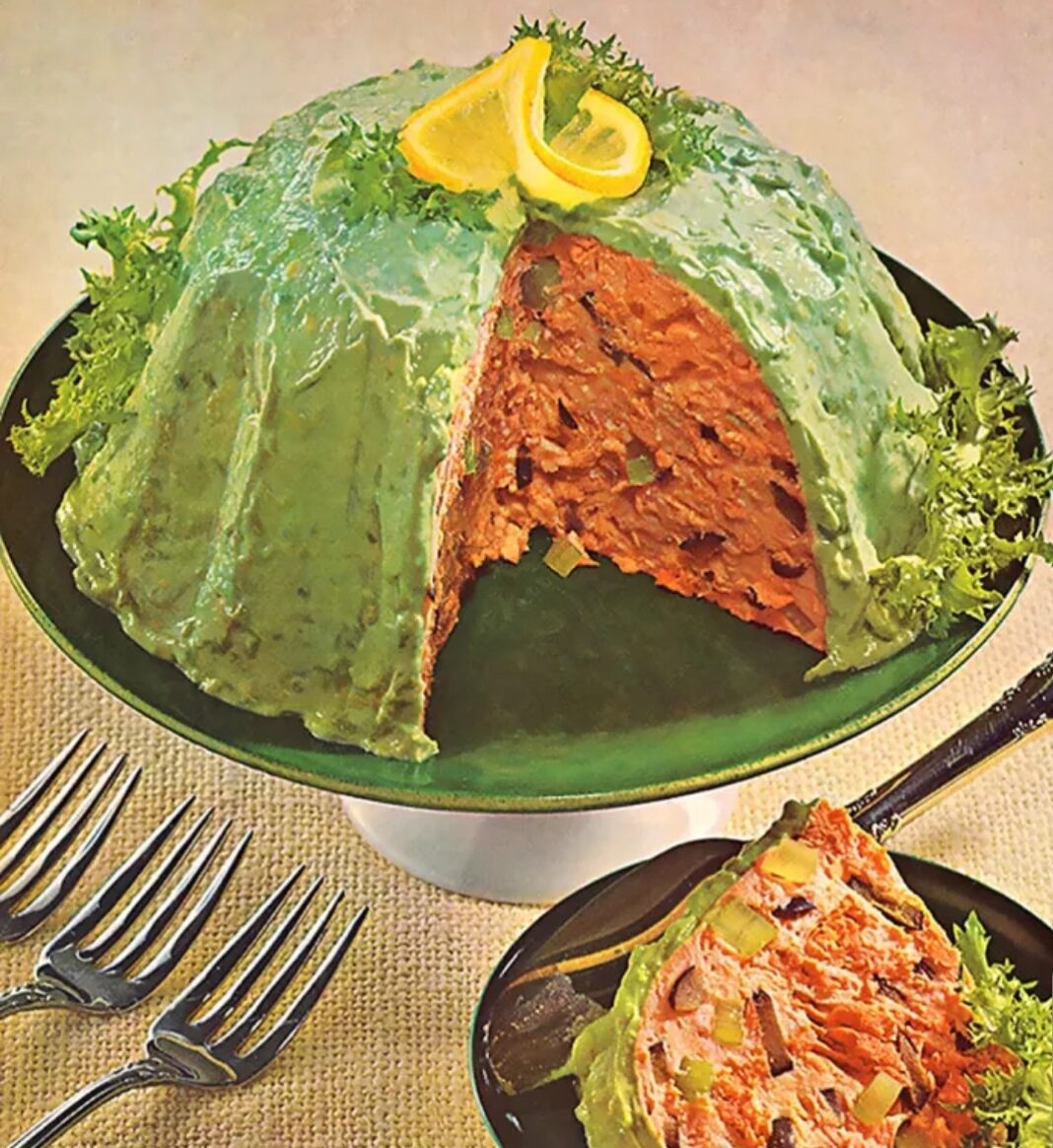
To really give you the willies, here’s a dish whose name and ingredients are unknown. It looks like ground beef, or possibly Spam, and onions and peppers, possibly baked in a bundt mold, cooled and slathered with mayo tinted with green food coloring – sort of a glorified meat loaf – but your guess is as good as mine.

The magazines of the 50s and 60s initially offered these recipes to American women who needed a handsome buffet dish that stayed in one neat piece on the plate. Later the recipes emphasized using up leftovers and making prep-ahead foods for the working mother who needed to put dinner on the table fast.
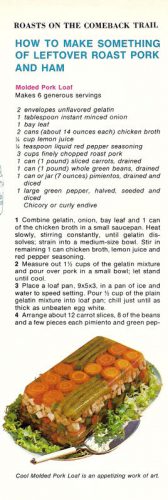
Here’s an example: leftover roast pork mold. All the ingredients, except for the leftover meat and a green pepper, come out of cans.
Fancy molded dishes were always status symbols. Molds that survived from medieval times can be viewed at some museums. As long ago as 1520, Henry VIII enjoyed a jelly consisting of squares of rose-flavored milk jelly made more precious by gold leaf.
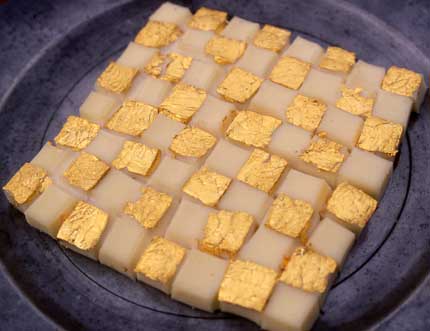
Source: www.historicfood.com
Elaborate dessert molds from the 17th and 18th century exist. Mrs. Beeton’s famous “Book of Household Management” (1861) offers a variety of molded jelly desserts, some tinted with cochineal (a dried, powdered insect that yields a red color and which is still used in some industrial foods).
Over time, the domestic servants needed to produce these culinary marvels were replaced by appliances. The vacuum cleaner, the electric iron, and the refrigerator were new-fangled status symbols. Some food historians suggest that a fancy, gelatin-based food, which had to come out of a refrigerator, subtly reflected the affluence of the household. In other words, showing off with food, just as they did back in Henry VIII’s time.
Others propose that the emphasis on using up leftovers in gelatin was a thrifty hangover from the austere WW2 years.
We look back on those mid-20th century congealed foods with a shudder. Those were the days of the “Sensational Avocado-Turkey Crown,” which allowed the wise American housewife to use up “tag ends of turkey.” The days of the Can-Opener Cookbook (Poppy Cannon, 1951). But we understand the appeal of industrial foods like gelatin, mayonnaise, and canned vegetables. A woman could, for example, turn a couple of cans of Spam and biscuit mix into a quick, filling and cheap dinner for the family.

There’s not much to be said in favor of the foods concocted out of industrial ingredients except that they did offer convenience and economy. I may view them with repugnance, but I respect the women who saw them as God-sent answers to the pressures of fitting into the job market and running their homes at modern standards in the post-Great Depression and post-WW2 era. Those grandmothers were convinced that they were doing their best in the brave new world.
A final quickly prepared family meal: Spagetti-O (canned pasta) Jello salad with a fillip: boiled hot dog sticks. And no, I’m not giving the recipe. I wouldn’t wish it on anyone.