Greenhouse agriculture in Kazakhstan

woman food grower kazakhstan
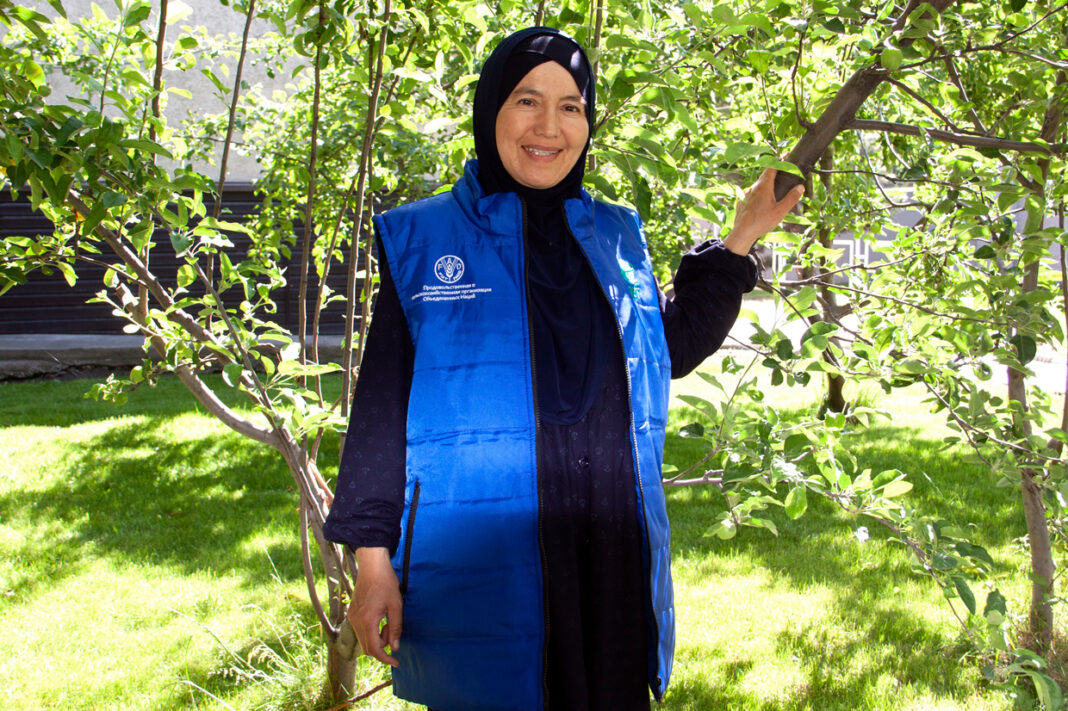
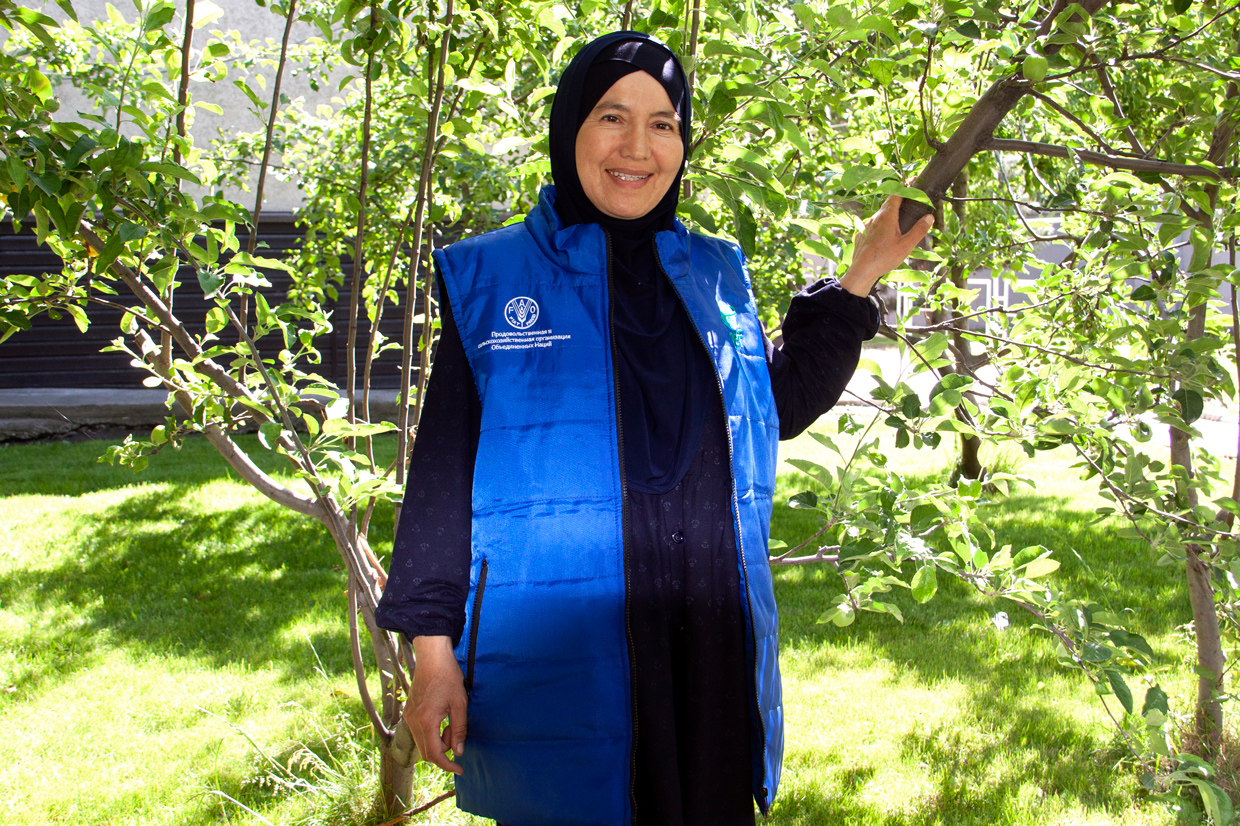
Working with an FAO project that provided a greenhouse, Aishagul Duganova is now able to grow vegetables year-round in her backyard and support her family. ©FAO/Didar Salimbayev

The eyes of Aishagul Duganova, a 48-year-old mother of three, light up as she talks about her new greenhouse, which is bringing with it a new stability amidst her family’s health problems and money troubles.

In the village of Koram, around 150 kilometers east of Almaty in Kazakhstan, Aishagul’s life has been marked by her husband’s debilitating injury and the severe illnesses of her elderly parents-in-law.
With her family completely reliant on her, Aishagul was caught between the demanding care they required and the necessity to earn money; yet she was unable to take advantage of work opportunities too far from home.
Before her husband’s accident, Aishagul worked with him in the field, and they sold their produce in local markets. But as his condition worsened, she could no longer leave him alone, pushing the family into a cycle of debt to cover medical expenses and sustain their children.
“Every day, I had to make a choice— care for my sick family or leave them behind to work. It was a choice no one should have to make,” Aishagul shares, her voice tinged with the fatigue of years of caregiving.
A turning point came when Aishagul’s sister-in-law, aware of her dire situation, introduced her to a greenhouse harvesting training programme. This initiative was part of the broader Food and Agriculture Organization of the United Nations (FAO) project, known as CACILM-2, and funded by the Global Environmental Facility (GEF).
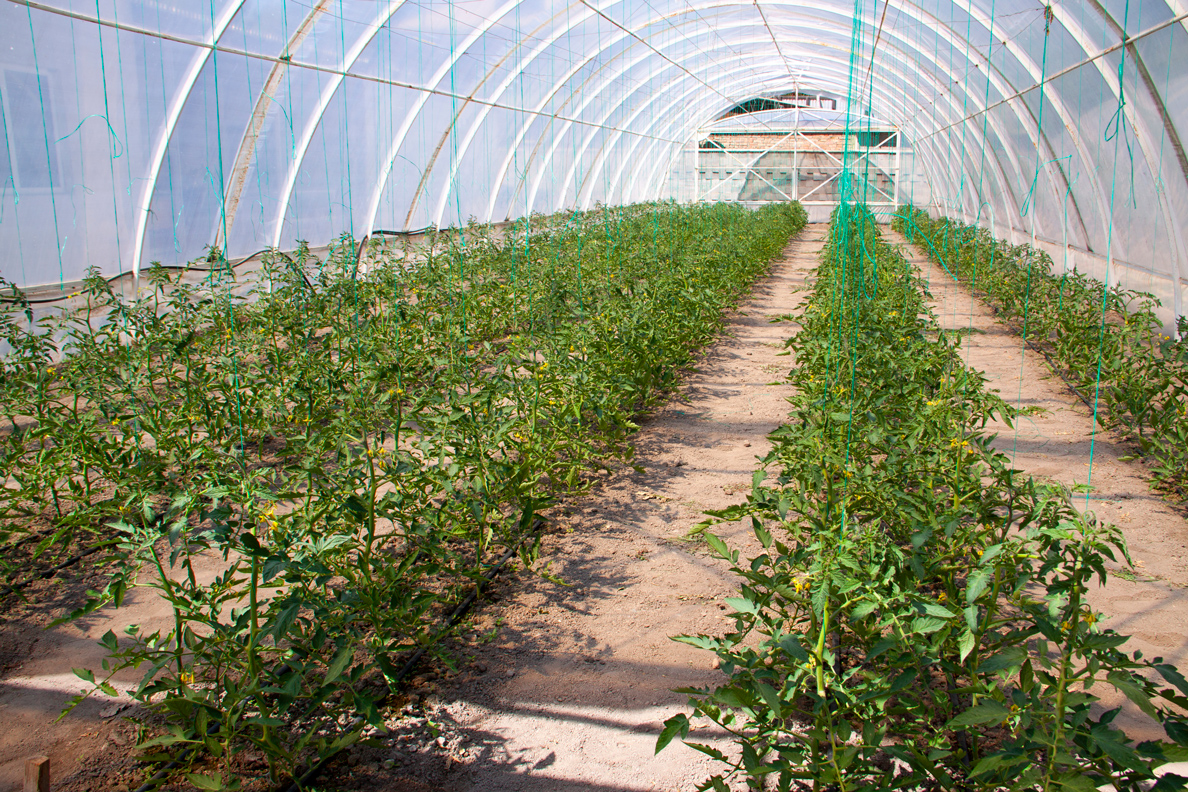
A hoop house greenhouse in Kazakhstan
A hoop house greenhouse in Kazakhstan. ©FAO/Didar Salimbayev
Among its objectives, the project equips rural women in Kazakhstan with the skills and resources to adopt sustainable farming practices and make a living from agriculture. The training course provided by FAO’s partner, the Local Community Foundation of Enbekshikazakh District, Aishagul has improved her vegetables and produce-growing skills, allowing her to independently cultivate food.
Pavel Kavunov, an agronomist working at the Foundation, explained the training offered by the project: “We focused on practical, climate-smart agriculture techniques that ensure these women can produce quickly and sustainably.”
He imparted information on the characteristics of seedlings, their root systems and important aspects to consider during planting. “It’s about giving them the tools and the knowledge to succeed on their own terms,” he added.
This local expert presence ensures that the women farmers are not only trained but also have continual access to advice and problem-solving techniques, which is vital for the sustainability of their agricultural activities.
FAO also worked with Aishagul and nine other women to install 100 square metre, tunnel greenhouses on their lands. This collaboration has empowered them to cultivate vegetables all year-round in their backyards, opening the door to economic independence and lasting stability.
As the women learn to manage their micro-farms, they are supported by a network of agronomists and coordinators, such as Bakytgul Yelchibayeva, who assist them in connecting with local markets and buyers. “Our goal is to go beyond providing initial support by creating a lasting infrastructure that enables these women to thrive independently,” she explains.
Aishagul is now making the most of her new greenhouse, growing cucumbers and other vegetables to support her family. “This greenhouse has changed everything. It allows me to be with my family when they need me and still provide for them,” she explains. Encouraged by her success, Aishagul hopes to build a sustainable farm that also helps other women in her community learn and grow together.
In addition to the greenhouse, the project supported women farmers with tillage materials and cucumber seeds. Together, the women sold 3 992 kilograms of produce, earning roughly double what they would typically make. The boost in income from this extra produce helped improve the lives of 64 people, strengthening their community’s farming efforts.
 
The CACILM-2 project is providing targeted training, resources and coaching to rural communities in Central Asia, addressing several critical barriers such as inadequate job opportunities and lack of information. Moreover, through partnerships with local foundations and experts, participants forge connections with local markets and introduce their products to potential buyers, ensuring a reliable outlet for their produce.
By empowering rural women with the tools and knowledge to undertake agricultural ventures, FAO is promoting equality of opportunity, enhancing their economic stability and independence.
Karin Kloosterman
Karin Kloostermanhttp://www.greenprophet.com
Karin Kloosterman is an award-winning journalist, innovation strategist, and founder of Green Prophet, one of the Middle East’s pioneering sustainability platforms. She has ranked in the Top 10 of Verizon innovation competitions, participated in NASA-linked challenges, and spoken worldwide on climate, food security, and future resilience. With an IoT technology patent, features in Canada’s National Post, and leadership inside teams building next-generation agricultural and planetary systems — including Mars-farming concepts — Karin operates at the intersection of storytelling, science, and systems change. She doesn’t report on the future – she helps design it. Reach out directly to [email protected]

TRENDING

Farm To Table Israel Connects People To The Land

Farm To Table Israel is transforming the traditional dining experience into a hands-on journey.

Sink holes from over-watering farmers’ fields

Sinkholes are rapidly appearing in Turkey’s central Anatolian farming region, particularly around Konya and Karapınar. These giant gaping holes in the ground in areas of farmland, known locally as obruk, are not random geological events. They are linked to prolonged drought, climate-driven heat stress, and heavy groundwater extraction for agriculture in one of the country’s most important breadbaskets.

Inflatable concrete homes: a California and Ontario case study

Across Ontario and California, builders are rethinking concrete housing through inflatable-shell design—an approach that replaces wooden formwork with air and innovation. A 1,000-square-foot low-carbon concrete shell, insulated with hempcrete, can be erected in a day and cost far less than conventional construction. Over time, the savings in energy, materials, and mortgage costs make this model a realistic response to rising living expenses and climate stress. With low-carbon cement, hempcrete walls, and renewable energy, inflatable concrete homes show how even the world’s most carbon-heavy material can become part of a sustainable future—if built smartly, and within local building codes.

Lizard tail stew, dhub mansaf, is a favored folk dish in Saudi Arabia

By exploring forgotten folk dishes like lizard stew, Green Prophet continues to connect the dots between culture, ecology, and the future of sustainable living in the Middle East.

Biodiversity Blueprint Set for 2026

If we seize this moment, the 2026 review can catalyse a new wave of finance (see Green Finance mechanisms in the UAE), innovation and policy coherence — and move us closer to the vision of a nature-positive world by 2050. If not, the checkpoint risks becoming another missed opportunity while ecosystems, livelihoods and economies continue to degrade.

Qatar’s climate hypocrisy rides the London Underground

Qatar remains a master of doublethink—burning gas by the megaton while selling “sustainability” to a world desperate for clean air. Wake up from your slumber people.

How Quality of Hire Shapes Modern Recruitment

A 2024 survey by Deloitte found that 76% of talent leaders now consider long-term retention and workforce contribution among their most important hiring success metrics—far surpassing time-to-fill or cost-per-hire. As the expectations for new hires deepen, companies must also confront the inherent challenges in redefining and accurately measuring hiring quality.

8 Team-Building Exercises to Start the Week Off 

Team building to change the world! The best renewable energy companies are ones that function.

Thank you, LinkedIn — and what your Jobs on the Rise report means for sustainable careers

While “green jobs” aren’t always labeled as such, many of the fastest-growing roles are directly enabling the energy transition, climate resilience, and lower-carbon systems: Number one on their list is Artificial Intelligence engineers. But what does that mean? Vibe coding Claude? 

Somali pirates steal oil tankers

The pirates often stage their heists out of Somalia, a lawless country, with a weak central government that is grappling with a violent Islamist insurgency. Using speedboats that swarm the targets, the machine-gun-toting pirates take control of merchant ships and then hold the vessels, crew and cargo for ransom.

Leopoldo Alejandro Betancourt López Turned Ocean Plastic Into Profitable Sunglasses

Few fashion accessories carry the environmental burden of sunglasses. Most frames are constructed from petroleum-based plastics and acrylic polymers that linger in landfills for centuries, shedding microplastics into soil and waterways long after they've been discarded. Leopoldo Alejandro Betancourt López, president of the Spanish eyewear brand Hawkers, saw this problem differently than most industry executives.

Why Dr. Tony Jacob Sees Texas Business Egos as Warning Signs

Everything's bigger in Texas. Except business egos.  Dr. Tony Jacob figured...

Israel and America Sign Renewable Energy Cooperation Deal

Other announcements made at the conference include the Timna Renewable Energy Park, which will be a center for R&D, and the AORA Solar Thermal Module at Kibbutz Samar, the world's first commercial hybrid solar gas-turbine power plant that is already nearing completion. Solel Solar Systems announced it was beginning construction of a 50 MW solar field in Lebrija, Spain, and Brightsource Energy made a pre-conference announcement that it had inked the world's largest solar deal to date with Southern California Edison (SCE).

Related Articles

Popular Categories