Are black olives safe to eat?

real versus fake black olives
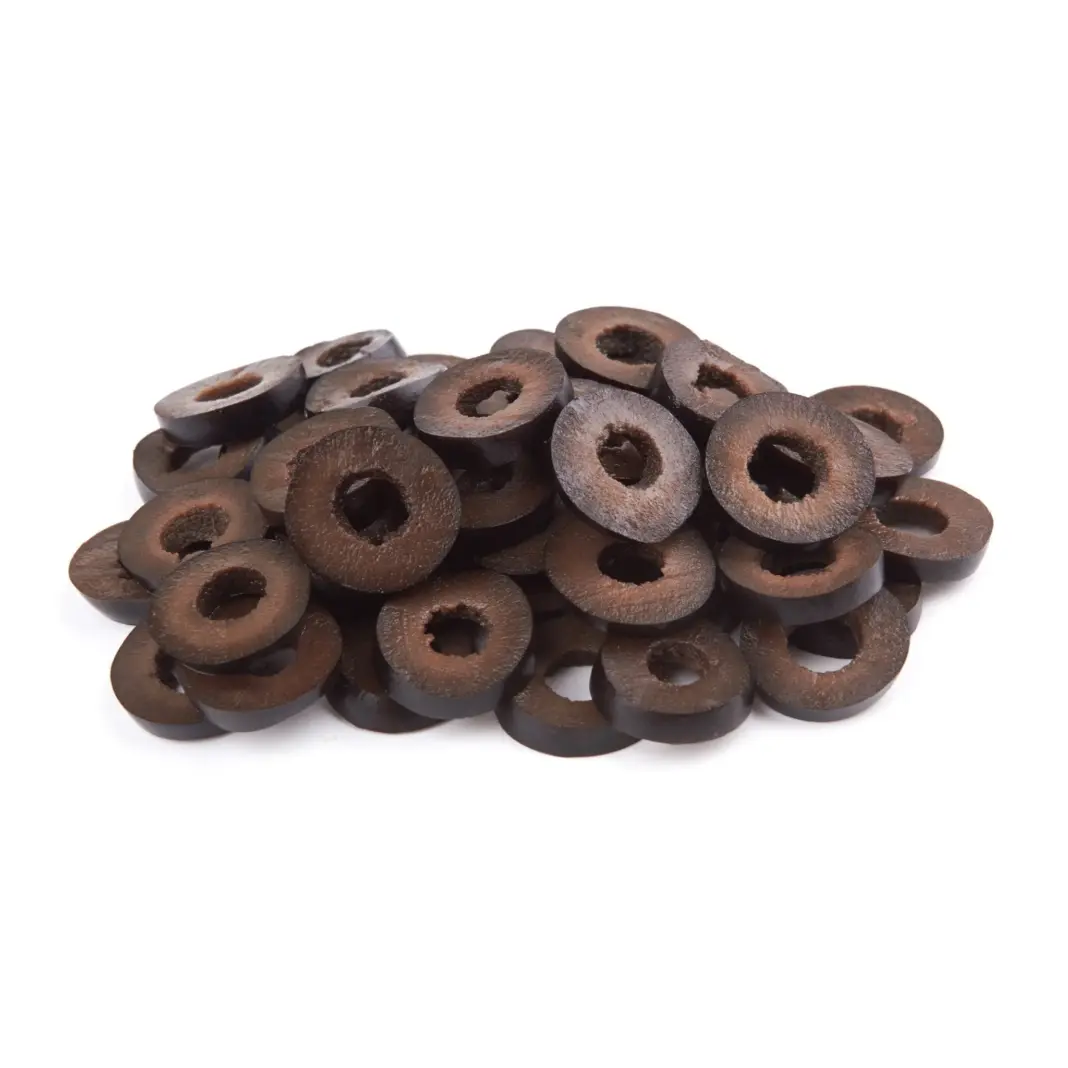
Black olive producers have been duping us all this time. The black isn’t a fermented olive, and it’s actually a green olive in food coloring. The left are fake olives. The ones on the right are the real deal. Mushy, greyish, with

Olives ––  the symbol of the Mediterranean and of good heart health and peace. The Old Testament speaks of olives are as loved as honey, figs, grapes, and pomegranates. As cherished as they are, black olives may be keeping a not-so-healthy secret. Olives naturally turn from green to black when they ripen, but they usually don’t ripen uniformly. To even out the color and look of black olives, and to make them cure quicker, Californians invented a way to dye them so that they will look and taste great.

What we are saying is that most black olives that you buy are actually green olives dressed up in black! It’s like the take of pink pistachios.

fake black olives
Uniform in color, and like a small rubber tire: these are fake olives and they are as dead as pickles cured in vinegar.

So when you buy ripened black olives in a can, the olives are usually neither actually black or ripe. Many olives in a can are picked when they are green and are cured using an iron salt and brine and lye solution to cause the olives to darken and preserve quickly. Additives may include lye, acetic acid, chloride salts, iron salts (such as ferrous gluconate also known as ferrum sulfate) and compressed air bubbled through the olive curing vats help develop the black color.

home pickled fermented olives
Naturally darkened olives. They aren’t uniformly dark.

Some health effects of eating ferrous gluconate, which is generally regarded as safe, or GRAS for human consumption: This chemical study found that there are people who may have allergies to ferrous gluconate, represented by the food labeling E number E579 in Europe: “Although ferrous gluconate is widely applied in food processing and is generally regarded as safe, it should be used according to the prescribed level. Excessive application can lead to iron overload.”

This site is a food additives watchdog that points out some potential side effects of ferrous gluconate, used as a common iron supplement pill. Possible Side Effects of Ferrous Gluconate E579 can be gastrointestinal discomfort, anorexia, diarrhea, nausea, heartburn, vomiting, constipation, fecal impaction, darkening of stools, gastrointestinal necrosis, and hematemesis. Allergic reactions and cardiovascular effects such as circulatory collapse.

Green olives colored black. Read the label.
Green olives colored black. Read the label. Naturally fermented olives should in

Natural shops offer what they call black olives that are not “dead” or treated with pasteurization, lye and other chemicals.

real black olives or fake?
Are these real black olives or fake?

They argue the case against additives in olives are to make them look better: “Olives don’t need to be this way. The difference between raw and pasteurised; between brine or salt or water and the chemical lye is little known, but significant on all levels. And that difference can be vast.

“Olives are a huge global market and something that we are likely to consume with little thought on a regular basis. Increasingly, even modern processing methods such as lye are being outpaced by techniques such as ultrasound, taking a natural process even further away from its roots,” they add.

Wait, is there a problem with green olives too?

Lye is a powerful corrosive substance which may be still present when you or your family eat the olives. It is used in commercial olive processing in both green and black olives to speed up the process, but like vinegar to make pickles, this method of using lye takes out all the good stuff that fermented fruits and vegetables can give you. Traces may be left on the olives.

Self sufficient culture explains why he won’t use lye. “I use lacto fermentation to cure my olives because I want good bacteria to survive the curing process and be present in my olives for the heath qualities it brings particularly for “gut” health.” We have piles of stories on health fermentation. Start with Jeff’s article on Sandor Katz.

While we have made and cured ripened black olives in the past (here is a recipe for making olives at home, which include blackened olives), we are now going to think twice about buying any black olive in brine if it means eating additives that may be harmful to my health or my kids. We are also going to look for naturally fermented green olives, because we didn’t realize that green olives in the can are industrialized.

How you can avoid lye and ferrous gluconate in your olives?

  1. Make your own olives means you need to live close to a Mediterranean market or olive groves in California. We have done the process which involves washing the olives every day for a month and then letting them sit for a month more. My son did it for a school project without the washing part. They added salt and lemon and after a few weeks they were picked perfectly. If you live in a Med area country, there ma be olive trees that you can forage from in towns and cities. Ask around.
  2. Buy your olives at a natural food stores with labels and vendors you trust.
  3. Go visit natural, slow food farms as part of your summer holidays in Europe and eat your heart out.

Love everything about olives? Here is more:

Here are 17 varieties of olives. How many do you know?

Want to plant an olive tree in a container at home? Read here how.

oldest olive tree with man
The world’s oldest olive trees

Here is a story about the world’s oldest olive tree. Guess where?

Meet the olive oil pioneer who fixed his heart with olive oil.


Karin Kloosterman
Karin Kloostermanhttp://www.greenprophet.com
Karin Kloosterman is an award-winning journalist, innovation strategist, and founder of Green Prophet, one of the Middle East’s pioneering sustainability platforms. She has ranked in the Top 10 of Verizon innovation competitions, participated in NASA-linked challenges, and spoken worldwide on climate, food security, and future resilience. With an IoT technology patent, features in Canada’s National Post, and leadership inside teams building next-generation agricultural and planetary systems — including Mars-farming concepts — Karin operates at the intersection of storytelling, science, and systems change. She doesn’t report on the future – she helps design it. Reach out directly to [email protected]

Hot this week

How Renewable Energy is Revolutionizing the Way We Power Our World

Solar has become the star of the transition thanks to modular hardware and straightforward installation. It fits dense cities and remote towns alike. Many companies are turning to rooftop arrays and carport systems - and exploring commercial solar installation as a practical way to lock in future savings.

How does one start prepping?

Faced with an extreme winter storm this year, Americans wonder how to be prepared for catastrophe. Miriam has lived through wars in the Middle East - so she's prepared on giving you a guide to prepping.

Fishermen sue tire manufacturers on behalf of the salmon

A federal trial in San Francisco has brought US tire manufacturers, fishing groups, and environmental scientists into court over a chemical most drivers have never heard of — but which scientists say may be silently reshaping aquatic ecosystems.

Listening to Water: Tarek Atoui’s Next Work for Tate Modern

Born in Beirut, Lebanon in 1980 and now living in Paris, Atoui has spent years building instruments that don’t sit comfortably in concert halls. Many of them involve water, glass, and ceramics — materials that react to sound instead of simply producing it.

Leading Through a Dual-Energy Transition: Balancing Decarbonisation with Energy Security

Experience in one area of the energy industry isn't enough to guarantee readiness across all the others. That's where a structured program like an MBA in energy can come in. Today's advanced curricula explore energy economics, finance, policy, and strategic management alongside the technical subjects. And when pursuing an energy MBA online, professionals can skill up and retrain without having to step out of the labor market -- an important perk at a time when skilled professionals are already in short supply.

Topics

How Renewable Energy is Revolutionizing the Way We Power Our World

Solar has become the star of the transition thanks to modular hardware and straightforward installation. It fits dense cities and remote towns alike. Many companies are turning to rooftop arrays and carport systems - and exploring commercial solar installation as a practical way to lock in future savings.

How does one start prepping?

Faced with an extreme winter storm this year, Americans wonder how to be prepared for catastrophe. Miriam has lived through wars in the Middle East - so she's prepared on giving you a guide to prepping.

Fishermen sue tire manufacturers on behalf of the salmon

A federal trial in San Francisco has brought US tire manufacturers, fishing groups, and environmental scientists into court over a chemical most drivers have never heard of — but which scientists say may be silently reshaping aquatic ecosystems.

Listening to Water: Tarek Atoui’s Next Work for Tate Modern

Born in Beirut, Lebanon in 1980 and now living in Paris, Atoui has spent years building instruments that don’t sit comfortably in concert halls. Many of them involve water, glass, and ceramics — materials that react to sound instead of simply producing it.

Leading Through a Dual-Energy Transition: Balancing Decarbonisation with Energy Security

Experience in one area of the energy industry isn't enough to guarantee readiness across all the others. That's where a structured program like an MBA in energy can come in. Today's advanced curricula explore energy economics, finance, policy, and strategic management alongside the technical subjects. And when pursuing an energy MBA online, professionals can skill up and retrain without having to step out of the labor market -- an important perk at a time when skilled professionals are already in short supply.

From Green Energy to Healthy Societies: Why old systems thinking is becoming relevant again

Across the Middle East and North Africa, large investments are being made in green hydrogen, renewable energy, water infrastructure and sustainability. Most of these efforts are discussed in the context of climate change, decarbonization and economic diversification. That framing is important, but it may not capture their full value.

We saw peace – an interreligious encounter deep in our eyes

They came from Israel, Palestine, Jordan, Iraq, Yemen, Morocco, Tunisia, Lebanon, Egypt… There are Sunni Muslims, Shiite Muslims, Jews (Orthodox and Reform), Orthodox Christians, Coptic Christians, Protestant Christians, Druze, Baha'is, a Scientologist.

Can biochar reduce ‘Forever Chemicals’ in food if it’s used in farms?

Biochar is produced by heating organic material in a low-oxygen environment so it does not burn. This process, known as pyrolysis, transforms plant matter into a stable, carbon-rich material.

Related Articles

Popular Categories