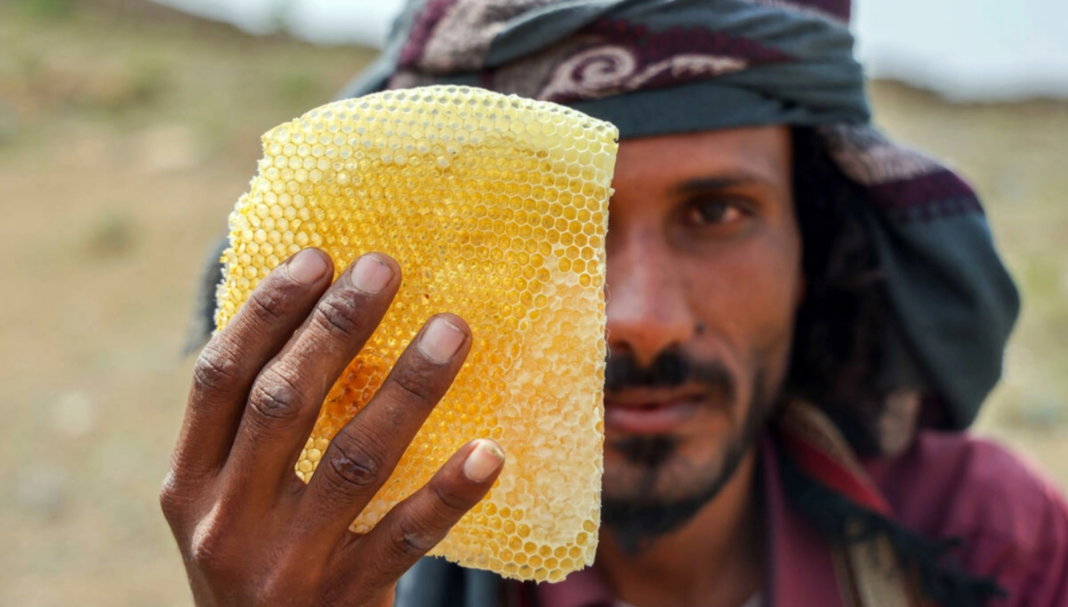
The Sidr tree is the sacred link between Judaism, Islam and Christianity

Yemen honey - Sidr tree
Yemen Honey from the Sidr tree, magical honey from paradise according to the Quran

In the enchanting tapestry of nature, the Sidr tree (Ziziphus spina-christi), known by various names such as Lote tree, Christ’s Thorn, the Jujube, or Nabkh tree, and it is a tree weaves a story that transcends religious boundaries. Beyond its status in Islam and Christianity, the Sidr tree plays a unique role in Jewish traditions, the beginning of monotheism and which Christianity and Islam is based.

According to the Jewish Library two species of jujube grow wild in Israel: the wild jujube (Zizyphus spina-Christi) and the lotus jujube (Zizyphus lotus). The first is a tall tropical tree with dense, prickly branches (from which, according to Christian tradition, Jesus’ crown of thorns was made, hence its scientific name), growing in the hot regions of Israel.

The second is a prickly desert bush, bearing small floury fruit; it grows wild in North Africa where the people make bread from it. These are “the lotus eaters” mentioned by Herodotus (Historiae, 4:177).

Also growing in Israel is the cultivated jujube (Zizyphus vulgaris) which produces a large fruit with an excellent flavor. This is the sheizaf of rabbinic literature which is commonly grafted on to the wild jujube, called rimin, the two species being counted as diverse kinds (kilayim) according to halakhah (Kil. 1:4). The fruits of the wild jujube are tasty but were not highly thought of (cf. Dem. 1.1).

natural medicine Sidr tree
Natural medicine from the jujube or Sidr tree

This tree, widespread in the wadis of the Arabah and the Jordan Valley, is identified with the ze’elim (lotus trees, AV “shady trees”) of Job 40:21–22 under which the behemoth lies near the banks of the Jordan. Near Ein Hazevah in the Arabah grows a huge wild jujube which is counted among the oldest trees in Israel.

The Wondrous Sidr Honey and its Healing Powers

At the heart of the Sidr tree’s significance lies the mystical Sidr honey, cherished for its unique properties across cultures. The Sidr tree, resilient and deep-rooted, grows in coastal, desert, and semi-desert areas, spanning regions from India and Pakistan to Ethiopia, Egypt, Libya, Sudan, and the southern Arabian Peninsula. Yemen’s sidr honey makers are very well known.

Yemen beekeepers keep ancient tradition alive
Yemen beekeepers keep ancient tradition alive. Now they get support from the UN/credit FAO

From the leaves of the jujube (sidr) to its fruits, roots, and bark, the sidr tree is a treasure trove of medicinal wonders:

The leaves, rich in calcium, iron, and magnesium, hold therapeutic prowess, serving as components in natural wound disinfectants and herbal shampoos.

The fruits, with protein-rich seeds, offer high nutritional value, boosting energy and fortifying the immune system. Even the ashes of the Sidr tree find purpose in treating snakebites, showcasing its versatile role in traditional medicine. Here are some folk medicines from Bedouin in Israel.

Sidr is Allah’s tree and it could stop climate change

A testament to resilience, the Sidr tree has weathered ancient floods and stands tall alongside the Tamarisk and the Mustard Tree. Belonging to the Ziziphus family of plants, it reaches an average height of 7-8 meters, with soft, gray-yellowish branches, yellow flowers, and round fruits turning reddish when ripe.

Sidr tree honey Yemen

In Islam, the Sidr tree is mentioned four times in the Quran, signifying both earthly and heavenly connections. The Sidr tree is considered sacred because it is mentioned in the Quran as being one of the plants in Paradise.

The sidr tree is also believed to be a great candidate for slowing climate change. The plant has a rare ability to thrive in harsh desert communities. It can do well in intense sunlight and without much water in the Middle East.


Karin Kloosterman
Karin Kloostermanhttp://www.greenprophet.com
Karin Kloosterman is an award-winning journalist, innovation strategist, and founder of Green Prophet, one of the Middle East’s pioneering sustainability platforms. She has ranked in the Top 10 of Verizon innovation competitions, participated in NASA-linked challenges, and spoken worldwide on climate, food security, and future resilience. With an IoT technology patent, features in Canada’s National Post, and leadership inside teams building next-generation agricultural and planetary systems — including Mars-farming concepts — Karin operates at the intersection of storytelling, science, and systems change. She doesn’t report on the future – she helps design it. Reach out directly to [email protected]

TRENDING

Jujube, the sidr tree of medicine and magic

A magic holy sidr bath to deflect the evil eye? It needs 7 powdered sidr leaves stirred into a bucket of warm water. The hadith of the Prophet Muhammad allows to repeat healing prayers and verses from the Koran to increase the water’s potency. 5 grams, or 1 tablespoon of sidr powder equals 7 leaves.

The holy sidr tree can stop desertification

Al-Rumaydh describes the Sidr less as a single organism and more as a working ecological unit. Its deep roots reach down toward groundwater, while lateral roots spread wide to catch surface moisture. Its dense canopy slows wind instead of blocking it abruptly, reducing erosion.

The Christ’s thorn (sidr tree) is also a well-known folk medicine

Christ’s thorn jujube (Ziziphus spina-christi) also known as the sidr tree is a real, identifiable tree native to the Middle East, and it appears—directly or indirectly—in Islam, Judaism, and later Christian tradition. The connections between the three faiths are not theological agreements but overlapping uses, names, and symbolic associations rooted in the same landscape.

The Lote Tree of the Utmost Boundary, explained

Knowing about the concept of the Lote Tree of the Utmost Boundary helps explain a core idea in Islam.

In The Dark Review – An Immersive Music Experience in Total Darkness at St Andrew Holborn

In complete darkness, inside the holy space of St Andrew Holborn, listening begins to feel like a form of prayer. With no light and no distraction, sound fills the church and holds the room. For an hour, attention itself becomes the shared act.

Turning Your Energy Consultancy into an LLC: 4 Legal Steps for Founders in Texas

If you are starting a renewable energy business in Texas, learn how to start an LLC by the books.

Tracking the Impacts of a Hydroelectric Dam Along the Tigris River

For the next two months, I'll be taking a break from my usual Green Prophet posts to report on a transnational environmental issue: the Ilısu Dam currently under construction in Turkey, and the ways it will transform life along the Tigris River.

6 Payment Processors With the Fastest Onboarding for SMBs

Get your SMB up and running fast with these 6 payment processors. Compare the quickest onboarding options to start accepting customer payments without delay.

Qatar’s climate hypocrisy rides the London Underground

Qatar remains a master of doublethink—burning gas by the megaton while selling “sustainability” to a world desperate for clean air. Wake up from your slumber people.

How Quality of Hire Shapes Modern Recruitment

A 2024 survey by Deloitte found that 76% of talent leaders now consider long-term retention and workforce contribution among their most important hiring success metrics—far surpassing time-to-fill or cost-per-hire. As the expectations for new hires deepen, companies must also confront the inherent challenges in redefining and accurately measuring hiring quality.

8 Team-Building Exercises to Start the Week Off 

Team building to change the world! The best renewable energy companies are ones that function.

Thank you, LinkedIn — and what your Jobs on the Rise report means for sustainable careers

While “green jobs” aren’t always labeled as such, many of the fastest-growing roles are directly enabling the energy transition, climate resilience, and lower-carbon systems: Number one on their list is Artificial Intelligence engineers. But what does that mean? Vibe coding Claude? 

Somali pirates steal oil tankers

The pirates often stage their heists out of Somalia, a lawless country, with a weak central government that is grappling with a violent Islamist insurgency. Using speedboats that swarm the targets, the machine-gun-toting pirates take control of merchant ships and then hold the vessels, crew and cargo for ransom.

Related Articles

Popular Categories