
Humans – since they could – terraformed and transformed our land. We rerouted rivers, we cut chucks of granite from mountains, some of us grew roots of trees into footbridges. And today we see terraforming – outside the scope of humanscale and naturescale. Like the boondoggling, preposterous 150-mile city strip of mirrored city (or Hadrian’s Wall) called The Line in Saudi Arabia. The Line looks like it was “borrowed” from the playbook of Iranian architect Kamran Heirati of Kamran Heirati Architects.

Back in 2018 Heirati envisioned a floating city for Iran and unlike Saudi Arabia’s project Neom, which is building the future for unknown tourism and rich people, Heirati considered the needs of the locals in his design and approach.
Green Prophet reached out to Heirati and while he was not familiar with The Line who said, “Actually despite the resemblance of the general idea to our project I am not sure they would have copied it.”
 .
.
Ancient floating islands such as Atlantis were a myth, but cultures throughout history have built steppes for agriculture, qanats for water, and floating terraces for cultivating food.
Kamran Heirati Architects has developed their own version of a futuristic city with locals in mind. Reforming our relationship with land and the sea.
What’s the floating city concept?
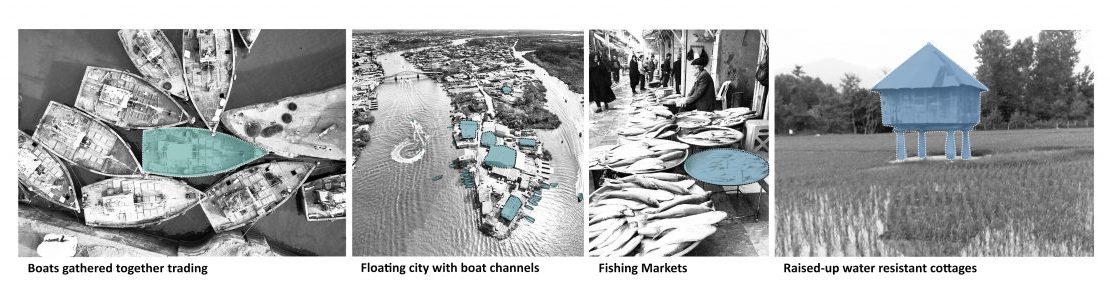
The floating city project is located on a beach town, Salmanshahr, in the north of Iran. Surrounded by the Alborz mountains and the Caspian sea, filled with jungles in between, northern Iran has a unique local culture where people lives relies on the green lands and the blue sea.
Poor economic conditions has led the locals to sell their lands with the idea of leaving the business and livelihood of agriculture and fishing to achieve a better plan life, which was a great mistake, says Heirati in his manifesto.

Now the municipality only promotes only the projects which can bring back the local lives while adding to the value of the region.
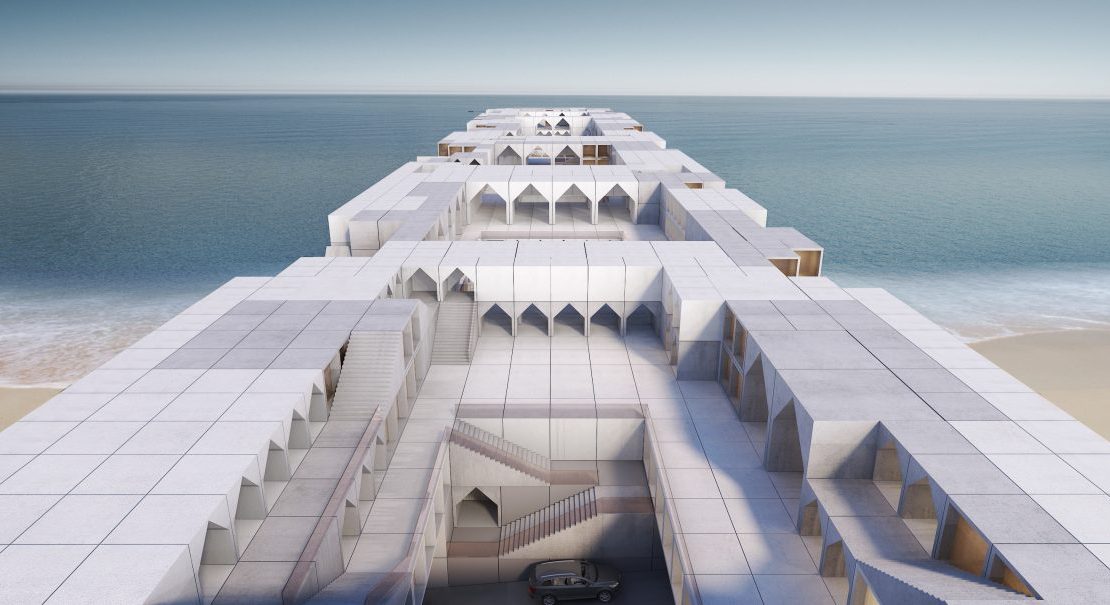
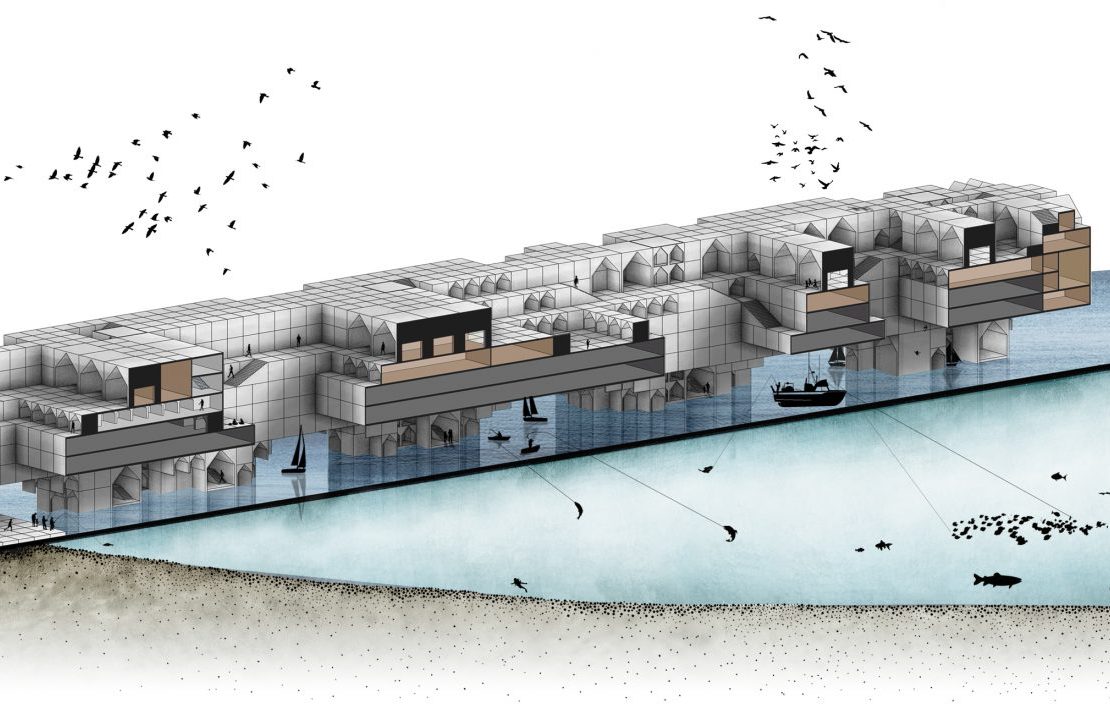
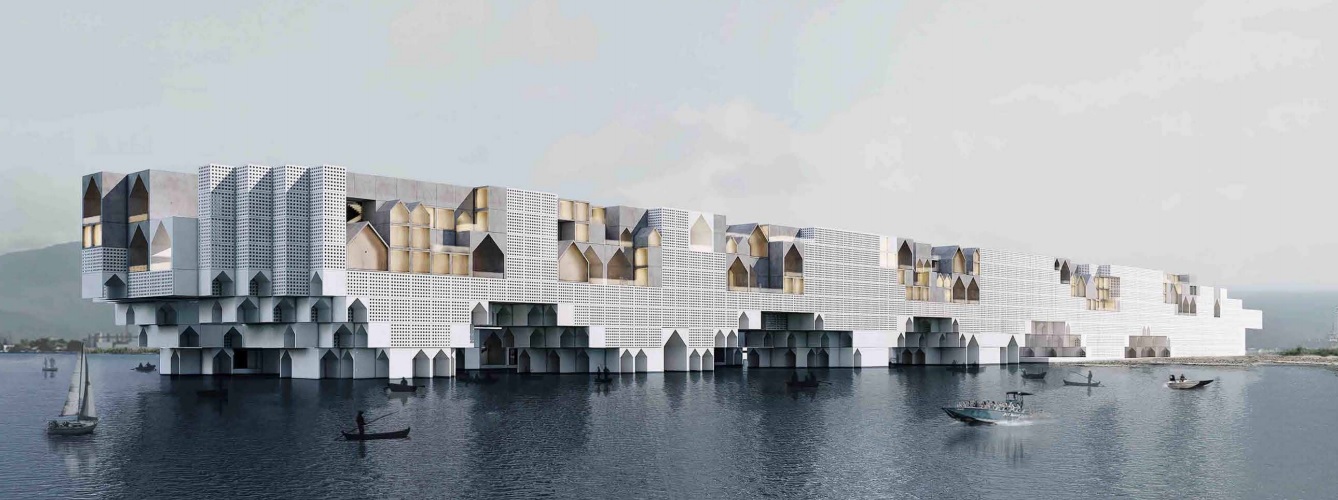
The floating city is a mixed-use complex, lying on the beach growing into the sea. It has combined all sorts of events in one place and gives the locals the opportunity of regaining their income through local markets which can attract many tourists and buyers to the complex. A hybrid city that gathers fishermen and farmers, to encourage the locals to preserve their lands and their livelihood.
And why a floating city?
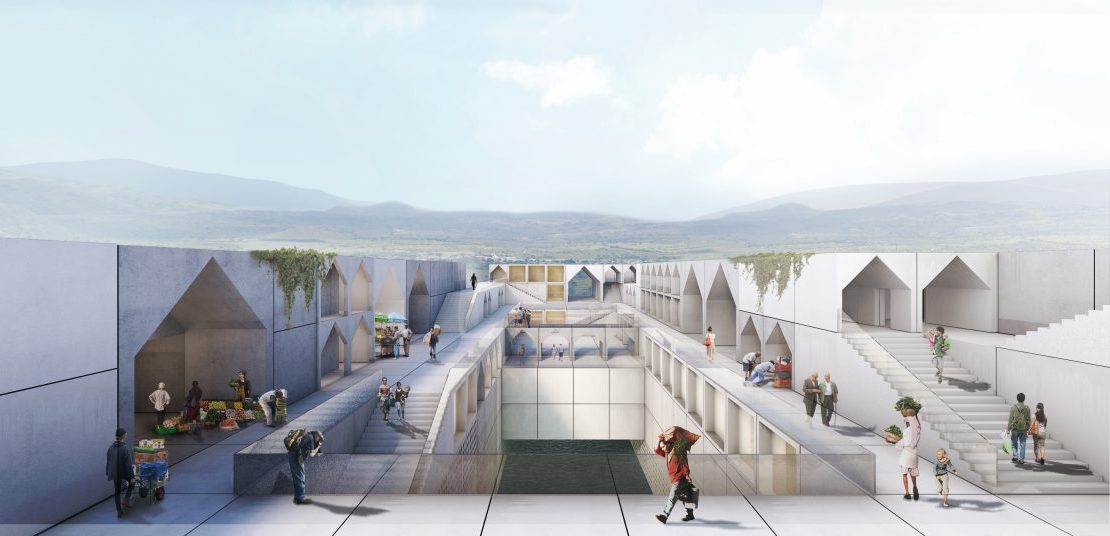
In north of Iran, water has a deep reflection on local’s lives. A region with rice fields, boat channels, suspended buildings, in other words the whole area is somehow floated on water, people who rely on water, fish that live in the water, rice that grow in water, lands thoroughly irrigated with rainfalls and green jungles breathing through water; this is indeed a floating city, a station for fishermen and farmers who no longer need intermediaries to sell their products.
How the floating city is built
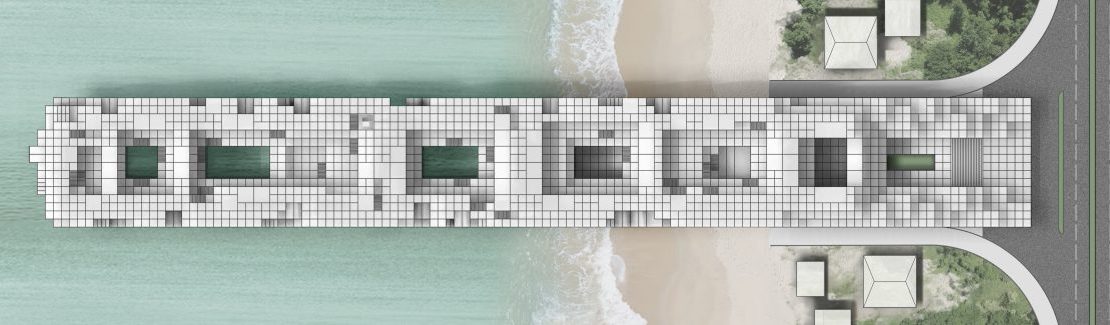
The floating city has a modular design with a corrosion shaped body which is due to the touch of the sea water. Three basic modules were extracted by studying and observing the local architecture of the region. A context where traditionally, most building have sloped roofs due to the climate of the region with heavy rainfalls, and lifted houses due to the wet grounds.
The modules are defined in 3.3.3 meters cubes, combined in all directions, creating a deck on water where all sort of lives meet (sort of like a Moshe Safdie concept at Habitat ’67). The complex is equipped with all sorts of accesses including pedestrians, car and bicycle roads and of course boat channels which allow the users experience the old local experience of transportation in the north of Iran through water.
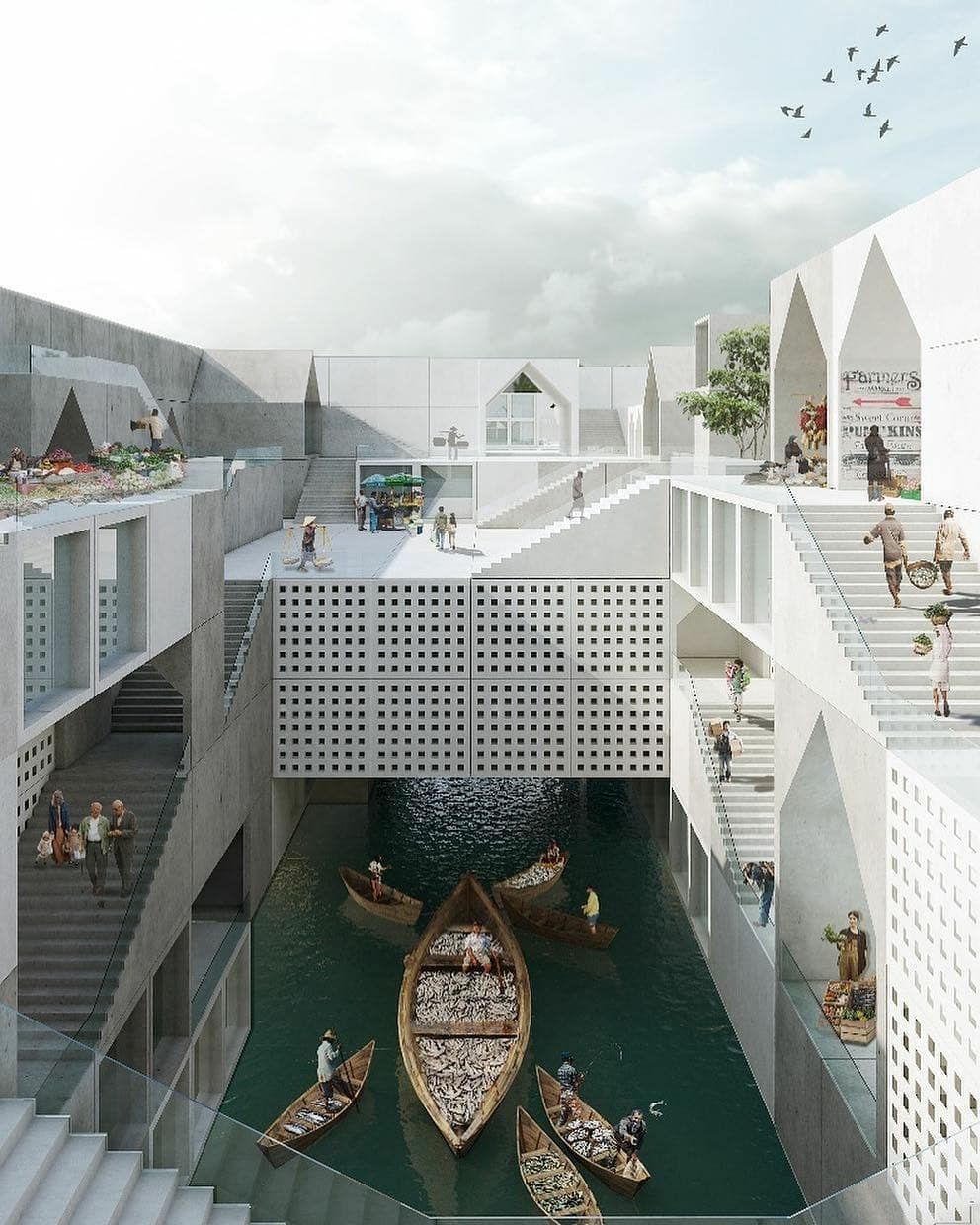
The floating city enables one to interact with sea in so many different ways. This complex has different varieties of openings towards the sea. You may see the water through looking down the voids, from your private window, while standing under the covered terraces at the end of the local markets, while you’re on the top of the project, standing on the deck wide open around you, when you are in a boat passing through, going down the stairs of the courtyards and even waiting in the elevator going up or down. Thousands of images of the sea are captured in this city; and they are not just images since people are living throughout this deck.
Passive cooling elements
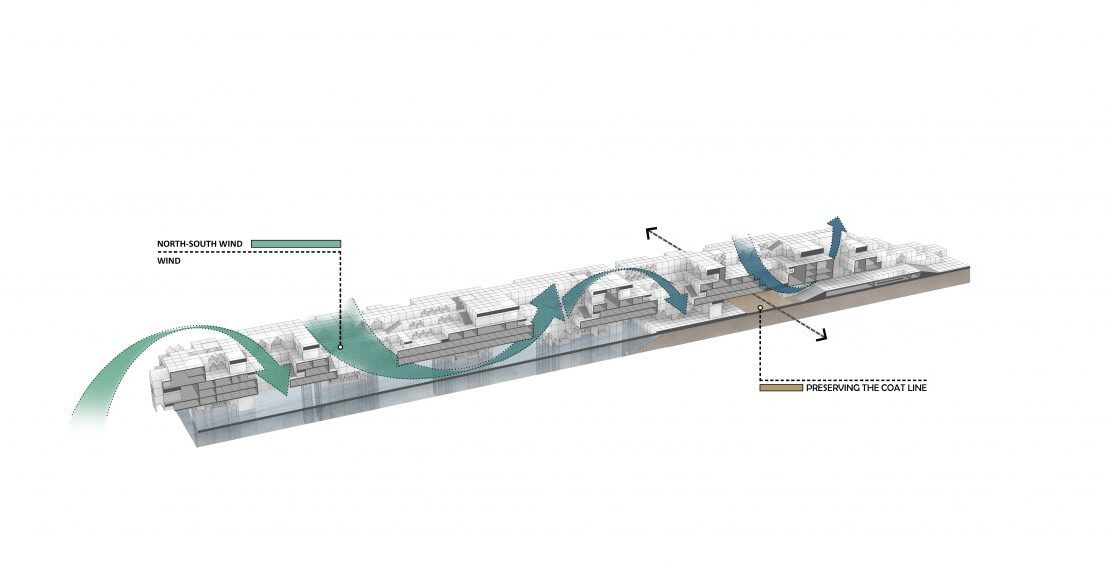
Iranians can be credited for inventing passive cooling. Check out the windcatchers of Yazd. Due to the high humidity, natural ventilation (in north-south direction) is a must which happens easily throughout the deck as shown in the diagrams. To preserve the coast line, the project pulls itself up to let the coast line pass through it. As a heterogeneous city all functions are located in all sections of the project, but yet organized around main voids, designed as courtyards.
Just like old Iranian heterogeneous cities one may pass through the local bazaars and experience narrow paths with sheltered walkways which lead to wide vast open spaces, then again enter a closed square full of people selling, buying, passing and living. One must walk throughout this deck to realize how diversely and yet unified this city is holding locals, tourists, buyers, producers, distributors all next to each other.
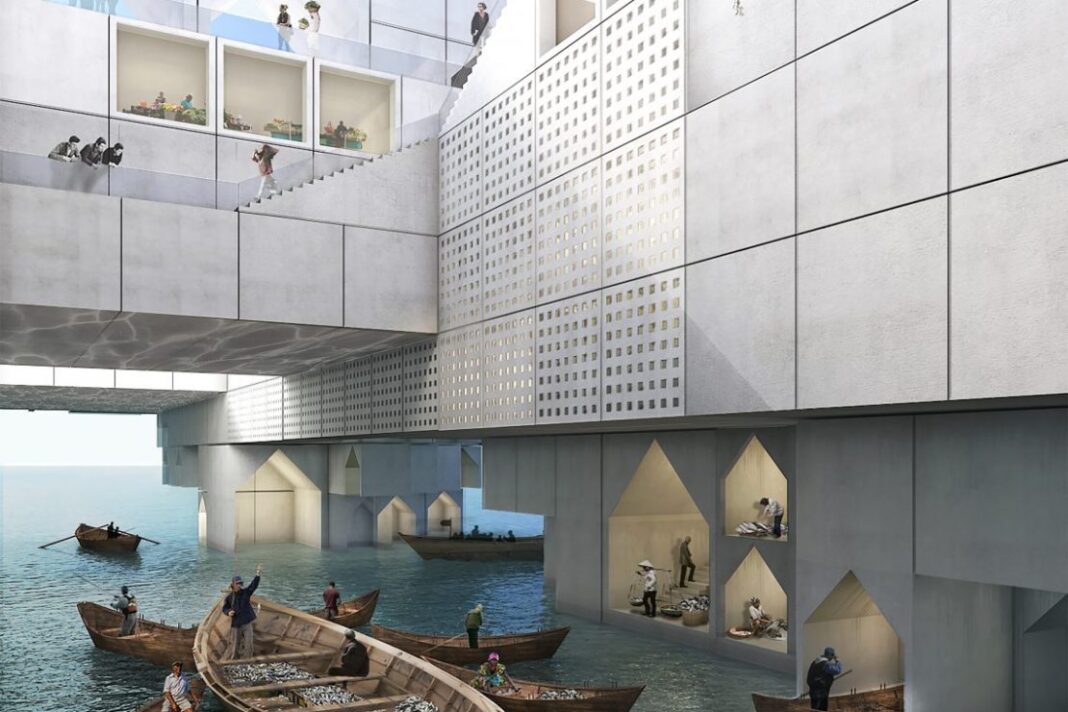
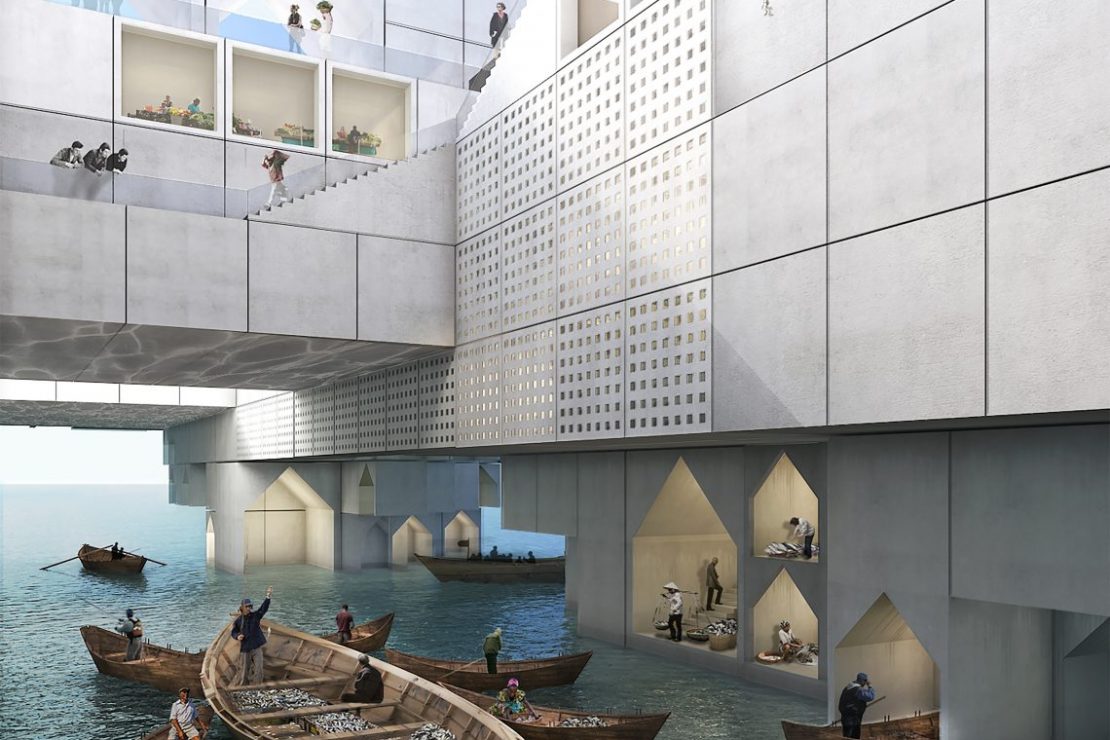
“Sitting in your private room with sea view towards you, meanwhile you can simply exit your house to reach the local markets or to get on a boat for a trip, only in 5 minutes. In this complex, local markets are organized in two levels. Fishermen and floating fishing markets are located in the lower levels touching the water and local markets (open and semi-open) and handicraft shops are settled in the upper levels. All local sellers can interact with one another through vertical shafts.
“Meanwhile visitors, buyers, tourists etc., are as well involved in all scenarios.
“A fisherman sitting in his boat selling his fish just caught from the sea brought here down the floating city, raises up his head says hi to his farmer neighbor upstairs in local markets selling crops.”
Who proposed the first linear city?
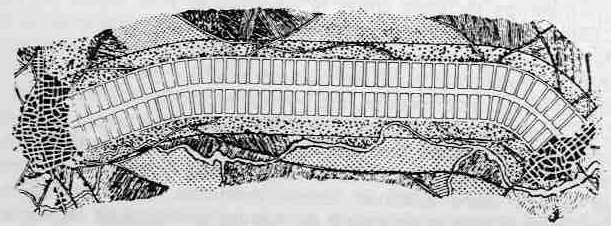
While First Nations people of North America lived in Long Houses fit for a few families or more, the modern concept of linear cities started in the late 19th century by Spanish engineer and philosopher Arturo Soria y Mata also known as Arturo Soria. The heart of his idea was building a light rail line, which was supposed to link Madrid with several settlements in the surrounding area.
Soria was an internationally important Spanish urban planner whose work remains highly inspirational today. He is most well known for his concept of the Linear City.