The Power of Satellite Imagery In Agriculture & Farming

Agriculture is transforming with the implementation of modern technologies. Technologies such as GPS and satellite image dissemination allow researchers and farmers to gain more information, monitor and manage agricultural resources. Besides, images provide an opportunity to optimize processes on the farm and increase the efficiency of various farm operations. EOSDA (EOS Data Analytics) and other companies offer solutions based on satellite technologies that allow monitoring the state of crops throughout the growing season. 

Satellite imagery can also be integrated with other innovative solutions, including the Internet of Things. This kind of integration further empowers farmers to practice precision farming. Thus, growers can get more data on the state of their crops. Furthermore, farmers can save resources by applying them only where they are needed and not evenly distributing them.
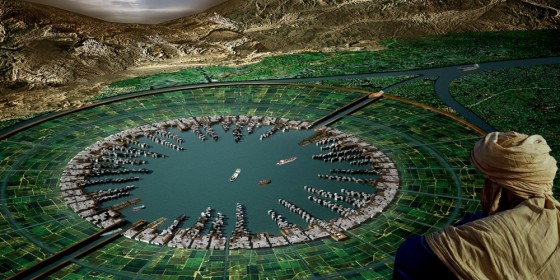
Hydropolis, Nile River, Agriculture, Architecture, Design, Egypt

What is satellite imagery data? 

Satellites and the images they produce differ from each other, as different companies use them for various purposes. Satellite data is a collection of millions of pixels that are related to distance on Earth. The result is images with different resolutions and time scales. A pixel can display an area from 30 m2 to 1 km2 or even more. The technology is constantly being improved, and soon it will be possible to obtain images close to the resolution of a square centimeter.

The temporal measure of the data is also essential since modern satellites such as Landsat orbit the Earth every 16 days. It means that changes can be assessed every two weeks. Other information products based on satellite data are only available on an annual basis.

Ways how agriculture satellite imagery changes agriculture and farming

Achieving sustainability 

Sustainable resource management is a necessity today. Remote sensing satellites are contributing to more sustainable water use on farms. Satellite data helps to avoid over or under irrigation, improves the quality of agricultural products, and helps to increase yields. It is because farmers can monitor large areas, assess the condition of the soil, and more accurately determine the need for water. Satellite imagery analysis enables farmers to develop an irrigation plan and make it more efficient.

Encouragement of enhanced climate-resilience 

Extreme weather events can have a strong negative impact on crops. With satellite imagery, farmers can be aware of potential threats to plants, including drought, floods, and other weather events, and take timely action to protect crops. Satellite imagery will be beneficial in planning preventive measures and reducing the impact of weather on crop health. In this way, farmers can build resilience in farming practices to climate change.

agriculture, middle east food shortages, groassis, aerofarms, liveinslums, water shortages, farming, soilless farming, vertical farming

Satellite-based crop monitoring 

Monitoring crops using satellite imagery significantly expands the ability of farmers and other participants in the agribusiness, such as auditors. Using the images, auditors can estimate the real value of the land. As for farmers, satellite-based crop monitoring allows them to make better decisions throughout the growing season. In addition, growers have access to historical satellite imagery, which opens the door to identifying climate patterns and allows them to plan field activities to increase productivity. Taking into account the data obtained earlier also makes it possible to create historical maps of the fields, and as a result, farmers can determine which methods are most effective.

Powering precision agriculture practices
agriculture, land grabs, organic agriculture, slow food movement, sustainable agriculture, population

Precision farming contributes to the efficient and rational use of resources. In addition, this practice implies significant savings in seeds, fertilizers, water, and pesticides, thereby increasing the productivity of farms. The integration of satellite imagery with other innovative technologies, including IoT and drones, allows you to monitor soil conditions, manage water resources, and obtain accurate information for fertilization. And when combined with agricultural robots, satellite imagery can also help improve planting function.

Fortifying farm planning  

Satellite images allow you to monitor, control and manage the state of crops, soil, protect crops from extreme weather conditions, as well as diseases, pests, and other threats. Integrating satellite imagery with other technologies can also detect stress, soil moisture, and nutrient saturation. In this way, businesses can make accurate estimates of yields and improve purchasing and storage plans. The data obtained can also be used by insurance agents and companies to assess future crop conditions better.

Final thoughts 

Satellite imagery significantly expands the capabilities of farmers and other participants in agribusiness. Technology continues to evolve and improve, allowing you to capture images of the best quality. Using data from imagery and integrating it with other innovative technologies can save resources, respond to changes and threats on time, increase farm yields, and increase profits. At the same time, more accurate and rational use of resources also contributes to improving the sustainability of the agricultural sector.


 

Karin Kloosterman
Karin Kloostermanhttp://www.greenprophet.com
Karin Kloosterman is an award-winning journalist, innovation strategist, and founder of Green Prophet, one of the Middle East’s pioneering sustainability platforms. She has ranked in the Top 10 of Verizon innovation competitions, participated in NASA-linked challenges, and spoken worldwide on climate, food security, and future resilience. With an IoT technology patent, features in Canada’s National Post, and leadership inside teams building next-generation agricultural and planetary systems — including Mars-farming concepts — Karin operates at the intersection of storytelling, science, and systems change. She doesn’t report on the future – she helps design it. Reach out directly to [email protected]

TRENDING

Farm To Table Israel Connects People To The Land

Farm To Table Israel is transforming the traditional dining experience into a hands-on journey.

Iran’s holiest city about to run dry as terror chosen over water management

Iran’s second-largest city, Mashhad, is facing an acute water emergency after dam reservoirs feeding the city fell below three percent capacity, according to Iranian state and local media. Officials warn that without rainfall or improved inflows from neighboring Afghanistan, the city’s supply could soon collapse.

1,600-Year-Old Samaritan Farm Estate Found in Kafr Qasim Shows How Ancient Communities Lived Sustainably

Archaeologists in Kafr Qasim have uncovered a 1,600-year-old Samaritan agricultural estate with colorful mosaics, an olive oil press, and a ritual bath. This rare discovery reveals how ancient communities lived sustainably—growing food locally, reusing materials, and balancing faith with farming—offering lessons for modern climate resilience in the Middle East.

Arab agricultural land is on the brink

Across the Arab world, croplands face a perfect storm of stressors. Excessive fertilizers and pesticides erode soil ecology. Poor drainage and over-irrigation drive salinization, leaving fields crusted with salt. Rising temperatures, dwindling groundwater, and more frequent sand-and-dust storms—all amplified by climate change—compound the crisis.

Jordan turns to ancient fire and mines volcanic soil to solve water crisis

In the volcanic highlands of northern Jordan, north of Amman engineers are mining a natural resource not for energy, but for agriculture. The material: crushed volcanic rock, now processed into a mineral-rich soil that may hold the key to reducing water and fertilizer demand in arid regions.

Qatar’s climate hypocrisy rides the London Underground

Qatar remains a master of doublethink—burning gas by the megaton while selling “sustainability” to a world desperate for clean air. Wake up from your slumber people.

How Quality of Hire Shapes Modern Recruitment

A 2024 survey by Deloitte found that 76% of talent leaders now consider long-term retention and workforce contribution among their most important hiring success metrics—far surpassing time-to-fill or cost-per-hire. As the expectations for new hires deepen, companies must also confront the inherent challenges in redefining and accurately measuring hiring quality.

8 Team-Building Exercises to Start the Week Off 

Team building to change the world! The best renewable energy companies are ones that function.

Thank you, LinkedIn — and what your Jobs on the Rise report means for sustainable careers

While “green jobs” aren’t always labeled as such, many of the fastest-growing roles are directly enabling the energy transition, climate resilience, and lower-carbon systems: Number one on their list is Artificial Intelligence engineers. But what does that mean? Vibe coding Claude? 

Somali pirates steal oil tankers

The pirates often stage their heists out of Somalia, a lawless country, with a weak central government that is grappling with a violent Islamist insurgency. Using speedboats that swarm the targets, the machine-gun-toting pirates take control of merchant ships and then hold the vessels, crew and cargo for ransom.

Leopoldo Alejandro Betancourt López Turned Ocean Plastic Into Profitable Sunglasses

Few fashion accessories carry the environmental burden of sunglasses. Most frames are constructed from petroleum-based plastics and acrylic polymers that linger in landfills for centuries, shedding microplastics into soil and waterways long after they've been discarded. Leopoldo Alejandro Betancourt López, president of the Spanish eyewear brand Hawkers, saw this problem differently than most industry executives.

Why Dr. Tony Jacob Sees Texas Business Egos as Warning Signs

Everything's bigger in Texas. Except business egos.  Dr. Tony Jacob figured...

Israel and America Sign Renewable Energy Cooperation Deal

Other announcements made at the conference include the Timna Renewable Energy Park, which will be a center for R&D, and the AORA Solar Thermal Module at Kibbutz Samar, the world's first commercial hybrid solar gas-turbine power plant that is already nearing completion. Solel Solar Systems announced it was beginning construction of a 50 MW solar field in Lebrija, Spain, and Brightsource Energy made a pre-conference announcement that it had inked the world's largest solar deal to date with Southern California Edison (SCE).

Related Articles

Popular Categories