Mountains host about half of the global biodiversity hotspots and are home to a growing number of the world’s hungriest people, according to a new United Nations study. The study shows that the number of mountain people vulnerable to food insecurity in developing countries increased from 243 to almost 350 million between 2000 and 2017.
Mountains provide between 60 and 80 percent of the world’s freshwater, which is essential for irrigation, industry, food and energy production and domestic consumption. Many of the world’s most important crops and livestock species also originate in mountain regions and are a source for food and medicine.
Yet the joint study found that mountain ecosystems are becoming increasingly fragile, under pressure from changes to land use and climate, overexploitation, pollution, demographic shifts and other factors which threaten livelihoods and food security.
“The vulnerability to food insecurity of the mountain people in the developing world is compounded by the presence and occurrence of natural hazards and armed conflicts that disrupt livelihoods or put strain on the natural resources on which mountain people depend,” the study concluded.
It also noted that environmental degradation affects mountain people disproportionately. Climate change has increased the degradation of mountain ecosystems and the incidence of natural hazards such as landslides and droughts.
Around 275 million rural people vulnerable to food insecurity were estimated to live in mountain areas that have already been affected by natural hazards.
The COVID-19 pandemic has added urgency to an already difficult situation as restrictions imposed by various countries have amplified the vulnerabilities of mountain communities that depend on agriculture and tourism for their survival.
“One in every two rural mountain people in developing countries do not have enough food to live a healthy life and they are now dealing with the impact of the COVID-19 pandemic. We must protect our mountains and the livelihoods of those who depend on them,” said FAO Deputy Director-General Maria Helena Semedo, commenting on the study’s findings.
The joint study recommended urgent action to address climate change and remove food insecurity and malnutrition in mountain areas. It called for policies to improve the resilience of mountain ecosystems and promote sustainable food systems that support innovation, research and community involvement.
“Ultimately, the goal of this study is to call on decision-makers and others stakeholders to strengthen cooperative action to reduce the vulnerability of mountain people, in particular local communities and indigenous people, and of the most vulnerable among them, often women and children,” the study said.
Who are the mountain people of the Middle East?
Taurus People of Turkey, Iraq and Iran
The Taurus Mountain range extends through southern Turkey to the Iraqi and Iranian borders. The famous Mount Ararat, seen in the Bible as the resting place of Noah’s Ark, is located in the eastern part of the range, and is the highest peak of the Taurus Mountains at 16,583 feet (5137 meters), according to the resource Teach Middle East. The Tigris and Euphrates Rivers both originate in the eastern Taurus Mountains, and are fed by snowmelt as they flow toward Iraq.
The Taurus Mountains give us a good example of transhumance, or seasonal nomadism, in the Yoruk people. Over thousands of years, nomad herders like the Yoruk have wintered their animals on the southern side of the Taurus closer to the Mediterranean, away from the bitter cold of the mountains and the plateau, and then moved them to summer pastures in the cooler heights to escape the blistering heat and insects of the plain.
The Taurus Mountains have also acted as a natural political boundary between states over the centuries. They marked the boundary, for example, between the Byzantine Empire and the Islamic state founded after the rise of Islam from the seventh century until the Battle of Manzikert in 107, when the Seljuk Turks defeated the Byzantines and moved decisively into Anatolia.
The Zagros and Elburz People of Iran
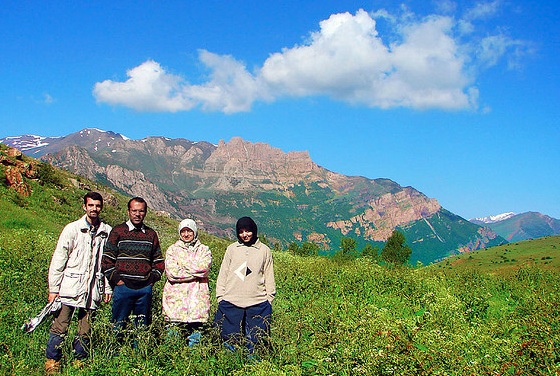
The Zagros and Elburz Mountains run along the western and northern borders, respectively, of Iran. The Zagros extend about 1000 miles from northern Iraq through western and southern Iran. The Elburz run over 600 miles across northern Iran along the coast of the Caspian Sea.
In both ranges many peaks exceed 9,000 feet, with Zard Kuh being the highest point of the Zagros at 14,921 feet (4,548 meters), and the dormant volcano Mt. Damavand the highest peak in the Elburz Mountains at 18,602 feet (5,670 meters) high. See the Mountain Watchers of Iran here.
The Hijaz and Asir Mountain People of Saudi Arabia
Running along Saudi Arabia’s border with the Red Sea, the Hijaz and Asir Mountains form an escarpment along the cleavage of the African and Arabian plates. This escarpment lifts the western edge of the Arabian plateau, which then slowly slants downward and eastward toward the Persian Gulf and Indian Ocean. The mountains of the Hejaz and Asir ranges average 6,000 to 7,000 feet (1,829 – 2,130meters), with Mount Sawda’ in the south rising to just over 10,000 feet (about 3000 meters) in the south.
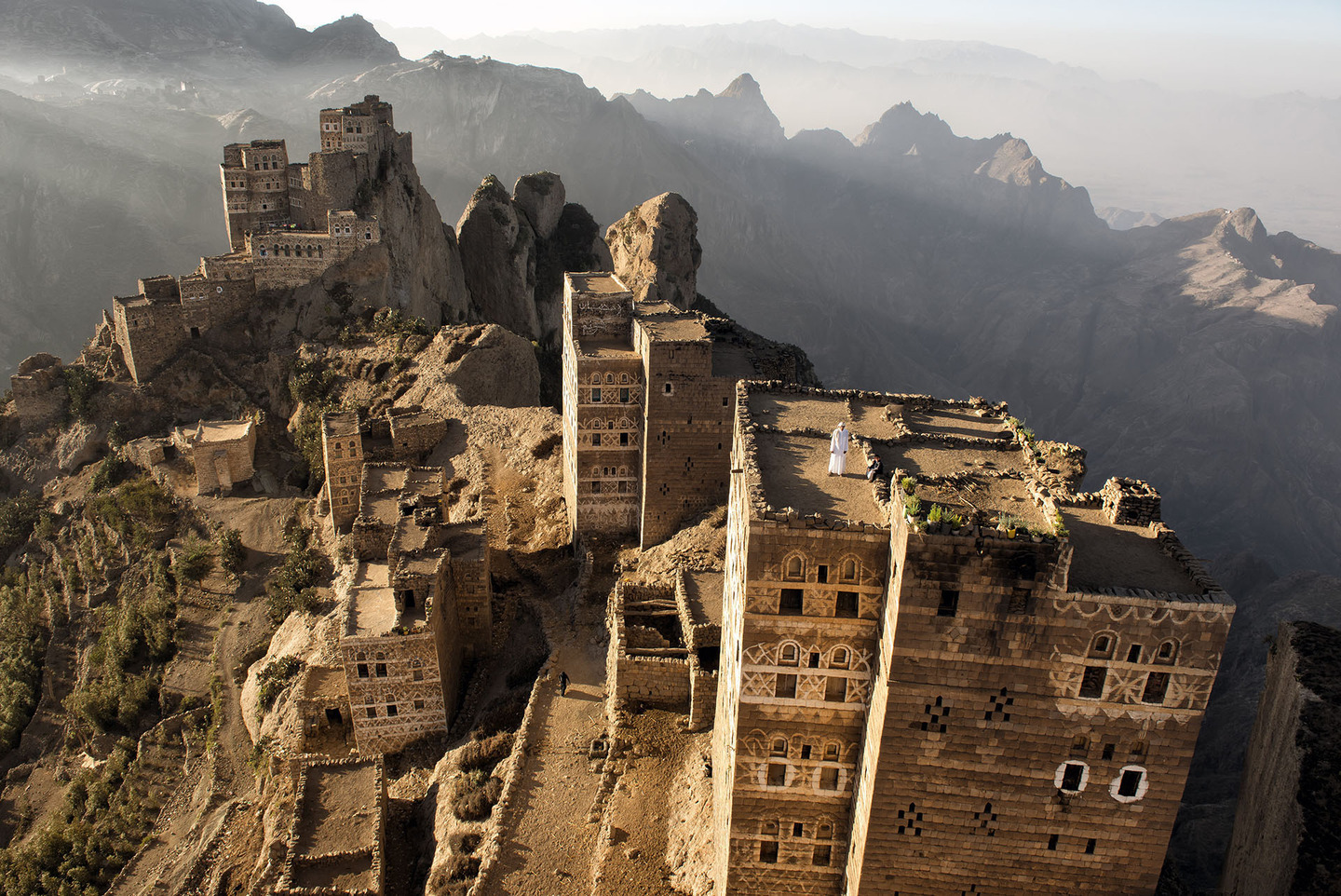
The Red Sea Mountain People
Along the Tihamah, the narrow coastal plain between the Red Sea and the mountains, there is enough rainfall, although floods often occur during the monsoon season, to support agriculture in this watershed, but too little moisture crosses over the mountainous barrier to support farming on the desert of the central Arabian plateau.
The Atlas Mountain People of Morocco, Algeria and Tunisia
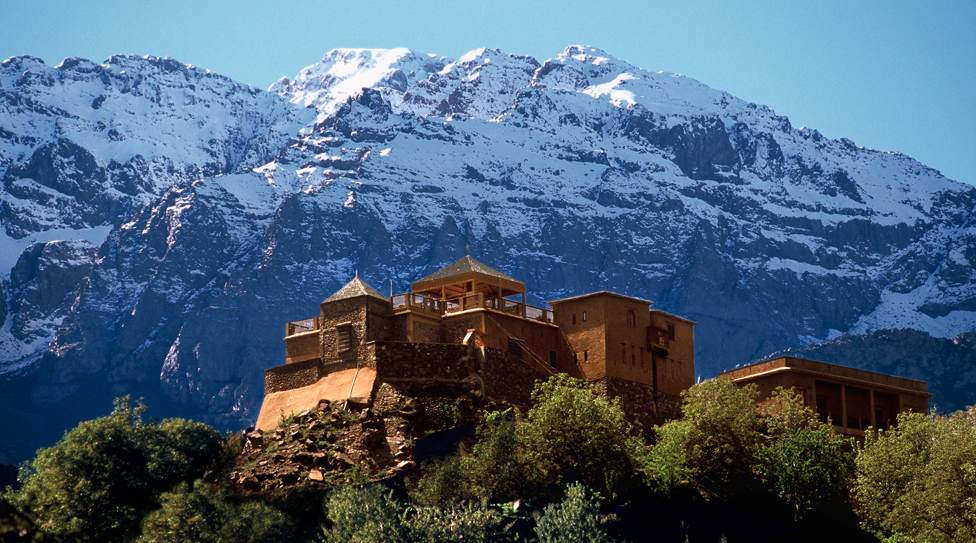
The Atlas series of mountain ranges in northwestern Africa extend 1200 miles southwest to northeast across the North African countries of Morocco, Algeria, and Tunisia. In northern Morocco, the Rif Mountains receive enough rainfall to support forests and a great diversity of wildlife; to the east, this range becomes the Tell Atlas.
Further south, the broad belt of the Middle Atlas and then the High Atlas (peaking at Mount Toubkal, standing at 13,665 feet or 4165 meters) and then the Saharan Atlas ranges separate the Mediterranean basin from the Sahara Desert to the south. On the north-facing slopes of this great climate barrier, rich farmland exists.
The Atlas mountain ranges not only restrict the passage of water from the verdant Mediterranean edge to the Sahara, but also have played a role in restricting the movement of humans. In this difficult terrain, over the centuries of conquest by new groups such as the Arabs and the French, the indigenous culture of the various Imazighen peoples (or Berbers) has survived centuries.
The Lebanon Mountain People

The Lebanon Mountains, along with the Anti-Lebanon Mountains further to the east, parallel the Mediterranean coast from southern Lebanon into Syria. Between the two ranges lies the fertile Bekaa Valley. In ancient times, Lebanon was famous for the huge cedar trees that grew in the Lebanon Mountains and which still appear on its flag, although there are very few specimens remaining.
Like the Atlas, the Lebanon Mountains have long been a refuge for minority groups wishing to escape both persecution and assimilation into the dominant culture. In this case, the mountains have provided refuge over the centuries for Christians, particularly the Maronites; the Druze; and communities of Shi’a Muslims.
Want a mission in life to help the planet? Look to find a way to help the mountain people. In areas like crafts, artisans, regenerative agriculture you can restore livelihoods and repair the earth.