
Plastics and leather from wasted meat

Shahar Livne, industrial designer mining future, plastics and leather from meat, biodegradable plastic, plastic alternative
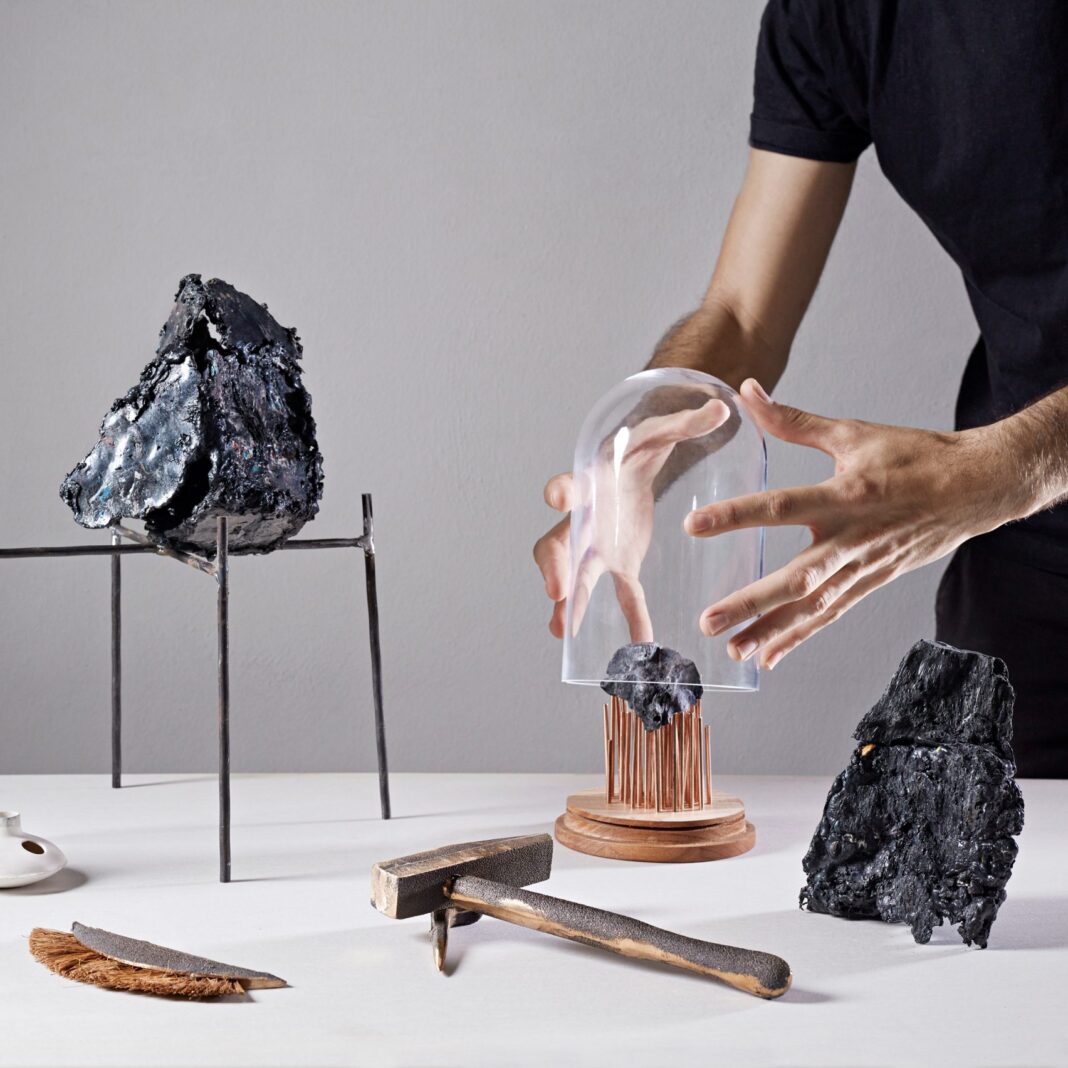
Lithoplast, a new material from old plastic.

Imagine the islands of garbage floating in the seas, the plastic bags filling the landfills.  Shahar Livne, named Emerging Designer of the Year at the Deezeen Virtual Design Festival in May 2020, imagined all that plastic as a future material resource.  Then she created the imagined new material. She calls it lithoplast. She follows in the footsteps of these 10 sustainable designers from Israel we featured all the way back in 2008.

Shahar Livne, plastics and leather from meat, biodegradable plastic, plastic alternative
Shahar Livne. by Charlotte Kin

Livne’s 2017 graduate project at the Design Academy Eindhoven was creating from plastic a sustainable material that can be adapted to multiple applications.  This is not recycling, she emphasizes, but re-forming the texture and shape of plastic itself. Upcycling

shahar livne, lithoplast, plastics and leather from meat, biodegradable plastic, plastic alternative
Lithoplast formed into a vessel

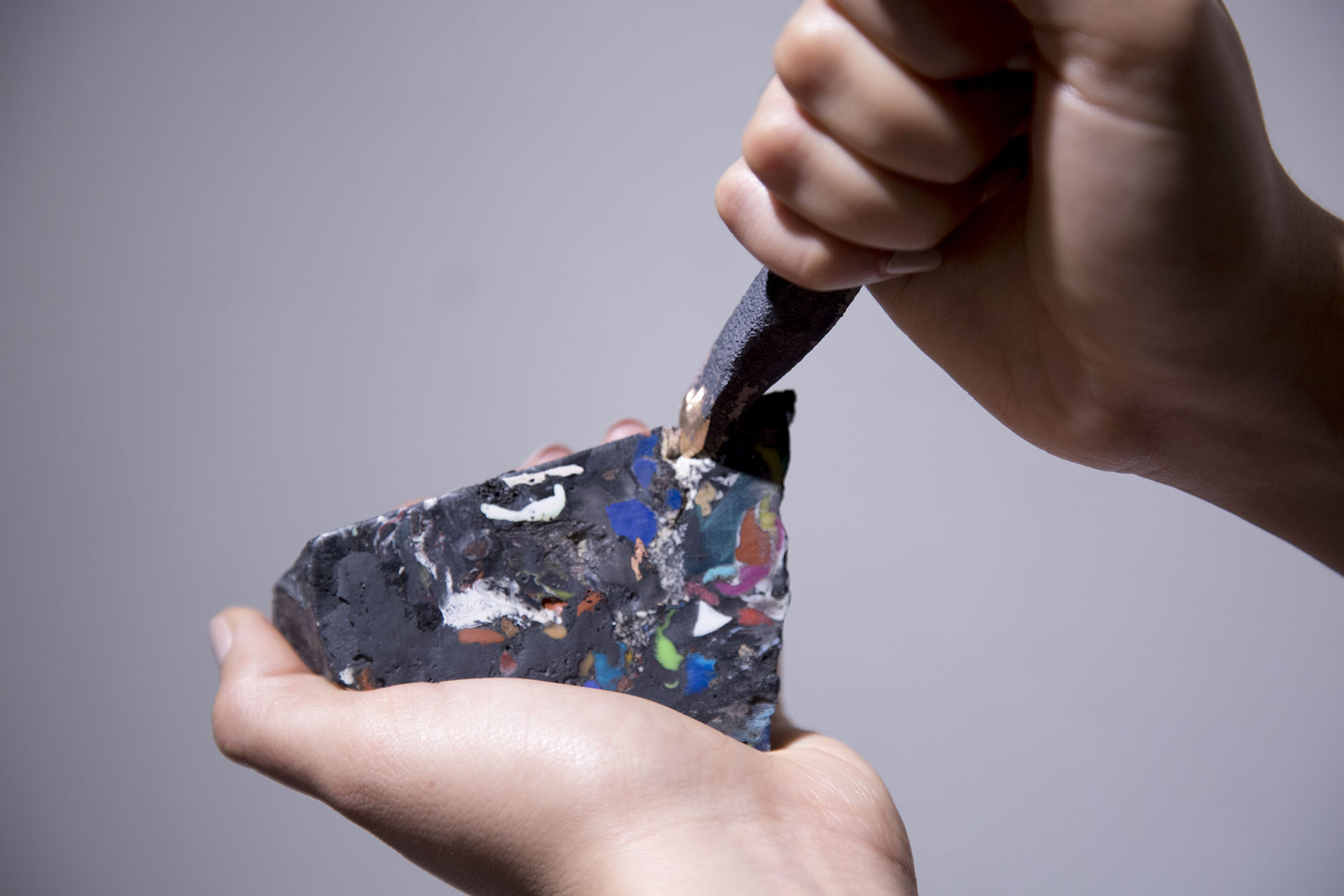
Livne used two industrial by-products, minestone and marble dust, in combination with plastic she garnered from beaches in Israel and Holland. Imitating the geological process called metamorphism, she applied pressure and heat to the layered materials. The result is a pliable material she calls  Lithoplast.

“I call it Lithoplast from the Greek words for rock and moldable,” Livne said in an interview as part of the Dezeen Virtual Design Festival. 

Livne quotes geologists she’s spoken to, who expect that if plastic continues to accumulate on the earth’s surface, it will hybridize with nature and start occurring naturally.  In the future, she envisions, people will mine old plastic deposits as we mine for minerals today, in order to make materials from them.
shahar livne lithplast, plastics and leather from meat, biodegradable plastic, plastic alternative

Repurposing animal byproducts too

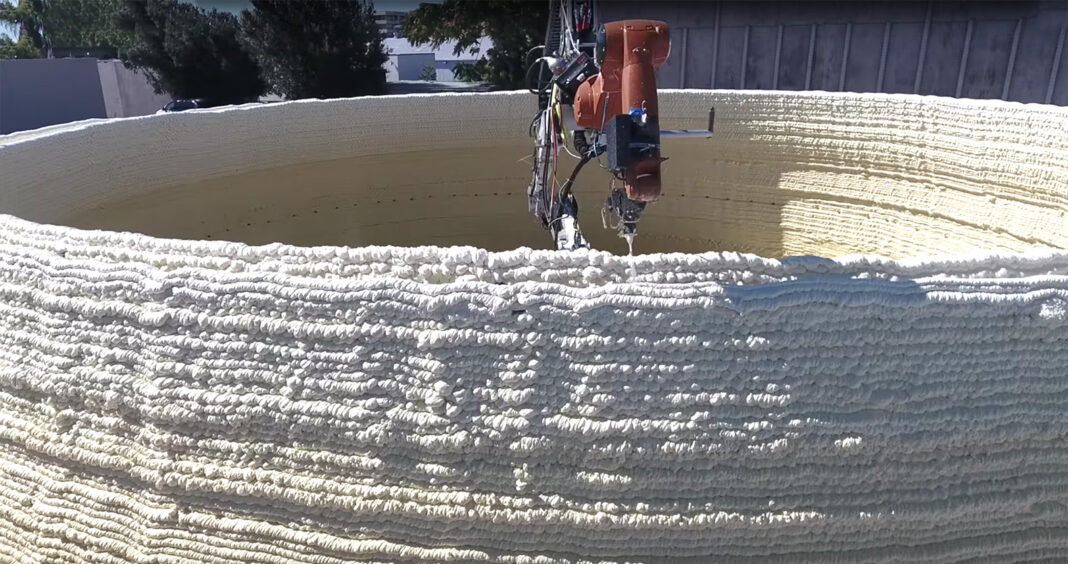
Now imagine, if you will, the garbage of slaughterhouses – blood, bones, fat. Livne takes this animal waste and re-creates it as  a new kind of leather, as yarn, and as pigments for dyes. She calls it the Meat Factory Project.

biolether Shahar livne, blood, plastics and leather from meat, biodegradable plastic, plastic alternative
Bioleather displayed on butcher’s hooks to emphasize its origin as blood.

Vegetarian herself, Livne takes a carefully neutral stance towards the relative good or evil of eating meat, hoping that her works raise questions in people’s minds which they will seek to answer themselves.

Her philosophy includes respecting animals in using every part of them.  However, she confesses to a personal moral conflict in using slaughterhouse waste.

“Research was very hard, hauling buckets full of fresh blood still warm from the slaughter,” she says. “But as long as waste is here, it needs to be dealt with.”

She acknowledges that slaughter isn’t going to go away and adds, “This is something that happens anyway. Most of those materials get incinerated or reach waterways. For me, it’s a way to avoid further pollution. I don’t want to encourage them to kill more animals, but we have those resources, and I think they should be used. ” 

Slaughterhouse waste leather

As part of the Meat Factory project, and in collaboration with sustainable luxury footwear brand Nat-2,  Livne has designed sneakers with inserts resembling leather which is made of slaughterhouse waste. She calls it bioleather. The sneakers are made from rubber and cork, with the dark-red bioleather insert.

The formula for bioleather is secret, but Livne goes so far as to say she hopes to make the material waterproof in the future, and that Nat-2 will be able to make an entire shoe from it. She has also produced pigments in shades of orange and red from blood.  

sneakers from slaughterhouse waste, shahar livne, plastics and leather from meat, biodegradable plastic, plastic alternative
Sneakers bearing an insert of bioleather made from blood.

Bioleather can also be spun into yarn. Now imagine a sweater woven out of slaughterhouse waste. Does it creep you out? But such products are meant to raise consciousness.  

“The Meat Factory project investigates the dissonance people have with the food on their plates and the living animal, and the psychological dissonance between raw materials and processed materials,” Livne says.

“It explores the emotional connection with nature that has changed since food and materials became industrialised, and consumers have been alienated from the source, content and use of animal-based materials,” she adds.

One of our long-time readers Pablo Solomon, an environmental artist, comments:

“While Shahar Livne is beautiful, creative and intelligent, I must just say that I have trouble when well meaning people want to go to these incredibly complicated methods to replace tried and true, environmentally friendly, sustainable products like—leather. Almost all meat scraps from slaughterhouses go into pet food.”

::Shahar Livne website

More sustainable design from Israel:

Junktion Upcycles Waste to Whimsey

Israel and Milan Design Week

Merav Feiglin’s recycled lights out of trash

Beauty Increases Sustainability, According to Designer Gadi Amit

Ten Sustainable Israeli Designers Who Reduce, Reuse & Recycle

 

Miriam Kresh
Miriam Kreshhttps://www.greenprophet.com/
Miriam Kresh is an American ex-pat living in Israel. Her love of Middle Eastern food evolved from close friendships with enthusiastic Moroccan, Tunisian and Turkish home cooks. She owns too many cookbooks and is always planning the next meal. Miriam can be reached at miriam (at) greenprophet (dot) com.

LEAVE A REPLY

Please enter your comment!
Please enter your name here

TRENDING

Urban miner Sortera raises $45 million USD to pull aluminum from the scrap pile

Sortera Technologies, founded in 2020 by Nalin Kumar and Manuel Garcia, is emerging as a major U.S. circular-industry player. Led by CEO Michael Siemer, the company uses AI and advanced sensors to turn scrap metal into high-value aluminum alloys. Its new ~$45 million funding round signals investor appetite for industrial decarbonisation—where emissions cuts come not from PR-friendly solar installs, but from upgrading the materials that power EVs, solar frames, and construction.

Pea pod wine recipes are making a comeback with allotment gardeners

Yes, pea pod wine is a real thing, an old-fashioned, home-brewed country wine made from the leftover pods after shelling fresh peas. It is a sustainable, no-waste practice, often popular among allotment gardeners.

Waste Reform from the Ground Up: How Trash Balers Are Helping Cities Rethink Sustainability

If you’ve ever watched a recycling truck weaving through city streets, you’ve seen the problem firsthand. Most of what we call “recycling” still depends on long-distance transportation and centralized sorting facilities. Those systems are energy-intensive and prone to contamination — the dreaded mix of wet food, plastic wrap, and paper that renders recyclables useless.

Pilsok turns airbags into bags

Pilsok creates sustainable, eco-friendly bags from upcycled airbags, turning automotive waste into stylish, functional accessories. Their innovative approach to recycled materials supports the circular economy, reduces landfill waste, and promotes ethical fashion for a greener future.

Scientists Crack the Code for Low-Cost, Low-Carbon Plastic Recycling

While enzymatic recycling offers hope for managing existing plastic waste, scientists and environmental advocates agree it must be paired with the development of bio-based plastics—materials made from renewable biological sources like corn starch, sugarcane, or algae. Unlike conventional plastics derived from fossil fuels, bio-based alternatives can dramatically reduce carbon emissions at the production stage and are often compatible with closed-loop recycling.

Qatar’s climate hypocrisy rides the London Underground

Qatar remains a master of doublethink—burning gas by the megaton while selling “sustainability” to a world desperate for clean air. Wake up from your slumber people.

How Quality of Hire Shapes Modern Recruitment

A 2024 survey by Deloitte found that 76% of talent leaders now consider long-term retention and workforce contribution among their most important hiring success metrics—far surpassing time-to-fill or cost-per-hire. As the expectations for new hires deepen, companies must also confront the inherent challenges in redefining and accurately measuring hiring quality.

8 Team-Building Exercises to Start the Week Off 

Team building to change the world! The best renewable energy companies are ones that function.

Thank you, LinkedIn — and what your Jobs on the Rise report means for sustainable careers

While “green jobs” aren’t always labeled as such, many of the fastest-growing roles are directly enabling the energy transition, climate resilience, and lower-carbon systems: Number one on their list is Artificial Intelligence engineers. But what does that mean? Vibe coding Claude? 

Somali pirates steal oil tankers

The pirates often stage their heists out of Somalia, a lawless country, with a weak central government that is grappling with a violent Islamist insurgency. Using speedboats that swarm the targets, the machine-gun-toting pirates take control of merchant ships and then hold the vessels, crew and cargo for ransom.

Leopoldo Alejandro Betancourt López Turned Ocean Plastic Into Profitable Sunglasses

Few fashion accessories carry the environmental burden of sunglasses. Most frames are constructed from petroleum-based plastics and acrylic polymers that linger in landfills for centuries, shedding microplastics into soil and waterways long after they've been discarded. Leopoldo Alejandro Betancourt López, president of the Spanish eyewear brand Hawkers, saw this problem differently than most industry executives.

Why Dr. Tony Jacob Sees Texas Business Egos as Warning Signs

Everything's bigger in Texas. Except business egos.  Dr. Tony Jacob figured...

Israel and America Sign Renewable Energy Cooperation Deal

Other announcements made at the conference include the Timna Renewable Energy Park, which will be a center for R&D, and the AORA Solar Thermal Module at Kibbutz Samar, the world's first commercial hybrid solar gas-turbine power plant that is already nearing completion. Solel Solar Systems announced it was beginning construction of a 50 MW solar field in Lebrija, Spain, and Brightsource Energy made a pre-conference announcement that it had inked the world's largest solar deal to date with Southern California Edison (SCE).

Related Articles

Popular Categories