
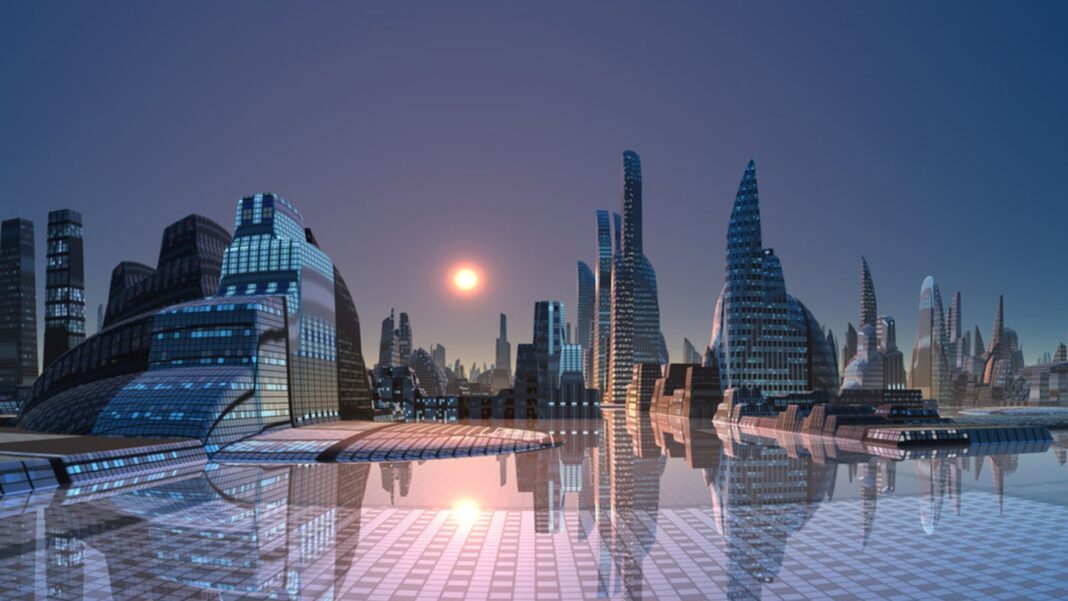


Slick videos, fake moons, glow in the dark sand, and fake rain. Neom? Nightmare or a futuristic green fantasy? PR stunt or a serious step in building a new Middle East green city? We’ve already read that Saudi Arabia wants to be the new Ibiza and that reform is happening there at breakneck speed.
Even in the midst of corona we saw an advertisement that Saudi Arabia is looking for a PR firm to handle Neom. This is a new conceptual mega city from your futuristic dreams or nightmares, that is promised to be run on renewable energy and built on LEED standards. See Masdar in the United Arab Emirates to see how that thinking worked. Could Neom be different?
Located deep in the Saudi Arabian desert, overlooking the Red Sea, the city of Neom is starting to take shape. Saudi Arabia is building a futuristic mega-city, 33 times the size of New York about 10,000 square miles, from scratch. Neom, which means “new future”, sets out to create a new model for sustainable living, based on advanced technology. What exactly does Neom promise? And will those promises become reality?
April 23 update: Saudi activist killed protesting removal to make way for Neom
Neom is a portmanteau of the Greek word neos, meaning “new,” and mustaqbal, the Arabic word for “future.”
Cloud seeding, fake rain and what’s wrong with the real moon?
Neom has gained media attention with daring project proposals that speak to the imagination. The city is meant to use cloud seeding technology to create artificial rain and be illuminated by a giant artificial moon. It is to include an attraction park with robotic dinosaurs and a coastline with glow-in-the-dark sand on its beaches. According to Saudi officials, holographic teachers will teach classes and people will go about in flying taxis.


But Neom is setting out to be more than just a set of novelty attractions. Neom is to include towns and cities, ports and enterprise zones, research centers, sports and entertainment venues, and tourist destinations. It describes itself as a home and workplace for people who want to dream big and be part of building a new sustainable future. According to the official website, the city is to serve as a living laboratory where entrepreneurship and innovation shape the course of the future.
A circular system meant for 200 years in the future?
To build that future, Neom targets a wide range of sectors. The city aims to rely 100% on renewable energy, create a zero waste and fully circular system for water management, and transform traditional food systems. It wants to use biotechnology and genetics to create a next-generation healthcare system. It envisions an environment where the gap between humans and machines blends, robots come to life, and artificial intelligence and the internet of things shape the world.
All this should turn it into the most advanced and livable urban environment in the world. Considering that Masdar had massive green ambitions and practically no one lives there, it might be hard to bridge the divide between what might sound like a great idea and what human beings actually want in their souls – like gardening, Slow Food, back to nature.
Neom is the brainchild of crown prince Mohammed Bin Salman (who else?) who is considered the de facto ruler of Saudi Arabia. The project is part of a broader plan, named Vision 2030, that aims to grow and diversify Saudi Arabia’s economy, reducing dependency on oil revenues, promoting private sector growth, and supporting entrepreneurship. It is to be a cross-over between Silicon Valley, Dubai and Seychelles, positioning Saudi Arabia as a global hub for technology, entertainment, and tourism.
While located within Saudi Arabia’s borders, the project has an international scope. The city is targeted to house more than a million international citizens and attract creators and innovators from around the world. The Saudi Public Investment Fund (PIF) has pledged $500 million dollars, but this is not enough to complete the project. For the rest of the funding, Saudi officials are looking for foreign investors.
The city is scheduled to be ready in 2025 and the first phase of the project should be finished this year. Work has started on Neom Bay, a residential area and tourist destination. Saudi Arabia has launched a new e-visa, opening its doors to foreigners of 49 nationalities. The government has also launched initiatives to create a buzz around the project, hosting international media, business executives and social influencers to the site, and organizing a three-day music festival. A series of political events have, however, cast a shade on the project.
Some of the features of Neom leaked from a Wall Street Journal report:
- Cloud seeding: The planned site for Neom sits on the coast and is surrounded by desert where there is virtually no rainfall or very sparsely. Cloud seeding could be used to make it rain.
- Dystopian surveillance:Facial recognition, drones, cameras everywhere. The aim is only to keep citizens safe. Hmm.
- Genetic-engineering: Neom would host a genetic-modification project of some sorts. The WSJ quotes plans from Japanese tech giant Softbank to create “a new way of life from birth to death reaching genetic mutations to increase human strength and IQ.” Um.
- Robots everywhere: Robot “maids” would do your chores for you; robot cage fights would be staged for your amusement (like are we in the 5th century?); and an amusement park full of robot dinosaurs.
- Flying taxis: “I don’t want any roads or pavements. We are going to have flying cars in 2030!” said Prince Fahd bin Sultan, the region’s governor, in a planning meeting. Another planning document reportedly read: “Driving is just for fun, no longer for transportation.”
- Fake moon: Details are unclear in what is already an incredibly hazy report, but apparently there have been proposals for a fake moon, which could perhaps be created by a fleet of drones or involve live-streaming images from space.
Within the past years, Saudi Arabia has undergone progressive social reforms, among others to improve the social status of women. But during the same period, Mohammed Bin Salman has cracked down hard on his opponents. Analysts claim opponents have been detained to tighten his control over the kingdom. The Saudi government and crown prince have also been linked to the assassination of Washington Post Journalist Jamal Khashoggi, although they deny the allegations.
Investors take note
Although Neom ensures it will be regulated by a legal system compatible with international norms, political issues and Saudi Arabia’s religious-based justice system are potential red flags to foreign investors. Critics claim the project is a personal enrichment project of Mohammed Bin Salman and a means to cover up his crackdowns.
According to them, the project is a PR stunt to create positive press and put a liberal mask on Saudi Arabia’s face.
On a more fundamental note, it remains to be seen whether Neom will be everything it promises to be. A new kind of society, where people live sustainably and prosperously, in harmony with nature, sounds like a dream to many. The world needs technological innovations to lead the way towards sustainable solutions. Neom has the potential to create that. But a world ruled by biotechnology, artificial intelligence, and the internet of thing could also quickly spiral out of control, into the opposite of a dream: a dystopian society. Only time will tell.
Is Neom real or is it a publicity stunt? Will the Saudi government be able to attract foreign investors to fund the project and make it happen? If they do, will it live up to the sky-high expectations? Will the megacity become the hotspot it wants to be or will it remain an empty bubble in the desert? And if the project really takes off, what will be the outcome of this ambitious but controversial experiment? The world is watching.
Meanwhile, make judgement for yourself. The company has produced a series of slick videos using blond Australians, hulky Germans and pro tennis players to try and make Saudi Arabia look like the new Berlin. Great cities emerge from history, culture and art. Not a pile of money and PR stunts. Time will tell how this will play out.
With so many places to travel in Sinai, Egypt: Aqaba, Jordan, and Eilat, Israel already, I think the Red Sea is better left alone. Of course Saudi Arabia should have its center too, but maybe something a lot more modest. And what ever happened to Saudi’s eco park Musma Park which was announced in 2010? Seems like nothing.

