A most convincing argument to include anglers in AI development

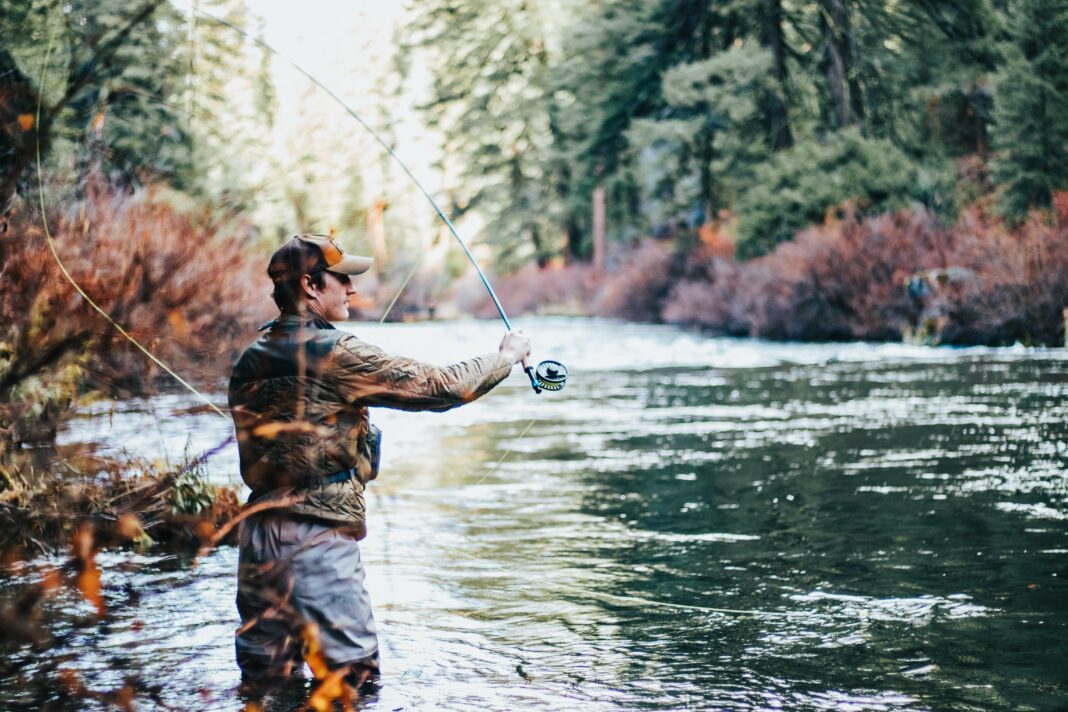
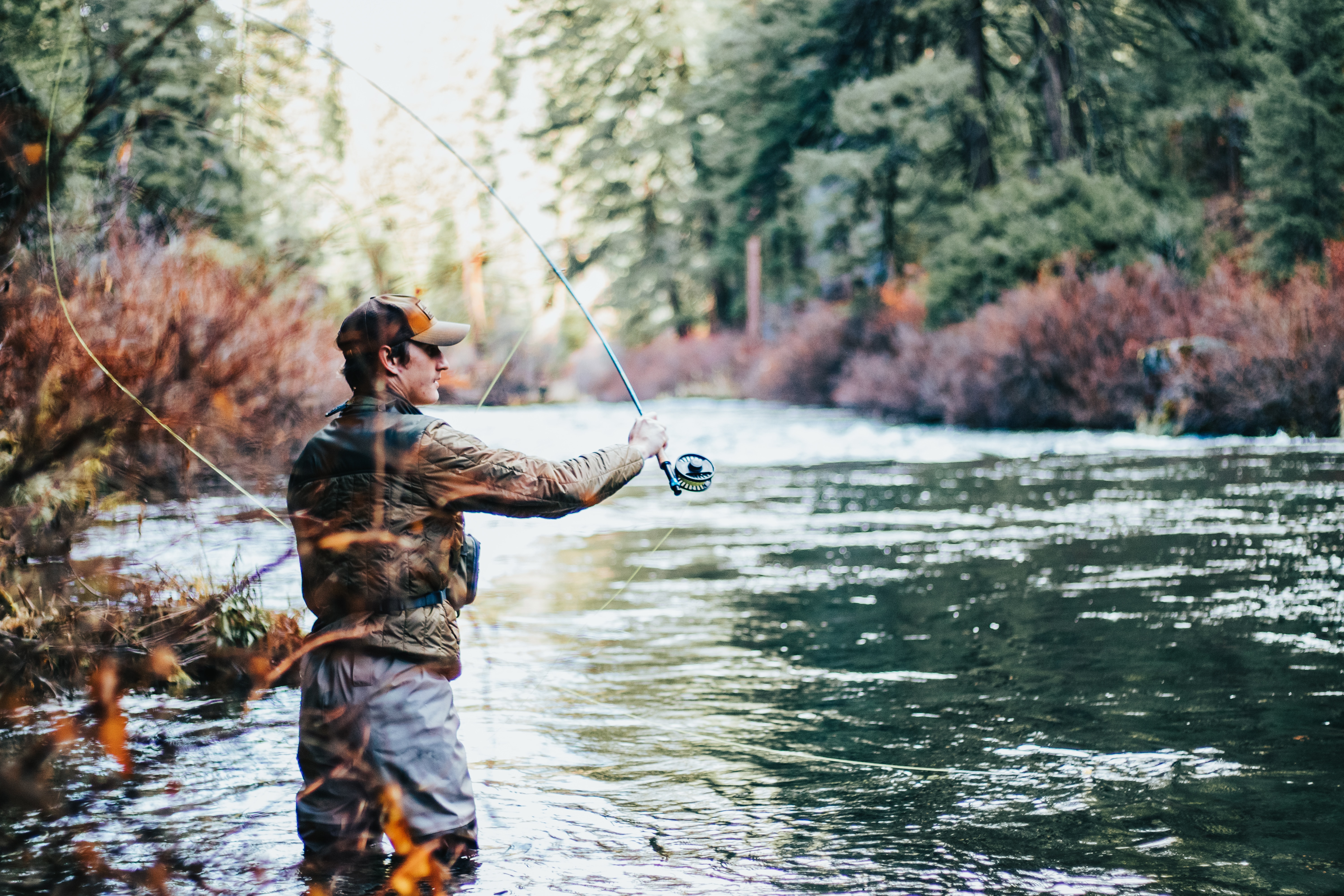
angler in water, flyfishing
Well can you believe it dears? University scientists understand a way to include layman (fisherman) smarts into understanding complex ecological systems.

Have we got a fish story for you. Any angler beginning a yarn like that usually ends up spinning a tall tale, an exaggeration or bald-faced lie. Michigan State University researchers, however, have demonstrated that anglers can produce accurate and complex environmental models similar to those of trained scientists.

The study, led by graduate student Payam Aminpour and Steven Gray, community sustainability professor, shows that fisheries stakeholders can accurately predict pike populations, predator abundance, habitat and fishing pressure.

“This is a novel and potentially revolutionary way to estimate the status of the environment,” Gray said.

The survey was conducted in Germany and involved more than 200 anglers, fishing clubs board members and others. They were asked to create drawings that represent ecological relationships influencing the pike population, including fishing pressures and nutrient availability. The individuals’ models were then mathematically combined into a collective model representing the community’s understanding of the ecosystem.

Computer system results improved with angler input

“The solution produced a model of ecological relationships that is similar to scientists’ understanding of pike ecology,” Aminpour said. “The accuracy of the results improves when more anglers are involved.”

Aminpour found that it is important that the opinions of different types of anglers – recreational, fisheries managers and board members of fishing associations – are taken into account. If the knowledge of only one type of angler is considered, their biases lead to an inaccurate solution.

“Our study shows that it makes sense to involve as many different interest groups as possible, such as anglers, hunters, foresters and conservationists,” Gray said. “If as many ideas as possible are involved, the result will be particularly good.”

Applying Galton’s wisdom of the crowds

The foundational theory supporting the study is known as “the wisdom of crowds” or “collective intelligence.” Popularized by Francis Galton in 1907, the theory has been applied to many situations over the past century, from people estimating the number of jellybeans in a jar to predicting the winners of major sporting events – often with high rates of success.

Using the wisdom of crowds to better understand the environment is a new approach to managing natural resources. The researchers advocate for gathering the knowledge of local people to understand ecosystems where scientific information is limited.

“About 100 years after the introduction of the wisdom of crowds phenomenon, we have expanded this theory by demonstrating that the collective judgment of large crowds can have incredible scientific accuracy,” Aminpour said. “We have shown that this phenomenon exists not only in simple estimation tasks but also in more complex tasks, like predicting the relationships that drive a fishery ecosystem.”

The MSU Human-Environment Interactions Lab and their international team of collaborators are applying the principles of collective intelligence to address some of the most pressing environmental issues, such as warming oceans, the impact of climate change on coastal communities, wildfires, degraded wildlife ecosystems and other sustainability issues.

Additional scientists contributing to the study include Antonie Jetter from Portland State University, Robert Arlinghaus from Leibniz Institute for Freshwater Ecology and Inland Fisheries in Berlin, and Joshua Introne and Alison Singer, former MSU-affiliated scholars. 

Karin Kloosterman
Karin Kloostermanhttp://www.greenprophet.com
Karin Kloosterman is an award-winning journalist, innovation strategist, and founder of Green Prophet, one of the Middle East’s pioneering sustainability platforms. She has ranked in the Top 10 of Verizon innovation competitions, participated in NASA-linked challenges, and spoken worldwide on climate, food security, and future resilience. With an IoT technology patent, features in Canada’s National Post, and leadership inside teams building next-generation agricultural and planetary systems — including Mars-farming concepts — Karin operates at the intersection of storytelling, science, and systems change. She doesn’t report on the future – she helps design it. Reach out directly to [email protected]

LEAVE A REPLY

Please enter your comment!
Please enter your name here

TRENDING

Astro uses AI to help procure land for renewable energy

For oil-rich, environmentally vigilant Gulf states, Astro isn’t just another startup story. It is a blueprint for accelerating an energy transition that is now existential, not optional.

FireDome’s AI eyes the flames and catapults eco-flame retardants to save forests, homes and factories

FireDome’s platform defines what it calls Wildfire Resilience-as-a-Service (RaaS) — a new model that merges detection, decision-making, and suppression into one holistic defense system for communities, utilities, vineyards, and resorts living with wildfire risk.

How artificial intelligence can stop grid cyber-attacks and over-load

A  team of scientists say they can predict attacks and blackouts, making the grid more resilient –– and they are using AI.

The hidden chatter beneath our feet – how trees, mushrooms, and microbes speak

Mushrooms, microbes, and machine learning? Why does this matter? The underground networks built by fungi and bacteria are essential for healthy ecosystems—and for our ability to grow resilient crops in a changing climate. Fungi, in particular, act as “middlemen”, connecting roots across distances and helping move nutrients, water, and even chemical signals between plants.

AI chatbots are sending you fake health news up to 90% of the time

Trust your doctor, not a chatbot. That’s the stark lesson from a world-first study that demonstrates why we shouldn’t be taking health advice generated by artificial intelligence (AI). Chatbots like ChatGPT can easily be programmed to deliver false medical and health information, according to an international team of researchers who have exposed some concerning weaknesses in machine learning systems.

Qatar’s climate hypocrisy rides the London Underground

Qatar remains a master of doublethink—burning gas by the megaton while selling “sustainability” to a world desperate for clean air. Wake up from your slumber people.

How Quality of Hire Shapes Modern Recruitment

A 2024 survey by Deloitte found that 76% of talent leaders now consider long-term retention and workforce contribution among their most important hiring success metrics—far surpassing time-to-fill or cost-per-hire. As the expectations for new hires deepen, companies must also confront the inherent challenges in redefining and accurately measuring hiring quality.

8 Team-Building Exercises to Start the Week Off 

Team building to change the world! The best renewable energy companies are ones that function.

Thank you, LinkedIn — and what your Jobs on the Rise report means for sustainable careers

While “green jobs” aren’t always labeled as such, many of the fastest-growing roles are directly enabling the energy transition, climate resilience, and lower-carbon systems: Number one on their list is Artificial Intelligence engineers. But what does that mean? Vibe coding Claude? 

Somali pirates steal oil tankers

The pirates often stage their heists out of Somalia, a lawless country, with a weak central government that is grappling with a violent Islamist insurgency. Using speedboats that swarm the targets, the machine-gun-toting pirates take control of merchant ships and then hold the vessels, crew and cargo for ransom.

Leopoldo Alejandro Betancourt López Turned Ocean Plastic Into Profitable Sunglasses

Few fashion accessories carry the environmental burden of sunglasses. Most frames are constructed from petroleum-based plastics and acrylic polymers that linger in landfills for centuries, shedding microplastics into soil and waterways long after they've been discarded. Leopoldo Alejandro Betancourt López, president of the Spanish eyewear brand Hawkers, saw this problem differently than most industry executives.

Why Dr. Tony Jacob Sees Texas Business Egos as Warning Signs

Everything's bigger in Texas. Except business egos.  Dr. Tony Jacob figured...

Israel and America Sign Renewable Energy Cooperation Deal

Other announcements made at the conference include the Timna Renewable Energy Park, which will be a center for R&D, and the AORA Solar Thermal Module at Kibbutz Samar, the world's first commercial hybrid solar gas-turbine power plant that is already nearing completion. Solel Solar Systems announced it was beginning construction of a 50 MW solar field in Lebrija, Spain, and Brightsource Energy made a pre-conference announcement that it had inked the world's largest solar deal to date with Southern California Edison (SCE).

Related Articles

Popular Categories